US-Israel Drags The World Into a Global Crisis

By Abdel Bari Atwan

By bombing Iran’s Pars gas field, the world’s largest with missiles, and with a green light from President Donald Trump, the Israeli occupation state and its right-wing ruling clique is revealing a major, diabolical plan. Its goal is to drag the world into a massive economic crisis on all levels, starting with an energy crisis that may be even more dangerous than the Arab oil embargo of 1973, in solidarity with Egypt and Syria, leading to a wider global conflict.

This Israeli bombing of Iran’s South Pars gas field, which came after the third week of the war and the failure of the US-Israeli alliance to topple the Iranian regime, constitutes the most significant breach of red lines and will have very serious and dangerous consequences in this war. Gas prices have already risen by 36 percent today, while the price of a barrel of oil has reached $118 so far. These figures may triple, if not more, if Iran retaliates by bombing energy facilities in the Gulf, especially in Saudi Arabia, the UAE, Qatar, and Kuwait. It is an option that is not out of the question, given the threats issued by the new leadership, which states that the “oil and gas sites in neighboring countries have become direct and legitimate targets after the bombing of the South Pars field.”

***

By taking this step—bombing the South Pars gas field facilities—the Israeli army has shifted the conflict from a realm of threatening maritime routes, primarily the Strait of Hormuz, to targeting production infrastructure. This is a very dangerous shift if it escalates and will lead to an expansion of the scope of this war and its objectives and reflects the despair and frustration Israel is experiencing due to its failure to achieve its objectives in waging this war, and rallying the western world behind Trump’s leadership whilst trapping it in the Iranian snare, and seeking to eliminate the existential threat to its survival, namely Iran and the resistance factions it supports.

Iran managed this war with unprecedented political and military acumen. The developments of the first three weeks demonstrated that it was well-prepared for all eventualities according to a well-devised plan. The most prominent evidence of this was its deception of the occupying state and its generals when it used older-generation missiles to absorb and deplete Israel’s air defenses. Then, it delivered the decisive blow by bombarding major occupied Palestinian cities with advanced, hypersonic cluster missiles, turning Tel Aviv, Haifa, Acre, and Safed into ghost towns.

***

The “decapitation” theory, which Israel used as a successful formula for regime change and collapse, exemplified by the assassination of Ayatollah Ali Khamenei, was thwarted by Iranian ingenuity, yielding the opposite results. The Iranian regime emerged stronger than before the assassination war, now led by a young figurehead, Ayatollah Mojtaba Khamenei, the new Supreme Leader. His first decree was to refuse negotiations with the US to halt the killings unless it fully submitted to Iranian demands, including surrender, a cessation of hostilities, and the payment of reparations.

The lack of response from NATO, and indeed from not a single country Trump appealed to for intervention and the deployment of warships to forcibly reopen the Strait of Hormuz—from China to Australia—underscores his and his Israeli allies’ early defeat in this war and signals the beginning of the countdown to his removal from power, and perhaps even his trial as a war criminal. Time will tell.

This op/ed by the the Chief Editor of Al Rai Al Youm was translated from Arabic and reprinted in crossfirearabia.com.

  • CrossFireArabia

    CrossFireArabia

    Dr. Marwan Asmar holds a PhD from Leeds University and is a freelance writer specializing on the Middle East. He has worked as a journalist since the early 1990s in Jordan and the Gulf countries, and been widely published, including at Albawaba, Gulf News, Al Ghad, World Press Review and others.

    Related Posts

    Killing Happiness!

    By Ismail Al Sharif

    “I fear only one thing: That we might be broken forever, for whoever is broken forever can never rise again. Tell them: take care not to be defeated forever.” — *Gaza Weddings* (also known as *The White Horses*), a novel in Arabic by Ibrahim Nasrallah.

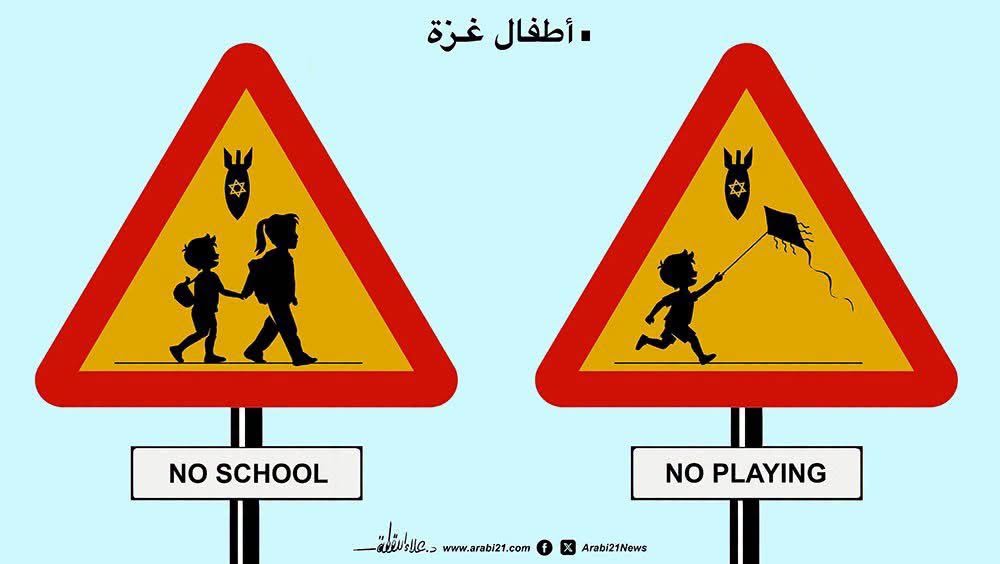
    In 2011, Palestinians set a world record by flying the largest number of kites on the Gaza beach during a summer camp organized by the United Nations Relief and Works Agency for Palestine Refugees (UNRWA).

    By 2024, however, the United States had halted its funding to the agency, while the Zionist entity designated it a terrorist organization, revoked agreements with it, and cleared out its premises. Furthermore, children in Gaza faced threats of death if they flew even a single kite—despite kites being among the few remaining playthings that offer them moments of joy—at a time when even a child’s smile or expression of happiness has become a provocation to the Zionists, warranting death.

    Just days ago, a four-year-old child was killed after the army fired missiles at a warehouse in the Al-Wayda area, near Salah al-Din Street. The strike killed three Palestinians, including the child Abdul Salam Taha, in retaliation for the flying of kites.

    Subsequently, war criminal Benjamin Netanyahu and his Defense Minister Israel Katz, threatened to target any area in Gaza where kites were spotted—an escalation revealing that the targeting encompasses everything, even the simplest expressions of joy and play among children. A nuclear state—possessing the world’s most advanced weaponry, receiving billions of dollars in aid, enjoying limitless military supplies, and shielded by aircraft carriers—views small children flying kites as a threat to its national security. It deems killing them as the appropriate response to this “threat,” as if the blood of tens of thousands of children were not enough to slake its thirst for bloodshed.

    No foreign official has stepped forward to condemn the targeting of children flying kites; on the contrary, the matter has been treated as routine—as if the act itself constituted a threat warranting death. Foreign media outlets have echoed the same narrative claiming that Hamas orchestrates the kite-flying—the very narrative used to justify the destruction of hospitals, bakeries, and water stations, as well as the bombing and burning of displaced persons’ tents.

    For instance, a BBC headline read: “Israel warns of strong response to kites launched from Gaza.” By attributing the kite-flying to an unspecified entity—implying an organized military operation—the incident was framed as a security confrontation. Consequently, the targeting of children—and the blowing of their bodies to pieces by bombs—was portrayed as a natural and justified response.

    Preventing the children of Gaza from flying their kites—depriving them of one of the few remaining joys in their lives—cannot be separated from the attempt to break them psychologically and emotionally, nor from a policy aimed at rendering Gaza uninhabitable and denying its people their most basic human rights. The daily crimes in Gaza—compounded by impunity, a lack of accountability, and the support and encouragement of certain allies—reveal the extent of the corruption, brutality, and injustice in this world. The tragedy has not ceased; circulating figures indicate that Palestinian casualties continue to mount even after the announced ceasefire, amidst ongoing human suffering.

    In Gaza, even the simple joy of a child holding a kite is treated as a threat—as if the objective were no longer merely to defeat the human being, but to steal their smile.

    This article written by Ismail Al Sharif was originally published in Arabic in Ad Dustour newspaper and appeared in crossfirearabia.com

    Continue reading
    Autumn Papers: Palestinians Must Sieze The Moment

    By Radwan Barghouti

    Sometimes writing is a conversation with oneself—a way of setting oneself straight before going astray…

    Prisoner asked:
    “When will they let me out?”

    Guard replied:
    “The door has been open for a long time.”

    Prisoner asked:
    “Then why didn’t you tell me?”

    Guard replied:
    “You were too busy asking when.”

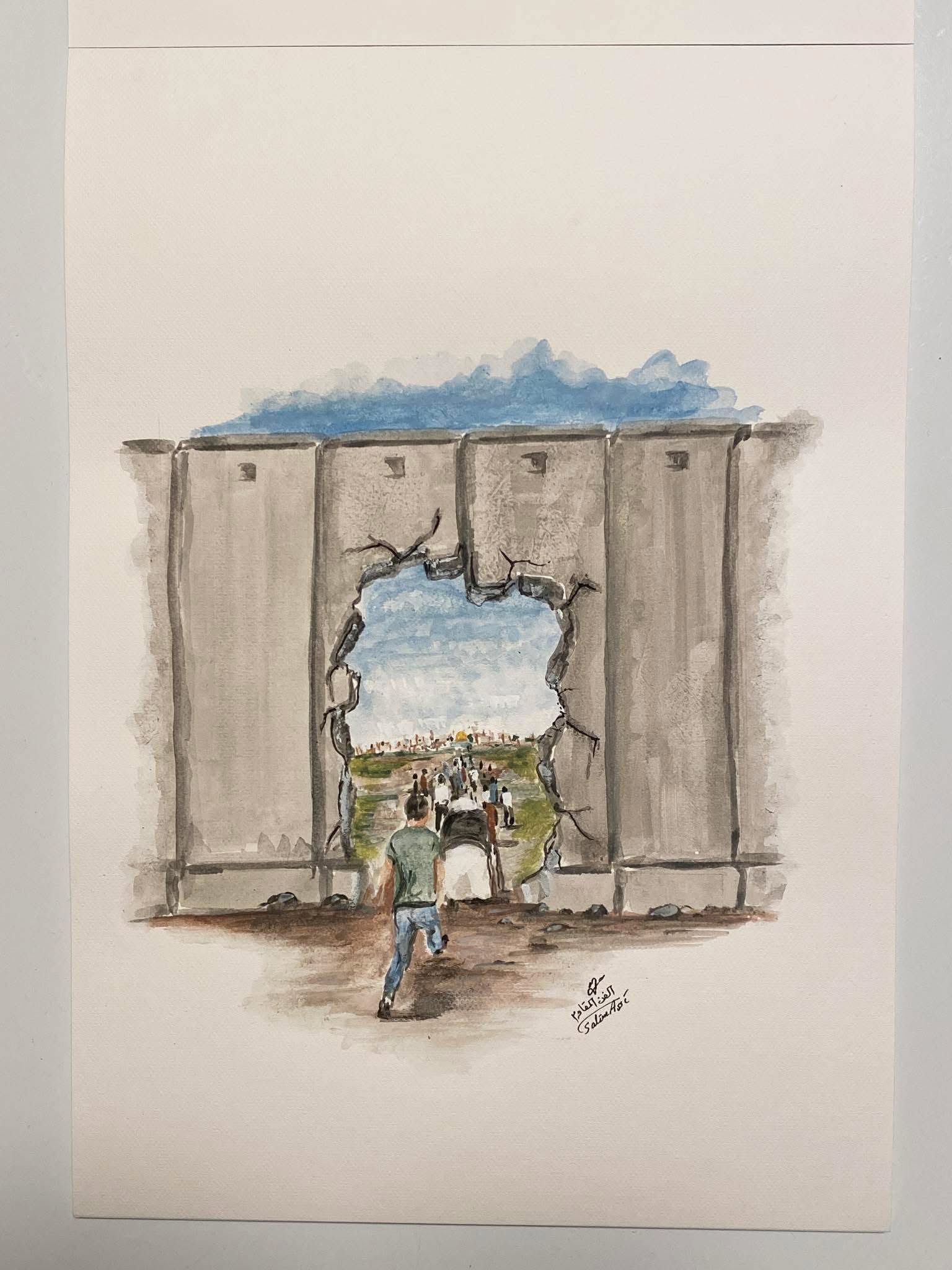
    Not every door that opens is seen, nor does every historic opportunity announce itself boldly. Sometimes a rare moment passes before a people—a moment when something in the world around them begins to change—yet those who are supposed to seize it are preoccupied with something else.

    Perhaps this simple story can serve as a mirror of the Palestinian condition after 7 October, 2023. The war on Gaza, with all the killing, destruction, devastation, and unprecedented human tragedy it has brought, has thrust the Palestinian cause back into the heart of global consciousness. Millions have now seen what Palestinians have been saying for decades. The world has witnessed with its own eyes the scale of the tragedy endured by a people living under occupation. Across capitals and cities around the world, powerful voices have risen demanding an end to the war, justice for the Palestinians, and recognition of their right to freedom, self-determination, statehood, and independence.

    Palestine is no longer merely a passing item on the evening news. It has returned to the conscience of the world—to universities and streets, parliaments and international organizations, and to the center of a far-reaching global political and moral debate.

    There has been—and still is—a historic moment. But the painful question is: What have the Palestinians done with this moment?

    This is not to suggest that the world has simply opened its doors and said to the Palestinians, “Come in; here is your state.” The reality is far more complicated. The balance of power remains deeply unequal, the occupation has not disappeared, and the tragedy in Gaza has not ended merely because international sympathy has grown. But history is measured not only by what is granted to peoples; it is also measured by what peoples themselves are capable of doing when the right historical moment arrives.

    And herein lies the problem.

    Instead of allowing this tragedy to become a point of Palestinian convergence, and instead of all political forces and factions sitting down together to confront one central question—How can we transform this global sympathy into a Palestinian political project that brings us closer to freedom and independence?—division has persisted, while factional and political calculations continue to rear their heads at precisely the moment when Palestinians most need to rise above them.

    It is as though the prisoner continues to ask:

    “When will they open the door?”

    When the more important question should have been:

    “What will we do when the opportunity comes to open it?”

    Palestinian unity today is neither a slogan for public consumption nor a group photograph to be taken in front of the cameras. It is a political and historical necessity.

    Global sympathy cannot be transformed into genuine political power without a unified Palestinian political voice. Nor can such a voice be built by excluding one faction, monopolizing decision-making, or branding those who disagree as traitors. It can only be built by bringing the entire Palestinian political spectrum together around a clear national program: Ending the occupation, protecting the Palestinian people, safeguarding their inalienable national rights, securing their right to self-determination, and achieving an independent and sovereign Palestinian state.

    The past years have demonstrated that Palestinians can be united in suffering, and that the world can sympathize with them in moments of danger. The real challenge, however, is for Palestinians to become united politically as well.

    Freedom does not come through sympathy alone. And sympathy, however widespread, does not automatically translate into independence. It requires a people who know what they want, genuine leadership capable of seizing the moment, and political forces willing to set aside their differences when the fate of an entire homeland is at stake.

    Perhaps the harshest aspect of the Palestinian situation today is that those who have spent decades waiting for a historic moment may fail to realize that when history opens its window, it does not leave it open for long.

    If the lesson of the story is that the prisoner failed to walk free because he was too preoccupied with asking “When?”, then Palestinians do not need to wait for yet another answer about when freedom will come.

    The question that should be knocking on everyone’s door today is this:

    Do we have the courage to disagree less, agree more, and transform what has happened into the beginning of a path toward freedom and independence?

    The door may not remain open forever.

    History does not wait for those who hesitate.

    At this unprecedented historic moment, the people themselves bear the full responsibility. No one can act in their place.

    Waiting for a savior is nothing but an illusion.

    Radwan Al-Barghouti is an attorney living in the Kingdom of Sweden

    Continue reading

    You Missed

    Ascend to The Skies

    Ascend to The Skies

    Killing Happiness!

    Killing Happiness!

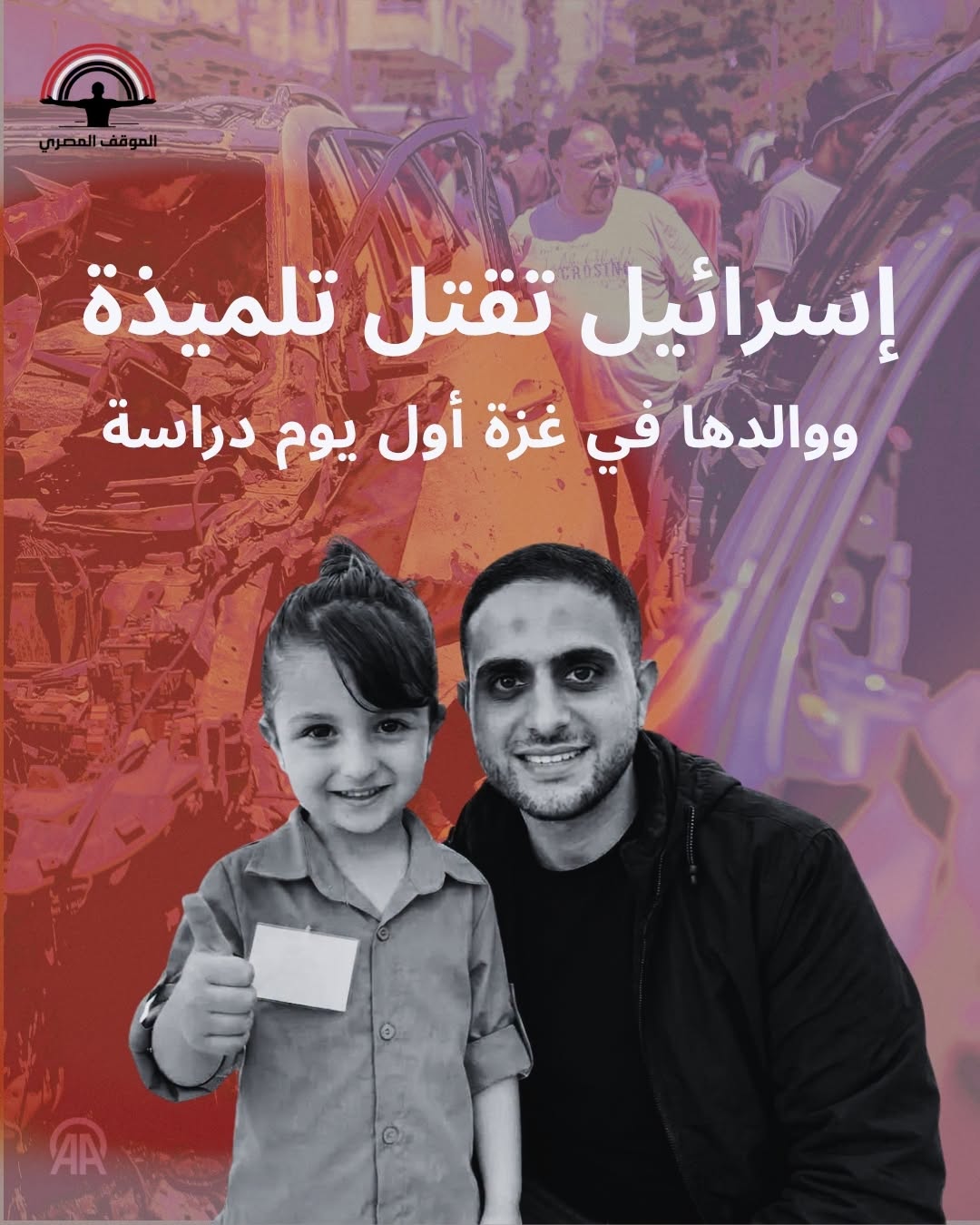
    Israel Kills Schoolgirl, Her Dad in Gaza on First Day of School

    Israel Kills Schoolgirl, Her Dad in Gaza on First Day of School

    Ibrahimi Mosque Without ‘Call to Prayer’ For 76 Days

    Ibrahimi Mosque Without ‘Call to Prayer’ For 76 Days

    Israel Orders Closure of The UK Consulate in East Jerusalem

    Israel Orders Closure of The UK Consulate in East Jerusalem

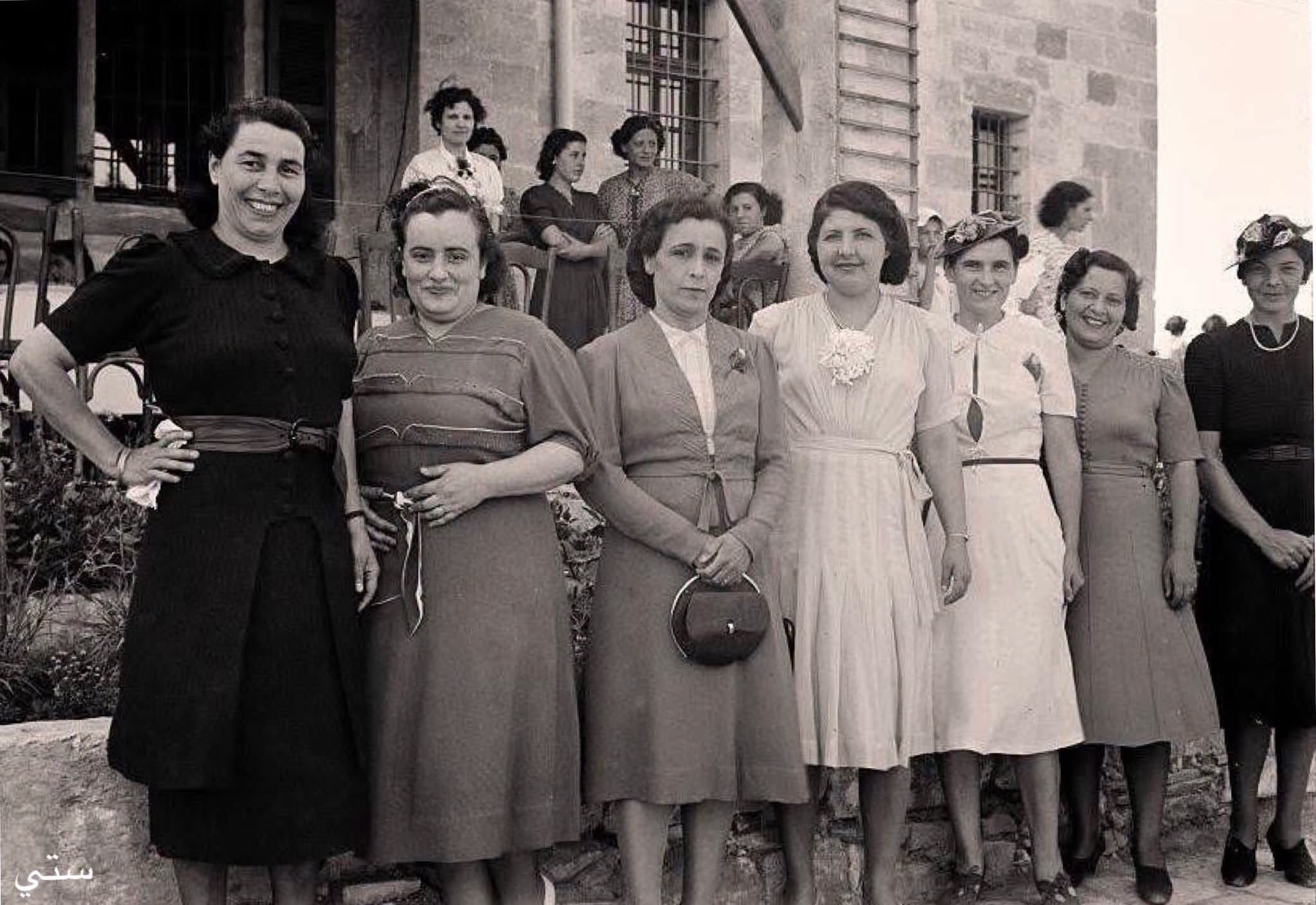
    Palestinian Ladies, Nazareth 1940

    Palestinian Ladies, Nazareth 1940