With Open Arms: Displaced Lebanese Flock to The Camps

By Samaa Abu Sharar

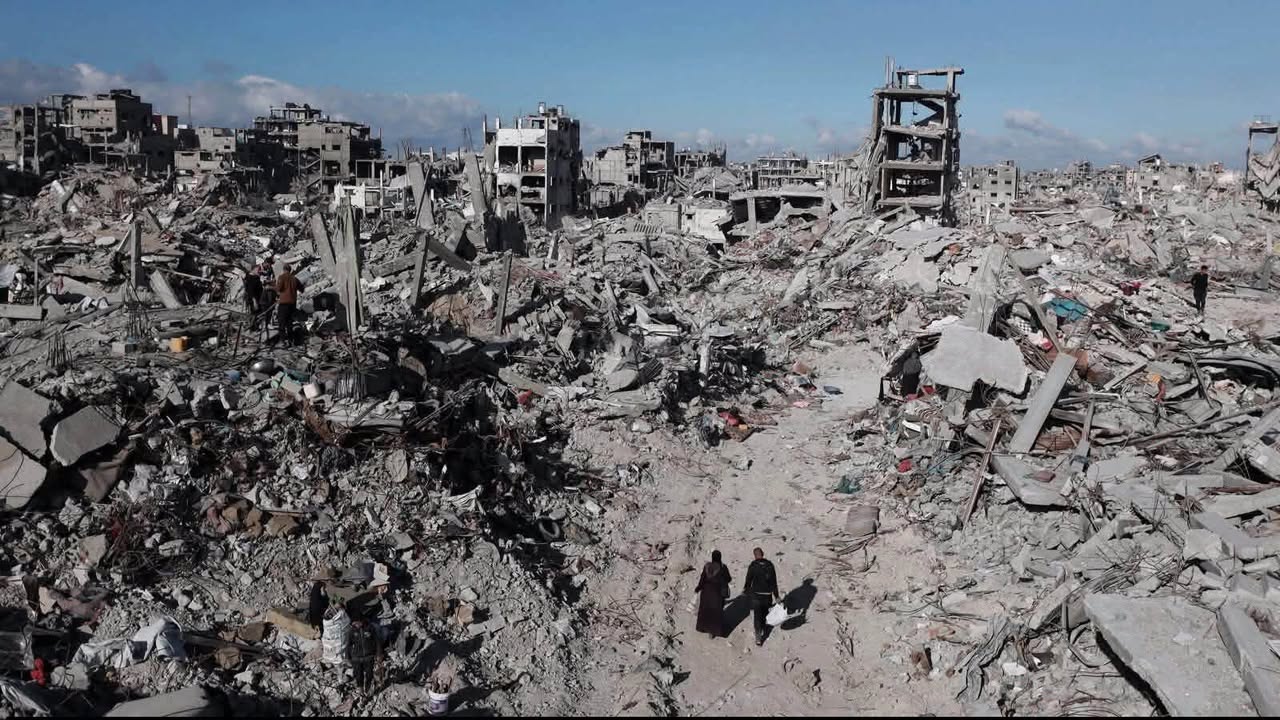
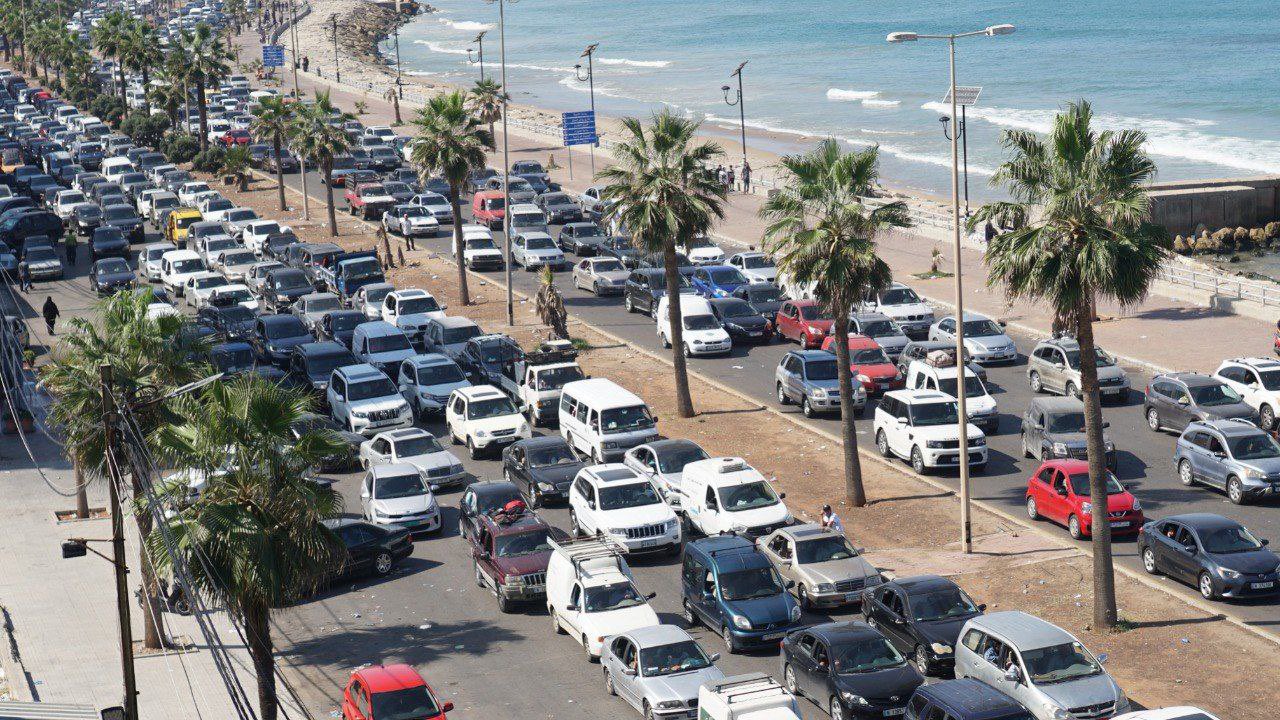
Over a million Lebanese have fled their homes in the south of Lebanon, the Bekaa Valley and the southern district of Beirut due to the unprecedented and indiscriminate Israeli raids on their cities. 

In the blink of an eye, over a million people lost literally everything and became displaced on the streets of the tiny capital and other Lebanese cities they believe are safer. Luckier ones were able to secure a corner in schools or other public places that were opened by the Lebanese government to temporarily host the displaced people. 

Along with the Lebanese, many Syrians and Palestinians were also displaced. Many of those resorted to the Palestinian camps to take refuge in the already cramped camps. This included refugee camps in Tyre in the south like Rashidieh.

A ‘Safe Place’

Photographer Rania Saadallah is a resident of the camp. She spoke to the Palestine Chronicle about the exodus of many families to the camp, particularly Lebanese and Palestinians with families in Rashidieh.  

According to Saadallah, most of those who arrived in Rashidieh came for two reasons; one, to remain close to their villages and towns in the south and two, because they lacked the financial means to go elsewhere.

“I know a family from Bazouriye; they are 14 individuals who came and stayed with their relatives, a family of seven, because they don’t have the means to rent a place inside the camp,” she said.

The Palestinian photographer told us that there are Palestinians who live in Lebanese villages in the south who also sought refuge in the camp as they did in the war of 2006.

“They consider the camp a safe place and it is close to their villages, but most importantly there is this familiarity between people of the villages and refugees in the camps,” she explained.

This familiarity and closeness that bond both people is undeniable and the latest events are proof of that.

Palestinian refugees across Lebanon rushed to help displaced Lebanese from the very start of Israel’s war on Lebanon.

Fraternity

The youth of Ain Al-Hilweh camp were amongst the first to rush to the streets to welcome the displaced Lebanese distributing water and snacks to those stranded in their cars.

According to Walid el-Ahmad, coordinator of the ‘Hand to Hand’ initiative, the unprecedented wave of displacement caught everyone by surprise because it was much bigger than anything that was anticipated by the Lebanese government, the United Nations Relief and Works Agency (UNRWA) or the Palestine Liberation Organization (PLO). 

El-Ahmad told the Palestine Chronicle that some people arrived at the Mar Elias camp in Beirut to stay with relatives and acquaintances but there were limited numbers because the camp is extremely small.

“We reactivated the emergency committee we created at the beginning of the genocide on Gaza, which is under the supervision of the Popular Committee of the camp,” he explained.

Enthusiasm to extend a helping hand to the displaced people was very visible.

“Despite their dire situation, refugees donated everything they had from money to food to mattresses, blankets, anything they could, they gave without hesitation,” he added.

El-Ahmad and many other activists in the camps confirm that help mostly came from individuals, small initiatives, or local organizations.

In many cases, the work of all those combined extended to schools surrounding the camps in the absence of the Lebanese government at the start of the displacement wave.

“We are entrusted with Palestine and its people until they return to their homeland,” a Lebanese man told el-Ahmad, who also supervises a clinic in the Mar Elias camp after he refused to take money from him for treating his son.

These sentiments of fraternity between Palestinians and Lebanese run very deep considering the common history and many sacrifices they both made for the Palestinian cause.

Contingency Plan 

Nazira Mohammed al-Haj, a social activist who lives in the Naher El-Bared camp in the north of Lebanon, confirms these sentiments of solidarity. 

“I have a friend, she has three furnished apartments in the camp. She offered two of them to displaced Lebanese families and provided them as well with groceries,” al-Haj said.

The activist emphasized that this is not a unique case as the majority of refugees in the camp rushed to offer anything they could afford. 

As part of a contingency plan, UNRWA has opened several schools across the country for displaced people and already said that it will open others if there is a need for that. Two of those are in Naher El-Bared camp.

The UN agency has announced that although it gives priority to Palestinian refugees, it also welcomes displaced people of other nationalities depending on the “availability of resources.” 

However, al-Haj told the Palestine Chronicle that the majority of people who arrived at Naher el Bared are staying with refugees in the camp. 

“Some people gave their furnished apartments free of charge to displaced Lebanese,” she explained.

“Even generator owners and satellite and internet providers in the camp offered their services free of charge, in addition to those who donated clothes, mattresses and food items,” the activist explained. 

Al-Haj attributes this overflow of solidarity with the displaced Lebanese to the fact that refugees in Naher el Bared went through a similar displacement in 2007 when clashes broke out between the Lebanese army and the Fateh El-Islam group.

Same Destiny

In the neighboring Beddawi camp, the scene is not different. Refugees of the camp along with Palestinian organizations constituted the rock for the displaced Lebanese.

Social activist Dalal Sharour spoke to the Palestine Chronicle about an initiative that was launched by the Palestinian Cultural Club in the camp through which they established a ‘station’ for all displaced Palestinians and Lebanese. 

The station provided people with places to stay, received donations and offered basic aid.

“The youth in Beddawi camp are very active. They drove in a big pick-up truck roaming the camp’s streets collecting donations, which were largely received through WhatsApp groups,” Sharour said.

The Palestinian activist told the Palestine Chronicle that the Popular Committee in the camp along with many organizations created an emergency unit to collect data on the number of displaced people and their needs.

“The emergency unit will have representatives from each organization so as to coordinate efforts and not duplicate the services extended,” Sharour explained.

There are still no official numbers on how many displaced Palestinians and Lebanese headed to Tripoli in the north of Lebanon where the two camps are located. What we know is that people from the south, Bekaa and Beirut headed to Tripoli because at the moment it is considered safer than other areas.

Researcher and consultant in refugee studies Jaber Suleiman told the Palestine Chronicle that the overwhelming solidarity that the Palestinian refugees have shown towards the displaced Lebanese is expected and not strange to Palestinian refugees.

“In the face of the second phase of genocide, which started in Gaza and is continuing in Lebanon, there is a state of national Lebanese solidarity and the Palestinians are part it,” he said. 

“Palestinians more than others feel the suffering of displacement and leaving one’s homes. These generations in the camps are the generations of the first, second and third Nakba, and they feel more than others with the Lebanese displaced from their villages,” the Palestinian researcher said.

Suleiman also attributes the support and solidarity to the deep gratitude Palestinians in Lebanon feel towards the Lebanese for the sacrifices they are enduring in support of Gaza and the Palestinian cause.

“If they could, they would place them in their eyes and hearts as a sign of gratitude for all they are doing,” he said.

According to Suleiman, this is not the first time that Palestinians have welcomed displaced Lebanese into their camps, since in 2006 many took refuge in Ayn el-Helweh camp despite the hardships these refugees face in a country that deprives them of many of their basic rights. 

“They share the same destiny and they shed the same blood on the same soil against a common Zionist enemy, thus it’s no surprise to see this solidarity,” Suleiman concluded.

 This article is reproduced from the Palestine Chronicle.

CrossFireArabia

CrossFireArabia
Dr. Marwan Asmar holds a PhD from Leeds University and is a freelance writer specializing on the Middle East. He has worked as a journalist since the early 1990s in Jordan and the Gulf countries, and been widely published, including at Albawaba, Gulf News, Al Ghad, World Press Review and others.

Related Posts

‘All I Want is to Bury My Family in Dignity’  

GAZA – Abdel Rahman Khalla no longer holds any dreams of a life; there is no home waiting for him, no family to return to, and no future he can envision as he once did. After losing 39 members of his family under the rubble of their home in northern Gaza, all hopes and aspirations dwindled to a single wish: To find the bodies of his loved ones and bury them with dignity.

Amidst the heavy stones, the dust, and the agonizing wait, he now asks for nothing more than a simple human right: A grave to embrace those who have passed away, and an end befitting the story of a family wiped out by war.

He has decided to dig and undertake this task himself.

Amid the rubble of a five-story building, Khalla stands as the sole witness to one of the most horrific massacres in northern Gaza. He lost about 39 members of his family in a single attack on their home in the Jabalia al-Nazla area on 21 December, 2023.

Read also: Gaza: Civil Defense begins recovering bodies from rubble

Abdul Rahman, the sole survivor of his family, recounts the details of the tragedy, which continues till this day. He says that 39 people, including women and children, were inside the house at the time of the bombing. All were killed under the rubble and no one else emerged alive.

He adds that only 18 bodies were recovered, while the rest, 20 to 21 others, are strill trapped under the debris – over 30 months later because there was no heavy machinery to remove the rubble and debris. Today, Israel continues to block such machinery from entering Gaza.

Abdul Rahman confirmed to the Sanad News Agency they exhausted all avenues, appealing to the Red Cross, Civil Defense, and the Jabalia al-Nazla Municipality, as well as the Qatari and Egyptian committees, requesting such heavy equipment to help in recovering the bodies but all of their appeals went unanswered.

“After 30 months of suffering, we decided to dig with our bare hands,” Abdul Rahman explained, adding the members of his surviving family had only begun manually removing the rubble four days prior, using simple and worn-out tools such as shovels, picks, and light rakes, despite the dangerous situation and the sheer size of their building that collapsed.

But during these arduous efforts, they only managed to recover two bodies; one belonging to his uncle, and the other who remains unidentified. About 19 bodies remain buried under the rubble, awaiting recovery and a proper burial.

Abdel Rahman appeals to the Egyptian Committee and the Reconstruction Committee for urgent intervention, requesting they send bulldozers and trucks to remove the rubble and debris. He emphasizes his family is not asking for the impossible, but simply for their right to reach their loved ones and bury them with dignity.

The tragedy of the Khalla family is not just another statistic in the war’s record, but a human story that speaks of all the suffering of Gaza, where entire families still live amidst the ruins of their homes, searching for their martyrs and awaiting for a long-delayed mercy.

Despite the ceasefire agreement in Gaza that came into effect on October 10, 2025, the Israeli occupation authorities continue to evade their obligations by preventing the entry of hundreds of heavy vehicles needed to remove the thousands of tons of rubble scattered throughout the Strip.

According to data from the Government Media Office, the occupation destroyed 90% of the civilian infrastructure in Gaza during the two years of its offensive, leaving behind more than 70 million tons of rubble, in one of the region’s largest humanitarian disasters in the world.

The Civil Defense Authority indicated in previous statements that dozens of families in Gaza continue to send appeals for help in recovering their relatives months after their martyrdom, but the Authority is unable to respond due to the lack of necessary equipment.

This article was in the Arabic Sanad Lil Anba website and reproduced in crossfirearabia.com.

Continue reading
‘Living Graves’, Is How Palestinian Journalist Describes Israeli Prison

Veteran Palestinian journalist Ali Samoudi described Israeli prisons as “living graves” after his release on Thursday, appearing in severely deteriorated physical condition following his arrest by Israeli forces last year.

Samoudi, who worked for the Palestinian newspaper Al-Quds and international media outlets, said he lost 60 kilograms (about 132 pounds) while in Israeli prison. “My weight was 120 kilograms (about 264 pounds); now my weight is 60 kilograms,” Samoudi said.

According to Samoudi, prison conditions were harsh and cruel, and prisoners suffered. “The food is very bad. Even a cat would not eat what they eat,” he said. “Prisoners have nothing. No notebook, no pen, nothing,” he added, calling on the families of detainees to take care of their well-being. 

He was arrested in April 2025 on false claims of transferring funds to the Palestinian Islamic Jihad. Samoudi and his family strongly denied the allegations.

In a statement issued in January, the Palestinian Journalists Syndicate said al-Samoudi has not been granted a fair trial and that his arrest is “a blatant violation of international law and press freedom”.

The syndicate also warned “that his life is now at risk” due to the harsh and inhumane treatment he has been experiencing in prison.

Samoudi’s son, Mohammed, said his father was an “independent journalist who isn’t affiliated with any party,” adding he was “surprised to hear him being accused of ties with Islamic Jihad. I was in shock.”

Mohammed said the forces raided their home at around 5 A.M., searched the premises and destroyed some of the family’s belongings before taking his father away. He said he didn’t know where his father is being held, but said the family is particularly worried because he is diabetic and suffers from high blood pressure, and therefore needs a special diet and medications.

On May 8, 2025, Wafa reported that an Israeli court had issued an administrative detention order against him for a period of six months.

This was because the Israeli army said it did not have “sufficient evidence” to formally charge him and had hence issued an administrative detention order.

In a statement issued to the United States news group CNN, the Israeli army said: “As sufficient evidence was not found against him, and in light of the accumulated intelligence material, security authorities requested to consider issuing an administrative detention order.”

The military claimed the order was justified as Samoudi’s “presence” posed “a danger to the security of the region”.

Since then, Samoudi has been held in administrative detention and his detention order has been repeatedly renewed.

Samoudi also witnessed the Israeli killing of Al Jazeera journalist Shireen Abu Akleh in Jenin in 2022 and was himself injured that day.

“I was there personally and witnessed the whole thing,” he said about the killing of his colleague. “There was no one there apart from the Israeli force, and they were the ones who shot at us.”

The Palestinian Prisoners’ Society said Samoudi is among more than 3,530 Palestinians held under administrative detention, in addition to over 40 journalists still held in Israeli prisons, including four women.

The group renewed calls for the release of all detained journalists and urged the international community to take responsibility for ongoing violations against prisoners.

More than 9,600 Palestinians remain in Israeli prisons, including women and children, facing torture, starvation and medical neglect, which have led to the deaths of dozens, according to Palestinian and Israeli rights groups. – Quds News Network

Continue reading

You Missed

An Egyptian House in a German Town

An Egyptian House in a German Town

Nakba Art

Nakba Art

Palestinian Population Tops 15.5 Million

Palestinian Population Tops 15.5 Million

‘All I Want is to Bury My Family in Dignity’  

‘All I Want is to Bury My Family in Dignity’  

Israeli Army: 18 Soldiers Dead, 910 Injured in Lebanon

Israeli Army: 18 Soldiers Dead, 910 Injured in Lebanon

Watch Out: Israel is Secretly Filling The West Bank With Settlements

Watch Out: Israel is Secretly Filling The West Bank With Settlements