Morocco-Israel: Normalization Stops at The Top
by Mohamed El Metmari
Palestine has always been at the heart of all Moroccan societal and political life. From street art in Chaabi neighborhoods, university student unions, leftist and Islamist political parties, to football chants in Moroccan stadiums, Moroccan solidarity is deeply rooted in a history of shared regional anti-colonial and anti-imperial struggles.
Therefore, Moroccan streets fill with demonstrations whenever Palestinian rights are violated. Moroccans never fail to remind Palestinians of a brotherhood stretching back 750 years, when Salah ad-Din al-Ayyubi named a quarter in Jerusalem the Moroccan Quarter (Ḥārat al-Maghāriba) to commemorate their assistance in reclaiming the city from the Crusaders.
A prime example is the Islamist Justice and Development Party (PJD), which earned much of its credibility in Moroccan streets through marches in solidarity with Palestine. Incorporated into the makhzen state, the party faced significant structural constraints that curtailed its ideological positioning. In December 2020, this culminated in the PJD-led government signing the Abraham Accords on behalf of the state, marking a structural realigning of diplomatic priorities that stood in tension with the party’s historical grassroots platform
Ever since then, Moroccans have never missed a chance to call for an end to normalization: signing petitions, engaging in acts of boycott, and taking to the streets, often at the expense of their own freedom, as the country’s crackdown on dissent has only intensified in the aftermath of COVID. More recently, an investigative report by Forbidden Stories implicated Morocco in the use of Israeli NSO Group’s Pegasus spyware to target journalists and activists.
However, reversing normalization remains far-fetched, as foreign policy in Morocco remains largely concentrated within the monarchy, giving the king a central role in determining the country’s strategic and diplomatic orientation.
Consequently, although signed by the Head of Government, the decision to normalize did not go through the Moroccan Parliament, and the Moroccan people were never consulted. This, however, did not prevent Moroccans from taking to the streets to demand an end to normalization. Moroccan authorities and the media tried their best to promote the benefits of normalization, highlighting Trump’s recognition of Moroccan sovereignty over Western Sahara while stopping short at mentioning Israel. Instead, Moroccan media focused on showcasing the Moroccan Jewish heritage in preparation for the big reveal.
The American support and recognition of what Morocco considers its first national cause amplified a patriotic narrative which justified normalization, as it asserted that Morocco comes first, even before Palestine. However, to avoid backlash, the royal cabinet issued a statement asserting that Morocco’s obligations towards Palestine remain unchanged, promising that it will keep advocating for a two-state solution.
Nevertheless, many Moroccans remained unconvinced that Trump’s proclamation did not come at the expense of Morocco’s longstanding position on Palestine. Indeed, Israel’s outreach expanded into all critical sectors, including intelligence, trade, agriculture, and even education, with the Ministry of National Education modifying curricula to add more “Jewish elements.” Subsequently, Moroccan official and media rhetoric refrained from commenting on Israeli violations such as the Sheikh Jarrah incidents in East Jerusalem and settler violence in the West Bank, not to mention their failure to condemn Israeli actions in Gaza after October 7, contributing to perceptions of a significant shift in Morocco’s foreign-policy priorities following normalization.
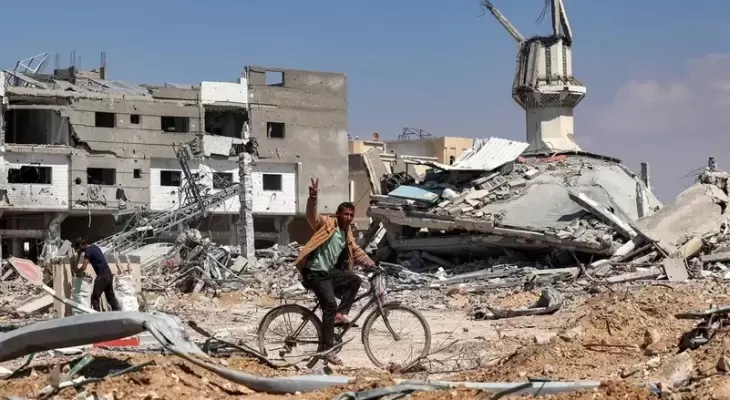
Moroccan people could not remain silent in the face of Israeli crimes, especially in the aftermath of October 7th, when they joined a global outcry denouncing Israel’s ongoing genocide in Gaza. Throughout the genocide, Morocco could not temporarily sever ties nor even issue condemnation statements, except on one occasion when the Foreign Ministry condemned the violence in the region, stopping short of denouncing Israeli crimes. This response angered many, as it was seen as equating “the victim with the aggressor.”
As Morocco’s official silence increased, the Moroccan Front for Supporting Palestine and Anti-Normalization, a coalition of various leftist, Islamist, and labor entities, emerged as a strong societal player pushing the kingdom to sever ties with Netanyahu’s genocidal state.
In contrast, leading up to October 7th, a number of Moroccan pro-Israel organizations, NGOs, and institutions emerged to support normalization and promote more favorable perceptions of Israel within Moroccan society. Some of these bodies emphasized a ‘Morocco first’ narrative and promoted the view that the Palestinian issue should not take precedence over Morocco’s national interests.
Following the October 7 attacks, some of these actors adopted positions strongly supportive of Israel, while using the events to reinforce arguments in favor of normalization. For instance, Ahmed Charaï, a close figure to the top intelligence and diplomatic tier and the president of the conglomerate Global Media Holding, published a provocative article titled “We Are All Israelis.” In this piece, Charaï denounced Hamas, labeling it a “terrorist” group that needed to be eliminated.
Although this piece sparked fierce backlash within the pro-Palestinian Moroccan community, Ahmed Charaï’s media wings, such as MedRadio, have continued to this day to defend Israel by promoting the “Taza before Gaza” narrative, prioritizing Moroccan interests, where not only is normalization publicly defended by hosts and guests, but the same talking points used by Israeli spokespersons also surface.
After Charaï, other Moroccan pro-Israel civil society entities issued similar statements, indicating the emergence of a more visible pro-Israel current within parts of Moroccan civil society. In a joint statement led by the Moroccan-Israeli Friendship Association (MIFA), October 7 was described as a “black day” for the Jewish people, and Hamas was described as a “Nazi-like” terrorist group. As they failed to address Israel’s war crimes, they asserted its right to attack Gaza and eliminate Hamas as an act of “self-defence.”
The combination of institutional support for pro-normalization voices and increasing restrictions on anti-normalization activists has contributed to a growing perception of a gap between state policy and public opinion.
Crackdowns on pro-Palestine voices started in campuses and universities, which were the first institutions to strike normalization agreements with Israeli counterparts. These developments also raised concerns among critics that Moroccan academia was increasingly becoming a space for normalizing relations with Israel and reducing resistance to Israeli policies within campuses. Indeed, just after the Abraham Accords, there was a rush of conferences to host events praising the diplomatic wins in Western Sahara, asserting that they would not have happened without these monumental agreements, especially as both Israel and the US promised to build consulates in the area.
However, Moroccan universities are also spaces where Moroccan youth first encounter organized pro-Palestinian activism, mainly through leftist and Islamist student unions such as the National Union of Moroccan Students (UNEM). UNEM members have mobilized vigilantly against this Israeli encroachment on their campuses. They have pushed for petitions, attended classes wearing keffiyehs, and even boycotted seminars, such as those of Saad Eddine El Othmani, the PJD leader who signed the Abraham Accords.
Since most academic institutions and universities have formed partnerships with Israeli counterparts, an effective way to circumvent the state’s control over academic spaces is to organize open solidarity conventions and pro-Palestine events on campuses. Against this backdrop, campuses became an important site of contestation over normalization, and authorities increasingly restricted anti-normalization activism there, particularly as students advocated for divestment from Israeli universities.
In July 2024, Morocco’s top university, UM6P, cancelled a graduation ceremony after students planned to wear keffiyehs to the event in solidarity with Gaza. The same year, Abdelmalek Essaadi University closed its doors for four days to prevent students from holding the sixth edition of the Al-Quds Convention. This was not an isolated incident; earlier, in 2022, Ibn Tofail University also shut its doors for three days to block the fifth edition of the same convention, following a violent police crackdown in which three UNEM students were arrested and detained.
As pro-Palestine activism moved from campuses to the streets following the outbreak of the war in Gaza, the state intensified its restrictions on activists. These developments coincided with growing criticism of Morocco’s continued relations with Israel, particularly as reports emerged that ships carrying military supplies to Israel had been permitted to dock at Tanger Med
These developments contributed to growing public perceptions of Moroccan complicity in Israel’s war in Gaza. This indignation only increased with the state’s decision to detain anti-normalization activists, especially those active within the Front. A prominent incident involved 13 activists from BDS Morocco who, according to a recent statement, were sentenced to six months in prison and fined 2,000 MAD each for their involvement in boycotting Carrefour, a company seen as complicit in the Gaza genocide for supplying aid to IOF soldiers.
This reality of detention has already befallen many other activists, especially members of the banned but tolerated Al-Adl Wal-Ihsan group. A prominent example is that of the activist Redouane Al-Kastit, who was sentenced to two years in prison over a Facebook post, an outcome that would have been unthinkable before normalization.
Recently, a 23-year-old young rapper from Taza, of all cities, named Souhaib Qabli (aka L7assal), was detained and sentenced last March to 8 months in prison and fined $106 for the content of his songs, especially a song titled “No to Normalization,” where he clearly criticizes the rulers for their role in normalization.
Despite a brutal genocide and ongoing starvation and siege in Gaza, continuous attacks on Iran and Lebanon, Israel is still deepening its ties with Morocco, branching into deep structures of the Moroccan state.
For the first time, the royals, who hold a sacred position in Moroccan consciousness, were scrutinized for their closeness to Israel, as an investigative report by Le Desk showed that Princesses Lalla Hasnaa and Lalla Asmae have partnered with the Israeli hotel chain Selina amid the ongoing war in Gaza. This comes after André Azoulay, the French-Jewish advisor to the king, was awarded a Presidential Medal of Distinction by Israeli President Isaac Herzog for his peace-building efforts and mediation in the Abaraham accords.
Moreover, the rise of arbitrary arrests against activist and protestors had led to the state to be alienated from its people especially after Morocco welcomed members of the Golani Brigades to train on tunnel fighting after they have just come from a brutal massacre they committed in Gaza just two months prior, which involved 15 Palestinian medics, United Nations workers, and ambulance drivers.
Outside the framework of the United Nations, Trump established the Board of Peace to oversee the proposed reconstruction and governance of Gaza in the post-war period. With Trump as its permanent chair, the first countries to join included signatories to the Abraham Accords. As part of its Gaza deradicalization pledges to the Board, Morocco was the first Arab country to send senior military officers to join the Gaza International Stabilization Force, thereby contributing to what critics describe as an indirect Western-led occupation of Gaza.
These developments have also raised concerns among critics that Morocco’s expanding cooperation with Israel may be increasingly at odds with public opinion, particularly as authorities continue to detain activists who oppose normalization. For some Moroccans, this tension is particularly significant because of the kingdom’s religious and political responsibilities toward Jerusalem and its role as chair of the Al-Quds Committee.
Mohamed El Metmari is an independent Moroccan writer, activist, and PhD researcher specializing in Orientalist discourse. His master’s thesis focuses on the Khan Younis and Rafah massacres of 1956. His articles have appeared across various prominent platforms, including Al Jazeera, Raseef22, and The New Arab. He wrote this article for Countercurrents.org

 Dr Khairi Janbek

 Heba
Heba
 Saleem Ayoub Quna