Israel Starts Forced Displacement Under World Silence

The Israeli project in the Gaza Strip has reached its most revealing and dangerous stage yet. Israel is no longer concealing its intention to forcibly displace Palestinians from their homeland—it now announces this plan more openly than ever before, through official rhetoric at the highest levels. Through actions on the ground and institutional measures designed to reframe the crime as “voluntary migration”, Israel has attempted to implement its displacement campaign by exploiting the international community’s near-total silence, which has enabled the continuation of the crime and Israeli impunity despite the unprecedented nature of humanity’s first livestreamed genocide.

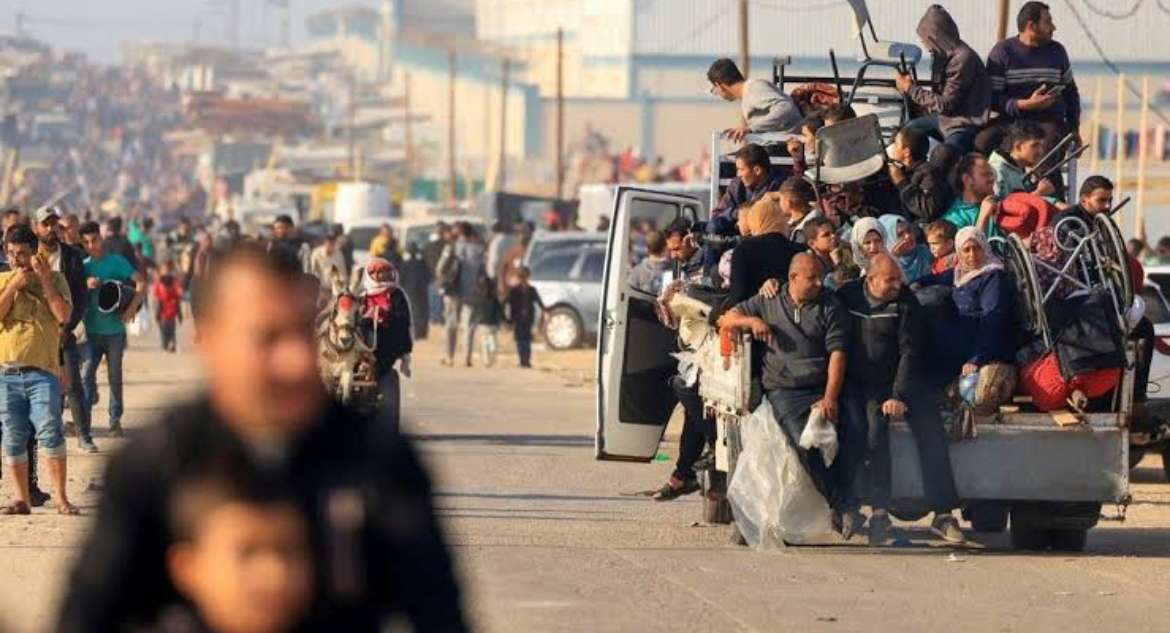
Israel is now attempting to carry out the final phase of its crime, and its original goal: the mass expulsion of Palestinians from Palestine, specifically from the Gaza Strip. For a year and a half, Israel has carried out acts of genocide, killing and injuring hundreds of thousands of people, erasing entire cities, dismantling the Strip’s infrastructure, and systematically displacing its population within the enclave. These actions aim to eliminate the Palestinian people as a community and as a collective presence.

The current plans for forced displacement are a direct extension of Israel’s long-standing settler-colonial project, aimed at erasing Palestinian existence and seizing land. What distinguishes this stage is its unprecedented scale and brutality—Israel is targeting over two million people who have endured a full-scale genocide and have been stripped of even the most basic human rights, under coercive, inhumane conditions that make living any sort of a normal life impossible. Israel’s deliberate objective is to pressure Palestinians into leaving by making it their only means of survival.

Having succeeded in revealing the weak principles of international law, such as protections for civilians based on their perceived racial superiority or lack thereof, Israel is now reshaping the narrative once again. Armed with overwhelming force and emboldened by the international community’s abandonment of legal and moral responsibilities, Israel seeks to portray the mass expulsion of Palestinians as “voluntary migration”. This is a blatant attempt to rebrand ethnic cleansing and forced displacement using dishonest language—like “humanitarian considerations” and “individual choice”—and is a direct contradiction of legal facts and the reality on the ground.

Euro-Med Monitor emphasises that forced displacement is a standalone crime under international law. It involves the removal of individuals from areas where they legally reside, using force, threats, or other forms of coercion, without valid legal justification. Coercion, in the context of Israel’s genocide in the Gaza Strip, goes beyond military force. It includes the creation of unbearable conditions that render remaining in one’s home practically impossible or life-threatening. A coercive environment includes fear of violence, persecution, arrest, intimidation, starvation, or other forms of hardship that strip individuals of free will and force them to flee.

“Israel has already committed the crime of forced displacement against Gaza’s population,” stated Lima Bustami, Director of Euro-Med Monitor’s Legal Department, “having driven them into internal displacement without legal grounds and in conditions that violate international legal exceptions, which only permit evacuation temporarily and under imperative military necessity, while ensuring safe areas with minimum standards of human dignity. None of these standards have been met. In fact, Israel has used this widespread and repeated pattern of displacement as a tool of genocide—aimed at destroying and subjecting the population to deadly living conditions.”

She added: “Although the legal elements of the crime are already fulfilled, Israel is further escalating it to a more lethal level against the Palestinian people—manifesting its settler-colonial vision of expulsion and replacement. Now it is attempting to market the second phase of forced displacement, i.e. beyond Gaza’s borders, as ‘voluntary migration’: a transparent deception that only a complicit international community—one that chooses silence over accountability—would accept.”

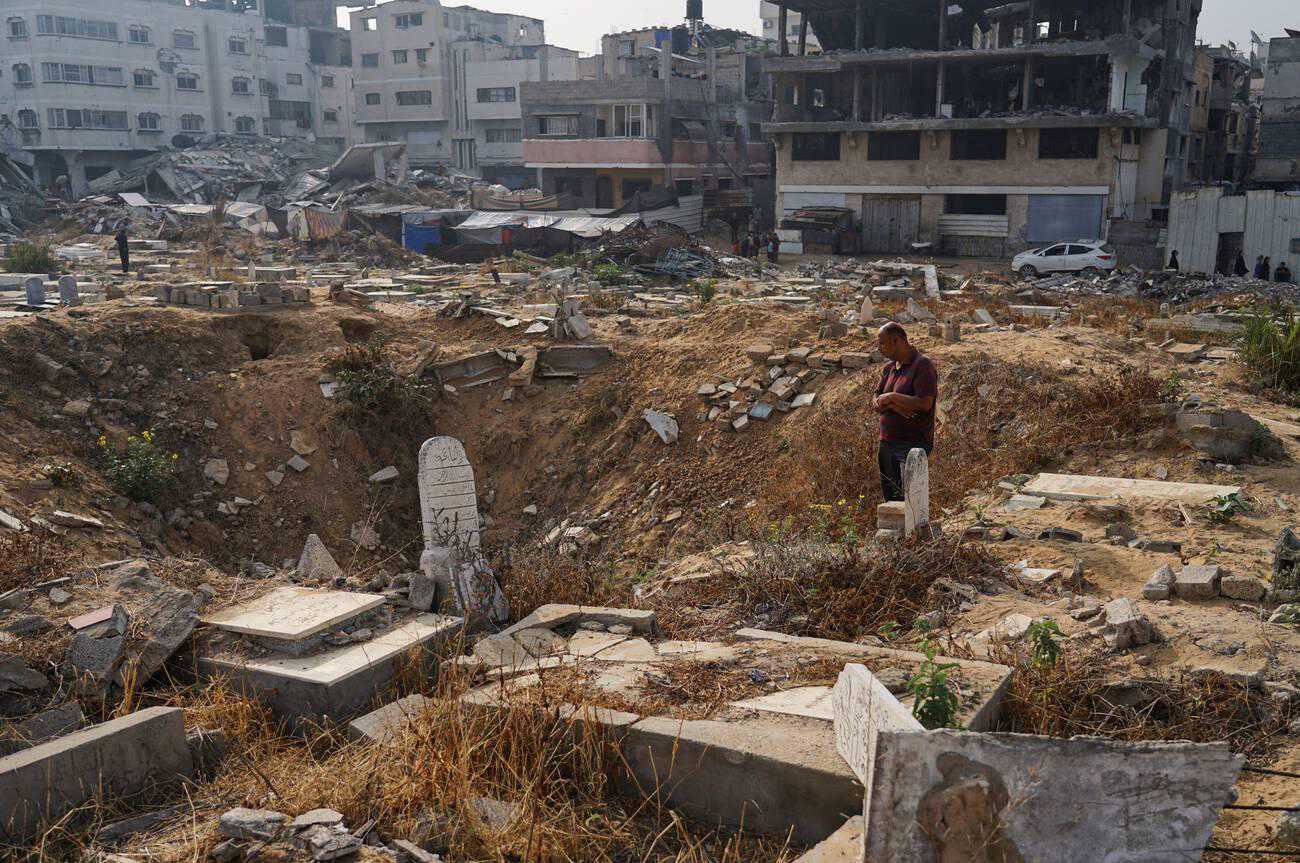
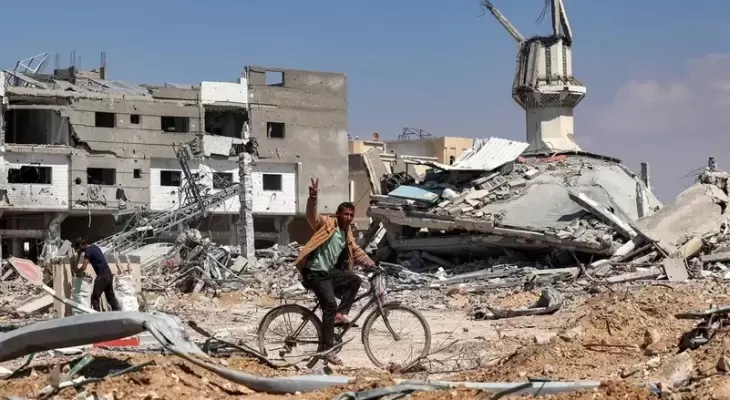
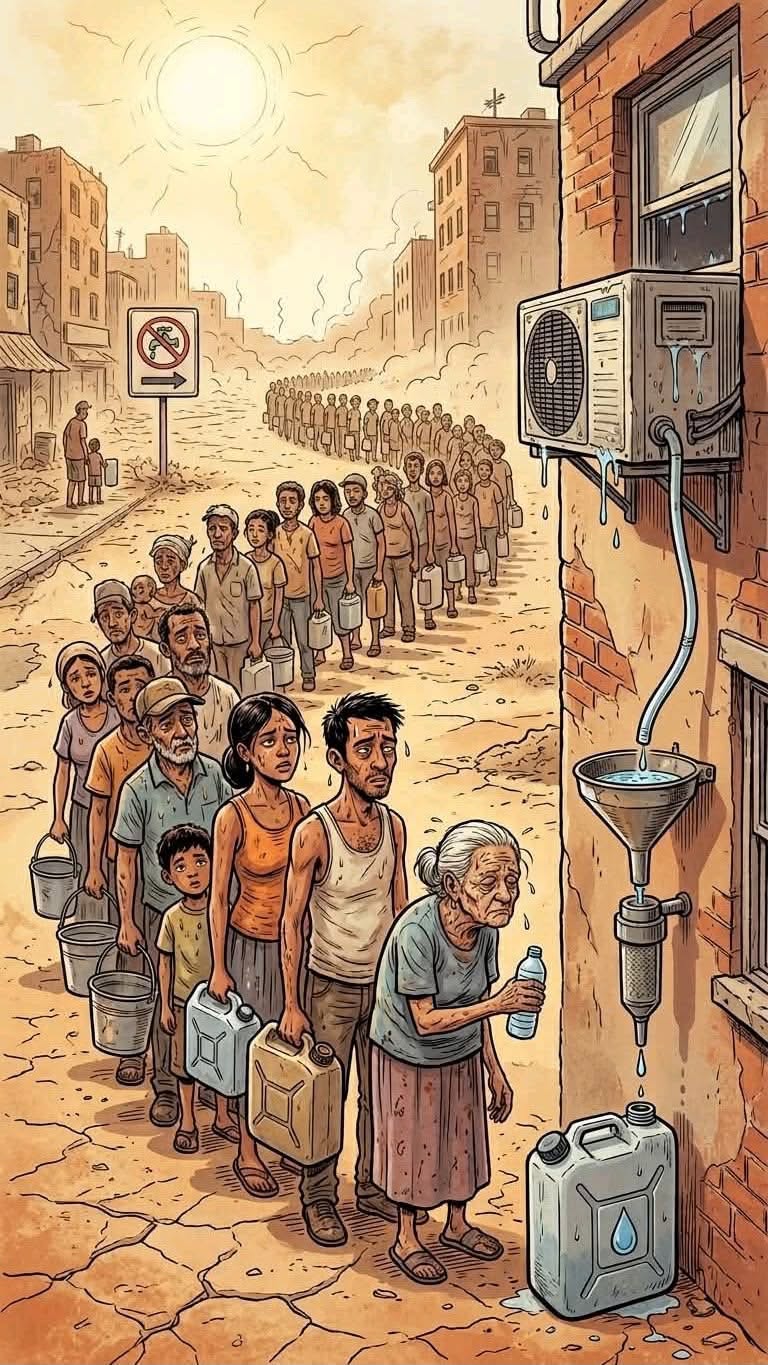
Today, the people of the Gaza Strip endure catastrophic conditions that are unprecedented in recent history. Israel has obliterated all forms of normal life; there is no electricity or infrastructure, and there are no homes, no essential services, no functioning healthcare or education systems, and no clean water services. Around 2.3 million Palestinians are confined to less than 34% of the Strip’s 365 square kilometres. Approximately 66% of the territory has been turned into so-called “buffer zones”, or areas that are completely off-limits to Palestinians and/or that have been forcibly depopulated through Israeli bombings and displacement orders.

Most of the population is now living in tattered tents amid the spread of famine, disease, and epidemics and an accumulation of waste—conditions symptomatic of the near-complete collapse of the humanitarian system. Israel continues to systematically block the entry of food, medicine, and fuel; destroy all remaining means of survival; and obstruct any efforts aimed at reconstruction or restoring even the minimum conditions for a healthy life.

These conditions in place are not the result of a natural disaster; rather, they have been deliberately engineered by Israel as a coercive tool to pressure the population into leaving the Gaza Strip. The absence of any genuine, voluntary alternative for Palestinians in the enclave renders this situation a textbook case of forcible transfer, as defined under international law and affirmed by relevant jurisprudence.

“While population transfers may be permitted in certain humanitarian contexts under international law, any such justification collapses if the humanitarian crisis is the direct consequence of unlawful acts committed by the same party enforcing the transfer,” according to Bustami. “It is impermissible to use forced displacement as a response to a disaster one has created—a principle clearly upheld by international tribunals, particularly the International Criminal Tribunal for the former Yugoslavia.”

Framing this imposed reality as a “voluntary” migration and an option not only constitutes a gross distortion of truth, but undermines the legal foundations of the international system, erodes the principle of accountability, and transforms impunity from a failure of justice into a deliberate mechanism for perpetuating grave crimes and entrenching the outcomes of such crimes.

Repeated public statements from the highest levels of Israel’s political and security leadership have escalated in intensity over the past year and a half, and expose a clear, coordinated intent to displace the population of the Gaza Strip. In a blatant bid to enforce a demographic transformation serving Israel’s colonial-settler agenda, senior Israeli officials—including Prime Minister Benjamin Netanyahu, former Defence Minister Yoav Gallant, Finance Minister Bezalel Smotrich, and National Security Minister Itamar Ben-Gvir—have publicly called for the expulsion of Palestinians from the Strip and for the settlement of Jewish Israelis in their place.

Netanyahu expressed full support in February 2025 for United States President Donald Trump’s plan to resettle Palestinians outside of the Gaza Strip, describing it as “the only viable solution for enabling a different future” for the region. Likewise, Smotrich announced in March that the Israeli government would back the establishment of a new “migration authority” to coordinate what he termed a “massive logistical operation” to remove Palestinians from the Strip. Ben-Gvir, meanwhile, has openly advocated for the encouragement of “voluntary migration” coupled with calls to resettle Jewish Israelis in the territory.

The 23 March decision of the Israeli Security Cabinet to establish a dedicated directorate within the Ministry of Defence, to manage what it calls the “voluntary relocation” of the Gaza Strip’s residents to third countries, is evidence that this displacement is not a by-product of destruction or political rhetoric, but an official policy. This policy is being implemented through institutional mechanisms, directed from within Israel’s own security apparatus, with full operational powers, executive structures, and strategic goals.

Current Defence Minister Israel Katz’s statement on the new directorate confirmed that it would “prepare for and enable safe and controlled passage of Gaza residents for their voluntary departure to third countries, including securing movement, establishing movement routes, checking pedestrians at designated crossings in the Gaza Strip, as well as coordinating the provision of infrastructure that will enable passage by land, sea and air to the destination countries”.

The true danger of establishing such a directorate lies not only in its institutionalisation of forced transfer, but in the new legal and political reality it seeks to impose. It rebrands displacement as an “optional” administrative service while stripping civilians of their ability to make free, informed decisions, therefore cloaking a war crime in a veneer of bureaucratic legitimacy.

Any departure from the Gaza Strip under current circumstances cannot be considered “voluntary”, but rather constitutes, in legal terms, forcible transfer, which is strictly prohibited under international law. All individuals compelled to leave the Strip retain their inalienable right to return to their land and property immediately and unconditionally. They also have the full right to seek compensation for all damages and losses incurred as a result of Israeli crimes and rights violations, including the destruction of homes and property, physical and psychological harm, the assault on human dignity, and the denial of livelihood and basic rights.

Under its obligations as an occupying power responsible for the protection of the civilian population, Israel is prohibited from forcibly transferring Palestinians and bears full legal responsibility to ensure their protection from this crime. The rules of international law, particularly customary international law and the Geneva Conventions, require all states not to recognise any situation arising from the crime of forcible transfer and to treat it as null and void. States are also obligated to withhold all material, political, and diplomatic support that would contribute to the entrenchment of such a situation.

International responsibility goes beyond mere non-recognition. It includes a legal duty for states to take urgent effective steps to halt the crime, hold perpetrators accountable, and provide redress to victims. This includes ensuring the safe, voluntary return of all displaced persons from the Gaza Strip, and providing full reparations for the harm and violations they have suffered. Any failure to act in this regard constitutes a direct breach of international law and complicity that could subject states to legal accountability.

The international community must move beyond deafening silence and abandon paltry rhetorical condemnations, which have come to represent the maximum response it dares to make in the face of the livestreamed genocide unfolding before its eyes. It must act swiftly and effectively to halt Israel’s ongoing project of mass displacement in the Gaza Strip and prevent it from becoming an entrenched reality. This action must be based on international legal norms, a commitment to justice and accountability, and an honest reckoning with the root structural cause of the crimes: Israel’s unlawful presence in the Occupied Palestinian Territory since 1967.

Endorsing or remaining silent about Israeli plans to forcibly transfer Palestinians out of the Gaza Strip not only exonerates Israel but rewards it for its illegal conduct by granting it gains secured through mass killing, destruction, blockade, and starvation. This is not just a series of war crimes or crimes against humanity—it embodies the legal definition of genocide, as established by the 1948 Genocide Convention and the Rome Statute of the International Criminal Court.

All states, individually and collectively, must uphold their legal obligations and take all necessary measures to halt Israel’s genocide in the Gaza Strip. This includes taking immediate, effective steps to protect Palestinian civilians and to prevent the implementation of the US-Israeli crime of forcible transfer that is openly threatening the Strip’s population.

The international community must impose economic, diplomatic, and military sanctions on Israel for its systematic and grave violations of international law. This includes halting arms imports and exports; ending all forms of political, financial, and military support; freezing the financial assets of officials involved in crimes against Palestinians; imposing travel bans; and suspending trade privileges and bilateral agreements that offer Israel economic advantages that sustain its capacity to commit further crimes.

States must also hold complicit governments accountable—chief among them the United States—for their role in enabling Israeli crimes through various forms of support, including military and intelligence cooperation, financial aid, and political or legal backing.

The ethnic cleansing and genocide taking place right now in the Gaza Strip would not be possible without Israel’s decades-long unlawful colonial presence in the Occupied Palestinian Territory. This is the root structural cause of the violence, oppression, and destruction in the besieged enclave. Any meaningful response to the escalating crisis in the Strip must begin with dismantling this colonial reality, recognising the Palestinian people’s right to self-determination, and securing their freedom and sovereignty over their national territory. As Israel and its allies must be compelled to abide by the law, international intervention is the only path to ending the genocide, halting all forms of individual and collective forcible transfer, dismantling the apartheid regime, and establishing a credible framework for justice, accountability, and the preservation of human dignity.

EuroMed Human Rights Monitor

CrossFireArabia

CrossFireArabia
Dr. Marwan Asmar holds a PhD from Leeds University and is a freelance writer specializing on the Middle East. He has worked as a journalist since the early 1990s in Jordan and the Gulf countries, and been widely published, including at Albawaba, Gulf News, Al Ghad, World Press Review and others.

Related Posts

Israel Killed Raghad on The Way to School

17-year-old Raghad Hussein Ashour left her home, Monday morning, carrying her books and dreams, heading to an educational center in the Rimal neighborhood of Gaza City. She was preparing for her secondary school exams and clinging to her right to education despite the war, displacement, and destruction that has affected schools and all aspects of life in the Gaza Strip.

But her path to knowledge was cut short. Raghad was killed in an Israeli airstrike that targeted a vehicle in the Rimal neighborhood as she was passing near the site of the attack on her way to the educational center. Her academic dreams turned into a new tragedy reflecting the reality for thousands of students in Gaza.

According to her mother, Raghad was an outstanding student and one of the top performers in her studies. She refused to let the war sever her connection to education.

Read also: Student killed while on her way to take her Tawjihi exam in a bombing in Gaza.

After the destruction of schools and the disruption of the educational process, she had become accustomed to moving between the streets of Gaza and cafes in search of electricity and internet access to continue her studies and complete her assignments.

From Beit Hanoun to Displacement

Raghad comes from the town of Beit Hanoun in the northern Gaza Strip, but she and her mother were forced to flee to Gaza City to escape the relentless bombardment there. They settled in a displacement camp near the Saraya area in the Rimal neighborhood, where the young woman continued her studies amidst extremely difficult humanitarian conditions.

Raghad’s suffering wasn’t solely due to the war; she had been orphaned since childhood, losing her father when she was just two years old. She was raised by her mother, who dedicated her life to her upbringing and care.

As the years passed, the only daughter became her mother’s support and companion in facing life’s burdens and losses.

“Who will replace her?”

Standing before her daughter’s body, the grieving mother was unable to comprehend the magnitude of the tragedy. Her words, heavy with anguish, uttered, “My daughter was my only child… my rose was taken from me in an instant. Who will ever replace her?”

She added bitterly, “I used to move her from place to place during the war so she wouldn’t be taken from me. We slept together on the same pillow.”

The mother recounted years of fear for her only daughter, how she tried to protect her from death during repeated displacements and the harsh days of war, before losing her on her way to school.

In poignant scenes captured in widely circulated videos, the mother embraced her daughter’s body, weeping for dreams unfulfilled. She spoke of the joy of success that awaited her, and the future she had envisioned for her despite all the hardships, before those dreams were extinguished by the bombing.

Her death sparked widespread grief and reactions on social media, where many saw in her story a poignant illustration of the suffering of Gaza’s students who cling to education despite displacement, destruction, and the lack of basic necessities. For some, their books have become the final testament to dreams that were never meant to be fulfilled.

The Israeli occupation forces continue to violate the ceasefire agreement and the end of the war of aggression on the Gaza Strip for the 256th consecutive day. This agreement was signed on October 10, 2015, in Sharm El Sheikh, Egypt, under Arab and American mediation. Sanad news agency

Continue reading
Meet Karimeh Abbud – First ‘Lady Photographer’ of Palestine

Ahmad Mrowat’s collection

Ahmad Mrowat’s collection

Late Israeli prime minister Golda Meir once unashamedly said the Palestinians don’t exist and Israel was established on empty lands.

It was a view repeated time and again to justify the Israeli occupation of Palestinian lands and their subsequent grab of more Arab territories.

The photographs of Karimeh Abbud (1893-1940), the first Palestinian woman photographer, debunks that view and makes Israelis like Meir eat their words.

Google honoured her legacy by celebrating Abbud’s 123rd birthday with a Google doodle in 2016 two years before this article was first published.

“Abbud captured vast landscapes, many of which don’t exist today. Through her art, we’re able to experience the beauty of these regions as she saw them nearly 100 years ago,” said Google on November 18, 2016. “Thank you, Karimeh, for making art that endures.”

Only upon closer inspection it is clear that the tree is in fact painted on the negative, curving around her head and through her hands

Google also dwelled on her “photographs of family, friends and the surrounding landscape of Bethlehem, Palestine.”

Darat Al Funun of the Khaled Shoman Foundation in Amman presented the first comprehensive exhibition of photographs by Karimeh Abbud in late 2018 to continue January 11, 2019.

Documentary

The exhibition also included a short documentary on Karimeh’s life and work by Mahasen Nasser-Eldin.

Many art critics have commented on the impressive nature of her photography. In a tribute to Abbud Palestinian art critic Tammam Al Akhal said “she is friend of the light and sun… there is an artistic sense of the equilibrium inside her pictures. She was a true artist when taking a photograph.”

Al Akhal was giving a short presentation on the artistic poise in Abbud’s photographs as the Karimeh Abbud Photography Competition Prize was being launched by Dar Al Kalima University College of Arts and Culture in Bethlehem, Palestine, in 2016. The competition has since become an annual event designed to encourage young talent in art, culture and photography.

The Lady Photographer of Palestine

In her time, she established herself amongst the great photographers of the time with Al Akhal referring to her as standing as “tall as the skyscraper.”

Abbud was born in Bethlehem on November 18, 1893, in a Christian family which had settled in Palestine in the latter half of the 19th century. Her father was Said Abbud, an Anglican-Lutheran priest, who used to travel all over Palestine and take Abbud with him wherever he went.

Ivana Peric wrote that when Abbud was little she would accompany her father on his travels to distant places to serve his congregations in Jerusalem, Bethlehem, Haifa and Nazareth “and this constant travel to Palestinian cities and villages allowed [Abbud] to see the diverse landscape of her homeland first-hand. She wanted to see more and capture the beauty she encountered.”

Reverend Mitri Al Raheb — who became a sort of unofficial biographer of Karimeh Abbud and her family — said when he came to Palestine, her father travelled to many places from Gaza in the south to Shaffa Amer in the north and then finally settled in Bethlehem in 1890. However, the family finally put down roots in Nazareth and this is where Abbud grew up, going to primary school there, then to Jerusalem and later to the American University in Beirut where she studied Arabic literature.

However her true passion was photography. She was merely 17 when her father gave her a camera and she started clicking there and then and didn’t stop until her death. She was buried in the Bethlehem Church where her father preached from the early 1900s until 1947 when he retired and left Palestine in January 1948 because of the troubles in Palestine and returned to Marj Ayoun in southern Lebanon where he originally came from.

During this period, however, the second of his six children quickly established herself by becoming a highly competent photographer, competing in a man’s world alongside such old hacks as Khalil Raad, Hanna Safieh and Fadil Saba and a handful of Armenian photographers who dominated the profession.

Ahmad Mrowat, the director of the Nazareth Archive Project devoted to collecting the works of the “Lady Photographer”, said Saba, the local photographer, moved to Haifa in the early 1930s and this made the emerging photographer a household name. He was invited to cover events all over Palestine, including one celebration in Hebron.

Social revolution

Abbud created a social revolution in photography. Unlike the male photographers who worked out of their own studios, Abbud did much more. She had two studios, one in Nazareth where she also had a laboratory for processing the photos and keeping the negatives in a safe place and adding colour to some of them, and a studio in Haifa. However, she visited homes to take photographs of women and children which male photographers could not do.

Abbud went into the homes of well-to-do and middle class families as Al Raheb points out. Increasingly, these people wanted her to come to their homes because of prevailing social constraints that made it inappropriate for them to venture outside their houses, especially to be photographed in studios.

So Abbud photographed women and children at different social occasions, during parties and marriage ceremonies. Her reputation was quickly cemented in the 1920s and 1930s when she took up the profession full time. In Al Carmel, a local newspaper, she advertised herself as “the only national photographer in Palestine [who] learned this beautiful art by well-known photographic personalities and is specialist in the service of women at reasonable prices…”

There are two points here to consider that could actually be inter-related. Jinan Abdo stresses the national element in this advertisement. She states in a 2012 documentary on Abbud made by Mahasen Nasser-Eldin: “when she calls herself a national photographer that feeds into the national context that was present at the time. In the 1920s, after the British Mandate began, Muslim and Christian associations started to counter the idea that we are sectarian groups and not a nation and to support the idea of the unification of our nation, so the rational element was essential and I think we can look at Karimeh through this national context,” Abdo says.

Dr Issam Nassar, an academic at Illinois State University who teaches Middle East history, focuses on the “micro” element in her photography. “Taking portraits in studios at that time required preparations” whilst “in the clients’ homes… it was more relaxing because people felt at ease in their natural sorroundings.”

Hani Hourani, a social science researcher who studied art and photography, says: “If we look at the family and group photos [taken by Karimeh Abbud] the viewer doesn’t see the traditional style of the setting, the background décor and the fixed distribution of light but the onlooker sees such marked diversity in all these elements.

“The home was an opportunity for more improvisation and diversity in the styles captured by the photo leading many to suggest Karimeh Abbud was a non-traditional photographer calling for change in the way she clicked photos.”

Abbud’s photographs on show at Darat Al Funun were recently acquired accidentally after much cajoling.

Mrowat answered an advertisement placed in an Arab newspaper by an antiquarian Jewish collector named Boki Boazz calling for more information about Karimeh Abbud. That was in 2006.

Mrowat says at first the collector was not willing to divulge any information but after being pressed, it turned out that he had 4,000 photographs which he got hold of in one of the houses in the Qatamon district in Jerusalem after their owners fled in 1948; the photographs, he adds were of Karimeh Abbud because her name was initialled on each of the photographs — the first signed picture postcard belonging to her was dated October 1919.

Mrowat says his heart was set on obtaining the collection which he felt were a very important part of Palestinian heritage, finally persuading Boazz to give up his collection by offering him an old edition of the Torah printed in the Palestinian city of Safad in 1860.

The photos on show form only a part of the collection at Darat Al Funun and are only a fraction of the huge number of photographs said to number 9,000 still believed to be in the possession of the Israeli army as an article in the Haaretz newspaper stated.

The photos present a narrative of the Palestinian society and travel before 1948. Abbud took photos of cities and villages that flourished in the early part of the 20th century.

It was easy for Abbud to get around, Mrowat says, as she was probably the first woman to have an automobile and a driving licence in Palestine and the Arab world. She used to travel frequently to photograph Bethlehem, Jerusalem, Tiberias and Haifa. Many photos were taken of beaches, markets, mosques and churches, providing a unique glimpse of Palestinian life.

Mrowat, Dr Nassar and others suggest she would act, at times, as a tour guide, accompanying visitors to many tourist locations including the Jordan River and Yarmouk River as well as many other places. In between these, she was interested also in photographing the daily lives of Palestinian women, the different stitches they would make as they embroidered their garments which represented different villages, farming, women carrying water and wood as well as other scenes in both the countryside and in towns and cities.

Nassar puts it in another way when he says that Abbud was able to bring out the human aspects of the personalities she was photographing and this added value to her work and individuality because she succeeded in preserving the modesty and humanity of the Palestinian existence “through what professional photographers call the “aura” of the photograph and its phantasmical imagination.”

Al Akhal agrees, saying this is why Abbud’s photographs surpassed time. It was the “professionalism”, “creativity” and “high quality” that produced good negatives and in turn excellent photographs that “allowed her work to continue to be seen long after,” she says. “Through these pictures she [Karimeh Abbud] talks to us in silence, we build a dialogue with her, become friendly with her and construct strong relations with her.”

Through her images, Abbud provided a pictorial documentation of Palestinian life.

Nasser-Eldin, also coordinator of the the Karimeh Abbud Photograph Competition Prize, says “Abbud started what we can call ‘documentary photography’ documenting the lives of people through her studios and through her movement in the country carrying her bulky tripod and her camera wherever she went.

“Through her lens we got to know the forms of Palestinians living in Palestine before 1948. Her photos give us a change concept, a new picture of windows and images of Palestine and Palestinians, totally different from the pictures of orientalists who showed our country [Palestine] was empty of people and/or showed images of people spread out and not as an integrated community with civilisation and culture living in towns and cities and in modernity at that time,” Nasser Eldin added.

Her photos were well-taken and are a vital part of history, so at various times Israel has sought to adopt her as one of its own. This is what one book, published in 2011, titled Karimeh Abbud: Israeli Portrait and Wedding Photography by Monica Millian tried to do. Many have questioned its credibility as it is primarily sourced from Wikipedia and other online resources.

It can easily be understood why Israel would want to “cash in” on such an historic cultural figure, but Abbud is a Palestinian through and through as judged by historical evidence.

Marwan Asmar is a commentator based in Amman. He has long worked in journalism and has a Phd in Political Science from Leeds University in the UK. This article originally written for and appeared in Gulf News and is now reprinted in crossfirearabia.com.

Continue reading

You Missed

Reem Arkan’s Painting Holds Jaffa in Her Eyes

Reem Arkan’s Painting Holds Jaffa in Her Eyes

Gaza: 28,000 Widows Must Serve as Breadwinners 

Gaza: 28,000 Widows Must Serve as Breadwinners 

Remains of 40 Martyrs Recovered in Gaza

Remains of 40 Martyrs Recovered in Gaza

Gaza Protest: ‘Stop Israeli Ceasefire Violations’

Gaza Protest: ‘Stop Israeli Ceasefire Violations’

Israel Violates Gaza Ceasefire 3338 Times, Kills 1027

  • By marwan
  • June 24, 2026
  • 19 views
Israel Violates Gaza Ceasefire 3338 Times, Kills 1027

Israel Deliberately Targeted Palestinian Children, Resulting in Genocide Atrocity – UN Commission of Inquiry

  • By marwan
  • June 24, 2026
  • 18 views
Israel Deliberately Targeted Palestinian Children, Resulting in Genocide Atrocity – UN Commission of Inquiry