How Can We Protect The ICC?

The coordinated actions to dismantle the International Criminal Court (ICC) and hinder its jurisdiction are deeply troubling and signal a dangerous path forward. This trend has become apparent with Venezuela and Chad announcing plans to withdraw from the Rome Statute. This occurs alongside clear US incitement efforts against the Court, including sanctions on its officials, and the European state parties’ lack of substantial action on arrest warrants for Israeli officials.

These actions risk undermining the international criminal justice system and depriving victims of international crimes of one of the few remaining accountability mechanisms, thereby entrenching impunity for perpetrators and providing political and legal cover for ongoing grave violations of international law.

Euro-Med Human Rights Monitor expresses deep concern over the Chadian government’s announcement that it has begun the process of withdrawing from the ICC. This comes shortly after Venezuela notified the United Nations of its withdrawal, following similar notifications from Niger, Mali, and Burkina Faso. These actions indicate a concerning trend of countries moving away from the Rome Statute, both within and outside Africa.

Chad plays a crucial role in Darfur investigations because of its direct border with the region and its large refugee, survivor, and witness populations. It has also recently supported ICC teams in documenting crimes. Although Chad’s withdrawal does not legally remove the Court’s jurisdiction over Darfur crimes, it may significantly hinder access to victims and evidence and impede cooperative efforts.

Additionally, Venezuela’s decision is especially significant because it occurs during an active investigation by the Court into alleged crimes against humanity since April 2017. This investigation involves suspected state security forces, civilian authorities, and pro-government actors. There are serious concerns that the withdrawal might be used as a tool to hinder cooperation and reduce chances of holding accountable those responsible for the crimes under investigation.

Venezuela and Chad’s simultaneous withdrawal decisions, along with similar actions by other states, reveal a coordinated effort to weaken the Court through two main strategies. The first involves a fierce campaign led by the United States with Israeli backing, employing sanctions, threats, and public rhetoric to encourage states to withdraw. The second consists of internal weakening tactics by state parties’ governments, such as withdrawing during investigations, ignoring cooperation duties, or selectively enforcing decisions while refusing to arrest or surrender wanted individuals.

Washington’s welcoming of Venezuela and Chad’s withdrawals on 25 and 27 July are part of a broader campaign, announced by US Secretary of State Marco Rubio on 13 July, aimed at dismantling the Court.

The successive withdrawals primarily harm the victims by limiting their access to justice, rather than penalising the Court as an institution. This situation gives perpetrators of international crimes more room for impunity, especially when there are no effective, independent national judicial alternatives.

The criticisms levelled at the ICC regarding slow procedures, selectivity in case handling, and limited outcomes, particularly concerning crimes committed outside Africa, are legitimate and demand serious structural reforms to strengthen the Court’s independence, efficiency, and consistency. However, addressing these shortcomings must not be done by dismantling or withdrawing from the Court, but by reforming it, enhancing its effectiveness, and ensuring it exercises its jurisdiction free from political interference or selectivity.

Past operational failures should not justify undermining the Court’s authority. The bias within the international justice system highlights the need to reform accountability mechanisms and broaden their scope, rather than weakening the few tools available to hold perpetrators of the gravest international crimes accountable.

Euro-Med Monitor points out the irony of the US administration exploiting African concerns about ICC selectivity while simultaneously intensifying its campaign against the international judicial system. This escalation is mainly due to the Court’s expanded reach to include officials in Israel, a key US ally.

Washington’s imposition of financial sanctions and travel restrictions on the ICC Prosecutor, judges, and deputy prosecutors due to their work on cases involving US and Israeli officials represents a blatant interference in the independence of international justice. These measures not only intimidate Court staff and block access to vital financial and technical resources but also discourage banks, corporations, organisations, and experts from cooperating, which hampers investigations, delays enforcement of decisions, and limits victims’ access to justice. Moreover, it sets a dangerous precedent that allows powerful states to penalise international justice whenever it targets their officials or allies, thereby broadening impunity.

On 21 November 2024, the ICC Pre-Trial Chamber I issued arrest warrants for Israeli Prime Minister Benjamin Netanyahu and former Defence Minister Yoav Gallant, after judges found reasonable grounds to believe they are criminally responsible for war crimes and crimes against humanity in the Gaza Strip.

Both arrest warrants remain in effect and must be obeyed by the parties involved. The argument that the Court lacks jurisdiction because Israel is not a signatory to the Rome Statute is unfounded, as jurisdiction is based on crimes committed within the territory of the State of Palestine, a member state. This covers the Gaza Strip, the West Bank, and East Jerusalem. Therefore, Israel’s non-acceptance of the Rome Statute does not exempt its officials from accountability for crimes allegedly committed on the land of a party state.

The fact that Greece, Italy, and France permitted a government aircraft carrying Israeli Prime Minister Benjamin Netanyahu to fly through their airspace during his recent trip to the United States, despite all three being state parties to the Rome Statute and aware of the active arrest warrant against him, raises serious questions about whether this conduct aligns with their legal duty to cooperate in good faith with the Court and to refrain from undermining its decisions.

Granting prior airspace transit was not compulsory for these states; it was a sovereign choice they could refuse. This decision allowed an individual wanted by the International Criminal Court on suspicion of war crimes and crimes against humanity to pass, which undermines the purpose of the arrest warrant. It also highlights a contradiction: while these states publicly support legal obligations, their actions of helping wanted persons evade arrest contradict their stated commitments.

The European Union’s political backing for the Court diminishes in credibility and practical value when member states allow a judicially wanted official to transit through their territories, instead of denying transit permissions and using their authority to prevent their territories from being used to evade arrest warrants.

Euro-Med Monitor emphasises that Greece, Italy, and France need to give clear legal reasons for granting transit permissions. It is essential to adopt strict, clear protocols to prevent facilitating the movement of wanted persons and ensure their rapid arrest and surrender to the Court if they enter or land in these countries, in line with their obligations under the Rome Statute.

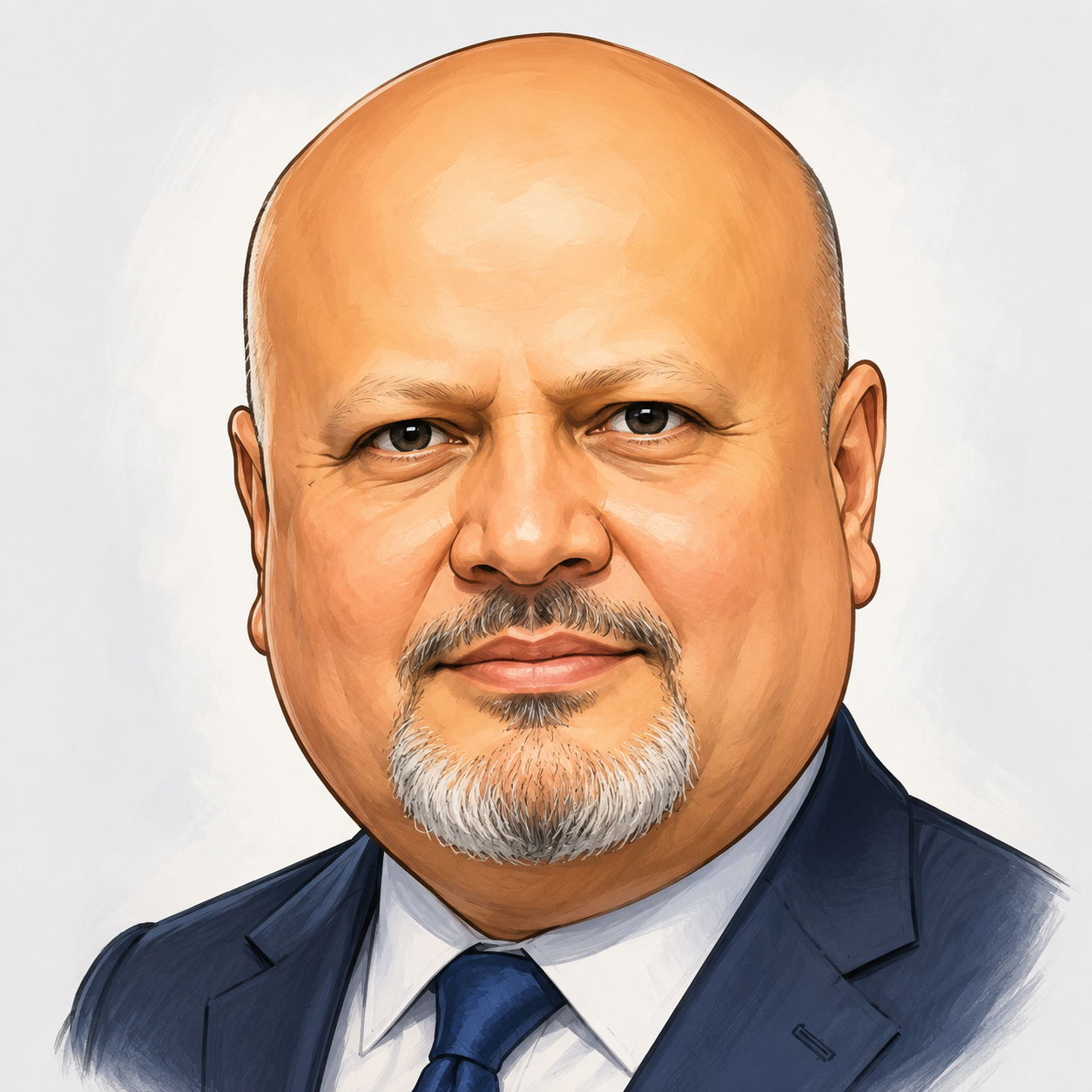
It is important to clearly separate proceedings related to the ICC Prosecutor Karim Khan’s personal and professional conduct from the Court’s judicial decisions. The process of dismissing or investigating Khan is a separate institutional matter and does not affect the legality of the arrest warrants.

Holding any Court official accountable for misconduct, when proven through independent, fair procedures that ensure the rights of all involved parties and safeguard whistleblowers and victims, is an institutional obligation that upholds the Court’s integrity without threatening its independence. Using individual accountability as a reason to discredit ongoing investigations or nullify independent judicial rulings is unacceptable.

Euro-Med Monitor rebukes any attempts to leverage Khan’s case to challenge the investigation into the situation in Palestine or the arrest warrants for Netanyahu and Gallant. The warrants were not issued by the Prosecutor in his personal capacity, but by an independent Pre-Trial Chamber that determined, following an evaluation of prosecution submissions, that there were reasonable grounds to believe both individuals bear criminal responsibility for crimes within the Court’s jurisdiction. Consequently, the enforceability and legal validity of the warrants do not depend on Khan remaining in office.

The removal of the Prosecutor does not disrupt the Court’s legal or institutional continuity, nor does it invalidate ongoing investigations or active arrest warrants, including those related to Palestine and Venezuela. Additionally, it does not absolve state parties from their obligation to cooperate fully with the Court and enforce its judicial orders.

A transparent, independent, and competitive process is crucial for selecting a new Prosecutor. This process should be based on clear public criteria for competence, integrity, and experience, ensuring candidates undergo rigorous professional and ethical assessments. It must also shield the selection from political influence and conflicts of interest. The Court must guarantee continuous progress on all cases without delays or bias, avoiding the transitional period being used to disrupt investigations or expose them to pressure from the US and Israel, which could undermine accountability.

Concerning the legal consequences of the withdrawals, notifications from Chad and Venezuela to begin withdrawal procedures do not cause an immediate departure from the Rome Statute. Article 127 states that a withdrawal becomes effective one year after the UN Secretary-General receives written notification, unless a later date is specified. Until that time, both countries remain state parties with legal obligations, including cooperating with the Court and fulfilling its requests.

Venezuela’s withdrawal, even after it takes effect, does not remove the Court’s jurisdiction over crimes committed while the Rome Statute was in force for the country. It also does not end ongoing investigations or cancel cooperation obligations related to proceedings started before the withdrawal became effective. Similarly, Chad’s withdrawal does not impact the Court’s jurisdiction over Darfur crimes or disrupt cooperation processes initiated during its membership. Withdrawal does not erase individual criminal responsibility nor stop the Court from considering issues submitted before it officially took effect.

Chad, Venezuela, Niger, Mali, and Burkina Faso should reverse their withdrawal decisions, retract their notifications before they become effective, uphold their legal commitments, and collaborate with other States Parties to reform the Court and address operational issues, rather than undermining the international criminal justice system and depriving victims of one of the few accountability tools available.

Concerned states should fully cooperate in relevant cases and investigations. This includes allowing Court investigators access to victims, witnesses, information, and evidence, while ensuring the protection of victims and witnesses and the preservation of evidence. States must also avoid using withdrawal procedures that could hinder investigations or reduce accountability for international crimes within the Court’s jurisdiction.

The United States should stop its efforts to dismantle the Court and lift any financial sanctions and travel restrictions imposed on its judges, prosecutors, and associates. EU member states and other allies need to work together to implement legal, financial, and technical strategies that protect the Court and its personnel from sanctions and political influence, so it can continue to utilise the necessary services and resources to fulfil its responsibilities.

European state parties to the Rome Statute should turn their support for the Court into tangible actions by refusing to accept wanted individuals or allow their transit through their airspace. They must also ensure the arrest and surrender of such individuals on their territories, adhering strictly to legal obligations, including executing arrest warrants for Netanyahu and Gallant without bias or political influence.

Euro-Med Monitor calls on state parties to review national legislation and adopt clear, binding protocols for executing arrest and surrender requests, as well as for handling transit, landing, and official visit requests by wanted individuals, thereby preventing procedural loopholes from being exploited to protect them.

It is vital to persist in investigating the situation in the State of Palestine, covering crimes in the Gaza Strip, the West Bank, and East Jerusalem. This includes executing arrest warrants for Netanyahu and Gallant without bias or political influence and rejecting any efforts to interfere with or alter the investigation’s direction or priorities.

Euro-Med Monitor calls on the Assembly of States Parties to ensure a transparent, independent, and competitive process for choosing and electing the new Prosecutor. This process should be based on published criteria for competence, integrity, and experience, with candidates undergoing comprehensive professional and ethical evaluations. It is also essential to disclose the selection procedures, prevent political interference and conflicts of interest, and thereby protect the independence of the Prosecutor’s Office. These measures are vital for maintaining the trust of victims and Court staff, and for ensuring ongoing investigations.

National judicial authorities should invoke universal jurisdiction as per their national laws, initiating independent investigations into international crimes and prosecuting suspects when jurisdiction is applicable. This approach broadens accountability opportunities beyond just the International Criminal Court. Euromedmonitor
Continue reading
Kareem Khan – Chronology of a Scandal: A View From Amman

By Saleem Ayoub Quna

Another somber episode in the ongoing Middle East saga is about to be quietly scrapped by manipulative overt hands and emerging developments, that are no less than disappointing!

The story of the main character of this episode began long time ago in Edinburgh, Scotland, in 1970, when a child was born to a dermatologist Scottish mother and a Pakistani father of the same trade!

The child was named Kareem Asad Ahmad Khan, who grew up to educate himself in Law, later to pursue a judicial career, until he landed as top job in The Hague, the Netherland, in 2021, and eventually becoming the Chief Persecutor of the International Criminal Court (ICC).

It was at this juncture that he replaced Ms. Fatou Bensouda, a lady of Gambian origin, who was seeking to investigate the never-ending tragic situation in Gaza and the West Bank under the Israeli military occupation.

Scuffle With Mossad

Bensouda stepped down after 17 years of service at the ICC, including the last nine years as Chief Prosecutor. On her point of departure, she made it clear that the Israeli head of intelligence, Yossi Cohen, met her more than once and told her to drop the charges she was making against Israel’s actions in the two Palestinian territories, but she would not bow, until she officially resigned on 15 June, 2021.

And so since the beginning of his new appointment the new chief prosecutor, and like his predecessor, Khan was charged of continuing to investigate cases, situations and/or individuals suspected of offenses such as genocide, war crimes, crimes against humanity and aggression, where and whenever, they occurred, whether in Ukraine, Darfur, Belarus, Afghanistan or in Gaza and which indeed become his nightmare, magnified by an Israeli genocide on all accounts that began on 7 October 2023 and lasted for 2 years, 9 months and more, and was declared ‘De Jure’ in October 2025.

No one warned Mr. Khan that he was stepping into a thick minefield, or if they did, he would only listen to his heart and conscience! For that, he must have been bracing for the worse, for himself, and probably for the thousands of war victims he was investigating.

The war in Gaza led to the death and injury of hundreds of thousands of Palestinians, (nearly 75,000 dead and more than 200,000 injured), whereas for the Israelis, they suffered 1200 dead and at least over 5000 injured.

So, in May 2024, Khan adopting a “balanced” position despite the flagrant disparity between the two sides on all levels, announced the arrest warrants for five main individuals directly involved in Gaza war: Israeli Prime Minister Benjamin Netanyahu and his Defense Minister Yoav Gallant, and the top three leaders in Hamas: Yehya Sinwar, Mohammd Dief and Ismail Haniyeh.

Days after the issuance of these arrest warrants, the name of a certain local female employee (known only as Sarah) suddenly popped up at the ICC, as the alleged victim of sexual harassment at the hands of non-other than the honorable Chief Prosecutor, Kareem Khan!

In an orchestrated follow up, the US Treasury Department in February 2024 imposed sanctions on Khan, after President Donald Trump sanctioned the ICC judges for issuing the said arrest warrants against Netanyahu and Galant.

And in May 2025 Khan stepped down as Chief Prosecutor due to the said allegations of sexual misconduct, and was suspended pending a vote by the state members of the ICC.

In July 2026 Khan was ousted from his post as 82 out of 125 ICC member states voted, in secret, in favor of his dismissal!

As for the Palestinian leaders who were also involved in that war, Israel took things in their hands and ended the life of the three Hamas leaders: Mohammd Deif was killed in Khan Younes on 13 July 2024, Yehya Sinwar killed in the same city on 16 October, 2024 and Ismael Haniyeh was assassinated in faraway Tehran on 31 July, 2024.

The question now is whether the candidate for the Chief Prosecutor post at the ICC, will follow suit in the footsteps of his two predecessors, regarding the unfinished business of atrocities and war crimes around the globe, or will he/she be somebody of a new breed of international prosecutors?

Soon we may have a clue! But personally, I am not optimistic!

Continue reading
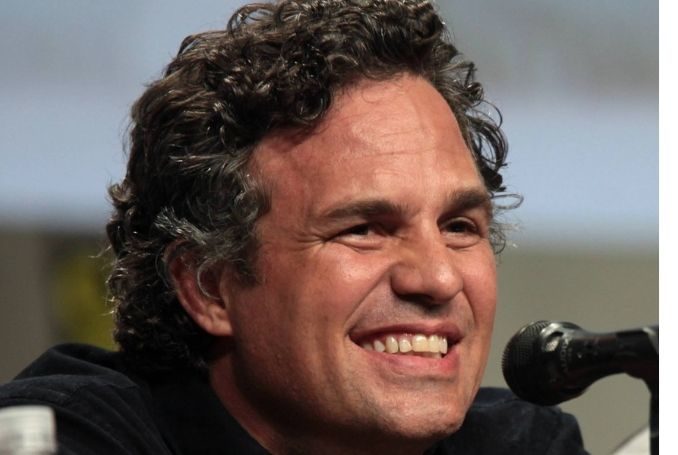
Mark Rufffalo Calls Netanyahu ‘a Murderous Maniac’

American actor Mark Ruffalo issued a sharp rebuke of Israeli Prime Minister Benjamin Netanyahu, asserting that the removal of the International Criminal Court (ICC) chief prosecutor cannot hide his atrocities in Gaza.

“You are a murderous maniac Benjamin Netanyahu,” Ruffalo wrote on US social media company X on Sunday.

He argued that lobbying to remove Karim Khan, who issued the arrest warrant for Netanyahu in 2024, does not mean “the war crimes disappear or your guilt is assuaged.”

Ruffalo maintained that the Israeli leader “will not lobby history” and will always be remembered for his actions. “You will not outrun justice.”

The actor’s comments followed Netanyahu’s welcoming of the removal of Khan. Member states of the ICC voted on Friday to dismiss the chief prosecutor over sexual misconduct allegations, which Khan denies.

Khan issued warrants for Netanyahu and former Defense Minister Yoav Gallant for war crimes and crimes against humanity in an offensive that has killed over 73,000 people in Gaza since October 2023 and has destroyed the enclave.

Ruffalo, one of Hollywood’s most outspoken voices for Palestinian rights, has frequently labeled the situation in Gaza as genocide and ethnic cleansing, a finding also supported by a number of UN agencies and rights groups. Anadolu

Continue reading
Many Faces of Colonialism

By Ismail Al Sharif

“I don’t admit that a wrong was done to the Native Americans in America or the Blacks in Australia. Rather, stronger peoples of a higher standard than the rest of the world came and took their place… That’s the way of life” – Churchill.

Last 26 August, US ambassador to Turkey—and President Trump’s special envoy to Lebanon—went up to the press conference podium following the US delegation’s meeting with Lebanese President Michel Aoun. In a familiar scene repeated in world capitals, journalists in the crowded room rushed to ask their questions simultaneously, all seeking direct answers from the ambassador.

This time, however, the ambassador confronted the Arab journalists addressing them with a tone of arrogance filled with contempt. He said: “The moment things turn into chaos, as if you were behaving like animals, we will leave immediately. Behave in a civilized manner; this is the essence of the problem in this region.” He then reiterated: “Please remain calm… The moment things devolve into animal-like chaos, we will withdraw immediately.”

His remarks sparked a wave of anger and condemnation. The Lebanese Journalists Syndicate demanded an official apology, while the Lebanese presidency issued a statement expressing its rejection of these offensive remarks. Ambassador Tom Barrack was later forced to backtrack, acknowledging his use of the term “animal” was inappropriate.

But Barrack is merely a recurring example of a colonialism that has not changed. He reminds us of Leopold II, King of Belgium, who displayed Africans as exhibits in humiliating human zoos. He is no different from the ex-Israeli Defense Minister Yoav Galant, the war criminal who called Palestinians “human animals.”

He is a natural extension of a deeply-rooted colonial mentality, embodied in the Sykes-Picot Agreement, which divided the Ottoman Empire’s legacy as spoils of war, or the Berlin Conference, when Bismarck distributed the African continent as gifts among the European colonial powers. The bitter truth is that colonialism’s view of us has never changed.

In the past, they labeled us as barbarians and savages and described our peoples as backward and our races as inferior. These old colonial terms evolved, cloaked in glittering and attractive slogans such as sustainable development, good governance, spreading democracy, protecting human rights, promoting reform, fighting terrorism, and establishing peace. But the essence and ultimate goal remained the same: Plundering our wealth and tightening control over our peoples.

In the Belgian Congo under Leopold II, in the late 19th and early 20th centuries, rubber-mining companies imposed mandatory production quotas on African villages, and anyone who failed to meet the required quota had their hands amputated as punishment.  Today, the same scene is being repeated in different forms: A million Iraqi children being killed to control oil under the false pretext of “weapons of mass destruction.”

In Gaza, the most heinous crimes of modern genocide are being committed to plunder gas resources, simply because Hamas dares to challenge Western hegemony and refuses to submit to it.

Barrack represents the naked face of colonialism, without embellishment or falsification; he is the blunt and frank expression of the Western view of us. In an interview with National News on 22 September, he stated with shocking clarity: “We don’t trust any of you; our interests are incompatible. The term ‘ally’ is inaccurate in describing our relationship with you, but our relationship with Israel is completely different; it is an exceptional and emotional relationship. As for peace, it is just an illusion that will never be achieved. Might makes right, and I personally oppose the establishment of a Palestinian state.”

In a subsequent statement to Al Jazeera, Barrack went further, saying with disdain: “There is no such thing as the Middle East; it is just a collection of scattered tribes and villages.” As for the countries you claim exist, they were created by the British and the French.”

Barrack’s statements may have been intentional and deliberate, aiming to reveal the true face of the colonial project, as part of an American strategy to pressure the Arabs in the context of redrawing the map of the region. Perhaps the deeper goal behind this rhetoric is to implant concepts of backwardness, impotence, and division deep within our collective consciousness, so that we internalize and believe in them, and thus act accordingly, making it easier for colonial powers to subjugate us and impose their control over us.

The late intellectual Edward Said expressed this truth profoundly when he said: “The most dangerous form of domination is not direct military occupation, but rather internalizing and believing the stereotype that the colonizer paints about us.” From this perspective, every word Barrack utters is not merely a passing blunder or a spontaneous slip of the tongue, but rather a clear embodiment of a deeply rooted colonial mentality that views Arabs, Muslims, and all other oppressed peoples of the earth as inferior and worthless to Westerners.

Similarly, the late intellectual, thinker and activist Frantz Fanon, and one of the prominent pioneers of anti-colonial thought, emphasized that true and most dangerous colonialism begins when we view ourselves through the eyes of the colonizer. Therefore, the first and fundamental step on the path to true liberation is to reject these imposed terms, which seek to define our inferior status and portray us as nations of lesser value and civilization than others.

We are not merely the “Middle East,” the “Third World,” or the “developing countries,” as they like to classify us. We are an ancient nation with deep roots in history. We are the bearers of one of the greatest and oldest human civilizations, the Arab-Islamic civilization, with our authentic and deeply-rooted identity, our immortal Arabic language, our deeply-rooted culture, and our history spanning thousands of years. We have made sublime civilizational contributions to the progress of humanity as a whole, and we are a beacon that has illuminated the paths of science, thought, knowledge, and enlightenment for the world.

This article by Ismail Al Sharif was originally written in Arabic for the Addustour daily.

Continue reading
Killing Gaza Slowly

By Tarek Bae  

OPINION - Slaughter dressed up as humanitarian aid: So-called Gaza Humanitarian FoundationFile Photo

“Gaza is on the verge of economic and humanitarian collapse. People live day to day, always at risk from hunger and disease,” notes a UN report. Yet these words were written not in 2025, but by the Independent UN Commission of Inquiry on Gaza in 2019.

Israel has enforced a blockade on the Gaza Strip since 2007. No one and nothing enters or leaves without Israeli permission, including at the crossing to Egypt. Every import and every exit requires an application to Israeli authorities. Human Rights Watch has repeatedly called Gaza the world’s largest open-air prison. Between 2017 and 2021, Israel blocked materials needed to maintain the water system. In 2017, the UN stated that 97% of Gaza’s water was undrinkable. Oxfam concluded the same year that Gaza was the most water-scarce place on earth.

From 2023 onward, Gaza became the target of genocide. From the first days, the blockade on essentials was radically expanded. On Oct. 8, 2023, then-Israeli Defense Minister Yoav Gallant announced there would be “no electricity, no food, no fuel,” because Israel was fighting “human animals.” The total blockade, combined with unprecedented bombardment, turned Gaza into the greatest humanitarian crisis of the 21st century.

During this genocide, international agencies, especially the UN, struggled to keep civilians alive. More than 400 distribution points tried to provide the bare minimum. Political pressure was needed again and again. There were 11 UN resolutions in all, 4 by the Security Council, 5 by the General Assembly and 2 by the Human Rights Council, calling on Israel to enable sufficient humanitarian aid. Israel dismantled every channel through which aid could be delivered. More than 900 humanitarian workers have been killed in Gaza since the genocide began. Never before in any war has the toll on aid workers been so high.

Netanyahu’s starvation strategy

By March 2025, the total blockade hardened into an open starvation strategy. “We have decided to stop all deliveries into Gaza, including food, water and aid,” Prime Minister Benjamin Netanyahu declared on March 2, 2025.

Barely two months later, in May, Israel and the US rolled out the so-called Gaza Humanitarian Foundation (GHF). This, Israeli officials said, would be the new and only route for humanitarian aid. Rumors of a new distribution mechanism had circulated since February, a design Israel was planning with US partners. Coverage of those plans was overshadowed by Donald Trump’s “Gaza Plan.” In a joint press conference with Prime Minister Netanyahu in Washington on Feb. 4, 2025, Trump publicly declared the intention of the US to “take over” the Gaza Strip. That the GHF sits inside this vision follows from statements by GHF officials. In June 2025, Executive Chairman Johnnie Moore Jr. said: “The United States will take full responsibility for the future of Gaza.”

It is not a purely American venture. Logistical coordination at the GHF is led by Israeli Brigadier General Yaakov Baruch. Despite its name, the GHF is not a foundation; it is a political-military organization. Alongside the Israeli military, mercenaries from the US are involved. According to The Times of Israel, Jared Kushner, son-in-law of Trump, is the chief architect of the idea. The US initially put €30 million ($35 million) into the project, with further pledges. In July 2025, Trump complained that no one had expressed gratitude. But what exactly should anyone thank the GHF, Israel, or the US for? GHF spokesperson Shahar Segal offers an answer. “It is frustrating to see people constantly blaming Israel, when in reality it is Israeli logistics that ensure humanitarian food reaches those who desperately need it. The GHF model is saving lives.”

Is that true? No. Among the familiar set of claims used to relativize the genocide is the allegation that allowing international aid only helps Hamas. Again and again, the line is that aid never reaches civilians. Another claim is that Hamas steals humanitarian supplies. The conclusion is clear: this is propaganda. Videos of armed guards on trucks or of lootings by armed gangs have been presented by Israel, in a misleading fashion, as Hamas seizures.

A review by the United States Agency for International Development examined 156 incidents of loss or theft of US-funded aid between October 2023 and May 2025. It found not a single piece of evidence that any of those incidents could be attributed to Hamas. In 44 cases, there were links to Israeli military activity. Reuters reported that Israeli military offices had produced no evidence of systematic theft by Hamas. The New York Times cited sources inside Israel’s government who acknowledged they had none either.

From 400 aid points to 4 militarized sites

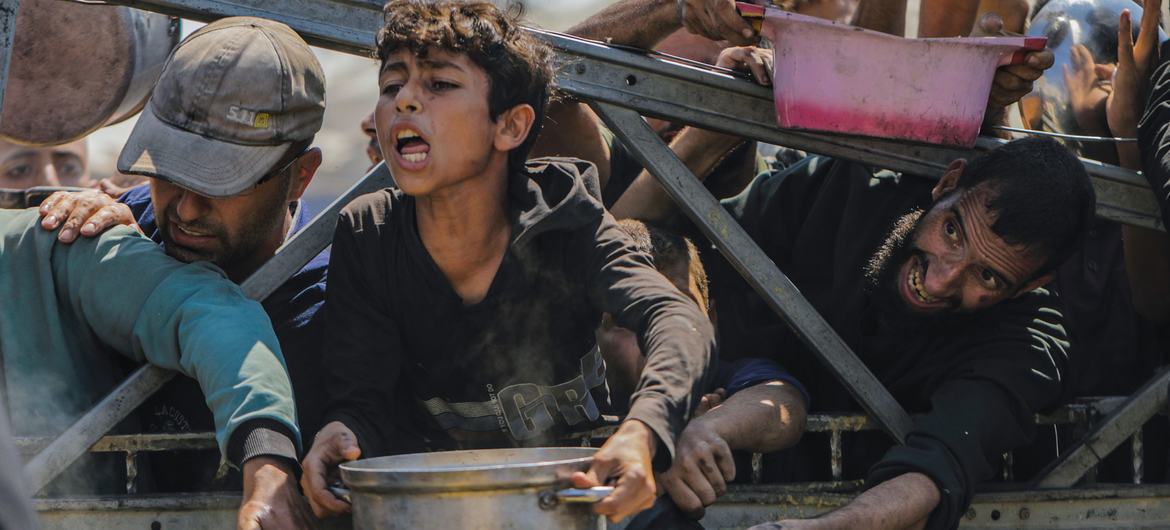
Is the GHF more effective at distributing aid? Not at all. Instead of the 400 international distribution points that once existed, Israel’s blockade and the imposition of the GHF have left only 4 highly militarized sites, with just 1 in the densely populated north. The UN calculates that Gaza’s basic humanitarian need amounts to around 600 truckloads a day. By its own account, the GHF moves at most 26 truckloads daily, roughly 4% of what is required. In a territory facing acute hunger, such an amount is not small—it is nothing.

According to the IPC Famine Review Committee, the whole of Gaza has been in IPC Phase 5 since July, the highest alert, a catastrophic food emergency. People in this phase are at immediate risk of starvation. More than 700,000 people have gone days without any food. The UN special rapporteur on the right to food, Michael Fakhri, was blunt: “Israel has made clear its intention to starve everyone in Gaza.”

What Israel and the US call a distribution mechanism and a foundation is, in the words of Doctors Without Borders, “slaughter dressed up as humanitarian aid.” Starving civilians are forced to walk up to 40 kilometers (25 miles) under the burning sun to reach GHF sites. Arrival does not guarantee help. More than 1,881 starving civilians have been killed at or near GHF distribution sites. The Israeli army regularly fires indiscriminately into the waiting crowd.

Philippe Lazzarini, Commissioner-General of UNRWA, calls the GHF “an alibi for the systematic starvation of Gaza.” For him, the logic is clear. Israel destroyed the humanitarian infrastructure in order to replace it with a facade organization under military control. OCHA spokesperson Jens Laerke sees in the GHF a “distraction.”

What does it distract from? Netanyahu has said the plan out loud. On May 11, according to the Israeli outlet Maariv, he tied aid to permanent expulsion. Those who receive aid at a given place should never see that place again and must evacuate. “The residents of Gaza whom we are expelling will not return. They will no longer be there. We will control the place. There is no other war aim. All other goals are mere eyewash.”

By the Israeli government’s own account, the GHF is a means to drive Palestinians out of Gaza or to let them die, by deliberately starving them, denying supplies, and cutting off humanitarian aid.

*The author is the editor-in-chief of the German journal itidal.de. The opinions expressed in this article are the author’s own and do not necessarily reflect Anadolu.

Continue reading