‘Can You Look in The Mirror After You Have Bombed an Entire Neighborhood?’

By Dr Ahmad Tibi

In the midst of the Spanish Civil War, some time in 1937, fascist dictator Francisco Franco’s regime bombed the Basque town of Guernica, with the help of Germany and Italy. In less than four hours, and after bombs weighing a total of 22 tons were dropped on it, the town was completely destroyed.

Hundreds were killed in the bombardment, which shocked the entire world and became a symbol of the cruelty of those times. Guernica was immolated in the fire of fascistic propaganda and in historical memory it is testimony to the fragility of justice during war. Pablo Picasso’s famous masterpiece, “Guernica,” has become a symbol of the destruction and horror of war.

In the bombing of Guernica, no pilot refused to obey orders. They flew – and carried out their job as dictated. Obedient soldiers. Eighty-seven years later, it is the same old song. No Israeli pilot has stood up and said “No.” “This is the limit.”

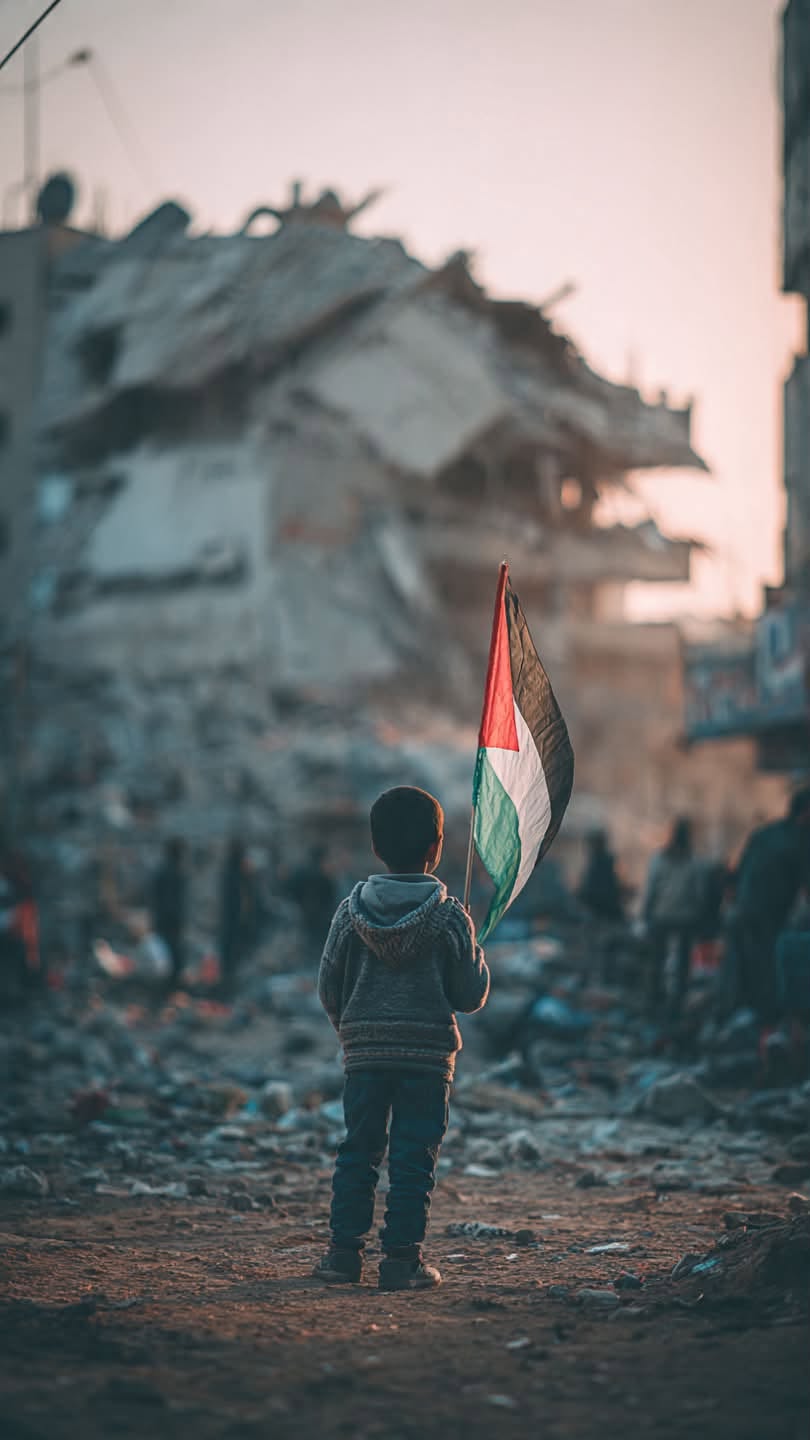
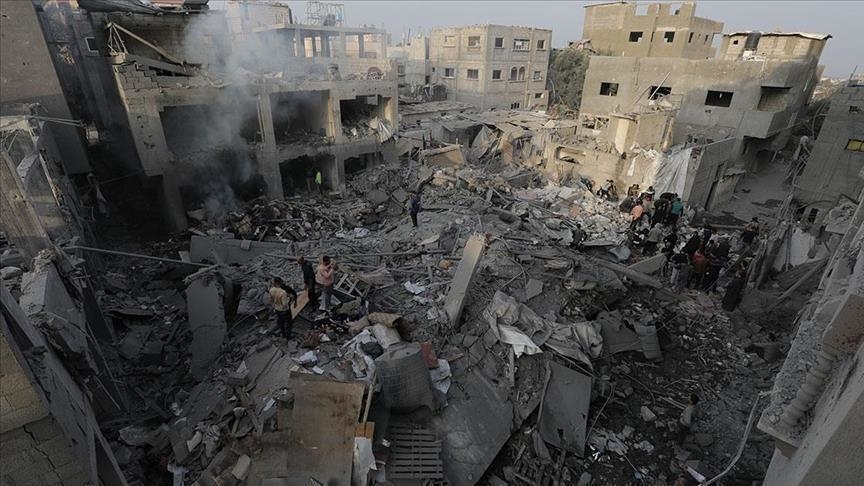
The bombardments in the Gaza Strip have hit and damaged hospitals, schools, kindergartens, mosques and churches, bakeries, public buildings and entire neighborhoods – leaving behind tragedies too numerous to elaborate – and not a single pilot has said “No.”

The pilots, who in their private lives are apparently considered by themselves and their surroundings moral men of integrity and values, sons of parents, fathers of children, good friends to their buddies – have made themselves a major part of the well-oiled killing machine that knows no mercy. Or limits.

During the past 14 months, and after multiple Guernicas in Gaza – human morality is facing yet another test. Since the war began, tens of thousands of children, women and men have lost their lives, and entire towns – like Beit Hanoun, Beit Lahia and Jabalya – have been wiped off the face of the earth in bombings by the IDF.

Cities comparable in population size to Herzliya and Dimona have been bombed into rubble. And the world, with its silence and its armaments and materiel support, is supporting this. The media in Israel wobbles between total denial and depicting the actions as heroic, justified, essential deeds.

How can a pilot be proud of this? How does he sleep at night? Killing 17,000 children and wounding about 100,000. Killing masses of civilians is not “self defense” even in the face of the horrors of the killing of dozens of children alongside hundreds of other civilians in the Gaza border communities.

We have arrived at an absurd rule: Nothing justifies October 7 – but in the name of October 7 everything is justifiable. There is no security justification for such massive bombing. No military action can justify bombing helpless human beings, or the eradication of Beit Lahia, Beit Hanoun and Jabalya from the face of the earth. This ethnic cleansing is reminiscent of the ethnic cleansing of 530 villages in 1948.

In the Israel of 2024, after 14 months of nearly constant bombardment, day and night – the voice of refusal has gone silent and is unheard. In the Jewish Israeli public, voices of protest and resistance are hardly audible.

The planes thunder and morality is silenced – and there are even those who are demanding yet more bombing and even more destruction. The few who refused to be conscripted this year – for example, Ido Ilam – and kudos to him for that – can be counted on the fingers of one hand, and the letters of refusal and resistance actions on the fingers of two, but no more than that.

Conscientious objection is entirely a personal gesture: It is a political act of resistance to the system. It is a refusal to commit war crimes in the name and for the sake of the system, a refusal to be part of a process of destruction and ruin. A refusal to kill. A refusal to steal. To destroy. To burn down a home. To rob. To deprive. And to ruin. But refusal only because of a judiciary reform is not enough.

Without refusal to take part wholesale military destruction, human society sinks ever deeper into its moral darkness, which has no limits.

“The West,” which for years fought for the values of democracy and human rights, is choosing to turn a blind eye to the horrors of Gaza. Under cover of “the right to self-defense” – as though Israel were not a regional military superpower and lacked might and means – the West is allowing it almost unlimited freedom of action and giving it a green light to destroy Gaza and deepen the occupation of the Syrian Golan Heights.

The ethnic cleansing taking place before our very eyes, and which is being broadcast live on social media, is made possible under the auspices of the Western countries that are enlightened only in their own eyes.

And the administration of the Democrats in the United States, led by President Joe Biden and Secretary of State Antony Blinken, will be remembered forever in disgrace, alongside Prime Minister Benjamin Netanyahu, as the destroyers of Gaza, perpetrators of ethnic cleansing and mass murder of women and children.

What will they say about this a few decades hence? What will you tell your children? Your grandchildren?

Ultimately, every individual’s morality – including a pilot’s morality – is measured by his deeds. What he agrees to do and what he refuses to do. Are you prepared to press the button that will kill scores of children? That will burn to death three generations of a single family? Can you look in the mirror after you have bombed an entire neighborhood?

Do you love the person the mirror reflects back to you in the morning? Gaza, like Guernica, did not ask to be a moral test and a symbol of the human cruelty of these times. Above all, it is a place, a home to millions of people – men, women and children – who want to live outside the walls of the biggest prison in the world. A prison that has become the biggest graveyard in the world.

Gaza, like Guernica, reminds us how important it is to resist and refuse to participate in injustice – loudly and clearly, even at a steep personal price. Where there is resistance, there is hope, and where there is hope there is a future for all of us.

Dr Ahmad Al Tibi is a Palestinian-Israeli politician and has been a member of the Knesset since 1999. This opinion was reproduced from the Israeli Haaretz.

CrossFireArabia

CrossFireArabia
Dr. Marwan Asmar holds a PhD from Leeds University and is a freelance writer specializing on the Middle East. He has worked as a journalist since the early 1990s in Jordan and the Gulf countries, and been widely published, including at Albawaba, Gulf News, Al Ghad, World Press Review and others.

Related Posts

A Middle East Whirlpool! View From Amman

By Saleem Ayoub Quna

Unlike the grey terrain of the Middle East, known for its harsh aridity and barren landscapes, the region’s still-unsettled, multi-front conflicts that erupted after the 7 October, 2023 surprise Palestinian assault on Israeli settlements around Gaza Strip, almost literally, become associated in the public imagination with the colour blue: The sea, its waves, its vessels and its strategic waterways.

The Palestinians called that watershed event Al-Aqsa Flood. Israel described 7 October as a second Holocaust. If the Palestinians deliberately chose the word flood for its religious and symbolic connotations, the Israeli way of describing it, indicated how serious and tough their losses and injuries were.

What followed was a succession of milestones and unprecedented developments across the Middle East. They continue to unfold dramatically, resembling the abrupt and unpredictable movements of hurricanes and tempests on the high seas.

Yet the side-conflicts and mini-wars that followed 7 October have neither followed a single pattern nor obeyed the same rules. Instead, events have moved in different, sometimes opposing directions — unlike the orderly circular motion of an actual whirlpool. It is almost as though every confrontation has chosen a course of its own: The predictable alongside the unpredictable, the rational alongside the seemingly illogical.

It therefore takes more than intelligent guesswork or clever political analysis to determine which direction these events will ultimately take, and which may prove more dangerous — not only to the region and its inhabitants, but also to the many international powers with interests at stake.

If we were to capture the current Middle Eastern scene in a single frame, we might portray it as an extraordinary, almost unbelievable collision of man-made tides, currents and sub-currents, all moving simultaneously through one increasingly turbulent sea.

Because the first shots fired on 7th October around Gaza strip, from a Palestinian point of view, came as a last desperate call and reminder of the injustice they are suffering, they soon found their echoes in the four corners surrounding it: In south Lebanon, Yemen to the south and Iraq and Iran to the east. Even to the west, there were international sailors who belonged to the Peace Flotilla, trying to bring medicine and food to the starving children of Gaza!

One of the most significant currents emerged on Israel’s northern front.

What initially appeared to be a relatively “controlled” confrontation between Israel and Hezbollah steadily intensified until September 2024, when Israel killed the party’s leader Hassan Nasrallah. Only a few months later came another geopolitical earthquake: The collapse of Bashar al-Assad’s government in Damascus in December 2024.

Each development sent another powerful current through the already boiling waters of the wider Middle Eastern whirlpool.

Then came an even larger artificial wave.

In June 2025, the United States launched Operation Midnight Hammer, striking Iran’s three principal nuclear sites at Fordow, Natanz and Isfahan while diplomatic efforts surrounding Iran’s nuclear programme were still underway.

Washington described the operation as an attempt to inflict decisive damage on Iran’s nuclear capabilities. Tehran responded with retaliatory action against American military interests in the Gulf.

But that was not the end of the storm.

On 28 February, 2026, the world witnessed another major escalation when the United States and Israel launched coordinated, large-scale attacks against Iran. The two allies acted jointly but gave their military campaigns different names: Washington called its operation Epic Fury, while Israel called its campaign Roaring Lion.

The strikes hit Iranian military infrastructure and senior leadership and inflicted substantial damage. Yet they failed to produce one of the most far-reaching political outcomes sought by US-Israeli advocates of the military campaign: The toppling of the Iranian regime.

And so the whirlpool continued.

Iran responded not simply through missiles and military retaliation, but by shifting the struggle towards one of the most strategically sensitive waterways on earth: The Strait of Hormuz.

Through restrictions on shipping, attacks on vessels and increasingly assertive claims over the waterway, Tehran transformed Hormuz into another major front in the confrontation. The strait — through which a substantial share of the world’s energy supplies traditionally passes — became yet another current dragging regional powers and the wider international community deeper into the turbulence.

Here, the metaphor of the whirlpool becomes more than literary.

Gaza, Lebanon, Syria, Iran, Yemen, Iraq, the Red Sea, the Arabian Gulf and the Strait of Hormuz are no longer easily separable theatres. Each produces currents that flow into the others. A military strike in one location generates political pressure somewhere else; an assassination changes the balance of power hundreds of kilometres away; a blocked shipping lane reverberates through global markets thousands of kilometres beyond the Middle East.

And all the while, new currents are being created faster than old ones can disappear.

What begins on the shores of Gaza does not remain in Gaza. What happens in Beirut, Damascus, Tehran or the Strait of Hormuz does not remain there either.

The Middle Eastern whirlpool has become too wide, too violent and too interconnected to contain its turbulence within the region itself.

And as it keeps spinning, its waves will continue to splash far beyond the shores of the Middle East — reaching, sooner or later, virtually every corner of the globe.

Conclusion: As long as the waters surrounding the Middle East remain crowded with warships, missiles, blockades, retaliatory strikes and the debris of foreign intervention, the region’s old whirlpool will continue to spin.

Continue reading
‘No Need For Your Crocodile Tears’
  • HebaHeba
  • August 13, 2026

By Ismail Al Sharif

“I’ll say it frankly: We should have exerted more pressure on Israel to adopt a different approach in Gaza” – Jake Sullivan, National Security Advisor to ex-President Joe Biden.

A striking phenomenon is recurring in American politics: Some presidents, cabinet members, and senior officials become more outspoken in their stances toward the Israeli occupation entity after leaving office, expressing regret for decisions that contributed to the injustice inflicted upon the Palestinian people.

This may be due to their liberation from diplomatic and partisan constraints, the pressures of Zionist lobbies, and the influence of tainted money, or perhaps their consciences awaken belatedly as they feel closer to death, realizing the enormity of the injustice they participated in or condoned.

Examples of this are numerous. Among the most prominent is former US President Jimmy Carter, who, after leaving office, shifted from a traditional pro-Zionist rhetoric to criticizing the Israeli occupation and its policies. Then there is Chuck Hagel, former US Secretary of Defense, who held the United States responsible for the Zionists’ continued aggression and described their practices as terrorism— but only after his retirement, of course.

Robert Gates, the former Secretary of Defense, also criticized war criminal Benjamin Netanyahu, calling him ungrateful.

More recently, Jake Sullivan, former National Security Advisor, and Antony Blinken, Biden’s lackluster Secretary of State, joined the ranks of those who have expressed regret. Both men have blood on their hands from the blood of Palestinian children and played a shameful role in supporting the Israeli entity during one of the greatest acts of genocide in modern history.

This was revealed in a lengthy investigation published in The New Yorker magazine last 20th July, titled “How Biden Enabled Israel’s Aggression Against Gaza – and Iran,” with the subtitle: “Top officials from the previous Administration now express regret over their failure to rein in Netanyahu.”

However, this regret will not absolve them for they knew full well that the Zionists were committing genocide in Gaza. On 5 March, 2024, five months after the start of the genocide, Mirjana Spoljarić, president of the International Committee of the Red Cross (ICRC), sent a confidential letter to President Biden. The ICRC, in addition to its humanitarian mission, is obligated under the Geneva Conventions to provide states with information and advice to help them avoid committing war crimes.

In her letter, Spoljarić reminded President Biden that the organization had condemned the “horrific” massacre perpetrated by Hamas against Israelis on 7 October 2023 and that it had continued to press the movement “tirelessly” for the release of the “hostages” it was holding.

However, this time she appealed to Biden with “grave concern,” warning that Israel, which had continued to bombard Gaza with heavy munitions since that October, was ignoring the ICRC in an unprecedented manner.

In her letter, she wrote: “The way Israel conducts hostilities is inconsistent with the laws of armed conflict, particularly the obligations to protect civilians, to distinguish between military objectives on the one hand and civilians and civilian infrastructure on the other, to ensure the humane treatment of detainees and the dead, to protect medical facilities and personnel, and to provide and facilitate the delivery of humanitarian aid.”

Despite these clear warnings, the United States remained a key partner in the genocide, providing weapons, money, and political and international cover to Israel. And now some of its officials come to shed crocodile tears for the children of Gaza!

I say to them: You have no right to repent now, after all these martyrs, after all these tragedies, to say: “We are sorry, we made a mistake.” You knew, and you had the power to pressure and prevent, but you chose to support, arm, and cover up. You bear the burden of what happened, and the blood of the children of Gaza will haunt you and pursue your names to the dustbin of history.

This piece by Ismail Al Sharif was originally published in the Arabic Addustour daily and reprinted in English in Crossfirearabia.com.

Continue reading

You Missed

Albanese Calls For World Force to Protect Civilians in Gaza, West Bank

Albanese Calls For World Force to Protect Civilians in Gaza, West Bank

40 Million Tons of Rubble: Gaza Ministry Faces Challenges in Removing it

40 Million Tons of Rubble: Gaza Ministry Faces Challenges in Removing it

Join The Queue For The Drops

Join The Queue For The Drops

‘My Way Out of Insanity’

‘My Way Out of Insanity’

The Child, Tree and The Dark

The Child, Tree and The Dark

Palestinian Dr Held Over Social Media Posts Suffers Heart Attack in Israeli Detention

Palestinian Dr Held Over Social Media Posts Suffers Heart Attack in Israeli Detention