Dr. Hassan Ahmadian: Trump Forced to Seek a Deal on Iran

Throughout the U.S.-Israeli war with Iran, President Donald Trump has constantly flailed in his campaign to portray it as a historic success. The blunt reality is that what Trump announced as a quick and easy war of regime change rapidly transformed into a quagmire. For the past two months, Trump has struggled to find a way to declare victory, alternating between claims that Iran is begging him for a deal and threats to destroy Iranian civilization.

On Thursday morning, Trump threatened to hit Iran “very hard.” Later in the day, Trump claimed a deal was now at hand, suggesting it could be signed as early as this weekend. “Based on the fact that discussions with the Islamic Republic of Iran have been brought to the highest level of Iranian leadership and approved, I have, as President of the United States of America, cancelled the scheduled strikes and bombings against Iran this evening,” Trump wrote on Truth Social. “Discussions and final points have been, in both concept and great detail, approved by all parties involved.”

Trump has made such claims more than three dozen times since the initial two-week ceasefire was signed on April 7, and behind the scenes, Iranian officials maintain they have stood firm in protecting their own red lines in any deal framework.

This time, however, the initial response from Tehran indicates that a deal may well take shape. According to Iranian officials and state-affiliated media outlets, a breakthrough occurred this week when Trump backed off a series of new demands and ultimatums and accepted a deal that would adhere to a framework ironed out in May in indirect negotiations between Tehran and Washington.

On Friday morning, Drop Site’s Jeremy Scahill spoke to one of the top Iran analysts, Dr. Hassan Ahmadian, Associate Professor of Middle East Studies at Tehran University. Since the war began, Ahmadian has become one of the most prominent Iranian commentators in the Islamic world because of his viral appearances on Al Jazeera Arabic.

“The United States has hit the hard rock of a formidable force that stopped its aggression and they have to deal with it,” said Ahmadian. “President Trump realized that he cannot change the failure, the military failure of the war into a diplomatic win.”

They discuss the events leading up to Trump’s announcement on Thursday, Iran’s red lines—including the unfreezing of assets and an end to the war on Lebanon—and how Israel will seek to sabotage a deal while continuing its overt and covert actions targeting Iran. They also discuss the economic impact on Iran and the domestic political situation.

CrossFireArabia

CrossFireArabia
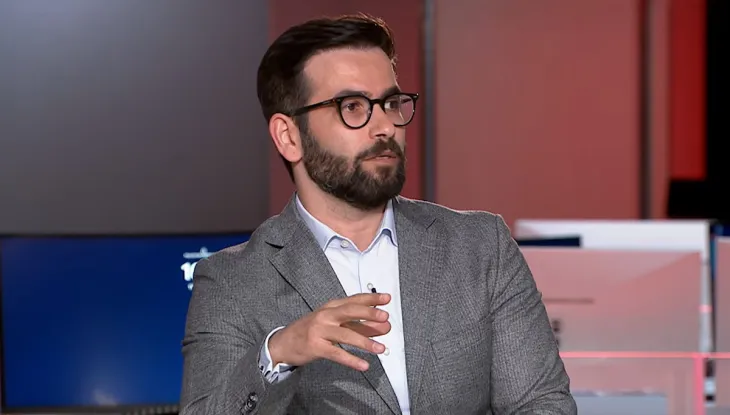
Dr. Marwan Asmar holds a PhD from Leeds University and is a freelance writer specializing on the Middle East. He has worked as a journalist since the early 1990s in Jordan and the Gulf countries, and been widely published, including at Albawaba, Gulf News, Al Ghad, World Press Review and others.

Related Posts

The Dress of Ramallah

Palestine Heritage:

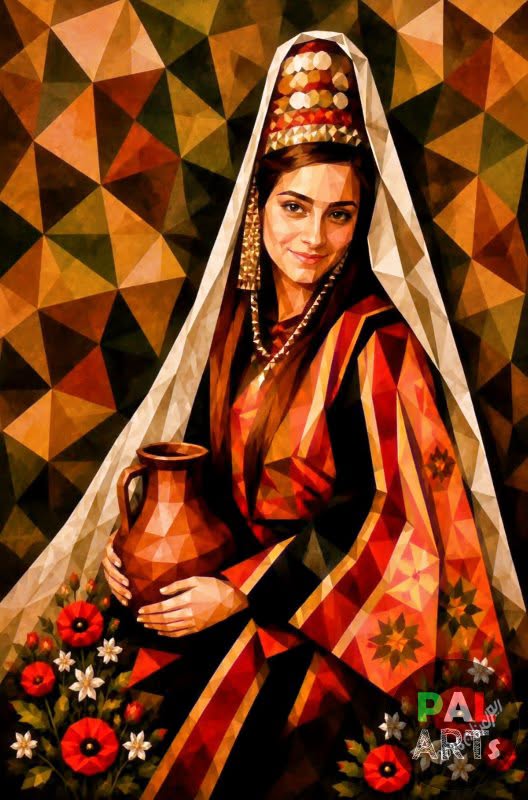
The image shows Zahia Merhej wearing the traditional Palestinian dress of Ramallah, accompanied by a traditional pottery jar.

The Embroidered Dress: The dress features intricate hand-embroidery that reflects exceptional craftsmanship and serves as a symbol of Palestinian heritage.

Headcovering: She wears a shawl or an embellished headcovering that drapes over her shoulders.
Beside her stands a pottery jar placed inside a basket—items that were once part of daily life.
#Palestinian_Dress
Coloring is by Mary Abu Assi | Show less

Continue reading
Salman Abu Sitta: Safeguarding Palestinian Memory

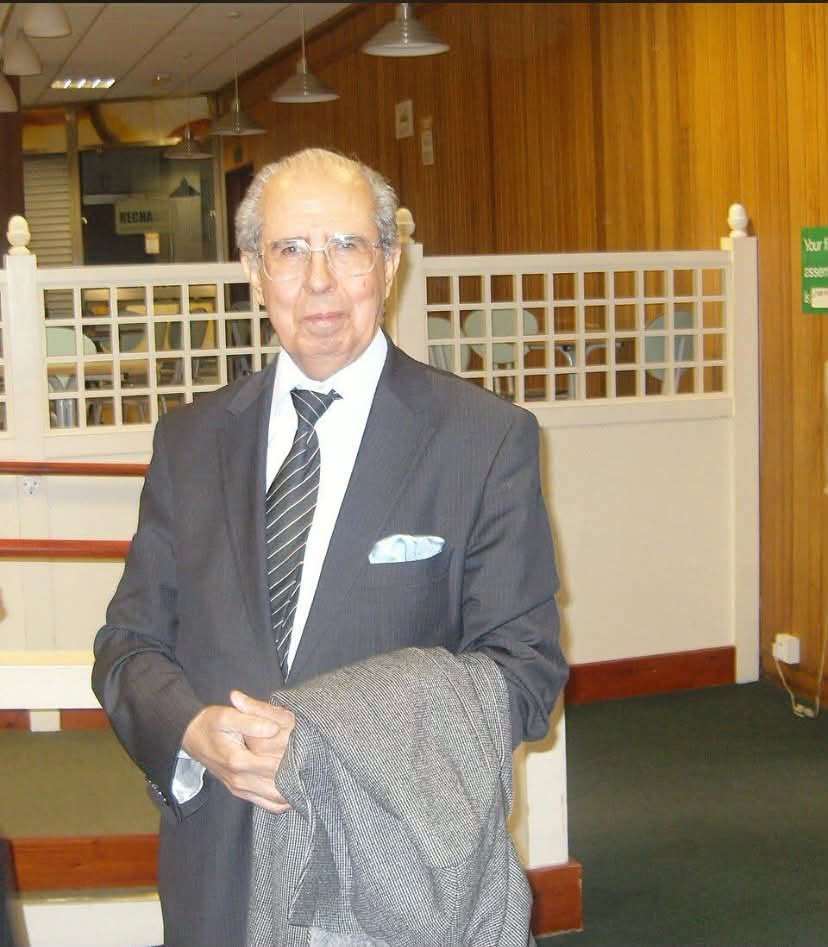
Salman Abu Sitta (b. 1937) is a Palestinian researcher born in the city of Beersheba; he is considered one of the researchers most deeply engaged with the issues of Palestinian refugees and the right of return.

Abu Sitta: A Note

Salman Abu Sitta was born in Beersheba, Palestine, in 1937. He earned a Bachelor’s degree in Civil Engineering from Cairo University in 1959 and a PhD in Civil Engineering from the University of London in 1964. He is a fellow of the Institution of Structural Engineers (UK), the Association of Professional Engineers of Ontario (Canada), and the American Society of Civil Engineers. He is also a former member of the Chartered Institute of Arbitrators (UK), the American committee for energy facility specifications, and the executive council for space structures. He has authored over 30 scientific papers and books on engineering and received multiple awards from the British engineering association.

He served as a professor at the University of Western Ontario in Canada and was an independent member of the Palestinian National Council from 1974 until the signing of the Oslo Accords in 1993. Additionally, he was a member of the Palestinian Cooperation body in Geneva, where he chaired the committee on refugees and UNRWA. He has authored more than 80 research papers and articles and published four books on the refugee issue in both Arabic and English. He also designed and illustrated a comprehensive map of all the villages and cities of Palestine, with three-quarters of a million copies distributed in both Arabic and English.

Documenting the Nakba


Abu Sitta spent over 40 years researching information regarding Palestine—both before and after the establishment of Israel. The mission he undertook went beyond merely chronicling the Nakba and documenting Palestine; he also strove to ensure that “the memories and identity of the homeland would never be lost.” Abu Sitta began his documentation work in his thirties after discovering the memoirs of the Turkish commander of Beersheba—which was under Ottoman rule at the time—a document dating back to the early 19th century. “That is where the research began, and it has never stopped since,” he says. “I have continued to gather every scrap of material regarding every inch of my homeland.”

Works
Atlas of Palestine 1917–1966.
The Right of Return: Sacred, Legal, and Feasible (2001), Arab Institute for Research and Publishing.
The Road to Return: A Guide to Displaced and Existing Towns and Villages and Holy Sites in Palestine (2007), Palestine Culture Foundation.
The Nakba Register 1948 (2000), Baheth Center for Studies.
Sources
Geographicus Rare Antique Maps biographical dictionary of cartographers | Salman Abu Sitta (in English), QID: Q133842860.
The Palestinian Return Centre. “Third Return Week” (in English). Archived from the original on 2023-12-12. Retrieved 2023-11-23.
Al Jazeera: Bila Hudood (Without Borders) – Dr. Salman Abu Sitta, October 10, 2007 [Broken link]; archived copy (March 4, 2016).
Interview with Al-Ahram newspaper [Broken link]; archived copy (September 24, 2013).


Continue reading

You Missed

The Dress of Ramallah

The Dress of Ramallah

Salman Abu Sitta: Safeguarding Palestinian Memory

Salman Abu Sitta: Safeguarding Palestinian Memory

Woman From Bethlehem

Woman From Bethlehem

Free Palestine

Free Palestine

Woman of The Vineyards

Woman of The Vineyards

Trumpaplooza! View from Amman

Trumpaplooza! View from Amman