Finally: Oman For The Nuclear Talks

Iran said Wednesday evening that Friday’s nuclear talks with the US are scheduled to be held in the Gulf state of Oman, confirming the timing and location of the planned negotiations.

On US social media company X, Iranian Foreign Minister Abbas Araghchi said the talks would take place in the capital Muscat at around 10 am (0600GMT) local time.

“Nuclear talks with the United States are scheduled to be held in Muscat on about 10 a.m. Friday,” Araghchi wrote, expressing gratitude to Oman for facilitating the meeting.

“I’m grateful to our Omani brothers for making all necessary arrangements,” he added.

His comments come as a White House official also confirmed Wednesday to Anadolu that the talks would be held in Oman, despite earlier reporting by Axios that the US refused a change in the site of the talks, previously set to be held in Istanbul, Türkiye.

Prior to that, Iranian media reported that Iran and the US were slated to hold indirect negotiations in Muscat on Friday, with a focus on nuclear-related issues.

Before Muscat, Istanbul had been proposed as the venue, following Türkiye’s successful intervention to help ease tensions between the two countries.

Iran calls non-nuclear issues ‘non-negotiable’

As for what will be discussed, Iran’s semi-official Mehr News Agency cited a source saying that Washington seeks to “raise issues outside the nuclear framework, including defense matters.”

“These demands are not only unrelated to the nuclear issue but are directly tied to national security and the country’s deterrent capability and are fundamentally non-negotiable,” the unnamed source said.

He added that Iran is “ready to negotiate within a defined framework based on mutual respect on nuclear matters,” but that the “insistence on excessive demands and raising issues beyond the agreement is the main factor behind any potential deadlock.”

Oman has previously served as a mediator in indirect contacts between the two sides.

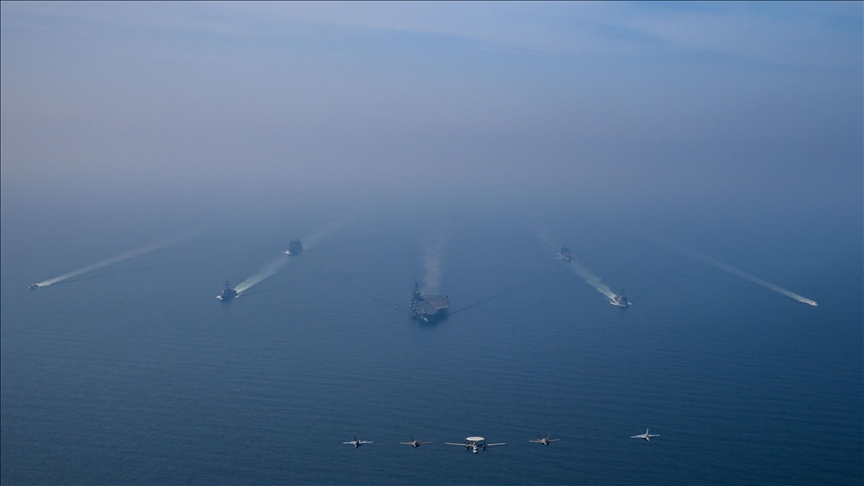
The planned talks come amid rising tensions between Washington and Tehran, fueled by an American military buildup in the Gulf and repeated threats of military action by US President Donald Trump.

In recent days, several countries have stepped in and offered to mediate between Tehran and Washington to ease tensions, with Türkiye playing a particularly active role.

The US and its ally Israel accuse Iran of seeking to produce nuclear weapons, while Tehran says its nuclear program is designed for peaceful purposes, including electricity generation.

Al Jazeera reported nine regional and Islamic countries pressured the Trump administration not to cancel and have the nuclear talks venue moved to Oman.

CrossFireArabia

CrossFireArabia

Dr. Marwan Asmar holds a PhD from Leeds University and is a freelance writer specializing on the Middle East. He has worked as a journalist since the early 1990s in Jordan and the Gulf countries, and been widely published, including at Albawaba, Gulf News, Al Ghad, World Press Review and others.

Related Posts

Israeli Official: ‘Life in The North is Dead’

Head of the Israeli Regional Council Moshe Davidovich expressed sorrow over the situation in the north, saying: “It’s a feeling we’ve experienced before, and we wish we could be rid of it.”

In an interview published by Israel’s Channel 14 on Sunday, Davidovich noted that “the residents of the north have been displaced and subjected to relentless shelling for nearly two years.”

Following the increasing number of Israeli soldiers injured in attacks by the Islamic Resistance in Lebanon in response to the aggression, Davidovich called on his government to take action to “minimize casualties.”

He also raised another important point, saying: “Everyone is now embracing the residents of the north and saying they are with us, but at the same time I hear that the government intends to cut the north’s budget.” He asked: “How can this be?” describing the Tel Aviv government’s actions toward its own residents as “neglect.”

Life in the North is Nearly Dead

Davidovich addressed the head of the occupation government, Benjamin Netanyahu, and Finance Minister Bezalel Smotrich, saying: “People here are unemployed, agriculture is nearly dead, and tourism has come to a standstill,” urging them to take action and not simply ignore the situation.

He criticized his government’s intention to “cut budgets,” saying: “We give generously, but I don’t want to hear that word. It’s inappropriate and incorrect, and ultimately, it represents a law that harms us.”

Regarding the settlers in northern occupied Palestine, Davidovich said it is not right for them to remain there, describing the situation as difficult after two arduous years, adding that a recurring scene is their “descending to shelters.”

Israel Surprised by Hezbollah’s Response

Israeli media outlets report that the “political leaders” in the occupation government are shocked by Hezbollah’s response and feel powerless in the face of it.

Other media outlets report that “living in the north is not easy, and the situation is more complex than it was during the 2023-2024 war,” while Yedioth Ahronoth asserts that Hezbollah is neither disintegrating nor collapsing, and consistently succeeds in maintaining an organized chain of command and control.

The Israeli newspaper Maariv acknowledges that the party “remains alive and active, launching rockets even deep into Israeli territory, and is not firing indiscriminately.”

Channel 12 admits that the Israeli army was surprised by Hezbollah’s attack despite warnings, and that its soldiers’ assessments of the party’s capabilities were incorrect. JO24

Continue reading

You Missed

Israeli Official: ‘Life in The North is Dead’

Israeli Official: ‘Life in The North is Dead’

White House Economic Council Head Says The Iran War May End in 6 Weeks, Wont Stay Months

White House Economic Council Head Says The Iran War May End in 6 Weeks, Wont Stay Months

At Day 16 of The War The Israeli Air Force Say The Dropped 10,000 Bombs on Iran

At Day 16 of The War The Israeli Air Force Say The Dropped 10,000 Bombs on Iran

IRGC Spokesman: Most of The Missiles Produced After The 12-Day War Are Yet to be Used

IRGC Spokesman: Most of The Missiles Produced After The 12-Day War Are Yet to be Used

IRGC Spokesman: Most the Missiles Launched in This War Were Produced 10 Years Ago

IRGC Spokesman: Most the Missiles Launched in This War Were Produced 10 Years Ago

Al Bahri: The Man Who Set Palestinian Theater

Al Bahri: The Man Who Set Palestinian Theater