
The Mecca Agreement: Is This The Beginning?

By Helmi Al-Asmar

In politics, not all agreements are created equal. Some accords are signed only to be forgotten, while others open a new chapter in history. The question that arises today is: To which category does the Mecca Agreement belongs to?

For more than a century, the Islamic world has lacked an independent security system capable of protecting its interests outside the sphere of influence of major powers. Alliances have come and gone, and coalitions have shifted, but security decisions have often remained hostage to international balances rather than stemming from regional will.

Today, three of the most important players in the Islamic world are coming together: Saudi Arabia with its political, economic, and religious weight; Turkey with its advanced industrial and military base; and Pakistan with its military strength, strategic expertise, and possession of nuclear weapons. The convergence of these elements within a single defense framework makes it difficult to treat the agreement as a mere passing news item.

But history also teaches us that texts alone do not create transformations. What gives any agreement its true value are the practical steps that follow: joint command, integration of military industries, intelligence sharing, unified defense systems, and regular exercises. Only then can it be said that the agreement has moved from paper to reality.

Conversely, this step will not pass without regional and international powers reassessing their calculations. The United States, Russia, China, Iran, and Israel will all interpret the agreement through the lens of its potential impact on the balance of power in the Middle East and the Islamic world.

However, the greatest challenge may not be external, but internal. Can the three countries overcome their differing priorities and interests and transform the political declaration into a long-term strategic project? This is the real test.

The Mecca Agreement may be just another milestone in the history of agreements, or it may be the first spark for building a different Islamic security system. Therefore, the question is not: What does the agreement stipulate? But rather: What will happen after its signing?

The answer will not be written in the final statement, but rather in the coming years.

Are we witnessing the beginning of a new chapter, or a major event destined for the archives of politics?

Only time will tell.

This opinion was originally written in Arabic and appeared in the Jo.24 website and republished in crossfirearabia.com
Continue reading
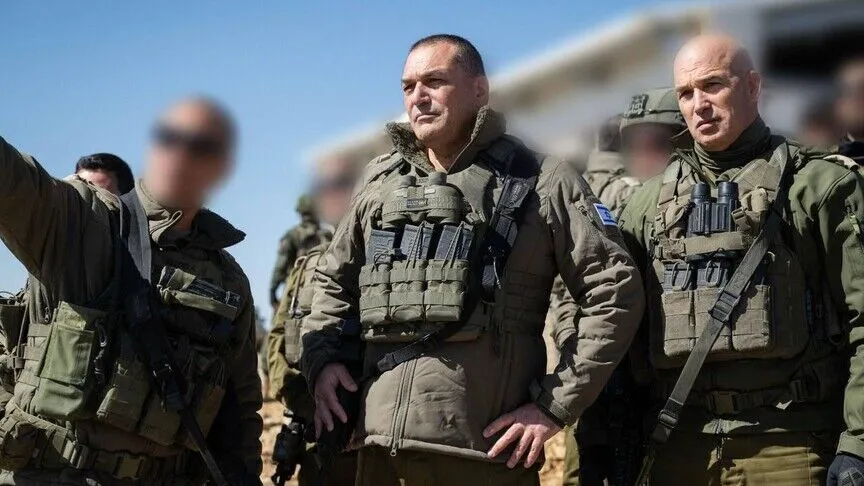
Is Eyal Zamir ‘Restricting’ Raids on Gaza?

Israel’s official Broadcasting Corporation (Kan) claimed, Tuesday, that Israeli Chief of Staff Eyal Zamir ordered a restriction on airstrikes in the Gaza Strip. It stated he is now stipulating his prior approval for targeted assassinations of specific Palestinians.

However, it is also thought that the latest directive does not mean a halt to the military strikes, allowing the current Israeli forces in Gaza to continue them to stop any “immediate threats,” according to unnamed sources in the Israeli army’s Southern Command.

This comes as a result of pressure exerted by the “Council for Peace” for Israel to stop its attacks, with the aim of seeking ways to implement the roadmap of the next phase of the ceasefire agreement.

On Monday, the High Representative of the Council for Peace, Nikolay Mladenov, and the Council’s advisor, US official Aryeh Lightstone, asked Israeli Prime Minister Benjamin Netanyahu to halt the airstrikes on Gaza, in accordance with plan put forwards by US President Donald Trump last year.

As a result Kan reported that Zamir has “directed, in recent days, a restriction in attacks on the Strip.”

It quoted an unnamed security source as saying: “The forces operating in the Gaza Strip will be able to continue thwarting any immediate threat should danger be perceived.”

The source claimed that assassinating Palestinians whom Israel alleges were involved in the 7 October, 2023 attacks, but who do not pose an immediate threat, would require prior approval from Zamir.

The agency also quoted an unnamed military source as saying that the Israeli army “implements decisions at the political level.”

However, and contrary to talk of restricting airstrikes, the Israeli army killed two Palestinians, Monday evening, in an airstrike that targeted their vehicle in the Sheikh Ajlin area, southwest of Gaza City.

The bombing came hours after Mladenov and his team called on Netanyahu to stop the attacks, marking the first Israeli airstrike following the request.

Israel also killed 18 Palestinians in separate airstrikes on the Gaza Strip on Sunday, one of the deadliest days since the ceasefire agreement came into effect.

On Monday, Egypt, Qatar, and Turkey affirmed that the continuation of Israeli attacks constitutes a violation of the agreement and undermines efforts to implement its second phase.

Trump announced, Thursday, that an understanding had been reached regarding the implementation of the next phase of the agreement, while the “Peace Council” published the text of the roadmap on Friday.

The roadmap stipulates Israel cease its military operations, followed by the deployment of the Palestinian National Authority’s Gaza Administration and the international stabilization force, and the commencement of a phased process for dismantling and storing heavy weapons and dismantling tunnels, concurrent with a phased Israeli withdrawal.

It also stipulates that the weapons be placed under the responsibility of the Palestinian Authority and not be handed over to Israel or any non-Palestinian entity.

However, the Middle East Peace Council stated in a statement issued after the meeting between Mladenov and Netanyahu, Monday, that a complete Israeli withdrawal beyond the “yellow line” will only occur after the dismantling of light and heavy weapons and tunnels is completed.

This differs from the text of the roadmap published on Friday, which links the dismantling of weapons to a phased Israeli withdrawal and requires Israel to first fulfill its obligations under the ceasefire agreement, primarily the cessation of military operations.

In its response, Hamas stated that it adheres to what was agreed upon regarding the implementation of the second phase, including the obligations of all parties, and that it awaits a clear and official response from Mladenov and the mediators.

Two days ago, the Israeli newspaper Haaretz quoted an unnamed Israeli source as saying that Tel Aviv had informed the “Peace Council” of its rejection of three points in the Road Map.

These points relate to the non-destruction of weapons collected from Hamas, the participation of Qatar and Turkey in verifying the implementation of the Road Map, and the denial of freedom of action to the Israeli army in areas whose responsibility would be transferred to the international stabilization force.

Israel insists on not withdrawing completely before the dismantling of all weapons and tunnels, while it continues to occupy 70 percent of the Gaza Strip, amidst ongoing airstrikes and the killing of Palestinians.

Since the ceasefire agreement came into effect on 10 October, 2025, Israeli military attacks killed 1,252 Palestinians and injured 4,120 others, according to the Gaza Ministry of Health.

The agreement came after two years of a war of genocide launched by Israel on 8 October, 2023, which left more than 73,000 Palestinians dead and 174,000 wounded, most of them children and women, in addition to widespread destruction of civilian infrastructure according to Anadolu.

Continue reading
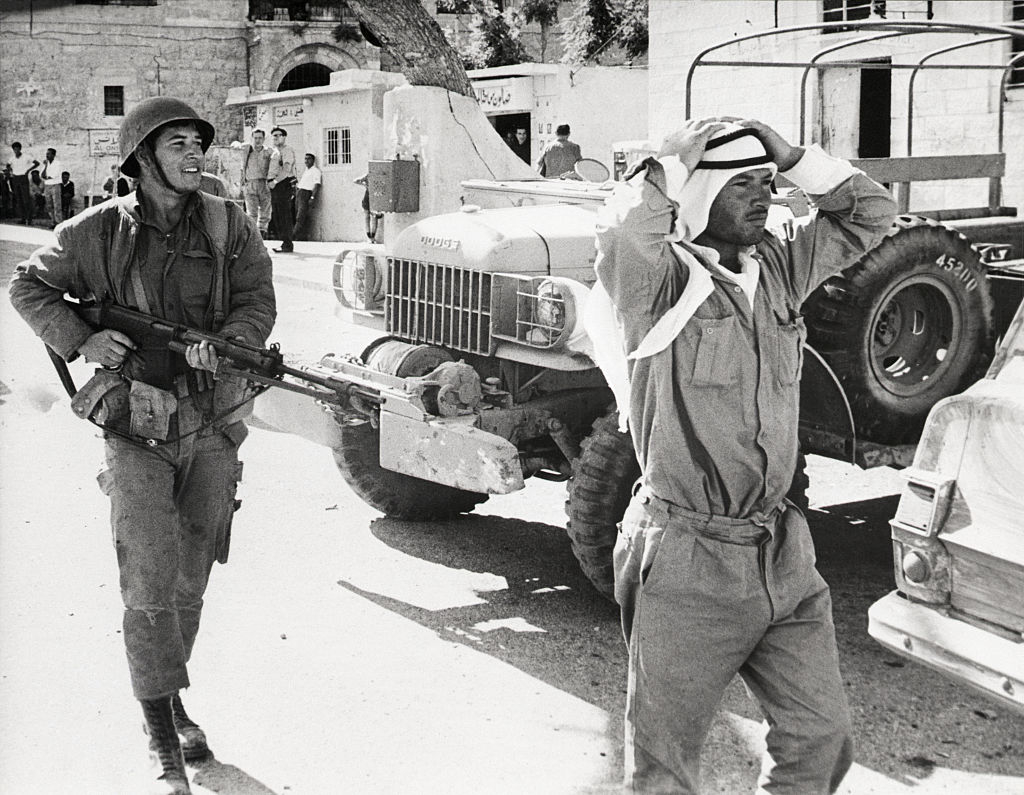
Memorizing The 1967 War Defeat!

By Dr Khairi Janbek

What can one say about the defeat of 1967 war, more than what the experts, the memoirs, and the active participants in it have said and written already, save from the eyes and ears of a child; for after all one was a child at the time and one must admit that growing up with defeat did have profound effect on one’s developing personality.

As it happened, in fact we were on a family holiday driving to Turkey when we heard the first actions in the war. By the time we crossed Damascus towards the north, the car radio was blasting with the advances made by the Arab armies on the path towards liberating Palestine.

However, by the time we reached an area close to the Syrian-Turkish border somewhere near Jabla in Syria, we discovered the the border was closed on the Syrian side and people including my late father were stuck around the big radio in the small roadside hotel talking about the destruction of the Israeli military forces, and the remarks that in a couple of days, Israel will cease to exist,

But low and behold, after a few days and by the time the border was opened, Egypt had lost Sinai, Syria, the Golan Heights, and Jordan the West Bank and Jerusalem; the jewel in the crown.

The car was tense, and for the first time I was disappointed, not because of the news of defeat rather, rather because I was no longer the centre of attraction for the family. As we entered Iskenderun in Turkey, a couple of young men crossing the streets, seeing our car number plate in Arabic, spat on the ground and said in Turkish; Pis Arap, meaning dirty Arab.

I didn’t undrestand Turkish at the time, until my father smiled bitterly and said, so we have just become dirty Arabs. In the small hotel in Iskenderun owned by a generous Armenian family, they brought us their transistor which could catch Syrian broadcasts and heard my father saying Nasser has resigned, and I was wondering how could he do that. For me, Nasser’s image was a cross between a king and an idol football player.

By the time we reached Ankara, it was all over. We were nothing in the eyes of the Turks at the time, but lying impotent Arabs. As the years passed, maturity set in as a strong slap in the face, with my childhood’s main scar left inside me, engulfing me with doubt, and disbelief, not only regarding what I now hear but also in what I see: with Arab politics to me, becoming just a mixture of cynicism, blatant lies, and regimes self-preservation.

The disaster from top to bottom was, unqualified military officers in Egypt, only accustomed to internal security and privileges were punching above their weight and carrying ranks which were above their undrestanding of warfare. Their ignorance was stark obvious when they knew about the attack and opted for absorbing the first blow before counter-attacking, not knowing they’ll have nothing left to counter with.

Jordan was squeezed between the hammer and the anvil diplomatically, though there were voices among the statesmen at the time urging not to participate in the impending whilst recognizing the perils, yet the decision to participate in the war and opening the Jordanian couldn’t be avoided because first of all the belief in Nasser’s victory held sway among the people, and secondly, to imagine an Arab defeat would not spare Jordan who will be blamed for this defeat due to the lack of giving support in the war.

In the case of Syria, how could an army in which the first officer who wakes up before the others and carries out a coup d’état, fight a war; and how could an army in which a general has to walk behind the coup d’état lower ranks whom are only concerned about preserving their own hold on power, conduct warfare? In fact the fall of the Golan Heights was declared by the Syria representative in the UN, 36 hours before it actually fell. And why was this? All in aid for withdrawing the army to protect Damascus.

Has anything changed? Everything has changed so that nothing changes!

Dr Janbek is a Jordanian writer based in Paris, France

Continue reading
Finally: Oman For The Nuclear Talks

Iran said Wednesday evening that Friday’s nuclear talks with the US are scheduled to be held in the Gulf state of Oman, confirming the timing and location of the planned negotiations.

On US social media company X, Iranian Foreign Minister Abbas Araghchi said the talks would take place in the capital Muscat at around 10 am (0600GMT) local time.

“Nuclear talks with the United States are scheduled to be held in Muscat on about 10 a.m. Friday,” Araghchi wrote, expressing gratitude to Oman for facilitating the meeting.

“I’m grateful to our Omani brothers for making all necessary arrangements,” he added.

His comments come as a White House official also confirmed Wednesday to Anadolu that the talks would be held in Oman, despite earlier reporting by Axios that the US refused a change in the site of the talks, previously set to be held in Istanbul, Türkiye.

Prior to that, Iranian media reported that Iran and the US were slated to hold indirect negotiations in Muscat on Friday, with a focus on nuclear-related issues.

Before Muscat, Istanbul had been proposed as the venue, following Türkiye’s successful intervention to help ease tensions between the two countries.

Iran calls non-nuclear issues ‘non-negotiable’

As for what will be discussed, Iran’s semi-official Mehr News Agency cited a source saying that Washington seeks to “raise issues outside the nuclear framework, including defense matters.”

“These demands are not only unrelated to the nuclear issue but are directly tied to national security and the country’s deterrent capability and are fundamentally non-negotiable,” the unnamed source said.

He added that Iran is “ready to negotiate within a defined framework based on mutual respect on nuclear matters,” but that the “insistence on excessive demands and raising issues beyond the agreement is the main factor behind any potential deadlock.”

Oman has previously served as a mediator in indirect contacts between the two sides.

The planned talks come amid rising tensions between Washington and Tehran, fueled by an American military buildup in the Gulf and repeated threats of military action by US President Donald Trump.

In recent days, several countries have stepped in and offered to mediate between Tehran and Washington to ease tensions, with Türkiye playing a particularly active role.

The US and its ally Israel accuse Iran of seeking to produce nuclear weapons, while Tehran says its nuclear program is designed for peaceful purposes, including electricity generation.

Al Jazeera reported nine regional and Islamic countries pressured the Trump administration not to cancel and have the nuclear talks venue moved to Oman.

Continue reading
Analysis: Israel Seeks “Most” Out of Ceasefire

Military-strategic expert retired Major-General Mamoun Abu Nuwar states the ceasefire in the Gaza Strip remains extremely fragile as Israel continues to control the ground, security corridors and the buffer zone east of the enclave.

Abu Nuwar told Jordan 24 the current situation on the so-called “yellow line”—with its construction, improvements, and the creation of earthen fortifications—clearly shows Israel wants to make this line a permanent reality and has no intention of withdrawing from east of Gaza and will continue to carry out airstrikes and artillery shelling under the pretext of “thwarting imminent terrorist attacks.”

He added Israel seeks to establish a new reality on the ground and reinforce its security presence in the eastern areas, while simultaneously continuing to bombard the western areas of the Strip. This, he clarified, threatens the continuation of the truce and reduces it to a mere shadow.

Retired Major-General Mamoun Abu Nuwar

Regarding the formation of an international stabilization force in Gaza, Abu Nuwar explained it would be “a key element in the transitional phase,” but its success hinges on several crucial factors, notably a clear UN and Security Council.

He pointed out that any international force wouldn’t succeed without first of all coordinating it with and agreement of Hamas. He said without this, such a force would be seen as an occupation force exposing it to armed confrontation with the other resistance factions.

He stressed such force must have specific and clear tasks limited to maintaining security and assisting in the reconstruction of Gaza, along with establishing rules of engagement and a unified command structure to prevent a slide into open conflict.

Abu Nuwar indicated disarming Hamas is going to be one of the most “significant obstacles” to a settlement, as Israel insists on making it a precondition for any reconstruction or withdrawal. This is while Hamas states it would only disarm if a just political settlement leading to the establishment of a Palestinian state is reached.

He added Hamas agreed in principle to the formation of a technocratic administrative committee to take over the administration of Gaza and to allow the deployment of a new Palestinian force currently being trained in Jordan and Egypt, as part of an international plan to manage the next phase. However, Israel rejects the presence of Turkish forces in any potential mission and prefers the participation of countries such as Azerbaijan, Malaysia, and Indonesia.

Abu Nuwar believes Israel will not withdraw completely from the Gaza Strip and will seek to maintain its security and military control over the border crossings and areas. He pointed out the continuation of this situation could lead to new waves of displacement of Palestinians, given the catastrophic humanitarian conditions in the south, particularly in Rafah and Khan Younis.

He indicated any attempts to rebuild or develop new areas in Rafah will fail unless the siege is lifted and full Palestinian control is restored. He noted the continued ambiguity surrounding the “yellow line” drawn by Israel east of the Gaza Strip suggests there is an attempt to impose a new geographical and political division in the enclave

Abu Nuwar concluded by saying that the road to a political solution or a comprehensive peaceful settlement is still long and arduous, especially with Israeli Prime Minister Benjamin Netanyahu’s lack of interest in the political process due to his internal electoral calculations. He stressed that the continuation of the current situation will make the ceasefire merely a cover for a new occupation reality, and will open the door to repeated clashes and numerous difficulties in implementing any peace plan or genuine reconstruction.

Continue reading





