Can Netanyahu Reshape The Middle East?

By Mohammad Abu Rumman

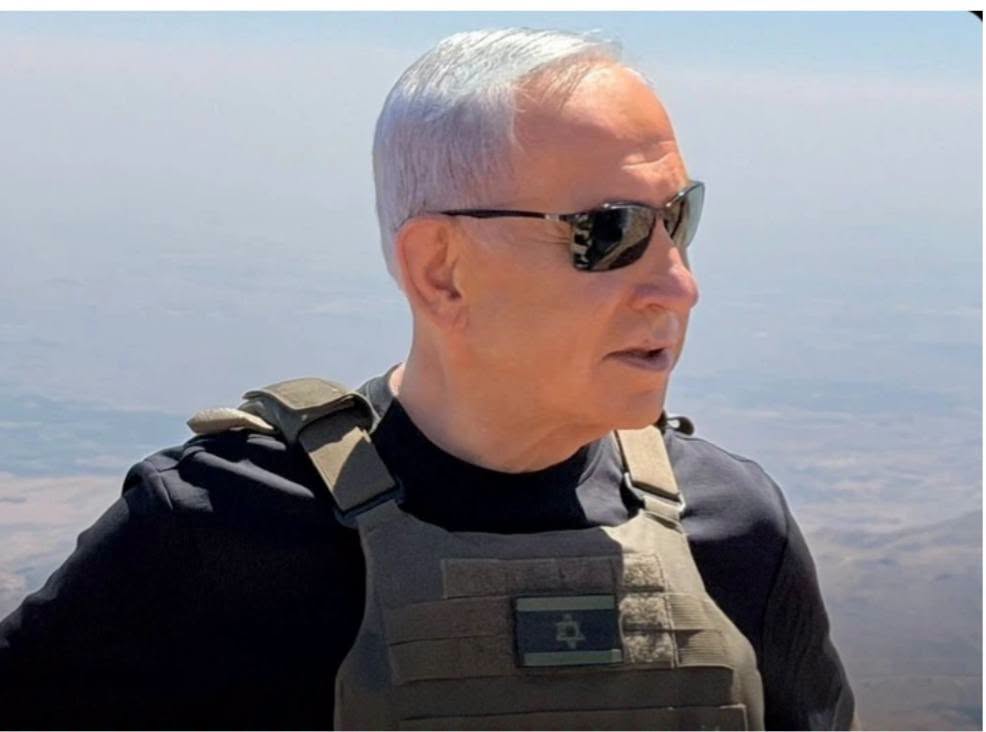
What happened on October 7th was not merely a surprise, bloody attack for Israel—it marked a watershed moment that redefined its security doctrine and the limits of its regional project. It was a moment strikingly similar to what the events of September 11th represented for the United States. Immediately after the launch of the Al Aqsa Flood operation, prime minister Benjamin Netanyahu wasted no time in drawing a direct comparison to 9/11.

This comparison was not just rhetorical or meant to rally emotions. It reflects a much deeper strategic vision. Netanyahu is using the shock of the attack to advance an old-new Israeli project: restructuring the region’s security and political landscape in a way that guarantees Israel near-absolute security in a demilitarised environment, free of any threats.

After the 9/11 attacks, US neoconservatives in the White House seized the moment to implement the “Project for the New American Century”—a vision developed by think tanks and figures like Paul Wolfowitz, William Kristol and Robert Kagan. Founded in 1997, the project aimed to reshape the global order and maintain American dominance, with Iraq, Syria, and Iran at the heart of its ambitions. September 11th became the ideal pretext to accelerate this vision through the invasion of Iraq and redrawing the map of the Middle East.

Today, Netanyahu is doing something strikingly similar. He sees the Al Aqsa Flood as a historic opportunity to accelerate his own regional vision—one that is no longer confined to Gaza but extends to southern Syria, Lebanon, Iran, Gaza again, and even the political dynamics in Turkey and several Arab states.

Those following Netanyahu’s rhetoric—and that of his ministers—can clearly see that Israel is no longer content with merely deterring its enemies. It now seeks to re-engineer the entire geopolitical landscape of the region. In southern Syria, Netanyahu stated clearly: “We will not allow any military forces threatening our borders to remain in southern Syria, and we will not return to the old equation.” Defence minister Yoav Gallant added that Israel will reshape the reality there to ensure its strategic security—which essentially means preventing the Syrian army from returning to its previous positions and enforcing a safe corridor between Sweida and the Golan Heights in line with Israeli interests.

In Lebanon, the objective has shifted from merely weakening Hizbollah to explicitly disarming the group entirely and eliminating its missile capabilities, which pose a direct threat to Israel.

In Gaza, the discussion is no longer about reconstruction or humanitarian relief. The conversation centers on the “day after”—meaning the complete removal of Hamas, disarmament of all resistance forces, and transforming Gaza into a powerless entity under full Israeli security control.

Even the proposed Palestinian state mentioned in the recent New York declaration is envisioned as a demilitarized one—to appease Netanyahu. Yet, he still won’t accept it. Israel has already moved past the idea of any sovereign Palestinian state. What’s “allowed”, according to current Israeli thinking, are fragmented cantons and voluntary or forced displacement of Palestinians.

As for Iran, Israel’s confrontation with Tehran is open-ended, aiming to reduce its missile capabilities and eliminate its strategic threat. It is also plausible that Israel’s strategic vision may extend to shaping the political scene in Turkey—possibly by pushing for a government more aligned with Israeli interests—and exerting pressure on certain Arab states, even those officially labeled as “friendly” to Tel Aviv.

This project is no longer tied to Netanyahu’s personal political survival. It has become close to a national consensus among Israeli institutions and political elites. Leaders like Yair Lapid or Naftali Bennett are unlikely to reverse course or return Israel to the pre-October 8th status quo.

What’s unfolding today isn’t a series of short-term security tactics. It’s a long-term strategic plan aimed at reshaping the regional balance of power and cementing Israel’s status as the undisputed regional superpower.

The author is a columnist for the Jordan Times

Continue reading
Iran-Israel: Making of a World War

By Dr Khair Janbek

We became accustomed for a while to the mutual bombardment of Iran and Israel for the first a couple of days. Then Israel started declaring that it had achieved its objectives whilst Iran maintained its own momentum, saying it is also teaching Israel a lesson.

But now the new flaring conflict is lasting longer than expected. We really don’t know for certain what are the objectives as the declared intentions keep changing on daily basis and the hidden objections tend to be irrelevant, at least for the time being because we have no clue about them.

What is certain is that neither Israel nor Iran are naïve to think that, a protracted campaign of mutual bombardment, is in their interest. The reality however, is that a war of attrition is not in their interest of either, and may serve the interests of the two other regional powers: Turkey and Saudi Arabia.

But would both Israel and Iran willingly allow Turkey and Saudi Arabia to replace their influence? This is not very likely, as we can clearly see both sides are trying their best to drag others into the conflict by turning it into a regional conflgeration, by dragging the US and the EU on one side, and the Russians, Chinese, and Pakistanis on the other.

One at this juncture must say that a regional conflict, even by unintended consequences may lead to a wider global conflagration, quickly bringing in world powers and states that will not sit by the sidelines.

On the face of it, anyone cannot miss the fact that bombarding Iran came on the first day of the end of the two-month grace period which the US gave to Tehran to reach an ‘ironclad’ nuclear agreement. So at least on the face of it, the whole issue is related to forcing Iran to come back to the negotiating table with the US albeit with a weakened position.

But then again, the contradictory statement of the administration in Washington could mean anything or nothing, implying for certainty that it had prior knowledge of the Israeli attack on Iran.

Another idea which was thrown into the arena in a flip-flop manner, is that of helping in the process of regime change, but if one can say anything, is that when the Iraq-Iran war erupted, it was still in the early days of the Islamic Revolution and there was strong opposition to the mullahs regime.

And rather than creating a possibility for a regime, the war created a united nationalist response against the then Saddam Hussein regime in Iraq. In a sense what started with a serious possibility of regime change ended up uniting the forces of the country.

Therefore, if the intention of the Israelis is regime change, then they better think twice about. Still, Iran is a country of more than 92 million people, with a territorial space of about 1.6 million kilometers so anything is possible. Just for interest, it is argued that Iran is 75 times the size of Israel.

So where do both parties go from here? One thing is for sure: One doesn’t know the extent of damage the two parties can do to each others’ nuclear arsenals. But if Israel feels it may not be able to destroy the Iranian nuclear infrastructure but can make it costly for them to re-start their programme, that would be naive because the Russians, the Chinese, and Pakistanis would be more than happy to offer their expertise.

One must add here however, that in the Near East, things can change very quickly.

Dr Janbek is a Jordanian writer based in Paris, France. He has contributed this article to crossfirearabia.com.

Continue reading
Middle East Psychosis

By Dr Khairi Janbek

As far as one is concerned, the Middle East has been for a long time a matter of balance of power overlapping with strategic reluctance to change its status quo. But the advent of US President Donald Trump is ushering a new era with all sorts of possibilities.

On the microcosm level for instance, Arafat’s Fateh movement in the PLO was checked in a formula of a balance of power by the leftists organizations as well as the Palestinian organizations sponsored by some Arab countries, the affiliation of all in the PLO created the sense of a balance of power.

However, with the emergance of the PNA and the affiliation of the Palestinian groups in it, albeit with variable influence, created a unit which under the balance of power notion, necessitated the creation of a check and balance on its power.

Consequently Hamas was created, and what seemingly appeared as contradiction between them, turned out to be a symbiotic relationship between them. Now, one cannot say with certainity what will happen next, however, if the objective is to maintain the balance of power by just weakening Hamas, this will require symbiotically weakening the PNA as well, but if the objective is to eleminate Hamas, the next step will be to eleminate the PNA.

As for the macro level, and as one often repeats, the Middle East, has at least for the last five decades was strategically governed by the famous triangle, Iran-Israel-Turkey, with the Arab world having little say in their own affairs , if at all.

However, since the fall of the Shah regime in Iran, the search started for a third angle to replace Iran in governing the Middle East, considering the open hostility of Iran towards West. Consequently some Arab countries jumped into the frey as possible candidates, like Egypt, then Qatar, UAE and Saudi Arabia. But as it seems, a preference for the old triangle was decided upon by the world powers, accepting the inconvenience of having to negotiate with Iran.

Now, we can see a new development that breaks the taboo of the old balance of power in the region.

Starting mid-way from the Biden administration, and with the start of the second Trump administration, the notion of balance of power by the usual triangle has turned into a balance of aggressiveness in the region, as Israel and Iran “bombard” each other, Turkey’s involvement in toppling Assad, and now the distinct possibility of confrontation with Israel in Syria, while being threatened itself by Iran if it cooperates in any possible American attack on Persia. Thus the stability which this triangle had sustained itself, is no more.

From appearances, at least how things look like: It seems Israel is being supported by Trump explicitly and by many other international parties implicitly, to be either the major power that has a say in Middle Eastern affairs. This means that Iran’s grip on the region will be curtailed through negotiations at least if not war; and here the symbiotic issue appears again, with Turkey’s role curtailed through pressures and/or and economic threats.

Here, as well, the aim is to designate Israel as only point of compass on the map of the Middle East, which Arabs are expected to flock to and normalise with.

In this case events will inevitably take a nasty symbiotic turn, meaning Iran will have to be attacked and taken out altogether with its surrogates from the power relations of the Middle East, and Turkey forced to take a more insular step from the affairs of the region, even with a regime change if required.

But we will have to wait and see what lies in store!

Dr Janbek is a Jordanian writer based in Paris, France.

Continue reading
The Middle East Octopus

By Dr Khairi Janbek

When we think of contemporary Iran, one always believes that the Arab Middle East had always been dominated by three Non-Arab American allies: Iran of the Shah, Turkey and Israel. One thinks that those “neighborhood police stations” were the guarantors of stability through their convergence, and at times contradictions in the age of Cold War and oil. However, the Shah of Iran was deposed and the anti-communist Cold War ended, but that didn’t mean that oil stopped becoming important nor that both Russia and China were no longer threats.

One would say, that the rehabilitation of Iran and possibly turning it into a negotiations partner aims at keeping the third angle of the police stations triangle going, because non of the Arab countries, no matter how much they tried, could never replace Iran, because no “Arab police station” is permitted to emerge as a third angle.

Having said that, it would be beyond naive to think that the expansion of Iran’s power and influence happened by stealth or escaped the notice of the US and NATO. After all, Iran grew to become a Red Sea country through its influence on the Houthis in Yemen, a Mediterranean country through its influence in Syria as well Lebanon through Hezbollah, and the major Gulf country through its supporters in Iraq. In fact this Iranian domination of space is what has created a common space between all its long arm organizations in the region.

Essentially, if we compare Iran to an octopus, all those various groups are its tentacles, and they all serve the purpose of Iran’s strategic interests, albeit not through a push-button approach, but through not taking any action which would not please their master Iran. Of course, this puts Iran in a strong position to be a major player in the region and an inescapable negotiations partner for the US, which is also convenient for the Americans, in order to remind their Arab allies who is their protector in a region policed by Turkey, Israel and Iran.

Of course, this takes us to the point of saying that, for all intents and purposes, for the Americans a trusted adversary is more important than distrusted friends, and that it would be absurd to think that all those long arms of Iran in the Arab world can be amputated by military means; they certainly can be weakened, but without the consent of Iran and without the right price, so long as it remains behind them, nothing much can change.

At this point, from what one can only see, is that no one in their right mind or otherwise, will permit a war to emerge in which Israel is pitted against Iran and the US as well as NATO putting all their weight behind Israel and forcing the Arabs to choose their camp. That would be the scenario of the end of the world as we know it , or with major civil wars in the Arab countries controlled by the tentacles of Iran, and no one wants that.

Dr Janbek is a Jordanian writer based in Paris

Continue reading
Israel is Exporting its “Crises” to Syria – Experts

Syrian political analysts are warning that Israel is seeking to export its internal crises to Syria, following its military failure in the Al-Aqsa Flood battle in Gaza. They add Tel Aviv wants to fuel regional tensions to divert attention from its worsening internal crisis.

Weakening Syria to unite the Israelis

Member of the Syrian National Dialogue Conference Abdul Nasser Hawshan believes the recent Israeli escalation “aims to prevent the establishment of a strong Syrian state and destabilize the region,” adding the Israeli occupation government is trying to unite the Israelis behind it to escape the increasing internal and international pressures it is facing.

https://twitter.com/Dylanjusti79850/status/1895386169812361434

Hawshan told Quds Press, the recent National Dialogue Conference held in in country witnessed a national consensus on the unity and independence of Syria, and the rejected partition projects as espoused by the Syrian Democratic Forces (SDF). He described such a project as a “separatist” one that “serves the Israeli agenda.”

He also pointed out that the Israeli incursions into southern Syria came “in response to this popular rejection of foreign plans.”

Druze position and rejection of Israeli intervention

Regarding the Druze community’s position in these developments, Hawshan explained that “some Druze leaders have adopted a discourse in line with the Israeli proposal,” but he stressed they “do not represent the Druze sect in general, which rejects any foreign intervention in Syrian affairs.”

He also denied the possibility of establishing the so-called Daoud Crossing, which links Israel to the areas under the control of the SDF, stressing “this project will not succeed under any circumstances.”

Irksome Turkey-Israel ties over the SDF

Political analyst Adel Hanif Daoud believes Israel is trying to exploit regional tensions to strengthen its position as an effective force, despite its escalating political and military crisis.

But Daoud warned that “any Israeli attempt to link the Druze and the SDF through the Tanf crossing could lead to an inevitable military confrontation with Turkey.” He noted Ankara considers the “Syrian Democratic Forces” a direct threat to its territorial integrity, and may resort to large-scale military intervention even if that leads to an international conflict.

He added the Druze leadership is divided between those who support Israel and those who are loyal to Damascus, but he expected that Druze leader Kamal Jumblatt would intervene to pressure the Druze community to reject the Israeli project.

As for the Turkish position, Daoud indicated that Ankara, as a member of NATO, has many political tools that it can use before resorting to the military option.

Military escalation in southern Syria

These warnings come in light of the escalation of Israeli military violations in southern Syria, as the occupation forces have intensified their airstrikes on sites in the Damascus countryside and Quneitra in recent weeks, targeting military and civilian infrastructure. Unprecedented Israeli military movements were also monitored along the occupied Golan Heights, amid reports of limited ground incursions.

In this context, Israeli Prime Minister Benjamin Netanyahu escalated his rhetoric, stressing that his army would not allow the Syrian army or its allied forces to enter southern Syria, stressing Tel Aviv would not back down from its control of Mount Hermon, considering it a “strategic part of Israel’s national security.”

Damascus rejects Israeli aggression

For his part, Syrian President Ahmed al-Sharaa stressed his categorical rejection of these attacks, considering them a threat to regional security and a continuation of the policies of aggression against Syria’s sovereignty.

In light of this escalation, Syria continues to defend its sovereignty and rights, while calls are increasing for the international community to act to stop Israeli violations, amid growing complications that threaten the stability of the entire region.

Continue reading