Religion, Nationalism, Middle East Style!

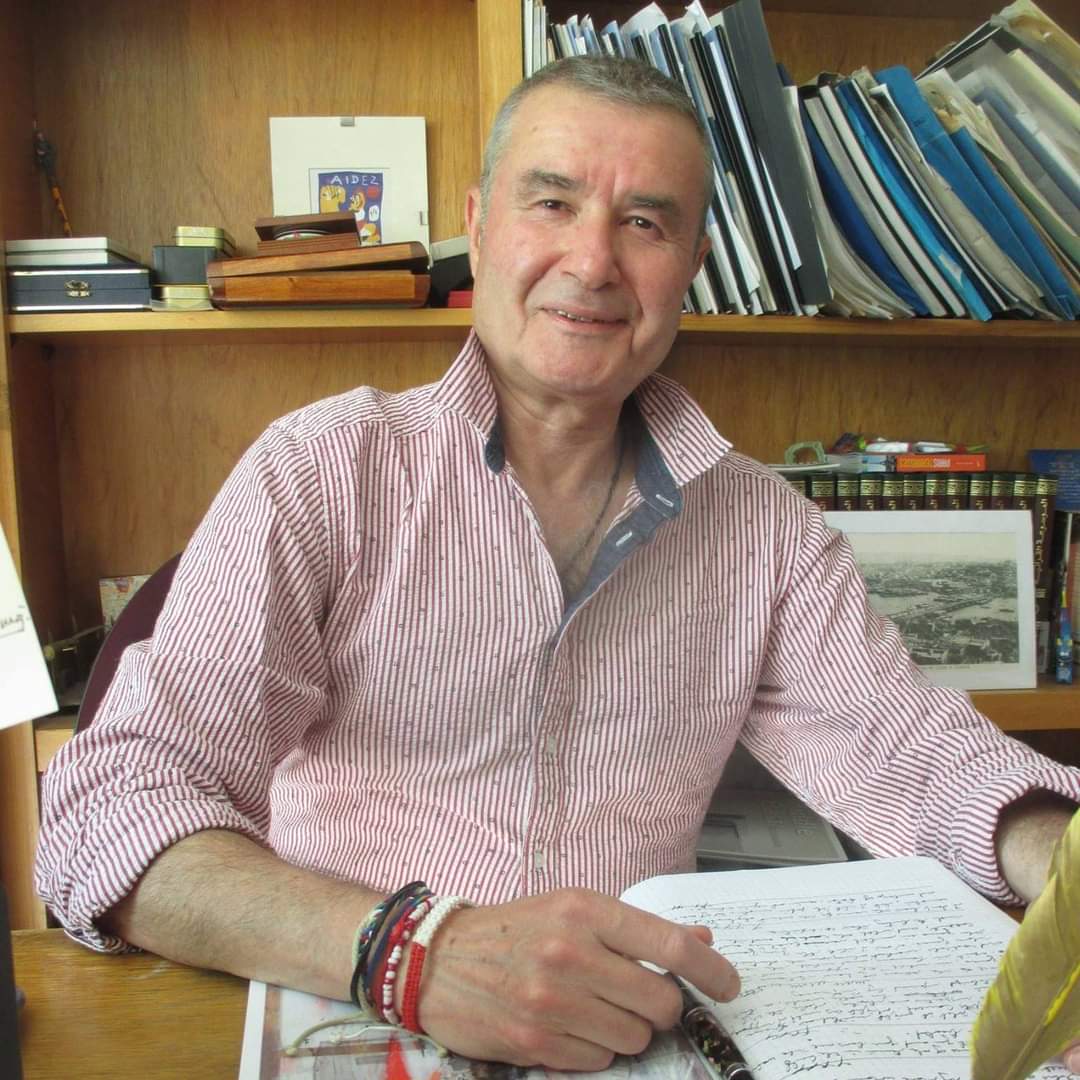
Dr Khairi Janbek 

When you consider yourself as a member of the greatest group in existence, irrespective of its characteristics, it is only natural to assume that the values of this group are the greatest, and consequently, the only valid values which are permissible to hold.

However, we must not delude ourselves, because religion cannot be neatly put in the pigeonhole as a moral, or personal spiritual force, for the very ancient nature of organised religion has given it a powerful role in defining peoples personal and group identities, 

in other words, religion plays a national as well as personal, moral, and spiritual roles.

Nationalist and religious identities are both manifestations of the need for belonging, as people have the basic need to belong, a need which can be expressed in inclusive or an exclusive way leading to serious consequences.  

Dualism

In the context of the Arab world, dualism has ruled supreme, the choice has always been, either religion or nationalism, but Iran, Israel and Turkey, have managed to fuse religion into nationalism.  Each one of those countries, reflecting on themselves individually, thought of themselves as great nations, consequently, this meant that great nations require great religions, and not only that, but their own perspective of their own faiths can only be the true path.

The Arab world till now, shows that religion and nationalism remain irreconcilable, which makes it difficult for the Arab individual to understand Iranian, Israeli, and Turkish societies.  

In fairness however, one must say that, the reluctance of any Arab state to claim representation of Islam is very likely to bring severe opposition from both Islamists and nationalists. 

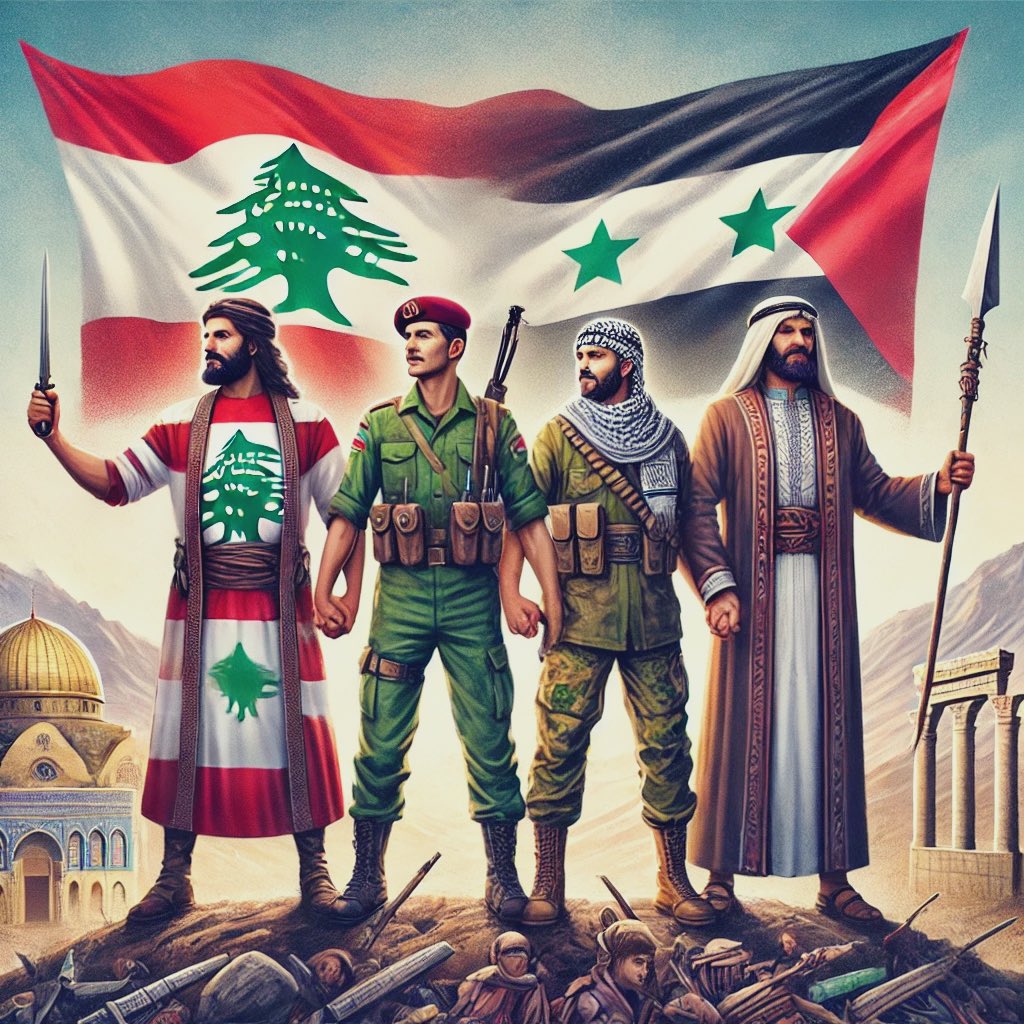
Therefore by separating Islam from nationalism, the individual Arab state strengthens its own brand of legitimacy, and as we see, every Arab state is comfortable with the abstract notion of an Islamic Umma (greater nation) in as much as it is comfortable with the abstract notion  of Arab Umma (greater nation).

Dr Khairi Janbek is a Jordanian writer based in Paris and the above opinion is that of the author and doesn’t reflect crossfirearabia.com. 
Continue reading
Domination Space For Common Space

By Dr Khairi Janbek

When we think of contemporary Iran, one always believes that the Arab Middle East had always been dominated by the three Non-Arab American allies; Iran under of the Shah, Turkey and Israel.

One thinks that those “neighborhood police stations’ were the guarantors of stability through their convergence, and at times contradictions, in the age of Cold War and oil. However, the Shah of Iran was deposed and the Anti-communist Cold War ended, but that didn’t mean that oil stopped becoming important nor that Russia and China were no longer threats.

One would say, that the rehabilitation of Iran and possibly turning it into a negotiations partner aims at keeping the third angle of the police stations triangle going, because non of the Arab countries, no matter how much they tried, could never replace Iran, because no Arab police station is permitted to emerge as a third angle.

Having said that, it would be beyond naive to think that the expansion of Iran’s power and influence happened by stealth or escaped the notice of the US and NATO.

After after all Iran grew to become a Red Sea country through its influence on the Houthis in Yemen, a Mediterranean country through its influence in Syria as well Lebanon through Hezbullah and the major Gulf country through its supporters in Iraq. 

In fact this Iranian domination of space is what has created a common space between all its long-arm organisations in the region.

Essentially, if we compare Iran to an octopus, all those various groups are its tentacles, and they all serve the purpose of Iran’s strategic interests, albeit not through a push-button approach, but through not taking any action which would not please their Persian master.  

Of course, this puts Iran in a strong position to be a major player in the region and an inescapable negotiations partner for the US, which is also convenient for the Americans, in order to remind their Arab allies who is their protector in a region policed by Turkey, Israel and Iran.

Of course this takes us to the point of saying that, for all intents and purposes, for the Americans a trusted adversary is more important than distrusted friends, and that it would be absurd to think that all those long arms of Iran in the Arab world can be amputated by military means; they certainly can be weakened, but without the consent of Iran and without the right price, so long as it remains behind them, nothing much can change.

At this point, from what one can only see, is that no one in their right mind or otherwise, will permit a war to emerge in which Israel is pitted against Iran and the US as well as NATO putting all their weight behind Israel and forcing the Arabs to choose their camp.  

That would be the scenario of the end of the world as we know it, or with major civil wars in the Arab countries controlled by the tentacles of Iran, and which no one wants.

Dr Khairi Janbek is a Jordanian writer based in ParisFrance

Continue reading
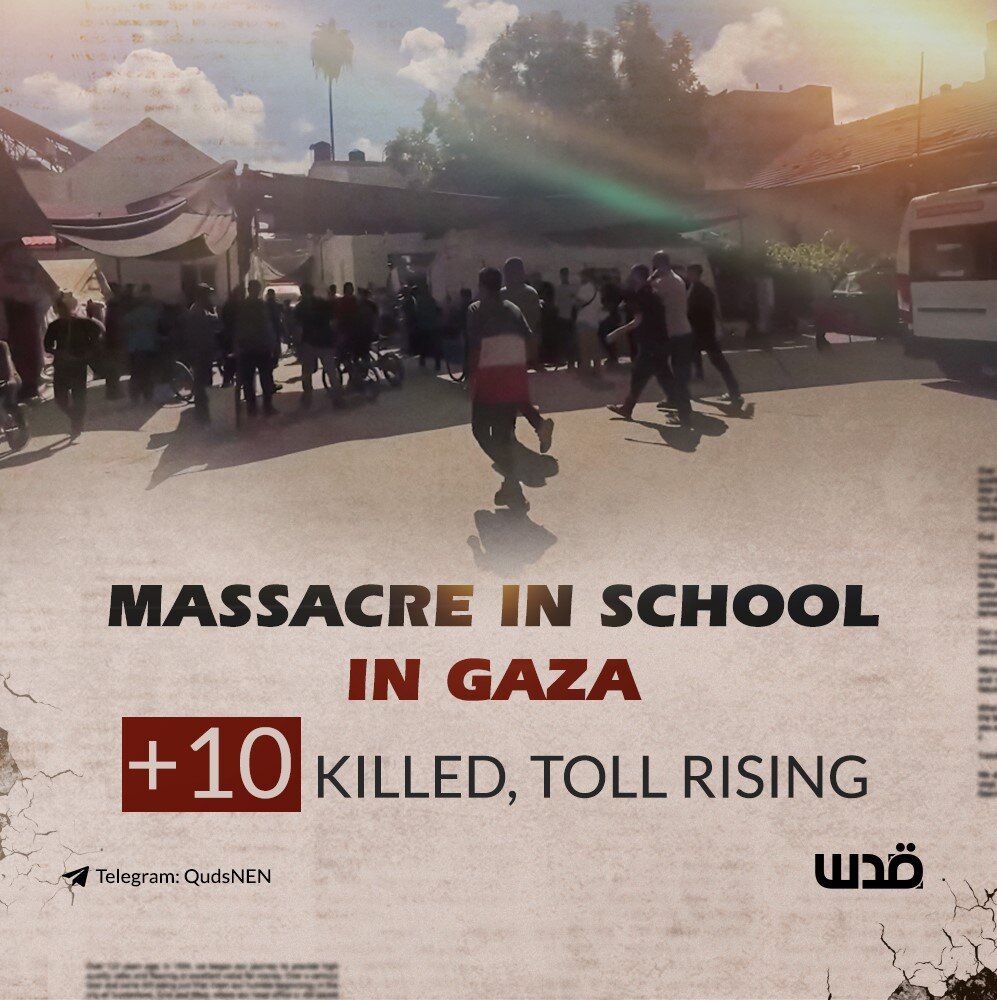
Massacre: 20 People Killed in Israel Strikes of Gaza School

At total of 20 Palestinians were reportedly killed and dozens more wounded in an Israeli airstrike that targeted a Al Falah School sheltering displaced families in Al-Zeitoun neighborhood that lies in the south of Gaza City.

In between those killed were 13 children and 6 women while 30 people were injured including nine children.

The school was hit by two Israeli missiles with the impact so vast that many of those killed were turned into pounds of human flesh. In one case a fetus was blown out of a woman who was killed in the process.

The injured were taken to the Al Ahli Baptist Hospital where doctors are calling for blood donations.

Mahmoud Basal, spokesperson for the Civil Defense, confirmed the death toll, stating: “Twelve children and six women were killed in this horrific massacre by the Israeli occupation forces at the Zaytoun School, which was home to thousands of displaced civilians.”

The Government Media Office in Gaza labeled the attack as a horrific massacre, emphasizing that 30 people were injured, with many suffering from severe burns, amputations, and other life-threatening injuries. Two people remain missing under the rubble of the destroyed school.

Meanwhile Fahrettin Altun, Director of Communications for the Turkish Presidency, condemned the world’s silence regarding the ongoing Israeli genocide in Gaza.

Continue reading
Aysenur: Heroic Martyrdom

By Khaled Nusseibeh

She graced the hallowed soil
With the wanton spilling of her noble blood
Aysenur stands at a towering height
Carving in Palestine’s memory a story of heroic martyrdom
She answered the beckoning call of tremendous injustice
To stand in solidarity against iniquitous occupation
In the environs of the blessed city of Nablus
In the contiguous hamlet of Beita
The mischievous sniper’s fire targeted her
Inflicting the dying day on her living soul

Shall we sing an ode or an elegy?
To mourn the passing of Aysenur
Daughter of great Turkey and America
Whose only wrongdoing was to stand by
Those protesting nefarious and illegal settlement
Of the holy soil marking a day of immense grief
At the death of a righteous warrior
Struggling to lift injustice and affirm an incontrovertible truth
That Palestine is the abode of the steadfast and brave
Who show tremendous courage in the face of injustice
Only to rise from the ashes and light the torch of freedom and justice

Khaled Nusseibeh is a translator, writer and a poet with several published poetry collections to his name. He holds a BA and MA Degrees from Colombia and Princeton universities in the USA. Mr Nusseibeh was born in Amman in 1961 and is a Jordanian of Palestinian origin.

Continue reading
Truth Be Told….

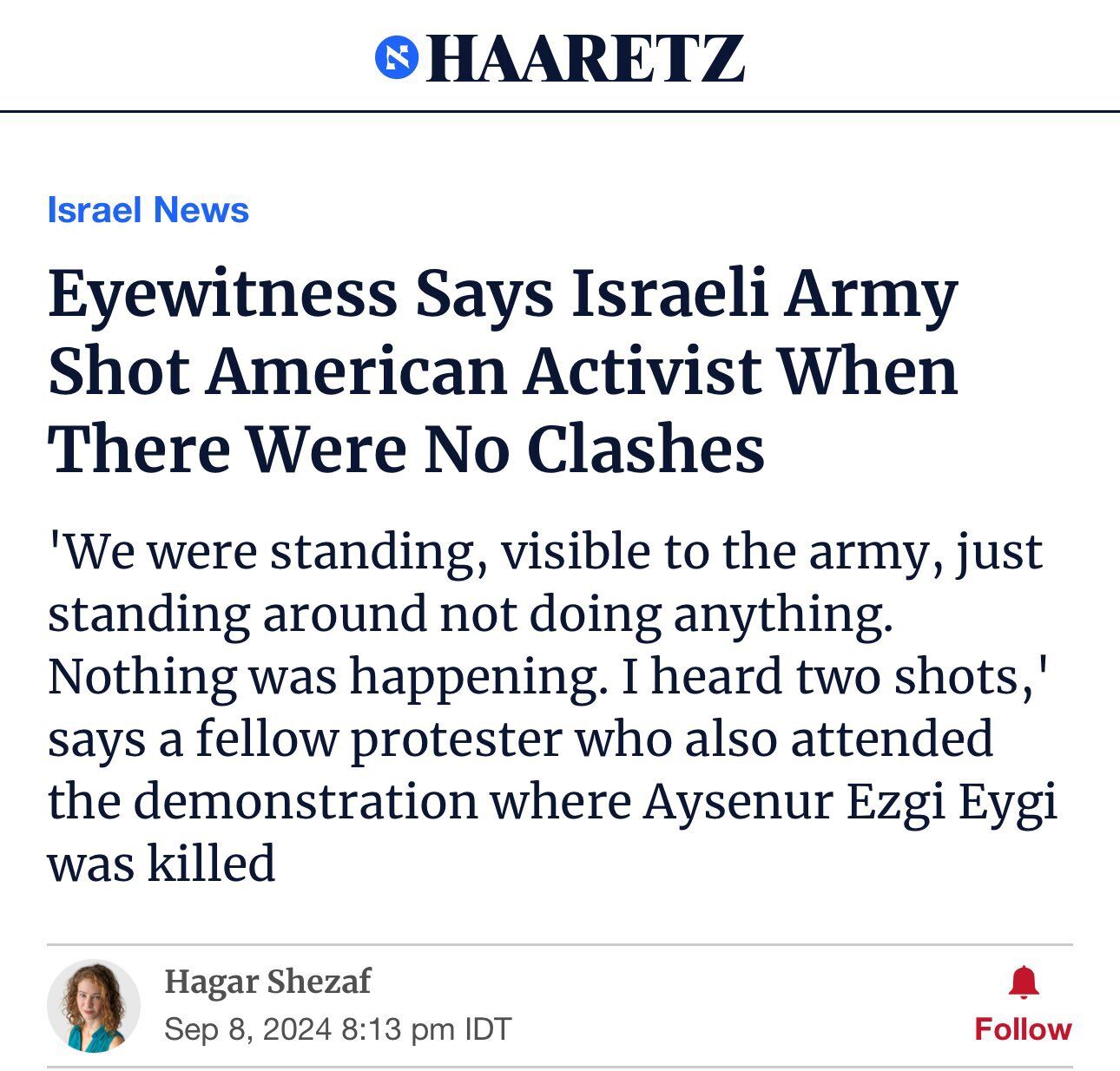
Palestinian groups, Monday, said Turkish-American activist Aysenur Ezgi Eygi “will remain an icon” for the Palestinian struggle on the local and international levels. 

Eygi, 26, a dual citizen of Türkiye and the US, was shot dead by Israeli forces during a Friday protest against illegal Israeli settlements in the town of Beita in the occupied West Bank.

In a statement, the National and Islamic Forces, an umbrella that includes most of the Palestinian groups, said: “Martyr Aysenur will remain an icon for the struggle and fighting at the Palestinian and international levels.”

“Many solidarity activists join our Palestinian people in the activities of the popular resistance in the towns and villages that are exposed to (Israeli) colonization and expropriation,” the statement read.

The Palestinian groups considered Eygi’s death as a confirmation of Israel’s implementing of the policies of killing, expulsion, and ban-of-entry for international solidarity activists.

The statement stressed the importance for punishing Israel for its indifference towards the life of international solidarity activists who stand against Israeli occupation and settlements construction on the occupied Palestinian territories.

Early on Monday, hundreds of Palestinians in the West Bank city of Nablus paid farewell to activist Eygi. The funeral procession began from Rafidia Government Hospital in Nablus, with mourners walking through several streets, chanting slogans condemning Israeli actions and praising foreign supporters, according to an Anadolu reporter.

Eygi’s body is expected to be transported to Türkiye.

The Israeli military has yet to comment on the specifics of the incident or the findings of the autopsy.

Eygi’s killing echoes the case of American-Palestinian journalist Shireen Abu Akleh, who was killed in a similar manner in 2022.

Continue reading