Will The US-Iran Deal Last?

By Ali Bakir

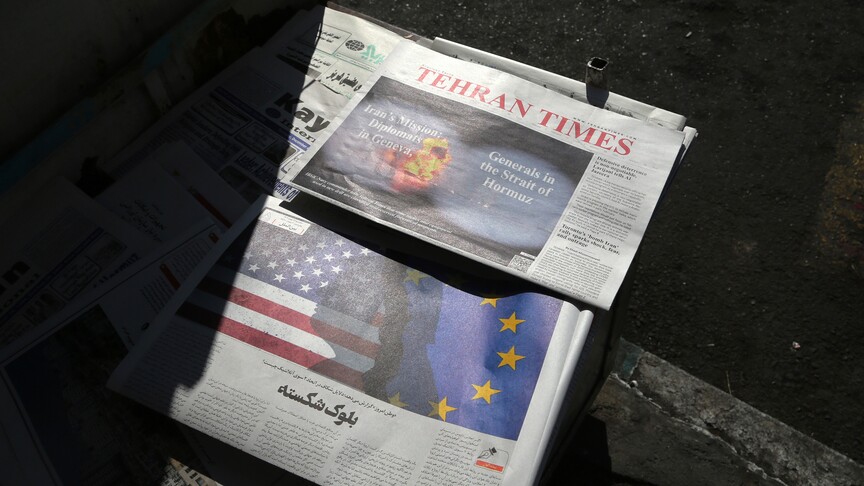
On June 15, Pakistan’s Prime Minister Shehbaz Sharif announced via the US social media platform X that a peace deal between the US and Iran had been reached, following over two months of mediation by his country. Sharif expressed gratitude to Qatar, Saudi Arabia, and Türkiye for their significant contributions, stating that the official signing ceremony would take place on June 19 in Switzerland. Following this announcement, a memorandum of understanding was signed electronically by US President Donald Trump and Vice President JD Vance on the US side, and by Iranian Parliament Speaker Mohammad Bagher Ghalibaf on the Iranian side.

The reported agreement is characterized as a framework peace deal aimed at ending the 2026 Israel/US-Iran war and transitioning the current ceasefire into a broader diplomatic process. Although the text of the agreement has not yet been published, key reported elements include immediate cessation of military operations, reopening of the Strait of Hormuz to international shipping, and a 60-day negotiation period to address unresolved issues, particularly Iran’s nuclear program, alongside discussions on sanctions relief and access to frozen Iranian assets during follow-up negotiations.

This agreement follows two significant developments. First, Israel conducted military strikes on Iranian targets in western and central Iran around a week ago, marking the first such actions since April. Explosions were reported in Tehran, Tabriz, Isfahan, and other cities in response to Iranian missile launches that were highly performative. Second, Trump warned that Iran would “pay the price” for what he described as slow progress in negotiations to end the conflict, indicating that the US could resume strikes against Iranian infrastructure.

5 bullet points on the agreement

Although the agreement does not necessarily mean that the root causes that prompted the war have fully disappeared, a few observations are worth mentioning and analyzing.

First, a lot of narrative spinning is occurring publicly at the moment. While the main parties are trying to sell the agreement as a victory, there are factions within the broader regional camps (such as hardliners in both Iran and Israel) that oppose it. Critics in Iran have labeled the agreement a “humiliating capitulation,” arguing that it involves unjustified concessions. Hardline opponents have publicly criticized the negotiating team, with Iranian MP Mahmoud Nabavian stating that the latest draft is “more damaging” than previous versions. Similarly, Israeli officials emphasized that Israel was not directly involved in negotiating the US–Iran deal and does not necessarily consider itself bound by its provisions. Israeli Defense Minister Israel Katz declared that Israel would not withdraw from territory seized in Lebanon and would continue to act against threats from Hezbollah and Iran if necessary.

Second, the timing of the agreement suggests that Iran was running out of options. As the Islamic Revolutionary Guard Corps (IRGC) focused on messaging and performative measures, the gap between their narrative and reality widened, with Iran’s ability to endure further pressure significantly diminishing. Trump’s counter-blockade against Iran’s restriction of the Strait of Hormuz imposed significant economic costs on Iran, leading to the decision to sign the agreement. It is estimated that the blockade could have cost Iran over $24 billion in just two months — almost equal to Iran’s reported total reserves of foreign currency — leaving the regime with little choice but to agree to the terms or face economic collapse.

Third, despite the negative reactions from hardliners in both Iran and Israel, the agreement highlights Trump’s genuine interest in reaching a resolution with Iran, especially following last year’s swift 12-day war between Israel and Iran. However, radical elements in both Iran and Israel seem intent on using procrastination, escalation, or military actions to sabotage meaningful attempts to achieve peace. Given that there is reportedly a 60-day negotiation period following the signing of the agreement, it is likely that these factions will continue to work against a comprehensive resolution.

Fourth, while Pakistan played a significant role in the mediation process, Qatar’s involvement was also crucial, as acknowledged by American, Pakistani, Saudi, and Turkish officials. Notably, neither the Qatari Foreign Ministry spokesman nor the ministry itself reported any independent measures taken by Qatar, apart from endorsing Pakistan’s mediation efforts. In fact, a Qatari spokesman denied any independent role in the mediation at this stage. Qatar’s involvement appears to have been executed at the request of the United States and had several dimensions.

Primarily, Qatar facilitated technical issues between the US and Iran, such as enabling the transfer of Iranian funds without direct US involvement, thereby avoiding the perception of it being a US initiative or taxpayer-funded. Additionally, Qatar played a role in establishing a communication channel between the United Arab Emirates and Iran, which emerged later in the mediation process. Finally, Qatar aligned itself with Saudi Arabia’s position, providing support for the Pakistani initiative.

Changing actors

Fifth, two awkward positions regarding the agreement can be highlighted. Firstly, the Europeans have been largely inactive in resolving the crisis yet somehow managed to host the official signing ceremony between the Americans and Iranians. Instead of crediting Pakistan, Switzerland offered to host the ceremony, which can be seen as an act of opportunism. Secondly, Oman, historically a favored mediator between the US and Iran, has been notably absent from this current arrangement. Oman’s position during this war was not popular in the Gulf Cooperation Council and beyond. According to a senior US administration official, Oman was removed from its mediation role in negotiations with Iran after the US concluded that Muscat had acted “very duplicitously” during the talks.

Finally, we must approach the prospects of the agreement with caution. It is essential to recognize that this is not a comprehensive peace agreement but rather a transitional framework. The future of the agreement will largely depend on the outcomes of negotiations in the next 60 days. Given that several factions within Iran and Israel are opposed to the agreement, we should not dismiss the possibility of sabotage, particularly from Israel.

Ali Bakir is an assistant professor of international affairs, security, and defense at Qatar University and senior nonresident fellow at the Middle East Council on Global Affairs. Anadolu

Continue reading
Diving in a War Zone

By Jing Zhang

When US and Israeli forces launched strikes on Iran on 28 February, triggering one of the most serious geopolitical crises in years, the Strait of Hormuz – a narrow channel just 34 kilometres wide at its narrowest point – became a global flashpoint overnight.

Iran closed the waterway to foreign shipping, attacking merchant vessels and cutting off around 20 per cent of the world’s seaborne oil trade. Some 20,000 seafarers were stranded in the Persian Gulf. The UN Secretary-General called for an immediate ceasefire.

Beneath all of it, the fish kept swimming.

Back in the water

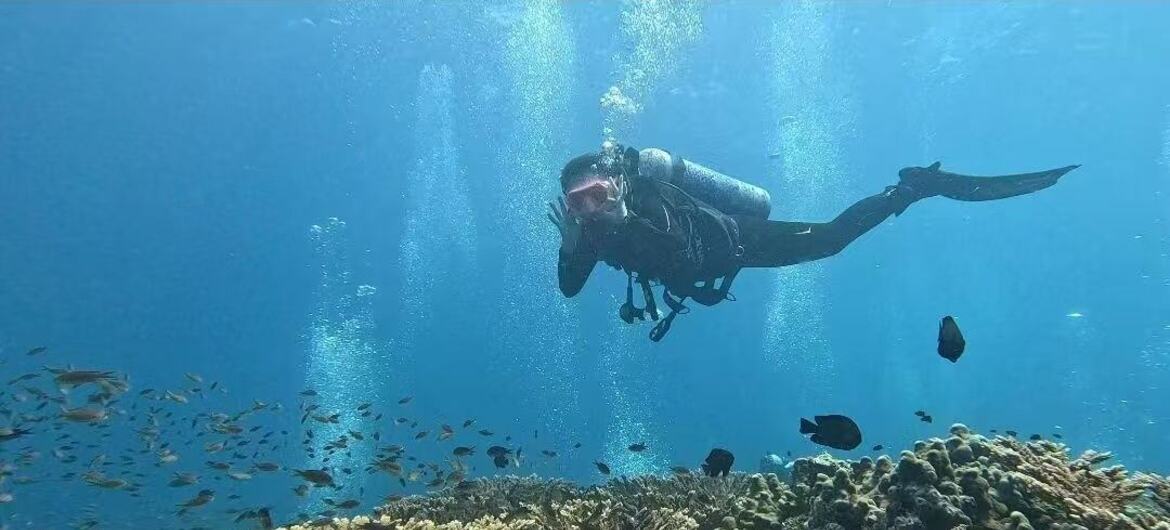
Three Chinese divers based in the United Arab Emirates (UAE) – diving instructor Rui Li, freediver Shanshan Du and technical diver Jie Zhang – had been locked out of the water for weeks by the coastal closure. When a ceasefire allowed limited access in mid-April, they went straight back in.

World Oceans Day, marked each year on 8 June, carries the theme this year of Reimagining the Relationship Between Humans and the Ocean. For these three, that reimagining is anything but abstract.

“We were actually a little worried before setting off,” says Du, who dived the narrowest stretch between the UAE and Oman on 18 April, just days after the UN welcomed Iran’s announcement that the strait would be open to commercial vessels during the ceasefire. 

“But after more than two months, we all felt it was fantastic to be able to dive again. We encountered a large group of dolphins. There was none of the war-torn atmosphere I had imagined – only peace and beauty before my eyes.”

Zhang, who dived the area as recently as last week, describes coral diversity she has rarely encountered elsewhere – soft and hard corals varying with the topography, and sea turtles gathered in such numbers they evoked a nature reserve.

A person in a scuba diving suit and mask makes a peace sign against the ocean and blue sky.
Courtesy of Jie Zhang. Jie Zhang is back from the depths, feeling the warmth of the sun.

Troubling signs

She also noticed something more troubling. “I saw more white debris on the seabed than before,” she says, uncertain of its origin. And when she and her companions followed dolphins near the eastern side of the strait, the water around the animals was streaked with green algae, oil fumes and floating rubbish. 

“I recalled that when I used to chase dolphins, the water was blue. Seeing this scene with my own eyes is still very heartbreaking.”

Li is careful to hold both realities at once. The strait is not the world’s most biodiverse marine zone, he notes, but its complex topography sustains coral reefs of unusual variety – formations “as white as silver needles” alongside colonies “as purple as pine forests” – as well as seahorses, whale sharks and species rarely seen elsewhere.

He describes witnessing a boat captain who, unable to dive and with no other means of communication, could reliably find a pod of dolphins that seemed to recognise him. “We would greet each other and then go our separate ways,” Li says. “This place is truly magical.”

A wide bay with deep blue water, bordered by arid, rocky mountains and a small coastal settlement on the right.
©Jie Zhang Overlooking the Strait of Hormuz from the Musandam Peninsula, Oman.

Potential catastrophe

Yet he is also acutely aware of what armed conflict can do to such a place. An attack on oil storage facilities, he points out, could be catastrophic for marine life. “Many marine organisms are small and vulnerable. A single attack could be enough to wipe out some amazing species that have never been seen by humans.”

Zhang frames the underwater world’s vulnerability in blunt terms. “No one can speak for the underwater ecosystem  – fish can’t speak, and neither can large animals. 

“We dump all the disputes, wars and pollution on land onto the ocean, ignoring the fact that the ocean has no good self-protection capabilities and can only bear all the conflicts and damage caused by human activities.”

Diving has quietly dissolved certain certainties for all three. “Underwater, the ocean has no borders,” says Zhang. “Ocean currents and schools of fish move freely. When whale sharks cruise, they follow fixed routes through different countries – they are free. Humanity should share this blue world instead of tearing it apart with disputes.”

A person in a wetsuit and goggles floats in the ocean, adjusting their mask with both hands.
©Jie Zhang Rui Li makes a heart gesture to his dive buddy on the water’s surface, which also stands for “OK” in diving hand signal terms.

Mother ocean

Li reaches for a different metaphor – warmer, and perhaps more honest about the limits of human agency. The relationship between people and the sea, he suggests, is something like that between a child and a parent: the ocean sustains us, nurtures us, occasionally punishes us. 

“We have grown old enough to want to protect it, he says, yet what we can actually do remains small. “Our parents are still quietly waiting for us, helping us, and continuing to nurture us.”

Du, diving in a country where people of dozens of nationalities converge, has found that underwater, borders feel beside the point. Communication happens through gesture alone. “Because of this hobby, and because of the ocean, it has created a wonderful environment for us.”

The conflicts raging above the surface have not ended. Talks between Washington and Tehran remain fragile, conditions volatile. But 71 per cent of the Earth is ocean – and, as Li says to anyone who has yet to see it: come and touch the refreshing water whenever you can.

A school of sharks swimming in deep blue ocean water.
©Jie Zhang Madivaru Corner in the Maldives is a world-class dive site. Grey reef sharks and white-tip reef sharks are its permanent residents.

UN News

Continue reading
Why is Iran’s FM in Oman?

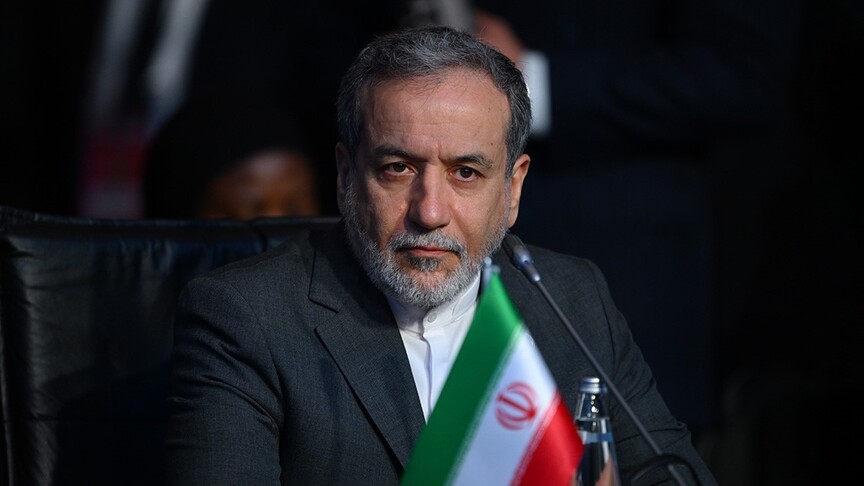
Iranian Foreign Minister Abbas Araghchi arrived in Muscat, Oman’s capital, on Saturday evening, leading a diplomatic delegation, according to Tasnim news agency.

Araghchi is expected to meet with senior officials in Oman to discuss bilateral relations and exchange views on regional developments.

The visit follows his trip to Pakistan, where he said in a statement that he shared his country’s “position concerning a workable framework to permanently end the war on Iran,” without providing further details.

He also expressed skepticism about Washington’s intentions.

“Have yet to see if the U.S. is truly serious about diplomacy,” he said on the US social media company X.

Pakistan has been acting as an intermediary between Tehran and Washington amid ongoing tensions following recent military escalation.

Araghchi arrived in Pakistan late Friday and met with Pakistan’s Prime Minister Shehbaz Sharif in Islamabad on Saturday, amid efforts to revive stalled peace talks between the US and Iran to end their eight-week war.

The first round was held in Islamabad two weeks ago but failed to reach an agreement to end the conflict that began on Feb. 28 and engulfed the entire Middle East. Those talks came after Pakistan brokered a two-week ceasefire on April 8, which was later extended by US President Donald Trump.

Meanwhile, US President Donald Trump on Saturday said that he has cancelled a planned trip to Pakistan by special envoy Steve Witkoff and adviser Jared Kushner.

“I’ve told my people a little while ago they were getting ready to leave, and I said, ‘Nope, you’re not making an 18 hour flight to go there. We have all the cards. They can call us anytime they want, but you’re not going to be making any more 18 hour flights to sit around talking about nothing’,” Trump told Fox News via phone.

Iran has refused to hold direct talks with the US and said observations would be conveyed to Pakistan.

Some of the sticking points are said to be the Strait of Hormuz, the US blockade of Iranian ports, and Iran’s enriched uranium. Anadolu

Continue reading
Larijani: Iran Will Not Negotiate With The US

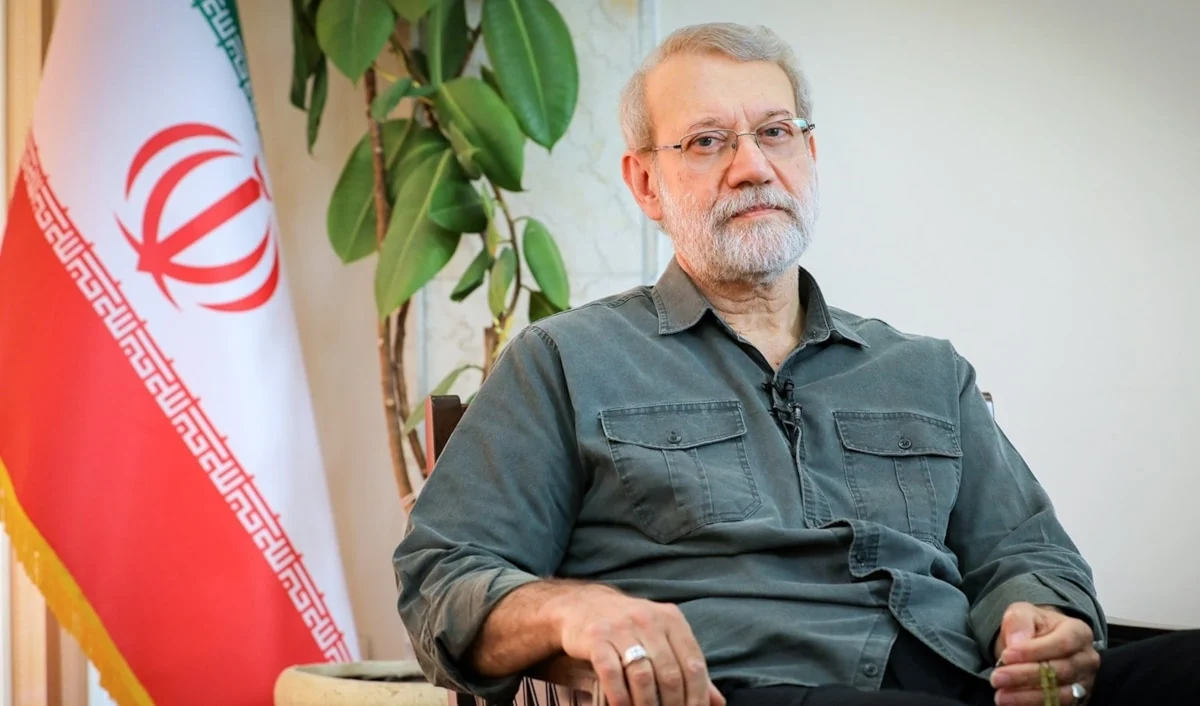
Iran’s Supreme National Security Council Secretary Ali Larijani affirmed that his country will not negotiate with the United States. He added that US president Donald Trump has plunged the region into chaos with his “false hopes.”

On Monday, Larijani asserted Iran will not negotiate with the United States, noting that Trump “has plunged the region into chaos with his ‘false hopes,’ and is now worried about further losses among American forces.”

In a post on his “X” account, Larijani argued Trump has transformed his “America First” slogan into “Israel First,” sacrificing American soldiers for Israel’s pursuit of power. He continued: “With delusional actions and new lies, Trump is once again making American soldiers and their families pay the price for his personality cult.”

He added: “Today, the Iranian people are defending themselves, and the Iranian armed forces did not initiate the invasion.”

These statements come in response to a report in the Wall Street Journal about an initiative by Larijani to resume talks with Washington, presented through Omani mediators.

These statements also come amidst the ongoing US-Israeli aggression against Iran, which has targeted large areas of the country and resulted in the martyrdom of the Supreme Leader of the Islamic Revolution and the Islamic Republic of Iran, Ayatollah Ali Khamenei, and a number of other Iranian leaders. Almayadeen

Continue reading
Finally: Oman For The Nuclear Talks

Iran said Wednesday evening that Friday’s nuclear talks with the US are scheduled to be held in the Gulf state of Oman, confirming the timing and location of the planned negotiations.

On US social media company X, Iranian Foreign Minister Abbas Araghchi said the talks would take place in the capital Muscat at around 10 am (0600GMT) local time.

“Nuclear talks with the United States are scheduled to be held in Muscat on about 10 a.m. Friday,” Araghchi wrote, expressing gratitude to Oman for facilitating the meeting.

“I’m grateful to our Omani brothers for making all necessary arrangements,” he added.

His comments come as a White House official also confirmed Wednesday to Anadolu that the talks would be held in Oman, despite earlier reporting by Axios that the US refused a change in the site of the talks, previously set to be held in Istanbul, Türkiye.

Prior to that, Iranian media reported that Iran and the US were slated to hold indirect negotiations in Muscat on Friday, with a focus on nuclear-related issues.

Before Muscat, Istanbul had been proposed as the venue, following Türkiye’s successful intervention to help ease tensions between the two countries.

Iran calls non-nuclear issues ‘non-negotiable’

As for what will be discussed, Iran’s semi-official Mehr News Agency cited a source saying that Washington seeks to “raise issues outside the nuclear framework, including defense matters.”

“These demands are not only unrelated to the nuclear issue but are directly tied to national security and the country’s deterrent capability and are fundamentally non-negotiable,” the unnamed source said.

He added that Iran is “ready to negotiate within a defined framework based on mutual respect on nuclear matters,” but that the “insistence on excessive demands and raising issues beyond the agreement is the main factor behind any potential deadlock.”

Oman has previously served as a mediator in indirect contacts between the two sides.

The planned talks come amid rising tensions between Washington and Tehran, fueled by an American military buildup in the Gulf and repeated threats of military action by US President Donald Trump.

In recent days, several countries have stepped in and offered to mediate between Tehran and Washington to ease tensions, with Türkiye playing a particularly active role.

The US and its ally Israel accuse Iran of seeking to produce nuclear weapons, while Tehran says its nuclear program is designed for peaceful purposes, including electricity generation.

Al Jazeera reported nine regional and Islamic countries pressured the Trump administration not to cancel and have the nuclear talks venue moved to Oman.

Continue reading