CrossFireArabia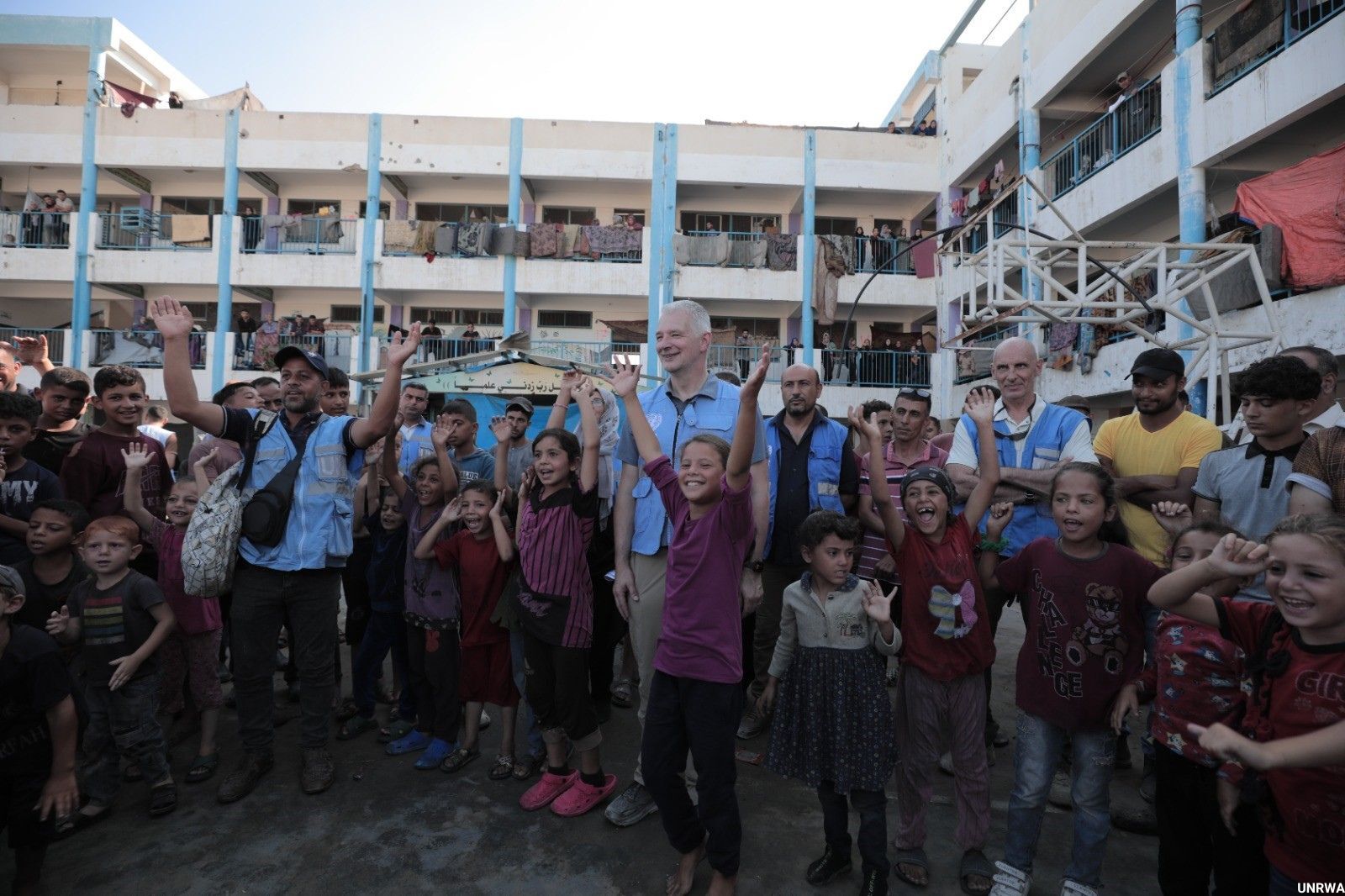
Scaling up aid delivery remains a challenge in Gaza as the war reaches the 300-day mark, the head of the UN humanitarian affairs office, OCHA, in the Occupied Palestinian Territory said on Thursday.
Andrea De Domenico was speaking from Jerusalem in his final briefing to journalists at UN Headquarters in New York as the Israeli authorities have not renewed his visa.
Reflecting on his time in the region, Mr. De Domenico recalled that the UN Secretary-General had previously said that Gaza was becoming a graveyard for children and “unfortunately he was right, and this is what Gaza became”.
He said the international community “has to answer the question of how much human suffering can be tolerated in the name of security.”
‘Systematic de-humanization of civilians’
Mr. De Domenico said that over the past 10 months, he had witnessed “the systematic dehumanization of civilians” in both Gaza and the West Bank, and “the absolute physical and psychological exhaustion of an entire population.”
He also voiced concern over “the growing anger towards Israel, awakening the dark forces that could fuel antisemitism”, noting that the UN continues to call for all leaders to speak out against antisemitism, anti-Muslim bigotry and hate speech, which only reinforce stigma and marginalization.
The top humanitarian said it was “kind of a coincidence” that his final briefing was taking place on the eve of the 300-day mark.
The war erupted in response to Hamas-led terror attacks in southern Israel on 7 October 2023 which left some 1,250 dead. More than 250 people were taken to Gaza as hostages, and 115 remain in the enclave.
Death and destruction mounting
Mr. De Domenico said recent weeks had seen more evacuation orders in Gaza, which sparked more displacement, and it was “particularly worrisome” that they affected areas that Israeli had unilaterally declared as safe zones.
More than 200,000 people were displaced but spontaneous returns have been occurring over the past few days.
“And we will keep on trying to deliver a response to those people in those areas,” he said. “The reality, though, remains that our ability to deliver has never gone up to scale.”
Meanwhile, the toll of the war is still increasing. More than 39,000 people in Gaza have killed, 91,000 injured, 90 per cent of the population -1.9 million people – is displaced, and 60 per cent of residential buildings have been destroyed, with an estimated 49 million tonnes of debris generated.
Furthermore, food insecurity is at its highest level, and polio was recently found in sewage samples.
“In this environment we do a lot,” he said. “We provide people with water, food, tents, clothing, hygiene items, nutritional supplements, and cash. We equip hospitals with bed stretchers, medicine, meals and facilities with medical evacuation.”
However, he said “all these efforts are nowhere near where they should be in terms of helping people”, highlighting the need to scale up operations.
He also pointed to “rays of hope”, such as the start that day of a programme to provide informal learning for some 30,000 children, which is being run by UNRWA, the UN agency that assists Palestine refugees, and the UN Children’s Fund (UNICEF)
West Bank violence
Mr. De Domenico also addressed the situation in the West Bank, where the UN has verified the killing of 572 Palestinians, including 141 children, since 7 October. Most were shot by Israeli forces and settlers. Fourteen Israelis were killed during the same period.
Demolitions have also continued, and they now seem to be “spreading all over and also affecting houses that are in areas that were for many years untouched”. In total, more than 1,300 structures been demolished, nearly 40 per cent of which were inhabited, displacing nearly 3,000 people.
At the same time, search and rescue operations “have become more and more frequent” and “seem to be more military operations rather than police enforcement operations”, resulting in “huge devastation to civilian infrastructure.
“We have seen, for example, streets completely demolished, and sewage network demolished, and that of course has an impact on public health.”
He also reported that the Israeli military’s “attitude” towards humanitarians is also becoming more aggressive.
“We have been systematically stopped at checkpoints and identified. They request the staff to step out of the vehicle, take out the keys. They want to ID every single staff and it seems that this is unfortunately a growing trend”.
Lack of permits and visas for staff is also becoming a problem for international non-governmental organizations in the West Bank.
Asked about his own situation, Mr. De Dominico said visas were previously given for a year and after the war began, they were shortened to three to six months.
He was recently given a one-month extension and warned that it would not be renewed.
“The straw that broke the camel’s back is the publication of the Children and Armed Conflict report from the United Nations, and they alluded to long-standing issue of reporting that OCHA has been doing,” he said.
“But this has been communicated verbally and there is no formal communication that I’ve received, despite asking repeatedly.”