UNRWA Chief: ‘…Air Filled With The Smell of Blood’

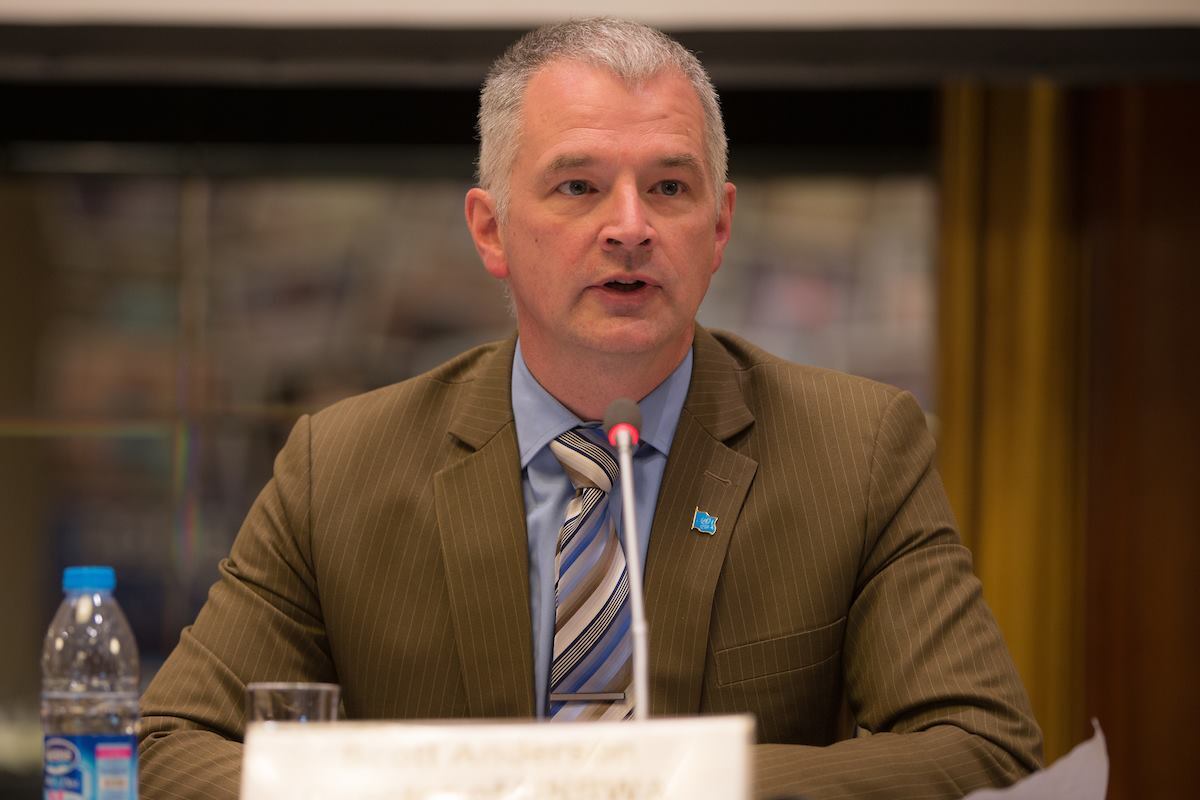
CROOSFIREARABIA – “The air was filled with the smell of blood,” Scott Anderson, deputy humanitarian Coordinator, UNRWA Affairs Director in Gaza said during his visit to the Nasser Medical Complex in Khan Younis.

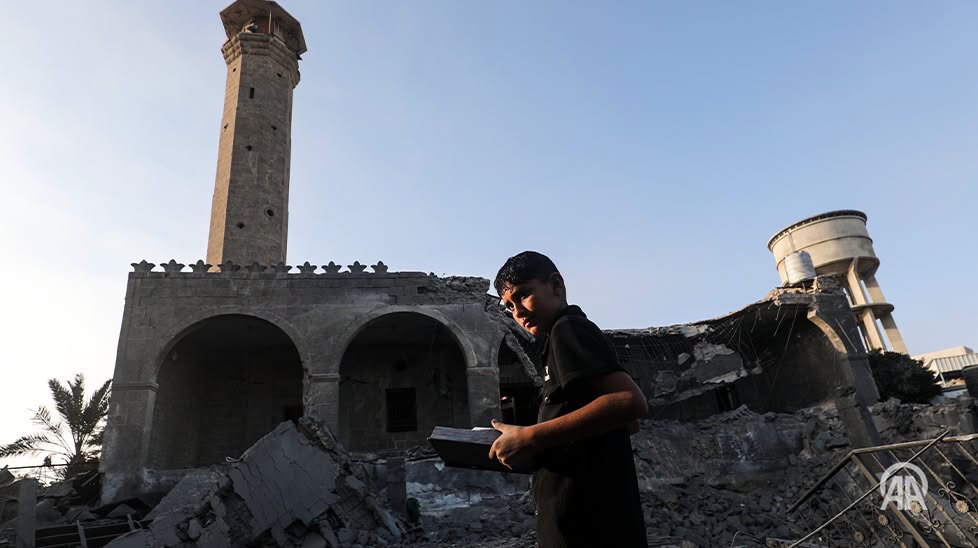
“Visiting the Nasser Medical Complex in Khan Younis yesterday, I witnessed some of the most horrific scenes I have seen in my nine months in Gaza,” he added.

“This overstretched health facility admitted well over 100 of yesterday’s severe injuries. With not enough beds, hygiene equipment, sheeting, or scrubs, many patients were treated on the ground without disinfectants,” he pointed ot.

“Ventilation systems were switched off due to a lack of electricity and fuel, and the air was filled with the smell of blood,” he said according to the Palestine News Agency WAFA.

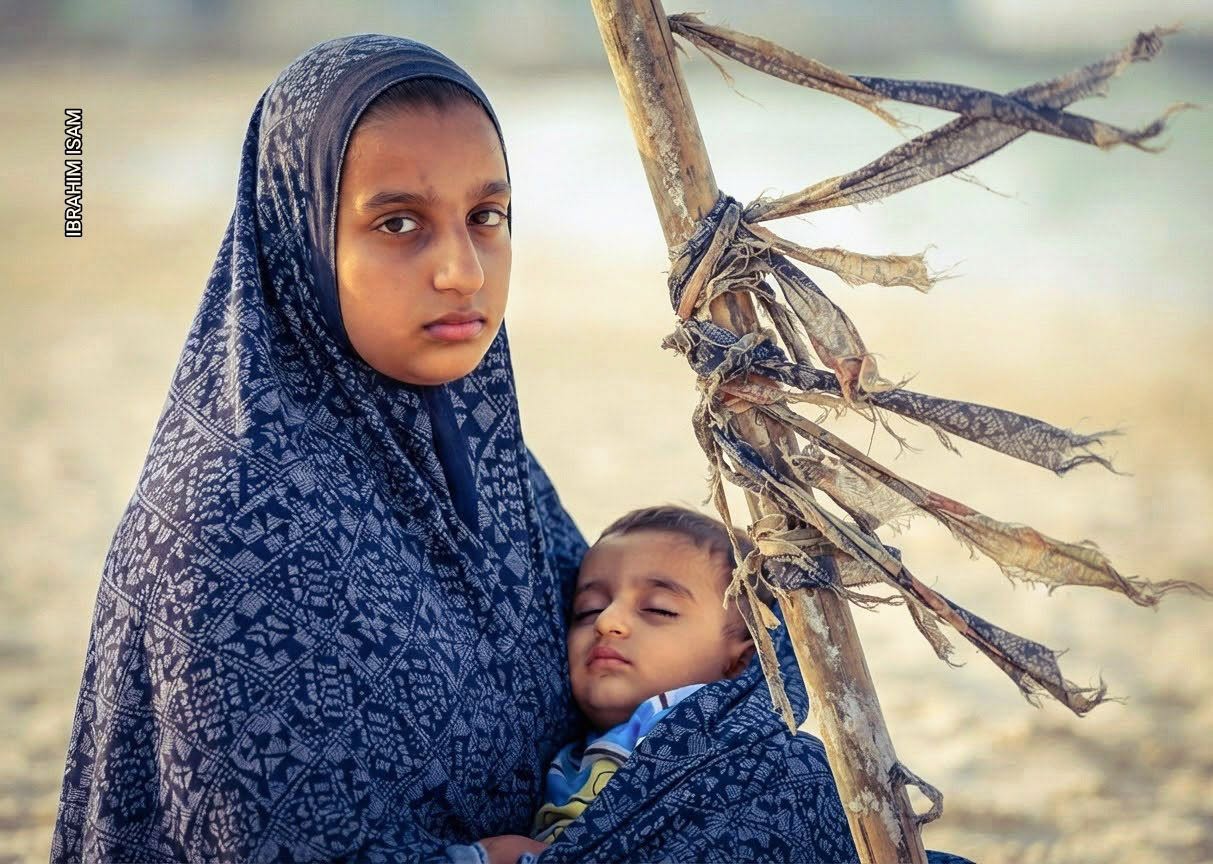
“I saw toddlers who are double amputees, children paralyzed and unable to receive treatment and others separated from their parents. I also saw mothers and fathers who were unsure if their children were alive. Parents told me in despair that they had moved into the ‘so-called humanitarian zone’ in the hope that their children would be safe there,” he said.

“My colleagues from the humanitarian community are doing everything possible to increase medical capacity in Gaza, where the health system has long been on the ropes. Yesterday, we provided referral services, as well as additional tents, beds, stretchers, disposables, and medications. But impediments to humanitarian operations prevent us from supporting people anywhere near the scale necessary,” Anderson added.

“Civilians must be protected at all times. We urgently need a ceasefire, the release of all remaining hostages, respite for the people of Gaza, and a meaningful opportunity for healing to begin,” he concluded.

CrossFireArabia

CrossFireArabia
Dr. Marwan Asmar holds a PhD from Leeds University and is a freelance writer specializing on the Middle East. He has worked as a journalist since the early 1990s in Jordan and the Gulf countries, and been widely published, including at Albawaba, Gulf News, Al Ghad, World Press Review and others.

Related Posts

Zamir: Israel May Resume War on All ‘Active Fronts’

Israeli Chief of Staff Eyal Zamir said Monday that intense fighting could resume across all of Israel’s active fronts this year according to the Drop Site website.

“We remain ready and on alert for the possibility of a resumption of intense fighting on all these fronts—2026 could still be a year of fighting on each of them,” Zamir told army officers during a meeting. I

In an interview with Fox News on Monday, Secretary of State Marco Rubio declined to say whether the Trump administration would support Israel resuming the war in Gaza, but said that “the entirety of this project only works if Hamas is demilitarized.”

Hamas has consistently refused to discuss disarmament until Israel ceases its violations of the ceasefire and fulfills its Phase One obligations according to Drop Site.

Continue reading
Haaretz Emigré: ‘Israel is a Broken Society’

Tel Aviv’s escalation with Iran has made the risks of daily life in Israel more immediate and visible, according to an Israeli journalist who previously worked for Haaretz and left the country after Oct. 7, 2023.

“It was never safe,” Asaf Ronel told Anadolu in an interview. “But when you live inside it, you don’t notice.”

He said it was only after leaving Israel for Berlin that he became aware of the constant underlying stress.

“It took me months to understand why I’m so relaxed here,” he said. “I suddenly had hobbies. Because this layer of fear for your life is gone.”

But, he added, that sense of fear builds gradually over time.

“It accumulates. You keep denying it. You keep trying to maintain a facade of normalcy in your life,” he said. “Like everybody does until they’re broken.”

According to Ronel, the situation has deteriorated sharply in recent years.

He described the Oct. 7 attacks as a turning point that exposed deep vulnerabilities in Israel’s security system.

“The level of collapse of the military establishment on Oct. 7 was obvious,” he said.

At the same time, he argued that Israel’s military response has intensified insecurity.

“The more violence they’re using, it’s only creating more danger to them,” he said.

Ronel also criticized the role of the army more broadly, describing it as “functioning as a machine for oppression and violence against Palestinians and surrounding populations.”

Frequent trips to shelters have become routine, he added, though he stressed that Israeli civilians’ experience differs significantly from that of Palestinians.

“Israelis never dealt with anything similar to the daily life of Palestinians around us,” he said.

‘Israeli media is 99% propaganda’

From Feb. 28 until the current ceasefire, Iranian retaliatory strikes hit multiple locations across Israel, targeting military sites, energy infrastructure and other areas, exposing what analysts describe as mounting pressure on the country’s interception systems.

Strikes penetrated Israel’s multi-layered defenses in multiple districts, including Tel Aviv, Petah Tikva, Bnei Brak, Holon, Arad, Dimona, Nahariya and Haifa.

Ronel said the scale of these developments is not fully reflected in domestic media coverage.

“Maybe the media should tell them that … there’s also the other side that’s quite sophisticated and capable of hurting them directly,” he said.

According to Ronel, Israeli media has failed to convey these realities, focusing instead on military achievements.

“Israeli media is 99% propaganda, self-propaganda,” Ronel said.

“They’re not even aware that they’re doing it,” he added, describing what he called a “level of denial of reality” that has become institutionalized.

He pointed to reports of a growing shortage of the most sophisticated missile interception systems and the military adjusting its defense priorities accordingly.

“The media is not reporting it,” he said.

‘Broken state and society’

Ronel said the current crisis reflects deeper structural problems within Israel that predate the latest escalation.

“It was clear that the country is broken,” he said, pointing to widening gaps in public services, infrastructure and governance.

He also pointed to broader institutional failures, saying basic systems were no longer functioning effectively.

“It didn’t seem like there was anyone who knows how to fix it, at least not in charge,” he said.

He said the events following Oct. 7 reinforced that view.

“And then, a few days later, when the genocide started, it was clear that not only the state is broken, but the society,” he said.

While he said Prime Minister Benjamin Netanyahu should not be seen as the sole cause, he argued that both the government and wider society have moved in the same direction, turning what he described as the “constant state of emergency of the Zionist life” into a condition that has become “much, much more severe.”

Unsafe at home and abroad

Ronel said insecurity is not limited to Israel’s borders, arguing that perceptions of Israeli identity have also shifted internationally.

Saying he had never lived outside Israel for more than a month before Oct. 7, Ronel said he still does not feel safe abroad.

“Because I’m an Israeli, and Israeli identity carries meaning – this meaning now is the meaning of genocide and attempts to destabilize the world economy.”

He predicts that more Israelis will move abroad to “look for ways to live.”

According to recent research conducted by professors at Tel Aviv University, there has been a notable rise in emigration from Israel in recent years.

The research suggests that around 99,000 Israelis left the country in 2023 and 2024, while fewer than 20,000 returned in 2024. More than three-quarters of those who left were under 40.

For Ronel, too, the chances of his family returning are “getting lower and lower.”

Continue reading

You Missed

Zamir: Israel May Resume War on All ‘Active Fronts’

Zamir: Israel May Resume War on All ‘Active Fronts’

Haaretz Emigré: ‘Israel is a Broken Society’

Haaretz Emigré: ‘Israel is a Broken Society’

11 Israel Soldiers Commit Suicide in April

11 Israel Soldiers Commit Suicide in April

Palestinian Pound Lives on!

Palestinian Pound Lives on!

Israeli Settlers Uproot 400 Olive Trees

Israeli Settlers Uproot 400 Olive Trees

Amidst Death, Palestinians Celebrate in Group Wedding!

Amidst Death, Palestinians Celebrate in Group Wedding!