US-Israel Relations Toxic

By Robert Inlakesh

Zionists have now become so unpopular that the Vice President feels the need to appear critical of Israel.

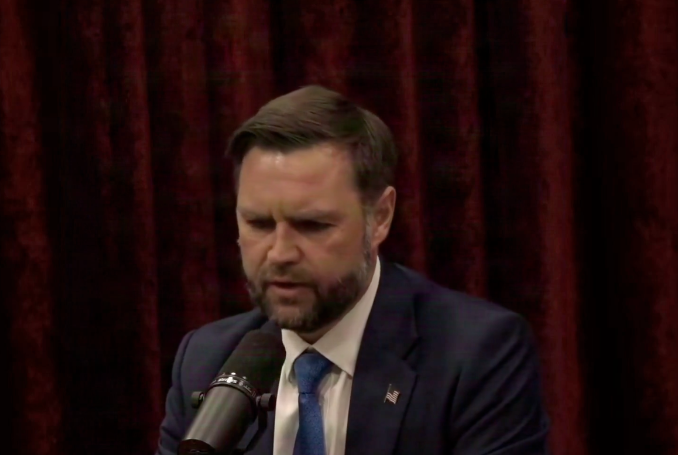
The recent comments made by US Vice President JD Vance to Joe Rogan are indicative of just how toxic the Israel brand has become. Yet his comments have been largely pulled out of context in order to invent an image of a totally different politician to the man who is actually operating as America’s second in command.

In a recent episode of the Joe Rogan Experience, JD Vance made some notable comments on Israel when pushed on the topic – ranging from admitting an Israeli Mossad connection to the infamous Jeffrey Epstein to Israeli interference in the negotiation process he led with the Islamic Republic of Iran.

Understanding the nature of these comments first requires a little background information on who JD Vance actually is. This is a man whose political rise has largely been attributed to Palantir co-founder Peter Thiel.

Vance’s relationship with Thiel began to form back in 2011, when the German-American entrepreneur gave a speech at Yale Law School, which would lead to a relationship whereby Vance would be brought into the world of big tech and venture capital.

The Palantir co-founder later granted Vance $15 million dollars – the largest single sum ever donated to a Senate candidate – to buy him into politics. While JD Vance had previously criticized US President Donald Trump’s character vociferously, Thiel is credited with having successfully convinced Trump to make him his VP.

It is clear that Vance has broader political ambitions, including winning the Presidency in the future. Paramount to understanding his recent shift on the question of Israel is understanding all of this context. What has presented as a shift on the question of Israel began with the comments he previously made regarding Israeli opposition to the Memorandum of Understanding (MoU) the US briefly secured with Iran.

At the time, the Vice President had stated that those Israelis who had become critical of Washington’s strategy needed to “wake up and smell the reality of the situation that country is in”, after noting that the US taxpayer had footed the bill for defending it and reminding those critics that Donald Trump was their last true ally.

Again, on the Joe Rogan Podcast, he attempted to replicate this sentiment, but was subjected to follow-up questions which ended up making what he was trying to pull off fall flat.

While Vance has proven capable of questioning some Israelis and their supporters, he is deliberately ambiguous. This is because he is siding with Israeli Prime Minister Benjamin Netanyahu and trying to criticize the current Israeli opposition, without actually going as far as naming anyone consequential.

He even told Joe Rogan that Jeffrey Epstein was connected to both the CIA and Mossad, but made it clear that former Israeli Prime Minister Ehud Barrack was responsible for coordinating with the convicted sex trafficker. The American official then tries to pass off the situation as if Netanyahu is an opponent of Epstein’s affiliates.

When discussing Israeli influence on the United States, he does not deny that it exists, but instead argues that this is normal and even tries to compare it to Qatar’s limited role in influencing Washington. 

All this being said, it is clear that JD Vance is not making radical critiques of Israel; it is a strategy that hopes to put him on the record as having been a voice within the Trump administration who has pushed back against the disastrous pro-Tel Aviv policy choices.

What is significant about this, however, is that a politician like him feels it to be necessary to present himself as critical of the Israelis. It reflects a substantial shift in American politics across the board, especially amongst voters 35 years old and younger.

In the Democratic Party, the base has become so incredibly pro-Palestinian that taking contributions from AIPAC and stating a pro-Israel position has gone from being a net positive to now being a position that could even lose an establishment Democrat their position in Congress.

On the Republican side, there is still remaining support for Israel amongst its base, but the vast majority of these sentiments come from older voters. If you look at young Republicans, the picture is very different, and according to the polls, the 35-year-old and under bracket is gradually shifting more and more towards an anti-Israel position. There is, therefore, a need for even Republican candidates to begin treading a fine line on the issue.

For a large segment of American voters, a politician’s position on Israel is a primary indicator of whether they are genuine actors or not. If they are seen to be identifying with the Israel Lobby, the assumption is that they are not going to prioritize their constituents and instead will work to please the donor class.

It represents a radical change in US politics and is a major loss for the Zionists, who have now become so unpopular that the Vice President feels the need to appear critical of Israel in order to avoid committing political suicide.

– Robert Inlakesh is a journalist, writer, and documentary filmmaker. He focuses on the Middle East, specializing in Palestine. He contributed this article to The Palestine Chronicle.

CrossFireArabia

CrossFireArabia
Dr. Marwan Asmar holds a PhD from Leeds University and is a freelance writer specializing on the Middle East. He has worked as a journalist since the early 1990s in Jordan and the Gulf countries, and been widely published, including at Albawaba, Gulf News, Al Ghad, World Press Review and others.

Related Posts

‘No Need For Your Crocodile Tears’
  • HebaHeba
  • August 13, 2026

By Ismail Al Sharif

“I’ll say it frankly: We should have exerted more pressure on Israel to adopt a different approach in Gaza” – Jake Sullivan, National Security Advisor to ex-President Joe Biden.

A striking phenomenon is recurring in American politics: Some presidents, cabinet members, and senior officials become more outspoken in their stances toward the Israeli occupation entity after leaving office, expressing regret for decisions that contributed to the injustice inflicted upon the Palestinian people.

This may be due to their liberation from diplomatic and partisan constraints, the pressures of Zionist lobbies, and the influence of tainted money, or perhaps their consciences awaken belatedly as they feel closer to death, realizing the enormity of the injustice they participated in or condoned.

Examples of this are numerous. Among the most prominent is former US President Jimmy Carter, who, after leaving office, shifted from a traditional pro-Zionist rhetoric to criticizing the Israeli occupation and its policies. Then there is Chuck Hagel, former US Secretary of Defense, who held the United States responsible for the Zionists’ continued aggression and described their practices as terrorism— but only after his retirement, of course.

Robert Gates, the former Secretary of Defense, also criticized war criminal Benjamin Netanyahu, calling him ungrateful.

More recently, Jake Sullivan, former National Security Advisor, and Antony Blinken, Biden’s lackluster Secretary of State, joined the ranks of those who have expressed regret. Both men have blood on their hands from the blood of Palestinian children and played a shameful role in supporting the Israeli entity during one of the greatest acts of genocide in modern history.

This was revealed in a lengthy investigation published in The New Yorker magazine last 20th July, titled “How Biden Enabled Israel’s Aggression Against Gaza – and Iran,” with the subtitle: “Top officials from the previous Administration now express regret over their failure to rein in Netanyahu.”

However, this regret will not absolve them for they knew full well that the Zionists were committing genocide in Gaza. On 5 March, 2024, five months after the start of the genocide, Mirjana Spoljarić, president of the International Committee of the Red Cross (ICRC), sent a confidential letter to President Biden. The ICRC, in addition to its humanitarian mission, is obligated under the Geneva Conventions to provide states with information and advice to help them avoid committing war crimes.

In her letter, Spoljarić reminded President Biden that the organization had condemned the “horrific” massacre perpetrated by Hamas against Israelis on 7 October 2023 and that it had continued to press the movement “tirelessly” for the release of the “hostages” it was holding.

However, this time she appealed to Biden with “grave concern,” warning that Israel, which had continued to bombard Gaza with heavy munitions since that October, was ignoring the ICRC in an unprecedented manner.

In her letter, she wrote: “The way Israel conducts hostilities is inconsistent with the laws of armed conflict, particularly the obligations to protect civilians, to distinguish between military objectives on the one hand and civilians and civilian infrastructure on the other, to ensure the humane treatment of detainees and the dead, to protect medical facilities and personnel, and to provide and facilitate the delivery of humanitarian aid.”

Despite these clear warnings, the United States remained a key partner in the genocide, providing weapons, money, and political and international cover to Israel. And now some of its officials come to shed crocodile tears for the children of Gaza!

I say to them: You have no right to repent now, after all these martyrs, after all these tragedies, to say: “We are sorry, we made a mistake.” You knew, and you had the power to pressure and prevent, but you chose to support, arm, and cover up. You bear the burden of what happened, and the blood of the children of Gaza will haunt you and pursue your names to the dustbin of history.

This piece by Ismail Al Sharif was originally published in the Arabic Addustour daily and reprinted in English in Crossfirearabia.com.

Continue reading
Is There a New Regional Order Emerging?

By Mohammad Abu Rumman

The trilateral Saudi-Turkish-Pakistani agreement, signed in Mecca last Friday and already being referred to as the “Mecca Mutual Defense Agreement,” should not be seen as just another diplomatic event in the region’s long history of security arrangements. What took place at Al-Safa Palace—where Saudi Crown Prince Mohammed bin Salman, Turkish President Recep Tayyip Erdoğan, and Pakistani Prime Minister Shehbaz Sharif agreed that an armed attack against any one of their countries would be considered an attack against all three—may signal the beginning of a new phase in Middle Eastern politics: one that could reshape regional alliances and, more importantly, the region’s relationship with the major powers.

The immediate context is clear. The agreement comes amid renewed US-Iranian tensions and escalating Houthi threats. But interpreting it simply as an attempt to “protect Saudi Arabia from Iran” misses the larger strategic picture. What is emerging goes beyond the immediate Iranian question. It points toward an effort to construct a regional order that is less dependent on the binary that has dominated Middle Eastern geopolitics for years: the US-Israeli axis on one side and Iran and its network of allies on the other.

There is another important dimension. The agreement effectively redraws the geopolitical boundaries of the Middle East by bringing Pakistan more directly into its security architecture while consolidating Turkey’s role as a central regional actor. This represents a departure from the conventional understanding of the regional system as primarily comprising the Arab states, Iran, Israel and Turkey. It comes, moreover, at a moment of profound transformation following the fall of Bashar al-Assad’s regime and the weakening of the old division between the Iranian-led “Axis of Resistance” and the traditional Arab “moderate camp.

In practical terms, the new arrangement offers a different model—one that could provide regional powers with greater strategic and security autonomy. In that sense, it differs fundamentally from the regional vision advanced by President Donald Trump through the Abraham Accords, in which Israel occupies a central position in a US-backed regional security architecture. After the Gaza war, that model increasingly raises another question: whether integration with Israel means accepting not only normalization, but also an Israeli claim to military primacy in the region.

Seen from this perspective, the trilateral alliance may be less about confronting Iran than about challenging the underlying logic of the Abraham Accords.This may also explain Benjamin Netanyahu’s warnings several months ago about the emergence of what he described as a “radical Sunni axis.” Israel, meanwhile, has been pursuing its own countervailing network of partnerships. India—Pakistan’s historic rival—has become increasingly important in this calculus, alongside Israel’s strategic relationships with Greece and Cyprus and, more recently, Argentina. These relationships serve strategic purposes of their own, but they also help Israel counter the growing perception of regional isolation in the aftermath of the Gaza war.

Nor should the Saudi-Turkish-Pakistani framework necessarily be viewed as a closed alliance. It has the potential to evolve into a broader regional umbrella centred on the Middle East’s increasingly influential middle powers. Other Arab states could eventually find a place within such a framework, including Jordan, Qatar and Egypt, and perhaps even Syria, which now faces Israeli military encroachment and the occupation of additional territory in its south following the collapse of the Assad regime.

Barry Buzan’s theory of regional security complexes provides a useful lens through which to understand the significance of this development. From this perspective, the emerging alignment represents change on three interconnected levels.

First, it expands the geopolitical boundaries of the Middle Eastern regional security complex, particularly by integrating Pakistan more directly into its strategic calculations. Second, it intensifies competition over the hierarchy of regional power: which states will emerge as the principal poles of influence within this enlarged security system? And third, it forces a reconsideration of the familiar categories of alliance, rivalry and cooperation that have shaped our understanding of Middle Eastern politics for decades.

The significance of the Mecca Agreement, therefore, lies not only in what the three countries have formally committed themselves to, but in what the agreement potentially represents: the search for a regional security architecture that is neither entirely dependent on Washington nor organized around Israel, while at the same time avoiding subordination to an Iranian-led regional order.

Yet this is precisely where the real questions begin. The agreement faces three major tests. The first is whether it can move beyond political declarations towards credible institutional and military mechanisms. The second is whether Saudi Arabia, Turkey and Pakistan can develop a sufficiently coherent strategic agenda despite their different interests, alliances and regional priorities. The third—and ultimately decisive—test will come when one of the three countries faces an actual security crisis and collective commitments collide with the national calculations of the other two.

The Mecca Agreement may indeed mark an important turning point in the architecture of Middle Eastern security. But regional orders are not created by communiqués alone. Between declaring an alliance and proving that it exists lies the most difficult test of all: what its members are prepared to do when their commitments carry a real political and strategic cost.

By Mohammad Abu Rumman is a columnist in The Jordan Times

Continue reading

You Missed

Prisoner Mohammad Arab Hadn’t Seen His Face in 2 Years!

Prisoner Mohammad Arab Hadn’t Seen His Face in 2 Years!

UN: 3000 Settler Attacks on West Bank Palestinians Since 2025

UN: 3000 Settler Attacks on West Bank Palestinians Since 2025

Four Days in Cairo: A Journey Into The Faces of Egypt

Four Days in Cairo: A Journey Into The Faces of Egypt

Click in Gaza

  • By marwan
  • August 16, 2026
  • 10 views
Click in Gaza

Hisham Sharabi: Embers and Ashes

Hisham Sharabi: Embers and Ashes

Independent: Israeli Settlers Set Fire to a Home With a Child Inside

Independent: Israeli Settlers Set Fire to a Home With a Child Inside