US-Israel: More Than a Crack in Relations

By Mohammad Abu Rumman

The significance of the recent vote in the U.S. House of Representatives does not lie in its immediate outcome. The amendment introduced by Republican Congressman Thomas Massie to suspend roughly $3.3 billion in annual U.S. military aid to Israel was defeated by a comfortable margin, 314 votes to 104. The real surprise, however, was that 103 Democratic lawmakers voted in favor of the proposal, representing more than half of the Democrats who cast either a “yes” or “no” vote. This is difficult to dismiss as a passing protest or as the position of the party’s progressive fringe alone.

The more revealing development is that a number of those lawmakers had, until recently, been considered acceptable allies by the American Israel Public Affairs Committee (AIPAC), with several having previously received its endorsement and political support. Yet immediately after the vote, online fundraising for fifteen of those members seeking re-election quietly disappeared from AIPAC’s donation platform. Their names remained listed among “pro-Israel” legislators, but the financial pipeline had effectively been shut off.

Against this backdrop, Vice President J.D. Vance’s recent remarks become particularly significant. Vance did not merely criticize specific Israeli policies. Speaking on Joe Rogan’s podcast, he accused elements within the Israeli government of attempting to derail U.S. negotiations with Iran and prolong the military campaign. He also referred to financial and political influence campaigns aimed at attacking American officials whose priority, in his view, was to place U.S. national interests above all else.

The debate over Israel is therefore evolving from two seemingly opposite directions that ultimately converge on the same question. Progressive Democrats approach the issue through the lens of Gaza, human rights, and the costs of unconditional American support. At the same time, an emerging current within the Republican populist right approaches it through the doctrine of “America First,” skepticism toward endless wars, and growing reluctance to see the United States become the permanent financier and guarantor of conflicts largely shaped by its allies.

This does not mean that either party is suddenly turning against Israel, nor does it suggest that the U.S.-Israel strategic alliance is on the verge of collapse. America’s military, intelligence, and institutional commitments remain deeply entrenched. What is changing, however, is the old bipartisan consensus.

Within the Democratic Party, divisions have become increasingly visible. Minority Leader Hakeem Jeffries opposed the amendment, while senior Democratic figures, including Nancy Pelosi and Katherine Clark, voted in favor of it. Even J Street—the liberal pro-Israel organization that opposed the amendment itself—acknowledged that the vote represented a politically significant moment.

Republicans, meanwhile, remain broadly supportive of Israel, particularly within the party’s traditional conservative and evangelical base. For precisely that reason, Vance’s comments provoked unusually fierce criticism from Republican politicians and conservative media, who viewed them as a departure from long-standing party orthodoxy. Yet the very existence of such a dispute suggests that Israel is no longer entirely beyond debate, even within the constituency historically regarded as its strongest American supporter.

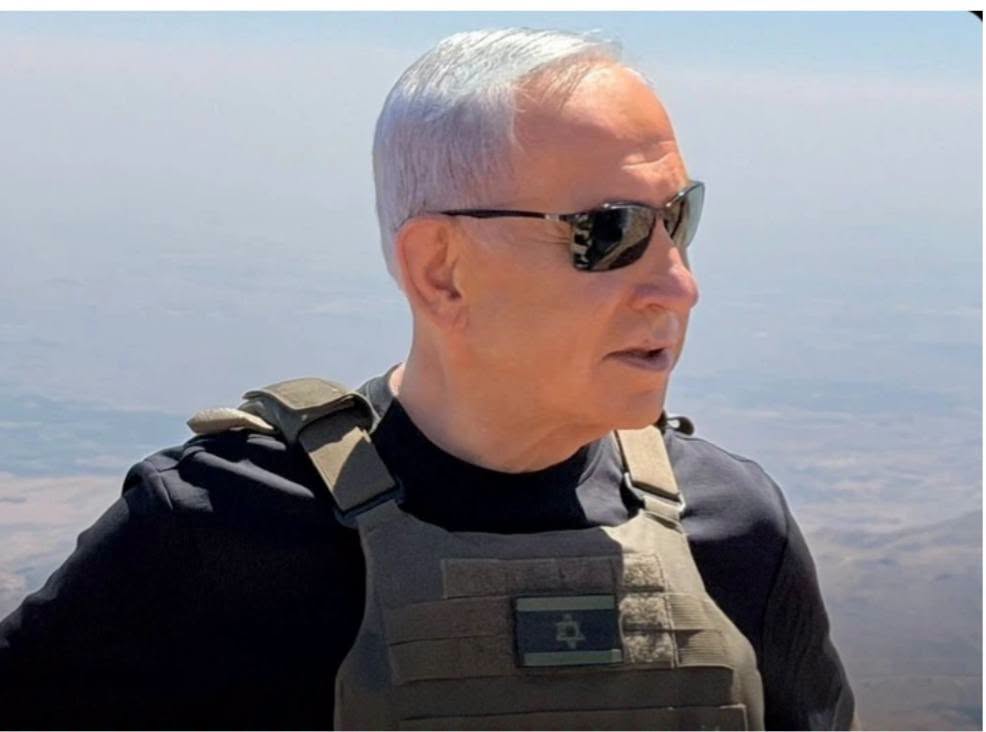
Here lies the central paradox of the current moment. Benjamin Netanyahu sought to use the Gaza war to reshape the Middle East while capitalizing on what had become an unprecedentedly close relationship with the Trump administration. Yet Israel’s successive wars—from Gaza to Lebanon and later Iran—have produced an unexpected consequence: they have triggered a broader American conversation about costs rather than strategic necessity.

Increasingly, the central question in Washington is becoming less about Israel’s security and more about America’s own national interest. Why should the United States continue to bear the financial, military, political, and diplomatic costs of these conflicts? And who ultimately determines when America enters a war—or when it leaves one?

Even the personal relationship between Donald Trump and Benjamin Netanyahu has not escaped these contradictions. After a period of remarkable military coordination, differences emerged as Trump sought negotiations with Iran and an end to the conflict, while Netanyahu’s government viewed continued military pressure as an opportunity to pursue broader strategic objectives. What had appeared to be an exceptionally close partnership gradually evolved into a more complicated relationship marked by disagreements over ceasefires, Lebanon, and the parameters of any future understanding with Tehran.

Israel thus finds itself confronting a profound strategic paradox. It has reached perhaps the highest level of military integration with the United States in its history, while simultaneously experiencing one of the lowest levels of political acceptance among growing segments of the American public and political establishment.

The first major war fought in such close strategic coordination between Washington and Tel Aviv may well have achieved important military objectives. Yet it also accelerated the erosion of the old bipartisan consensus, reopening fundamental questions about money, influence, and the independence of American decision-making. In that sense, Israel may have won battles on the battlefield while beginning to lose something far more consequential in Washington.

The writer is a Jordan Times columnist

CrossFireArabia

CrossFireArabia
Dr. Marwan Asmar holds a PhD from Leeds University and is a freelance writer specializing on the Middle East. He has worked as a journalist since the early 1990s in Jordan and the Gulf countries, and been widely published, including at Albawaba, Gulf News, Al Ghad, World Press Review and others.

Related Posts

Free Hussam Abu Safieh: 600 Days in Israeli Jail

By Ismail Al Sharif

This is the last time you’ll see me. They brought me here to kill me’ – Dr. Hussam Abu Safieh.

Dr. Hussam Abu Safieh, a pediatrician and director of Kamal Adwan Hospital, has been detained by the Israeli occupation forces for nearly 600 days without trial or charges.

His only crime was trying to save the children of Gaza, condemning the crimes he witnessed, and documenting the suffering of the injured children who arrived at the hospital. He shared their images and testimonies with the world; these sparked a wave of outrage and solidarity with the Palestinian people of Gaza.

The occupation has not only bombed hospitals and cut off their electricity, causing premature babies to die in their incubators, and not only prevented medicine from reaching the wounded and denied them treatment, but it has also targeted doctors, paramedics, aid workers, journalists, and anyone who reached out to save the victims.

It doesn’t want witnesses to its crimes. But wants a fully-fledged crime committed in secret, then justified with a ready-made accusation: Belonging to Hamas, or being present in a place allegedly used by members belonging to the organization.

Dr. Abu Safieh was abducted while on duty and subsequently subjected to torture and ill-treatment. His lawyer, Nasser Odeh, documented severe injuries, difficulty breathing, and repeated episodes of unconsciousness during a visit to him on 2 July this month. He was brought to the meeting handcuffed and shackled, surrounded by masked soldiers who concealed their faces, as their actions constitute a crime.

More than 200 healthcare workers have been killed in Gaza, many as a result of direct targeting, while more than 300 doctors and healthcare workers remain detained without trial or charge; as if saving children has become a crime.

Similarly, the Israeli occupation forces abducted Palestinian surgeon Khaled al-Sir from Nasser Hospital in Khan Younis while he was working and detained him for six months before releasing him from Ofer Prison. His family remained unaware of his fate throughout this period.

The thirty-two-year-old doctor described his arrest as a “nightmare,” after he was subjected to torture, humiliation, and denied medical care. He considered himself lucky to have emerged unscathed, while some of his colleagues lost limbs due to being denied medical treatment.

No war has ever claimed so many victims among those who dedicated their lives to saving others. Despite appeals from international, human rights, and grassroots organizations, Dr.  Abu Safieh and his colleagues have not been released.

Appeals are no longer enough; what is needed is genuine political pressure, and the issue of detained doctors must be at the forefront of the priorities of Arab leaders and politicians. Remaining silent about the detention of those who gave their lives to save people is not merely a sign of weakness, but a dereliction of the most basic human and moral obligations.

This is a translated piece written by Ismail Al Sharif and published in the Arabic Addustour newspaper in Amman and appears in crossfirearabia.com

Continue reading
‘Dad, What’s a Ballistic Missile?’

By Firas Al Nassan

Suddenly, I realized that the war with Iran had changed the words we use every day, adding a new vocabulary to our lives, along with the sarcastic lexicon that accompanied footage of people staying up all night watching missiles, hearing air raid sirens, and brazenly dragging missile debris behind them.

My son surprised me with this question just a few days ago. He wasn’t looking for information for a homework assignment, nor was he watching a documentary; he was watching the news with me. I paused for a moment before answering him. Not because explaining the term was difficult, but because I realized that the war hadn’t just changed the political and military landscape, but also the words and semantics now echo in our homes.

Months ago, most of us couldn’t distinguish between a ballistic missile and a cruise missile, and words like “hypersonic,” “drones,” or “air interception” weren’t part of our daily conversations. Today, however, they’re on everyone’s lips. From children to the elderly, from taxi drivers to office workers who start their day by browsing the news.

Even the word “intercept” has changed its meaning. It no longer refers to interrupting someone while they’re speaking, but rather to the success of an air defense system in shooting down a missile before it reaches its target. “Barrage” is no longer associated with rain, but with the number of missiles launched simultaneously. As for “de-escalation,” it has become the most frequently used expression, and perhaps the least achievable.

Remarkably, the war has not only changed military vocabulary, but has also redefined the very concept of place. The Strait of Hormuz, Bab el-Mandeb, and the Red Sea are names that, for many, were merely locations on a map. Now, they have become headline news, determining oil prices, shipping traffic, flight paths, and even market sentiment.

Years ago, anyone who spoke about ballistic missiles or air defenses was considered a military expert or a security analyst. Today, these terms have become part of the general culture, used by people with ease, as if they were words they’ve known for ages.

After I finished explaining the meaning of “ballistic” to my son, it occurred to me that every war has consequences that cannot be measured solely by the number of missiles or the extent of the destruction. There is another, less noisy, impact that lingers with us for a long time: Words.

Wars not only impose new realities on the ground, but they also add new vocabulary to our language. Some of these words disappear with the end of the fighting, while others remain for years, bearing witness to an entire era.

I hope that one day my son will ask me about the meaning of a new word, one unrelated to missiles or air defenses, but rather to travel, exploration, or peace.

The author originally wrote this piece in Arabic and published in Ad Dustour daily in Amman, Jordan  

Continue reading

Leave a Reply

Your email address will not be published. Required fields are marked *

You Missed

US-Israel: More Than a Crack in Relations

US-Israel: More Than a Crack in Relations

Gaza Artist Paints From Rooftop of Destroyed Home

Gaza Artist Paints From Rooftop of Destroyed Home

Netherlands Bans Products From Israeli Settlements

Netherlands Bans Products From Israeli Settlements

Flower of Palestine

  • By marwan
  • July 21, 2026
  • 15 views
Flower of Palestine

47 Bodies Recovered From The Wreckage of a House in Gaza

  • By marwan
  • July 21, 2026
  • 9 views
47 Bodies Recovered From The Wreckage of a House in Gaza

‘Israel has no interest in joining a war against Iran’

  • By marwan
  • July 21, 2026
  • 14 views
‘Israel has no interest in joining a war against Iran’