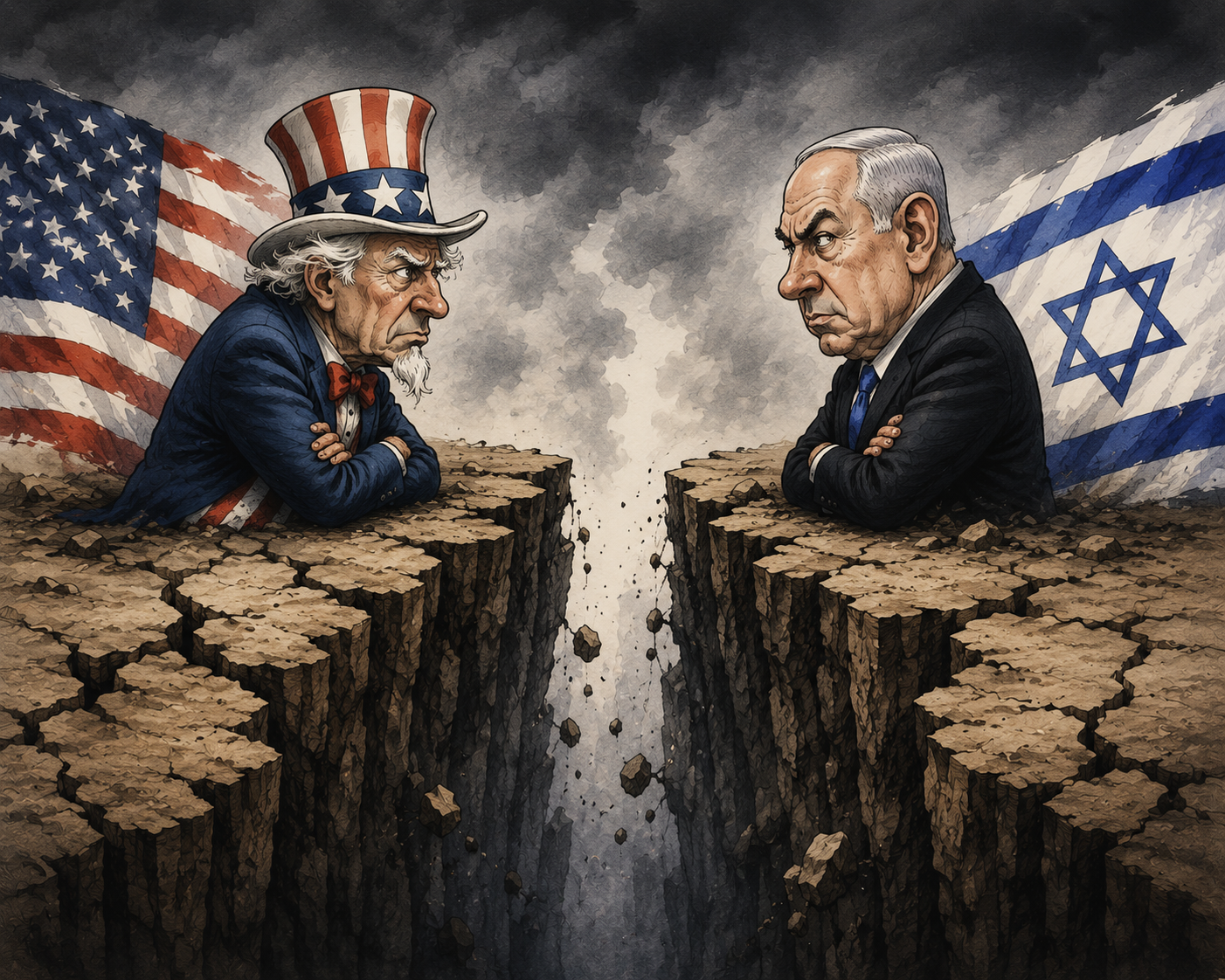
US-Israel: More Than a Crack in Relations

By Mohammad Abu Rumman

The significance of the recent vote in the U.S. House of Representatives does not lie in its immediate outcome. The amendment introduced by Republican Congressman Thomas Massie to suspend roughly $3.3 billion in annual U.S. military aid to Israel was defeated by a comfortable margin, 314 votes to 104. The real surprise, however, was that 103 Democratic lawmakers voted in favor of the proposal, representing more than half of the Democrats who cast either a “yes” or “no” vote. This is difficult to dismiss as a passing protest or as the position of the party’s progressive fringe alone.

The more revealing development is that a number of those lawmakers had, until recently, been considered acceptable allies by the American Israel Public Affairs Committee (AIPAC), with several having previously received its endorsement and political support. Yet immediately after the vote, online fundraising for fifteen of those members seeking re-election quietly disappeared from AIPAC’s donation platform. Their names remained listed among “pro-Israel” legislators, but the financial pipeline had effectively been shut off.

Against this backdrop, Vice President J.D. Vance’s recent remarks become particularly significant. Vance did not merely criticize specific Israeli policies. Speaking on Joe Rogan’s podcast, he accused elements within the Israeli government of attempting to derail U.S. negotiations with Iran and prolong the military campaign. He also referred to financial and political influence campaigns aimed at attacking American officials whose priority, in his view, was to place U.S. national interests above all else.

The debate over Israel is therefore evolving from two seemingly opposite directions that ultimately converge on the same question. Progressive Democrats approach the issue through the lens of Gaza, human rights, and the costs of unconditional American support. At the same time, an emerging current within the Republican populist right approaches it through the doctrine of “America First,” skepticism toward endless wars, and growing reluctance to see the United States become the permanent financier and guarantor of conflicts largely shaped by its allies.

This does not mean that either party is suddenly turning against Israel, nor does it suggest that the U.S.-Israel strategic alliance is on the verge of collapse. America’s military, intelligence, and institutional commitments remain deeply entrenched. What is changing, however, is the old bipartisan consensus.

Within the Democratic Party, divisions have become increasingly visible. Minority Leader Hakeem Jeffries opposed the amendment, while senior Democratic figures, including Nancy Pelosi and Katherine Clark, voted in favor of it. Even J Street—the liberal pro-Israel organization that opposed the amendment itself—acknowledged that the vote represented a politically significant moment.

Republicans, meanwhile, remain broadly supportive of Israel, particularly within the party’s traditional conservative and evangelical base. For precisely that reason, Vance’s comments provoked unusually fierce criticism from Republican politicians and conservative media, who viewed them as a departure from long-standing party orthodoxy. Yet the very existence of such a dispute suggests that Israel is no longer entirely beyond debate, even within the constituency historically regarded as its strongest American supporter.

Here lies the central paradox of the current moment. Benjamin Netanyahu sought to use the Gaza war to reshape the Middle East while capitalizing on what had become an unprecedentedly close relationship with the Trump administration. Yet Israel’s successive wars—from Gaza to Lebanon and later Iran—have produced an unexpected consequence: they have triggered a broader American conversation about costs rather than strategic necessity.

Increasingly, the central question in Washington is becoming less about Israel’s security and more about America’s own national interest. Why should the United States continue to bear the financial, military, political, and diplomatic costs of these conflicts? And who ultimately determines when America enters a war—or when it leaves one?

Even the personal relationship between Donald Trump and Benjamin Netanyahu has not escaped these contradictions. After a period of remarkable military coordination, differences emerged as Trump sought negotiations with Iran and an end to the conflict, while Netanyahu’s government viewed continued military pressure as an opportunity to pursue broader strategic objectives. What had appeared to be an exceptionally close partnership gradually evolved into a more complicated relationship marked by disagreements over ceasefires, Lebanon, and the parameters of any future understanding with Tehran.

Israel thus finds itself confronting a profound strategic paradox. It has reached perhaps the highest level of military integration with the United States in its history, while simultaneously experiencing one of the lowest levels of political acceptance among growing segments of the American public and political establishment.

The first major war fought in such close strategic coordination between Washington and Tel Aviv may well have achieved important military objectives. Yet it also accelerated the erosion of the old bipartisan consensus, reopening fundamental questions about money, influence, and the independence of American decision-making. In that sense, Israel may have won battles on the battlefield while beginning to lose something far more consequential in Washington.

The writer is a Jordan Times columnist

Continue reading
Ceasefire And Defeat: Iran Won The War  

By Abdel Bari Atwan

Finally, after 100 days of aggression into which Benjamin Netanyahu dragged the US president into, Donald Trump realized he couldn’t not win the war against Iran, and the chances of defeat were far greater than the chances of victory. Therefore, he decided to surrender and raise the white flag, seeking a way out to minimize losses and save face.

He found what he was looking for in the hands of his Pakistani allies, who offered him a lifeline in the form of a “Memorandum of Understanding” leading to a ceasefire, preventing a regional war of attrition, and forcing him to reluctantly acknowledge Iranian-Omani sovereignty over the Strait of Hormuz.

Trump then turned his arrows toward those who had deceived him—the Israeli occupation state—after beginning to awaken from his stupor and the great deception he had suffered.

Trump might sign this “memorandum” with the leaders of the country whose current Islamic regime he waged war to overthrow, replacing it with a puppet regime, stripping Iran of its nuclear ambitions and more than 460 kilograms of highly enriched uranium—enough to produce 10 nuclear bombs—and, most importantly, acknowledging the unity of the battlefields, thus yielding to Iranian demands the ceasefire encompass all fronts, especially the Lebanese front.

Now the decisions on contentious issues are being postponed, particularly the Iranian nuclear file, and referring them to negotiations that will begin immediately after the ceasefire, along with the gradual lifting of sanctions on Iran for a period of two months, and the unfreezing of tens of billions of dollars of its assets.

These are all concessions reflecting the first fruits of the success of the astute Iranian administration, coupled with a swift military deterrent against any American or Israeli strikes in or around the Strait of Hormuz, and ignoring all of Trump’s empty threats to destroy Iran, wipe it off the face of the earth, and unleash hell upon it.

***

For over two years, Iran negotiated with the United States and European countries regarding its nuclear program and the sensitive issue of uranium enrichment in several capitals, from Vienna to Muscat, Oman, and finally Geneva. It made no concessions whatsoever. Ironically, the head of its negotiating team was Abbas Araqchi, who adhered to the leadership’s ‘yes, but’ approach, which is based on another principle: “We welcome and study” any proposals presented at the negotiating table. As a reward, he was promoted to lead Iranian diplomacy as Foreign Minister in both the previous and current governments.

The Iranian regime possessed many cards, which it used intelligently to counter this Israeli-American aggression. These included the nuclear card and military preparedness based on self-sufficiency in the production of missiles and highly advanced drones. However, one of the most important cards was the unity of the battlefields, support for resistance factions, and the expansion of the conflict into a regional war of attrition.

All these cards yielded results, forcing Trump to resort to the current agreement in a humiliating manner to end the war as quickly as possible. Regardless of whether this memorandum of understanding holds or not, the biggest loser is the Israeli occupation state. This isn’t because it wasn’t consulted or involved, even though it is the true architect and instigator of this war.

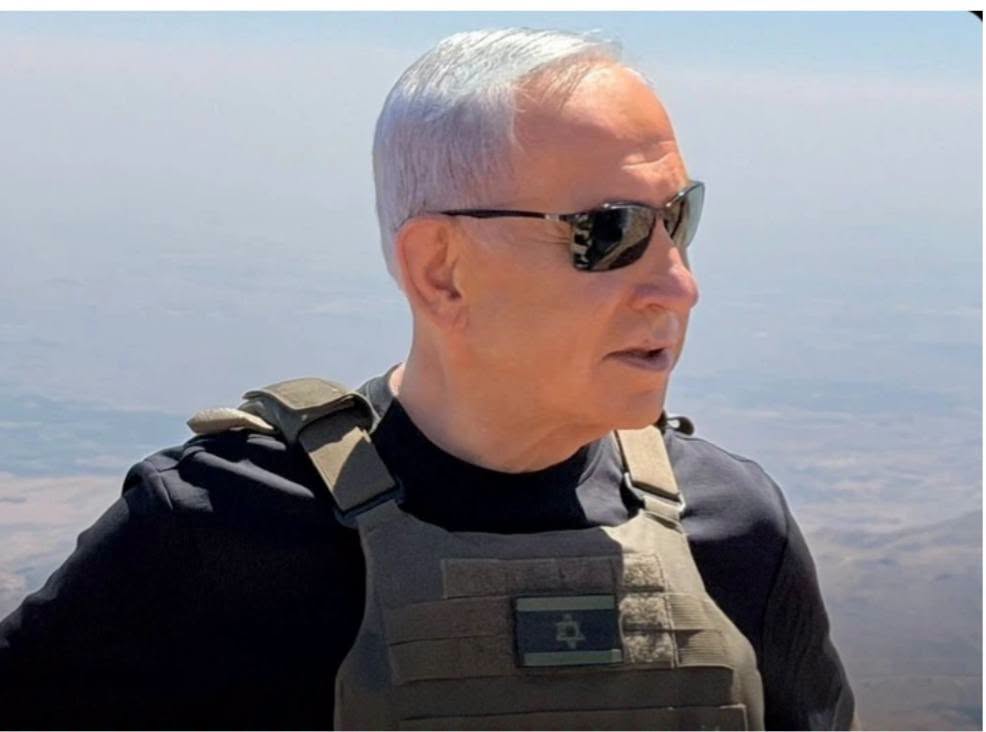
Netanyahu, who was reprimanded and labeled insane by his former protégé and “rebellious” servant, Trump, was completely oblivious, searching for information in newspaper reports, television broadcasts, and social media. How things change!

The unity of the battlefields, which embodies one of Iran’s most prominent strategic achievements, and the leadership’s insistence on a complete ceasefire in Lebanon, were the most significant blow to the occupation state.

The American recognition of this unity in the proposed memorandum legitimizes Hezbollah’s existence as a resistance movement, just as it criminalizes the Israeli occupation and its destructive raids. Netanyahu’s acceptance, or rather his acquiescence, to this agreement is a major defeat, while his rejection of it means a direct confrontation with America and its president, and the possibility of being left to act alone in aggression, which would signify an even greater existential defeat.

Netanyahu deceived Trump, leading him into this war like a sheep, convincing him that Iran would collapse as soon as it was bombarded with the first salvo of joint American and Israeli missiles. He led him to believe that tens of millions of Iranians would take to the streets, dancing in celebration of this aggression and demanding the overthrow of the regime.

Yet, the war has dragged on for 100 days, and the results are the opposite. The Iranian Islamic regime is growing stronger and more resilient, reinforcing both territorial and popular unity, and embodying both nuclear and regional sovereignty.

***

We say it without hesitation, with complete frankness and clarity: Trump has been defeated, and the Israeli occupation state is rapidly heading towards collapse, becoming increasingly isolated and hated, especially by its strategic American ally—both the American people and government—who have fallen into the trap of its lies, fabricated information, and blackmail.

This serves Israel’s interests and its racist, terrorist schemes at the expense of America’s own interests, its people, its standing as a superpower claiming leadership of the free world, and the values ​​of justice, democracy, human rights, and global security and stability.

Trump has led America to defeat, whether this agreement holds or not, and this defeat will be clearly confirmed in the American midterm elections next November. We do not rule out that he and his deceiver, Benjamin Netanyahu, will end up behind bars, as prominent symbols of stupidity, criminality, and failure… Time will tell.

Abdul Bari Atwan is the Chief Editor of the Arabic Al Rai Al Youm and his latest article has appeared in the English crossfirearabia.com English website. 

Continue reading
‘Iran Ready For Diplomacy’

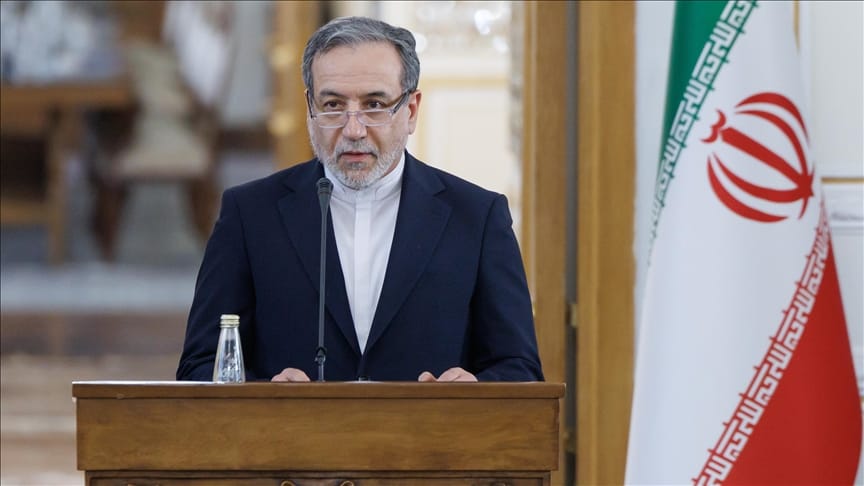
Iran is ready for diplomatic negotiations, the country’s foreign minister said Monday, as tension continues to rise between Tehran and Washington.

“We are ready for diplomacy, but diplomacy also has its own principles. I hope we will see results soon,” Abbas Araghchi said during a visit to the shrine of Ayatollah Ruhollah Khomeini, the architect of Iran’s 1979 Revolution according to Anadolu.

“Iran’s enemies, who failed to achieve their goals,” whether through last year’s 12-day war or recent protests “have now turned to diplomacy.”

“These same parties are talking about diplomacy today, even though Iran has always been ready for this option, provided there is mutual respect and consideration of interests,” he added.

In June 2025, Israel, backed by Washington, launched a 12-day attack on Iran that targeted military and nuclear sites as well as civilian infrastructure and killed senior commanders and scientists. Iran responded by striking Israeli military and intelligence facilities with missiles and drones before the US announced a ceasefire.

Araghchi’s remarks came amid heightened tensions between Iran and the US, with the American military fleet reportedly heading toward the region, as announced by President Donald Trump.

Trump confirmed that a large US “armada” was en route to the region, warning Iran to enter negotiations over its nuclear program or face potential military action.

In recent days, there has been intense diplomatic activity, with several regional countries – including Turkiye – intervening to ease tensions between the two nations.

Continue reading
Truth Be Told….

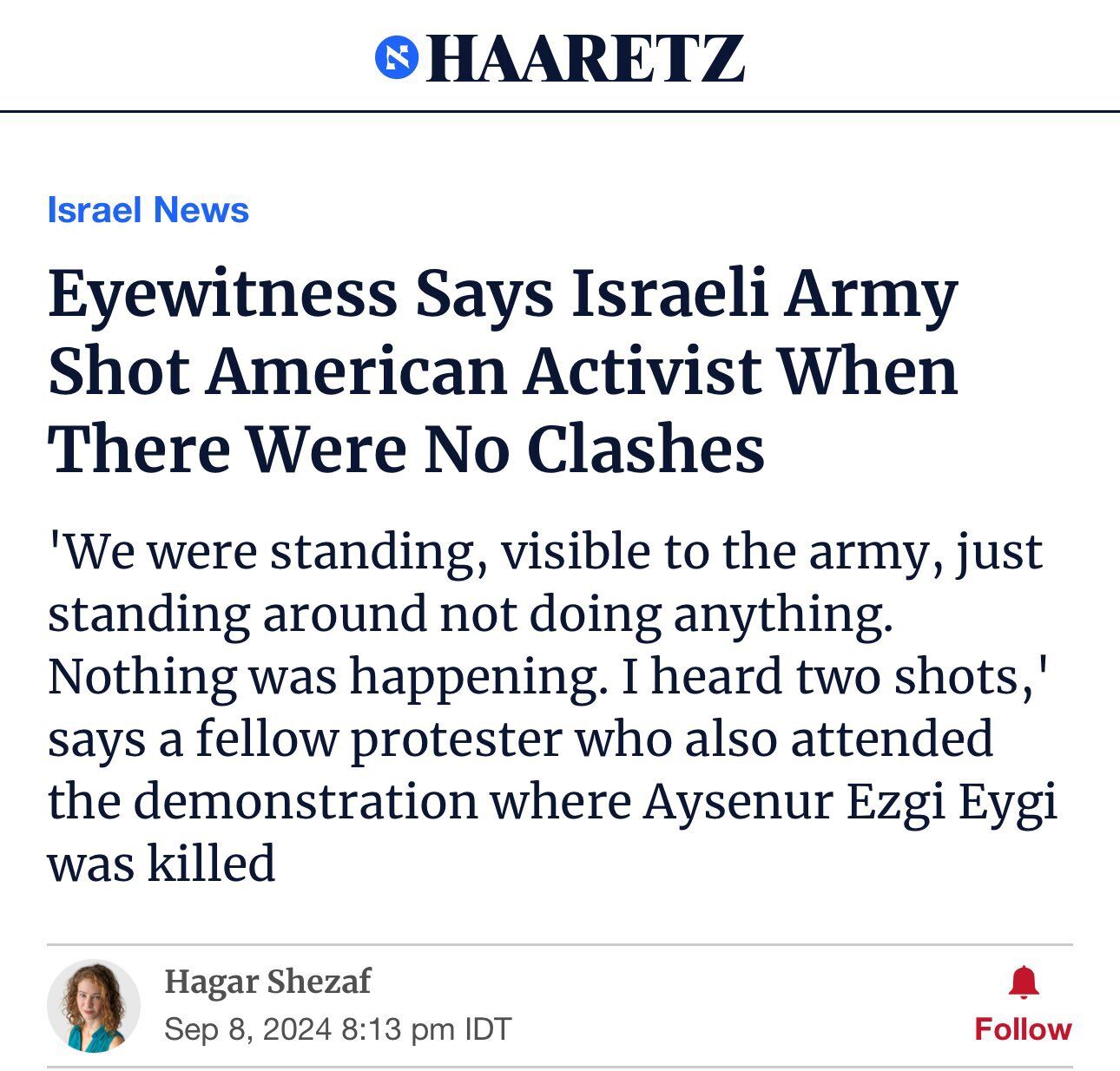
Palestinian groups, Monday, said Turkish-American activist Aysenur Ezgi Eygi “will remain an icon” for the Palestinian struggle on the local and international levels. 

Eygi, 26, a dual citizen of Türkiye and the US, was shot dead by Israeli forces during a Friday protest against illegal Israeli settlements in the town of Beita in the occupied West Bank.

In a statement, the National and Islamic Forces, an umbrella that includes most of the Palestinian groups, said: “Martyr Aysenur will remain an icon for the struggle and fighting at the Palestinian and international levels.”

“Many solidarity activists join our Palestinian people in the activities of the popular resistance in the towns and villages that are exposed to (Israeli) colonization and expropriation,” the statement read.

The Palestinian groups considered Eygi’s death as a confirmation of Israel’s implementing of the policies of killing, expulsion, and ban-of-entry for international solidarity activists.

The statement stressed the importance for punishing Israel for its indifference towards the life of international solidarity activists who stand against Israeli occupation and settlements construction on the occupied Palestinian territories.

Early on Monday, hundreds of Palestinians in the West Bank city of Nablus paid farewell to activist Eygi. The funeral procession began from Rafidia Government Hospital in Nablus, with mourners walking through several streets, chanting slogans condemning Israeli actions and praising foreign supporters, according to an Anadolu reporter.

Eygi’s body is expected to be transported to Türkiye.

The Israeli military has yet to comment on the specifics of the incident or the findings of the autopsy.

Eygi’s killing echoes the case of American-Palestinian journalist Shireen Abu Akleh, who was killed in a similar manner in 2022.

Continue reading