How Would You Like to Die?

Hilal Elver

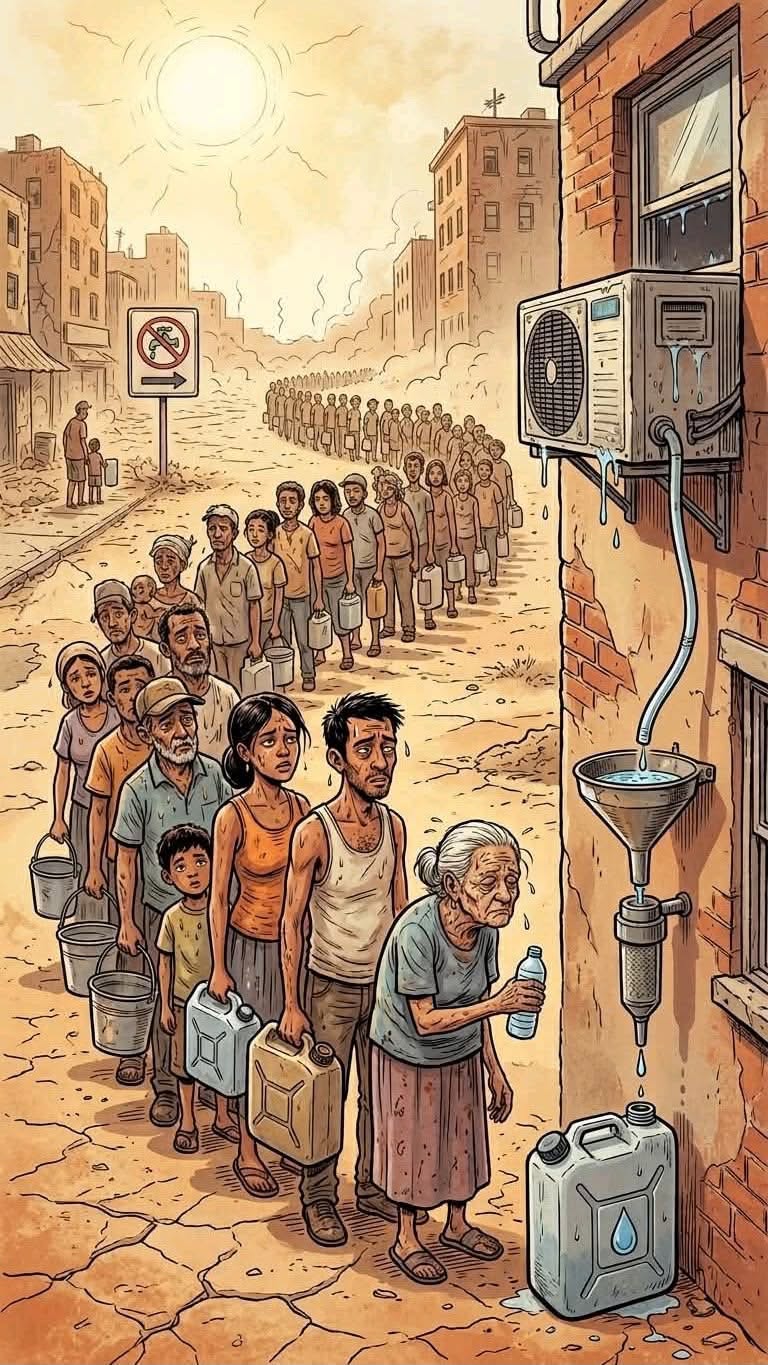
As we approach the second anniversary of the horrific and genocidal assault on the civilian population of the Gaza Strip, we are witnessing Israel’s systematic disregard for international law and human rights and its weaponization of humanitarian principles. In any armed conflict, the denial of food and water constitutes a war crime under international criminal law. But the mass starvation in Gaza—which quickly evolved into a man-made famine—is unlike any other crisis in modern times.

In Gaza, not only is access to food and water deliberately obstructed, but humanitarian aid itself has become a tool of warfare—used as leverage and denied as a means of collective punishment. The visibility of this crisis, the abundance of credible evidence of war crimes, the immense suffering of civilians—above all women and children—and the impunity of powerful actors make this both a test case for the erosion of humanitarian norms and a tragic outlier in the history of international law.

The blockade and starvation of Gaza are not new. They have a long history—and a uniquely bleak future compared to other conflict-related famines. Since 2007, Gaza has been under Israeli blockade. During this period, Israel systematically calculated the minimum caloric intake required for survival—creating a so-called “Gaza Diet.”[1]

Entering the war, Israel had detailed knowledge of the population’s basic needs and made a conscious, sustained choice to deny adequate access to food and clean water for over 21 months.

Unlike other conflicts, there is no escape from the devastation in Gaza. The entire territory is a war zone, and all 2.3 million Palestinians are treated as enemies[2]—collectively punished and militarily targeted. Humanitarian convoys wait at border crossings, fully loaded, but are denied entry. Food rots within sight of starving families, often just meters away.

Due to Gaza’s specific circumstances, starvation spread rapidly—from the North to the Center and then to the South. By December 2023, with winter approaching, most homes and residential areas were destroyed. The majority of Gazans were living in tents or the ruins of buildings—without food, water, cooking facilities, heating, or sanitation. Evidence has long shown that catastrophic living conditions, a crumbling healthcare system, and severely inadequate and sporadic humanitarian aid produced mass malnutrition and imminent famine.


Deliberate targeting tactics

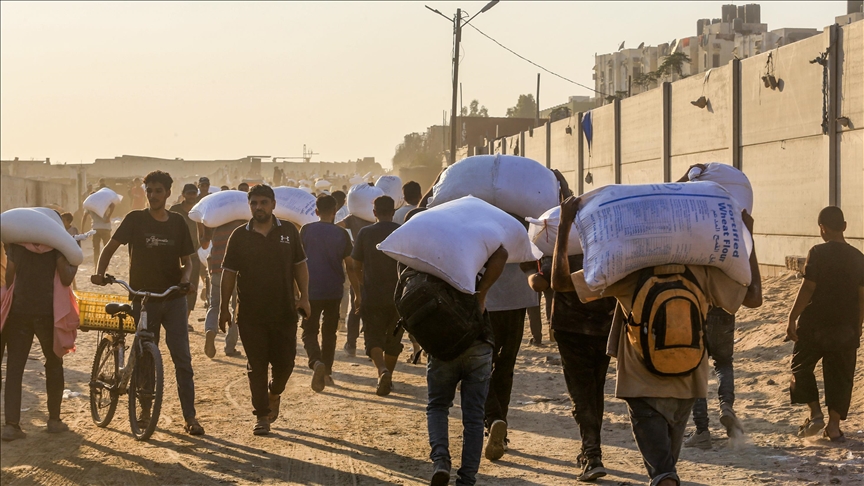
Israel has repeatedly denied UN and NGO reports about the use of starvation as a weapon. The US government also ignored clear warnings and overwhelming evidence. For months, most Western governments avoided using the words famine or genocide in relation to Gaza. The UN’s Integrated Food Security Phase Classification (IPC)[3], the authoritative global body on famine assessments, has yet to formally declare a famine in Gaza—despite mounting evidence—due to political pressure from perpetrators. Statements by UN Special Rapporteurs, based on scientific data, and multiple interim rulings by the International Court of Justice [4] warning of the “plausibility of famine” have been disregarded. Instead, Israeli forces have responded with further attacks on aid convoys[5] and on civilians trying to collect sacks of flour.[6] These were not collateral damages; they were targeting tactics.

Day by day, the situation has gone from bad to worse—to catastrophic. On March 2, 2025, during a broken ceasefire, Israel blocked all international humanitarian aid from entering Gaza, allowing only minimal deliveries through a militarized and dehumanizing distribution system it controls. In March 2025, the blockade entered a harsher phase, marked by stricter restrictions and the militarization of aid distribution. After two months without food and water, the United States, alongside private contractors and mercenaries under Israeli military supervision, launched a long-planned entity: the Gaza Humanitarian Foundation (GHF)[7].

This new structure replaced over 400 non-militarized UN distribution points with just four distribution centers—located in highly insecure areas. Humanitarian principles of humanity, neutrality, impartiality, and independence were completely abandoned. UN agencies and international humanitarian organizations refused to participate in this privatized, militarized, and lethally deceptive system.

Dire results were feared from the outset. More than 1,000 people have died of Israeli army sniper attacks at these sites, and more than 5,000 have been injured. People walk for hours along dangerous, dusty roads, wait under the desert sun, and are given just 11 minutes to collect 25 kilograms[8] of flour before the GHF arbitrarily closes its gates. When they exit, the ordeal often continues. Many are shot—by Israeli forces, private security, or armed groups. Gaza’s civilians are forced to choose between being killed by snipers or dying of hunger. Today, simply following the path of supposed humanitarian aid amounts to a death sentence.


Israel knows no limits in committing war crimes

On July 20, 2025, Israeli tanks and snipers attacked a 25-truck World Food Programme convoy[9] at the Zikim crossing. More than 100 Palestinians waiting for food were killed. It is a demonic inversion of humanitarianism: starvation weaponized, aid turned into bait, and civilians punished for seeking sustenance.

Famine, though still undeclared, is now undeniably present in Gaza. Why does the IPC exist if it cannot act? In recent days alone, over 100 people have died of hunger[10], including infants. Humanitarian workers and medical staff are collapsing from exhaustion and malnutrition. Every day, 10–15 people die from starvation.

Starvation is a silent death. It hides its cruelty. It is a societal torture.[11] People lose the energy to ask for help. Children stop crying. It is also one of the most painful deaths—the body consuming itself. Children suffer first, and if they survive, they are left with lifelong physical and cognitive damage. The effects of the Gaza famine will persist for generations.

Even the death toll has become a political battleground. Israel accuses Gaza’s health authorities of inflating numbers, yet respected research institutions have reported far higher estimates. In July 2024, The Lancet [12] projected over 186,000 deaths—many from indirect causes such as starvation, dehydration, and exposure. Oxfam[13] now reports that in the past 100 days, the daily death rate in Gaza is over 250—higher than in any other 21st-century conflict.

Unless there is an immediate permanent ceasefire or a meaningful intervention by the international community, Gaza will become even more of a monstrous killing field—a real-life version of The Hunger Games. What once seemed like dystopian fiction is now a horrifying reality, unfolding in plain sight.

[1] https://visualizingpalestine.org/visual/the-gaza-diet/
[2] https://www.isdglobal.org/digital_dispatches/no-innocents-the-collective-blame-of-palestinians-online/
[3] https://www.ipcinfo.org
[4] https://www.icj-cij.org/node/203447
[5] https://www.aljazeera.com/news/2024/11/30/israel-kills-world-central-kitchen-aid-workers-in-gaza
[6] https://www.ohchr.org/en/press-releases/2024/03/un-experts-condemn-flour-massacre-urge-israel-end-campaign-starvation-gaza
[7] https://www.972mag.com/gaza-social-collapse-criminal-gangs/
[8] https://www.theguardian.com/global-development/2025/jul/22/food-aid-gaza-deaths-visual-story-ghf-israel
[9] https://www.wfp.org/news/gaza-convoy-incident-statement
[10] https://www.ft.com/content/6899af82-1a6f-4ec6-91ba-41e7a5f0012d?utm_source=chatgpt.com
[11] https://cjil.uchicago.edu/print-archive/siege-starvation-war-crime-societal-torture
[12] https://www.thelancet.com/journals/lancet/article/PIIS0140-6736(24)01169-3/fulltext
[13] https://www.oxfam.org/en/press-releases/daily-death-rate-gaza-higher-any-other-major-21st-century-conflict-oxfam

*Opinions expressed in this article are the author’s own and do not necessarily reflect Anadolu’s editorial policy.​​​​​​​

The author is a former UN Special Rapporteur on the Right to Food (2014-2020) and a member of the High Level Panel of Experts (HLPE) of the UN Committee of World Food Security (CFS).

CrossFireArabia

CrossFireArabia
Dr. Marwan Asmar holds a PhD from Leeds University and is a freelance writer specializing on the Middle East. He has worked as a journalist since the early 1990s in Jordan and the Gulf countries, and been widely published, including at Albawaba, Gulf News, Al Ghad, World Press Review and others.

Related Posts

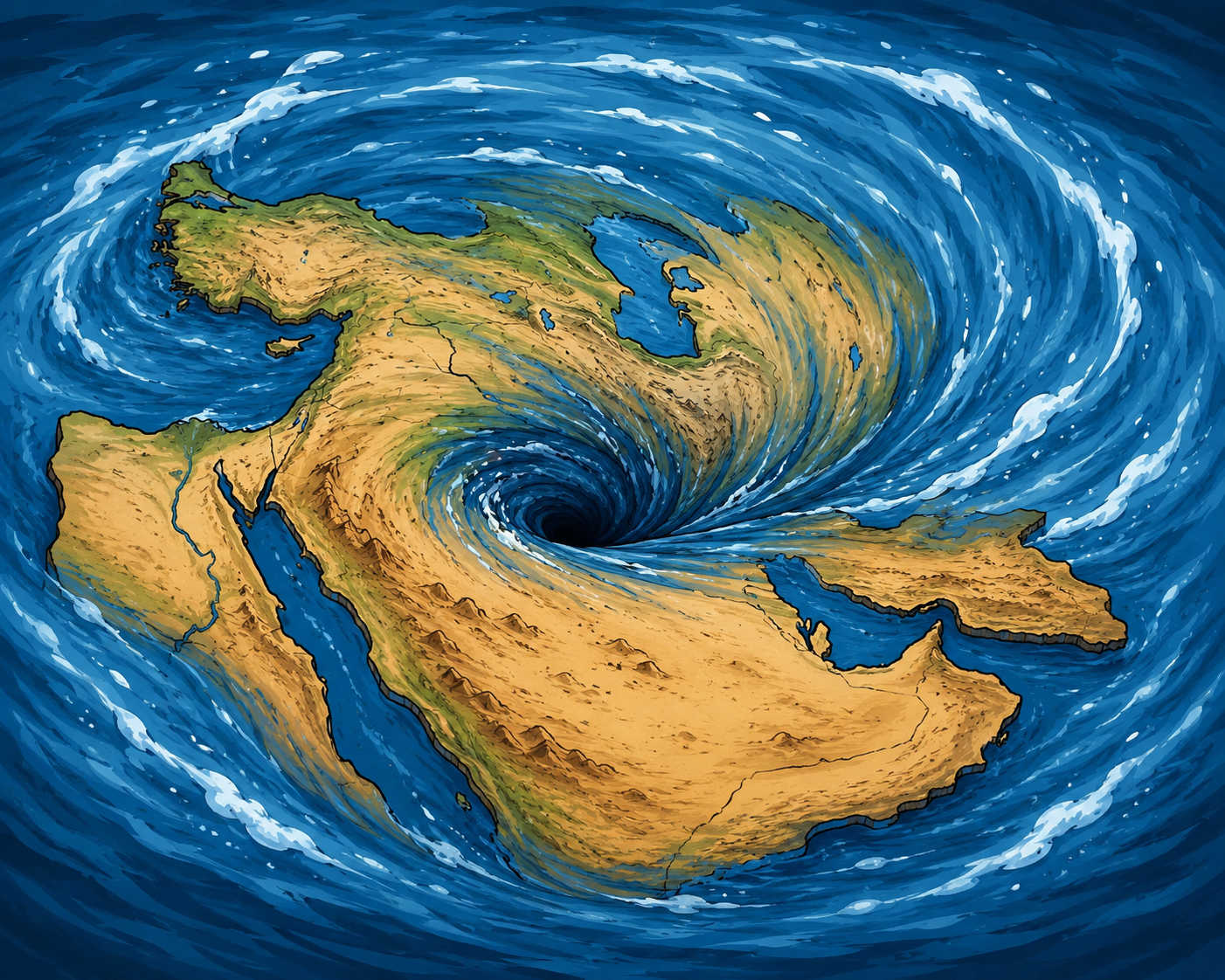
A Middle East Whirlpool! View From Amman

By Saleem Ayoub Quna

Unlike the grey terrain of the Middle East, known for its harsh aridity and barren landscapes, the region’s still-unsettled, multi-front conflicts that erupted after the 7 October, 2023 surprise Palestinian assault on Israeli settlements around Gaza Strip, almost literally, become associated in the public imagination with the colour blue: The sea, its waves, its vessels and its strategic waterways.

The Palestinians called that watershed event Al-Aqsa Flood. Israel described 7 October as a second Holocaust. If the Palestinians deliberately chose the word flood for its religious and symbolic connotations, the Israeli way of describing it, indicated how serious and tough their losses and injuries were.

What followed was a succession of milestones and unprecedented developments across the Middle East. They continue to unfold dramatically, resembling the abrupt and unpredictable movements of hurricanes and tempests on the high seas.

Yet the side-conflicts and mini-wars that followed 7 October have neither followed a single pattern nor obeyed the same rules. Instead, events have moved in different, sometimes opposing directions — unlike the orderly circular motion of an actual whirlpool. It is almost as though every confrontation has chosen a course of its own: The predictable alongside the unpredictable, the rational alongside the seemingly illogical.

It therefore takes more than intelligent guesswork or clever political analysis to determine which direction these events will ultimately take, and which may prove more dangerous — not only to the region and its inhabitants, but also to the many international powers with interests at stake.

If we were to capture the current Middle Eastern scene in a single frame, we might portray it as an extraordinary, almost unbelievable collision of man-made tides, currents and sub-currents, all moving simultaneously through one increasingly turbulent sea.

Because the first shots fired on 7th October around Gaza strip, from a Palestinian point of view, came as a last desperate call and reminder of the injustice they are suffering, they soon found their echoes in the four corners surrounding it: In south Lebanon, Yemen to the south and Iraq and Iran to the east. Even to the west, there were international sailors who belonged to the Peace Flotilla, trying to bring medicine and food to the starving children of Gaza!

One of the most significant currents emerged on Israel’s northern front.

What initially appeared to be a relatively “controlled” confrontation between Israel and Hezbollah steadily intensified until September 2024, when Israel killed the party’s leader Hassan Nasrallah. Only a few months later came another geopolitical earthquake: The collapse of Bashar al-Assad’s government in Damascus in December 2024.

Each development sent another powerful current through the already boiling waters of the wider Middle Eastern whirlpool.

Then came an even larger artificial wave.

In June 2025, the United States launched Operation Midnight Hammer, striking Iran’s three principal nuclear sites at Fordow, Natanz and Isfahan while diplomatic efforts surrounding Iran’s nuclear programme were still underway.

Washington described the operation as an attempt to inflict decisive damage on Iran’s nuclear capabilities. Tehran responded with retaliatory action against American military interests in the Gulf.

But that was not the end of the storm.

On 28 February, 2026, the world witnessed another major escalation when the United States and Israel launched coordinated, large-scale attacks against Iran. The two allies acted jointly but gave their military campaigns different names: Washington called its operation Epic Fury, while Israel called its campaign Roaring Lion.

The strikes hit Iranian military infrastructure and senior leadership and inflicted substantial damage. Yet they failed to produce one of the most far-reaching political outcomes sought by US-Israeli advocates of the military campaign: The toppling of the Iranian regime.

And so the whirlpool continued.

Iran responded not simply through missiles and military retaliation, but by shifting the struggle towards one of the most strategically sensitive waterways on earth: The Strait of Hormuz.

Through restrictions on shipping, attacks on vessels and increasingly assertive claims over the waterway, Tehran transformed Hormuz into another major front in the confrontation. The strait — through which a substantial share of the world’s energy supplies traditionally passes — became yet another current dragging regional powers and the wider international community deeper into the turbulence.

Here, the metaphor of the whirlpool becomes more than literary.

Gaza, Lebanon, Syria, Iran, Yemen, Iraq, the Red Sea, the Arabian Gulf and the Strait of Hormuz are no longer easily separable theatres. Each produces currents that flow into the others. A military strike in one location generates political pressure somewhere else; an assassination changes the balance of power hundreds of kilometres away; a blocked shipping lane reverberates through global markets thousands of kilometres beyond the Middle East.

And all the while, new currents are being created faster than old ones can disappear.

What begins on the shores of Gaza does not remain in Gaza. What happens in Beirut, Damascus, Tehran or the Strait of Hormuz does not remain there either.

The Middle Eastern whirlpool has become too wide, too violent and too interconnected to contain its turbulence within the region itself.

And as it keeps spinning, its waves will continue to splash far beyond the shores of the Middle East — reaching, sooner or later, virtually every corner of the globe.

Conclusion: As long as the waters surrounding the Middle East remain crowded with warships, missiles, blockades, retaliatory strikes and the debris of foreign intervention, the region’s old whirlpool will continue to spin.

Continue reading
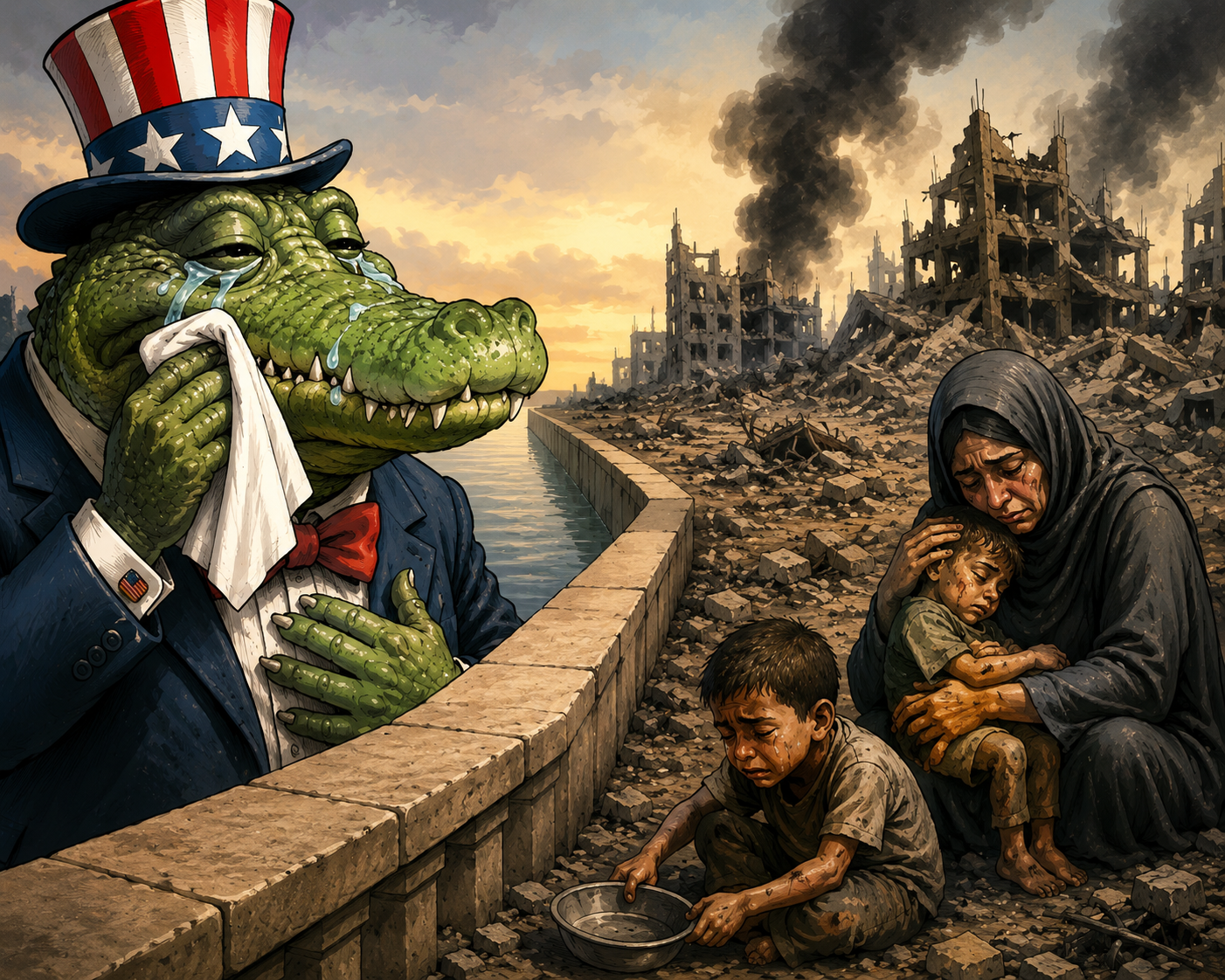
‘No Need For Your Crocodile Tears’
  • HebaHeba
  • August 13, 2026

By Ismail Al Sharif

“I’ll say it frankly: We should have exerted more pressure on Israel to adopt a different approach in Gaza” – Jake Sullivan, National Security Advisor to ex-President Joe Biden.

A striking phenomenon is recurring in American politics: Some presidents, cabinet members, and senior officials become more outspoken in their stances toward the Israeli occupation entity after leaving office, expressing regret for decisions that contributed to the injustice inflicted upon the Palestinian people.

This may be due to their liberation from diplomatic and partisan constraints, the pressures of Zionist lobbies, and the influence of tainted money, or perhaps their consciences awaken belatedly as they feel closer to death, realizing the enormity of the injustice they participated in or condoned.

Examples of this are numerous. Among the most prominent is former US President Jimmy Carter, who, after leaving office, shifted from a traditional pro-Zionist rhetoric to criticizing the Israeli occupation and its policies. Then there is Chuck Hagel, former US Secretary of Defense, who held the United States responsible for the Zionists’ continued aggression and described their practices as terrorism— but only after his retirement, of course.

Robert Gates, the former Secretary of Defense, also criticized war criminal Benjamin Netanyahu, calling him ungrateful.

More recently, Jake Sullivan, former National Security Advisor, and Antony Blinken, Biden’s lackluster Secretary of State, joined the ranks of those who have expressed regret. Both men have blood on their hands from the blood of Palestinian children and played a shameful role in supporting the Israeli entity during one of the greatest acts of genocide in modern history.

This was revealed in a lengthy investigation published in The New Yorker magazine last 20th July, titled “How Biden Enabled Israel’s Aggression Against Gaza – and Iran,” with the subtitle: “Top officials from the previous Administration now express regret over their failure to rein in Netanyahu.”

However, this regret will not absolve them for they knew full well that the Zionists were committing genocide in Gaza. On 5 March, 2024, five months after the start of the genocide, Mirjana Spoljarić, president of the International Committee of the Red Cross (ICRC), sent a confidential letter to President Biden. The ICRC, in addition to its humanitarian mission, is obligated under the Geneva Conventions to provide states with information and advice to help them avoid committing war crimes.

In her letter, Spoljarić reminded President Biden that the organization had condemned the “horrific” massacre perpetrated by Hamas against Israelis on 7 October 2023 and that it had continued to press the movement “tirelessly” for the release of the “hostages” it was holding.

However, this time she appealed to Biden with “grave concern,” warning that Israel, which had continued to bombard Gaza with heavy munitions since that October, was ignoring the ICRC in an unprecedented manner.

In her letter, she wrote: “The way Israel conducts hostilities is inconsistent with the laws of armed conflict, particularly the obligations to protect civilians, to distinguish between military objectives on the one hand and civilians and civilian infrastructure on the other, to ensure the humane treatment of detainees and the dead, to protect medical facilities and personnel, and to provide and facilitate the delivery of humanitarian aid.”

Despite these clear warnings, the United States remained a key partner in the genocide, providing weapons, money, and political and international cover to Israel. And now some of its officials come to shed crocodile tears for the children of Gaza!

I say to them: You have no right to repent now, after all these martyrs, after all these tragedies, to say: “We are sorry, we made a mistake.” You knew, and you had the power to pressure and prevent, but you chose to support, arm, and cover up. You bear the burden of what happened, and the blood of the children of Gaza will haunt you and pursue your names to the dustbin of history.

This piece by Ismail Al Sharif was originally published in the Arabic Addustour daily and reprinted in English in Crossfirearabia.com.

Continue reading

You Missed

Albanese Calls For World Force to Protect Civilians in Gaza, West Bank

Albanese Calls For World Force to Protect Civilians in Gaza, West Bank

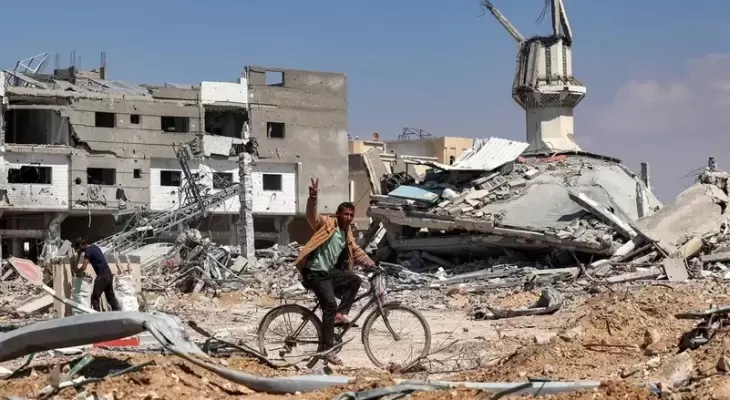
40 Million Tons of Rubble: Gaza Ministry Faces Challenges in Removing it

40 Million Tons of Rubble: Gaza Ministry Faces Challenges in Removing it

Join The Queue For The Drops

Join The Queue For The Drops

‘My Way Out of Insanity’

‘My Way Out of Insanity’

The Child, Tree and The Dark

The Child, Tree and The Dark

Palestinian Dr Held Over Social Media Posts Suffers Heart Attack in Israeli Detention

Palestinian Dr Held Over Social Media Posts Suffers Heart Attack in Israeli Detention