CrossFireArabia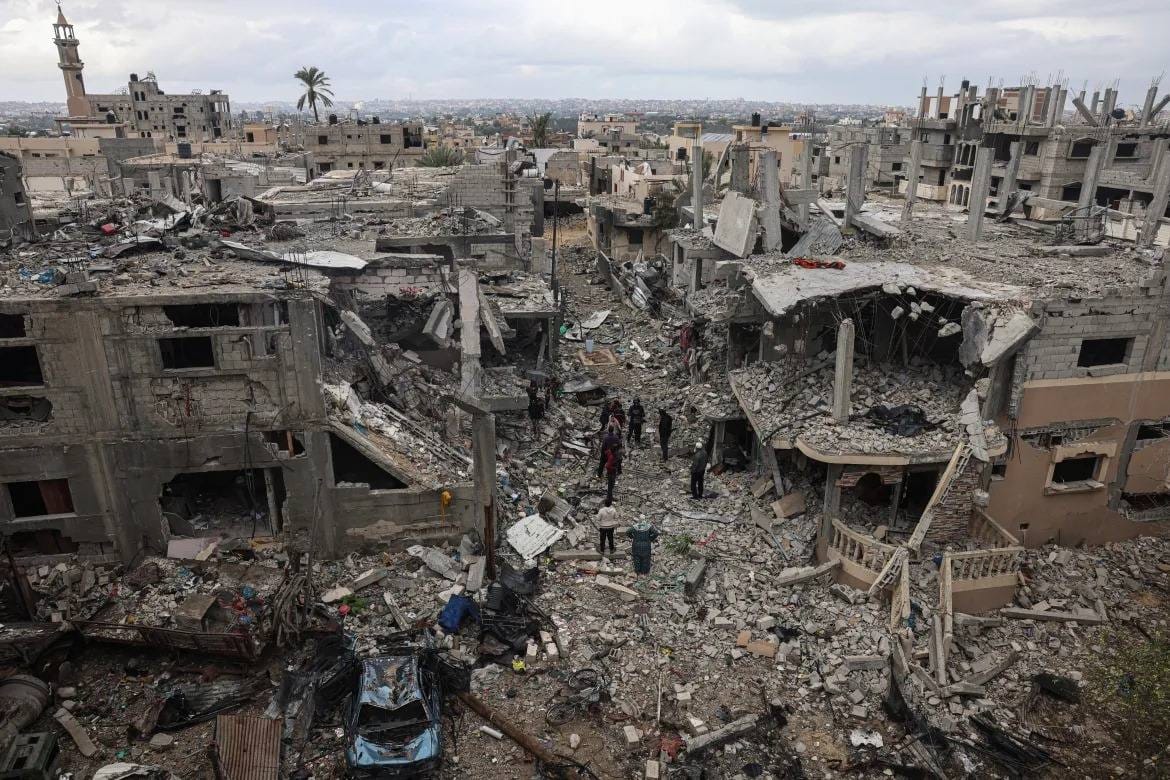
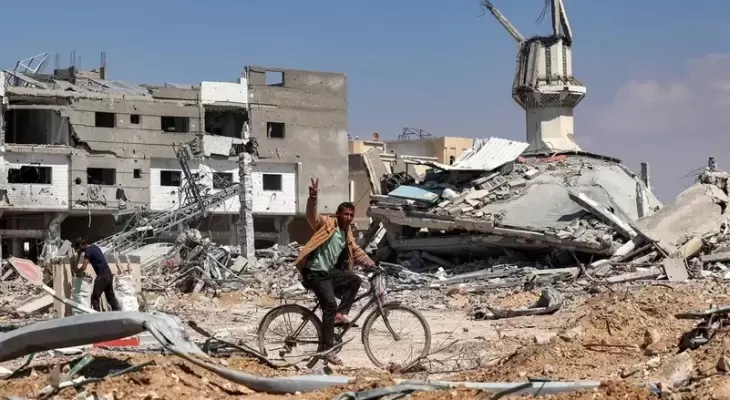
Hundreds of thousands of displaced Palestinians continue to return to Gaza City and other areas, amidst the rubble and destruction left behind by the two-year Israeli military offensive on the Gaza Strip.
Families are walking along Rashid and Salah al-Din streets, carrying their children and their few belongings. Many have no homes to return to.
Palestinians were also able to return to the center of Khan Yunis, in the southern Gaza Strip, after Israeli military vehicles withdrew from the city center following the ceasefire announcement.
The mayor of Khan Yunis said that 85% of the Khan Yunis governorate was destroyed, adding that 400,000 tons of rubble must be removed from the city’s streets.
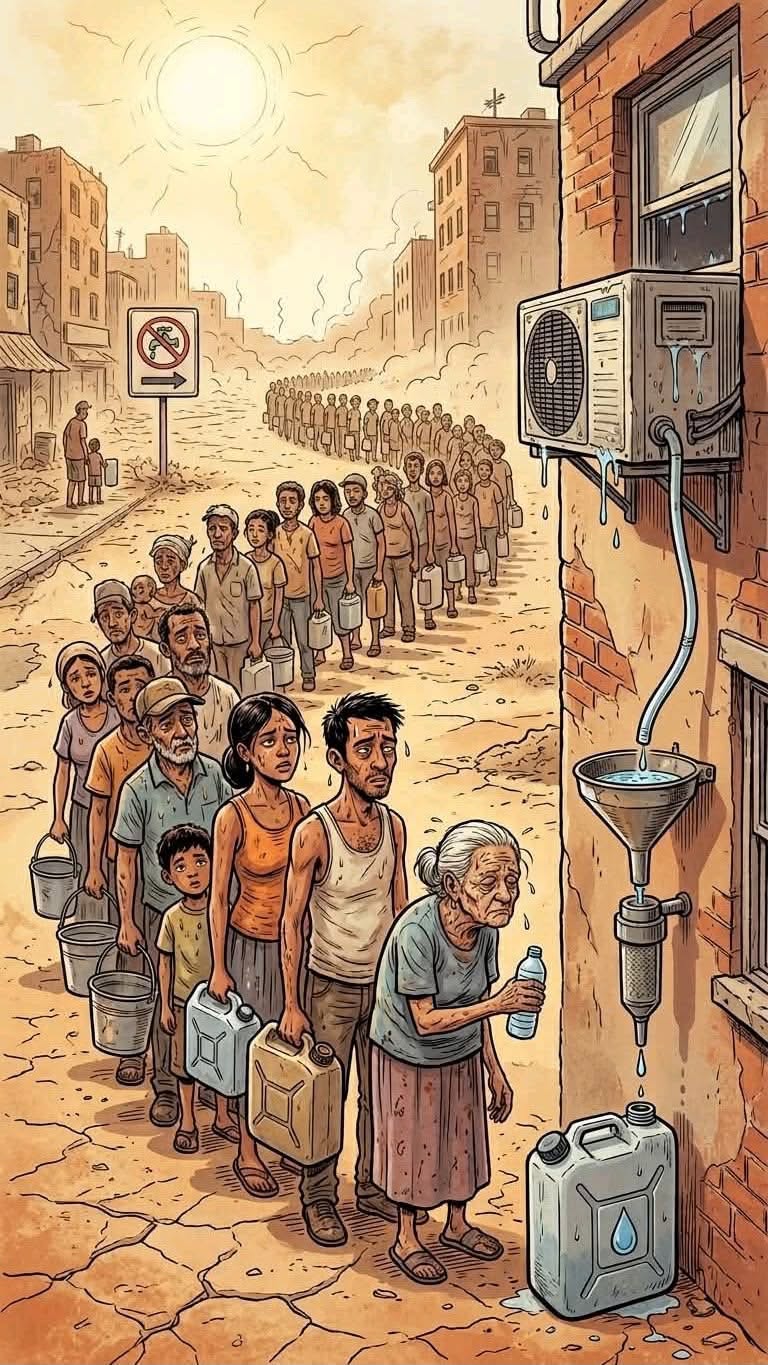
He added that 300 kilometers of the city’s water network have been destroyed, and 75% of the city’s sewage network has been destroyed.
He also explained: “We have to deal with more than 350,000 tons of waste in the city,” noting the need for modern mechanisms to deal with the rubble.
Holding on to the land
The military operation that lasted more than five months in Khan Yunis left unprecedented destruction to its buildings, commercial, health, and educational facilities.
Returnees stress their commitment to remaining on their land and not leaving it, despite the difficult and complex reality created by the Israeli war machine.
The Ministry of Interior in Gaza stated that police and security forces were deployed in the areas from which the occupation forces withdrew to restore order and address the chaos that the occupation sought to spread.
The Ministry of Interior called on citizens to preserve public and private property and to cooperate and adhere to the directives and instructions issued by the relevant authorities.
Yahya al-Sarraj, the mayor of Gaza, said that the current priority is to prepare to receive returnees from the southern Gaza Strip. He explained that the capabilities to prepare the roads are almost nonexistent, stressing that the municipality is communicating with several parties to provide the necessary equipment as soon as possible.
Major Challenges
Local authorities in Gaza City have begun to open roads in the city, with images showing bulldozers removing rubble and debris from one street.
Such operations are expected to continue due to the extent of the destruction inflicted by Israeli forces on infrastructure and housing throughout the Gaza Strip.
In this context, the Gaza government stated that it had completed more than 5,000 field, service, and humanitarian missions within 24 hours as part of an emergency plan to gradually restore life to the Strip.
A spokesperson for the Gaza Municipality stated that the current priority is securing water, opening streets, collecting waste, and addressing sewage problems.
The return of displaced persons to areas from which the army had withdrawn in various areas of the Strip began on Friday, as the ceasefire came into effect.
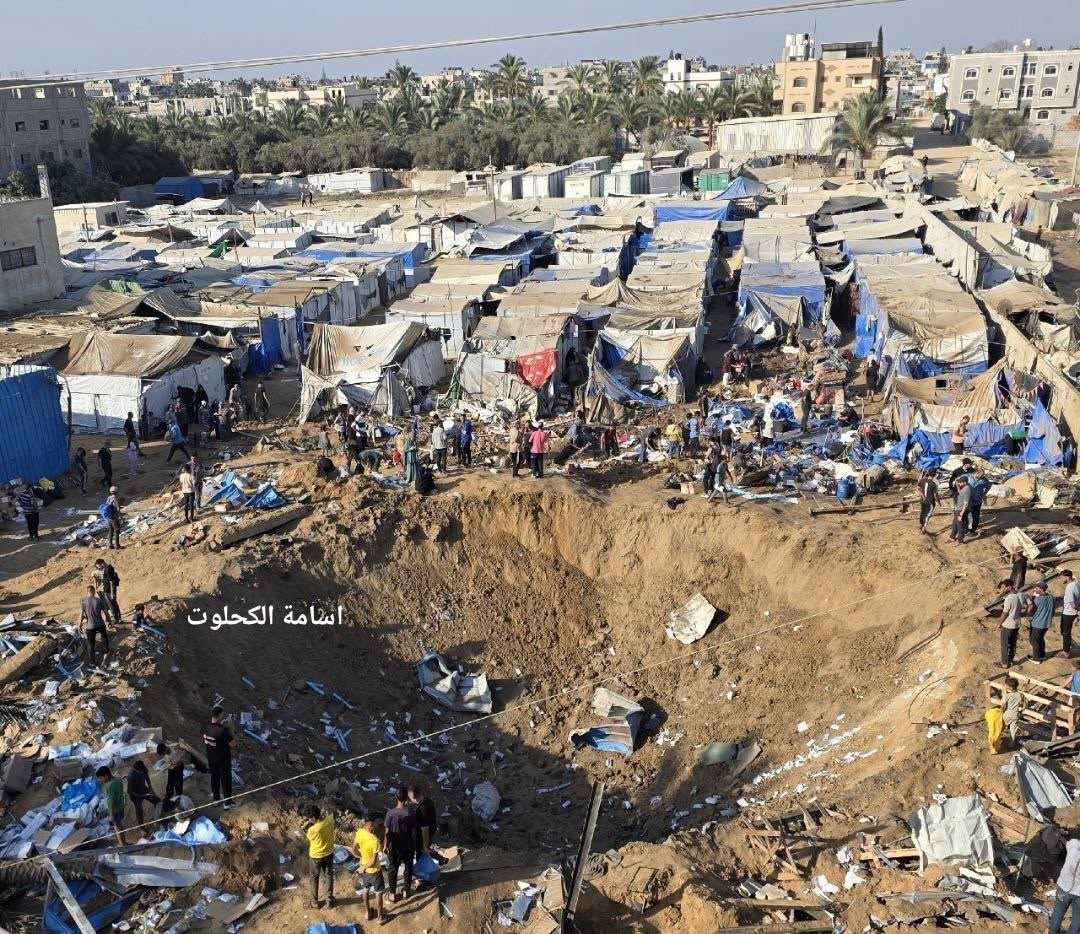
Some of the displaced expressed cautious joy at this agreement, expressing hope that it would contribute to a permanent end to the war. Meanwhile, hundreds of displaced persons who arrived in their residential areas on Friday were forced to set up tents in the rubble of their homes after they were destroyed by Israeli forces.
Ceasefire
The first phase of the ceasefire agreement between Hamas and Israel went into effect at 12:00 noon on Friday, Jerusalem time (09:00 GMT), after the Israeli government approved the agreement at dawn.
The Israeli military withdrawals included Gaza City (north), with the exception of the Shuja’iyya neighborhood and parts of the Tuffah and Zeitoun neighborhoods.
In Khan Yunis (south), the army withdrew from the central areas and parts of the east, while preventing Palestinians from entering the towns of Beit Hanoun and Beit Lahia (north), Rafah (south), and the Gaza Strip Sea.
The agreement is based on a plan proposed by US President Donald Trump, which calls for a ceasefire, a gradual withdrawal of the Israeli army, a mutual release of prisoners, the immediate entry of aid into the Gaza Strip, and the disarmament of Hamas.
The approval of the first phase came after four days of indirect negotiations between the two sides in the Sharm el-Sheikh resort, with the participation of Turkey, Egypt, and Qatar, and under US supervision.
With American support, Israel has been committing genocide in Gaza for two years since October 8, 2023, leaving at least 67,211 martyrs and 169,961 wounded, most of them children and women, and causing a famine that claimed the lives of 460 Palestinians, including 154 children.