Guterres in Syria: ‘A Land of Possibilities’

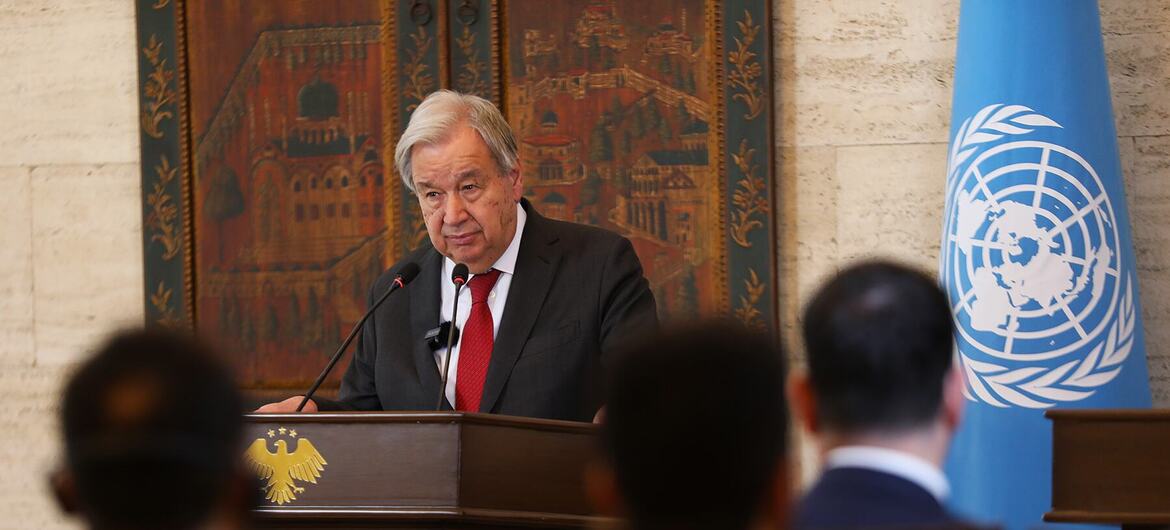
Syria has an opportunity not only to recover from conflict but to build “a future that is more stable, more inclusive and more prosperous for all Syrians”, UN Secretary-General António Guterres said in Damascus on Saturday as he began a landmark visit to the country.

Calling Syria “today the pillar of stability of the Middle East”, the UN chief said the country “stands at a moment of possibility” and urged the international community to seize the opportunity to help rebuild a nation emerging from more than a decade of conflict. 

Addressing reporters alongside Foreign Minister Asaad al‑Shaibani, Mr. Guterres described his visit as “an extremely meaningful” one, rooted in decades of engagement with Syrians as former UN High Commissioner for Refugees and later as Secretary-General.

“For years, long before becoming Secretary-General, I worked closely with Syrians,” he said, recalling communities that welcomed refugees fleeing conflict and persecution, as well as Syrian families later forced to flee their own country.

“I met young Syrians whose hopes were simple and universal: to learn, to work, to contribute, and to live in peace.”

Those experiences, he said, remained with him and helped explain why it was important for him to be in Damascus now.

“Indeed, I made a conscious decision not to come to Syria since the beginning of the brutal repression of the Syrian people in 2011 until the fall of the regime.”

A chance to build a new future

The Secretary-General said Syrians had endured years of “hardship, loss and uncertainty” but had never lost the resilience, talent and creativity that define the country.

“Today, Syria stands at a moment of possibility.

“The opportunity now is not only to recover from conflict, but to lay the foundations for a future that is more stable, more inclusive and more prosperous for all Syrians.”

He stressed that rebuilding the country would require leadership and trust, while ensuring that all Syrians see themselves reflected in the nation’s future.

“Above all, it will require that every Syrian sees a place for themselves in the future of their country.

“And it is for Syrians to define their path forward and shape the institutions that will serve future generations.”

A ‘moment for partnership and solidarity’

The UN chief warned that no country emerging from more than a decade of conflict could rebuild alone and appealed for stronger international engagement.

“This is a moment that requires the international community to support Syria with determination and foresight,” he said.

“Syria’s recovery is a humanitarian imperative – and it is also an investment in development, in peace and regional stability.”

He said the international community should help create conditions for economic recovery, restore essential services and infrastructure, expand livelihoods and employment opportunities, and support the safe, voluntary and dignified return of refugees and displaced people.

“International financial institutions and development partners also have an important role to play in helping Syria reconnect with regional and global economic opportunities.”

“This is the moment for partnership and solidarity.”

Emphasizing the UN’s role, he said the Organization stood ready to accompany Syria through its transition.

“We are ready to support your political transition, including your efforts to ensure transitional justice, draft a permanent constitution, and hold free and fair elections.”

“We have no UN agenda for Syria. Our agenda is the agenda of the Syrian government and the Syrian people.”

Sovereignty and territorial integrity

Mr. Guterres also reiterated the UN’s support for Syria’s sovereignty, independence and territorial integrity.

“We underscore the importance of fully respecting Syria’s sovereignty, independence, unity, and territorial integrity.”

“Violations of Syria’s sovereignty and territorial integrity are unacceptable and must cease.”

Referring to developments around the Golan Heights, he added: “What is happening in the region around the Golan Heights is totally unacceptable.”

“I’d like to remind the international community that the Golan Heights are Syrian territory.”

The Secretary-General said the UN would continue working with Syrians and international partners in support of “a future defined by peace, dignity and opportunity by the Syrians themselves.”

Pressed on Israel’s actions in Syria

Taking questions from journalists, the UN chief reiterated his call for an end to violations of Syrian territorial integrity and said the international community needed to take a more active role.

“We consider that the present situation is intolerable and that that situation needs to stop,” he said, while noting that UN personnel on the ground were working to mitigate the impact of ongoing developments.

While acknowledging divisions within the UN Security Council, he pledged continued advocacy on the issue, insisting that “what is Syrian is Syrian and cannot be taken away.”

Visit continues

The visit marks the Secretary-General’s first trip to Syria since the fall of the former regime. During his stay, he is expected to meet President Ahmed al‑Sharaa and other senior officials, and meet women’s groups, civil society representatives and members of diverse communities.

On Monday, Mr. Guterres is scheduled to address the new People’s Assembly of the Syrian Arab Republic before travelling onward to Cyprus. UN News

CrossFireArabia

CrossFireArabia
Dr. Marwan Asmar holds a PhD from Leeds University and is a freelance writer specializing on the Middle East. He has worked as a journalist since the early 1990s in Jordan and the Gulf countries, and been widely published, including at Albawaba, Gulf News, Al Ghad, World Press Review and others.

Related Posts

Beautiful Bethlehem

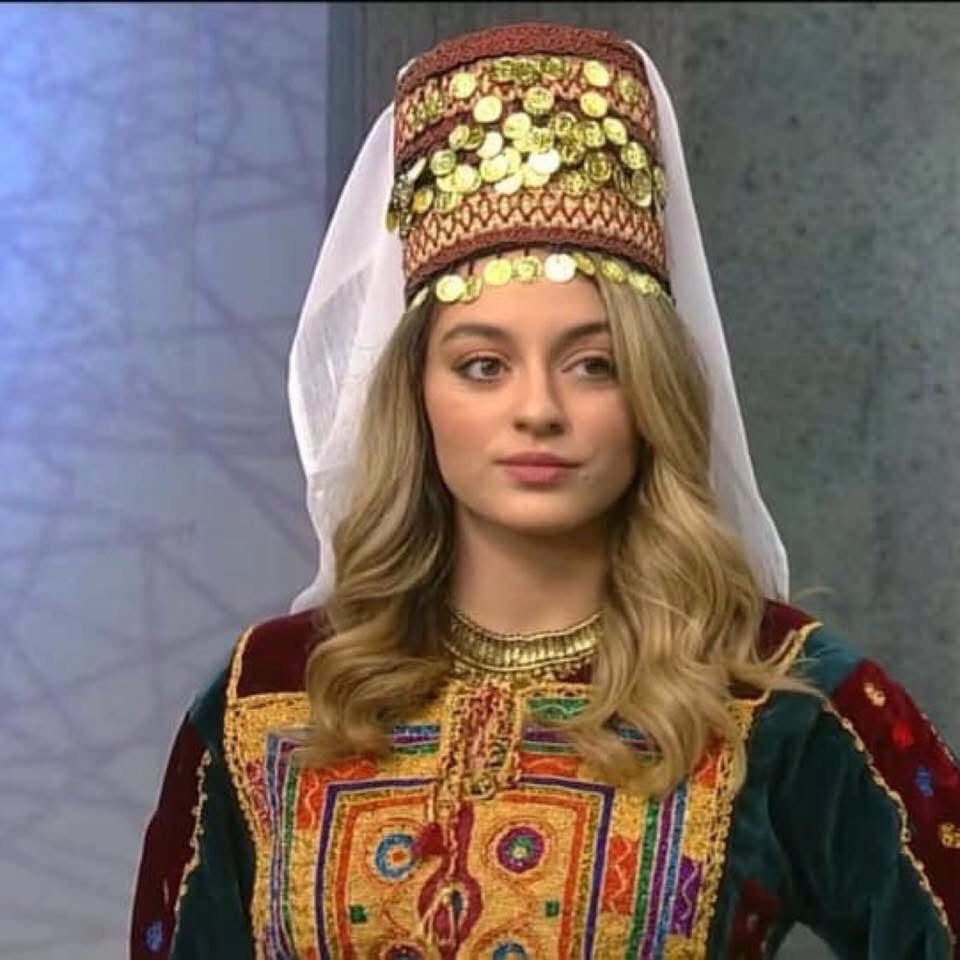
On Palestinian Dress Day, we renew our commitment to preserving the traditional Palestinian dress and write a story about it every day, a story connected to a homeland we cherish.

The dress of Bethlehem, Palestine.

The headdress, called “al-Shatwa,” is made of red felt fabric and decorated with Syrian silk, coral beads, and Ottoman silver coins. The bride adorns herself with a silver necklace and bracelets, and her beauty is enhanced by an inked fish necklace, symbolizing blessing.

PalestinianDressDay

Continue reading
‘Living in a Tent is Like Living in Hell’ Maryam Says

In Gaza, tents are no longer havens from war. They have become prisons of fabric, trapping displaced civilians in the sweltering heat of the summer, while thirst, hunger, mosquitoes, and disease stalk them at every turn.

Here, people don’t escape the constant bombing to safety. Rather day, they face another battle against the scorching sun, the scarce water, and the sleepless nights in tattered tents, that no longer protect from the darkness.

In the Heart of Hell

Read also: “Gaza Live”… 7 Martyrs and Injuries in 13 New Israeli Violations of the “Truce”

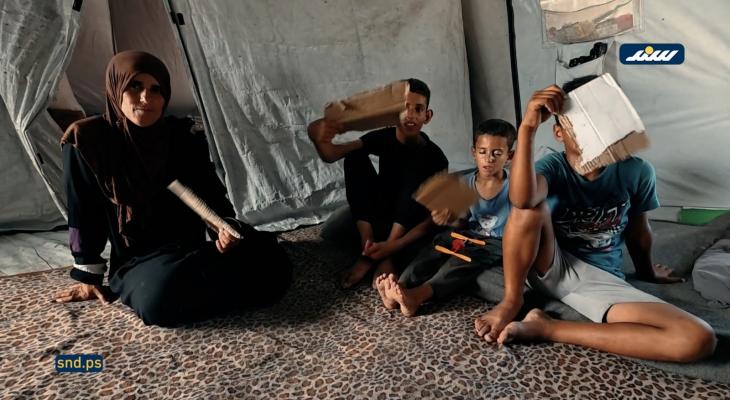
“There are eight of us living in a tent, and the situation is hell in the summer,” displaced woman Mariam Baraka, tells the Sanad News Agency, whilst summarizing the details of life inside her tent that offers no protection from the heat and leaves little to dignity.

She says she spends long hours searching for water under the bitter hit of the sun, sometimes managing to fill a few buckets, while other times she returns empty-handed after a grueling journey to a distant water source.

The suffering doesn’t end with thirst. The family is forced to cook over a wood fire amidst sweltering temperatures, and cardboard boxes serve as a primitive makeshift tolls to circulating air inside the tent.

Maryam recounts that her son can no longer bear the intense heat, constantly telling her: “Mommy, I can’t take it anymore.” Her young child is unable to sleep due to the heat and the bites from mosquitoes and flies that have covered his body in blisters. Their entire lives revolve around the sun and what she describes as “extremely difficult” conditions.

Maryam’s testimony reflects the stark reality faced by nearly one million displaced people—about 170,000 families—who endure the summer heat in tents and makeshift shelters, according to a recent report by the Norwegian Refugee Council.

Documented data indicates that 125,000 out of 135,000 tents have been damaged and are unfit for human use due to weather conditions. The organization also reports that approximately 5,000 families are sleeping in the open without any shelter from the sun or darkness.

A Daily Battle

The tents, made of nylon and thick fabric, have become like closed ovens, with temperatures inside sometimes exceeding 37 to 40 degrees Celsius. This makes staying inside nearly impossible due to the trapped heat and humidity, a situation described in international press reports as “slow death inside thermal gas chambers.”

The tragedy is compounded by the severe water crisis. The United Nations Children’s Fund (UNICEF) confirms that water supplies in the camps have dropped to critical levels, forcing families, including children, to walk long distances under the scorching sun to obtain limited quantities of water.

The dangers don’t stop at heat and thirst. The spread of mosquitoes and flies within the camps has led to skin diseases among children, while displacement areas are witnessing an increase in snakes, scorpions, and rats due to the accumulation of rubble and the breakdown of sanitation systems, according to multiple media reports.

Doctors and health workers warn of a rise in skin and infectious diseases, in addition to heatstroke and dehydration, which threaten the lives of children and the elderly.

The Secretary-General of the Norwegian Refugee Council, Jan Egeland, emphasized that this humanitarian catastrophe could have been avoided were it not for the continued blockade and the closure of crossings, which prevent the entry of essential aid, awning materials, wood, and hygiene supplies.

With the destruction of homes and infrastructure, areas like the Khan Younis and Deir al-Balah camps have been transformed into vast tent cities lacking water and sanitation. Each tent has become a new chapter in an unending ordeal, a daily battleground for displaced people struggling for survival.

Continue reading

Leave a Reply

Your email address will not be published. Required fields are marked *

You Missed

Guterres in Syria: ‘A Land of Possibilities’

Guterres in Syria: ‘A Land of Possibilities’

Beautiful Bethlehem

Beautiful Bethlehem

Kamal Bullata: Not Only A Jerusalem Artist!

  • By marwan
  • July 26, 2026
  • 7 views
Kamal Bullata: Not Only A Jerusalem Artist!

‘Living in a Tent is Like Living in Hell’ Maryam Says

‘Living in a Tent is Like Living in Hell’ Maryam Says

Israeli Settlers Set Fire to Two Mosques in The West Bank

  • By marwan
  • July 26, 2026
  • 5 views
Israeli Settlers Set Fire to Two Mosques in The West Bank

Ahmad The Japanese Remained a ‘Palestinian’ Till His Last Breath

Ahmad The Japanese Remained a ‘Palestinian’ Till His Last Breath