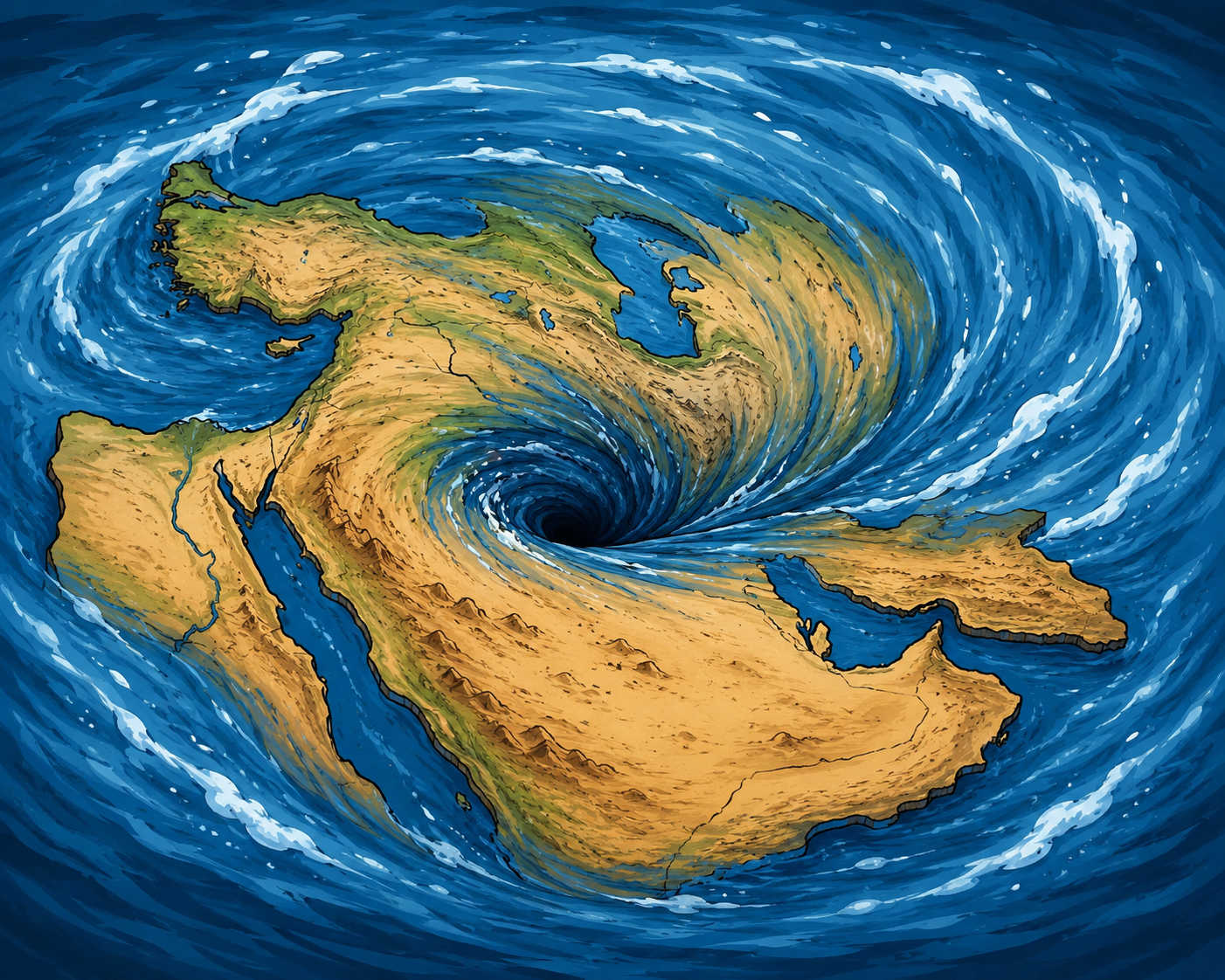
A Middle East Whirlpool! View From Amman

By Saleem Ayoub Quna

Unlike the grey terrain of the Middle East, known for its harsh aridity and barren landscapes, the region’s still-unsettled, multi-front conflicts that erupted after the 7 October, 2023 surprise Palestinian assault on Israeli settlements around Gaza Strip, almost literally, become associated in the public imagination with the colour blue: The sea, its waves, its vessels and its strategic waterways.

The Palestinians called that watershed event Al-Aqsa Flood. Israel described 7 October as a second Holocaust. If the Palestinians deliberately chose the word flood for its religious and symbolic connotations, the Israeli way of describing it, indicated how serious and tough their losses and injuries were.

What followed was a succession of milestones and unprecedented developments across the Middle East. They continue to unfold dramatically, resembling the abrupt and unpredictable movements of hurricanes and tempests on the high seas.

Yet the side-conflicts and mini-wars that followed 7 October have neither followed a single pattern nor obeyed the same rules. Instead, events have moved in different, sometimes opposing directions — unlike the orderly circular motion of an actual whirlpool. It is almost as though every confrontation has chosen a course of its own: The predictable alongside the unpredictable, the rational alongside the seemingly illogical.

It therefore takes more than intelligent guesswork or clever political analysis to determine which direction these events will ultimately take, and which may prove more dangerous — not only to the region and its inhabitants, but also to the many international powers with interests at stake.

If we were to capture the current Middle Eastern scene in a single frame, we might portray it as an extraordinary, almost unbelievable collision of man-made tides, currents and sub-currents, all moving simultaneously through one increasingly turbulent sea.

Because the first shots fired on 7th October around Gaza strip, from a Palestinian point of view, came as a last desperate call and reminder of the injustice they are suffering, they soon found their echoes in the four corners surrounding it: In south Lebanon, Yemen to the south and Iraq and Iran to the east. Even to the west, there were international sailors who belonged to the Peace Flotilla, trying to bring medicine and food to the starving children of Gaza!

One of the most significant currents emerged on Israel’s northern front.

What initially appeared to be a relatively “controlled” confrontation between Israel and Hezbollah steadily intensified until September 2024, when Israel killed the party’s leader Hassan Nasrallah. Only a few months later came another geopolitical earthquake: The collapse of Bashar al-Assad’s government in Damascus in December 2024.

Each development sent another powerful current through the already boiling waters of the wider Middle Eastern whirlpool.

Then came an even larger artificial wave.

In June 2025, the United States launched Operation Midnight Hammer, striking Iran’s three principal nuclear sites at Fordow, Natanz and Isfahan while diplomatic efforts surrounding Iran’s nuclear programme were still underway.

Washington described the operation as an attempt to inflict decisive damage on Iran’s nuclear capabilities. Tehran responded with retaliatory action against American military interests in the Gulf.

But that was not the end of the storm.

On 28 February, 2026, the world witnessed another major escalation when the United States and Israel launched coordinated, large-scale attacks against Iran. The two allies acted jointly but gave their military campaigns different names: Washington called its operation Epic Fury, while Israel called its campaign Roaring Lion.

The strikes hit Iranian military infrastructure and senior leadership and inflicted substantial damage. Yet they failed to produce one of the most far-reaching political outcomes sought by US-Israeli advocates of the military campaign: The toppling of the Iranian regime.

And so the whirlpool continued.

Iran responded not simply through missiles and military retaliation, but by shifting the struggle towards one of the most strategically sensitive waterways on earth: The Strait of Hormuz.

Through restrictions on shipping, attacks on vessels and increasingly assertive claims over the waterway, Tehran transformed Hormuz into another major front in the confrontation. The strait — through which a substantial share of the world’s energy supplies traditionally passes — became yet another current dragging regional powers and the wider international community deeper into the turbulence.

Here, the metaphor of the whirlpool becomes more than literary.

Gaza, Lebanon, Syria, Iran, Yemen, Iraq, the Red Sea, the Arabian Gulf and the Strait of Hormuz are no longer easily separable theatres. Each produces currents that flow into the others. A military strike in one location generates political pressure somewhere else; an assassination changes the balance of power hundreds of kilometres away; a blocked shipping lane reverberates through global markets thousands of kilometres beyond the Middle East.

And all the while, new currents are being created faster than old ones can disappear.

What begins on the shores of Gaza does not remain in Gaza. What happens in Beirut, Damascus, Tehran or the Strait of Hormuz does not remain there either.

The Middle Eastern whirlpool has become too wide, too violent and too interconnected to contain its turbulence within the region itself.

And as it keeps spinning, its waves will continue to splash far beyond the shores of the Middle East — reaching, sooner or later, virtually every corner of the globe.

Conclusion: As long as the waters surrounding the Middle East remain crowded with warships, missiles, blockades, retaliatory strikes and the debris of foreign intervention, the region’s old whirlpool will continue to spin.
Continue reading
Guterres in Syria: ‘A Land of Possibilities’

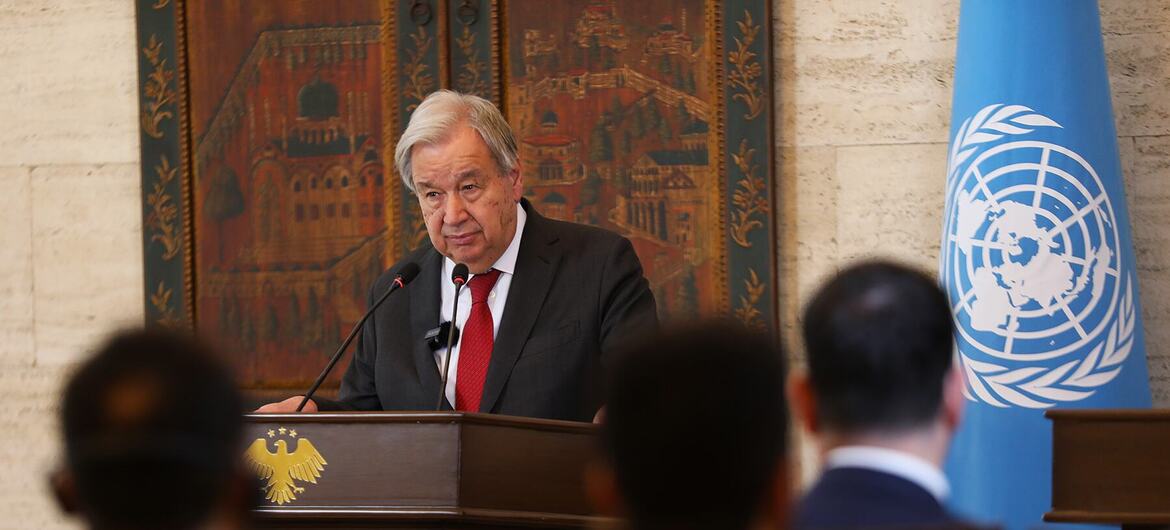
Syria has an opportunity not only to recover from conflict but to build “a future that is more stable, more inclusive and more prosperous for all Syrians”, UN Secretary-General António Guterres said in Damascus on Saturday as he began a landmark visit to the country.

Calling Syria “today the pillar of stability of the Middle East”, the UN chief said the country “stands at a moment of possibility” and urged the international community to seize the opportunity to help rebuild a nation emerging from more than a decade of conflict. 

Addressing reporters alongside Foreign Minister Asaad al‑Shaibani, Mr. Guterres described his visit as “an extremely meaningful” one, rooted in decades of engagement with Syrians as former UN High Commissioner for Refugees and later as Secretary-General.

“For years, long before becoming Secretary-General, I worked closely with Syrians,” he said, recalling communities that welcomed refugees fleeing conflict and persecution, as well as Syrian families later forced to flee their own country.

“I met young Syrians whose hopes were simple and universal: to learn, to work, to contribute, and to live in peace.”

Those experiences, he said, remained with him and helped explain why it was important for him to be in Damascus now.

“Indeed, I made a conscious decision not to come to Syria since the beginning of the brutal repression of the Syrian people in 2011 until the fall of the regime.”

A chance to build a new future

The Secretary-General said Syrians had endured years of “hardship, loss and uncertainty” but had never lost the resilience, talent and creativity that define the country.

“Today, Syria stands at a moment of possibility.

“The opportunity now is not only to recover from conflict, but to lay the foundations for a future that is more stable, more inclusive and more prosperous for all Syrians.”

He stressed that rebuilding the country would require leadership and trust, while ensuring that all Syrians see themselves reflected in the nation’s future.

“Above all, it will require that every Syrian sees a place for themselves in the future of their country.

“And it is for Syrians to define their path forward and shape the institutions that will serve future generations.”

A ‘moment for partnership and solidarity’

The UN chief warned that no country emerging from more than a decade of conflict could rebuild alone and appealed for stronger international engagement.

“This is a moment that requires the international community to support Syria with determination and foresight,” he said.

“Syria’s recovery is a humanitarian imperative – and it is also an investment in development, in peace and regional stability.”

He said the international community should help create conditions for economic recovery, restore essential services and infrastructure, expand livelihoods and employment opportunities, and support the safe, voluntary and dignified return of refugees and displaced people.

“International financial institutions and development partners also have an important role to play in helping Syria reconnect with regional and global economic opportunities.”

“This is the moment for partnership and solidarity.”

Emphasizing the UN’s role, he said the Organization stood ready to accompany Syria through its transition.

“We are ready to support your political transition, including your efforts to ensure transitional justice, draft a permanent constitution, and hold free and fair elections.”

“We have no UN agenda for Syria. Our agenda is the agenda of the Syrian government and the Syrian people.”

Sovereignty and territorial integrity

Mr. Guterres also reiterated the UN’s support for Syria’s sovereignty, independence and territorial integrity.

“We underscore the importance of fully respecting Syria’s sovereignty, independence, unity, and territorial integrity.”

“Violations of Syria’s sovereignty and territorial integrity are unacceptable and must cease.”

Referring to developments around the Golan Heights, he added: “What is happening in the region around the Golan Heights is totally unacceptable.”

“I’d like to remind the international community that the Golan Heights are Syrian territory.”

The Secretary-General said the UN would continue working with Syrians and international partners in support of “a future defined by peace, dignity and opportunity by the Syrians themselves.”

Pressed on Israel’s actions in Syria

Taking questions from journalists, the UN chief reiterated his call for an end to violations of Syrian territorial integrity and said the international community needed to take a more active role.

“We consider that the present situation is intolerable and that that situation needs to stop,” he said, while noting that UN personnel on the ground were working to mitigate the impact of ongoing developments.

While acknowledging divisions within the UN Security Council, he pledged continued advocacy on the issue, insisting that “what is Syrian is Syrian and cannot be taken away.”

Visit continues

The visit marks the Secretary-General’s first trip to Syria since the fall of the former regime. During his stay, he is expected to meet President Ahmed al‑Sharaa and other senior officials, and meet women’s groups, civil society representatives and members of diverse communities.

On Monday, Mr. Guterres is scheduled to address the new People’s Assembly of the Syrian Arab Republic before travelling onward to Cyprus. UN News

Continue reading
Memorizing The 1967 War Defeat!

By Dr Khairi Janbek

What can one say about the defeat of 1967 war, more than what the experts, the memoirs, and the active participants in it have said and written already, save from the eyes and ears of a child; for after all one was a child at the time and one must admit that growing up with defeat did have profound effect on one’s developing personality.

As it happened, in fact we were on a family holiday driving to Turkey when we heard the first actions in the war. By the time we crossed Damascus towards the north, the car radio was blasting with the advances made by the Arab armies on the path towards liberating Palestine.

However, by the time we reached an area close to the Syrian-Turkish border somewhere near Jabla in Syria, we discovered the the border was closed on the Syrian side and people including my late father were stuck around the big radio in the small roadside hotel talking about the destruction of the Israeli military forces, and the remarks that in a couple of days, Israel will cease to exist,

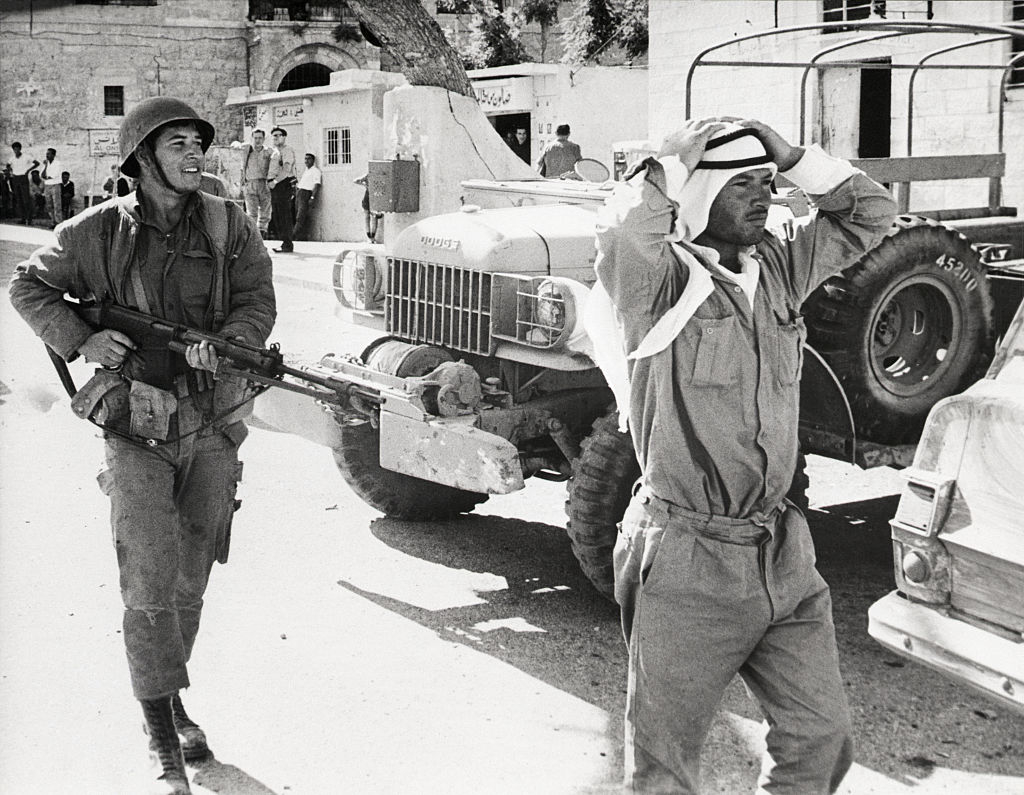
But low and behold, after a few days and by the time the border was opened, Egypt had lost Sinai, Syria, the Golan Heights, and Jordan the West Bank and Jerusalem; the jewel in the crown.

The car was tense, and for the first time I was disappointed, not because of the news of defeat rather, rather because I was no longer the centre of attraction for the family. As we entered Iskenderun in Turkey, a couple of young men crossing the streets, seeing our car number plate in Arabic, spat on the ground and said in Turkish; Pis Arap, meaning dirty Arab.

I didn’t undrestand Turkish at the time, until my father smiled bitterly and said, so we have just become dirty Arabs. In the small hotel in Iskenderun owned by a generous Armenian family, they brought us their transistor which could catch Syrian broadcasts and heard my father saying Nasser has resigned, and I was wondering how could he do that. For me, Nasser’s image was a cross between a king and an idol football player.

By the time we reached Ankara, it was all over. We were nothing in the eyes of the Turks at the time, but lying impotent Arabs. As the years passed, maturity set in as a strong slap in the face, with my childhood’s main scar left inside me, engulfing me with doubt, and disbelief, not only regarding what I now hear but also in what I see: with Arab politics to me, becoming just a mixture of cynicism, blatant lies, and regimes self-preservation.

The disaster from top to bottom was, unqualified military officers in Egypt, only accustomed to internal security and privileges were punching above their weight and carrying ranks which were above their undrestanding of warfare. Their ignorance was stark obvious when they knew about the attack and opted for absorbing the first blow before counter-attacking, not knowing they’ll have nothing left to counter with.

Jordan was squeezed between the hammer and the anvil diplomatically, though there were voices among the statesmen at the time urging not to participate in the impending whilst recognizing the perils, yet the decision to participate in the war and opening the Jordanian couldn’t be avoided because first of all the belief in Nasser’s victory held sway among the people, and secondly, to imagine an Arab defeat would not spare Jordan who will be blamed for this defeat due to the lack of giving support in the war.

In the case of Syria, how could an army in which the first officer who wakes up before the others and carries out a coup d’état, fight a war; and how could an army in which a general has to walk behind the coup d’état lower ranks whom are only concerned about preserving their own hold on power, conduct warfare? In fact the fall of the Golan Heights was declared by the Syria representative in the UN, 36 hours before it actually fell. And why was this? All in aid for withdrawing the army to protect Damascus.

Has anything changed? Everything has changed so that nothing changes!

Dr Janbek is a Jordanian writer based in Paris, France

Continue reading
For Israel The ‘Yellow Line’ is Occupation

By Ismail Al Sharif

Two months after the signing of the ceasefire, that remains merely ink on paper, the region is yet to witness a fundamental shift to the second phase: A transition from a strategy of destruction to a withdrawal mechanism, and from the logic of military operations to a framework of international administration, paving the way for a political process to ultimately lead to the establishment of a sovereign Palestinian state.

However, the realities on the ground today proves this path is nothing more than a theoretical assumption quickly crumbling in the face of a complex reality.

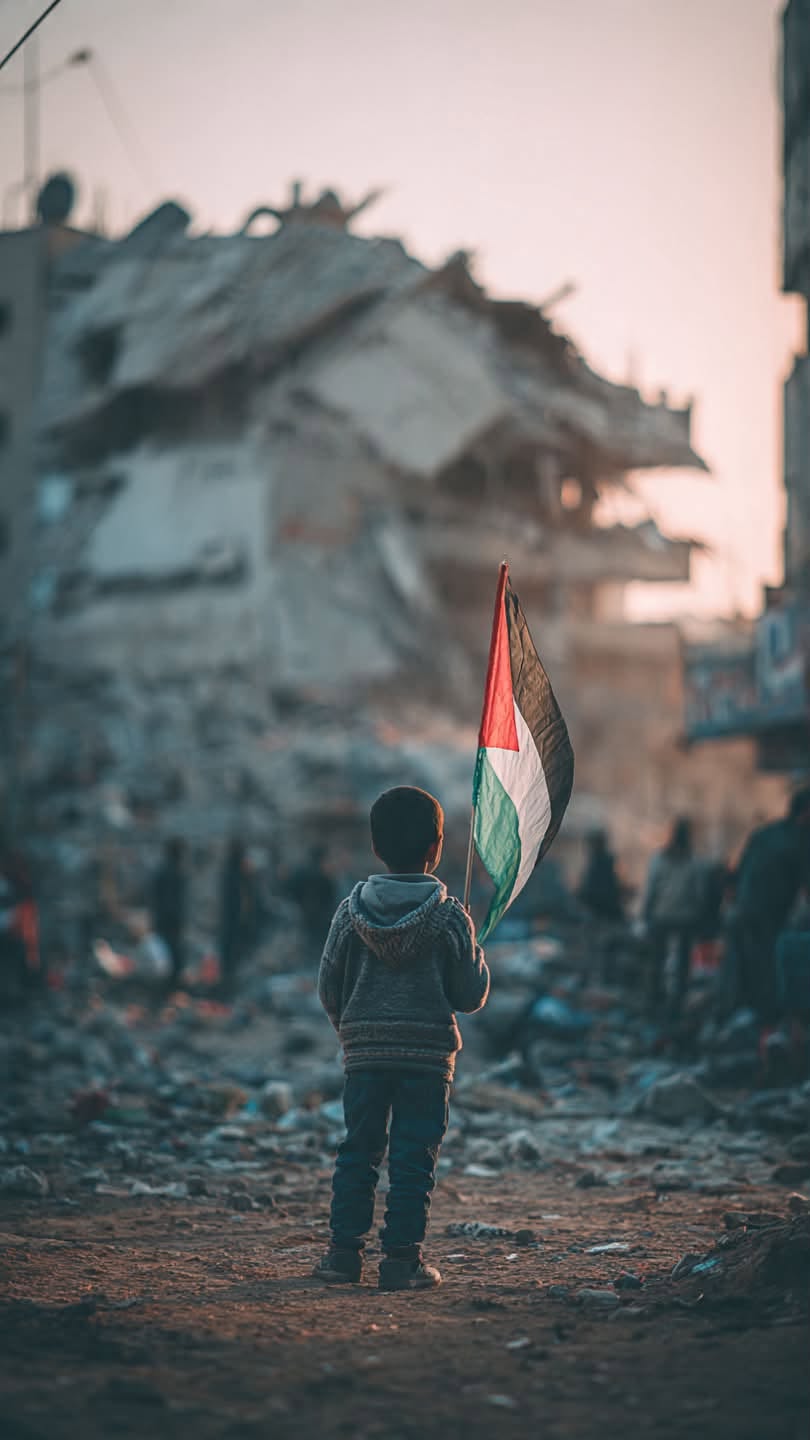
Two months after the supposed ceasefire, a completely different truth emerges; Israel continues its ethnic cleansing of the Gaza Strip. Palestinian civilians are dying from the bitter cold, just as they previously perished from the bombardment, while unilateral decisions are being made whilst deepening the chasm of mistrust between the parties supposedly partnering in ending this humanitarian tragedy and implementing the Donald Trump plan, who claims to have ended a three-thousand-year-old war.

What was supposed to be a temporary withdrawal line for the Israeli army has, according to its generals, become a new de facto border called the “Yellow Line,” swallowing up more than half of the Gaza Strip.

Early this month, the army’s chief of staff Eyal Zamir addressed his troops, asserting Israel “now exercises effective control over vast areas of the Strip” and its military units “will maintain their positions on these defensive lines.” He explicitly declared “the Yellow Line represents a new border of an advanced line of defense to protect Israeli society, and serves as a framework for the ongoing military operational activity.”

From these comments it can be understood the ceasefire line is no longer a temporary, transitional measure, but has effectively become a forcibly-imposed border, a permanent defensive zone, and a legal framework that legitimizes a long-term Israeli military presence within territories that, until recently, were an integral part of the Palestinian territories.

These pronouncements are not merely political rhetoric. The “Yellow Line” is now embodied on the ground by massive, yellow-painted concrete blocks that bisect the Gaza Strip to a depth of between 1.5 and 6.5 kilometers. Before the recent escalation, the Strip extended about 41 kilometers in length and between 6 and 12 kilometers in width. As it stands however, Israel has tightened its grip on more than half of this area in one of the world’s most densely-populated regions. This has exacerbated overcrowding, drastically reduced usable land, and devastated the agricultural sector, thus intensifying the humanitarian catastrophe, entrenching mass forced displacement, deepening the destruction, and contributing to the complete collapse of the institutional infrastructure.

The Zamir statements cannot be separated from the context of the pronouncements of war criminal Benjamin Netanyahu, who, from northern occupied Palestine, spoke of the expansion of his northern and northeastern borders by establishing a demilitarized buffer zone from the Syrian capital, Damascus, to the occupied Golan Heights. This is being made with the advance of his military forces into the UN-monitored buffer zone and the occupation of the Syrian side of Mount Hermon (Jabal al-Sheikh). Also, Israel is presently establishing establishing a “buffer zone” in the territory of southern Lebanon, destroying border villages and/or leaving them completely depopulated and deploying military reinforcements at strategic border points to impose a new security and geopolitical reality by force.

According to the Trump’s plan the second phase was supposed to begin after Hamas fulfilled its commitment to release all Israeli captives, both alive and deceased, and after Netanyahu announced his readiness to move to this phase.

However, this transition was contingent on two fundamental conditions: The deployment of international peacekeeping forces and the complete disarmament of Hamas. Herein lies the complexity of the issue; Netanyahu has publicly expressed skepticism about the ability of any international force to carry out the disarmament mission and has categorically stated that Hamas’s disarmament will be achieved through coercive military means and under the direct supervision of Israeli forces.

In contrast, Hamas maintains its categorical refusal to disarm except within a comprehensive framework that includes the formation of a unified Palestinian ‘technocratic” government and a complete withdrawal of Israeli occupation forces. At a minimum, Hamas has expressed its willingness to store its weapons within an agreed-upon mechanism as part of a comprehensive political process, as confirmed by Bassem Naim, a member of the movement’s political bureau, in recent statements.

The current situation reveals that Israel is treating the existing circumstances as a strategic opportunity to expand its geographical borders and exert maximum pressure on the Palestinian people, paving the way for what it calls “voluntary displacement” under a humanitarian pretext—a pretext it itself created.

Simultaneously, it is deliberately and systematically obstructing the transition to the second phase of the Trump agreement by continuing its policies of occupation, killing, and destruction under the guise of a ceasefire.

It is clear this arrangement serves its strategic interests and intersects with broader Western interests, with the ultimate result being the aborting of any chance of establishing a sovereign Palestinian state, and keeping the Gaza Strip – as it has always been – a besieged enclave, which Israel exploits to achieve its political agenda and strengthen its internal cohesion, and turning it into a field laboratory in which various military weapons, biological tools and advanced technological techniques are tested, but with a reduction in the population, which allows it to continue what is strategically known as “managing the conflict” in the long term.

This article by Ismail Al Sharif was originally written in Arabic for the Addustour daily and published in Crossfirearabia.com.

Continue reading
Exiled: Bashar Al Assad Wiles His Time in a Moscow Flat

Bashar Al Assad sometimes walks the streets of Moscow incognito. This was a prerequisite set by the Kremlin for his stay in Russia.

The Syrian president, who was forced into exile, exactly one year ago on 8 December, 2024, lives in one of Moscow’s top palatial flats in the capital’s business district with his wife and three children with 24-hour body guards who have been assigned to the family for their protection.

Since his stay Moscow, the message has been thrust forward that Moscow takes care of its friends even when they have fallen from grace and/or down in the dumps. Bashar Al Assad, and his father before and who held power since 1970 were always the strongest of allies and Damascus was always seen as Russia’s strategic gateway to the Middle East.

Friendship however doesn’t mean the end of political opportunism and interest. Whilst Assad is allowed to stay in Moscow under the rubric of humanitarian grounds, his asylum follows strict rules: he is not allowed to engage in any political activity nor is he allowed to talk to the press or the media. 

He is no longer treated as presidential but a private person. Russian president Vladimir Putin had never met him since he arrived in Moscow nor is he planning to despite  claiming otherwise. All Putin would say is he is planning to meet the ex-president ‘sometime’ in the future. Add insult to injury is the fact that Assad has been assigned a lowly figure in the Russian Foreign Ministry as a means of coordination whenever it’s necessary.

But this has long proved a sign of frustration. Today, Assad is alone despite his staff that either travelled with him when he was hastily bungled up last year on a military jet from a Russian airbase near Latakia last year or joined him latter in his residence to start his exile.

With little to do, he spends his days playing video games or going downstairs to the mall in his plush complex to wile his time away, doing it day after day after day. The strong man of Syria, at the top of the helm for the 24 years with ministers, officials, politicians and Ba’ath Party – for theoretically it was this pan-Arab institution that ruled Syria since the late 1960s – is no more.

In Moscow he is a guest with his brother, Maher Al Assad, a former strong man and previous head of the Republican Guard who is staying at the capital’s Four Seasons Hotel. Today they have little political sway with the Kremlin preferring they stay as low as possible and ‘out of sight out of mind’ because of Moscow’s new strategic plans with the new government of Syria lead by previous Al Qaeda extremist-turned-president Ahmad Al Sharaa. 

Putin wants to maintain a rapport with the new government because Syria is still seen as the new battleground of political rivalry vis-a-vis the United States, Turkey and Israel. Moscow wants to continue to be a part of the geo-political pie despite the fact that Al Shara has continually called on Moscow to handover Assad to be tried for criminal charges in Damascus, something that was always refused by the Kremlin and Putin. 

But politics reflects the interests of both sides for Sharaa wants to be a favorite with everyone, both the West and Russia as demonstrated by his last visit to Moscow last October who continues to have military, strategic, economic and aid ties to Syria from the past Baathist regime. 

Thus, although relegated to his luxurious apartments, Assad can still be a valuable political asset to Moscow, being put on hold for the right time as a political chip to be used with the new government of Syria who is desperate to create the needed stability of the country, keep outside powers at bay, check Israeli incursion into its territory and start a program of reconstruction and economic development.

Continue reading