Syria – The New Battleground?

By Dr Amer Al Sabaileh

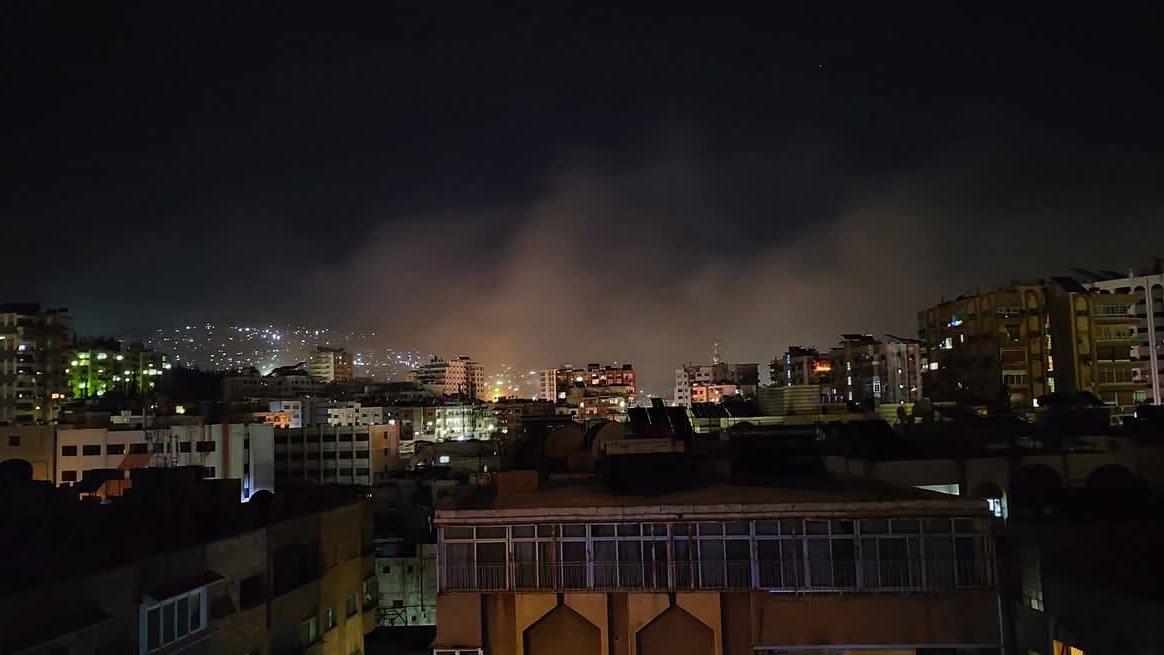
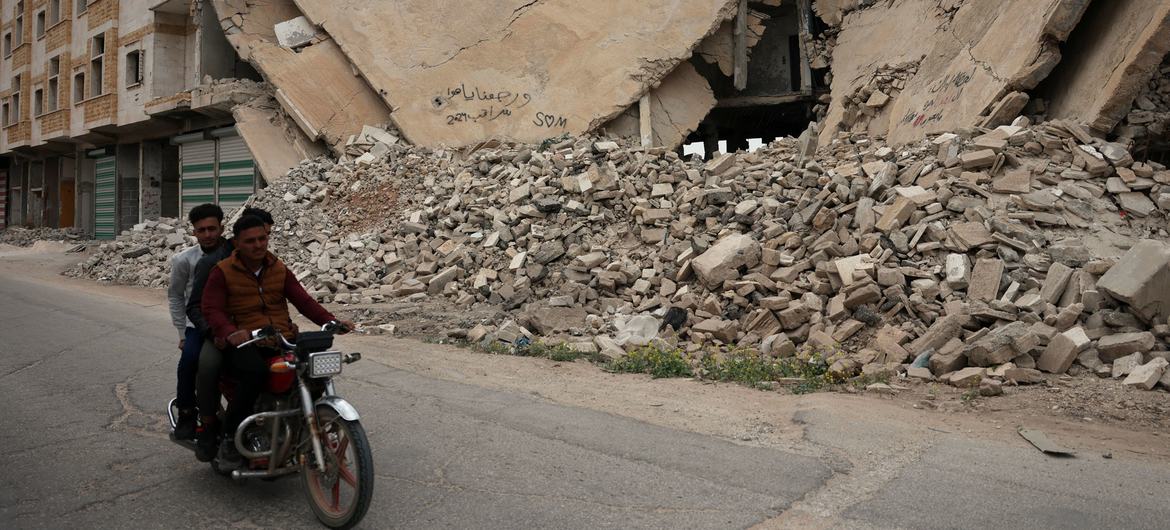
Southern Syria has returned to the center of regional attention with the recent outbreak of violent clashes. These developments, while not surprising, reflect the ongoing fragility of Syria’s political and security landscape. Since the collapse of the Assad regime, Syria has remained in a state of uncertainty, with internal power balances eroded and the rise of the Shar-Joulani administration in the absence of a viable and inclusive governance framework.

Over the past seven months, the country has witnessed massacres and targeted attacks against Alawites, Druze, Kurds, and Christians—clear signs of deep and worsening instability. This internal collapse is being exploited by external actors, particularly Israel, which views southwestern Syria as critical to establishing a demilitarized buffer zone along the Golan Heights. Despite the complexity of Syria’s internal landscape, Israeli strategic calculations in southwestern Syria remain a pivotal factor in shaping the region’s future.

While Israel initially entered the scene under the banner of “protecting the Druze,” this intervention risks inflaming sectarian tensions and sparking a prolonged conflict. At the same time, it has begun to impose a new reality on the ground—one that cannot be addressed without genuine understanding amongst key Syrian groups such as the Druze and Kurds, as well as broader arrangements with Israel itself. The latter has already sent unmistakable signals to Damascus through symbolic military strikes, indicating that future operations could escalate to directly undermine or even topple the current regime.

The ongoing clashes in Sweida and Damascus are likely to persist, especially in the absence of a clear military map for southern Syria. This suggests that Israeli strikes on military infrastructure in Damascus and beyond may continue. Furthermore, sectarian instability is set to deepen amid mutual distrust between the Druze, Bedouin tribes, and the central government—raising the probability of renewed violence. The recent developments have provided Druze militias with significant de facto autonomy, potentially opening the door for direct regional support, as they increasingly emerge as independent actors on the ground.

In parallel, this fragmentation heightens the risk of southern Syria becoming a multi-front proxy battlefield. Hezbollah—under internal pressure in Lebanon—alongside Iranian militias, may seek to open a new front against Israel, exploiting Syria’s geography to mount a tangible threat and divert Israeli focus away from Tehran.

These developments expose the deep institutional fragility of the Syrian state. The new transitional government remains unable to assert control or establish legitimacy in contested provinces, which paves the way for militias to expand their influence and for chaos to deepen. With the resurgence of extremist groups, the implications for long-term stability and reconstruction in Syria are deeply alarming.

Israel is moving forward with plans to establish a demilitarized buffer zone along its border with Syria, administered by friendly or at least non-hostile forces. The areas of Sweida and southern Daraa are of particular strategic importance, as Israel aims to prevent the advance of forces loyal to the new Syrian administration or the infiltration of Iranian proxies and Hezbollah operatives.

This unprecedented weakening of the Syrian administration may leave it increasingly prone to align with Israeli interests or offer major concessions simply to survive—an opportunity Israel will likely exploit to reshape not just Syria’s security geography, but its broader political map in accordance with long-term Israeli strategic goals.

From the Jordanian perspective, this evolving reality on Syria’s southern border presents a real and growing threat to national security. The concern goes beyond the spectre of chaos or fighting spilling across the border. It’s about a broader attempt to reshape the geopolitical landscape of the entire region—a transformation that will inevitably affect Jordan. Rising security threats are likely to be accompanied by political ones, as the drivers and dynamics of the Syrian conflict may cross borders. This makes it imperative for Jordan to adopt a proactive approach that prevents the spread of this new reality—both in its security and societal dimensions—into its own territory.

The author is a writer for The Jordan Times
Continue reading
Bombing Damascus, Arab Silence!

In a scene that reflects its utmost political and military arrogance, Israel, Wednesday, bombed the Syrian General Staff and the Republican Palace in the heart of the capital, Damascus.

This blatant attack crosses all red lines, interfering in Syria’s internal affairs as if it were the world’s superpower, openly defying international law and humiliating some Arab regimes with its silence and suspicious incompetence.

This is not a passing event, nor is it merely a “security message,” as Western media attempts to gloss it over. It is a blatant aggression against the sovereignty of an Arab state, striking its most important symbols of sovereignty in broad daylight.

The military strikes are a declaration of rebellion against international law and an insistence that Israel remains “above the law,” capable of destroying any Arab capital without fear of punishment or even blame.

What does Israel want?

It wants to brazenly say:


“I decide who lives, who is bombed, and whose voice is forcibly silenced.”

It seeks to impose the logic of force and dictate new rules in the region, titled: There is no place for an Arab state with independent decision-making, capable army, or a resistance project.

What is happening in Syria today has happened and is happening in Gaza, in southern Lebanon, in Iraq, in Yemen, and in every region trying to breathe outside the Zionist orbit.

The challenge is not only facing Syria…but all Arabs.

Anyone who thinks that these raids target Syria alone is delusional.

Every Arab country is now on the waiting list.

Today, Damascus is being bombed, and tomorrow… who will be next? Baghdad? Beirut? Yemen, Khartoum? Riyadh, Cairo? No one is immune to this arrogance as long as silence is the only response.

It is the Arab silence that has encouraged Israel to persist. The disagreements, divisions, and humiliating normalization are what have reassured Tel Aviv that no one will hold it accountable, or even condemn it.

What’s needed now: Break the silence and stop the collapse.

It’s time for the Arab nation to wake up from its slumber and realize that what is happening is not a “Syrian crisis” but a “collective Arab setback.”

Overt and gratuitous normalization with Israel must be halted immediately.

The Joint Arab Defense Charter must be activated, even if only verbally at first.

The steadfastness of Syria—its people, army, and institutions—must be supported, because the ultimate target is every Arab state. Everyone’s turn will come if Arab silence continues.

Israel is not destiny… and if the Arabs want to, they can.

Our history is full of moments of steadfastness and victory, but we need an awakening of conscience and a political will to halt this unbearable collapse.

Israel does not respect the weak, nor does it take into account those who remain silent.

Unless it is curbed now, every Arab state will one day find itself in its crosshairs, without support or dignity.

This opinion was written by Awni Al Rjoub in Arabic and published in Jo24.

Continue reading
Israel Violates Syria With 11 Air Raids

Israel will not leave Syria alone! Israeli raids, Wednesday evening, struck the Scientific Research Institute in the Barzeh neighborhood in Damascus according to Sana, the Syrian news agency.

https://twitter.com/warintel4u/status/1907509948881502435

Israeli warplanes went on to strike the Hama military base with more than 11 air raids, Sana pointed out. later reports show that the military airport was targeted 17 times.

The Israeli Channel 12 added that an additional target was the T4 military airport in rural Homs.

The Israeli raids, almost daily, started months ago on Syria and its capital, Damascus, and increased after 9 December 2024 when there was a change of regime in the country.

Residents in Damascus said they heard loud explosions after the intense air raids that targeted the scientific building in Barzeh.

But before that Israel has been conducting deadly air raids, literally mounting to thousands on Syria for years under the now ousted Baath regime of President Bashar Al Assad.

Israel then claimed it was targeting Hezbollah and Iranian bases but there were many deaths and injuries.

Israel occupied most of the Syrian Golan Heights after the 1967 Arab-Israel war, and took advantage of the fall of the regime and occupying the country’s buffer zone and declaring the collapse of the 1974 disengagement agreement between the two sides.

Continue reading
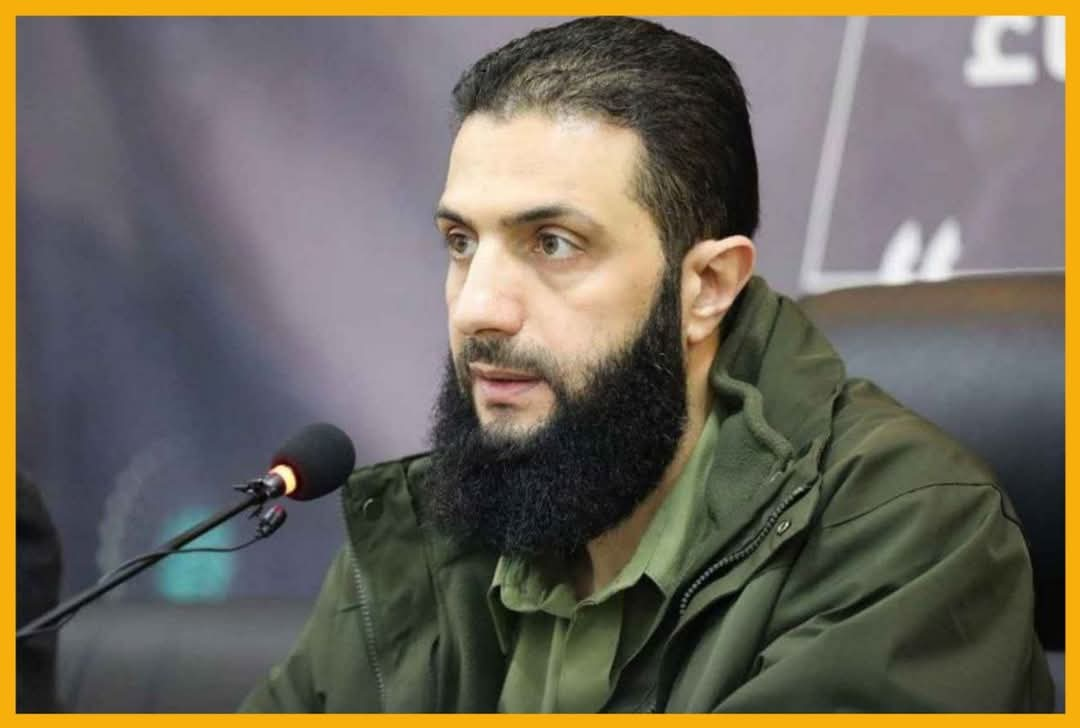
Ahmad Al Sharaa: From Khaki-wear to a Blue Suit

With the fall of the Assad regime, Syria has turned a new page, with the opposition forces now holding the reins of the country .

An 11-day-long opposition blitzkrieg forced Bashar al Assad to flee to Moscow, dealing a death blow to the regime after 13 years of the brutal war.

Though various revolutionary groups fought for this decisive moment, Hayat Tahrir al-Sham (HTS), which means Levant Liberation Committee, emerged as a dominant force under the leadership of Ahmed al Sharaa, also known by his nom de guerre Abu Mohammed al Jolani.

The US and its Western allies has designated the HTS as a terrorist organisation, putting a bounty of $10 million on his head, which was lifted recently.

But the 42-year-old Syrian leader has emerged as an indispensable force, wielding strong influence over the war-ravaged country. In late December, Sharaa met Turkish and Ukrainian foreign ministers as well as top diplomats from the US and the UK, signalling that he is the de facto leader of the new Syria.

Sharaa had a joint press conference with Turkish Foreign Minister Hakan Fidan, during which the top Turkish diplomat “thanked” the Syrian leader for his “friendly” welcome to the country.

“I saw that he (Sharaa) and his friends had very clear ideas about the establishment and transition process of the new system,” said Fidan, referring to the transition process from the Assad regime rule to the new government.

Fidan and Sharaa also sat down for a tea stop in Damascus’s famous Mount Qasioun, which overlooks the capital. Mount Qasioun is believed to be the site of legendary events, such as the Biblical and Quranic figure Abel’s murder by Cain.

From a fighter in battle fatigues to a statesman in a Western suit and a trimmed beard, Sharaa’s transformation reflects the changes in the country since the fall of the Assad regime.

Since the beginning of the 11-day lightning offensive against the Assad regime, Sharaa has given several interviews and statements from CNN to Saudi state-owned Al Arabiya TVreflecting a fair degree of moderation in his worldview.

He has pledged to ease sectarian tensions and rebuild the country along the margins of justice and equality. The HTS leader also sent a message to the Western camp saying that “your interests are understood in the new Syria.”

He suggested working with Russia, an ally of the Assad regime, and sent a conciliatory message to Iran, in which he offered to develop a positive relationship even though Tehran fiercely backed Bashar al Assad in the past.

“This new triumph, my brothers, marks a new chapter in the history of the region, a history fraught with dangers (that left) Syria as a playground for Iranian ambitions, spreading sectarianism, stirring corruption,” he said, during one of his first speeches after the overthrow of the Assad regime in Damascus’s Umayyad Mosque, one of the most decorated and oldest Muslim religious structures.

In his latest interview, Sharaa suggested that elections and drafting a new constitution replacing the current Baathist charter will take several years due to the fact that the civil war has led to a large displacement and a lot of disruption in many public services.

A moderate leader?

The Biden administration has also signalled that depending on Sharaa’s path, Washington might consider removing the HTS from the US terror list.

“We have taken note of statements by the leaders of these rebel groups in recent days, and they’re saying the right things now, but as they take on greater responsibility, we will assess not just their word, but their actions,” Biden said on Dec. 8.

In a recent interview, Sharaa urged the Western leadership to lift sanctions because they were “issued based on the crimes” of the Assad regime, which is gone after the opposition victory. As a result, “these sanctions should be removed automatically”, he said.

Not only the US but also regional powerhouses like Türkiye, which has backed the opposition’s democratic aspirations against the Assad regime, also closely watching Sharaa and the new Syrian administration’s ongoing policies.

With an overwhelming majority of Syrians having lost so many loved ones in the brutal war, they are now hoping for a long-lasting peace and a life with dignity and honour.

“I have an advice for him (Sharaa/Jolani), I hope he is smart enough to know it by himself: don’t even try to be the new Assad. The Syrians who did a revolution against Assad, can do it again easily against you as well,” says Omar Alhariri, a Daraa-based Syrian journalist.

“We are looking for the future, being a good part of it. We are waiting for justice,” Alhariri tells TRT World, adding that Sharaa should lead a process in which “Syrians themselves should choose their leaders” in a democratic process.

Sharaa has recently shown his openness to a democratic order, saying the HTS and its armed allies intend to form a “council chosen by the people” and a state operating through institutions.

In March, however, he faced large protests in his previous stronghold Idlib, where protesters accused him of corruption and suppression. It remains to be seen whether his moderate rhetoric will match his future actions.

What is his background?

Born in Saudi Arabia to Syrian parents who are from the Israel-occupied Golan Heights, Sharaa grew up hearing the stories of his family’s displacement.

During the infamous Arab-Israeli War of 1967, Israel occupied the Golan Heights, rendering its inhabitants, including Sharaa’s family, homeless.

Assad’s ouster under the leadership of Sharaa is, in a way, life coming full circle. His father Hussein al-Sharaa was a pan-Arab nationalist, who was imprisoned in the 1970s by Bashar al Assad’s father Hafez al Assad. After his release, Sharaa’s father sought asylum in Saudi Arabia where he worked as an oil engineer.

In 1989, when he was seven-years-old, the Sharaa family returned to Syria’s Damascus. The young Sharaa pursued journalism, studying media.

In the 2000s, the Second Intifada left indelible marks on Sharaa’s life. While his father had cultivated strong ties with the Palestinian armed groups affiliated to the Palestine Liberation Organization (PLO), the young Sharaa established contacts with radical groups like Al Qaeda.

“I started thinking about how I could fulfil my duties, defending a people who are oppressed by occupiers and invaders,” he said during an interview with Frontline in 2021, referring to the Palestinian resistance against Israel.

In the preceding months of the US invasion of Iraq in 2003, he joined the Al Qaeda ranks, fighting against the American occupation.

By the mid-2000s, he was imprisoned by US authorities in Iraq and subjected to difficult conditions in America’s notorious dark sites for at least five years. On his release in 2011, Sharaa stepped into a different world.

The Arab Uprisings were spreading across the Middle East, reaching Syria too. Sharaa quickly joined hands with the anti-regime forces, launching another battle against the Bashar al Assad’s rule in Syria.

Toward being a top operative

After his move to Syria, Sharaa formed Jabhat al Nusra, the Syrian wing of Al Qaeda. In 2013, when Daesh wanted to annex Syria and merge it with the parts it had captured in Iraq, Sharaa rebelled, triggering a fight between the two groups.

While Daesh lost control across both Syria and Iraq thanks to an American-led coalition interference, Sharaa’s Nusra Front survived, partly due to its anti-Daesh stance.

In 2016, Sharaa rebranded his group Jabhat Fateh al-Sham (Front for the Conquest of Syria), indicating that the new structure has its own agenda, straining its ties with Al Qaeda. The next year, he once again changed the group’s name to its current format, publicly saying that the HTS has no connections with al Qaeda.

In the last seven years, Sharaa’s HTS has focused on Syria, increasing its hold over the Idlib province, which was the last opposition stronghold in the country prior to November 27, when the 11-day offensive against the Assad regime began.

TRTWorld

Continue reading
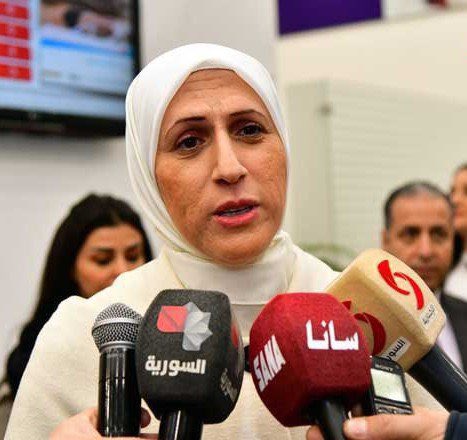
Baathist Maysaa Sabrine Appointed as Syria’s Central Bank Chief

Syria’s new interim government is moving full-blast ahead on women’s right. It has just appointed, Monday Maysaa Sabrine as the new governor of the country’s Central Bank. This is the second woman appointment in the new administration of Ahmed Al Sharaa, seen as an Islamist extremist turned liberal.

She becomes the first woman to hold such a top position in the bank’s seven decade history  and is expected to lead Syria into the modern age in a post-Baathist government. 

But there is a hitch and apparently that doesn’t seem to be much bothering the new government in Damascus for Sabrine has served under the old Baathist regime as deputy governor of the Central Bank for the last six years and holds a degree in accounting.

Thus it would seem the new government is looking for meritocracy than ideological or political affiliation for Sabrine is will versed in the country’s fiscal system having also served on the board of directors of the Syria securities exchange.

Her appointment is trending on the social media as she is the second woman after Aisha Al Dibs who was made head of the Women Affairs Section in the interim administration, an appointment designed to allay the fears of the West who still see this government as an Islamist extremist one.

Therefore the appointment of Sabrine has created much talk among the social media buffs related to those who supported the move and those against it as she was part-and-parcel of the former Baath regime.

But those in favor believe the woman has a wide ranging economic experience that would be essential for the current administration. So maybe practicalities has over-ridden the ideological garb.

Continue reading