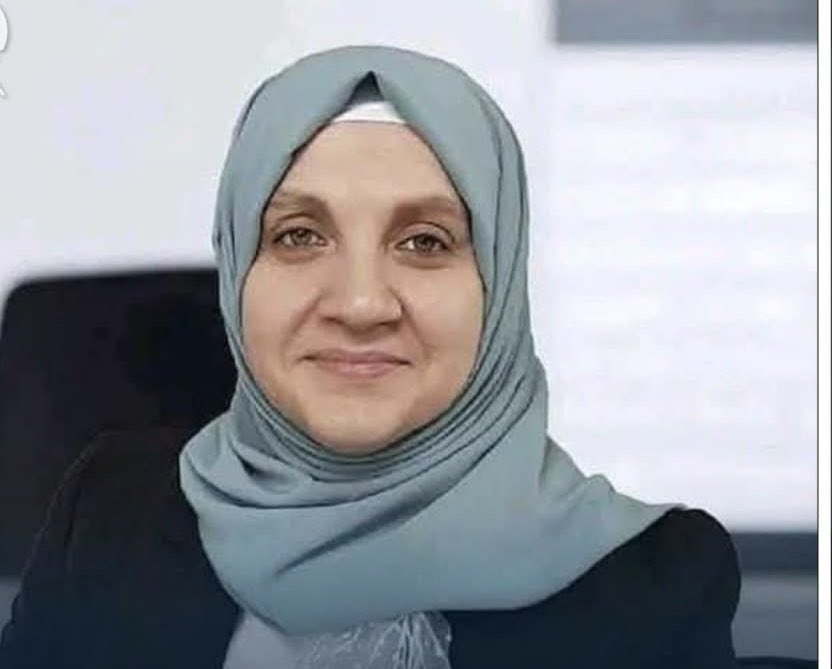
Syria Appoints Aisha Al Dibs in Interim Cabinet

Surprising many, or not so, the new interim government in Syria, has appointed a women minister to head the “Women Affairs Section” in the cabinet.

Aisha Al Dibs name and image is trending on the social media as the first high-level official in the new administration after the fall of the Baath regime on 8 December, 2024.

Dibs, who previously worked in the field of humanitarian aid, describes herself on her social media account as “an activist focused on the development of women and humanitarian work according to Anadolu.

Continue reading
Syria: A Hot Political Potato

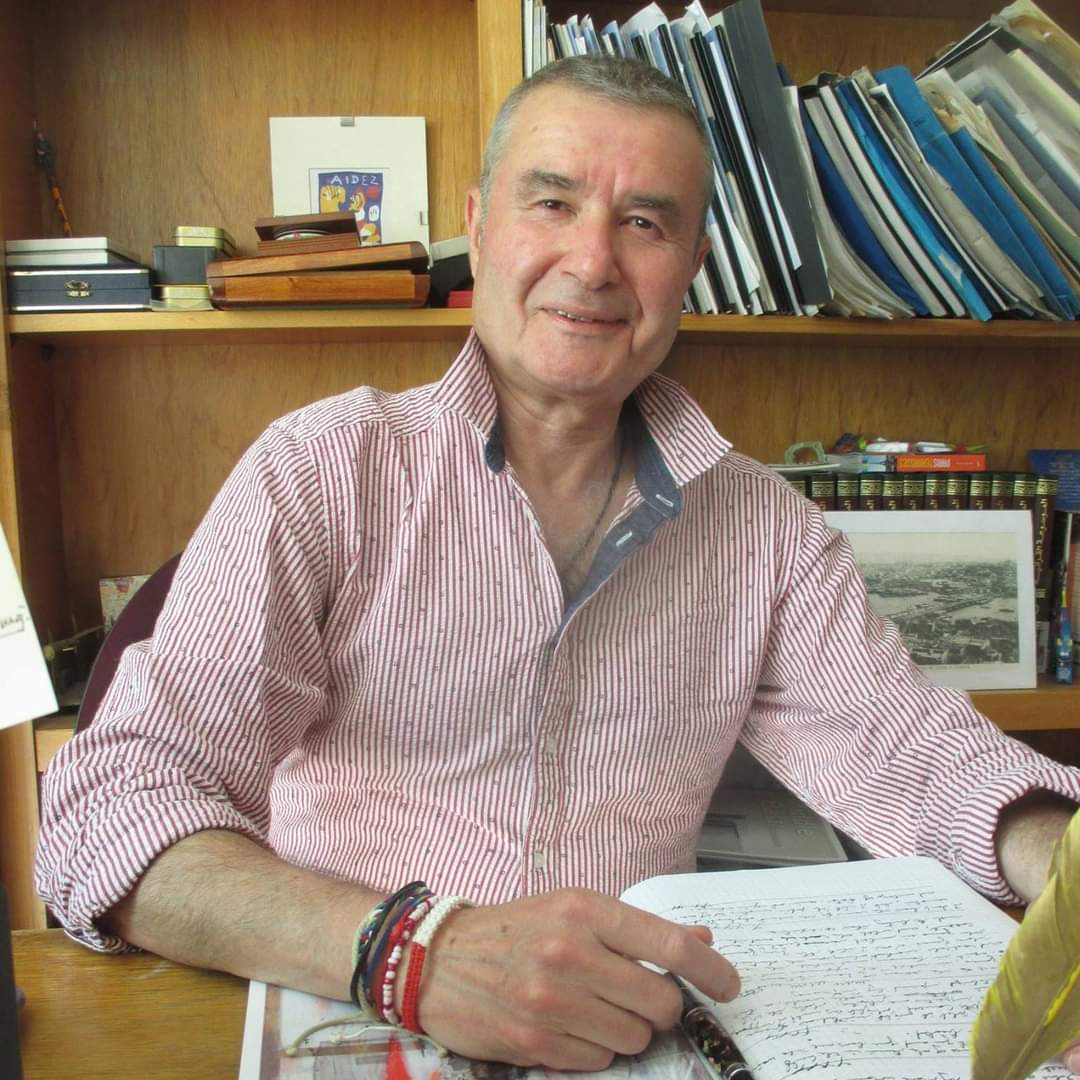
By Dr Khairi Janbek

All eyes are on Syria, simply because the only thing known about how the new Syria will look like is frankly, the unknown. What is prevailing in the new predictions and analysis is at best, and at worst blunt fears.

Of course, this is understandable considering the composition of the groups which are now trying to run the country. What is vey disconcerting however, is how the international media presented the war prior to the fall of Damascus in no more than a side show, giving the impression that, as big Syrian cities fell one after the other in the hands of the rebels, that an agreement was likely to be struck which will solve the concept peaceably. Well, such an agreement was not struck, and the victorious rebellion became the hot potato in the hands of all.

Now, how will the new regime look like in Syria? Frankly your guess is as good as mine. Will they act momentarily in a pluralistic manner, then adopt political Islam as regime ideology? Again, only time will tell, but also that would depend primarily, on the prevailing regional and international actors and players.

For a start, the rapprochement between Russia and Turkey will not greatly depend on the shape of the new regime, so long of course, as the new regime in Damascus continues to protect the Russian interests in warm water bases, and be a wall against Kurdish armed groups threatening Turkish interests.

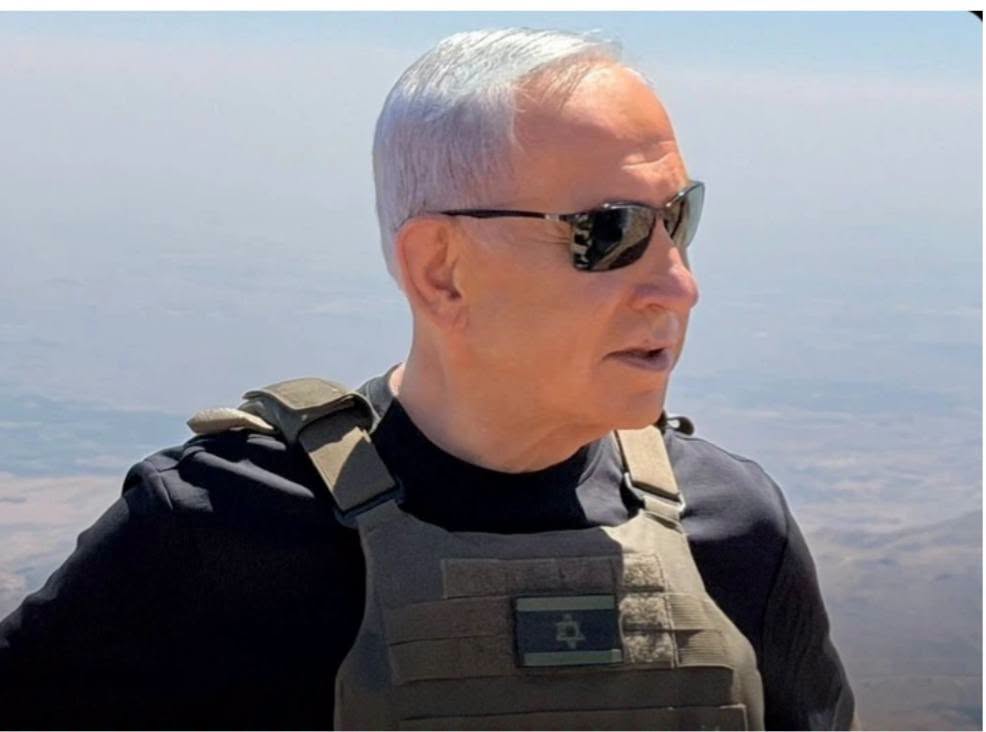
Then of course there is Israel, which after it destroyed Syrian military capabilities, has no fear of war with Damascus, but does fear the potential presence of a regime adopting political Islamist trappings on its borders, which it will use as an excuse use to expand and probably annex Syrian, and maybe Lebanese territories before the dust settles down.

However, when it comes to the Arab neighbors of Syria, Jordan and Iraq, it’s only natural they would feel concerned but for different reasons. For Jordan, the recent history of Iraqi political instability and the associated acts of terrorism are still fresh in the mind of everyone in the Kingdom, so in no uncertain terms, Jordan would wish to see on its border, a regime adopting political Islam, lest it suffers once more from terror acts that are likely to push for military action and in which it doesn’t wish to be involved in.

As for Iraq, the sectarian troubles are still fresh in the minds of everyone. Certainly the Iraqi government doesn’t wish to see a regime on its borders which has the potential of igniting an unwanted sectarian civil war. As for the rest of the Arab countries, the question remains theoretical – plainly speaking being against political Islam .

As for Syria itself, it’s rather banal to repeat the obvious which is, that it is pluralistic country. But, how can you mange such a country, if indeed this is the intention intention and not shoving it up everyone’s throat ideology by blood and fire.

For a start every community, ethnic and religious, has to feel secure, and secondly they need to know that they have a stake in the future of the country, and that can only happen by establishing a truly functioning parliament freely elected by all of its constituents, then adopt a prime ministerial system of government accountable to the people with a titular president of the republic. No political party should be prohibited to field parliamentary candidates except those associated with armed groups.

At the end of the day, the only thing which will turn the current victorious rebels into extremist islamists is the specter of internal civil conflict which everyone is trying to avoid.

Dr Khairi Janbek is a Jordanian commentator currently based in Paris.

Continue reading
Israel Continues to Strike Syria Despite ‘Assurance’

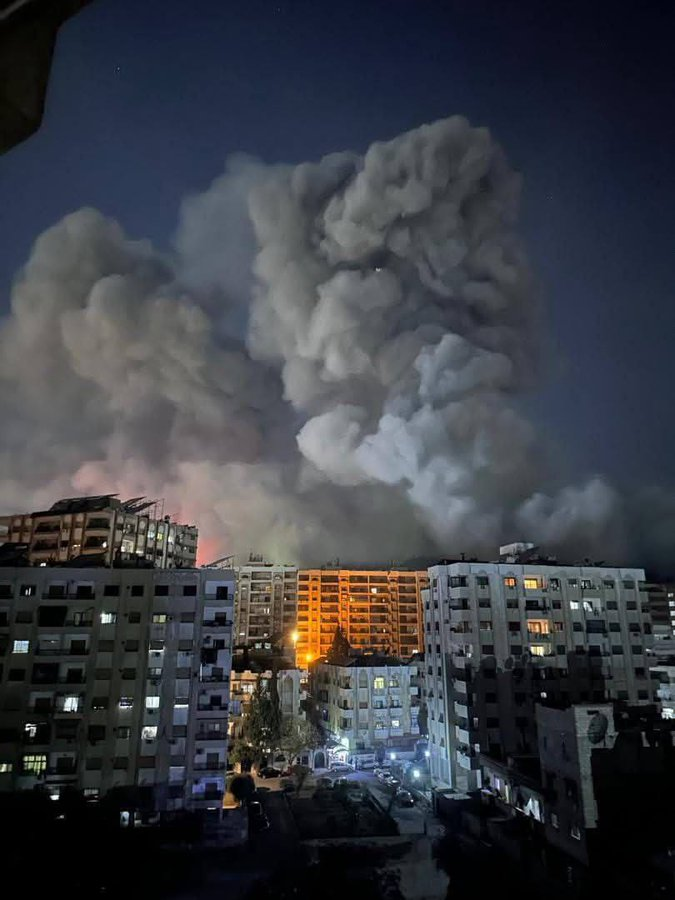
Israel has struck Syria 61 times in less than five hours, Sunday, according to the London-based Syrian Observatory for Human Rights.

The news is trending on the social media with the Israeli strikes reaching Damascus, Homs, Deraa, Suwayda, Sednaya, the so-called torture chamber prison under the Al Assad regime.

However, the Observatory claims 52 of these strikes were conducted on military depots that belonged to the ousted regime inside different areas of Syria.

The Observatory, which is based in the UK, claims that since the fall of Bashar Al Assad last week, Israel conducted 446 airstrikes on Syria on 8 December, 2024.

Syria watchers, including those in the Arab world are condemning the non-stop Israeli attacks as willful destruction of essential security public property that now belongs to the Syrian people.  

The new Syrian leader Ahmad Al Sharaa, known as Mohammad Al Jolani whose HTS (Hayat Tahrir Al Sham) group was mainly responsible for the ouster of the old Baathist regime says he is not interested in a new conflict with Israel.

But despite this the Israelis, who occupy the Golan Heights, continue to bomb Syrian targets

Continue reading
After 42 Years Jordanian Freed From Syria Prisons

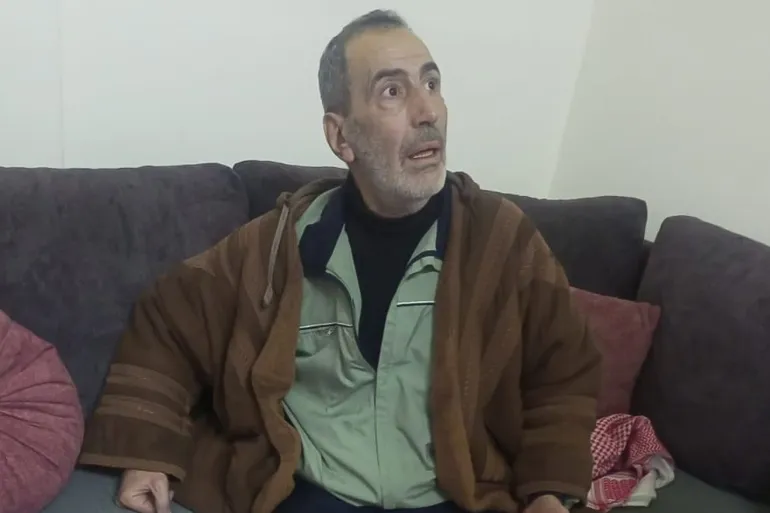
The Jerusalemite Walid Barakat, who hails from the village of Nabi Samouil, northwest of occupied Jerusalem, was released and reunited with his family in Jordan after entering prison life in Syria as a young man at the age of 26.

Barakat said that “life was written for him several times in prison after he was close to death,” and that he learned of his life sentence after 30 years of imprisonment.

Barakat’s nephew pointed out that “his uncle arrived at the border physically exhausted after the opposition forces took him there immediately after he revealed his nationality,” adding “Walid has a large family in Jordan that will embrace him forever after years of forced absence from them.”

He added that “Walid spent 14 years in solitary confinement, and that the family did not know exactly where he was, whether he was detained in Syria, Turkey or Lebanon, until his name was listed in 1996 among the Palestinian detainees in Syrian prisons in a newspaper through the efforts made by international human rights organizations.”

He said, “the family started communicating with him through some Syrians who contact him by phone, and they told him of our news and they conveyed his news to us.”

Walid was arrested by Syrian forces at the Damascus airport on 31 October, 1982, and was subjected to solitary confinement in Tadmur prison for many years, where he experienced the worst forms of torture, before the opposition forces opened the prison doors and freed the prisoners and he immediately headed towards the border with Jordan, according to his family.

The family added that “Walid never saw sunlight during his solitary confinement, and inside the prisons he became a number that was called out like the rest of the prisoners.”

His relatives said, “the only meeting that brought him together with one of his family members was in 2005 when Hatem’s father and sister traveled to Syria and met him in Mezzeh prison in Damascus, and no one was able to visit him after that.”

On 27 November, the Syrian armed opposition factions launched their “Deterrence of Aggression” operation, starting from Idlib and Aleppo, then Hama and Homs, arriving in Damascus, which they entered at dawn last Sunday, announcing the fall of the Assad regime according to the Quds News Network.

Continue reading
‘Arab Spring’ Continues Withering

By Saleem Ayoub Quna

After December 2010 when a desperate and angry Tunisian young man of the name of Mohammad Bouazizi, dramatically immolated himself, an unprecedented wave of mass protests against incumbent totalitarian regimes swept five Arab capitals: Tunisia, Cairo, Tripoli, Yemen and Damascus.

The simultaneous civic uprising in these countries was deceitfully baptized as the “Arab Spring”, which initially won the hearts of millions of Arabs. But it did not take long before the average Arab citizen started realizing that it was one thing to get rid of a dictator or topple a regime, and completely another thing to have a plan for the day after!

It was the same course of events in the five capitals except for Tunisia: Street demonstrations, clashes with police, havoc and death, under the watchful eyes of disguised outside interference and finally a forced humiliating departure, imprisonment or execution of the incumbent ruler and his entourage.

In Tunisia, the military sat on the fence! Consequently, the violence and loss of life was minimal there, while in the other four countries the toll was higher and kept rising until the end.

The last leg of the fake “Arab Spring” was Syria, where the clashes between the forces of the regime and the opposition groups, mostly of Islamic orientation, dragged on and gradually turned into open urban warfare.

Syria’s distorted model of the “Arab Spring” took nearly 14 years, simply because the regime, at a certain crucial turning point in 2015, resorted to outside direct support, namely from Russia, Iran and Hezbollah.

Opposition groups in Syria and their sympathizers never forgot or forgave the brutal crackdown they were subjected to in the city of Hama back in 1982 by the Hafez Al-Assad’s regime.

Of course Russian, Iranian and Hezbollah’s response to help Assad’s regime in 2015, was not an act of charity. Each party had their own agenda and motivations; Iran sought to ascertain its regional clout, while continuing to arm Hezbollah in Lebanon through Syria and Iraq; Russia wanted to strengthen its foothold in Syria in a move to counter balance American encroaching measures in northern-eastern Syria, the oil rich land, where the latter supported the local Kurdish population.

Hezbollah was paying back the debt for the Syrian regime that facilitated the transfer of Iranian military hardware.

Today, Syrians are celebrating the end of the 53rd year of the rule of the Assad dynasty, except, maybe by a handful of them. As the saying goes: Loss and defeat are born orphans; victory and success gets many adopters!

The Syrian groups who took over from the previous regime are multiple in number and diverse in outlook; like an art work of a mosaic, from a distance, it looks picturesque and colorful, but from within and in detail, it clearly lacks coherence and chemistry.

As things stand now in Syria and its surroundings, there is not much room for optimism, despite the big change! Many outside players are gossiping about the future of this beleaguered country in ways that reveal that what they are doing is more than gossiping. They are working on concrete ideas and plans for the day after in Syria while, during the coffee breaks, they watch those who are dancing and chanting in the squares and streets of Damascus!

This opinion was especially written for Crossfire Arabia by Saleem Ayoub Quna who is a Jordanian author writing on local, regional and international affairs and has two books published. He has a BA in English Literature from Jordan University, a diploma from Paris and an MA from Johns Hopkins University in Washington. He also has working knowledge of French and German.
Continue reading