Entering The Baath Torture Chambers

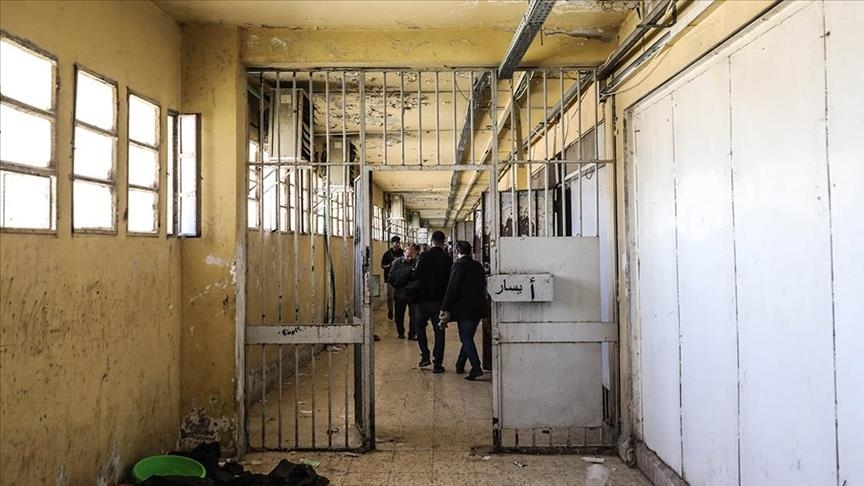
During the rule of the collapsed Baath regime in Syria, thousands were subjected to torture in dozens of centers beyond Sednaya prison.

Since the uprising began in March 2011, the fallen Baath regime reportedly tortured and killed thousands. However, it is feared that the undocumented numbers reach tens of thousands.

According to the Syrian Network for Human Rights (SNHR), regime forces detained at least 1.2 million Syrians during the civil war and subjected them to various torture methods.

Although the regime announced over 20 so-called amnesty decisions during the war, international human rights organizations state that the regime continued detaining Syrians.

Numerous reports from international organizations emphasize that detainees were killed through torture.

Anadolu compiled details of torture centers and methods under the collapsed Baath regime, which ruled Syria for 61 years.

According to an exclusive SNHR report for Anadolu, the regime’s torture centers were categorized as civilian prisons, military prisons, secret unofficial detention centers, and security unit interrogation centers.

There were more than 50 such centers across almost all provinces in the country.

Prisons under Interior Ministry

In cities taken over by groups that toppled the Baath regime, their first action was to rescue detainees, most of whom were opposition members.

Prisoners were freed from major prisons, including Aleppo Central Prison, Hama Central Prison, Adra Central Prison in Damascus, Homs Central Prison, and Suwayda Central Prison.

Prisoners in the central prisons of Tartus and Latakia, however, are still awaiting release.

Centers of crime

Tens of thousands of people were tortured for years in military prisons under the Defense Ministry.

Among these, Sednaya, Mezzeh, and Qaboun in Damascus, and Al-Balloon and Tadmur in Homs, stood out as centers of severe torture. Many detainees held there were never heard from again.

After armed groups brought down the regime, prisoners in Mezzeh and Kabun were also freed.

Mezzeh prison, located at the military airport in Damascus’s Mezze district, was managed by military intelligence units under the Defense Ministry.

Secret and unofficial detention centers

There were also centers where the regime detained its opponents, but these centers were practically secret.

According to SNHR and other human rights organizations, the purpose of establishing these secret detention centers was to carry out even more severe torture. Those who ended up in these torture dens had no chance of survival.

These facilities operated under the Fourth Division, commanded by Assad’s brother, Maher Assad.

In early 2012, the regime also turned houses, villas, and stadiums into detention centers. One such facility was Deir Shmeil Camp in northwestern Hama.

Detention, torture centers

Security units tied to the regime also played an active role in operating interrogation and detention centers.

The security apparatus consisted of four main intelligence services: the Military Intelligence Service (known as “military security”), the Political Security Service, the General Intelligence Directorate (known as “state security”), and the Air Intelligence Directorate.

The Military Intelligence Service, with the largest network in the country, had at least 20 branches.

The Political Security Service maintained branches in most provinces, while the General Intelligence Directorate operated six main headquarters in Damascus.

The Air Intelligence Directorate ranked second in detentions after the Military Intelligence Service. With branches in nearly every province, the directorate was particularly active in areas with military airports.

These units were placed under the Syrian National Security Bureau, established in 2012. The Military Intelligence Service, under the Defense Ministry, functioned as the primary body responsible for detentions.

Those detained in these branches were typically transferred to main centers in Damascus after several days, where they could be held for years.

Across the country, security units operated more than 45 detention branches, with 18 of them located in Damascus.

Regime used 72 different torture methods

According to the SNHR report, the Baath regime employed 72 torture methods involving physical, psychological, and sexual violence.

The regime also subjected detainees to forced labor and solitary confinement, violating basic human rights.

Physical torture included pouring boiling water on victims’ bodies, simulating drowning by submerging heads in water, electrocuting individuals with electric batons, and placing them naked on electrified metal chairs. Other inhumane practices involved melting plastic bags onto bodies, extinguishing cigarettes on skin, and burning fingers, hair, and ears with lighters.

The regime also used brutal methods such as pulling out fingernails with pliers, tearing out hair, amputating body parts—including ears and genitalia—with sharp tools, and driving nails into sensitive areas like hands, tongues, and noses.

Spotlight on Sednaya prison

Sednaya prison, where tens of thousands are believed to be held, has the worst reputation of all.

After protests in March 2011, Sednaya became a center of torture, holding tens of thousands of political detainees.

Following the collapse of the 61-year-old Baath regime on 8 December, 2024, attention turned to the situation of prisoners in Sednaya.

Some detainees reportedly appeared on security cameras but could not be found in accessible areas, raising the possibility that they may be in secret compartments underground.

As teams continue to dig tunnels and break down walls, Syrians who have not heard from loved ones for years are flocking to the prison, searching for traces of their relatives.

Continue reading
After 33 Years Lebanese Man Describes Horrors of a Syrian Jail

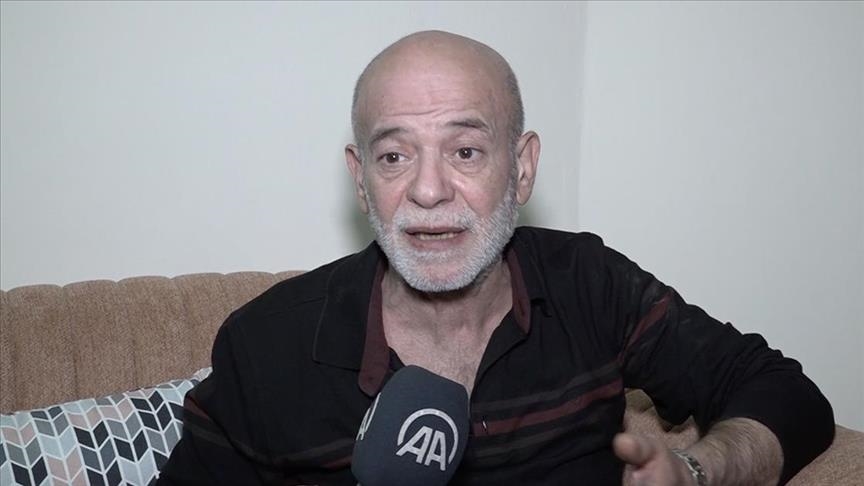
Suheil Hamawi, a Lebanese national who returned to his homeland after opposition groups toppled the Syrian regime and freed detainees from Sednaya and other notorious prisons in Damascus, shared his harrowing ordeal during 33 years of captivity.

The Bashar al-Assad regime operated numerous torture centers across the country referred to as “death hubs.”

Following the regime’s collapse over the weekend and the opposition’s takeover, anti-regime prisoners held in Sednaya and other detention centers were freed.

Among them was Hamawi, who was released from Sednaya, infamously known as a “human slaughterhouse” for its brutal torture practices.

A victim of the Assad regime, which tortured hundreds of thousands of people, he was abducted by Syrian forces in Lebanon in 1991. He was subsequently arrested and transferred to various prisons in Syria.

Accused of opposing the Syrian occupation of Lebanon from 1976 to 2005, Hamawi endured 33 years of inhumane imprisonment.

‘I had no hope of ever returning to my homeland and family’

Speaking to reporters, Hamawi expressed his gratitude for regaining his freedom and returning to Lebanon after more than three decades of captivity.

He recounted being among the hundreds of Lebanese detained by Syrian intelligence in 1991 for opposing Syria’s military presence in Lebanon.

Hamawi described the unimaginable suffering he endured in Syrian prisons.

“I was sentenced to life imprisonment in Sednaya. Today, I am back in my hometown of Chekka, the same place where Syrian forces detained me 33 years ago,” he said.

Initially transferred to the Anjar detention center in the Bekaa Valley near the Lebanese-Syrian border, he was later moved to detention centers in Damascus and Latakia before being sent to Sednaya.

“I spent 15 years in solitary confinement before being placed in a shared cell at Sednaya. Every single day was torture. From the moment I was detained, every breath I took felt like agony. I had no hope of ever seeing my family again. Visits were completely forbidden, and we had no contact with the outside world,” he said.

Hamawi described his imprisonment as a state of constant despair and deprivation, adding that he had lost all hope of freedom. Even as they heard rumors of events outside, the pace of developments gave prisoners little expectation of imminent release.

“When I heard gunfire, I didn’t know who had come to free me. I walked for 15 kilometers before someone took me to Lebanon,” he said.

According to Lebanon’s National News Agency, Hamawi is the first Lebanese national to return home after being released following the fall of the Assad regime.

Lebanese detainees in Syrian prisons

The Association of Lebanese Political Prisoners in Syrian Prisons estimates that 622 Lebanese citizens remain forcibly disappeared in Syrian detention centers. Many were abducted during Syria’s 29-year occupation of Lebanon.

During this period, the regime detained numerous Lebanese citizens, accusing them of opposing Syria’s military presence or collaborating with anti-regime groups.

Many were transferred to Syrian prisons, with families often losing contact with loved ones for decades.

Some detainees are believed to have been released following recent developments in Syria.

The ‘human slaughterhouse’

Reports from international organizations reveal that Sednaya prison, located 30 kilometers (18.6 miles) north of Damascus, became a detention center for anti-regime activists and military opponents after the 2011 uprising. Under the Assad regime’s Ministry of Defense, the prison became infamous for systematic torture and mass executions.

Between 2011 and 2015, reports indicate that as many as 50 detainees were hanged weekly or bi-weekly, with executions conducted in silence and secrecy. Prisoners endured inhumane conditions, repeated torture and deliberate deprivation of food, water, medicine and medical care.

A 2017 investigation by Amnesty International concluded that the crimes committed at Sednaya, including torture and mass executions, amounted to crimes against humanity. These violations were part of the Assad regime’s broader policy of systematic violence against civilians.

Continue reading
350 Israeli Warplanes Hit Syrian Targets

The Israeli occupation army announced, Tuesday, it destroyed about 70%-80% of the capabilities of the Syrian army.

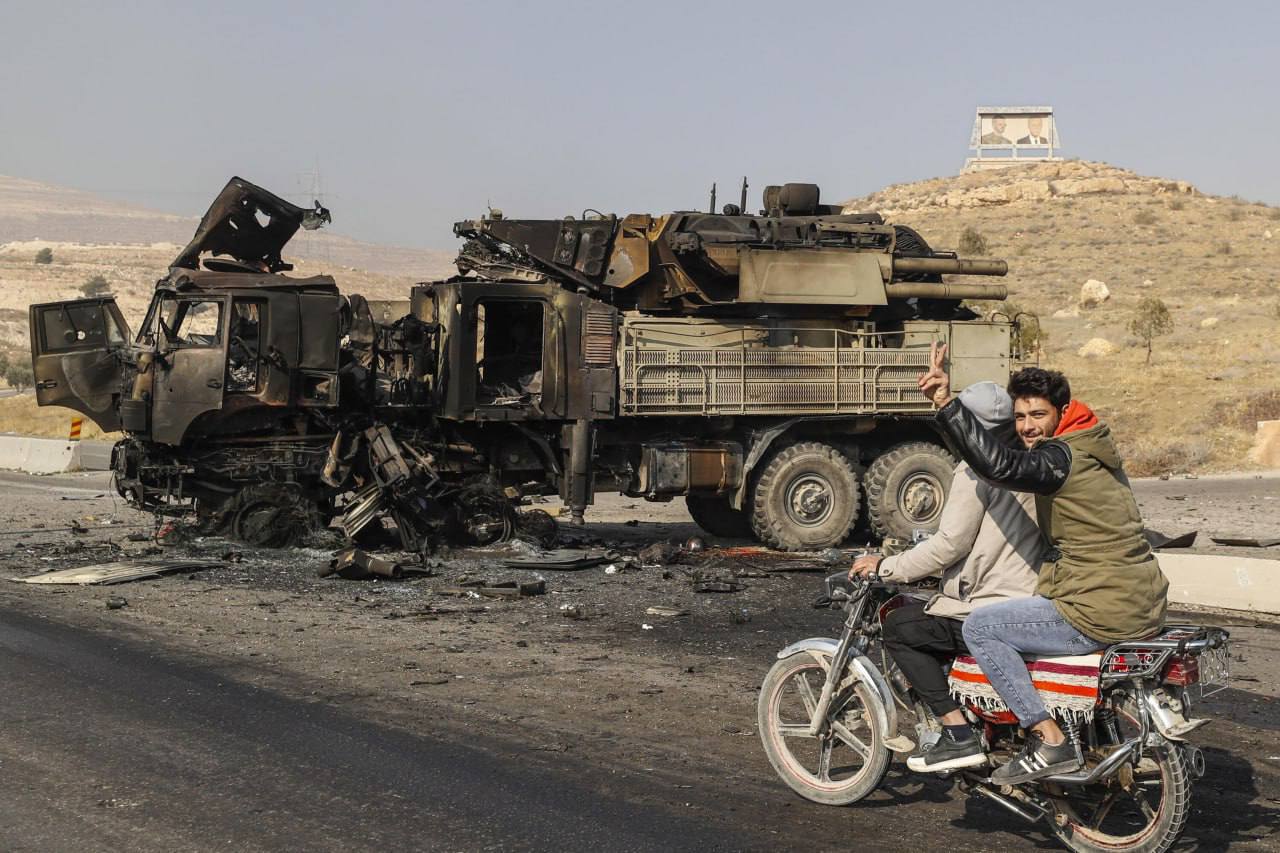
Its stated that about 350 Israeli Air Force fighter jets participated in the aggression, attacking around 320 targets throughout Syria.

It added that “…warplanes and helicopters, radars, surface-to-air missile batteries, ships, surface-to-surface missiles, rocket shells, weapons production sites, weapons warehouses, Scud missiles, cruise missiles, sea-to-sea missiles, drones, and others were destroyed.”

In parallel, the aggression continues on land, through operations carried out by the ground forces in the “buffer zone” in the occupied Syrian Golan, so that the Israeli army is working to “establish a presence in the area and destroy weapons.”

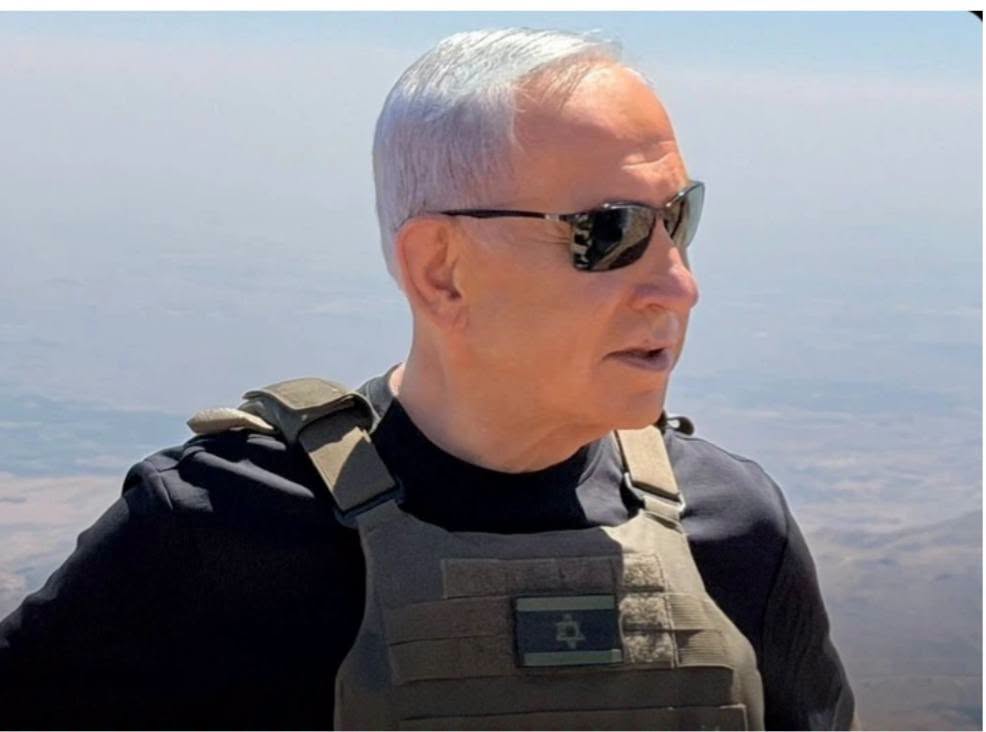
On the political level, Prime Minister Benjamin Netanyahu, said that “Israel will respond forcefully if the new regime in Syria allows Iran to return, or allows weapons to pass to Hezbollah, and will exact a heavy price from it,” but adding it “wants to establish relations with this new regime.”

However, he stressed “what happened to the previous regime in Syria will happen to this regime as well, if it allows weapons to pass to Hezbollah.”

Earlier, the Israeli army radio described the latest aggression on Syria, following the fall of the President Bashar al-Assad regime, as “one of the largest attacks since the establishment of Israel.”

Israeli Defense Minister Yisrael Katz confirmed the occupation’s decision to continue controlling strategic points in Syria, establish a security buffer zone, and target strategic weapons and air defense systems, and any attempts to transfer weapons to Lebanon.

The Israeli Channel 12 confirmed that the air force is operating on a very large scale throughout Syria with the aim of destroying what remains of the Syrian army and all its equipment, “from tanks to missiles,” according to the Kan official channel.

Continue reading
Syria: 10 Days That Shook The World

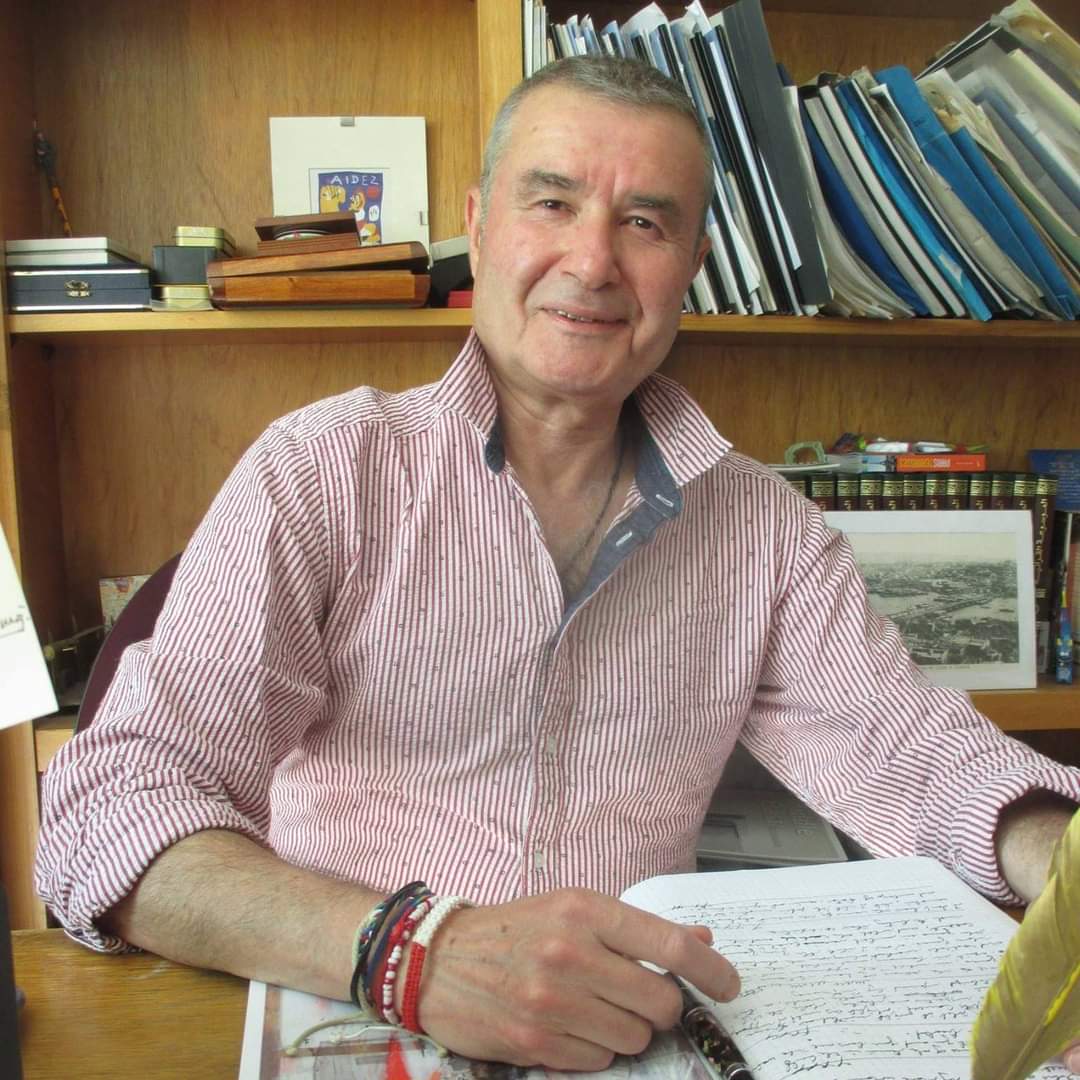
Dr Khairi Janbek

Without much ado, the western media is currently preoccupied with this question: Are the Syrian rebels Jihadis? This is while the Arab media appears to be in a state of euphoria about the Syrian rebels seen as liberators. The issue however is about two perspectives, the first being cautious about the next phase for the country, and this is for understandable reasons, while the second reflects optimism for the next stage and also for understandable reasons.

Now, the fear of dividing Syria on ethnic and sectarian grounds has its blueprint in the colonial history of Syria and certainly not a product of today and/or creative chaos utterances.

Looking back

In fact, on 1 July, 1922, the French colonial authorities divided Syria into federal statelets: statelet of Damascus, statelet of Aleppo, statelet of the Alawites, and the statelet of the Druze. Of course, the idea was that the country would be easier to rule and a regional and a sectarian balance would guarantee political stability. Of course, the Kurds were outside this formula as they were struggling to create an independent state of their own.

But what about Syria now, to paraphrase John Reed, after the 10 days that shook the world. Indeed, the two regional police stations in the region, Turkey and Israel seems to be gaining major influence in the current affairs, while the third police station, Iran, has lost out in this formula.

Rivalry

For all intents and purposes, no one is naive enough to think that the march towards Damascus could have occurred without Turkish support, and the Israeli foreign minister has confirmed that talks were held between his government and the Druze as well as the Kurds of Syria, whom he described as having good relations with them.

But what about the Russians? One would venture to say that they are like to stay in Syria as most probably, paying guests of the new Syrian government, renting their military installations from them.

Undoubtedly, no matter how much we can be optimistic about the future of all-inclusive democratic Syria, we will always reluctantly fall back on our cognitive dissonance regarding the case of Iraq, and make the mistake of comparison with the post-Saddam era of terrorism, sectarianism an ethnic strife.

This is simply because, we forget that in Iraq there was superpower which brought down the regime and destroyed all the functioning institutions of the country favoring when religious Islamic sect over another, and supporting one ethnicity against others. While in Syria, its the Syrians themselves brought down the Ba’ath regime.

On the face of it, the rebels don’t seem to want to be the new masters of Syria and they are working very hard to protect and preserve the functioning institutions of the country, and claim their adherence to pluralism and for an all inclusive new regime.

But two important questions remain outstanding, and only time will tell how these will unfold: To what extent will there be Turkish and Israeli influence on the emerging regime, and more importantly, what would be the share of those two police stations of the country?

In other words, how will Turkey perceive the future of the Kurds in Syria, and where does Israel see its border posts with the “new” Syria?

In all likelihood, the rebels will keep their word of wanting a stable pluralist Syria, but let us not forget also, that a future spark of ethnic, regional or sectarian conflict, will very likely turn all into extremists in the country.

Dr Khairi Janbek is Jordanian commentator based in Paris.

Continue reading
Israel Strikes 100 Military Sites on 1st Day of Syria Takeover

This is not trending on the social media nor any media but has been made by an Arab journalist.

Ahmad Mansour, a journalist in Al Jazeera, writes:

Israel struck, Sunday, more than 100 military targets in Syria, in addition to civilian institutions.

Israel does not want to leave any military or civilian components for the new state led by the rebels.

Assad #سوريا left the ruins of a state, but Israel wants to turn it into ashes #دمشق_تتحرر #سوريا_تتحرر

Continue reading