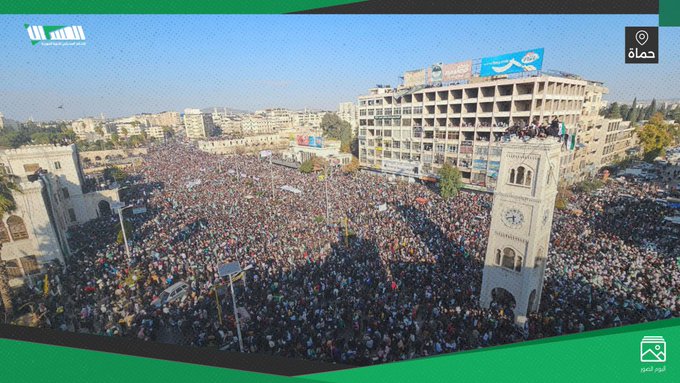
‘Arab Spring’ Continues Withering

By Saleem Ayoub Quna

After December 2010 when a desperate and angry Tunisian young man of the name of Mohammad Bouazizi, dramatically immolated himself, an unprecedented wave of mass protests against incumbent totalitarian regimes swept five Arab capitals: Tunisia, Cairo, Tripoli, Yemen and Damascus.

The simultaneous civic uprising in these countries was deceitfully baptized as the “Arab Spring”, which initially won the hearts of millions of Arabs. But it did not take long before the average Arab citizen started realizing that it was one thing to get rid of a dictator or topple a regime, and completely another thing to have a plan for the day after!

It was the same course of events in the five capitals except for Tunisia: Street demonstrations, clashes with police, havoc and death, under the watchful eyes of disguised outside interference and finally a forced humiliating departure, imprisonment or execution of the incumbent ruler and his entourage.

In Tunisia, the military sat on the fence! Consequently, the violence and loss of life was minimal there, while in the other four countries the toll was higher and kept rising until the end.

The last leg of the fake “Arab Spring” was Syria, where the clashes between the forces of the regime and the opposition groups, mostly of Islamic orientation, dragged on and gradually turned into open urban warfare.

Syria’s distorted model of the “Arab Spring” took nearly 14 years, simply because the regime, at a certain crucial turning point in 2015, resorted to outside direct support, namely from Russia, Iran and Hezbollah.

Opposition groups in Syria and their sympathizers never forgot or forgave the brutal crackdown they were subjected to in the city of Hama back in 1982 by the Hafez Al-Assad’s regime.

Of course Russian, Iranian and Hezbollah’s response to help Assad’s regime in 2015, was not an act of charity. Each party had their own agenda and motivations; Iran sought to ascertain its regional clout, while continuing to arm Hezbollah in Lebanon through Syria and Iraq; Russia wanted to strengthen its foothold in Syria in a move to counter balance American encroaching measures in northern-eastern Syria, the oil rich land, where the latter supported the local Kurdish population.

Hezbollah was paying back the debt for the Syrian regime that facilitated the transfer of Iranian military hardware.

Today, Syrians are celebrating the end of the 53rd year of the rule of the Assad dynasty, except, maybe by a handful of them. As the saying goes: Loss and defeat are born orphans; victory and success gets many adopters!

The Syrian groups who took over from the previous regime are multiple in number and diverse in outlook; like an art work of a mosaic, from a distance, it looks picturesque and colorful, but from within and in detail, it clearly lacks coherence and chemistry.

As things stand now in Syria and its surroundings, there is not much room for optimism, despite the big change! Many outside players are gossiping about the future of this beleaguered country in ways that reveal that what they are doing is more than gossiping. They are working on concrete ideas and plans for the day after in Syria while, during the coffee breaks, they watch those who are dancing and chanting in the squares and streets of Damascus!

This opinion was especially written for Crossfire Arabia by Saleem Ayoub Quna who is a Jordanian author writing on local, regional and international affairs and has two books published. He has a BA in English Literature from Jordan University, a diploma from Paris and an MA from Johns Hopkins University in Washington. He also has working knowledge of French and German.


Related Posts

World Cup, Wimbledon Kicks: Flags, Nepotism, Red Cards and a Watermelon!

By Saleem Ayoub Quna

For a change I would like to give credit to President Trump’s, latest attempt to support the American team before facing off Belgium’s team on July 6, when the day before, and despite his tight and loaded schedule, he called “his friend” Gianni Infantino, FIFA’s President, and asked him for a second look at the punishment against the American striker Folarin Balogun, who made a foul against a Bosnia-Herzegovina player in the match they played earlier on July 2, and which the US won 2-0.

FIFA regulations stipulate that when a player gets a red card during a match for an offense he makes against the other team, he should be suspended from playing in the following match! Mr. Infantino obliged and lifted the ban against the American player. But the match against Belgium in which Balogun played was won by Belgium 4-1.

This intervention episode by Trump on behalf of the American national soccer squad did not end there and led to a controversy that would not be settled before the closing of the 32nd round of the current international tournament.

Infantino was criticized by many within and outside the FIFA body and was asked to resign his post as head of this huge powerful organization. In brief, this episode shows that behind the broad smiles and nice words, sits a huge monster of nepotism and even possible corruption!

Also it means that sports, as a human “noble” endeavor, is not immune from certain uncouth and loath viruses that can affect and may shatter the dreams of other less resourceful nations!

Then we have the phenomenon of waiving national flags when a team wins a match. This occasion is ceased by some staff of the winning teams and players to demonstrate their support for a certain political or human cause or admiration of a person. This is exactly what Hossam Hassan, head-coach of the Egyptian team did when his players defeated Australia on July 3 as they scored 4 goals against Australia which scored only 2 goals, in the final shootout play of the match.

Coach Hassan came down to the pitch and waived the Palestinian flag in a sign of support for the Palestinians in beleaguered Gaza, which celebrated Egyptian performance at the tournament. Israel protested this solidarity gesture with Palestinians and labeled it as anti-Semitic, but FIFA officials maintained that flags belonging to FIFA members, (including Palestine) are allowed to be waived on this occasion!

On the other side of the Atlantic, and in London to be precise, another major sports event is underway, known as the Wimbledon grand slam championship. Wimbledon is known for its strict rules starting with the must-wear white attire, by all players and staff!

On June 29, the Turkish Tennis player, Zeynep Sonmez, ranked 51 by WTA, defeated American player Ann Li 2-1. Sonmez wanted to waive a sign of support for the Palestinians, but could not and according to Jamie Baker, the Wimbledon Tournament Director: “Wimbledon rules do not allow political massaging from players”!

So, what does Ms. Zeynep Somez do?! She sticks a small rubber shock absorber to her racket in a shape of a watermelon composed of the four colors of red, white, black and green! To that subtle demonstration, the Wimbledon people could not raise a finger or blow a whistle!

In this regard, other sources insisted that some people among the audience waived the Israeli which was received by a blind eye!

So next time I attend an important tournament or watch it on TV, I will keep my eyes open on tactics and kicks of this sort, which actually might add to the fun of watching!

Continue reading
New York: AIPAC Stranglehold No More !

By James J. Zogby

The American Israel Public Affairs Committee (AIPAC) has long held sway in elections, threatening and intimidating any opposition. When a critic of Israel was defeated, they boasted of victory as a lesson for others. In last week’s Democratic primary elections in New York City, three insurgent critics of Israeli policies defeated AIPAC-endorsed candidates, pointing to the potential end of an era for the pro-Israel lobby.


AIPAC’s approach to politics and elections was smart. Formed by the Conference of Presidents of Major Jewish Organizations, they were connected from the outset to an impressive national network of American Jewish leaders, activists, and donors they used to effectively influence members of Congress to embrace pro-Israel positions.

They’d visit elected officials in Washington seeking endorsements of legislation and enlist local leaders in a congressperson’s district to make the pitch.

They’d have local representatives offer to help write new candidates’ Middle East policy positions. Implicit were the promise of support if the official or candidate did what was asked—and the threat of opposition if they didn’t.

AIPAC also spawned a network of PACs—political action committees—to raise hundreds of thousands of dollars to distribute for or against candidates depending on their positions on Israel.

Strategic in their operations, not everyone benefited from AIPAC’s largesse.

Chairs of important congressional committees and very supportive congressmembers facing tough reelections received bundled contributions. When elected officials repeatedly stepped out of line, their opponents would benefit from PAC monies and bundled contributions from individual pro-Israel donors.

Overall, the amounts were not overwhelming but sufficient to send a message. When an election went their way, the lobby would crow about the victory, whether or not their support had been a factor. Their goal was communication: “Fear us, or you too can be defeated.”


With the end of federal oversight of independent election expenditures, AIPAC and other pro-Israel groups created “super-PACs” to raise and spend tens of millions of dollars each cycle. In 2022 and 2024, they effectively targeted a few candidates critical of Israel and spent millions to defeat them.

After Israel’s genocidal war on Gaza, we’ve witnessed a dramatic collapse of public support for Israel—especially among Democrats. AIPAC can no longer make examples of just a few candidates, with well over 100 electeds now critical of Israel. Add to this that AIPAC has become so toxic they’ve been forced to create new entities or rely on alternates to distribute funds to candidates.

Meanwhile, Israel’s behaviors alienate more voters. And the more money AIPAC spends, the more toxic its brand—even when they win, their heavy-handed tactics lead to declining support.

This brings us to last week’s New York primaries, a turning point in US politics when two prominent pro-Israel members of Congress were defeated by challengers critical of Israeli policies and supporters of Palestinian justice, and a former leader of pro-Palestinian campus protests won an open race. Not only did AIPAC and its allies spend millions and fail, but also these elections were upfront about Israeli policies and Palestinian rights.


A hallmark of pro-Israel groups’ past campaign involvement was the lengths they’d go to not make support for Israel a public issue. They’d raise money from their supporters based on Israel, but their expenditures would pay for ads criticizing a candidate’s age or “radical agenda,” never mentioning the candidate’s position on Israel. In these NY contests, many issues mattered to voters, especially frustration with the Democratic establishment’s failed policies—but they were also about Israel, and voters knew it. 


In predictable reactions from the pro-Israel side, some accused the targeting of AIPAC’s money and influence as unfair or even antisemitic—ignoring decades of AIPAC boasting about its money and influence as the source of its power. Others claimed that with the election’s results, “Jews no longer feel safe in New York,” ignoring that the most prominent contest’s victor is Jewish—a self-proclaimed progressive Zionist who strongly opposed Israel’s genocide against Palestinians. Finally, some desperately attempted to dismiss the entire election as just about New York with no larger significance, ignoring the changed national political landscape as similar contests emerge everywhere. 


The bottom line is that after a half-century AIPAC’s hold over politics has been weakened. It won’t go away anytime soon, but a real debate over US Middle East policy can now take place. Thank you, New York voters

James J. Zogby is president of the Washington-based Arab American Institute  and contributed this article to The Jordan Times

Continue reading

You Missed

Lebanese Media in The Age of Political Conspiracies

  • By marwan
  • July 13, 2026
  • 12 views
Lebanese Media in The Age of Political Conspiracies

Don’t Forget Palestine!

  • By marwan
  • July 13, 2026
  • 12 views
Don’t Forget Palestine!

Israeli Settlements Shoot up!

  • By marwan
  • July 13, 2026
  • 3 views
Israeli Settlements Shoot up!

Mahmoud Darwish: I will live, even if life betrays me and I will dream, even if dreams abandon me

  • By marwan
  • July 13, 2026
  • 8 views
Mahmoud Darwish: I will live, even if life betrays me and I will dream, even if dreams abandon me

Margot Saba Abdo: A Photo Pioneer in Jerusalem

  • By marwan
  • July 12, 2026
  • 10 views
Margot Saba Abdo: A Photo Pioneer in Jerusalem

Mustapha Barghouti: ‘Repression Will Not Deter The Palestinian People’

Mustapha Barghouti: ‘Repression Will Not Deter The Palestinian People’