Israeli War on Lebanon Displaces Around 700,000

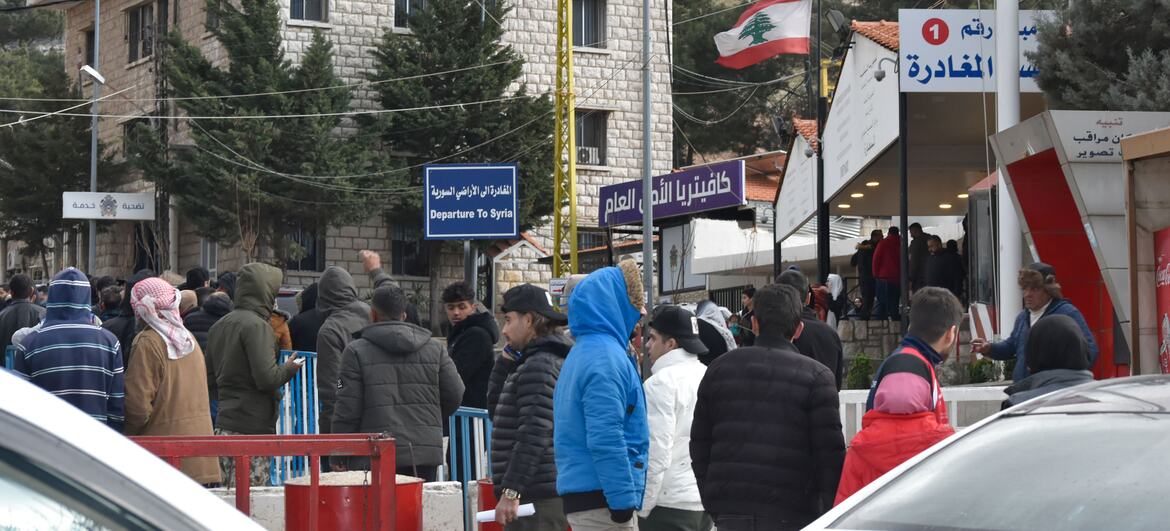
It has been just over a week since the new escalation in conflict started on 2 March, when Israeli evacuation warnings to residents of more than 53 villages and densely populated areas in Lebanon and intensified airstrikes forced families across Lebanon to flee within minutes. Lives have been upended on a massive scale.

According to the authorities, as of today, more than 667,000 people in Lebanon have now registered on the government’s online displacement platform – an increase of over 100,000 in just one day – and numbers continue to rise.

Around 120,000 of the displaced are sheltering in government-designated collective sites, while many others are staying with relatives or friends, or are still searching for accommodation. Many – often displaced for the second time since the hostilities in 2024 – fled in a rush with almost nothing, seeking safety in Beirut, Mount Lebanon, northern districts and parts of the Bekaa.

During a visit yesterday to a shelter in Beirut, I met a woman in her 90s who had lost 11 members of her family during the 2024 attacks. She is now displaced again, staying in the same school that was turned into a shelter. Stories like hers illustrate the fear, uncertainty and repeated trauma families are facing.

We are also seeing urgent movements into Syria. According to Syrian authorities, more than 78,000 Syrians have entered from Lebanon since the escalation began, and over 7,700 Lebanese. Among them are Syrian refugees who had been planning to return home in the coming months, and others who now rushed to return due to the current escalation. UNHCR teams are present at Syrian border crossings alongside authorities and partners to support those arriving with essential relief.

In Lebanon, since day one, UNHCR has supported the government and local authorities in responding to the crisis. To date, we have delivered around 168,000 emergency items to more than 63,000 displaced people across over 270 government-designated collective shelters. These include mattresses, blankets, sleeping mats, sleeping bags, solar lamps, and jerry cans, helping displaced families meet their most urgent needs.

To ensure this critical assistance reaches as many displaced people as quickly as possible, UNHCR is dispatching relief items from our warehouse to the collective shelters through multiple channels: through national and international NGO partners, as well as through municipal authorities and partners like the Lebanese Red Cross, ensuring fast, coordinated support, even in hard‑to‑access areas where some families remain.

I have seen first-hand over the past week how this volatile situation and displacement also trigger fear and emotional trauma. Children and adults alike, including many older people, are in shock and fear. UNHCR, through community centres, outreach volunteers and protection partners, is providing psychosocial support, identifying people at heightened risk, reuniting separated children with families, and assisting people with disabilities. – Reliefweb

At the current pace of displacement, we are working hard to replenish our country-level stocks of essential items, but UNHCR’s operation in Lebanon is currently only 14 per cent funded. Fast and sustained international solidarity is critical to enable us to support the Lebanese Government and authorities in responding to the emerging needs. Every day this conflict continues, more suffering is inflicted on hundreds of thousands of civilians, while Lebanon and the region are further destabilized.

Civilians must be protected at all times, and safe, unhindered humanitarian access must be guaranteed so aid can reach those who need it most.

For more information, please contact:

Continue reading
Netanyahu’s Middle East Vision

By the end of December, Israeli Prime Minister Benjamin Netanyahu is expected to visit Washington to meet US President Donald Trump, marking his fourth visit in less than a year since Trump assumed office. Unlike previous visits, this one comes after President Trump imposed his vision for ending the war in Gaza and outlined his broader concept of regional peace—giving the visit a distinctly political dimension.

At the core of the discussions will be the transition to the second phase of the Gaza ceasefire agreement, the appointment of an American general and a monitoring center, and the mechanism for administering Gaza ahead of the arrival of an international peace force. The visit is also expected to address Israel’s relations with its regional surroundings, particularly Egypt. Reports suggest the possibility of a simultaneous visit by the Egyptian president to Washington, reflecting a clear American desire to initiate direct engagement and promote the concept of “economic peace,” along with major regional projects that Trump views as the backbone of future relations, especially in the energy and gas sectors.

Yet even as President Trump speaks of a regional peace vision, the days preceding the visit remain open to further escalation. Indicators point toward a qualitative Israeli escalation across four fronts: Gaza, the West Bank, Lebanon, and Syria. These fronts have been deliberately kept open, transformed into continuous theaters of operation where Israel calibrates the level of military activity according to its security assessments.

Lebanon remains the most prominent arena of this escalation. Ongoing discussions about Hezbollah’s efforts to rebuild its capabilities coincide with Israel’s continued direct targeting of the group’s positions and operatives. This comes amid growing American pressure on the Lebanese government and army to take concrete steps toward disarming Hezbollah.

While the group is fully aware of its inability to engage in a comprehensive regional war, and the need to avoid providing direct justifications for escalation, it nevertheless finds itself compelled to use the weapons issue domestically to reshape internal power balances. At the same time, Hezbollah seeks to secure the future framework of its relationship with Syria, particularly if the Syrian-Lebanese border shifts from being merely a site of interdiction to a direct target zone.

This reality severely constrains Hizbollah’s response options while granting Israel continued latitude to strike the group’s infrastructure, capitalising on the absence of a decisive resolution to the weapons issue and on Lebanon’s institutional confusion over how to address it, whether through phased timelines or alternative formulas such as placing weapons under army control. From Israel’s perspective, this ambiguity justifies continued targeting until a decisive moment is reached.

Within this context, Israel’s strategy of imposing a new reality across its border fronts aligns closely with the transition to the second phase of President Trump’s plan. This approach corresponds with Israel’s efforts over the past two years to redraw geographical and security realities in Syria, Gaza, Lebanon, and even the West Bank. While the Trump administration opposed a formal declaration of annexation in the West Bank, it did not object in practice to Israel’s on-the-ground measures, allowing these changes to solidify as irreversible facts.

Security measures taken today may therefore establish realities that will be difficult to reverse in the future. From Washington’s perspective, redrawing borders may be seen as laying the groundwork for what it terms “regional peace,” treating the new border realities as spaces for potential economic or developmental investment.

Netanyahu’s visit to the White House thus represents a pivotal moment. He will seek to position himself as a central actor in the next phase, consolidate new realities along Israel’s immediate borders, and secure U.S. backing in addressing non-adjacent fronts, most notably Iraq, and above all Iran.

Iran is left to grapple with an increasingly severe internal reality marked by mounting economic, social, service-related, and security challenges, and is simultaneously categorized as part of the camp of “obstructors of regional peace” in Trump’s framework, opening the door to intensified pressure and varied forms of targeting in the period ahead.

Dr Amer Al Sabaileh, a professor in the University of Jordan contributed this analysis to the Jordan Times.

Continue reading
Can Netanyahu Reshape The Middle East?

By Mohammad Abu Rumman

What happened on October 7th was not merely a surprise, bloody attack for Israel—it marked a watershed moment that redefined its security doctrine and the limits of its regional project. It was a moment strikingly similar to what the events of September 11th represented for the United States. Immediately after the launch of the Al Aqsa Flood operation, prime minister Benjamin Netanyahu wasted no time in drawing a direct comparison to 9/11.

This comparison was not just rhetorical or meant to rally emotions. It reflects a much deeper strategic vision. Netanyahu is using the shock of the attack to advance an old-new Israeli project: restructuring the region’s security and political landscape in a way that guarantees Israel near-absolute security in a demilitarised environment, free of any threats.

After the 9/11 attacks, US neoconservatives in the White House seized the moment to implement the “Project for the New American Century”—a vision developed by think tanks and figures like Paul Wolfowitz, William Kristol and Robert Kagan. Founded in 1997, the project aimed to reshape the global order and maintain American dominance, with Iraq, Syria, and Iran at the heart of its ambitions. September 11th became the ideal pretext to accelerate this vision through the invasion of Iraq and redrawing the map of the Middle East.

Today, Netanyahu is doing something strikingly similar. He sees the Al Aqsa Flood as a historic opportunity to accelerate his own regional vision—one that is no longer confined to Gaza but extends to southern Syria, Lebanon, Iran, Gaza again, and even the political dynamics in Turkey and several Arab states.

Those following Netanyahu’s rhetoric—and that of his ministers—can clearly see that Israel is no longer content with merely deterring its enemies. It now seeks to re-engineer the entire geopolitical landscape of the region. In southern Syria, Netanyahu stated clearly: “We will not allow any military forces threatening our borders to remain in southern Syria, and we will not return to the old equation.” Defence minister Yoav Gallant added that Israel will reshape the reality there to ensure its strategic security—which essentially means preventing the Syrian army from returning to its previous positions and enforcing a safe corridor between Sweida and the Golan Heights in line with Israeli interests.

In Lebanon, the objective has shifted from merely weakening Hizbollah to explicitly disarming the group entirely and eliminating its missile capabilities, which pose a direct threat to Israel.

In Gaza, the discussion is no longer about reconstruction or humanitarian relief. The conversation centers on the “day after”—meaning the complete removal of Hamas, disarmament of all resistance forces, and transforming Gaza into a powerless entity under full Israeli security control.

Even the proposed Palestinian state mentioned in the recent New York declaration is envisioned as a demilitarized one—to appease Netanyahu. Yet, he still won’t accept it. Israel has already moved past the idea of any sovereign Palestinian state. What’s “allowed”, according to current Israeli thinking, are fragmented cantons and voluntary or forced displacement of Palestinians.

As for Iran, Israel’s confrontation with Tehran is open-ended, aiming to reduce its missile capabilities and eliminate its strategic threat. It is also plausible that Israel’s strategic vision may extend to shaping the political scene in Turkey—possibly by pushing for a government more aligned with Israeli interests—and exerting pressure on certain Arab states, even those officially labeled as “friendly” to Tel Aviv.

This project is no longer tied to Netanyahu’s personal political survival. It has become close to a national consensus among Israeli institutions and political elites. Leaders like Yair Lapid or Naftali Bennett are unlikely to reverse course or return Israel to the pre-October 8th status quo.

What’s unfolding today isn’t a series of short-term security tactics. It’s a long-term strategic plan aimed at reshaping the regional balance of power and cementing Israel’s status as the undisputed regional superpower.

The author is a columnist for the Jordan Times

Continue reading
Syria – The New Battleground?

By Dr Amer Al Sabaileh

Southern Syria has returned to the center of regional attention with the recent outbreak of violent clashes. These developments, while not surprising, reflect the ongoing fragility of Syria’s political and security landscape. Since the collapse of the Assad regime, Syria has remained in a state of uncertainty, with internal power balances eroded and the rise of the Shar-Joulani administration in the absence of a viable and inclusive governance framework.

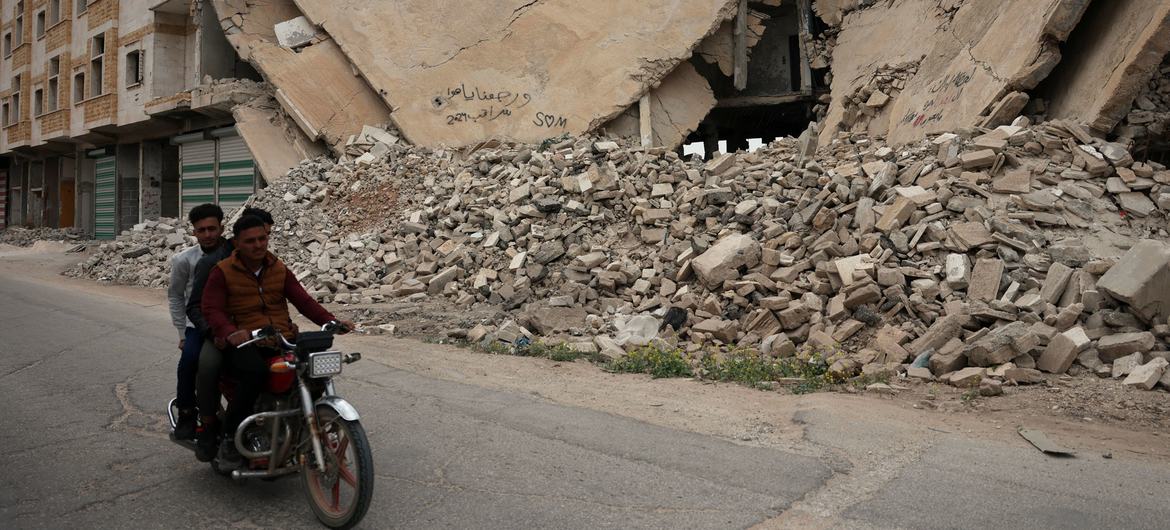
Over the past seven months, the country has witnessed massacres and targeted attacks against Alawites, Druze, Kurds, and Christians—clear signs of deep and worsening instability. This internal collapse is being exploited by external actors, particularly Israel, which views southwestern Syria as critical to establishing a demilitarized buffer zone along the Golan Heights. Despite the complexity of Syria’s internal landscape, Israeli strategic calculations in southwestern Syria remain a pivotal factor in shaping the region’s future.

While Israel initially entered the scene under the banner of “protecting the Druze,” this intervention risks inflaming sectarian tensions and sparking a prolonged conflict. At the same time, it has begun to impose a new reality on the ground—one that cannot be addressed without genuine understanding amongst key Syrian groups such as the Druze and Kurds, as well as broader arrangements with Israel itself. The latter has already sent unmistakable signals to Damascus through symbolic military strikes, indicating that future operations could escalate to directly undermine or even topple the current regime.

The ongoing clashes in Sweida and Damascus are likely to persist, especially in the absence of a clear military map for southern Syria. This suggests that Israeli strikes on military infrastructure in Damascus and beyond may continue. Furthermore, sectarian instability is set to deepen amid mutual distrust between the Druze, Bedouin tribes, and the central government—raising the probability of renewed violence. The recent developments have provided Druze militias with significant de facto autonomy, potentially opening the door for direct regional support, as they increasingly emerge as independent actors on the ground.

In parallel, this fragmentation heightens the risk of southern Syria becoming a multi-front proxy battlefield. Hezbollah—under internal pressure in Lebanon—alongside Iranian militias, may seek to open a new front against Israel, exploiting Syria’s geography to mount a tangible threat and divert Israeli focus away from Tehran.

These developments expose the deep institutional fragility of the Syrian state. The new transitional government remains unable to assert control or establish legitimacy in contested provinces, which paves the way for militias to expand their influence and for chaos to deepen. With the resurgence of extremist groups, the implications for long-term stability and reconstruction in Syria are deeply alarming.

Israel is moving forward with plans to establish a demilitarized buffer zone along its border with Syria, administered by friendly or at least non-hostile forces. The areas of Sweida and southern Daraa are of particular strategic importance, as Israel aims to prevent the advance of forces loyal to the new Syrian administration or the infiltration of Iranian proxies and Hezbollah operatives.

This unprecedented weakening of the Syrian administration may leave it increasingly prone to align with Israeli interests or offer major concessions simply to survive—an opportunity Israel will likely exploit to reshape not just Syria’s security geography, but its broader political map in accordance with long-term Israeli strategic goals.

From the Jordanian perspective, this evolving reality on Syria’s southern border presents a real and growing threat to national security. The concern goes beyond the spectre of chaos or fighting spilling across the border. It’s about a broader attempt to reshape the geopolitical landscape of the entire region—a transformation that will inevitably affect Jordan. Rising security threats are likely to be accompanied by political ones, as the drivers and dynamics of the Syrian conflict may cross borders. This makes it imperative for Jordan to adopt a proactive approach that prevents the spread of this new reality—both in its security and societal dimensions—into its own territory.

The author is a writer for The Jordan Times

Continue reading
Trump, Netanyahu’s Shared Secret!

By Dr Hasan Al Dajah

Since his arrival on the American political scene, Donald Trump has been an exceptional case in the United States’ relationship with Israel. Historically described as a strategic alliance, this relationship has transformed under Trump into a personal partnership between him and Israeli Prime Minister Benjamin Netanyahu. This relationship has deepened to an unprecedented degree, with Trump becoming one of the most biased and supportive American presidents toward Netanyahu, not only in foreign policy decisions but also on issues of a purely Israeli domestic nature, such as the ongoing trials against Netanyahu or calls for early elections.

What drives Trump to this level of involvement in Israeli domestic affairs? And why does he insist on defending Netanyahu despite the criticism and accusations against him? In the current Israeli landscape, Netanyahu faces significant domestic challenges related to multiple corruption trials, in addition to escalating tensions within the ruling coalition, particularly with the religious parties, which have expressed on more than one occasion their desire to dissolve the Knesset and call for early elections. These parties, despite being partners in the government, view continuing under Netanyahu’s leadership as a political burden due to the corruption cases and poor performance in some cases. This recently prompted them to propose a vote within the Knesset to call for new elections.

In this context, Trump’s position was clearly supportive of Netanyahu, expressing his rejection of any attempt to remove Netanyahu from power and considering his continued rule essential to Israel’s stability and its security and political future. Even stranger are the reported interventions by Trump or his circle in the matter of Netanyahu’s trial. It has been reported—through both official and unofficial channels—that he called for a pardon or an end to the legal proceedings against him, arguing that these trials are politically motivated and that Netanyahu is being subjected to an unfair campaign by the Israeli judiciary. This intervention raises many questions, most importantly: What is Trump’s interest in Netanyahu’s survival? Why would he risk his political reputation for the sake of being a foreign leader facing criminal charges?

The answer to these questions requires examining the nature of the relationship between the two men. Since Trump assumed the presidency in 2017, he has pursued an unprecedented agenda in support of Israel, including moving the US embassy to Jerusalem, recognizing Israel’s sovereignty over the occupied Syrian Golan Heights, and supporting the “Deal of the Century,” considered the most biased in the history of US mediation.

All these measures were met with widespread acclaim and celebration by Netanyahu, who used them in his election campaign to bolster his domestic popularity, portraying himself as capable of bringing absolute US support to Israel.

In turn, Trump found in Netanyahu a reliable ally who reflects his vision for the Middle East and helps him win the support of a pivotal electoral base within the United States: evangelical Christians. People must realize that the true backbone of support for Israel in America is not the Jewish community, but evangelicals, who constitute approximately 25% of the population, compared to less than 2% of American Jews.

Therefore, Trump—as he has stated on more than one occasion—considers engaging with evangelicals more effective than appeasing the Jews, because they constitute a formidable lobbying force pushing for American policies aligned with the Israeli right-wing agenda, and view support for Israel as part of the Christian Zionist religious doctrine. These people see Netanyahu as the leader most qualified to preserve the “Jewishness of the state” and advance policies of expansion and hegemony.

Accordingly, Netanyahu’s downfall, or even his trial, represents a threat not only to Trump, but also to the political and ideological system he has meticulously crafted during his presidency. It is impossible to trust that potential Israeli alternatives will maintain the same level of loyalty or pursue the same confrontational approach toward Iran and the Palestinians.

Hence, for Trump, defending Netanyahu becomes a defense of a broader regional project that keeps Israel at the forefront of the confrontation with Tehran and strengthens right-wing populist alliances globally.

Moreover, Trump himself faces investigations and legal prosecutions in the United States, whether related to his attempt to overturn the election results, his retention of classified documents after leaving the White House, or various financial issues. Therefore, his defense of Netanyahu may be implicitly understood as self-defense. He seeks to establish the principle that the trial of political leaders is primarily a selective political process, not a fair judicial process. If Netanyahu is able to escape accountability or obtain a pardon, Trump will see this as a precedent that will strengthen his argument before the American judiciary and domestic public opinion.

Strategically, Trump does not view Israel merely as a traditional ally, but rather as an extension of his global political vision based on isolation from international institutions, undermining the liberal multilateral order, and strengthening bilateral alliances with strong leaders who share his political style and confrontational personality. For him, Netanyahu is the Israeli version of this model: a leader who clings to power despite internal and external pressures, fiercely confronts the media and the judiciary, and relies on a solid right-wing popular base fueled by a sense of existential danger and threat.

From this perspective, Trump’s support for Netanyahu is not limited to domestic issues but extends to regional security issues, most notably the open confrontation with Iran. Trump believes that an alliance with Netanyahu is necessary to sustain the escalation against Tehran and contain its influence in the region. Therefore, any weakening of Netanyahu, whether through elections or trials, is viewed as a direct blow to the axis of pressure on Iran and a threat to the deterrence strategy adopted by Trump during his presidency.

All of this explains why Trump supports Netanyahu and even intervenes in domestic issues, such as seeking a judicial pardon or rejecting early elections that could lead to Netanyahu’s removal from the political scene. It is a deeply mercenary relationship that transcends diplomatic protocol and extends to an ideological alliance between two leaders who each see the other as a mirror to their own selves and a first line of defense for their political and personal futures. Despite the criticism Trump faces for this involvement, he continues this approach without wavering, driven by an overwhelming desire to return to the White House and see a world shaped according to his own vision. In this world, there is no place for trials of political leaders, no room for elections that bring down allies, and only mutual loyalty, no matter the cost.

Dr Dajah is a professor of Strategic Studies at Al-Hussein Bin Talal University. He contributed this article to the Jordan Times.

Continue reading