‘Israel Killed My Dad on His Farm,’ Says Daughter Zeinab

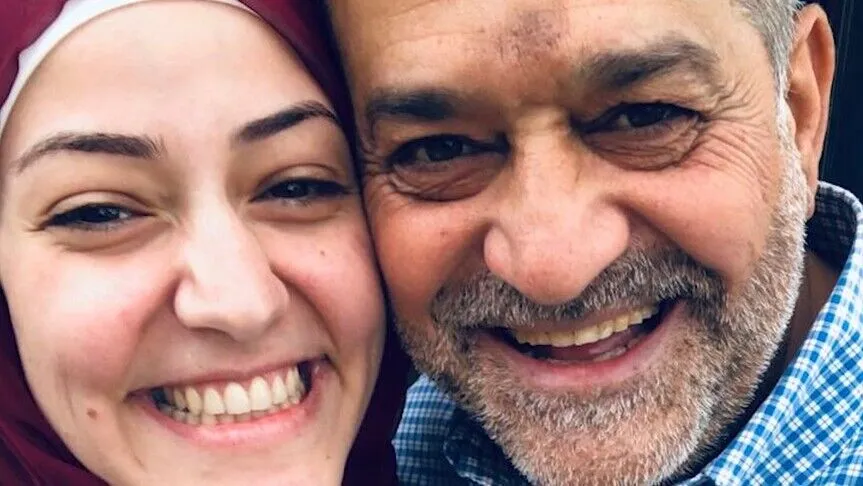
Zeinab Imad Yassine, a Lebanese journalist, learned of her father’s death while scrolling through her phone.

There was no phone call from a relative, no official notification, no moment of preparation.

Somewhere between WhatsApp messages was the news that Imad Yassine, 68, had been killed in an Israeli strike while at his poultry farm in southern Lebanon.

For decades, the farm had been part of his daily life. Inherited from his father, it was a family business he refused to abandon even as Israeli attacks made southern Lebanon increasingly dangerous.

His daughter had urged him to stay in Beirut. He would not.

Her father believed there was no reason for Israel to target him, Zeinab said.

“I have my cell phone every day, every night with me. They know what I’m doing. They know that I have a poultry company. They know that I’m taking care of the chickens and the farms,” she recalled him telling her.

“They know exactly what I’m doing, because the drones are 24-7 in the sky and sometimes the drone can go through your eye level.”

He repeatedly asked his daughter the same question.

“Why would they kill me? I’m not a threat for them. I’m not a soldier. I’m not a fighter. I’m not doing anything. I’m just taking care of my farm,” she recalled him saying.

When he was killed on June 8, Zeinab said, her father was doing exactly that – carrying out his normal work on the farm and repairing an electricity generator after power infrastructure in the area had been damaged.

After his death, his question became hers.

From private grief to public accountability

Zeinab is now trying to turn her family’s loss into a case for accountability.

She said she decided to pursue legal action to determine who was responsible for the strike that killed her father, including the person who “pressed the button that released that rocket or that missile that cut the artery veins in my father’s thighs.”

She chose to pursue the case with the Human Rights Council of the United Nations.

“I had to go through that because I want to sue Israel for taking my father’s life. And they never had the right to do so,” she told Anadolu in an exclusive interview.

Zeinab said she has contacted an official within the UN human rights system, presented details of her father’s killing and submitted supporting evidence.

She said the material is expected to be examined before the next steps are determined.

“My father is not … a number in the count of the dead,” she said.

“When you go to the Human Rights Council, you’re saying that I’m a human and I have rights to live, like everyone else on this earth.”

For Zeinab, pursuing the case is also about ensuring that her father’s identity and the circumstances of his death are documented.

“I’m going to say to the international court that this is my father. This is Imad Yassine. That’s what he was doing,” she said.

“And this is what the occupation did to him, and they must never get away with it.”

Zeinab said she wants accountability to extend from those directly responsible for the strike to Israel’s political and military leadership.

“In the first place, I need to know who pressed the button. I need to see that person in jail. I need to see Netanyahu in jail,” she said, referring to Israeli Prime Minister Benjamin Netanyahu.

Israel’s message to civilians

Her father’s killing left Zeinab haunted by a broader question: Why would a 68-year-old civilian working on his family farm be targeted?

“I asked myself many times, what did they want from him? Why did they kill him?” she said.

Zeinab said she ultimately came to believe that his death was intended to send a message to civilians seeking to remain in or return to southern Lebanon.

“They killed him, not because he was a soldier or because he was a fighter, but because they wanted to end the life in the south,” she said.

“They want to tell everyone in Lebanon, don’t go back to the south of Lebanon, because if you go back, we’re going to kill you, even if you are not soldiers, even if you’re not fighters. That’s the case of my father.”

Zeinab linked her father’s killing to the broader Israeli-Palestinian conflict, saying her greatest hope is to eventually see a free Palestine.

Zeinab argued that as long as the occupation of Palestine continues, both Palestinians and Lebanese will remain vulnerable to Israeli attacks, and accused Israel of pursuing territorial expansion in the region.

“They need to know that they cannot still commit any genocide or any crimes,” she said. “It’s not fine that Israel will continue doing what it’s doing without, and they escape without any punishment. We are losing the humanity in this world, because we are not confronting the real killer in the world.”

In Gaza, Palestinian authorities have said Israel has killed more than 73,000 people since Oct. 7, 2023.

According to the Lebanese Health Ministry, 4,346 people have been killed and 12,301 injured in Israeli attacks since March 2, and the UNHCR estimates that around 360,000 people in the country remain displaced.

‘I can’t go back to my house’

The consequences of the conflict for Zeinab extend beyond her father’s death.

She said she no longer feels able to safely return to her own home in southern Lebanon.

“If I go to my house in South Lebanon, if I go over the roof, I can see the Israelis. I can’t go back to my house now. Can you imagine the situation?” she said.

She also pointed to reported Israeli removal of hundreds of olive trees from Zawtar Shariyeh, a village neighboring her hometown of Shukin, as another example of what she sees as the erosion of civilian life in the area.

The experience, she said, has left her feeling that “the bare minimum of humanity is collapsing in this world.”

Zeinab said the experience has strengthened her determination to document what is happening and encouraged others affected by Israeli attacks to pursue accountability.

“We need to sue Israel for every pint of blood, for every house they demolished,” she said.

She urged people to continue documenting and speaking about the impact of the conflict on civilians.

“If you can’t do anything but talk, talk about Israel and document everything, because this is the bare minimum we can do.”

Without action, she warned, other families will continue to suffer similar losses.

“That’s what I need the world to always remember,” she said, warning that otherwise “there will be more and more and more of Imad Yassine and of all the martyrs that Israel killed in South Lebanon.”

CrossFireArabia

CrossFireArabia
Dr. Marwan Asmar holds a PhD from Leeds University and is a freelance writer specializing on the Middle East. He has worked as a journalist since the early 1990s in Jordan and the Gulf countries, and been widely published, including at Albawaba, Gulf News, Al Ghad, World Press Review and others.

Related Posts

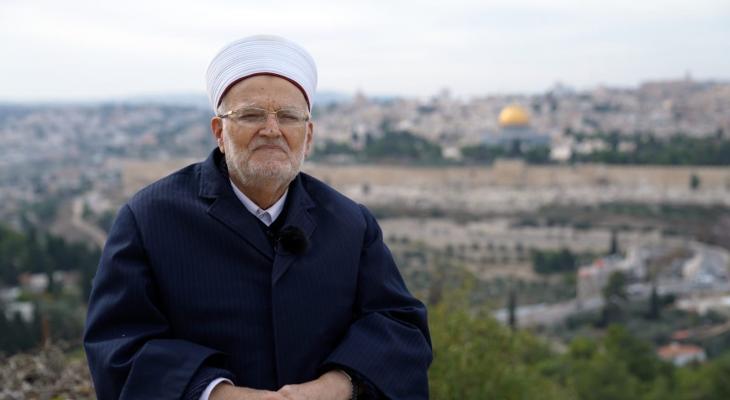
57th Year of Al Aqsa Burning: ‘The Fire Continues’ Ekrima Sabri Warns

The ex-Mufti of the Al-Aqsa Mosque, Sheikh Ekrima Sabri, affirmed that the fire that engulfed the mosque in 1969 has not been extinguished, for it continues till this day, with its scope expanding, targeting the entire city of Jerusalem, its geography, demographics, and its Arab and Islamic identity.

On the anniversary of the Al-Aqsa fire, which falls on Friday, Sheikh Sabri explained to Sanad News that the flames that consumed parts of the Qibli prayer hall 57 years ago are now taking on more complex forms through systematic Israeli policies targeting the Palestinian presence, tightening the noose around its residents, and threatening homes with demolition to forcibly impose a new reality.

He pointed out that what is happening in the neighborhoods and areas surrounding the mosque is a direct continuation of that historic fire, adding: “In 1969, the flames were visible inside the mosque, but today the fire is wider; we see it in the homes threatened with demolition, in the families facing displacement, and in the attempts to change the face of Jerusalem.”

He explained the danger does not stop at home threatened here and there, or a family being targeted. He said  today “every Jerusalemite home is being threatened with demolition and every family is threatened with displacement..”

He stressed the Al-Aqsa Mosque is not merely a building separate from its surroundings, but it is an integral part of the city’s history, and that targeting the surrounding towns is a direct attack on its status and identity.

Sheikh Sabri warned against treating the anniversary of the fire as just a historical event to be commemorated once a year. He emphasized that the essence of the crime remains present and ongoing as long as there are Israeli dangers that threaten the holy sites and the city.

He said the Palestinian people and the Arab and Islamic nations must keep the issue of Jerusalem and Al-Aqsa active in their consciousness and actions, and not to allow the ongoing attacks to become normative or accepted as facts on-the-ground.

“That fire which has since been consuming the Arab identity of the city and the mosque will only be extinguished by the will and steadfastness of the Palestinian people. Fire can burn stone, but it cannot burn the identity of Al-Aqsa, the memory of Jerusalem, or the will of a people clinging to their land.”

On 21 August, 1969, the Australian extremist Denis Michael Rohan stormed the Al-Aqsa Mosque compound through the Al-Ghawanimah Gate and set fire to the Qibli prayer hall. The fire consumed a large part of the mosque, including the pulpit of Saladin, which holds immense historical and cultural value.

Despite attempts by the Israeli occupation authorities at the time to provide an excuse for the crime and claim the fire was caused by an electrical short circuit, technical and engineering reports prepared by Arab engineers definitively proved it was deliberate and premeditated.

That incident sparked widespread international condemnation, with the UN Security Council issuing a resolution condemning it. It also ignited widespread anger in the Arab and Muslim worlds, leading to the establishment of the Organization of the Islamic Conference (now the Organization of Islamic Cooperation).

Rehabilitation and restoration work on the Qibli prayer hall began a year after the fire and continued until 1986, while a temporary iron pulpit remained in the mosque until 2006, when a new pulpit was installed that was exactly identical to the historical pulpit that was set on fire.

#Occupation Attacks, #Sheikh Akrama Sabri, #Displacement of Jerusalemites, #Al-Qibli Mosque, #Anniversary of the Burning of Al-Aqsa Mosque, #Anniversary of the Al-Aqsa Fire, #Al-Aqsa Burning 1969

Continue reading
In The Line of Fire: Gaza Families Fear The ‘Yellow Line’

By Mohamed Solaimane

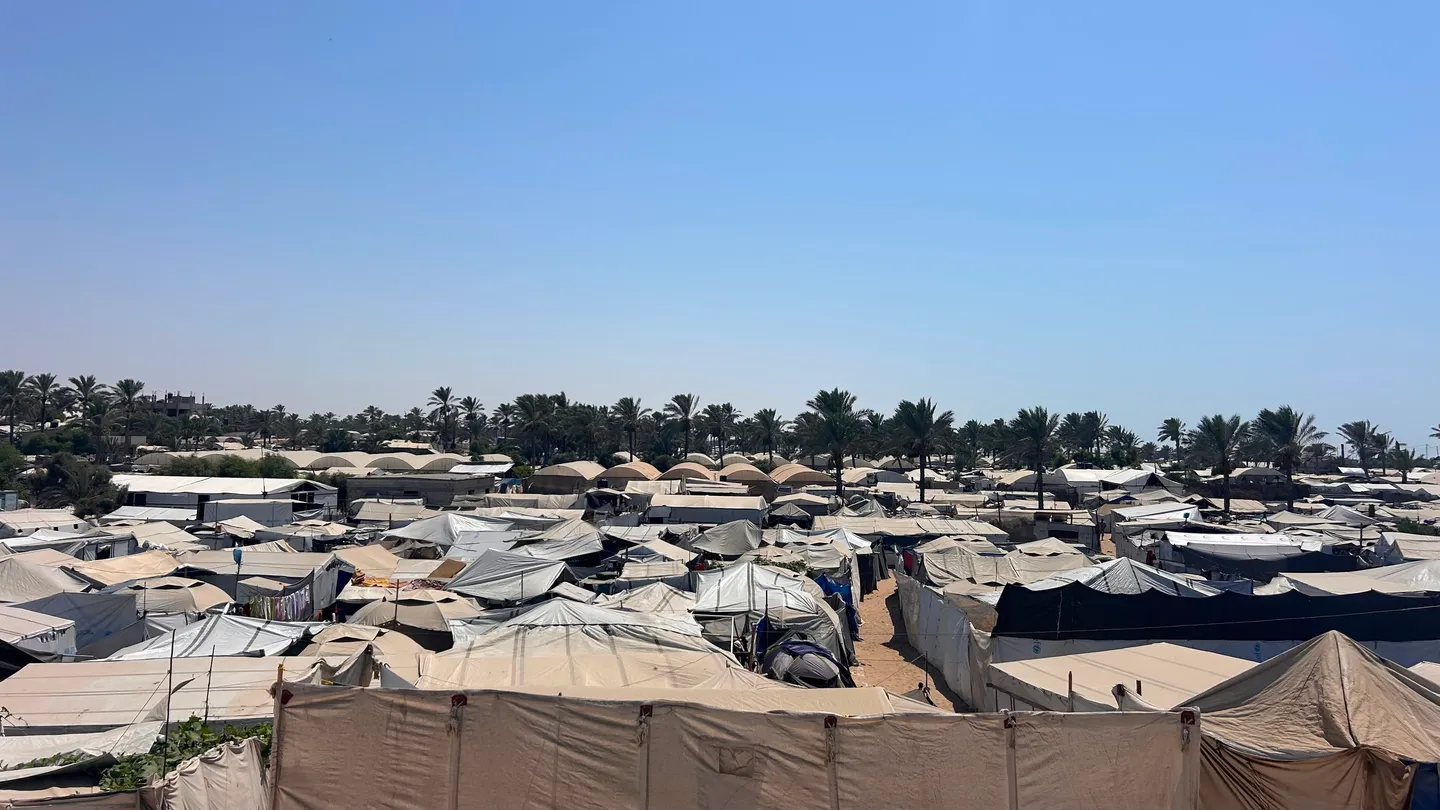
Hanan al-Dali was tidying up her threadbare tent on a humid August weekend when the staccato bursts of gunfire rang out.

She dropped everything to grab her three young children, the oldest just nine years old, and dropped to the ground. By now, it’s become almost routine – everyone flat on the floor, hands over their heads.

Al-Dali, 31, rarely lets her children roam outside the tent, despite the suffocating heat. It’s simply too dangerous.

They live just a hundred meters from the Yellow Line, the boundary that marks the start of Israeli-controlled territory in Gaza.

Despite a supposed ceasefire in October 2025, the violence has never stopped.

As world leaders prepare to gather in New York for the UN General Assembly’s high-level debate on September 22, Gaza will have endured nearly three years of war since October 2023. 

Though a ceasefire took effect on 10 October 2025, it’s the latest in a long line of UN-backed decisions Israel has disregarded.

“We could no longer bear the shelter, the crowding, the lack of hygiene, and the disease, so we chose to take the risk near the Yellow Line,” she tells TRT World.

“But I never imagined the risk would be like this. Gunfire reaches us daily, and sometimes we don’t sleep for fear the Israeli army might storm in.”

https://youtube.com/watch?v=oYJLtGCMIxc%3Fenablejsapi%3D1%26origin%3Dhttps%253A%252F%252Fwww.trtworld.com%26widgetid%3D1%26forigin%3Dhttps%253A%252F%252Fwww.trtworld.com%252Farticle%252Feb2eb6c61b74%26aoriginsup%3D1%26gporigin%3Dhttps%253A%252F%252Fwww.trtworld.com%252F%26vf%3D1

Nine months since the so-called truce, Israel’s control over the devastated Palestinian enclave has now grown to over 65 percent, according to a UN body

That’s up from 53 percent when the “Yellow Line” was first drawn.

The October truce, under a 20-point US plan, was endorsed by a Security Council resolution on November 17, 2025. It followed an earlier ceasefire beginning January 19 the same year.

While this second truce reduced the fighting, deadly violence near the frontline has carried on. Gaza’s Ministry of Health said that more than 1,200 Palestinians have been killed since the ceasefire, as of early August 2026.

Al-Dali has had to watch the Yellow Line creep closer, steadily bringing the violence closer to their doorstep.

“We thought it would recede as the army withdrew. But it advanced and got closer to us.

Al-Dali’s husband was wounded in an Israeli strike in May 2025. It left him blind in one eye, unable to speak, and without movement in his right hand.

Most of his days are occupied with seeking whatever treatment he can find in the enclave, which faces catastrophic medical shortages amid Israel’s ongoing blockade.

Still, she hopes the UN’s upcoming session will bring action, not just resolutions, to force Israel “to end the genocide, destruction, and starvation it is inflicting on the people of Gaza”.

Hanan rarely lets her children roam outside the tent, despite the suffocating heat.

Hanan rarely lets her children roam outside the tent, despite the suffocating heat.

Two kilometres away, Osama Ahmad Said, 54, and his family are sheltering in a bombed-out timber shop.

He tells TRT World that he can view his own ruined home only from a distance, since it sits beside the line.

He hauls water from hundreds of metres away, as donors are too afraid to reach the area. Even UNRWA, once a critical aid source, has stopped providing assistance, he said.

Israel has abandoned every commitment, said Said, yet what saddens him most is the UN’s failure to enforce its own resolutions.

“If the UN holds its annual meetings just to produce words, with no enforcement or pressure, then what’s the point?” he asked.

“We have a saying: whoever feels safe from punishment behaves badly. As long as Israel remains beyond accountability, the Palestinian people’s Nakba will go on without end.”

Even so, Palestinians are committed to the UN, he says. “We demand mechanisms to enforce its resolutions, because we believe in peace and justice.”

A pattern of UN resolutions, rarely enforced

In late July 2026, Hamas agreed to a US-brokered 15-point disarmament roadmap. Trump hailed it as a “historic” step toward ending the war. Under the roadmap, Hamas would disarm in stages. Israel would withdraw in parallel, pulling back to the Yellow Line.

But on August 9, Netanyahu rejected the deal outright. Israeli forces, he insisted, would not withdraw until Hamas was “genuinely” disarmed first.

Hamas has said it won’t surrender its weapons until Israel withdraws to the Yellow Line, as the original ceasefire promised. 

The deal remains stalled, and people like al-Dali and Said remain trapped in its shadow.

The tragedy unfolding in Gaza goes far beyond a humanitarian crisis, says Hussein Hammad, a Palestinian human rights defender.

It’s “a comprehensive, sustained collapse of the entire system of life, driven by Israel’s effort to turn Gaza into a hostile environment,” Hammad tells TRT World.

He pointed to an unemployment rate of nearly 85 percent, the repeated displacement of roughly two million people, generations of orphans, and the resurgence of diseases like polio amid collapsed sanitation.

Politically, he says, Israel has engineered Gaza into isolated “cantons,” with buffer zones and the Yellow Line blocking movement and cutting off food and water.

All of that comes even as UN bodies repeatedly rule against Israel.

In 2024, the ICJ ordered Israeli forces to fully withdraw. The General Assembly agreed and called for a September 2025 deadline. Israel ignored both.

Security Council resolutions have gone unenforced due to the US veto, and a UN commission concluded in September 2025 that Israel had committed genocide, which Israel denies.

Hammad calls the UN’s failure to enforce resolutions “a fatal marriage of structural flaws and international political complicity.”

UNRWA has long been a backbone of Palestinian survival, but it is now under pressure as Israel seeks to limit its capacity to respond.

UNRWA has long been a backbone of Palestinian survival, but it is now under pressure as Israel seeks to limit its capacity to respond.

The General Assembly “passes resolutions by sweeping majorities, but these are non-binding,” he says, while the Security Council “is completely hijacked by the US veto.”

The UN has reached a historic level of impotence, he said, unable to even protect its own staff – 397 have been killed during the war. Israel meanwhile declared the UN Secretary-General a persona non grata.

“The world’s largest organisation has turned into little more than a narrator of tragedies,” Hammad adds.

Former UNRWA spokesperson Sami Mshasha tells TRT World the problem isn’t a lack of resolutions but that “enforcement remains hostage to the will of member states”.

The General Assembly lacks an executive body to compel parties, he says, while Security Council action under Chapter VII can be politically blocked from within.

Gaza laid bare the consequences of such a compromised structure, says Mshasha.

The Council passed Resolution 2728 in March 2024, demanding a Ramadan ceasefire, then Resolution 2735 in June, endorsing a three-phase truce. “Yet neither was implemented in time.”

UN committee report, he points out, found the Council’s failure wasn’t due to reluctance to invoke Chapter VII, since it was applied in Iraq and Libya. 

That exposes “clear political selectivity.” What happened, he says, is “not simply a ‘UN failure’ but the failure of an international system whose enforcement mechanisms collided with political power.”

“It’s a credibility crisis, not a competence crisis,” Mshasha adds.

Gaza’s last lifeline

UNRWA has long been a backbone of Palestinian survival, stepping in to secure healthcare, food, and water sanitation. It’s now buckling under similar pressures, as Israel seeks to gut the humanitarian agency and limit its ability to respond.

In 2024, Israel’s Knesset designated the agency a terrorist organisation and passed laws to ban its activities. 

Israel also convinced 16 donor states – including the US, Germany, the UK, Canada, and Japan to withdraw funding– pausing $450 million in aid.

Hammad describes UNRWA’s situation as “a reflection of an Israeli political decision to liquidate the refugee cause by destroying their agency.” It’s been reduced to “a mere relief organisation in maximum-emergency mode”.

RelatedTRT World – Most Gaza oxygen stations forced out of service over Israel’s total blockade

Even on a reduced budget, the UNRWA has tried to keep up its work.

“It is inaccurate to say UNRWA now has no role in Gaza, and equally inaccurate to say it operates as before the war,” Mshasha says.

Per its latest report, UNRWA runs six health centres and 61 mobile teams, providing 70,000 weekly consultations and delivering water to over 860,000 people daily.

Yet, according to Mshasha, direct food aid – which once reached 1.9 million people – collapsed once UNRWA exhausted its stockpile and was barred from entering Gaza directly, since March 2025.

In 2026, UNRWA faced a $100 million deficit, with just 44 percent of its budget funded.

Mshasha calls that proof that donors have abandoned their commitments, even as needs multiplied.

A weaker UNRWA could leave a vacuum nothing else could fill, said Mshasha, given its 11,500 staff and network built over decades,  a concern the Colonna Commission also raised.

“This reality makes UNRWA exceptional,” he says, “because it treats the Palestinian as a refugee with legal rights registered since 1949, the year following the Nakba. 

That is why Palestinians still see in its card their last proof of identity and rights, despite all its administrative flaws.”

(This article is published by TRT World in collaboration with Egab)

Continue reading

Leave a Reply

Your email address will not be published. Required fields are marked *

You Missed

‘Israel Killed My Dad on His Farm,’ Says Daughter Zeinab

‘Israel Killed My Dad on His Farm,’ Says Daughter Zeinab

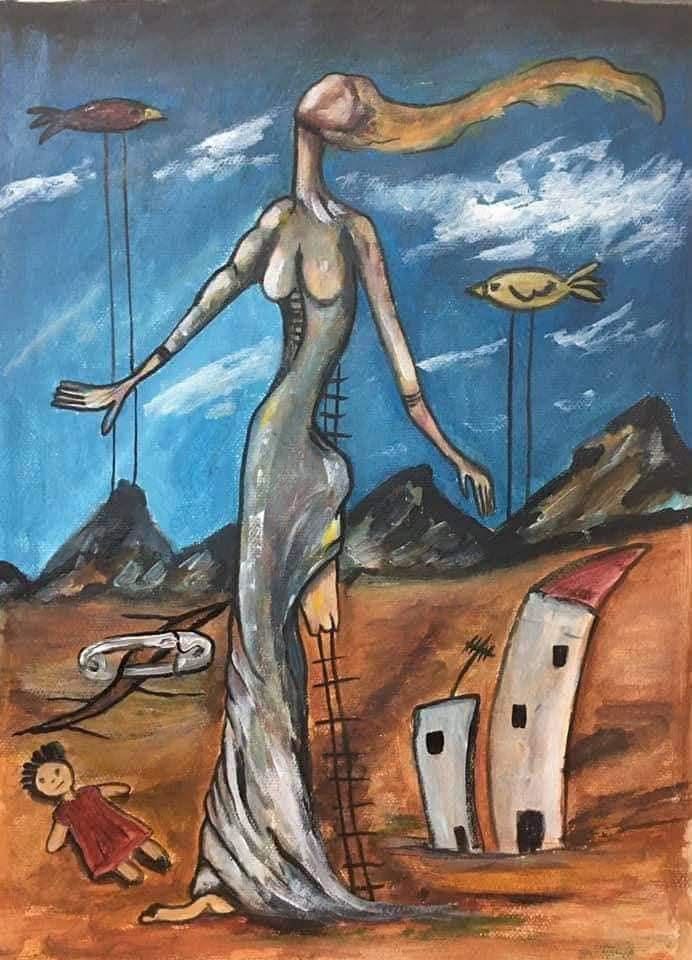
The Gaza Mermaid

The Gaza Mermaid

Gaza by The Sea

Gaza by The Sea

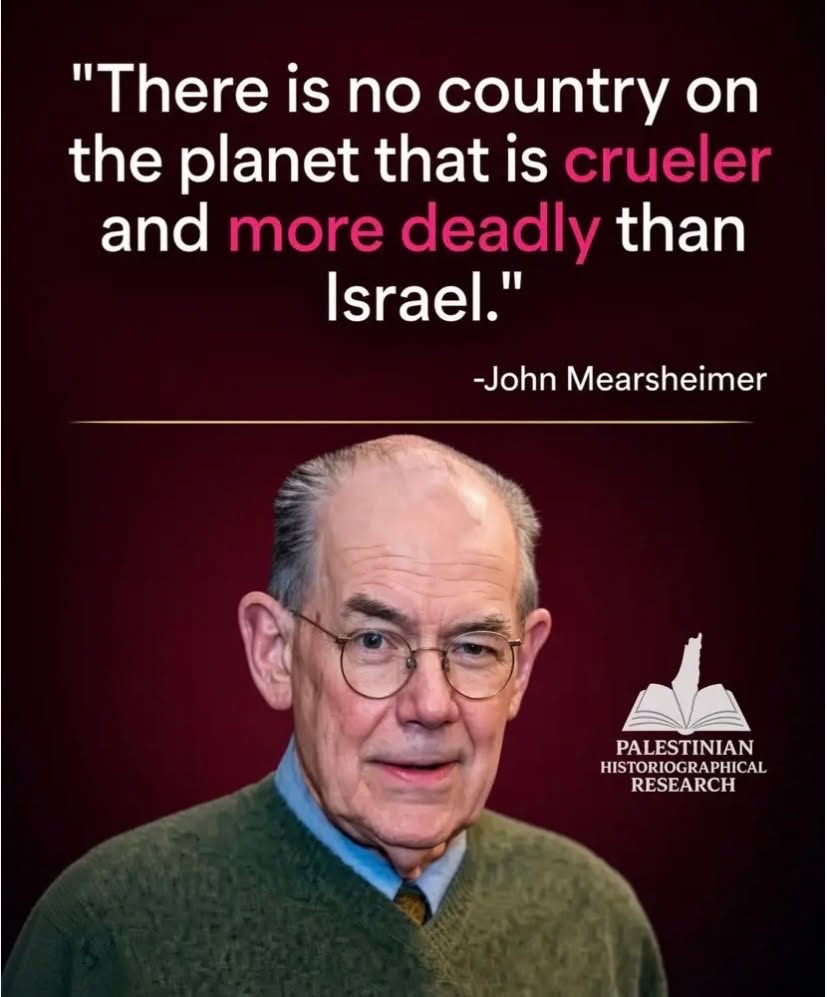
“There is no country on the planet that is crueler and more deadly than Israel,” – Mearsheimer

“There is no country on the planet that is crueler and more deadly than Israel,” – Mearsheimer

Palestine: Heritage, Folklore

Palestine: Heritage, Folklore

Gaza: Only 3% of Land Safe to Grow Food

Gaza: Only 3% of Land Safe to Grow Food