CrossFireArabia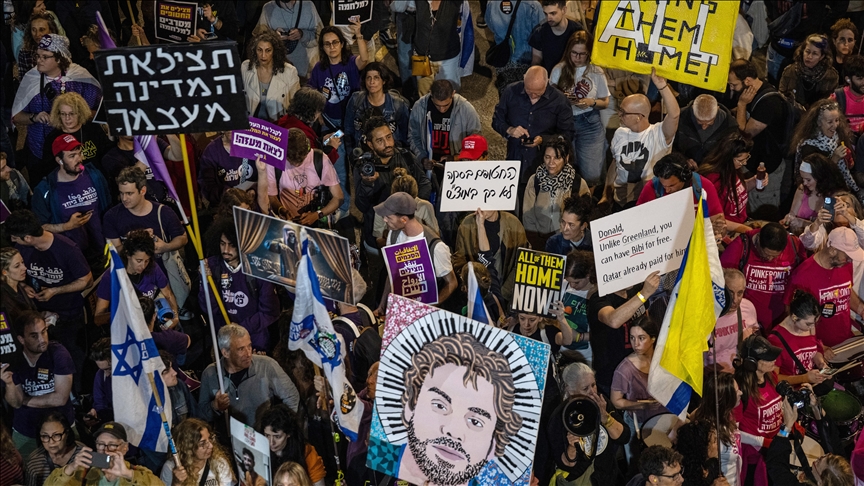
More than 9,500 Israeli academics, teachers and medical professionals, as well as approximately 1,000 parents, signed petitions Monday urging the government in Tel Aviv to secure the release of hostages held in the Gaza Strip, even if it meant ending the war in the enclave.
According to the Haaretz newspaper, approximately 3,500 academics signed a petition supporting a previous letter from Israeli Air Force reservists demanding the return of the hostages and the end of the war.
“We, members of the academic staff in higher education institutions, join the call of the Air Force soldiers and demand the immediate return of the hostages, even if it requires halting the war at once,” the petition stated.
The academics argued that “the war primarily serves political and personal interests. Its continuation will lead to the deaths of hostages, soldiers, and innocent civilians and will drain the reserve forces.”
They added that “as shown in the past, only a negotiated agreement can ensure the safe return of the abducted to Israel.”
In a similar petition, over 3,000 teachers emphasized that “this is not a call to refuse military service, but a plea to save lives,” the daily added.
About 1,000 parents also signed a separate letter, stating: “For the sake of our children’s future, we refuse to raise them in an endless war, and we will not turn a blind eye to the killing of children.”
“We reject the dangerous idea that there are no innocents in Gaza. We refuse to abandon the hostages or dehumanize others,” the parents wrote.
Meanwhile, nearly 3,000 Israeli medical professionals, alongside three Nobel laureates, signed another petition calling on the government to free hostages held in Gaza by halting the ongoing war, Yedioth Ahronoth reported.
About 150 former Israeli soldiers who served in the Golani Brigade, an elite infantry unit, signed a petition Monday for the government to secure the release of the hostages by ending the war, Israel Army Radio said.
Earlier Monday, former Israeli Prime Minister Ehud Barak and former Chief of Staff Dan Halutz signed a petition signed by 1,525 Armored Corps soldiers urging the release of hostages, even if it meant ending the war.
The same day, the Yedioth Ahronoth newspaper said in another report that more than 1,600 veterans from the Paratroopers and Infantry Brigades also signed a letter urging the government to bring back all hostages, even if it meant stopping the war.
About 170 graduates of the elite “Talpiot” military intelligence program signed a letter demanding the hostages’ release through the end of the war, while emphasizing that they were not calling on reservists to refuse service.
In their letter, the graduates of the army’s Talpiot Academy voiced support for several calls by soldiers and veterans denouncing the government’s war policy as serving “political and personal interest” rather than security needs, according to the Army Radio.
“The continuation of the war does not contribute to any of its stated goals,” said the letter, warning that continuing the war would only lead to more deaths, including captives, army soldiers, and innocent civilians according to Anadolu.
The petitions are part of a wider wave of public appeals from current and former Israeli military personnel, all demanding the return of hostages and an end to the war.
Since Thursday, soldiers have signed nearly 10 petitions demanding an end to the Gaza war, according to an Anadolu count.
Prime Minister Benjamin Netanyahu has threatened to dismiss active-duty soldiers who signed the petitions.
The Israeli army renewed its assault on Gaza on March 18, shattering a Jan. 19 ceasefire and prisoner exchange agreement.
Nearly 51,000 Palestinians, most of them women and children, have been killed in Gaza in a brutal Israeli onslaught since October 2023.
The International Criminal Court issued arrest warrants last November for Netanyahu and his former Defense Minister Yoav Gallant for war crimes and crimes against humanity in Gaza.
Israel also faces a genocide case at the International Court of Justice for its war on the enclave.