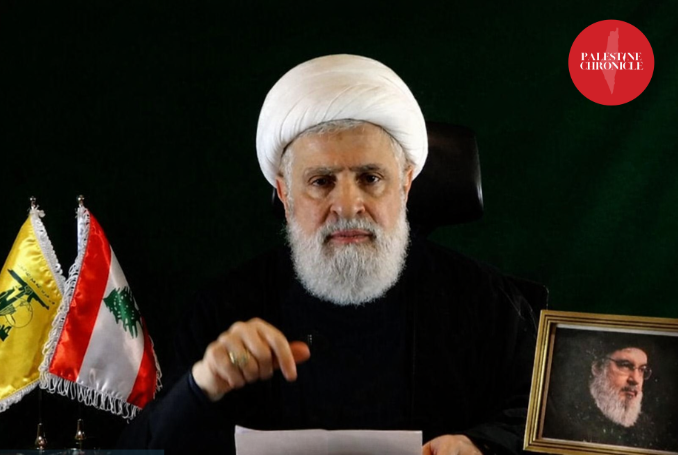
Analysis: Why Did Hezbollah Enter This War?

Hezbollah’s entry into the war reflects strategic calculations shaped by Israeli escalation, regional alliances, and Lebanon’s fractured politics.

Key Takeaways

  • Israel has repeatedly violated the ceasefire in Lebanon through airstrikes, raids, and surveillance operations.
  • Hezbollah’s response has so far remained limited compared to Israel’s sustained military actions.
  • Lebanon’s political leadership has failed to present a unified response to Israeli attacks on Lebanese territory.
  • Hezbollah’s intervention reflects strategic concerns about Israel’s long-term plans in Lebanon and the broader war against Iran.
  • The coordination between Iran, Hezbollah, Ansarallah, and Iraqi factions suggests the Axis of Resistance continues to operate collectively.

A Regional War Expands

Hezbollah’s decision to enter the ongoing regional confrontation did not occur in isolation. The latest escalation began when the United States and Israel launched major strikes against Iran, triggering waves of Iranian retaliation across the region.

The conflict quickly expanded beyond Iran itself. Iranian retaliatory strikes targeted US military assets and positions across the Gulf. The war rapidly assumed the character of a wider regional confrontation involving multiple actors aligned along competing geopolitical blocs.

Within this context, attention turned to Lebanon, where Hezbollah—one of the most powerful non-state actors in the Middle East—began limited military operations against Israeli positions along the border.

The central question quickly emerged: Why did Hezbollah enter the war?

The answer lies in a combination of military, political, and strategic considerations that go far beyond the immediate battlefield.

Did Hezbollah Violate the Ceasefire?

A central claim advanced by Israel and some Western governments – and even anti-Hezbollah factions in Lebanon itself – is that Hezbollah’s actions represent a violation of the ceasefire arrangements that followed previous rounds of conflict along the Lebanese border.

However, the reality on the ground presents a far more complex picture.

For months, Israel has carried out continuous violations of Lebanese sovereignty through airstrikes, drone surveillance, artillery fire, and cross-border incursions.

According to Lebanese government figures and reports by the United Nations Interim Force in Lebanon (UNIFIL), Israel has committed thousands of violations of Lebanese airspace and territory since the ceasefire arrangements took effect.

Lebanese officials have repeatedly documented Israeli overflights, drone operations, and missile strikes inside the country. UNIFIL has also confirmed frequent violations of Lebanese airspace by Israeli aircraft.

These actions have not been merely symbolic. Israeli strikes have caused civilian casualties and extensive destruction of homes and infrastructure in southern Lebanon.

Villages near the border have experienced repeated bombardments, forcing families to flee and damaging agricultural land and civilian property.

At the same time, Israeli officials have openly signaled that they have no intention of withdrawing fully from Lebanese territory or halting military operations.

Several Israeli leaders have stated publicly that Israel intends to maintain military pressure on Hezbollah and potentially establish a longer-term security presence along the border.

In this context, Hezbollah’s response—limited strikes against Israeli military positions—cannot easily be framed as the violation of a functioning ceasefire.

Rather, Hezbollah and its allies argue that no real ceasefire existed, given the scale and persistence of Israeli violations.

Did Hezbollah Violate Lebanese Consensus?

Another argument advanced by critics inside Lebanon is that Hezbollah’s intervention undermines national consensus and drags the country into a war it cannot afford.

Lebanon’s government, which maintains close ties with Western governments and the United States, has repeatedly blamed Hezbollah for escalating tensions.

However, the government has struggled to provide a convincing explanation of how it interprets Israel’s continued attacks on Lebanese territory.

While condemning Hezbollah’s actions, Lebanese authorities have largely failed to respond militarily—or even diplomatically in an effective way—to Israeli strikes.

The Lebanese state has not fired a single bullet at Israeli forces despite repeated attacks inside its territory. This has deepened the political divide within Lebanese society.

Lebanon has long been fractured along sectarian, ideological, and geopolitical lines. Some factions align closely with Western and Gulf states, while others view themselves as part of the Axis of Resistance, which includes Iran, Hezbollah, Ansarallah in Yemen, Palestinian resistance factons and several Iraqi factions.

Within this divided political landscape, there has never been a unified national consensus regarding confrontation with Israel.

For many Lebanese—particularly in communities that have historically borne the brunt of Israeli attacks—Hezbollah’s military posture is viewed as a form of deterrence rather than escalation.

So Why Did Hezbollah Enter the War?

Hezbollah’s decision to join the conflict appears to reflect a broader strategic calculation.

From Hezbollah’s perspective, the Israeli war was likely to expand regardless of its immediate actions.

Israeli leaders have repeatedly declared their intention to reshape the regional balance of power and weaken Iran and its allies.

For Hezbollah, the prospect of Iran being significantly weakened carries profound implications.

If Iran’s position in the region were severely damaged, Hezbollah could find itself facing Israel largely alone—while simultaneously confronting pressure from the United States, Western governments, and regional Arab powers aligned with Washington.

In such a scenario, Hezbollah could be isolated militarily and politically.

Entering the war now, while Iran remains actively engaged and regional allies are mobilized, allows Hezbollah to operate within a broader coalition rather than as an isolated actor.

It also ensures that Hezbollah retains influence over the eventual diplomatic outcome of the conflict.

Wars in the Middle East often conclude not with decisive military victories but through negotiated exits once the architects of war decide to pursue a political strategy.

By participating in the conflict, Hezbollah guarantees that it will have a seat at the negotiating table when such an exit strategy eventually emerges.

Does This Mean the Axis of Resistance Has Been Reborn?

Some analysts have framed the current coordination between Iran, Hezbollah, Ansarallah, and Iraqi factions as the “rebirth” of the Axis of Resistance.

But the reality may be more nuanced.

The Axis of Resistance was never destroyed. Instead, each actor within it has often had to adapt to its own domestic political realities.

Hezbollah operates within Lebanon’s complex sectarian political system. Iraqi factions must navigate Baghdad’s fragile state institutions. Ansarallah governs large parts of Yemen under conditions of war and blockade. Hamas remains focused on defeating the Israeli-US scheme aimed at disarming resistance and ethnically cleansing Palestinians from Gaza,

These differing political contexts often limit how openly each actor can coordinate with the others. Yet recent developments suggest that the axis is functioning in a coordinated manner.

Iranian strikes across the region, Ansarallah’s operations in the Red Sea, and Hezbollah’s engagement along the Lebanese border indicate a level of strategic alignment.

The current conflict has therefore revealed not the rebirth of the axis but its continued operational existence.

Our Strategic Analysis

Hezbollah’s intervention reflects a calculated strategic move rather than an impulsive escalation.

Israel’s continued military pressure on Lebanon, combined with the wider war against Iran, created conditions in which Hezbollah perceived long-term risks in remaining passive.

By entering the conflict in a limited but coordinated manner, Hezbollah seeks to shape the strategic environment before the war reaches a stage where diplomatic negotiations become inevitable.

In doing so, Hezbollah is signaling that the future of Lebanon—and the broader regional balance of power—cannot be determined without its participation.

Palestine Chronicle

Continue reading
Israel’s Next AI Solution to Gaza

The Israeli and US plans aiming to transform the Gaza Strip into an economy lacking financial sovereignty are extremely concerning. The plans suggest abolishing cash currency and enforcing a transition to a digital economy managed by external entities aligned with Israel.

This would change access to money and basic transactions from a fundamental right into a revocable privilege, making food, medicine, and shelter dependent on security decisions and military assessments. It reflects a coercive restructuring of daily life aimed at pushing the population toward poverty and displacement, managed through technology.

After over two years of financial blockade, Liran Tancman, an Israeli businessman and former officer in Israeli Intelligence Unit 8200, who has been involved with the Gaza Humanitarian Foundation (GHF), said at an event in Washington that rebuilding Gaza depends on restoring its digital and economic connectivity. He outlined a vision for creating a “secure digital backbone” to support electronic payments, education, and financial services, alongside an “Amazon-like logistics system”. This approach aims to transition the economy from a rights-based framework to one focused on operational and security control.

Introducing digital wallets as a technical solution for reconstruction functions as a cover for a new phase of engineering control over the population and increasing economic reliance on Israel. This strategy transforms financial technology into a programmable instrument for collective regulation, enabling real-time monitoring, arbitrary restrictions, and selective freezing of funds amidst ongoing blockade and occupation, all while lacking Palestinian sovereignty over data, financial systems, operational conditions, or options to object.

Subjecting the right of access to financial resources to a security authority, whether directly or indirectly, undermines the core of economic and social rights. It damages the right to food and human dignity and breaches international humanitarian law, which prohibits collective punishment and criminalising the population. Additionally, it violates the prohibition on the use of starvation as a warfare tactic and conflicts with the fundamental obligation to protect civilians and guarantee their access to essential survival needs.

Any digital infrastructure established under occupation or international tutelage without full Palestinian sovereignty over data and financial systems risks becoming a tool for collective control and subjugation. Israel has frequently enforced arbitrary movement restrictions based on vague and non-appealable security reasons, raising fears that similar restrictions could extend to access to financial resources.

Euro-Med Monitor warns that creating a digital financial system under Israeli control could serve as a comprehensive coercion tool against Palestinians, especially journalists, activists, and human rights defenders. Digital wallets might be frozen based on a single decision, or individuals could be assigned broad security labels, resulting in the loss of access to funds without proper oversight, due process, or remedies. This situation risks making essential rights to food, medicine, and shelter dependent on unchecked security judgments.

Israel’s extensive security classification system for Palestinians, which designates hundreds of thousands as having political or national affiliations, could potentially be used as a financial weapon under such a framework to block access to their wallets and enable coercion. This situation is similar to the current restrictions on travel for medical care or movement freedom, often justified by “lack of security approval,” despite the lack of clear standards or real chances to contest these decisions.

The threat goes beyond simply denying funds; it involves turning the economy into a network of conditions and restrictions. Basic services would become dependent on political and security compliance, while aid, salaries, and trade could be used as tools for classification. People would be tracked through digital records that decide their access to essential needs. This method risks reinforcing arbitrary discrimination and could lead to collective punishment that affects both individuals and groups.

Restricting the development of advanced internet services to areas like the so-called “New Rafah,” combined with partial reconstruction efforts, raises concerns about using technology as a pressure tool to alter demographics and enforce coercive changes. Digital services risk becoming a privilege tied to geographic location rather than a universal public right, thereby weakening the principles of non-discrimination and equitable access to services.

Euro-Med Monitor emphasises Tancman’s crucial role in the GHF, which is associated with contentious aid distribution methods amid the Gaza genocide. Field data indicate that the foundation’s policies helped engineer starvation in the enclave, resulting in about 1,200 civilian deaths and injuries to thousands more during food access efforts. He is also among those who suggested tying aid distribution to “biometric” checks, effectively turning relief efforts into mechanisms for data gathering, coercion, and security control.

Any digital or economic initiative that overlooks the occupation’s realities and provides the occupying power with more control tools over the population’s lives does not contribute to rebuilding Gaza or facilitating recovery. Instead, it solidifies an illegal system of domination and risks turning technology into a means to prolong violations and maintain the blockade in a “smart” manner. In this form, the blockade becomes programmable, with punishment that is swift and direct, serving as leverage to drive the population into poverty, displacement, and uprooting by limiting livelihoods and linking survival to security policies.

The reconstruction efforts and any transitional phase must be grounded in respect for international humanitarian law and human rights law, guarantee full Palestinian sovereignty over resources, systems, and data, and ensure the separation of humanitarian arrangements from security and intelligence functions.

Euro-Med Monitor underscores the prohibition on linking any financial services, humanitarian aid, or access to basic necessities to “biometric” verification, security classifications, or political conditions. It advocates adopting the principle of data minimisation and preventing the transfer or sharing of data with any third party, particularly security bodies or companies contracted with them.

Since October 2023, Israel has barred all cash entries into Gaza and enforced a strict financial blockade, resulting in the closure of all bank branches during the genocide. Although some branches later reopened partially, they were still not allowed to bring in cash, thereby preventing cash withdrawals.

Euro-Med Monitor urges rejection of any financial or digital arrangements imposed on Palestinians under occupation or made in their name without real Palestinian sovereignty, independent civil representation, and enforceable oversight and appeal processes. The idea of “consent” in the context of occupation lacks legitimacy as long as Palestinians do not control money and data.

Any system that does not guarantee full Palestinian sovereignty over data, infrastructure, standards, and governance, and that grants the occupying power or its agents the ability to access, disable, or freeze operations, remains an unlawful instrument of control, regardless of any humanitarian or developmental framing.

All digital systems should undergo regular independent audits focusing on privacy, cybersecurity, and human rights impacts, with the results openly published. Full transparency is required regarding funders, owners, operators, contractors, and contractual conditions. Euro-Med Monitor calls for safe non-digital alternatives and opposes making survival or access to services dependent on digital wallets, which could exclude vulnerable groups or those without connectivity or technical means.

The establishment of independent and effective appeal mechanisms with well-defined jurisdiction, competent judicial authority, and quick decision-making regarding asset freezes or transaction restrictions is crucial. These mechanisms should ensure transparency in operational standards and objection procedures and require that decisions be reasoned.

Euro-Med Monitor urges the establishment of an independent Palestinian civil authority to govern the financial and technological systems without interference from the occupation. It emphasises that genuine economic progress depends on lifting unlawful restrictions on crossings, cash flow, goods, and communications, rather than replacing a physical blockade with a “smart” digital one that increases dependency and perpetuates violations.

Continue reading
Trump’s War Drums ‘Dampen’

EDITOR’S NOTE: This editorial is written by Abdul Bari Atwan, chief editor of the Arabic Al Rai Al Youm website, on 2 February 2026, on the eve of increasing US military presence sorrounding Iran.

The fact that the Supreme Leader of the Islamic Revolution Ali Khamenei appeared three times in open and public meetings, chatting to ordinary Iranians recently, sends a shocking message to US President Donald Trump and Israeli Prime Minister Benjamin Netanyahu. It shows Khamenei still has the first and final word in Iran, and is not hiding in an underground bunker for fear of assassination; he has not relinquished his leadership and spiritual powers, as some Arab and Western media outlets have promoted in deliberate leaks part of the psychological warfare against Iran, coinciding with the US military buildup in the region.

In contrast top Israeli politicians and military officials are rushing to Washington fearing that President Trump will back down from his aggression threats and replace the military option for a peaceful, negotiated one and reaching an accord that does not include Israeli demands and conditions. Israeli Chief of Staff General Eyal Zamir made a surprise visit to Washington recently and met with senior US military leaders, accompanied by his own top military commanders, including the Israeli Air Force Commander.

Frankly however Trump may have already lost this war, just as he lost face and credibility by failing to follow up on his threats and translate them into aggressive actions on Iranian soil as he has resorted to sending mediators, with the latest being his friend, Turkish President Recep Tayyip Erdogan, to reopen negotiations with Iran after realizing his naval buildup and aircraft carrier deployments is not yielding results, nor are they intimidating the Iranian leadership into surrendering. Thus, he may be defeated either way, whether he goes to war or resorts to a political and diplomatic solution to the cri

The key to understanding this confusion and perhaps American retreat, and the postponement of military strikes, lies in the threatening message sent by Ayatollah Ali Khamenei to Trump during his meetings with the numerous Iranians on the anniversary of the late Ayatollah Khomeini’s death. The most prominent point was his assertion that “Iran does not initiate wars, but if it is subjected to aggression, it will confront it with all its might and inflict devastating blows on the enemy.” More importantly, he stated “this war will be a broad regional conflict, it will not be swift, decisive, or short-lived,” nor “clean”— meaning, free of casualties.

A “regional war” means all countries, movements, and military factions aligned with the “axis of resistance” will participate, starting with Hezbollah in Lebanon, the Popular Mobilization Forces in Iraq, and Ansar Allah in Yemen. American bases in the region, particularly on the Arabian side of the Gulf, will be legitimate targets, as will all the American soldiers stationed there and whose numbers exceed 70,000.

What terrifies Israel most is not only Trump’s failure to proceed with his aggression against Iran, but also the possibility of reaching an agreement that contradicts all three of Israel’s objectives:

First: Preventing Iran from acquiring nuclear weapons, halting all Iranian uranium enrichment at high levels, and surrendering all its existing stockpile (480 kilograms) to a neutral country. Second: Halting the development and launch of Iranian missiles, and dismantling all long-range missiles, whether hypersonic or multiple-warhead, capable of reaching deep into Israeli territory, particularly Haifa and Tel Aviv, as demonstrated in the 12-day war last June.

Third: Completely ceasing all financial and missile support for resistance movements, especially Hezbollah in Lebanon and its Iraqi counterpart, factions within the Popular Mobilization Forces such as Harakat al-Nujaba, and Ansar Allah in Yemen.

A Reminder

Everyone should be reminded the return of 5,000 American soldiers in coffins to Washington, killed by the Iraqi resistance after the 2003 invasion, forced the then-President Barack Obama to acknowledge defeat and withdraw 160,000 American troops from Iraq in November 2011. This was made to minimize losses. Thus, it is no exaggeration to say that any aggression against Iran today would result in four times that number of American casualties, if not more, in the initial days of the attack. This is due to Iran’s resolve, advanced missiles and drones, and other secret weapons that might be the biggest surprises of this war, should it start.

Perhaps the decline in oil prices, the collapse of gold and silver prices, and the dollar’s shocking depreciation in global financial markets are among the most prominent indicators confirming what was stated above: The diminishing likelihood of war, Trump’s reluctant inclination towards diplomatic solutions and negotiations, and his initial admission of his failure to achieve a military victory to avoid losses and the protracted regional war threatened by the Iranian Supreme Leader, Ayatollah Ali Khamenei. Time will tell.

Continue reading
Donald’s War Bells

By Dr Khairi Janbek

When talking about the stand off between the US and Iran, in fact, anything can happen on the kaleidoscope of endless talks to an endless war. Usually it is possible to predict the reaction of one collective or another with some knowledge, but impossible to predict the reaction of an individual no matter what knowledge is available.

This is especially the case if this individual is Donald Trump. He makes it his business to be unpredictable and depending who tells him what and whether he likes it or not; but at least we can attempt to drive some inference from the situation, a situation which finds the current American president who heavily criticized his predecessors for dragging the United States into protracted wars with dubious results.

In this sense, the operative term is a short and decisive war, which is unclear in terms of what duration in order to be decisive about what? From the term, short and decisive, President Trump seems to know what he wants, which we can pontificate on in a myriad of possibilities, however, and for all intents and purposes, it can only mean a campaign of targeting the current leadership, civilian, military and security, coupled with targeting Iran’s missile and nuclear capabilities.

Alternatively, for a leader obsessed with reality show image, he wishes to drag Iran to the negotiations table, which is not supposed to appear as a negotiations table, rather a table which will show a supposedly humiliated Iran, accepting the terms of the Washington administration: Those terms being a peaceful nuclear programme under close international supervision, no missile development programme, and stopping its support to its current regional proxies.

But the snag in all those plans,seems to be based on the reports indicating that the president has been told, that in order for the war to be decisive, it’s not likely to be a short one, which puts Trump in the conundrum of dragging the US into a protracted war on many other fronts, ranging from Iran to Iraq to Yemen. One is not saying at all that the US military cannot handle it, rather how costly will be the confrontation with Iran and its proxies be to achieve a decisive objective, which Trump desires to achieve in a short war?

In effect, if he does go to war at this point the objective has to change, and the meaning of decisive has also to change, meaning it would have to be regime change, knowing only too well, that there is no viable political alternative to the Mullahs except the Shah of Iran, which Trump doesn’t seem to be too keen on, and no one else in the region; for they are not much qualified to deal with day of regime change in Iran.

Also from an economic point of view: How long can a standing navy fleet stay on alert for war. The matter is not only psychological, but rather financial, as the moving of such a sizable war machine costs millions of dollars, now, if there are sponsors for this big operation and whom are willing to pay the expenses, then the US navy, similar to its Venezuelan operations, can encircle Iran and confiscate its oil shipments in the high seas , but if the US is paying for this big operation, then it won’t be long before we hear about a war breaking out.

Continue reading
Gulf Escalation: A Blaze Awaits The Region

By Dr Marwan Asmar

With the Abraham Lincoln destroyer entering Middle East waters, everyone is gearing up for another US–Israeli war on Iran—the second in less than eight months.

Anxiety is gripping the region from the Gulf to Iran and all the way to Israel. Foreign states are warning their citizens in these countries to leave, while some airlines have suspended flights to the region. Once again, the Middle East is on a war footing, with fears that a wide conflict could erupt at any moment.

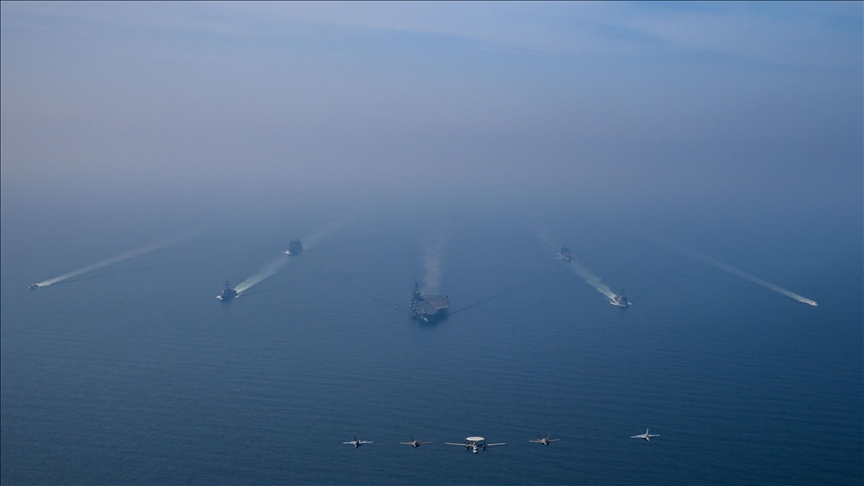
With an additional 7,000 US troops moving to the region, along with jets and fighter planes, the buildup is being described as the biggest “get-ready” military move since 2003, when the US launched its major war on Iraq and reshaped the region. Today, Middle Eastern countries are jittery about the current situation and the possibility of looming instability.

US President Donald Trump is not helping matters. He says he is weighing all options but keeps everyone guessing about his next move. He has warned that if the Iranian government continues its iron-fisted crackdown on protesters, the US could intervene militarily and wage another war on Tehran—much to the delight of the Israeli government, which is reportedly playing a behind-the-scenes role in encouraging unrest in Iran.

Although Trump is raising the war tempo and increasingly saber-rattling through military entrenchment, he is also sending mixed signals. He is not as boisterous as he was when he launched US strikes on Iran’s nuclear facilities in June 2025. What he really wants is to push Iran back to the negotiating table and secure a lasting deal on its nuclear programme. He claims Iran’s facilities have been dealt a significant blow and may never recover, but this seems unrealistic, given how far Iran has advanced in nuclear enrichment.

While Trump describes Israel as a “role model” ally and urges Arab countries to follow suit—a claim many find laughable—Washington appears to be diverging from Tel Aviv over objectives on Iran and may even be at odds with it. Analysts say Israel wants strikes, even multiple ones, to change Iran’s regime and is less concerned about the chaos that could follow.

The United States, by contrast, appears more cautious. US officials do not necessarily want a new regime in Iran, uncertain of what might replace it. They prefer the logic of “the devil you know rather than the devil you don’t.” Washington wants a regime it can work with, despite ideological differences, notwithstanding Trump’s bombastic rhetoric, which Tehran may exploit if it chooses to play the “Mr Nice Guy.”

One analyst suggests Trump wants tangible gains from Iran, preferably access to its oil resources through US petroleum companies, but this may be a pipe dream.

If that fails, Trump is likely to push for a revamped nuclear deal to replace the 2015 agreement, which reached its term in September 2025 and is up for renewal. He wants a deal stamped with a distinctly “Trumpian” identity, even though many issues are already settled. Needless to say, Trump wants to claim credit for clinching the deal.

Today, the region stands on the edge of a precipice. It is touch-and-go. Many experts argue that a Middle East war is not imminent because it is neither politically nor economically feasible. Yet logic often takes a back seat in Trump’s world, especially with Israel pushing for a new wave of attacks on Iran, this time targeting its ballistic missile programme.

Iran, however, says it is ready. It has warned it will strike US bases in the region and beyond if it detects even a hint of an imminent attack. Iranian political and military leaders insist they will not remain sitting ducks for Washington or Tel Aviv. As a result, the region is caught in an escalating poker game.

While many believe Iran and its regional allies, such as Hezbollah and Hamas, have been significantly weakened over the past two years, neither the US nor Israel can be certain of Iran’s real capabilities. This uncertainty leaves them unsure about their next move—or Iran’s.

All this makes both Israel and the United States nervous about unpredictable scenarios across the region. Everyone is waiting, tapping their fingers, bracing for what may come next.

This article was originally published in Countercurrents.org

Continue reading