Israel ‘Proudly’ Destroys 100s of Gaza Mosques
 CrossFireArabia
- November 3, 2024
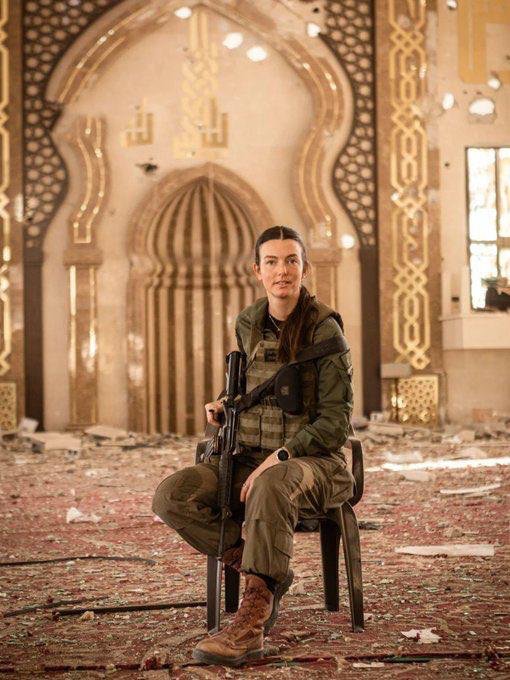
CROSSFIREARABIA – With confirmed reports of hundreds of mosques destroyed by the Israeli occupation army in Gaza, a female Israeli soldier poses for a picture inside a severally damaged mosque in the war-torn region.
The Israeli army is called the “most moral army” in the world, yet the social media images of soldiers desecrating mosque after mosque, shows that Jewish soldiers as the most uncouth and disrespectful.
But you can’t destroy faith. Gazans are considered as the most religious among the Palestinians. Online images abound websites of people praying and listening to the Imam in ramshackle and half-destroyed mosques.
Israel began to target and destroy mosques soon after 7 October 2023 when it waged war on the Gaza Strip.
The Israeli army has flattened 814 of Gaza’s 1,245 mosques and severely damaged another 148 during its intensified bombardment, the Ministry of Religious Affairs in Gaza revealed. It further stated that these represent 79% of mosques in the Gaza Strip.
Some of these mosques go back to centuries and are ancient, like the Great Omari Mosque that go back to the seventh century and named after Omar Ibn Al Khatab, Islam’s second caliph, and destroyed on 8 December, 2023. It represented a true symbol of Islamic architecture, culture and religion. But no more.
https://twitter.com/MiddleEastEye/status/1849840858167689608
The destruction of these mosques are heartbreaking stories; it’s as if Israeli warplanes and missiles aim at eradicating Islam from the heart of the people but this will never be so.
More Than 50 Children Killed in 48 Hrs in Gaza
- CrossFireArabia
- November 3, 2024
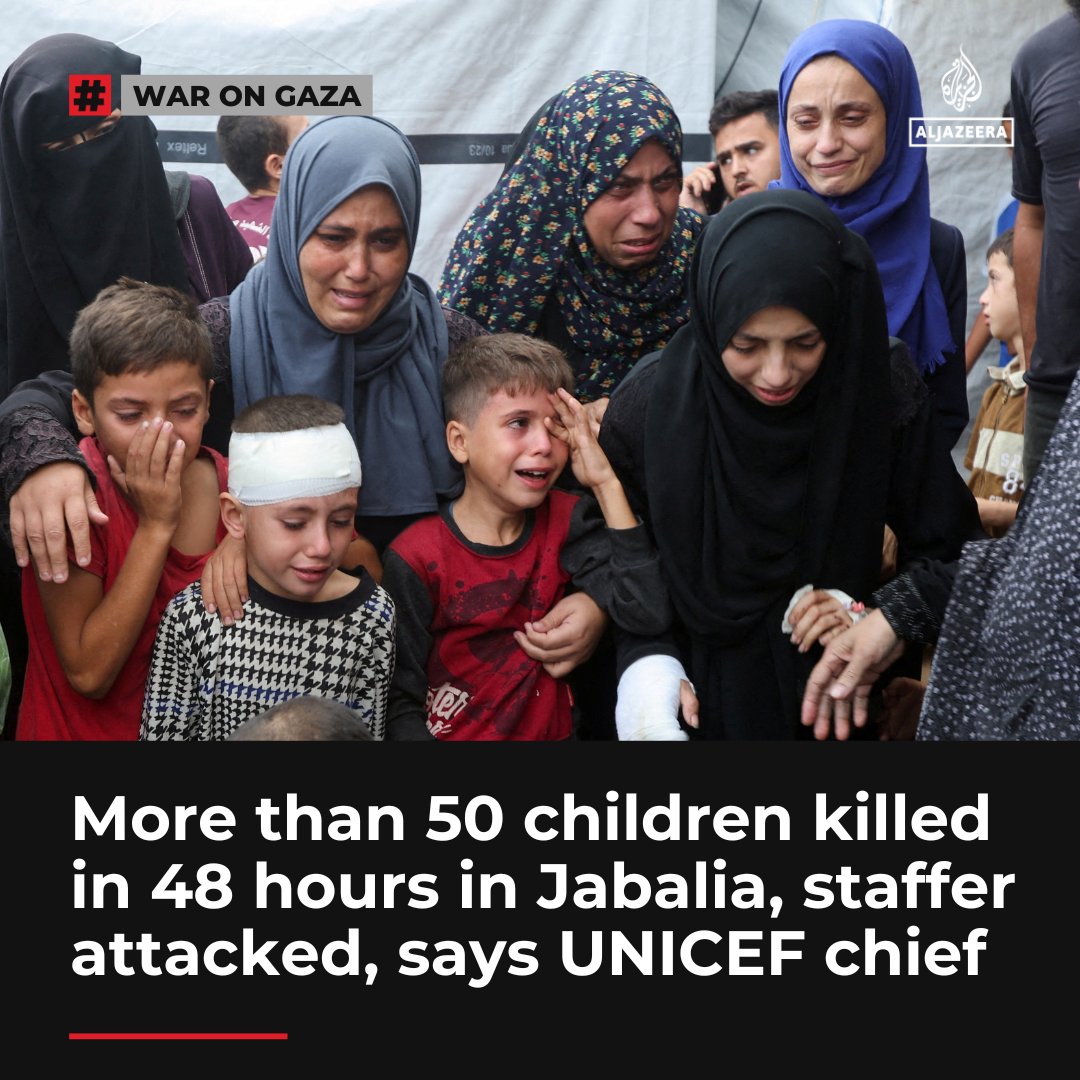
More than 50 children have been killed in Israeli attacks on Jabalia in northern Gaza in the past 48 hours alone.
Catherine Russell, UNICEF’s executive director, in a statement, condemned a “deadly weekend of attacks in North Gaza.”
This piece of news is trending on the social media with images of children who are killed by continual Israeli strikes.
Russell pointed out that a UNICEF staffer working on the polio vaccination campaign in Gaza was attacked on Saturday by a suspected Israeli quadcopter in Jabalia.
UN: Extra 100,000 Palestinians in Makeshift Sites
- CrossFireArabia
- November 3, 2024
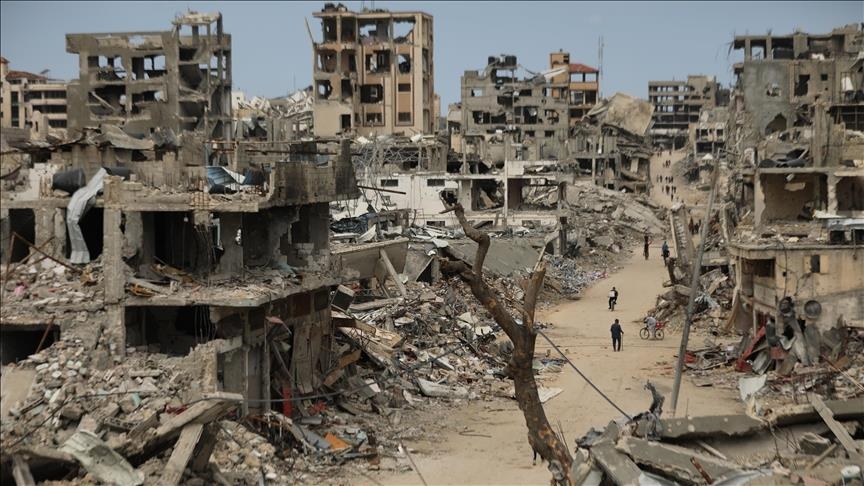
Some 100,000 people recently displaced from North Gaza are sheltering in schools, buildings, or makeshift sites in Gaza City, said a UN spokesman.
“The Office for the Coordination of Humanitarian Affairs (OCHA) warns that in North Gaza governorate, virtually all incoming supplies and humanitarian services have ceased,” Stephane Dujarric told reporters during a briefing.
“This is due to the ongoing siege imposed by Israeli security forces, as well as insecurity limited supplies and the displacement of aid workers,” he added.
About 75,000 people are estimated to remain in North Gaza governorate, Dujarric said.
“With no electricity or fuel allowed since October 1, only two of eight water wells in Jabalia refugee camp remain functional, just partially,” he added.
Israel has continued its brutal offensive on the Gaza Strip following an attack by the Palestinian group Hamas last Oct. 7, despite a UN Security Council resolution calling for an immediate cease-fire.
The onslaught has resulted in over 43,200 Palestinian deaths, mostly women and children, and over 101,800 injuries, according to local health authorities.
Israeli Ministries Cut Ties With Haaretz Over Scathing Comments
- CrossFireArabia
- November 1, 2024
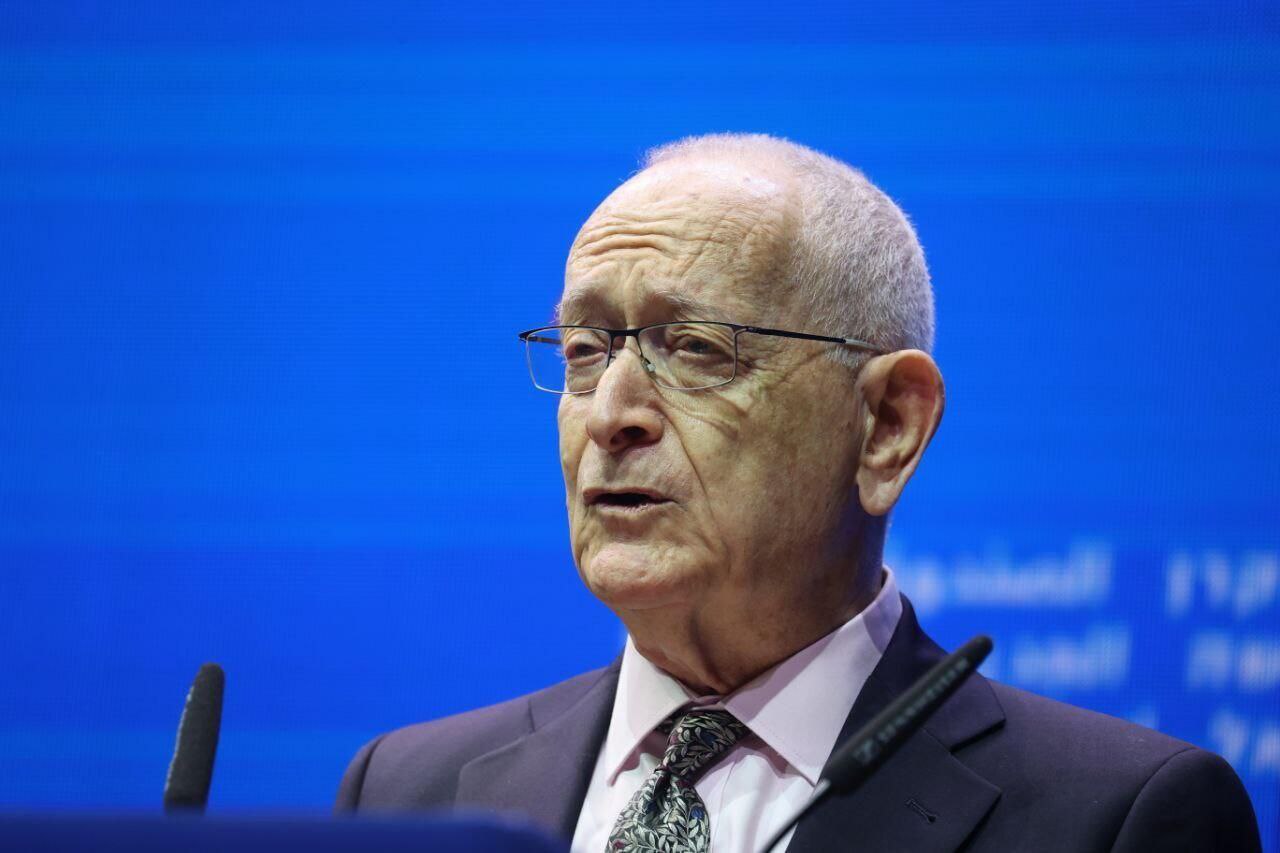
Multiple Israeli state ministries announced the suspension of ties with daily prestigious liberal daily Haaretz after the newspaper’s publisher described Palestinians as “freedom fighters.”
This decision late Thursday came after Haaretz owner Amos Schocken made the comments in London last Sunday, which sparked controversy within Israeli political circles.
Israeli news outlet Israel Hayom reported that an Interior Ministry directive includes halting cooperation with Haaretz due to Schocken’s remarks. The ministry has demanded an apology from Schocken for his description of Palestinians.
In a subsequent press conference, Schocken expressed regret for his comments, stating: “I have reconsidered my words … As for (Palestinian group) Hamas, they are not freedom fighters.”
In his original remarks, Schocken criticized the government of Israeli Prime Minister Benjamin Netanyahu, saying that it “doesn’t care about imposing a cruel apartheid regime on the Palestinian population. It dismisses the costs of both sides for defending the settlements while fighting the Palestinian freedom fighters, that Israel calls terrorists.”
He referred to the situation in Gaza as a “second Nakba” – the “catastrophe” of the mass displacement and dispossession of Palestinians in 1948, when Israel was founded – and called for sanctions on Israel, claiming that this is the only way to achieve a Palestinian state.
Following Schocken’s remarks, the Israeli Culture Ministry announced it would immediately cease all advertising and collaborations with Haaretz.
The controversy intensified after Haaretz published an editorial on Wednesday suggesting it was not surprising that serious doubts arose about Israel’s practice of ethnic cleansing in northern Gaza, part of a recent forceful effort to force Palestinians out of the area. “If it looks like ethnic cleansing, it probably is,” said the editorial.
Haaretz’s commentary highlighted the ongoing humanitarian crisis in Gaza, noting that Israeli forces have besieged northern Gaza for over three weeks, resulting in significant restrictions on humanitarian aid.
The editorial warned that continued aggression could lead to the displacement of hundreds of thousands of Palestinians and the destruction of entire communities, leaving a lasting moral and legal stain on Israeli society.
The Israeli army has sustained a deadly offensive in northern Gaza since Oct. 5, claiming it aims to prevent Hamas from regrouping. Palestinians, however, accuse Israel of seeking to occupy the area and forcibly displace its residents.
Overall, Israeli forces have killed more than 43,000 people since a cross-border offensive by Hamas on Oct. 7, 2023 and injured over 101,000.
The Israeli onslaught has displaced almost the entire population of the territory amid an ongoing blockade that has led to severe shortages of food, clean water and medicine.
Israel also faces a genocide case at the International Court of Justice for its actions in Gaza.