Palestinian National Initiative Movement Secretary-General Dr. Mustafa Barghouti said the USA tied Israel’s hands in regard to the Iranian response and gave it a free hand to commit genocide in the Gaza Strip and the West Bank, given the Israeli occupation remains helpless without Western support according to Jordan 24.
Iran’s Call
Al Jazeera’s Tehran bureau chief Abdul Qader Fayez said Iran believes that the Israeli attack is “no longer clean” because it caused bloodshed, but at the same time it downplays its importance, stressing that it is less than expected.
The Iranian army announced the death of two of its soldiers while confronting the Israeli attack.
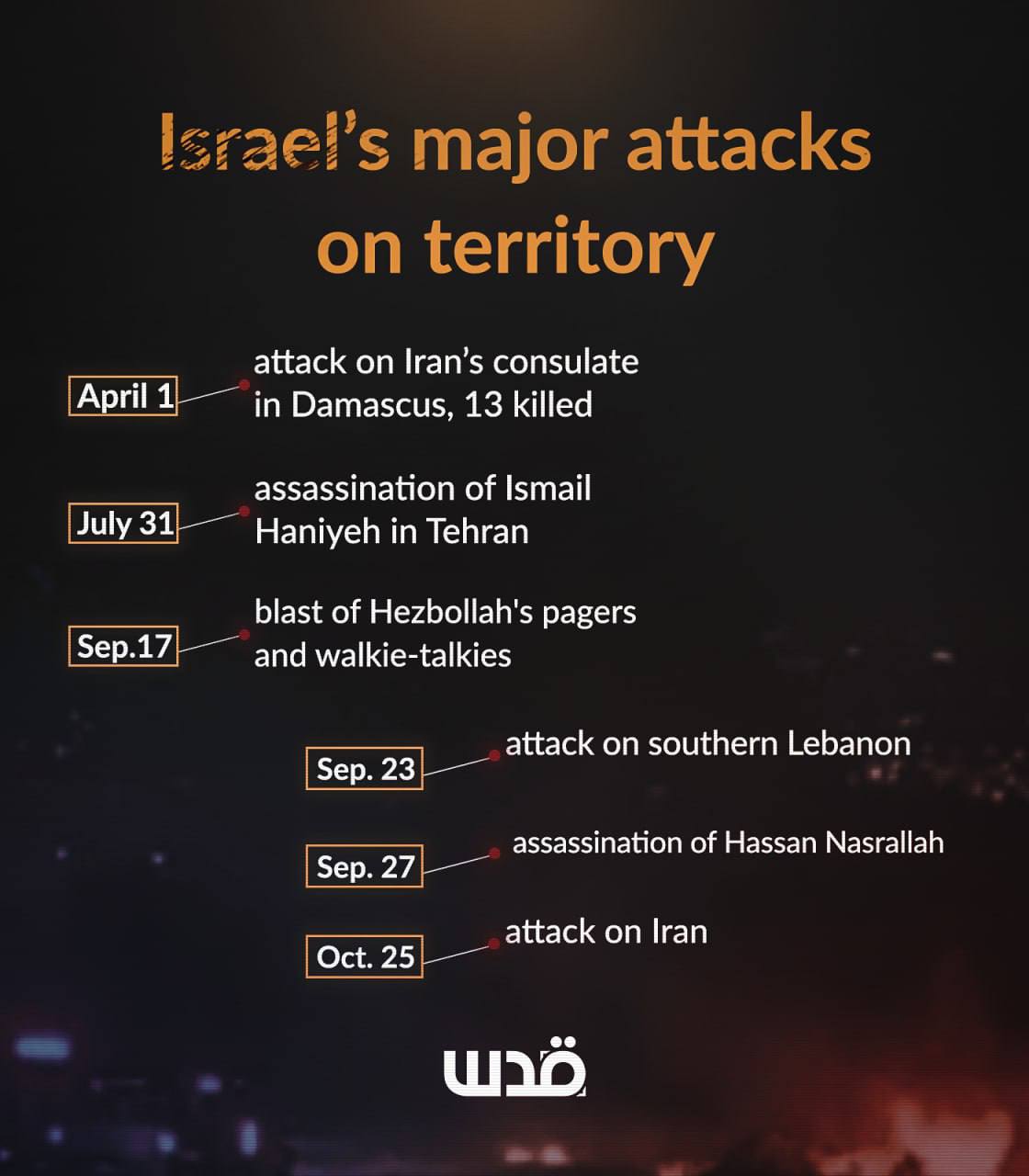
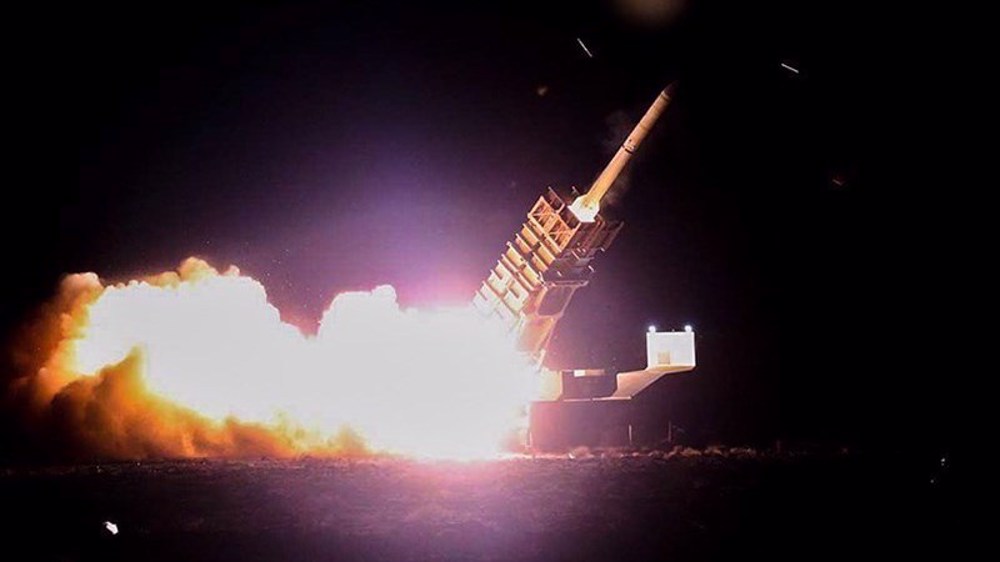
Israel launched a series of airstrikes on Iran early Saturday morning, and explosions were heard in the Iranian capital, Tehran. Four hours after the start of the operation, which Israel called “Days of Response,” the Israeli army announced that it had completed the attack on military targets in Iran, and all of its aircraft that carried out the attack on Iran had returned safely to their bases, and that the operation had achieved all of its goals.
Fayez spoke about three levels that summarize the Iranian position on the Israeli attack on Tehran. The first is that it uses terms such as that the attack was weak, and that the losses were limited in terms of military sites, noting that the Iranian army confirmed the death of two soldiers.
Tehran also says that the Israeli attack was not as it had previously expected, at least according to the ceiling that Israel spoke about, meaning that it was not a “large-scale attack.”
On the second level, Iran says, through its informed sources, that Iranian anti-aircraft missiles succeeded in confronting the Israeli attack, which the sources said “was not successful,” and the Al Jazeera bureau chief said that this needs to be explained in a military sense.
Deny
The Iranian sources deny the Israeli narrative that Tel Aviv targeted 20 sites and missile batteries in its attack, describing this as inaccurate.
The third level, according to the Al Jazeera bureau chief, is related to the Iranian response, noting that it is not yet clear what Iran will do in the coming days. Fayez said that a source informed of the events spoke to the Iranian Tasnim News Agency, saying that “Iran is interested in responding to the Israeli attack,” which was previously repeated by military and political officials that any attack would be met with an Iranian response.
In its first comment on the Israeli airstrike, the Iranian Foreign Ministry condemned the Zionist aggression on Iranian military headquarters according to assawsana.
Violation
The Foreign Ministry said that this attack is a violation of international law and our sovereignty.
The Iranian Foreign Ministry confirmed it has the right to defend itself against any foreign aggression according to the United Nations Charter.
It said that the continuation of Zionist crimes in the region with American and Western military and political support is a factor of tension, and we affirm that we will use all our capabilities to defend our security and interests and our commitment to regional security.
On the other hand, the Politico website quoted an American official as confirming that no American military equipment participated in the Israeli operation on Iran.
The New York Times reported, quoting Iranian officials, that among the sites targeted by the Israeli attack was the “S-300” defense system at Khomeini Airport.
In Tehran Province, at least 3 missile bases belonging to the Revolutionary Guard were targeted.
Condemned by Arab World
Meanwhile Middle East states – including Iraq, the United Arab Emirates, Oman, Saudi Arabia, Jordan, Egypt, Kuwait, and Qatar –condemned Saturday’s Israeli airstrikes on Iranian territory as reported in Anadolu.
Oman’s Foreign Ministry expressed “strong condemnation and denunciation” of the strikes, calling them a “blatant violation of [Iran’s] sovereignty” and “a clear breach of international law.”
The ministry warned that the attacks “fuel a cycle of violence and undermine efforts toward de-escalation and crisis containment through peaceful and diplomatic means.”
Qatar expressed its strong condemnation and denunciation of Israel’s targeting of Iran, branding the attacks “a blatant violation of Iran’s sovereignty and a clear breach of the principles of international law.”
The Qatari Foreign Ministry expressed “deep concern regarding the serious repercussions that may result from this escalation” and urged all concerned parties to “exercise restraint, resolve disputes through dialogue and peaceful means, and avoid anything that could destabilize security and stability in the region,” according to the Turkish news agency.
Jordan’s Foreign Ministry condemned the Israeli airstrikes on Iranian territory.
Ministry spokesman Sufyan Qudah reiterated the kingdom’s “absolute rejection of the dangerous escalation in the region and violations of international law.”
As well, the Jordan Foreign Ministry condemned the Israeli airstrikes on Iran’s territory, in breach of international law, adding that this attack is a violation of its sovereignty and a dangerous escalation that fuels further tension in the region.
In a statement Saturday, the ministry’s official spokesperson, Dr. Sufian Qudah, stressed the Kingdom’s “full” rejection of the dangerous escalation in the region and violations of international law, warning against slipping into a conflict that threatens the region’s stability and international security according to the Petra, the Jordan news agency.
A military source from the Jordan Armed Forces told Al Mamalaka TV that no military aircraft from the conflicting parties of the region have been allowed to transit through Jordanian airspace.
The source highlighted that the armed forces have been closely monitoring the military escalation in recent hours. The Royal Jordanian Airforce is on high alert and prepared to protect the nations, the source said.
The official stated this action also aims to stop Israeli violations of international law and UN resolutions and protect the region’s security and stability from the disastrous consequences of the continued Israeli attacks.
Also, Kuwait expressed its “strong condemnation and rejection of the Israeli aggression targeting Iran.”
“This act reflects the chaotic policies pursued by Israeli occupation forces, which violate the sovereignty of nations, jeopardize regional security, and disregard the principles of international law,” Kuwait’s Foreign Ministry said in a statement.
Saudi Arabia, UAE, Iraq, Egypt
Saudi Arabia’s Foreign Ministry expressed its “strong condemnation and denunciation of the Israeli attack,” calling it a “violation of Tehran’s sovereignty and a breach of international laws and norms.”
The UAE’s Foreign Ministry also issued a call for restraint, stressing “the importance of exercising utmost self-restraint and judgment to mitigate risks and prevent the expansion of the scale of conflict.”
It reaffirmed that “enhancing dialogue, adhering to international law, and respecting the sovereignty of states” are critical to addressing current tensions and that disputes should be resolved “through diplomatic means rather than confrontation and escalation.”
In Iraq, Foreign Ministry spokesperson Ahmed Al-Awadi condemned “the Zionist aggression on Iran” and called for an immediate cease-fire.
Iraq reiterated its stance against any actions that could provoke further instability in the region.
The Egyptian Foreign Ministry said in a statement that it is “closely monitoring the escalating tensions in the Middle East.”
Egypt condemned “all actions that threaten the security and stability of the region,” warning of the current risks of escalation.”
Cairo reiterated its call for an “urgent cease-fire” in Gaza and Lebanon, while calling for “respect for the sovereignty of nations and the integrity of their territories.”

 CrossFireArabia