Palestine Bids Farewell to Elias Khoury

Palestine will miss him greatly. Elias Khoury, a leading Lebanese novelist and writers and a staunch advocate for the Palestinian cause, gave up and died, Sunday.

Khoury, a leading voice of Arab literature, had been ill for months and admitted and discharged from hospital several times over the past year until his death, the Al-Quds Al-Arabi daily for which he worked stated.

One of his best-known novels, Gate of the Sun, tells the story of Palestinian refugees expelled from their homes in 1948 during the war that coincided with heartache creation of Israel.

“The Catastrophe began in 1948 and it is still going on,” he once wrote referring to Israel’s illegal settlements in the occupied Palestinian territories.

On 16 July, he published an article, titled A Year of Pain, recounting his time bedridden in hospital and enduring “a life filled with pain, which stops only to herald in more pain”. He ended his piece by alluding to the Israeli war in the besieged Gaza Strip, which by had rthen aged on for more than nine months.

“Gaza and Palestine have been brutally bombarded for almost a year now, but they stand steadfast and unshakable,” Khoury wrote. “A model from which I have learned to love life every day.”

The Institute for Palestine Studies honored the late Lebanese novelist for his contributions in support of the Palestinian people.

“Elias Khoury was a staunch advocate for Palestine, contributing to the struggle nationally and intellectually,” the institute said in a statement posted on X.

“Even while hospitalised due to illness, Khoury continued to work on the publication of the institute’s Majallat al-Dirasat al-Filastiniyya journal, “especially during the genocide in the Gaza Strip”, the institute pointed out in a statement

He “paid exceptional attention to the plight of prisoners and detainees in Israeli prisons, devoting pages of the journal to this crucial cause”, the statement added according to the Quds News Network.

Continue reading
Arab States Must Withdraw Envoys to Stop Gaza Slaughter – Kuwaiti Analyst

Kuwaiti observer and political analyst Walid Al-Ahmad called on Arab countries that have diplomatic and economic relations with Tel Aviv to “take decisive and effective steps to pressure the Israeli occupation to stop the war on Gaza.”

Al-Ahmad stressed on the “Manchet Press” program, on Kuwait’s official state television, Sunday, the “necessity of considering options such as withdrawing ambassadors with Israel and threaten to stop trade and economic dealings with the Jewish entity.”

“These measures, if implemented effectively, would leave a painful impact on the Israeli economy, which may push it to reevaluate its policies and meet Arab demands,” he explained.

“Pressure should not be limited to Israel only, but also directed towards the United States of America, which is considered the main supporter of Israel,” he added.

“Strengthening economic and diplomatic relations with global powers such as Russia and China can be a powerful tool to send a clear message to Washington about the need to review its policies supporting Israel,” he pointed out.

Kuwait and “despite its small size, is a large country in its giving and positions,” adding it “was the first among the Gulf and Arab countries to strengthen its relations with China, which highlights its pioneering role in changing the balance of economic power,” the political analyst said.

“In light of the current situation, where the United States dominates most global agreements, tenders and treaties, Kuwait’s move towards China is a smart strategic move, and through this step, Kuwait has opened the way for other Gulf countries to consider cooperation with China, which enhances the diversity of strategic economic options in the region,” he explained.

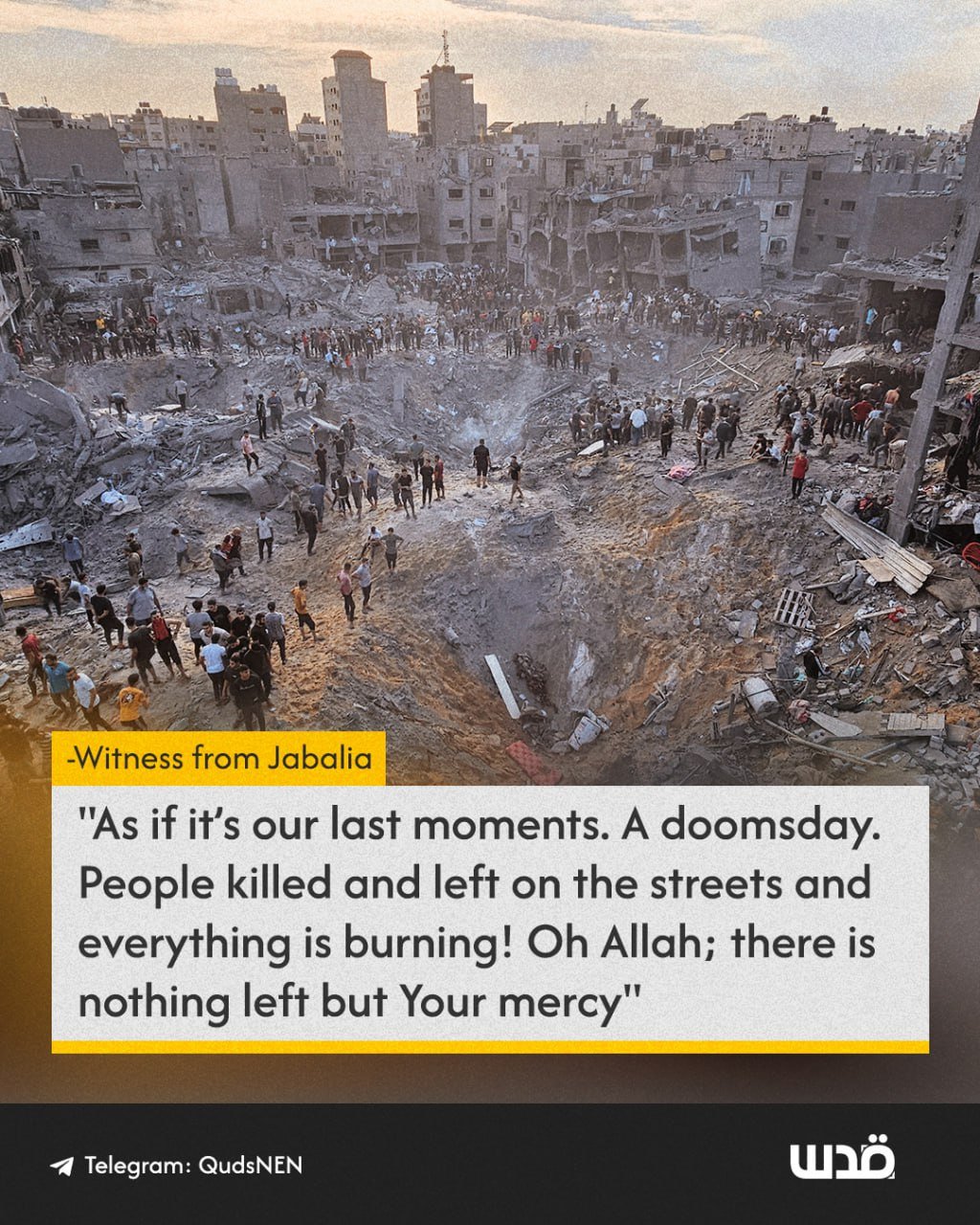
The Israeli occupation army has been continuing its aggression on the Gaza Strip for 345 days, with American and European support. Its aircraft are bombing the vicinity of hospitals, buildings, towers, and homes of Palestinian civilians, destroying them over the heads of their residents, and preventing the entry of water, food, medicine, and fuel.

Continue reading
Israel Promises Africans With ‘Residence’ if They Fight in Gaza


The latest scandal of Israeli officials telling African asylum seekers that they would be given legal status if they served in the Israeli army and fought  in the war against Gaza is causing shock waves.

The story first reported in Haaretz and then the other Israeli newspapers is trending on the social media with much commentary.

There are approximately 30,000 African asylum seekers in Israel, primarily young men who are looking for permanent stay in Israel.

Israeli officials have latched on the idea and gave decided to lure them to join the Israeli army to fight in Gaza, and no doubtedly in the brewing war on the Israeli-Lebanese border with Hezbollah despite the risks

Many of these workers, including around 3,500 Sudanese citizens, have sneeked into Israel and hold temporary status granted by Israeli courts due to delays in processing asylum applications.

Although the story have only just come to light, Israeli officials have tried to recruit these workers soon after the war on Gaza started after 7 October, 2023, and have continued eversince, especially in the months when the war become “bloody” for the Israelis.

Sources within Israel’s security establishments show that this initiative, being conducted under the guidance of legal advisers, aims to utilize asylum seekers’ desire for permanent residency to bolster military personnel and exploiting vulnerable people from Africa for these combative and quite often dangerous roles acccording to the Quds News Network.

This is while the Anadolu, ran the Haaretz story saying the Israeli government is telling its asylum seekers from different African countries it would grant them permanent residency if the join the Israeli army and fight in its war against the Palestinians in Gaza.

It added that Israeli defense officials are realizing that they could use the asylum seekers to bolster their military presence in Gaza by exploiting their deep wishes to obtain permanent residence in Israel.

Citing defense officials, the newspaper says these procedures are conducted “in an organized manner, with the guidance of defense establishment legal advisers,” according to the Turkish news agency.

However, “the ethical considerations of recruiting asylum seekers have not been addressed,” and so far, “no asylum seekers who contributed to the war effort have been granted official status.”

“Some people have expressed objections to the practice, arguing that it exploits people who have fled their countries due to war,” according to the Haaretz daily stated, adding that these voices have been silenced.

The South African Foreign Ministry on 18 December, 2023 warned that any South African citizens who join the Israeli army in the ongoing Gaza conflict could face prosecution at home.

The South African government is gravely concerned by reports that some South African citizens and permanent residents have joined or are considering joining the Israeli forces in the war in Gaza and the other Occupied Palestinian Territories, a ministry statement said as reported by Anadolu.

“Such action can potentially contribute to the violation of international law and the commission of further international crimes, thus making them liable for prosecution in South Africa,” it emphasized.

Continue reading
Gaza Women Tale Life Under The Genocide

You can hardly find a woman in the Gaza Strip whose husband, son, brother, or father, sister and mother that have been killed as a result of Israel’s mass war on Gaza. Left without a spouse, the women of Gaza have suffered alone with extra additional burdens.

Since the beginning of Israel’s war of extermination, the women in Gaza have paid a heavy price, in blood, pain, sufferings and responsibilities. They were and still are the blood arteries of the homeland and national struggle according to a report by the Gaza-based Palestine Information Center.

The Gaza Ministry of Health reports that about 12,000 women were killed because of Israel’s aggression, in addition to the thousands of wounded and dozens of female prisoners since the war on the enclave begun soon after 7 October, 2023.

The ongoing genocidal war, which has entered its first year, casts a heavy shadow on these women as they are now required to fulfill obligations beyond their capacities.

Suad Abu Shamla

Forty-two year-old Suad Abu Shamla who was displaced from Gaza City to Deir al-Balah camp in the middle of the Gaza Strip says she lost her husband at the beginning of the war following the Israeli army raids on their residential area in the Zeitoun neighborhood.

She is now required to take care of her five children, provide them with food, drink, housing, and even move them around in light of the ongoing Israeli evacuation orders.

“After their father was martyred our lives was turned upside down. All the tasks that he made were automatically assigned to me, and I began to endure what could not have been endured, but I will continue, and this is a promise I made to myself.”

“I will continue on the path to raise and take care of my children, until they achieve their goals and dreams.

Lost support

In the Deir al-Balah Camp, Hajja Umm Ahmad Abu Mughsib, a widow for many years, and who lost her son in the extermination war, says with his martyrdom I lost my right hand, and my support after his father passed away.

“I am required to do everything now, even those that men usually do like filling water, lighting fires to make bread, and search for energy sources,” she adds.

She explains the war placed difficult and heavy burdens on the women of Gaza, mountains of responsibilities but she stresses the women are up to the new tasks and will overcome their difficulties.

Multiple challenges

One of the biggest challenges facing women in Gaza is the lack of privacy as a result of overcrowding, whether in tents, shelters, or inside relatives’ homes. It imposed on them great psychological and health pressures including remaining veiled all the time, reducing their food and drink to avoid using toilets, which they have to wait in line for a long time in front of strangers and sleeping in rooms crowded with large numbers of women without beds.

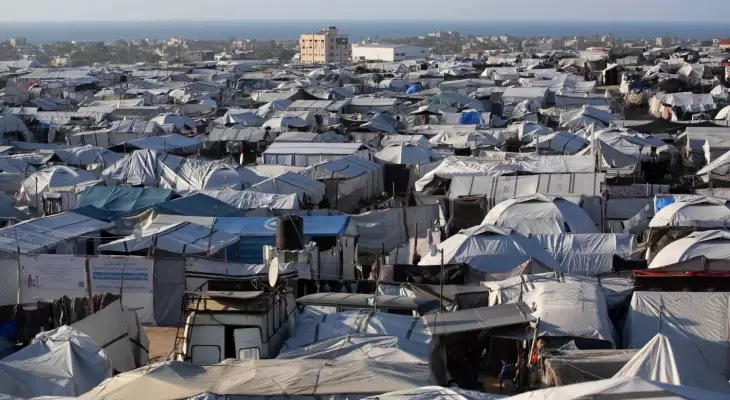
Today the biggest problem the women of Gaza are suffering from is homelessness, as 89% were displaced from their homes, 78% had  their homes destroyed by the Israeli occupation, and 55% now live in public shelters. This is whilst 25.2% live in tents, 15.8% are hosted by neighbors or family members, whilst 1.4% live on the streets, according to figures by the Palestinian Empowerment Coorporation. These figures are expected to much higher.

Also about  75.9 percent of them face challenges in preparing food as women rely mainly on firewood to prepare food due to the scarcity of cooking gas and the inability of many of them to buy it when it is available.

According to the corporation the Israeli army forced thousands of women and girls to flee from the north of the Gaza Strip to the south on foot, covering a distance of 22 kilometers, amidst heavy gunfire from the occupation army, despite claims for their safety. However, while walking on Salah al-Din Street towards the south, they were surprised by the arrest of a large number of them and subjected to brutal practices.

They were stopped at the Netzarim checkpoint and kept in a deep hole for long hours with weapons pointed to their necks and heads. Those who survived and reached the south of the Gaza Strip found themselves homeless, facing great challenges, without a breadwinner or economic resources to continue.

Executions

During the displacement, the occupation army executed many people, including women and children. They were deliberately targeted while carrying white flags while fleeing to safer places.

Women are often executed with their family members, especially their children. An unknown number of women and children have disappeared in the northern Gaza Strip. Nothing has been heard of them till this day. Their bodies have not yet been found. There are children who have been separated from their parents and their whereabouts are still unknown to their relatives. Press reports have recorded at least one girl being forcibly transferred into the occupying state.

Torture of female detainees

In addition to physical extermination, Palestinian women in Gaza were subjected to humiliating human behavior by the occupation army.

Reem Al-Salem, UN Special Rapporteur on Violence Against Women, revealed she received “horrific reports of women being stripped and photographed, especially during interrogation and soldiers exchanging photos among themselves and on the Internet,” which supports press reports and personal testimonies that speak  of cases of assault and sexual harassment, arrests and deliberate killing of Palestinian women by Israeli officers.

Suffering of pregnant women

In the first months of the war, 50,000 pregnant women faced severe and painful material obstacles and health and psychological problems; there was 183 births daily without anesthesia and painkillers, due to the lack of medical and health services and the absence of doctors, nurses or midwives, and the lack of care during and after childbirth due to the difficulty of accessing assistance.

About 45,000 women were deprived of basic reproductive services and around 5,000 children born in extremely poor conditions. The war also caused life-threatening miscarriages due to the mother’s injury or fear, and premature births for the same reason. This is in addition to the killing of a number of mothers with their fetuses.

A large number of pregnant women gave birth in camps and in places unsuitable for childbirth whilst 40 percent of pregnant women were at risk of poisoning and infections. Those who needed a caesarean section underwent it without anesthesia, disinfectants, or antibiotics to treat postpartum infections, in addition to challenges in obtaining adequate medical care, nutrition, and postpartum care.

Statistics show the rates of miscarriage and premature birth in Gaza rose by 20 percent since the beginning of the war soon after 7 October, 2023.

The United Nations Population Fund estimates that “840 women in Gaza are exposed to complications related to pregnancy or childbirth.”

If mothers overcome these risks during pregnancy and childbirth safely and are not killed by Israeli bombing, they are certain to face the risk of lack of medical care, malnutrition and hunger later on.

The restrictions imposed on the entry of humanitarian aid to Gaza have mainly harmed women and their children, and therefore pregnant and those that are breast feeding face severe health and nutritional risks that automatically affect their newborns and babies.

According to identical testimonies, there is no clean water to drink, no adequate food to feed their babies, no baby formula to make up for this shortage, and even if formula could be found, there is no safe water to mix with the milk to give to a hungry baby.

Mothers also do not have warm, suitable clothes for their newborns, as mothers have been forced to flee and leave behind their belongings, including everything related to children’s needs.

Access to aid

Among the challenges facing women in Gaza is access to food aid. When it is available, women, especially those who are alone, only get scraps, due to jostling, running, and severe crowding, and women’s limited ability to reach the distribution sites quickly. Photos and videos during the “attack” on airdropped aid, for example, or during food distribution, show the absence or scarcity of women.

According to UN reports, “about 2.1 million Palestinians are in need of humanitarian assistance with 49.2% of them being women, and 9 out of 10 women suffer from difficulty in obtaining food more than men.”

The lack of sanitary products is a serious problem for Gazan women, such as sanitary pads, which forces them to use pieces of cloth and used clothing during menstruation or after childbirth, which greatly increases their risk of contracting reproductive and bacterial diseases.

This shortage is accompanied by the lack of showers, toilets, washing water, and basic necessities for these special cases.

Despite all these tragedies, the women of Gaza remain steadfast, covering themselves with the skies and sleeping on the ground, refusing to submit and looking forward to a better day and divest themselves from the occupation.

Continue reading
UAE Will Not Back an Israeli Gaza Post-War Plan Without a Palestinian State

The United Arab Emirates said it will not back Israel in its post-war plan in Gaza unless a Palestinian state is established.

UAE Foreign Minister Abdullah bin Zayed Al Nahyan posted on X , Saturday: “The United Arab Emirates is not ready to support the day after the war in Gaza without the establishment of a Palestinian state.”

Israeli Prime Minister Benjamin Netanyahu published online in May a post-war plan for Gaza, claiming the Palestinians “would enjoy unparalleled prosperity” once it is implemented.

Palestinians in Gaza would run the plan under Israeli occupation, supervised by a coalition of Arab states, including the UAE, Saudi Arabia, Egypt, Bahrain, Jordan and Morocco.

However, the UAE Foreign Minister slammed Netanyahu, saying he “lacked legitimate authority to implement this step or take any similar measures” and making it clear that the UAE was not consulted on the Gaza plans.

“Furthermore, the UAE refuses to be involved in any plan aimed at providing cover for the Israeli presence in the Gaza Strip,” a statement released by the UAE’s Ministry of Foreign Affairs said.

“When a Palestinian government is formed which meets the hopes and aspirations of the brotherly Palestinian people, and is distinguished by integrity, competence and independence, the UAE will be fully prepared to provide all forms of support to that government,” it added.

In late July, the UAE stressed the need for a “temporary international mission” that addresses the enormous humanitarian fallout of the war in Gaza after the war comes to an end.

“Consolidating peace and security and ending the humanitarian suffering should begin by the deployment of a temporary international mission in Gaza with a formal invitation from the Palestinian government,” UAE Minister of State for International Cooperation Reem Al Hashimy told the official WAM news agency.

Al Hashimy added that the mission must put Gaza on a pathway to eventual reunification with the occupied West Bank under the rule of the Palestinian Authority according to the Quds News Network.

Continue reading