Eisenkot: Netanyahu Fails in His Wars on Gaza, Lebanon and Iran

Despite the wars in Gaza, Lebanon, and Iran, Prime Minister Benjamin Netanyahu has failed to achieve a decisive victory in any of them said Israeli opposition leader Gadi Eisenkot, head of the Yesh Atid party.

He asserted that “alongside the remarkable military achievements, in the past two years and eight months, there has been no decisive political progress on any front,” Eisenkot told the Hebrew-language news outlet i24NEWS.

“The military achievements are evaporating due to political and personal constraints, and because of the prime minister’s approach of ‘one war after another,'” he said

“The goal of using military force is to improve the strategic situation for years to come, and this simply hasn’t happened,” he added.

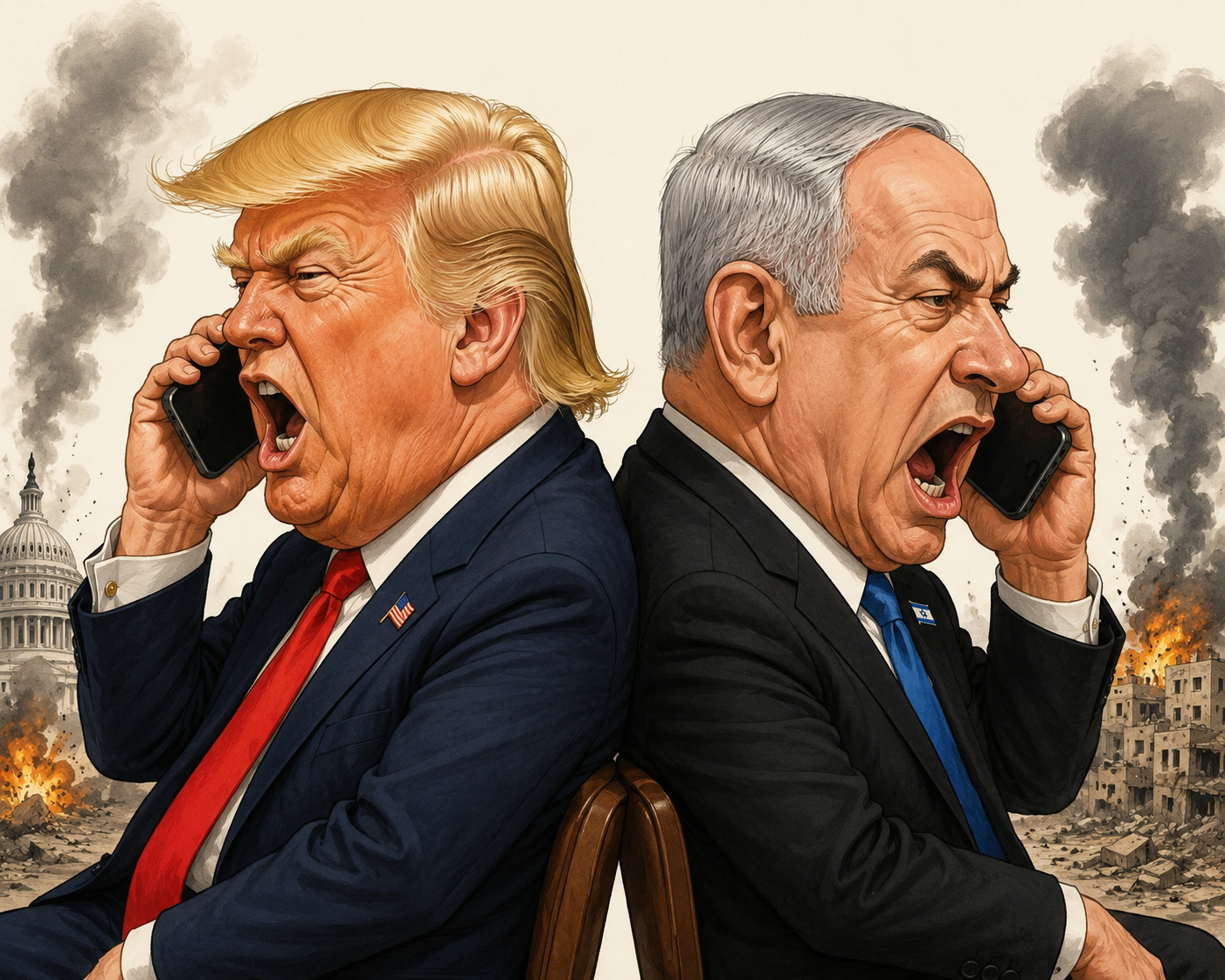
In the interview, Eisenkot attacked Prime Minister Netanyahu and the extremist Minister of National Security, Itamar Ben-Gvir, arguing that Netanyahu’s relationship with US President Donald Trump “ties the hands of the Israeli army.”

Eisenkot accused Ben-Gvir of harboring a “fascist vision” and of “failing” in managing internal security.

He said that internal security had deteriorated under his leadership to the point where crime within the Arab community was comparable to that in Mexico and Colombia.

He described Ben-Gvir as “a man who walks around with a noose around his neck, unfit for Israeli public life.”

Eisenkot reiterated his refusal to join the “Together” alliance, which includes former Prime Minister Naftali Bennett and opposition leader Yair Lapid according to Quds Press.

Continue reading
Anadolu Launches ‘Gaza Trilogy’ Website

Anadolu has launched a dedicated website for its “Gaza Trilogy” project, a three-volume publication series documenting crimes committed by the Israeli government in Gaza through evidence, eyewitness testimonies and international legal assessments.

Prepared by Anadolu’s Publications Directorate, the trilogy consists of The Evidence, The Witness and The Perpetrator, which examine developments in Gaza through the framework of evidence, testimonies and international legal decisions related to the Rome Statute of the International Criminal Court (ICC).

The collection, which has played an important role in bringing the genocide tragedy in Gaza to global attention, is now available digitally through the website gazatrilogy.com.

The first volume, The Evidence, documents Israel’s genocide in Gaza through photographs and footage captured by the agency’s journalists on the ground.

The publication presents visual documentation of the destruction caused by Israeli military operations.

Now in its 10th edition, The Evidence states that Israel’s attacks on Gaza, launched in October 2023 under the government of Prime Minister Benjamin Netanyahu, have resulted in the greatest destruction and loss of life witnessed since the 1948 Nakba, or “Great Catastrophe.”

The book argues that principles of international law and the laws of war were repeatedly violated during the ongoing military campaign.

The volume was compiled with the aim of meticulously documenting and globally tracking violations that have drawn widespread international criticism.

Drawing heavily on reports and photographs produced under difficult conditions by Anadolu correspondents in Gaza, The Evidence offers firsthand accounts of events in the enclave while serving as a reference work for international efforts seeking accountability for crimes committed by the Netanyahu government.

The second volume, The Witness, records accounts from individuals directly affected by the conflict and seeks to preserve their experiences for the historical record.

Comprehensive record

Now in its fourth edition, the book focuses on the human stories behind The Evidence and highlights testimonies that underpin international justice efforts regarding war crimes committed in Gaza under Netanyahu’s government.

The volume includes accounts from Palestinians who endured continuous violence, were targeted in locations where they sought refuge, including hospitals, aid organizations, refugee camps and border crossings, and who faced severe food shortages during the conflict.

Shaped primarily by testimonies from Palestinian and Turkish journalists, as well as members of various sectors of society accessible under wartime conditions, The Witness also portrays as the failure of some international actors to prevent the tragedy, while alleging that others ignored it or provided political protection.

The final volume, The Perpetrator, focuses on those responsible for the violence in Gaza, documenting crimes committed by Israeli authorities and their supporters.

Published as the concluding installment of the trilogy, the book seeks to complete a comprehensive record of Israel’s actions in Gaza.

The Perpetrator primarily examines the Netanyahu government as bearing primary responsibility for the violence and destruction in Gaza.

The book argues that the administration includes extremist figures, some of whom it says have also violated Israeli law, and examines statements and actions reflecting support for the killing of children, the destruction of civilian homes and environmental devastation.

The volume also documents individuals and institutions across politics, business, academia and the cultural sphere that have been directly or indirectly connected to the conflict through military or political support for the Israeli government.

The book records these connections as the hope and determination that those involved will one day be held accountable. Anadolu

Continue reading
Suleiman Mansour: A Painter For Palestine

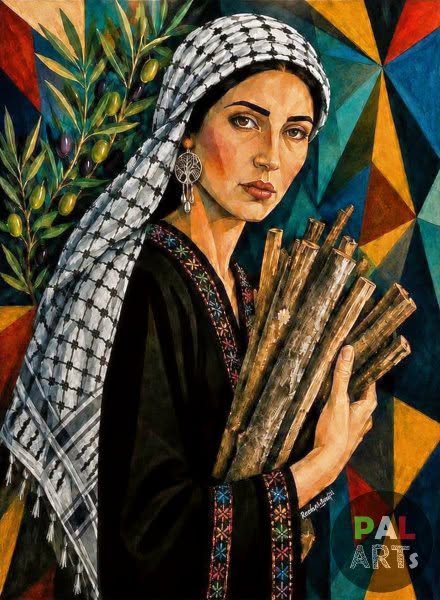
In a distinguished cultural and artistic evening held in Jaffa, the “Bride of the Mediterranean,” the pioneering Palestinian visual artist Suleiman Mansour, creator of the famous painting “The Camel of Burdens,” was honored at an event organized by the Arab Culture Association in cooperation with Al-Saraya Theater and Al-Mat’hana Gallery.

The evening included speeches praising Suleiman Mansour’s decades-long career, and an open dialogue that addressed his rich artistic experience, his cultural and national contributions, and his prominent role in documenting the Palestinian scene and conveying the suffering and resilience of the Palestinian people to the world through his artwork, which has become part of the Palestinian national memory.

Participants emphasized that Suleiman Mansour’s works, most notably “The Camel of Burdens,” constituted a landmark in Palestinian visual art and contributed to consolidating national identity and preserving the Palestinian narrative through the language of art and creativity, making him one of the most prominent figures of the contemporary Palestinian artistic and cultural movement.

Continue reading