Trump’s Advisor: Warns White House Against Escalation

Trump adviser David Sacks warns that continued escalation with Iran could destabilize the region and strain Israel’s defenses.

Key Takeaways

  • David Sacks urged Washington to “declare victory and get out” of the war with Iran before escalation spirals further.
  • He warned Iran could target Gulf oil infrastructure and desalination plants, threatening water supplies for millions.
  • His remarks come amid growing divisions within the Trump administration over whether to escalate the conflict or seek an exit.

A Rare Warning

A senior adviser to Donald Trump has warned that Washington may already be approaching the limits of what it can safely achieve in its escalating war with Iran.

Speaking on the All-In Podcast, White House AI and cryptocurrency adviser David Sacks urged the United States to step back from the conflict before it spirals further across the Middle East.

“This is a good time to declare victory and get out,” Sacks said, arguing that Washington should seek a negotiated off-ramp rather than push toward deeper escalation.

“I agree that we should try to find the off-ramp,” he added.

His remarks are notable because they challenge the dominant narrative coming from the White House and many Republican figures who continue to frame the war as a decisive strategic success.

Instead, Sacks sounded a far more cautious note, suggesting that the longer the war continues, the more unpredictable its consequences may become.

‘Catastrophic’ Consequences

Sacks warned that Iran retains the capacity to retaliate in ways that could destabilize the entire region.

One of the scenarios he outlined involved strikes on Gulf oil infrastructure and desalination plants that supply drinking water across the Arabian Peninsula.

“I think it’s something like 100 million people on the Arabian Peninsula that get their water from desal,” Sacks said.

Damage to those facilities could have immediate humanitarian consequences across several Gulf states that depend heavily on desalinated water.

Sacks described such a scenario as “truly catastrophic.”

His comments reflect growing concern that Iran may respond asymmetrically, targeting infrastructure and economic systems rather than focusing solely on military confrontation.

Israel’s Position Under Strain

Sacks also warned that the war could create serious pressure on Israel if it continues to escalate.

During the podcast discussion, he noted that prolonged regional confrontation could test Israel’s air defense systems and expose the country to sustained missile pressure.

In the same conversation, Sacks described Iran as holding what he called a “dead man’s switch over the economic fate of the Gulf States.”

The phrase referred to Iran’s ability to disrupt key economic and energy infrastructure throughout the region if the war intensifies.

Reshaping the Region

The remarks came shortly before the United States launched a major bombing raid on Iran’s Kharg Island, a strategic terminal through which the vast majority of Iranian oil exports pass.

The strike highlighted how deeply the war has already penetrated the economic and strategic infrastructure of the region.

Energy markets have reacted nervously to the widening conflict, while Gulf states remain exposed to the risk of retaliatory strikes on oil facilities and shipping routes.

Meanwhile, Iran and allied groups have continued missile and drone attacks against Israel and other targets across the region, expanding the battlefield beyond the initial US-Israeli strikes.

The result is a conflict that now spans multiple fronts across West Asia.

Growing Debate

Sacks’ remarks highlight a widening divide within Washington over how far the United States should go in its confrontation with Iran.

Publicly, the Trump administration has continued to project confidence that the military campaign is weakening Tehran and reshaping the regional balance of power.

But behind that messaging, officials and political allies appear increasingly split over what the next step should be.

Some figures within the administration and the broader Republican Party are pushing for deeper escalation. Defense Secretary Pete Hegseth has repeatedly framed the strikes as part of a broader effort to weaken Iran’s regional influence and restore deterrence.

Trump himself has combined victory rhetoric with threats of further escalation. After announcing the bombing raid on Iran’s Kharg Island, he claimed US forces had “obliterated” key military targets while warning that Iranian oil infrastructure could also be struck if Tehran moves to disrupt shipping through the Strait of Hormuz.

At the same time, a smaller but increasingly visible group within Trump’s orbit appears wary of a prolonged war.

Those voices argue that continued escalation could draw the United States into a wider regional conflict involving Iran’s network of allied forces across Lebanon, Iraq, Yemen, and elsewhere.

Sacks’ call to “declare victory and get out” reflects that concern.

Rather than advocating additional military pressure, he suggested Washington should use the current moment to claim success and pursue a negotiated exit before the conflict expands further.

The contrast between those positions — escalation versus exit — is becoming one of the central political questions shaping Washington’s response to the war. – The Palestine Chronicle

Continue reading
How Will Trump Get Out of This War?

By Ismail Al Sharif

“We are in an advanced position, and we will decide when the war will end,” said Kazem Gharibabadi, Iranian Deputy Foreign Minister.

President Donald Trump, in coordination with the Zionist entity, is igniting a regional war with Iran which is an unprecedented event in the region. Analysis of the true motives behind this fateful decision vary. One school of thought believes the strategic objective lies in controlling Iranian oil wealth and containing growing Chinese influence. Another links this to the Epstein affair, based on claims of Zionist pressure threatening to expose him to sensitive information.

A third school believes that Trump is tied to political commitments made to Miriam Adelson, who generously funded his election campaign. Some go even further, alleging that Trump, known for his transactional negotiating style, received substantial financial compensation for engaging in this war. In a related context however, recent reports indicate that Trump himself has blamed his son-in-law, Jared Kushner, and several close advisors for instigating this latest military adventure.

Whatever the true motives behind igniting this war, one path seems almost certain to end it: Trump will hold a press conference declaring a unilateral and absolute victory. The precise timing of this declaration remains uncertain.

But the decision to cease hostilities does not rest with Trump alone; it is contingent upon the agreement of two other key parties: Tehran and Israel.

Israel shows no desire to end this war, as it is the primary beneficiary of its continuation. It systematically seeks to dismantle the structure of the Islamic Republic and sees no harm in the regime’s collapse leading to widespread chaos engulfing Iran and the entire region.

If Trump fails to restrain Netanyahu, the latter will not hesitate to continue his military operations even after any official American declaration of a ceasefire. This may explain why Trump declared that any settlement to end the conflict would only be possible with Netanyahu’s consent and explicit blessing.

However, the Zionist entity might feign acceptance of a ceasefire while its Mossad intelligence apparatus works behind the scenes to fuel separatist and rebellious sentiments among ethnic minorities within Iran, such as the Kurds and Balouchis, potentially threatening the cohesion of the Iranian state from within. In response, Tehran would have no choice but to continue targeting the entity, which would then retaliate swiftly, potentially drawing Trump back into a cycle of military confrontation.

Adding to Trump’s predicament is the possibility that he might ultimately declare a ceasefire unilaterally, without any fundamental change to the structure of the Iranian regime, and without extracting any genuine concessions from Tehran regarding halting uranium enrichment, dismantling its missile program, or severing its ties with regional allies—the very pretexts used to launch the war.

Even more dangerous is the fact that the Islamic Republic’s resilience and its emergence from this crisis with its system intact will make it a unique and exceptional model: The first country to challenge American hegemony and emerge unscathed. This could encourage other countries suffering under the weight of Trump’s policies or ambitions—such as Venezuela and Greenland—to adopt resistance as a path, even if they lack Iran’s military capabilities.

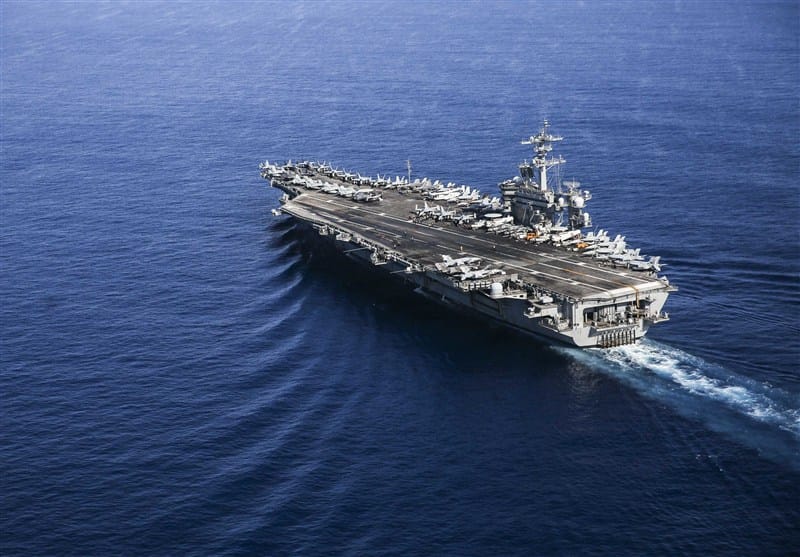
It seems to me that President Trump may be following in the footsteps of his predecessor, George W. Bush, when he famously declared victory in 2003 from the deck of the aircraft carrier USS Abraham Lincoln, which was then—as it is today—at the eye of the American military storm. It is worth recalling here that Bush’s speech was a highly symbolic and premature declaration, one that was quickly contradicted by events, as the war on Iraqi soil continued for nearly a decade afterward.

The war has exhausted Iran and burdened it with immense hardships, making it seriously seek a cessation of hostilities. However, it simultaneously finds itself in direct confrontation with American will. Iranian officials have made it clear that any agreement to a ceasefire and the resumption of negotiations is contingent upon receiving firm guarantees from Washington and Tel Aviv that the aggression will not be repeated. Should Tehran manage to withstand and overcome this phase, it is likely to add to its list of demands one of which is the lifting of some of the sanctions imposed upon it.

Therefore, it appears that the Iranian strategy is essentially based on a policy of systematic attrition; simultaneously exhausting the United States and Israel by driving oil prices to high levels and closing the Strait of Hormuz, the world’s vital energy artery. This would impose heavy economic burdens that might ultimately compel Washington to reconsider its calculations and agree to a ceasefire.

In short, Trump will not be in a position to deliver a victory speech in the next week or two, and any such declaration without genuine cooperation from Israel and Iran will amount to nothing more than empty rhetoric devoid of any real substance on the ground. There is no doubt that President Trump has put himself, his country, and the entire region in a very complex strategic predicament, from which the way out may not be as easy as those who made the decision to go to war imagine.

This analysis was originally written in Arabic and reprinted in crossfirearabia.com

Continue reading
‘This War is Not Hours’

By Dr Hasan Al Dajah

Events in the Middle East are accelerating, foreshadowing a comprehensive regional explosion. However, a deeper reading of the situation transcends the traditional narrative that attempts to portray the conflict as an “Arab-Iranian” or sectarian one that transcends borders. The reality emerging today from the rubble of burning military bases and oil facilities is clear: this war is not ours; it is a major strategic war led by Washington with direct Israeli planning, aimed at reshaping the region to serve absolute Western hegemony, even if the price is turning Arab capitals into arenas of destruction and settling scores in which we have no stake.

For years, the United States promoted the concept of “deterrence” and providing protection to allied countries in exchange for billions of dollars in arms deals and a massive military presence. However, Operation “True Promise 5” and the subsequent precise Iranian strikes have stripped away the fig leaf from these claims. Field reports indicate that US bases, once described as “impregnable fortresses,” have become vulnerable targets themselves, requiring protection. At Al Udeid Air Base in Qatar, damage to the AN/FPS-132 early warning radar and the AN/TPY-2 facility resulted in a near-total paralysis of surveillance capabilities.

In Bahrain, home to the Fifth Fleet, the destruction of satellite communications stations led to a loss of centralized control over naval vessels. In Kuwait and the UAE, the casualties and the destruction of F-15 fighter jets revealed that advanced US technology was incapable of countering waves of drones and missiles that disrupted even civilian air traffic and struck vital facilities at Jebel Ali Port, reducing military installations and oil depots to ashes.

This resounding failure raises a fundamental question about the viability of relying on a “security umbrella” that has failed to protect its own perimeter and has become a security burden, attracting attacks rather than repelling them. This is no longer mere political analysis; it has become a public admission emanating from the corridors of Washington. What Senator Lindsey Graham recently revealed represents the pinnacle of terrifying candor. He confirmed that the true agenda is not about spreading “democracy” or protecting allies, but rather about embroiling the Gulf States as the military front and human cannon fodder in a direct confrontation with Iran. This is a prelude to seizing oil wells and managing the region’s wealth for Washington’s benefit, thus paying the price for the American presence, while simultaneously imposing full normalization and strangling China’s energy lifeline.

The United States’ recent attempt to seek refuge in French bases in the UAE, such as Al Dhafra Air Base and Camp de la Paix, is nothing more than a desperate effort to spread losses and hide behind the European umbrella after the deterioration of the original American bases. However, even these shared bases have not been immune to attack.

The strikes have proven that any facility supporting Western operations is a legitimate target in this zero-sum confrontation. The effects of this war extend beyond the military arena, striking at the very heart of daily life. The threat to the Strait of Hormuz has triggered seismic repercussions in global markets. The price of a barrel of oil jumped to around $116, an increase of more than $38, while gas prices in Europe rose by more than €25, and oil shipping costs soared by over 90 per cent, foreshadowing an uncontrollable wave of global inflation.

The United States, which today expresses its “displeasure” at Israel exceeding expectations in striking Iranian fuel depots, is not acting out of a desire for peace, but rather out of fear that the economic game will backfire on it and on oil markets, which cannot withstand the loss of Gulf supplies, especially given the 11 per cent increase in gasoline prices in America and the 70 per cent increase in jet fuel prices. What is happening in Jebel Ali, Manama, Doha, and Kuwait is not a struggle to defend Arab sovereignty, but rather a settling of scores between major powers that want to use Arab land as a chessboard.

The American bases that are groaning today under the weight of the strikes have proven to be a “paper tiger” when it comes to protecting allies, and that their presence is nothing but a magnet for crises that drains Arab capabilities for the benefit of foreign agendas that do not take into account Arab national security.

Arab capitals must realize, before it’s too late, that the “illusion of protection” has completely evaporated under the weight of missiles and drones. To be drawn into Israel’s desire to destroy the region, and to accommodate American ambitions to seize energy resources to finance its expansionist policies, is strategic suicide by any measure.

This raging war is not our war, and staying out of the inferno of this manufactured conflict is the only way to ensure that our wealth and the future of our generations do not become fuel for the schemes of Netanyahu, Trump, and the war profiteers behind them.

The time has come to seriously seek a self-reliant regional security system, one that originates from within the continent and is based on the shared interests of the region’s countries, far removed from foreign bases that today lack even the most basic military effectiveness and have become a strategic burden that itself needs protection after its defensive vulnerabilities have been exposed.

False American promises only increase our subservience and dependence on a modern colonial project that sees Arabs as nothing more than insignificant figures on its debt list, or mere cheap tools in its proxy wars. The true protection of homelands begins today with disengaging from these destructive agendas, and with the explicit acknowledgment that bases that have failed to protect their own walls and platforms will never be a shield for others.

Hasan Al-Dajah, a Professor of Strategic Studies at Al-Hussein Bin Talal University, is a columnist in the Jordan Times.

Continue reading
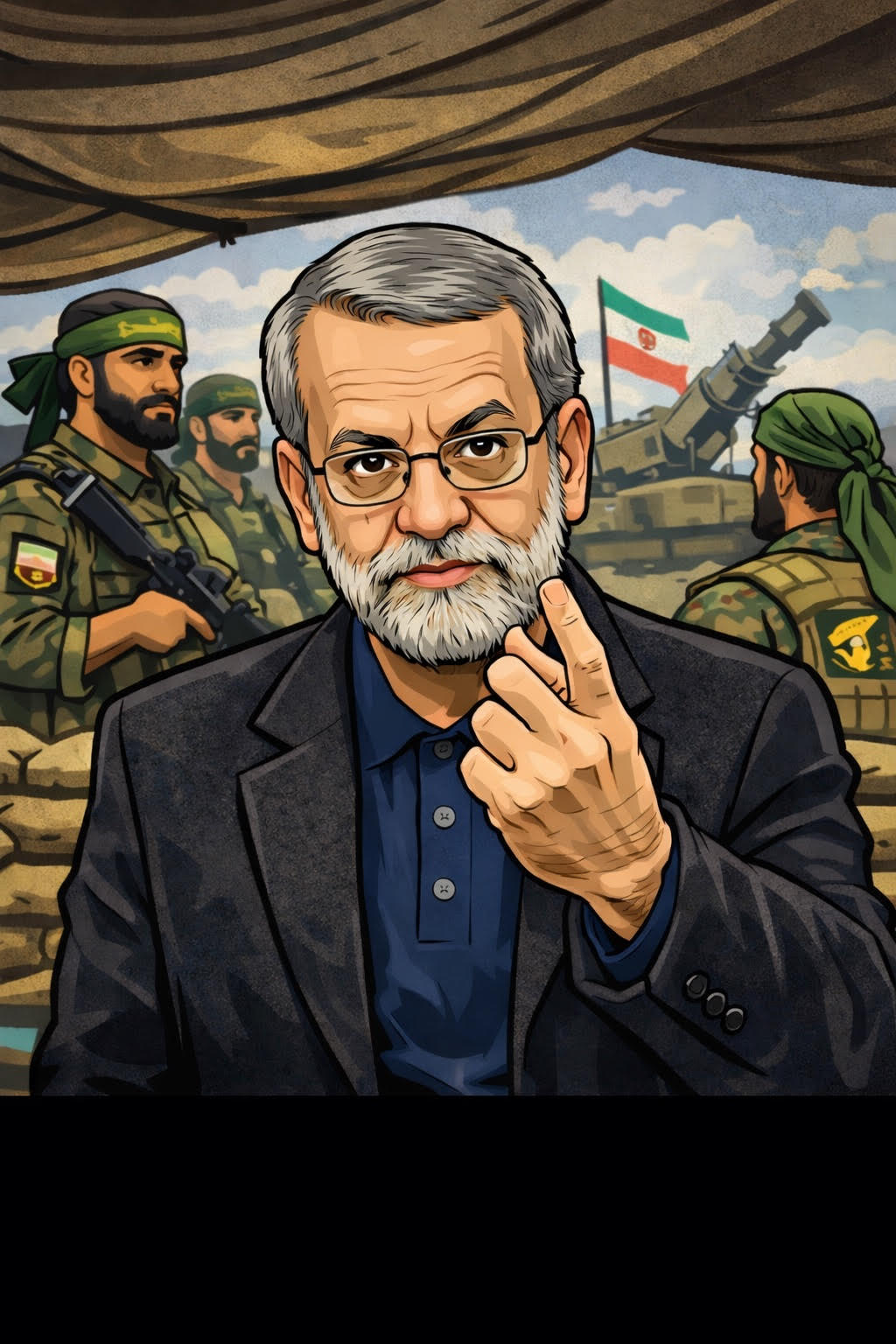
Ali Larijani: The Man Behind Iran’s War

As war reshapes Iran’s leadership landscape, veteran power broker Ali Larijani has emerged as a central figure coordinating strategy and continuity.

Key Takeaways

  • Ali Larijani, a veteran Iranian statesman and former parliament speaker, now plays a central role in Iran’s wartime decision-making.
  • Reports indicate Larijani is coordinating strategic policy through Iran’s Supreme National Security Council during the ongoing conflict.
  • His decades-long career spans the Revolutionary Guards, state media leadership, nuclear diplomacy, and parliamentary politics.
  • Larijani is widely regarded as a pragmatic conservative with deep ties to Iran’s clerical and security establishments.
  • In a moment of leadership transition, Larijani has emerged as one of the key figures ensuring institutional continuity in Iran.

Iran’s Pragmatic Power Broker

Few figures embody the institutional continuity of the Islamic Republic as clearly as Ali Larijani, a veteran politician whose career spans Iran’s military, media, parliament, and national security establishment.

Born in Najaf, Iraq, in 1958, Larijani comes from one of Iran’s most influential clerical families. His father, Ayatollah Mirza Hashem Amoli, was a prominent religious scholar, and several members of the Larijani family have held senior positions within the Iranian state.

This combination of clerical pedigree and political experience would later position Larijani as one of the Islamic Republic’s most enduring insiders.

Revolutionary Guards

Larijani began his career in the early years following the 1979 Islamic Revolution, serving within the Islamic Revolutionary Guard Corps.

Over the following decades, he moved steadily through the ranks of Iran’s political and administrative institutions. He held a series of posts within government ministries before becoming head of Iran’s state broadcasting organization, Islamic Republic of Iran Broadcasting (IRIB), in 1994.

Larijani remained in that position for nearly a decade, overseeing the country’s powerful state media apparatus during a critical period in Iran’s political development.

In 2004, he was appointed security adviser to Supreme Leader Ayatollah Ali Khamenei, a move that placed him closer to the core of Iran’s decision-making structure.

Nuclear Negotiator

Larijani’s national prominence expanded significantly in 2005 when he became secretary of the Supreme National Security Council, Iran’s top strategic policy body.

In that capacity, he also served as Iran’s chief nuclear negotiator, representing the country in early talks with Western powers over its nuclear program. Although he later stepped down from that role, Larijani remained central to Iran’s political landscape.

From 2008 to 2020, he served as speaker of Iran’s parliament, the Majles, one of the longest tenures in the history of the position.

During that period, he played an important role in shaping legislation related to Iran’s nuclear policy, economic governance, and relations with the outside world. He was also instrumental in helping shepherd the 2015 nuclear agreement with world powers through the Iranian political system.

Pragmatic Tendencies

Ideologically, Larijani is associated with Iran’s principlist conservative camp, which broadly supports the political framework of the Islamic Republic.

Yet analysts frequently describe him as a pragmatic figure capable of navigating Iran’s complex factional landscape. Larijani has often positioned himself as a bridge between competing political camps within the Iranian system.

His reputation for strategic thinking and bureaucratic competence has made him a trusted figure within the country’s governing institutions.

Wartime Decision-Making

Today, Larijani once again stands near the center of Iran’s strategic apparatus.

Serving as secretary of the Supreme National Security Council, he plays a key role in coordinating Iran’s national security and defense policies during one of the most volatile periods in the country’s modern history.

The position places him at the intersection of Iran’s political leadership, security institutions, and military command structures.

As Iran navigates war and internal leadership transition, Larijani’s long experience across multiple branches of the state has made him one of the most influential figures guiding the country’s response.

(The Palestine Chronicle)

Continue reading
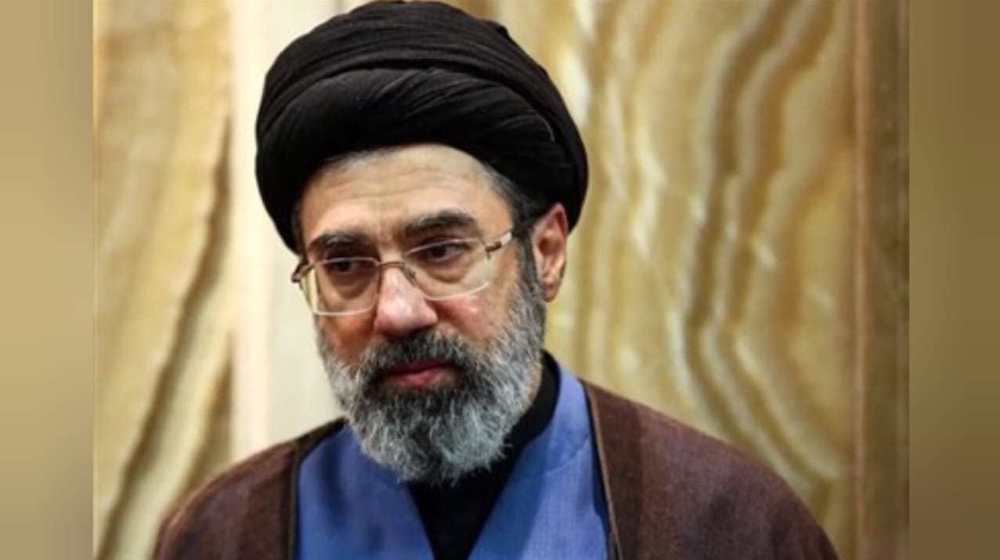
Expert: Mojtaba Election Means More Escalation

Military and strategic expert Nidal Abu Zeid stated that the election of Mojtaba Khamenei to a prominent position within the Iranian decision-making apparatus is a clear indication of the escalating trend being pursued by the Iranian Revolutionary Guard Corps (IRGC) at present.

In a statement to Jordan 24, Abu Zeid explained that the developments on the ground that followed the announcement of Mojtaba’s appointment within hours—namely, the launching of missile barrages toward neighboring countries—reflect a direct message that the hardline military faction has seized control of the political and security landscape in Tehran.

He added that Mojtaba Khamenei, whose name rose to prominence during the events of 2009 when he played a key role in suppressing the protests led by the reformist movement known as the “Green Movement,” is known for his rigid approach to managing domestic affairs. He noted that at that time, Khamenei directly confronted reformist opposition leaders such as Mehdi Karroubi and Mir Hossein Mousavi.

Abu Zeid explained that this political history suggests Mojtaba may be heading towards managing Iran’s internal affairs with an iron fist, while dealing with regional and international issues with a more radical and hardline mindset, especially given the escalating regional tensions.

He pointed out that Mojtaba’s initial appearance in a position of power might witness a clear show of support from Revolutionary Guard generals and religious figures, a message reflecting the Iranian regime’s hardline establishment’s commitment to escalation on both the regional and international levels.

Conversely, Abu Zeid noted that the reformist movement’s stance within Iran remains unclear regarding this appointment, while Iranian social media platforms have begun to witness a significant wave of criticism. This reflects indications of popular rejection of the radical mindset’s dominance in running the state, particularly in light of what he described as the existential political and economic crisis the Iranian regime is currently experiencing.

Continue reading