Duwairi: Hezbollah and Its Battle Management Versus Israel

Military expert Major-General Fayez Al-Duwairi said Hezbollah regained its political balance after it revamped its tactical and operational balance a few weeks ago at the level of managing the battle with Israel. He pointed to the party’s dual employment of its qualitative missiles on the horizontal and vertical levels.

Al-Duwairi explained on Al Jazeera Hezbollah’s Nasr and Aziz units are responsible for managing the defensive battle efficiently in the area south of the Litani River.

The Litani River extends 170 kilometers from its source in the east to its mouth in the west, and is about 30 kilometers from the Lebanese-Israeli border.

The strategic expert explained this party wanted to reveal the Imad 5 facility “to present a specific vision regarding the employment of qualitative missiles”, which he considered as “a translation of restoring the balance”.

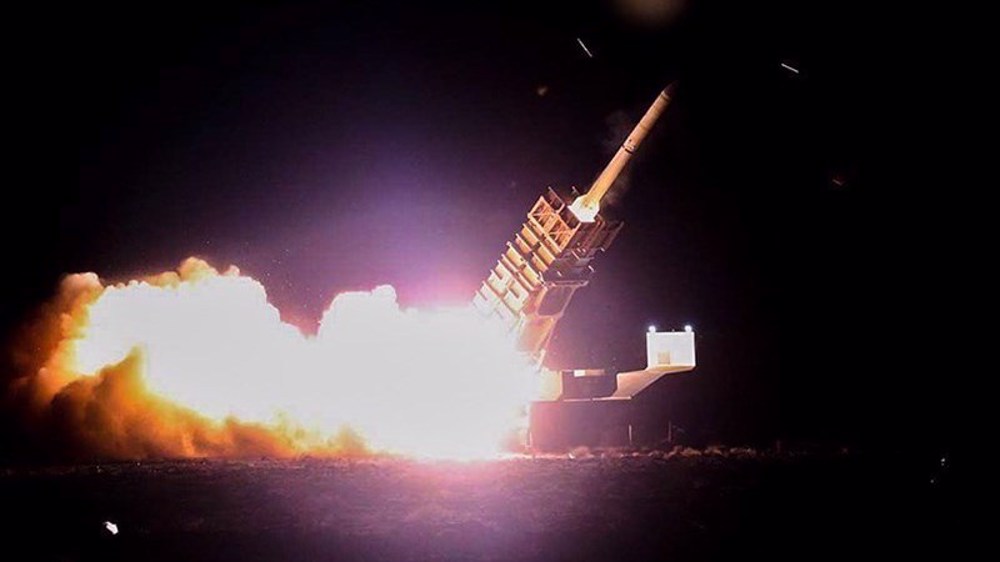
Hezbollah’s war media section published a video clip, Sunday evening, showing a missile launch facility called Imad 5, which included missile launchers and equipment inside an underground military facility.

The military expert warned of what he called “Hezbollah’s dual use of missile power”, as it sometimes resorts to direct missile targeting, and sometimes launches missiles to serve another military approach.

Missile barrages

According to Al-Duwairi, Hezbollah resorts to launching missile barrages that coincide with or slightly precede its drones, as the Iron Dome radars pick up the missile signal and focuses on it, while the drones penetrate deep into Israel, sometimes reaching up to 150 kilometers.

Hezbollah’s drones have become an obsession for the Israeli army with Al-Duwairi saying the party focuses on “the evening barrage launch to paralyze the widest possible geographical area of ​​Israel and force about two million people to enter the underground shelters.”

Hezbollah recently begun a horizontal escalation consisting of launching 100 rockets per day, in addition to a vertical escalation through the use of rockets it never used before, the military expert said.

Duwairi added Hezbollah’s qualitative rockets are evident through their range, accuracy, and ability to reach the target, noting the party has “a bank of targets arranged according to priorities in terms of the impact of these targets on the course of the battle and Israel.”

For these reasons, the party is focusing on Israeli military bases and the facilities that serve them, such as technical and military industries and weapons depots, in addition to economic facilities.

Hezbollah has been focusing in recent days on targeting the Glilot base of the 8200 Military Intelligence Unit in the suburbs of Tel Aviv, and the Palmachim Air Base (south of Tel Aviv).

It is also focusing on the Shraga and Sanat Gen logistics bases north of Acre, in addition to the Misgav base (northeast of Haifa), the Ramat David base and airport (southeast of Haifa), and the Zevulun military industries base (north of Haifa).

However, the military expert adds “Hezbollah is very cautious and does not want to go too far in its policy of targeting Haifa versus the southern suburbs of Beirut” for fear of a corresponding Israeli overreach.

Al-Duwairi explained Hezbollah is bombing military targets in return for an Israeli targeting of the party’s social infrastructure and incubator.

He explains the party cannot defeat the Israeli army in a conventional war, but “just by its survival and ability to withstand, and prevent Israel from achieving its goals and deterring it, it is considered victorious.”

Since 23 September, Israel has expanded its war on Hezbollah to include most areas of Lebanon, including the capital Beirut, through unprecedentedly violent and intense air strikes, and it has also begun a ground incursion in the south, relying on five military divisions operating along the border with Lebanon.

CrossFireArabia

CrossFireArabia
Dr. Marwan Asmar holds a PhD from Leeds University and is a freelance writer specializing on the Middle East. He has worked as a journalist since the early 1990s in Jordan and the Gulf countries, and been widely published, including at Albawaba, Gulf News, Al Ghad, World Press Review and others.

Related Posts

At Day 260: Israel Violates The Ceasefire 3465 Times

The Gaza Media Office reported, Monday, the Israeli army violated the Gaza ceasefire reached 10 October, 2025, 3465 times.

It went on to say that during these violations it killed 1045 people and injured 3380 people in different parts of the Gaza Strip.

And because the Israeli army effectively controls a major part of the Gaza Strip under a yellow line that today stands at least 60 percent and is purpotedly increasing to 70 percent of the territory as boasted by Israeli Prime Minister Benjamin Netanyahu, it arrested 113 people.  

The Media Office also states that during this time only 55,539 aid trucks entered the Gaza enclave as allowed by the Israeli army. That’s only 36 percent of what was allowed to enter by the ceasefire accord and which is 156,000 humanitarian trucks.

The Media Office which is part of the governmental authority in charge of Gaza, denounces what it calls the “methodological” policy practiced by the Israeli occupation to target and exterminate Palestinians and the continuation of the policy of killing without stopping.  

Continue reading
Gaza’s Dead Wait For Burial

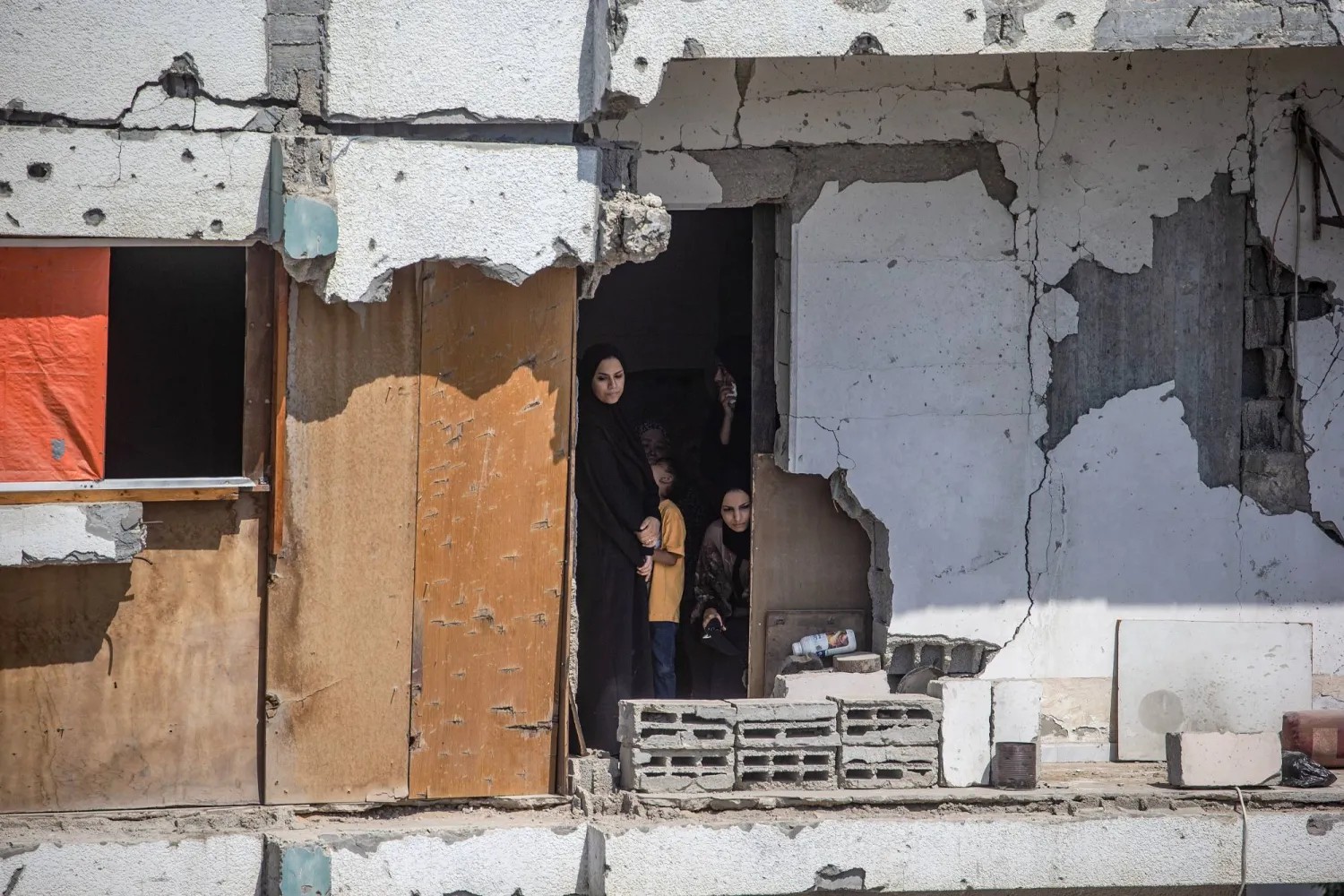
CROSSFIREARABIA – 12-year-old Mohammed Riyad Ghabboun isn’t waiting for a new house atop the rubble of his family’s home in the Sabra neighborhood of Gaza City. Instead, he’s waiting for the remains of family members who have been buried under the rubble for the last eight months, hoping Civil Defense teams will finally dig them up and place them proper graves.

Just steps away, a single excavator is working tirelessly, searching for approximately 8,500 bodies and remains under the rubble of homes destroyed by the Israeli occupation army during its genocidal war on the Gaza Strip. Civil Defense teams, with support from the International Committee of the Red Cross, resumed recovery operations on Saturday with extremely limited resources, amid warnings that continuing at this pace would take years.

The recovery of bodies in Gaza had repeatedly stopped over the past months due to shortages of fuel and heavy equipment.

The last announcement by the civil defense teams in Gaza regarding the recovery of bodies from under the rubble was on 12 May. But this Saturday, its teams began searching for eight missing members of the Ghabboun family at this very spot.

The Israeli war of annihilation on the Gaza Strip, which ended with a ceasefire accord on 10 October, 2015, left more than 73,000 Palestinians dead and over 173,000 wounded. It also caused widespread destruction, affecting approximately 90% of the civilian infrastructure, which exacerbated the limited capabilities of the Civil Defense Department and hampered the efforts of its teams to gain access to thousands of victims trapped under the rubble and huge chunks of debris.

Amid the ruins of the Ghabboun family home in the Sabra neighborhood, Civil Defense teams began their search for the bodies of eight martyrs buried beneath the debris of the house, which was bombed by Israel in October 2025.

Difficult and Slow Operations

Mahmoud Bassal, spokesman for the Civil Defense in Gaza, told Anadolu Agency that the recovery operations are proceeding very slowly due to significant difficulties stemming from a lack of resources and heavy equipment. He added about 8,500 bodies and remains are still buried under the rubble of destroyed homes in many areas of the Gaza Strip, noting there are numerous obstacles hindering the work, including a shortage of equipment and potential field hazards.

 “We are issuing a humanitarian appeal to all relevant parties to assume their responsibilities, as the available resources are insufficient to deal with the enormous number of victims and missing persons under the rubble,” he continued.

 Basal called for “providing the necessary heavy machinery, excavators, and specialized recovery equipment so that we can completely resolve this issue.”

 “Continuing to work at this slow pace will take many years, as we are currently operating with only one excavator, which could break down at any time,” he explained, pointing out that if heavy machinery were provided, “the work would not exceed three months.”

The Civil Defense’s capabilities have been severely damaged in the war, and its available resources now are wholly inadequate for the scale and extent of the destruction in the Gaza Strip. Removing the rubble requires specialized excavators, machinery, and technical teams, he stressed.

That is why the work is so painfully slow and moves haphazardly in fits-and-starts. Under the first phase of the ceasefire agreement in effect in Gaza since October 10, 2015, Israel was supposed to allow the entry of the necessary heavy equipment and machinery, but it has not done so, according to governmental and factional sources in Gaza.

Meanwhile and amidst the search operations, 12-year-old Mohammed Ghaboun stands anxiously awaiting the recovery of the remains of several family members he lost eight months ago.

He, a former survivor of an Israeli airstrike that killed eight members of his family months ago, says, “I have mixed feelings of longing and sadness as the operation to recover the bodies of my family members gets underway.”

“Since the operations started I have been in a state of anticipation and anguish, and I hope that I will be able to see their bodies and bury them in their graves,” he told the Anadolu Agency.  

Painful Memories

The absence of equipment not only delays the recovery of bodies but also exacerbates the suffering of the families of the missing, who remain unable to bury their loved ones. Meanwhile, rescue teams face significant difficulties and dangers in the field, particularly at sites of destruction.

For his part, the elderly Youssef al-Zaharneh recalls the moment his house was bombed during the war. “It was sheltering approximately 45 displaced people, mostly women and children,” he recollects.

“The five-story building was bombed without warning, killing some of its residents and injuring others,” Al-Zaharneh told Anadolu Agency, explaining three of his sons were killed in the bombing. “The bodies of two were recovered in pieces, while the third remains missing under the rubble.

 As a grieving father, my feelings at this moment are incredibly difficult as I wait for my son’s body to be recovered from under the rubble. All I want is to find a part of his remains or bones so I can bury him and give him a grave I can visit,” he pleads.

 “The pain inside me is intense, and I await relief from God,” al-Zaharneh continued.

The volume of rubble resulting from the widespread destruction in the Gaza Strip is estimated at between 50 and 68 million metric tons, according to United Nations estimates and experts.

This enormous amount of rubble covers vast areas of residential and civilian areas, making the search for victims and the recovery of bodies a complex task that could take years, given the limited resources and equipment currently available.

This article, originally appeared in the Palestinian Information Center, is reprinted in crossfirearabia.com

Continue reading

You Missed

Hormuz Strait in The Checkered Ceasefire

Hormuz Strait in The Checkered Ceasefire

Media Cries Foul: CBJ Removes 20 Martyred Palestinian Journalists From its Records

Media Cries Foul: CBJ Removes 20 Martyred Palestinian Journalists From its Records

UN: Israeli Expansion Risks Civilians

UN: Israeli Expansion Risks Civilians

Israel Demolishes House Near Bethlehem

Israel Demolishes House Near Bethlehem

‘We Will Win’

‘We Will Win’

Israel Kill Palestinian Goalkeeper Saleem Al Ashqar

Israel Kill Palestinian Goalkeeper Saleem Al Ashqar