Zamir: Israel May Resume War on All ‘Active Fronts’

Israeli Chief of Staff Eyal Zamir said Monday that intense fighting could resume across all of Israel’s active fronts this year according to the Drop Site website.

“We remain ready and on alert for the possibility of a resumption of intense fighting on all these fronts—2026 could still be a year of fighting on each of them,” Zamir told army officers during a meeting. I

In an interview with Fox News on Monday, Secretary of State Marco Rubio declined to say whether the Trump administration would support Israel resuming the war in Gaza, but said that “the entirety of this project only works if Hamas is demilitarized.”

Hamas has consistently refused to discuss disarmament until Israel ceases its violations of the ceasefire and fulfills its Phase One obligations according to Drop Site.

Continue reading
US-Iran: Who Will Blink First!

One would say that our main inheritance from the Covid period is the term, new normal, which has been since used, conveniently, in any circumstance we found baffling to our senses.

So one wonders if the stand in Hormuz will not be our current new normal, which will mean putting up with the economic consequences of the blockage and trying at the same time to find different routes for trade. Here, one is talking economics and trade simply because the loss of life and destruction doesn’t more matter in comparison to budgets and the flow of goods.

In fact each time anyone finds an intelligent reason for this ongoing conflict, the rediculous actions of the protagonists proves the impossibility of saying an informed or otherwise opinion. For all intents and purposes, all what can be reasonably said, is that for now, the war is supposed to be inconclusive despite the threats flying around, because essentially no one wants a regime change in Iran because no one can predict the consequences.

Therefore, back to economics again, the strategy seems, who will blink first and accept the conditions of the other to return to Islamabad. Iran with its enormous financial and economic problems which fears a new uprising in the streets once the stalemate with the US becomes the norm, or the USA with the mid term elections looming, rising inflation and higher energy prices, as well as volatility in stocks and shares prices in Wall Street.

When it comes to the situation in Lebanon, clearly the link with Iran is in fact Hizbullah; which is by its own admission the Party of Veliyati -Fatih in Lebanon, under the current circumstances, with the Israeli invasion of the south of Lebanon, for the first time in the history of Lebanon, not a sect, religious community, or power group, but in fact the official state representatives are talking about direct negotiations with Israel for peace, and in fact negotiating directly with each other in Washington.

For the Lebanese state, the situation now is legitimacy over the whole geography of the country, and limiting the possession of arms only in the hands of the Lebanese army and security. However, here also we face the scenario of whether the egg comes first, which is for Hizbullah Israeli withdrawal first, or the chicken, for the Lebanese government to negotiate the withdrawal of Israel.

Leaving the devil out of the details, would it mean ultimately, that a diplomatic agreement between Lebanon and Israel makes Hizbullah the enemy of both Israel and the Lebanese state together?, and what would the Lebanese state do as a next step, if Hizbullah decides to keep its weapons?

Then of course, there is the festering wound of Gaza and the West Bank which hardly warrant any news considering the scale of what is going on in the Gulf and in Lebanon. For Gaza, the vision fluctuates between lost peace, Israeli occupation withdrawn yellow lines, and Hamas with its show of force, amidst refugees, squalor, destruction and whether aid can go in or not, while on the other hand AI generated images of its rise beach resorts which no one is likely, from now on, be able to think about even if they can afford and realize them.

Future? What can one say save for bleak.

As for the West Bank, one has to apologise for saying that the Arabs, before anyone else, are reconciled with idea that the PNA is no longer there, apart from of course, moneymaking, here and there, and that what is termed as Palestinian territory will become a Bantustan in the sea of expanded Israel. Thus where do we go from here, well, there are people with paid salaries to think about!

Janbek is a Jordanian columnist based in Paris


Continue reading
Analysis: Middle East in Iranian Eyes

CROSSFIREARABIA – During the Israeli Genocide on Gaza Benjamin Netanyahu used to stand up and say with a smirk: ‘We are changing the face of the Middle East’.

Upbeat about murdering the women and children of Gaza from the late 2023 onwards, he was talking about the further normalization of the Arab world as established by the Abraham Accords, establish an economic order under Israel’s hegemony and end Hamas, Hezbollah and Houthis while clipping the wings of Iran.

Of course, Netanyahu’s face soon changed, albeit two-and-a-half years later, when Iran and Hezbollah were forced into a war generated by Israel and the USA on 29 February, 2026. While Iran got a battering, in the next 39 days, US ships and military bases in the Gulf and Jordan received such a hammering that soon forced US President Donald Trump to plead for a ceasefire.

In this war, Israel received a great shock, being attacked literally on an hourly and daily basis with its buildings, military basis and infrastructure taking directs hits while its millions of people living in underground shelters around-the-clock. 

To use a metaphor Tel Aviv’s nose was being rubbed in the sand in a way that has never been imagined by Netanyahu nor his ilk of extremist right wing fascist politicians who started calling for the expulsion of Gaza Palestinians from their homeland ever since the Israeli genocide on them since 7 October, 2023. 

Today’s Netanyahu’s vision of a new Middle East has been drastically changed, thrown in his face in fact! Iran’s political stances and its missiles have changed things around. The US and Israel were not able to change the current Iranian government in Iran despite killing the country’s spiritual leader Ali Khameini, have not ended the country’s nuclear program nor ended its ballistic missiles. 

So what is Netanyahu talking about? Yes, today there is clearly a new Middle East emerging but it is not according to Netanyahu’s eyes nor his wishful thinking. If anybody should be ‘celebrating’ it is clearly Iran, it’s government, revolutionary guard, its Generals, officers and soldiers who are very probably changing the face of the Middle East and may even be setting the map of how the region should look like in form from now on. 

From day one of the war, Trump started running scared despite his outlandish mutterings! He came to realize quickly that Netanyahu and the Mossad pushed him against Iran, convincing him it would be an easy fight and the government there would fall like a pack of cards. Trump since, started kicking himself as he finally fell to Netanyahu’s squinted prism to go after that country. Netanyahu kept pushing for this wild step since the 1990s through previous US presidents from Bill Clinton, George W Bush, Barack Obama and Joe Biden.

But they did not listen to him however, Trump fell into the trap and maybe this is why he is now privately kicking himself because he basically sent the globe into an economic tailspin and soaring exorbitant oil prices, a potentially deep recession and financial chaos.

In this war Netanyahu may have shot himself in the foot. His alliance with the USA  juxtaposed by Hezbollah whose fighters laid dormant since November 2024 when it stopped firing at Tel Aviv was a big surprise to the latter. Israel had previously thought that Hezbollah agreed to a ceasefire out of weakness and thus their entry into military action was unexpected. Hezbollah kept the military pressure on for six more days after Washington signed off with Iran and beating the Israeli army into submission.

On day 46 Trump intervened calling on the Israeli army to stop fighting Hezbollah. He had ulterior motive, he wanted to extract a normalization agreement between the Lebanese government and Israel; their ambassadors had just started meeting in Washington at the invitation of the US State Department in an upbeat atmosphere and inline for a final agreement to establish an accord between Tel Aviv and Beirut alongside the ones signed between Israel and four Arab states, the UAE, Bahrain, Sudan and Morocco starting September 2020. 

Thus a normalization agreement would be a feather in Trump’s cap, a sort of prestige move for the US president. But his pressure may have been seen as a life-saving formula. Trump was saving Israel from Netanyahu’s insistence that his army to keep fighting in southern Lebanon. Its fight has already cost Israel at least 13 soldiers who were killed, more than 500 injured and more than 100 topnotch Merkava tanks destroyed. Israeli towns and cities were being hammered from the north.

Israel was being beaten from the north. Its towns, cities and military bases again were wide-open to incoming rockets from Lebanon and were not being deflected. It was a war that had to be stopped. This time Trump insisted. If a ceasefire with Iran was going to stick, then Netanyahu had to be forced to make his soldiers stop their fight in Lebanon. 

Thus for the time being Netanyahu’s hand lie in check. Yet in the long run his dream for a new Middle East with Israel playing a central part in it may have been halted. After all, no Gulf or even Arab states now would think of normalizing with Israel despite the fact that Lebanon is being forced into it, but even for then its early days.

Netanyahu can kiss goodbye his long-life attempt to sign a normalization accord with Saudi Arabia for instance, a kingdom which is seen as a “major puller” in the Arab and Muslim world. It has already said that normalization is off the table with Israel. The Gulf has been disappointed in this war because it showed that America were not able to protect them from Iranian missiles that targeted their infrastructure as well the US military bases strewn across the region.

Netanyahu has lost on the economic level as well. His country stands economically devastated, army in ruins as admitted to by the Israeli chief of staff Eyal Zamir, and the dream of opening an ‘economic Middle East’ is definitely dashed for the time being.

America, as Trump knows, is left to pick up the pieces of a tattered world caused by war any choas in a region that is vital to the global system.

Continue reading
Can Israel Create A Lebanese Buffer Zone?

By Imad Rizk

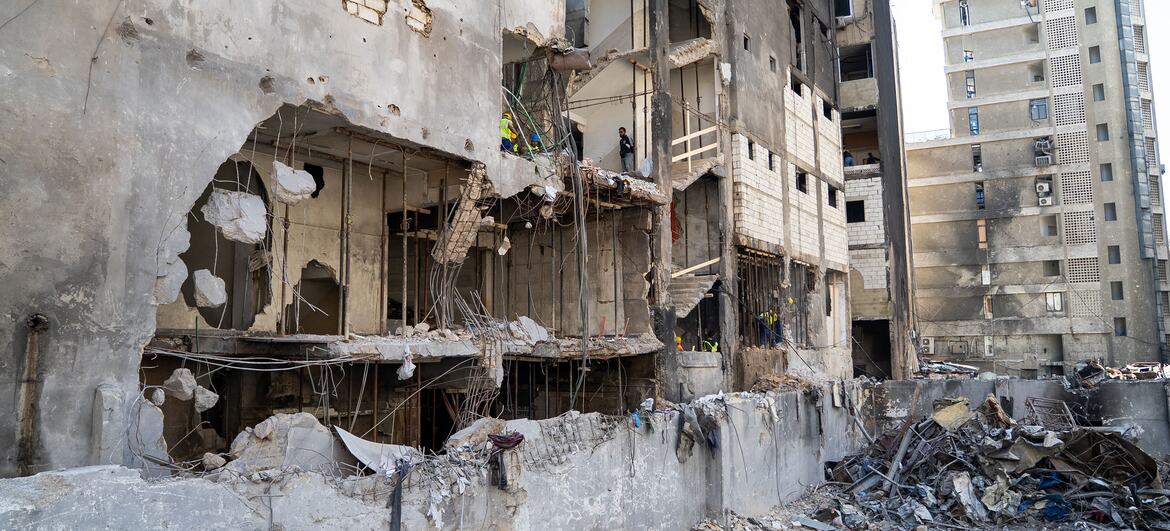
Since last Wednesday, the Israeli army has continued targeting the network of roads and bridges that link Lebanon to its south. In addition to pressuring the Lebanese government to make concessions in Lebanon and possibly beyond, the Israeli army claimed that targeting the Qasmiyeh bridge and other bridges is intended to prevent the transfer of military supplies to southern Lebanon. However, military experts questioned this justification, noting that Israeli aircraft maintain intense air dominance over the routes leading to the south, which undermines the credibility of this claim. Sources believe that targeting infrastructure, especially bridges and roads, aims to isolate the southern region in preparation for occupying it and turning it into a “buffer zone”.

After the 1982 invasion, Israel maintained a buffer zone in southern Lebanon for 15 years. It was meant to prevent attacks but instead created local resistance and required constant military presence, ending with a unilateral Israeli withdrawal in 2000.

Buffer zones as a military solution in the region were tested between 1985 and 2000. In the 2006 Lebanon War, Israel avoided re-occupying Lebanon, relying instead on air power and UN peacekeepers (United Nations Interim Force in Lebanon). Now, in 2026, Israel is returning to buffer zone thinking. Current discussions of a 10-15 km buffer zone show that Israel is returning to a doctrine it once abandoned as distancing itself from its enemy is more important than before.

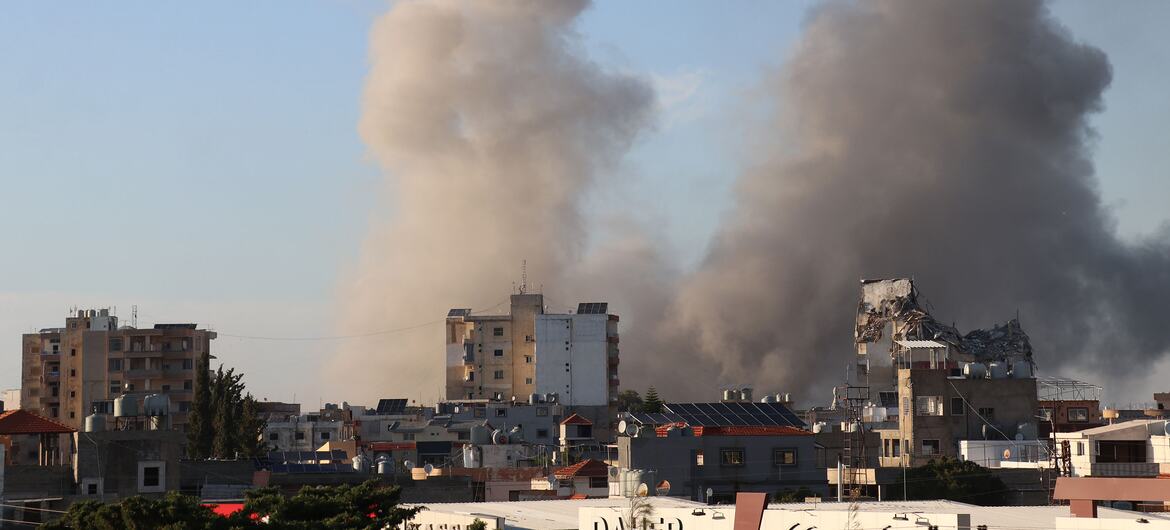
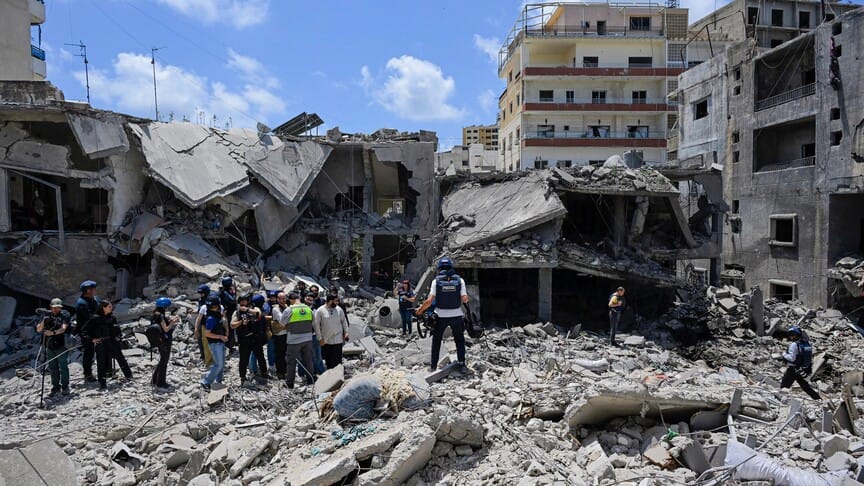
Meanwhile, air raids continue to target the Lebanese capital, Beirut, and its southern suburbs. Residential areas and neighborhoods near Beirut and in the coastal city of Sidon are also being targeted under the pretext of assassinating figures and cadres linked to Iran’s Revolutionary Guard.

On the southern front, the Israeli army has been facing major difficulties in advancing and consolidating its positions since March 2. Hezbollah in Lebanon targeted Israeli troops at dozens of locations.

Ground combat tactics against the Israeli ground maneuver

Hezbollah carried out strikes against concentrations of soldiers and vehicles in different border villages. These attacks were carried out using rockets and artillery shells.

Operations extended beyond the border line, where Hezbollah support units targeted military positions and fixed barracks, as well as newly established sites in Jabal al-Bat and Nimer al-Jamal. Strikes also repeatedly hit the Avivim barracks, as well as Ramot Naftali, Branit, Hounin, Nahal Gershom base, and the Meron Air Surveillance Base.

Both Hezbollah and the Israeli army also carried out psychological and media operations associated with the ground maneuver, including threats, intimidation, low-altitude aircraft flights, and air raids conducted at night or at dawn. Settlers were also used in messaging to suggest that failure to negotiate would expose Lebanon to destruction similar to Gaza, or to incite Lebanese public opinion against a particular sectarian group and the environment that supports confrontation with Israel.

Overall assessment

In summary, the ongoing confrontation since March 2 reveals a gap between Israeli rhetoric and action. Despite statements about deploying three full military divisions, these forces rely heavily on air strikes to flush out Hezbollah fighters positioned inside villages and in the surrounding wooded terrain.

Hezbollah initially responded by targeting troop concentrations with rockets from outside the area south of the Litani River in the early days, and also struck D-9 bulldozers from areas far from the front line, while its special units advanced and seized forward positions. There was also discussion of advances along the Khiam-Marjayoun axis, with the understanding that the advance aimed to encircle the city of Nabatieh in the south and push through the Sahmar axis toward an unspecified town to reach Lake Qaraoun, similar to what Israel did on the Syrian front when it took control of the Yarmouk basin.

A notable development was the use of explosive drones similar to tactics used in Ukraine. On Friday, armed drones were used to strike a rear-area position on the Israeli side. This was considered the second major tactical surprise to enter the battlefield after the previous confrontation in 2024 during the “66-day battle.”

Israeli attacks on Iran and the entry of Iranian missiles targeting Israeli troop concentrations and fortifications around the town of Khiam suggest that the linkage of fronts — from southern Lebanon to Iraq and Iran — indicates that the Khatam al-Anbiya headquarters in Iran is directing a confrontation against Israeli destabilization and US military presence across a theater stretching from the eastern Mediterranean to the Gulf.

The author is the director of the Institute for Strategic and Communication Studies in Lebanon (Isticharia-ISCS). Anadolu

Continue reading
‘They Don’t Know Iran’s Military Lexicon’: First Six Days of The Aggression

By Abdul Bari Atwan


They truly don’t know Iran. By this, I mean the Israelis and the US, and even some Arab leaders, none of whom dared to condemn the aggression. But the aggression entered its sixth day without the regime falling, and/or the new interim leadership rushing to the nearest negotiating table to surrender. The following factors need to be considered.

The battlefields:

First: The downing of an advanced American fighter jet, the F-15, by Iranian missiles in the west of Iran, a firstever development. This suggests the Iranian military leadership may have developed new missiles capable of achieving this feat, or they acquired them from their Chinese and Russian allies, or both, particularly the Russian S-400 and S-500 missile systems.

Second: The entry of Hezbollah’s ballistic missiles into the arena, striking deep inside Israel, specifically Tel Aviv and Haifa, for the first time after 15 months of restraint and the rebuilding of its military arsenal, and/or what was destroyed during the Israeli aggression. This means that no area in the Zionist entity will be safe.

Third: The fiery speech delivered by Sheikh Naim Qassem, Secretary-General of Hezbollah, containing strong unprecedented tone statements most notably: “We will not surrender and we will defend our land, no matter the sacrifices and despite the disparity in capabilities. We will not surrender.”

Fourth: The introduction of the fastest “infiltrating” drone into the Iranian Air Force for the first time. Named “Hadid 110,” it has a speed of 517 km/h and, according to Western military experts, is considered more efficient than its sister drone, “Shahed,” which performed well deep inside Israel. Its production costs only $35,000, while shooting it down costs $4 million.

Fifth: Every day of resistance by the Iranian army and people costs the occupying state approximately $1 billion. As for America, the costs of the war has already nearly spiralled to $160 billion in the first six days. These preliminary estimates are likely to rise, especially after the bombing of aircraft carriers and the destruction of warships, the increasing number of dead and wounded, the largest military buildup since the Iraq War, and the rise in energy prices.

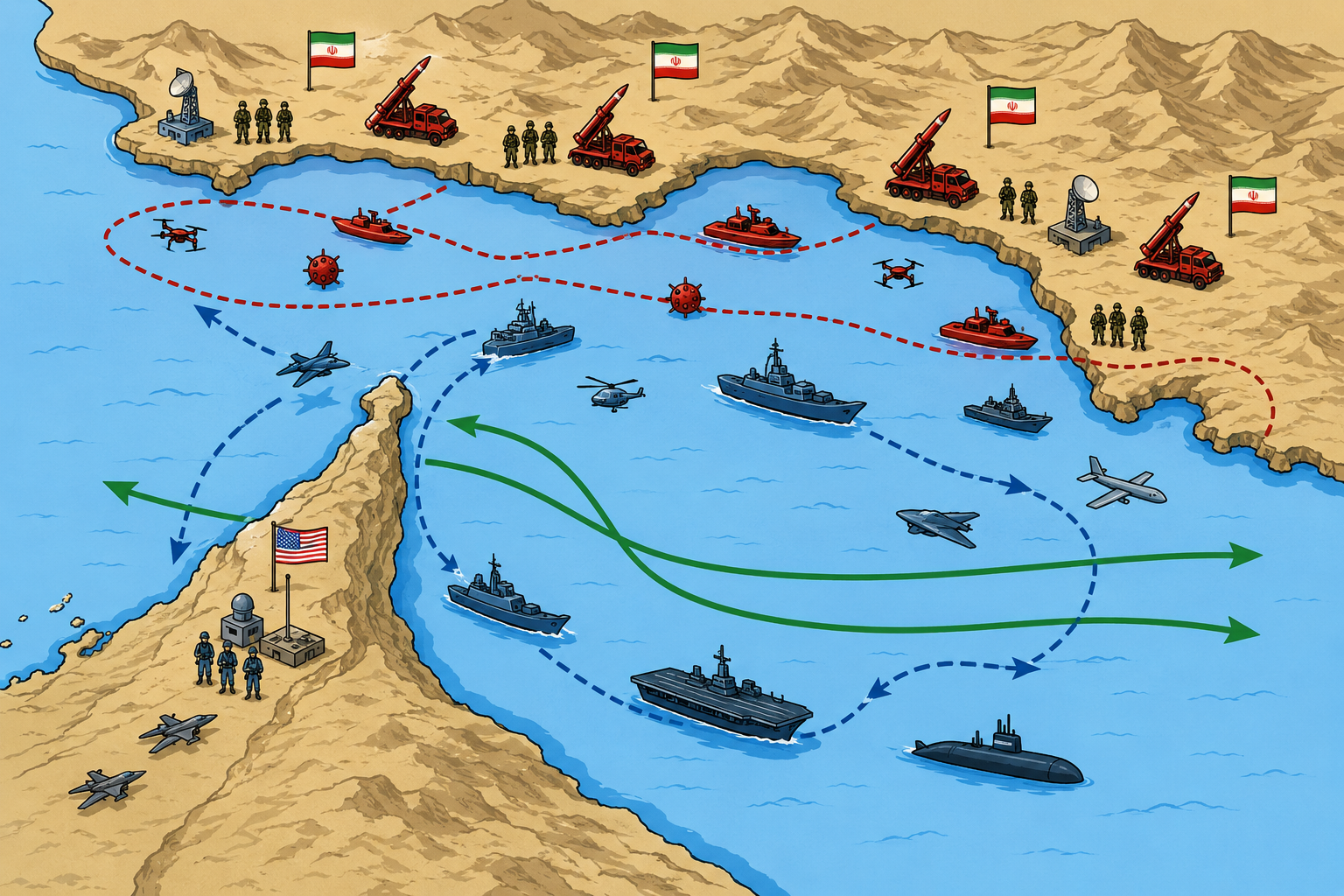
Sixth: The fulfillment of the promise to close the Strait of Hormuz, which means delivering two fatal blows. The first is to the Western economy because oil and gas prices would likely reach record-breaking figures, and the second, for the Arab states who host the US military bases. Closing the Strait means preventing their oil and gas exports from reaching global markets, and the losses will increase while oil and gas revenues decrease depending on the war’s duration and developments.

The Iranians wanted from the outset a regional war of attrition with no end in sight in direct opposite to the new American warefare military doctrine, which aims for short, swift, and clean wars (without American casualties). The Iranians resolved to bomb all those cooperating with the aggression in the region. This new Iranian theory was best and most clearly expressed by Sheikh Naim Qassem when he called on the Israeli army to prepare for many days of fighting with all available means.

Defeat, surrender, and raising the white flag, individually or collectively, have no place in the Iranian military and political lexicon. In the first six days, the Iranian army launched 500 hypersonic missiles with multiple cluster warheads and more than 2,000 drones, resulting in the displacement of more than 7 million settlers to shelters and tunnels, and the destruction of large parts of Tel Aviv and Haifa.

Neither the 47-year-long starvation siege, nor three Israeli-American aggressions within a few years, nor the incitement of popular protests and the planting of spies among the protesters, nor the deployment of aircraft carriers and warships, nor inflation and the collapse of the national currency, succeeded in defeating the mighty and unwavering Iranian will, and consequently, in toppling or changing the regime.

Our proof is they baffled the Americans in negotiations that lasted more than two years in Vienna and in several other Arab and European capitals, and they never conceded. They rejected all American conditions, starting with halting enrichment and handing over 460 kilograms of highly enriched uranium, and even refusing to allow the inclusion of the Iranian missile industry or severing ties with resistance factions on the negotiating table.

Yes, arrogance, conceit, and the unfortunate complicity of some Arabs blinded them to the true nature of Iran, and they will pay a very heavy price, the most prominent feature of which will be the destruction of all Israeli gas infrastructure. In the Mediterranean, water and electricity stations, and the lack of distinction between settler and soldier, many assumptions have changed after the massacre of the children’s school in southern Iran… and time will tell.

This opinion was written in Arabic by the chief editor of Alrai Al Youm Abdul Bari Atwan and translated for crossfirearabia.com

Continue reading