Bint Jbeil: Town of Heroic Resistance

By Mohammad Jaradat

Weaker than a spider’s web. This is a slogan used by the late martyr Sayyed Hassan Nasrallah, from here in Bint Jbeil that represents the crucible of southern Lebanese geography intertwined with a history of resistance from the last century against the French occupation, and the crown jewel of northern Palestine in the face of the British occupation. Here, some of Sheikh Izz ad-Din al-Qassam’s men received their training and ammunition for the battlefield.

The Litani River, with its proud craned neck, peering from its geographical depression into the nearby hills, eastward towards Ainata and southward opposite Maroun al-Ras and Ain Ebel peers in fervor. Here, the Israeli occupation army finally declared its encirclement after 50 days of war and nearly a month of intermittent ground incursions by their two fully equipped divisions.

The 98th Division, with over 15,000 soldiers, advanced from the east, and the 162nd Division, with a similar strength, advanced from the west. The spokesperson of this “army” boasted that the sports stadium had been captured. It was here that the complex of “weaker than a spider’s web” took root in the Israeli psyche, beginning in 2000 with the victory speech by Nasrallah, then general secretary of Hezbollah, delivered in this very stadium. This complex solidified in 2006, becoming deeply ingrained in the Israeli psychological and political landscape and surfacing.

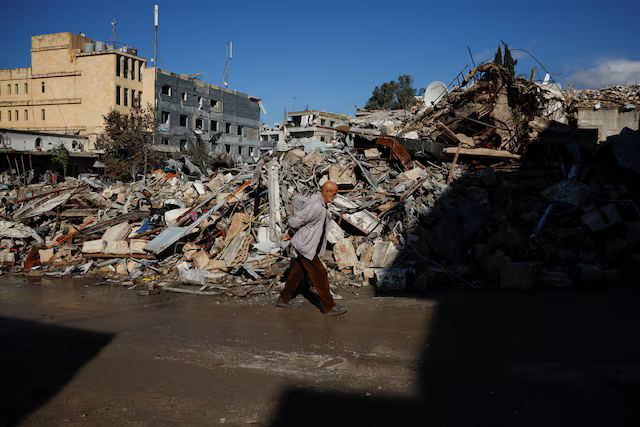
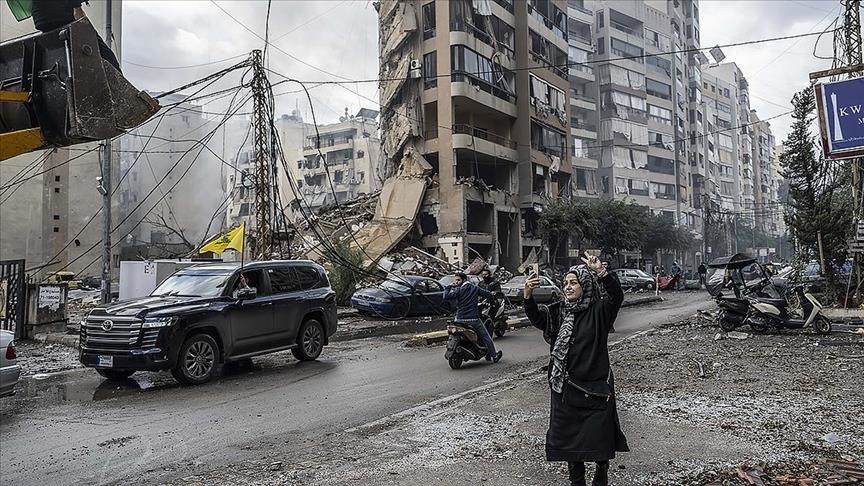
Today Bint Jbeil, a southern town with a population of 25,000 and an area exceeding 10 square kilometers, is besieged. The encirclement is now complete, and the Israeli army intends to storm it, as they did in 2006 for four weeks. Then, Brigadier General Gal Hirsch repeatedly announced its capture in three consecutive false claims. Israeli soldiers attempted a takeover 2024, but Bint Jbeil remained defiant against the invaders, even under the cover of the world’s most powerful air force and accompanied by the most advanced and sophisticated tanks.

Bint Jbeil sits peacefully in its low-lying geographical area, just 3 kilometers from the northern Palestinian border. Only Mount Maroun al-Ras separates it from this border, being fraught with tension and pride. This time the Israeli occupation army traversed its roads, advancing towards the outskirts of Bint Jbeil. Channel 14 of the Israeli entity, albeit through circuitous means, circumvented the military censor’s scissors to reveal the hell of war in Bint Jbeil, where the tank of the commander of Battalion 52 had just been blown up by an anti-tank missile.

The Israeli occupation army is pushing towards Bint Jbeil, fully aware of the symbolic and strategic importance of this town. It is the geographical neck that separates the eastern and western branches of the Litani River. Israel cannot claim to have complete control over the southern Litani without Bint Jbeil. However, its past experiences with the town have been bitter. While it may have studied its reality and learned from those experiences, its people and their resistance have surpassed even the lessons learned and the harshness of the confrontation.

The alleys and lanes of Bint Jbeil bear witness to the footsteps of dozens of resistance fighters and commanders who have fallen within its walls in previous battles. Dozens of Israeli soldiers and commanders have also fallen there. Today, in the Battle of Asif al-Ma’kul (Operation Protective Edge), Bint Jbeil opens its arms not to welcome invaders, but to shelter some of them as prisoners, after the promise made by today’s Secretary-General of the Resistance, Sheikh Naim Qassem. He, a man of action rather than oratory, and he would not have made such a vow unless the men of God, under his guidance, had prepared themselves for the present fight. There are resistance prisoners whom the November 2024 agreement left unfulfilled, and the resistance does not abandon its prisoners in prisons.

A picture of victory.

Through this, Benjamin Netanyahu seeks to market his empty slogans here, even at the cost of dozens of the lives of his soldiers. What he failed to achieve in his aggression against Iran, he now aims to accomplish here in Lebanon, even through direct negotiations with a government that represents only a small minority of subservient individuals. He arrogantly insists on negotiations under fire, hence his insistence that his Chief of Staff, Eyal Zamir, rush to Bint Jbeil, just as Ehud Olmert did previously when he insisted on his Chief of Staff, Dan Halutz, and persisted until some officers, according to Olmert’s later admissions, disobeyed orders and withdrew without permission from some of the areas they had seized in Bint Jbeil, leaving in a worse state than when they had entered.

The concentrated targeting of Bint Jbeil, amidst the rush to resolve the battle, even if only by attempting to stage a photo opportunity in some of its neighborhoods, points to several important aspects, most notably:

First: The quagmire of the Israeli army in southern Lebanon is becoming increasingly entrenched, especially as Israeli political ambitions have begun to outweigh its military achievements on the ground. This is due to the composure of the resistance leadership, its effective management, and its mobile control over key areas in southern Lebanon. It is also due to the pressure of Iranian steadfastness and the interconnectedness of the various fronts, which has driven Netanyahu to seek a preemptive escape by jumping into direct negotiations with the Lebanese government lead by Nawaf Salam in Washington.

Second: This serves to cover up the Israeli-American failure on the Iranian front. This failure, on the one hand, is what prompted the Israeli army to commit Wednesday’s massacres against hundreds of civilians. On the other hand, it indicates the frenzied behavior that gripped Netanyahu after the US agreed to the Iranian condition of halting the aggression against Lebanon, just as it halted the aggression against Iran—a condition that remains a thorn in Israel’s side.

Third: Exploiting the official Lebanese rush towards Israel through direct negotiations—negotiations devoid of any real possibility of agreement. The Lebanese government lacks the necessary realities and is negotiating to secure a ceasefire agreement, separate from any Iranian gains, in exchange for Israel’s insistence on disarming Hezbollah. Hezbollah’s weapons are used to bombard Israeli settlements in northern Palestine day and night, and to destroy invading tanks and vehicles with alarming regularity.

Fourth: Attempting to resolve the stalemate on all fronts south of the Litani River through a decisive battle in Bint Jbeil. This battle is seen as capable of dismantling the entire stalemate. Herein lies the Israeli spirit of adventurism, which might sometimes suit the resistance forces. Israel would not lose much if its gamble failed. However, in the approach of conventional armies, such reckless actions break their backs and cause them to lose their overall balance. This is precisely the situation the occupation army might find itself in if its adventurism backfires on it at the gates of Bint Jbeil or within its shadowy environs.

It is no exaggeration to say that the state of enticement that the Israeli occupation army is pursuing in Bint Jbeil may decide the fate of the aggression against Lebanon as a whole, especially with the insistence of Netanyahu and his war minister Israel Katz and their exertions on the army commanders in the field, at which point continuing to run away since October 7, 2023 will not be of any use.

Mohammad Jaradat is a Palestinian researcher who contributed this article to Al Mayadeen and this article is presented in translation form and reprinted in crossfirearabia.com
Continue reading
Can Joseph Aoun Get Lebanon Out of its Rut?

By Dr Khairi Janbek

We have grown accustomed to Lebanon being in the headlines as a result of blood and destruction, but no longer. Whether due to the weakening of Iran, determination of the international community and/or both, all this appears to be changing.

Lebanon has now officially elected a new president, ending a long period of political crisis that has long left the country without a head of state since the term of former president Michel Aoun expired in late October 2022. After protracted negotiations and intense political maneuvering, not to mention Arab and international pressure, general Aoun, with a tough military reputation who has lead the army since 2017, has become the latest leader of the country.

General Aoun takes office amidst a period of significant economic and social challenges for Lebanon, as the country is grappling with an acute and ongoing financial crisis, soaring rates of unemployment, and the collapse of its currency, in addition to the refugee crisis and deteriorating infrastructure that has left Lebanon hanging by a thread.

In fact to top it all, the powerful sectarian political groups which hindered the election of a president for the past 26 months and more will not likely disappear with the election of general Aoun despite the seemingly robust character of the new leader.

The new 14th Lebanese president in his first address to parliament, vowed to work with all political factions to implement reforms and tackle the pressing economic issues that has long log-jammed the country. His speech was one that had determination and a sense of purpose and appeal with a rallying-cry for all of the fractious political groups of Lebanon.

Having said that, and despite the election in the Lebanese Parliament, the country’s future still remains uncertain with challenges. The new president will need to navigate carefully the deeply entrenched political system which often leads to gridlock and an inability to implement meaningful change.

Additionally, the country’s economy remains in freefall, with millions of Lebanese struggling to afford basic goods and services. Therefore, it is clear the road ahead will be a challenging one to say the least. Logically for many, the focus has already turned to whether the new president can live up to the promise of healing the nation and lead it towards a more stable system.

From the Arab and international perspectives, the messages of support from both seem to be encouraging, but this support will need to be translated into monetary terms for re-building the country. It is said there is the promise of $10 billion earmarked for this effort but frozen on the condition that Lebanon elects a president based.

Now this hurdle has been overcome and passed. At the end of the day as well, General Aoun is seen as the consensus candidate for the Arab countries as well as the international community. In this sense, the release of the re-building funds may look optimistic but there is still the snag of the question of Hezbollah and Israel’s future belligerent intentions towards the country, issues that are still to be ironed out.

The new Lebanese administration needs guarantees from Hezbollah in as much as it needs guarantees from the new Lebanese administration, and the Arab and international community eagerly awaits the results of this dimension because, putting it bluntly, no one wishes to see their investments blown up in another war nor their money burnt in smoke.

All that one can say under the circumstances, is that General Aoun, and he is the fourth president to be chosen from the military establishment, can negotiate with Hezbollah to surrender their heavy weapons to the Lebanese Army while keeping their light weapons; at least for the time being, and stay away from the Litani River as demanded by Israel.

But this will need considerable political dexterity and acumen.

Dr Khairi Janbek is a Jordanian analyst based in Paris

Continue reading
Israel Culprit in Ceasefire Breaking With Lebanon

Israel’s ongoing violations of its ceasefire agreement with Lebanon, despite it coming into effect at dawn on Wednesday 27 November 2024, raise grave concerns.

Israel had violated the ceasefire agreement 18 times in southern Lebanon as of the evening of Thursday 28 November, including conducting an airstrike in the Bisariyeh area of Sidon and shelling border villages with artillery, resulting in the injury of two people in the town of Markaba.

The Israeli army escalated its attacks on Lebanese territory on Sunday 1 December, particularly the towns along the border, increasing the number of Israeli violations of the ceasefire to at least 62.

The Israeli shelling has affected several Lebanese towns, including Yaroun, Aitaroun, Aita al-Shaab, Taybeh, Khiyam, Halta, the Marjeyoun Plain, Kfar Shuba, and Shebaa. In addition, the Israeli army imposed a curfew in the area south of the Litani River from 5:00 p.m. to 7:00 a.m., and established a security cordon stretching from Mansouri in Tre to al-Habariyeh in al-Arqoub.

The Israeli army opened fire on several Lebanese individuals during a funeral procession on Friday 29 November. The procession was for one of the victims in the town, despite the necessary permits from the United Nations Interim Force in Lebanon (UNIFIL) and the Lebanese Army Command being obtained prior to the event.

Additionally, the Israeli army launched artillery shelling and machine gun fire at the town of Aita al-Shaab, as well as the outskirts of the towns of Markaba, Talousa, and Tal Nahas. Israeli tanks also advanced into areas not previously reached during the fighting that occurred before the ceasefire agreement was signed.

The Lebanese Ministry of Health has reported that three people were injured in an Israeli raid targeting a boat in the southern town of Majdal Zoun, an incident coinciding with the launch of an Israeli shell that struck the town of Khiyam. This occurred after the Israeli army shelled the outskirts of the town of Shaqra at dawn, plus fired upon the neighbourhoods of Maroun al-Ras, Bint Jbeil, and the areas surrounding the towns of Bani Hayyan and Markaba from late Friday night into early Saturday morning.

Israeli violations also led to the deaths of two individuals in a drone strike on the town of Rab al-Thalathin, one of the southern villages to which residents were prohibited from returning by the Israeli army. Another individual was injured in a separate strike on the town of al-Bissariyeh, located in the Sidon district, north of the Litani River.

Further, the Israeli army opened fire on members of the Lebanese security forces while they were inspecting the damage in Saraya Bint Jbeil, forcing them to return to the Rmeish police station. An Israeli Merkava tank also crushed several cars and surrounded multiple families in the town of Aitaroun.

The most recent attacks on southern border towns targeted the town of Khiyam, where the Israeli army demolished buildings and homes, dropping three shells on the town and its outskirts. Additionally, artillery was used to shell the outskirts of the towns of Yaroun, Maroun al-Ras, Aitaroun, and Rashaya al-Fakhar, while machine gun fire was also directed at the peripheries of these towns.

Israel’s ongoing violations of the ceasefire agreement in Lebanon represent a serious breach of its legal obligations, including international norms and laws. This unlawful use of force undermines the sovereignty of the Lebanese state. The international community and mediators must fulfill their responsibilities by compelling Israel to abide by international law and ensure the protection of civilians and civilian structures at all times.

EuroMed Human Rights Monitor

Continue reading
Can Lebanon’s Ceasefire Lead to a Gaza Let up?

The cease-fire between Israel and Lebanon is raising questions about whether a similar truce could bring an end to the ongoing Israeli genocide in Gaza.

Statements from around the world have given rise to cautious hope, such as the US saying it aims to use the Lebanon truce “as a catalyst for a potential Gaza cease-fire,” but prospects of something actually materializing remain uncertain.

Palestinian academic Sami Al-Arian believes Israel does not want a cease-fire in Gaza, at least “for the time being.”

“Knowing that (Israeli Prime Minister Benjamin) Netanyahu will be facing prison once the war ends in Gaza, it doesn’t seem like he’s interested in either getting the hostages out or ending this genocidal war,” he told Anadolu.

Israel, he said, has been trying to “annihilate the (Palestinian) resistance” but failed to do so, or “free their captives with military means.”

“They have been trying for 14 months and they have failed miserably,” he said, adding that going for a cease-fire in such conditions would not fit in with Israel’s goals.

Israeli expert Ori Goldberg also finds chances of a truce in Gaza difficult, pointing to Netanyahu’s own statement rejecting that specific possibility.

He said the Israeli premier, now a man wanted by the International Criminal Court (ICC) for war crimes and crimes against humanity, is unlikely to agree to cease-fire terms that risk his political standing.

“Various countries have already stated a renewed commitment to a hostage deal, but a cease-fire in Gaza will have to include a detailed schedule for Israeli withdrawal,” Goldberg said.

“I have trouble seeing Netanyahu agreeing to that in Gaza … If he agrees to it in Gaza, he will seem weaker.”

Another factor, he added, is how much “the Israeli public supports the presence of the Israeli military in Gaza, much more than it does in Lebanon.”

Why did Israel agree to Lebanon cease-fire?

Experts say Israel’s main reason for agreeing to the Lebanon truce was because it failed to achieve its military goals against Hezbollah.

“They wanted to push Hezbollah to the north of the Litani River but that failed. They wanted to disarm Hezbollah, and that failed,” said Al-Arian, adding that Israel opted for a cessation of hostilities because its forces were suffering.

“They wanted to impinge on Lebanese sovereignty and be able to fly over the airspace of Lebanon and control the border. That failed.”

Other goals of returning illegal Israeli settlers to Lebanese lands or creating a buffer zone also failed, he added.

Al-Arian emphasized that the current agreement is “not a cease-fire” but a truce for 60 days, reiterating that Israel’s only reason for agreeing was that “they were not able to bring Hezbollah to its knees and surrender.”

Ali Rizk, a Lebanese security analyst, presented a slightly different view, saying that both Israel and Hezbollah needed the truce.

“Hezbollah needed a cease-fire because it had suffered some heavy blows,” he told Anadolu.

Hezbollah’s supporters, particularly among the Shia community, were targeted by Israel, with many of them being displaced, and there was “immense human suffering with the onset of the winter season,” he added.

For Israel, Rizk believes they “initially had the momentum in their favor, especially after the assassination of Hezbollah’s former leader Syed Hassan Nasrallah, but gradually that momentum appeared to fade away.”

“They encountered some heavy resistance in the south. A lot of their soldiers lost their lives in the south. Hezbollah missile and rocket attacks continued,” he said.

In his own statement, while Netanyahu “didn’t say it, but he was implying that the Israeli military was suffering from some kind of a fatigue,” Rizk pointed out.

The US was another factor, he said, as it never wanted – since October 2023 – the “situation to erupt, to explode in Lebanon.”

“They (US) welcomed any steps and they took the opportunity when they found that these circumstances were appropriate and they sent Amos Hochstein,” said Rizk, referring to Biden’s special envoy.

“There were several factors – Hezbollah’s interests, Israeli interests and US interests – and I think they all converge in the same direction.”

Israeli analyst Goldberg also believes Netanyahu agreed to a truce because his forces were not accomplishing their goals in Lebanon.

“He wants to keep the Israeli military in Gaza. There’s no victory there, so he wanted something that would be a feather in his cap … He agreed to it in Lebanon because these are two sovereign states,” he said.

Will Lebanon cease-fire hold and what comes next?

On the durability of the Lebanon truce, Rizk struck an optimistic tone.

“If you look at what happened in 2006, Resolution 1701, that ended that conflict and it spoke about a cessation of hostilities,” he said, adding that the situation remained calm from 2006 till 2023.

“It’s quite possible that … we could have a long-term calm again … because it’s clear that neither the Israelis nor the Americans have an interest in the situation exploding.”

With Trump coming to power soon, having made clear his aversion to any war or military adventures, it would be fair to say “there is a good chance that this agreement is going to hold,” he added.

Goldberg, however, was more cautious in his outlook.

“I think the cease-fire will hold, even though there are provisions … that suggest that Israel can open fire and use violence whenever it likes. We will see how this happens,” he said.

“I think Netanyahu has an interest in the cease-fire holding because that gives him carte blanche in Gaza.”

Rizk, meanwhile, also believes that a formula could be reached to end the Gaza genocide and go ahead with a hostage deal.

“In July, according to reports, (US President-elect Donald) Trump told Netanyahu that he wants the situation done, and he wants the war to come to an end,” he said.

“If you look at Trump’s appointments and his mandate, it seems that he doesn’t want anything to do with a new conflict in the Middle East. He’s even given indications that he wants to deal with Iran, so that leads me to conclude that his foreign policy priorities are going to be elsewhere, which requires calm in this part of the world.”

Continue reading
The A, B, C to a Ceasefire

A cease-fire agreement between Lebanon and Israel went into force early Wednesday to end over 14 months of fighting between the Israeli army and Hezbollah group.

In a 13-item document obtained from a government meeting on Wednesday, the Lebanese Cabinet reaffirmed its commitment to implementing UN Security Council Resolution 1701 in its entirety.

Resolution 1701, adopted on Aug. 11, 2006, calls for a complete halt to hostilities between Hezbollah and Israel and the establishment of a weapons-free zone between the Blue Line and the Litani River in southern Lebanon, with exceptions for the Lebanese army and the UN peacekeeping mission (UNIFIL).

The cease-fire deal took effect hours after US President Joe Biden said a proposal to end the conflict had been reached, amid hopes it would stop Israeli airstrikes on Lebanese towns and cities and end the year-long cross-border fighting.

Over 3,800 people have been killed in Israeli attacks in Lebanon and over 1 million displaced since last October, according to Lebanese health authorities.

The document seen by Anadolu includes 13 items as follows:

1- Israel and Lebanon will implement a cessation of hostilities beginning at 04:00 hours (IST/EET) on November 27, 2024, in accordance with the commitments detailed below.

2- From 04:00 hours (IST/EET) on November 27, 2024, forward, the Government of Lebanon will prevent Hezbollah and all other armed groups in its territory from carrying out any operations against Israel. In return, Israel will not conduct any offensive military operations against Lebanese targets, including civilian, military, or other state targets, by land, air, or sea.

3- Israel and Lebanon recognize the importance of UNSCR 1701 in achieving lasting peace and security and commit to taking steps towards its full implementation without violations.

4- These commitments do not preclude either Israel or Lebanon from exercising their inherent right to self-defense, consistent with international law.

5- Without prejudice to the United Nations Interim Force in Lebanon (UNIFIL) and its responsibilities, or to commitments in UNSCR 1701 and its predecessor resolutions, Lebanon’s official military and security forces, infrastructure, and weaponry will be the only armed groups, arms, and related materiel deployed in the southern Litani area, as shown in the attached LAF Deployment Plan (hereinafter “the Southern Litani Area”).

6- Consistent with UNSCR 1701 and its predecessor resolutions, and to prevent the reestablishment and rearmament of non-state armed groups in Lebanon, any sales or supply of arms and related materiel into Lebanon will be regulated and controlled by the Government of Lebanon. Additionally, all production of arms and related materiel within Lebanon will be regulated and controlled by the Government of Lebanon.

7- Upon the commencement of the cessation of hostilities (as per paragraph 1), the Government of Lebanon will provide all necessary authorities, including freedom of movement, to Lebanon’s official military and security forces. It will instruct them, consistent with UNSCR 1701 and its predecessor resolutions, to:

a. Monitor and enforce against any unauthorized entry of arms and related materiel into and throughout Lebanon, including through all border crossings, and against the unauthorized production of arms and materiel within Lebanon.

b. Dismantle all unauthorized facilities involved in the production of arms and related materiel in the Southern Litani Area and prevent the establishment of such facilities in the future.

c. Confiscate all unauthorized arms and dismantle unauthorized infrastructure and military positions in the Southern Litani Area.

8- The United States and France intend to work within the Military Technical Committee for Lebanon (MTC4L) to enable and achieve the deployment of 10,000 LAF soldiers to southern Lebanon as soon as possible. They also intend to work with the international community to support the LAF’s capabilities.

9- Upon the cessation of hostilities, and in coordination with UNIFIL, Israel and Lebanon will reformulate and enhance the tripartite mechanism (hereinafter “the Mechanism”), which will be hosted by UNIFIL, chaired by the United States, and include France. The Mechanism will:

a. Monitor, verify, and assist in ensuring enforcement of these commitments.

b. Strengthen the LAF’s capacity to inspect and dismantle unauthorized sites, confiscate weapons, and prevent the presence of unauthorized armed groups.

10- Israel and Lebanon will report any alleged violations to the Mechanism and UNIFIL, without prejudice to their rights to communicate directly with the UN Security Council.

11- Upon cessation of hostilities, Lebanon will deploy its official military and security forces to all borders and regulate all land, air, and sea crossings.

12- Israel will withdraw its forces south of the Blue Line in a phased manner while the LAF deploys in the Southern Litani Area, as detailed in the attached Deployment Plan. This process will be completed within 60 days.

13- Israel and Lebanon request that the United States, in partnership with the United Nations, facilitate indirect negotiations to resolve remaining disputed points along the Blue Line, consistent with UNSCR 1701.

These commitments aim to enable civilians on both sides of the Blue Line to return safely to their homes and lands. The United States and France further intend to lead international efforts to support capacity-building and economic development throughout Lebanon to promote stability and prosperity in the region.”

Continue reading