CrossFireArabia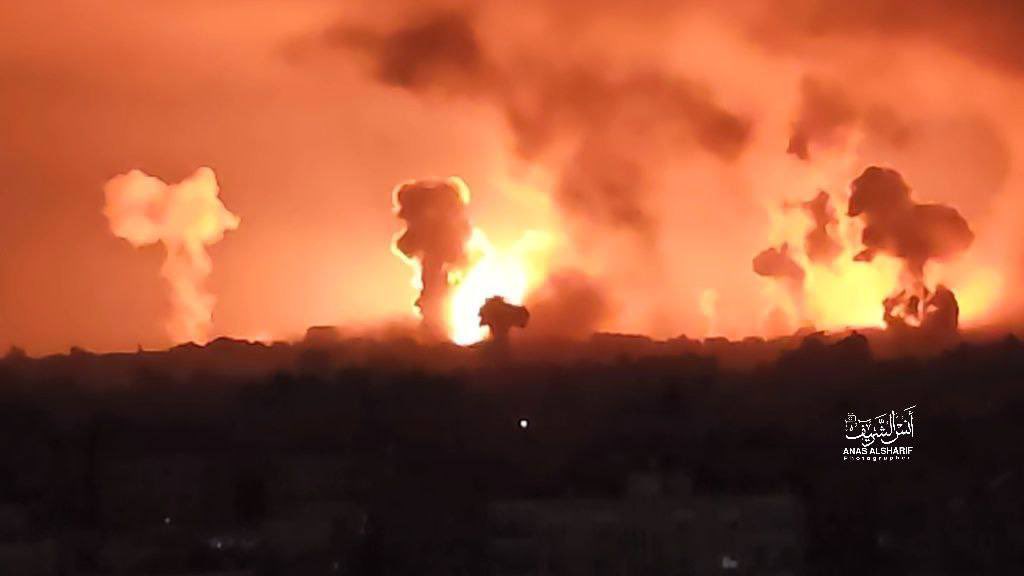
Israel’s deliberate cut-off of electricity to the Gaza Strip for almost a full year now has had catastrophic effects and long-lasting humanitarian repercussions, affecting every aspect of residents’ lives. The subjection of over two million individuals to deplorable living conditions by Israel, including cutting off their electricity, is a tool of its ongoing genocide against the Palestinian people.
Total black-out
Cutting off electricity to a 2.3 million-person population spread over 365 square kilometres for almost a full year is a highly unprecedented measure in the history of conflicts and wars, as it is not only the product of military operations but also a political decision. Israeli officials have clearly stated that their goal is to annihilate the Palestinians in the Gaza Strip.
Israeli Defense Minister Yoav Gallant announced, on 7 October 2023, “a complete siege … no electricity, no water, no food, no fuel. We are fighting human animals, and we act accordingly.” Subsequently, on the same day, Israeli Minister of Energy and Infrastructure Yisrael Katz decided to cut off the Gaza Strip’s electricity supply, and the Minister of Defense decided to prevent the entry of any trucks carrying fuel.
Following these decisions, the 120 megawatt feeder lines from Israel to the Gaza Strip were disrupted on 8 October 2023, and this disruption has continued to the present day. As part of its genocidal war against Palestinians, Israel has also prohibited the entry of fuel into the Strip, shutting down the sole power plant in the enclave. The power plant produced a maximum of 80 megawatts until its fuel stock ran out on 10 October 2023, leaving the Strip completely dark.
Targeting solar panels
Israel did not stop at these two measures to cut off electricity to the Gaza Strip; instead, it launched a concerted campaign over the course of several months to seize alternative energy sources that some residents and service facilities relied on. These attacks targeted solar energy systems and panels installed on building roofs as well as public and private facilities, such as bakeries, hospitals, restaurants, and shopping centres. This suggests that Israel has a deliberate strategy to destroy any source of electricity, even a small amount of it, in order to guarantee total blackout conditions for residents of the Gaza Strip.
Recently, the Israeli occupation army bombed a number of residences, as well as Internet and electricity charging stations, that depend on small solar panels. Dozens of homes were also bombed, apparently for this specific purpose, without any security or military necessity.
Onset crises
Prior to the ongoing genocide, the Gaza Strip had been subjected to an arbitrary and illegal 17-year-long blockade that caused an acute electricity crisis. The shortfall in electricity supply amounted to roughly 60%, and conditions worsened every summer and winter. A daily total of 450 to 500 megawatts is required by the Strip, and this amount increases to 600 megawatts during the winter. Still, the supply was limited to 200 megawatts at most, compelling the local electricity authorities to implement an electricity programme which, under ideal conditions, consisted of eight hours of power followed by eight hours of blackout.
Because of the unpredictable and intentional power outages, the Gaza Strip has experienced multiple debilitating crises, with hospitals and health facilities being forced to close multiple times due to damage to solar energy systems and electricity generators. The situation has been made worse by the lack of fuel and ongoing failure of the surviving generators, attributable to their constant use. Consequently, a number of hospital patients—including infants in incubators, injured individuals, and ventilator-dependent patients—have died, and continue to die, as a result of the power outage disrupting vital medical services. The outage has also caused the disturbance of medical laboratories, impeding the performance of essential tests, and causing supplies and medications to be stored improperly.
Power outage, a weapon of war
The power outage assists in Israel’s use of starvation as a weapon of war, as well. Following the decision to shut off the water supplies to the Gaza Strip during the first days of the Israeli military assault, the power outage also resulted in the cessation or obstruction of desalination plant operations, particularly in northern Gaza, and triggered the now-entrenched practice of using starvation as a means of systematically displacing residents from the northern parts of the Strip.
The lack of fuel and the power outage also made it more difficult for municipal crews to deliver water that they are able to extract from wells. Hundreds of thousands of residents and displaced people have been forced to drink contaminated water during the ongoing genocide, and the per capita share of water in the enclave has dropped by 97% amid the extensive destruction of the Strip’s water infrastructure.
No fuel, no water
In contrast to a daily consumption rate of approximately 84.6 litres per person in 2022, the per capita share of water in the Gaza Strip has dropped to between three and 15 litres per day, according to a joint report released by the Palestinian Central Bureau of Statistics and the Palestinian Water Authority. The report states that approximately 65 sewage pumps and six wastewater treatment plants have shut down as a result of the power outage, resulting in numerous environmental issues and aiding in the spread of epidemics and contamination of the groundwater reservoir. Skin, respiratory, hepatitis, and other infectious diseases have spread as a result. Additionally, the shutdowns have disrupted sanitary landfills and solid waste collection; the rate of waste collection was estimated to be 98% prior to the genocide, and is currently less than 20%.
Due to Israel’s arbitrary blockade and decision to prevent the entry of humanitarian aid and essential materials like fuel into the Gaza Strip, even partial solutions—e.g. the entry of limited quantities of fuel provided by the United Nations to operate generators in some hospitals, water stations, and water wells—remain insufficient and subject to frequent interruptions. This has increased the psychological burden on Palestinians in the Strip and put hundreds of thousands of residents and patients in constant danger.
The Office for the Coordination of Humanitarian Affairs (OCHA) reported on 24 November 2023 that 75,000 litres of fuel entered Gaza from Egypt, following an Israeli decision on 18 November to allow the daily entry of small amounts of fuel for essential humanitarian operations. Notably, the Strip requires about 200,000 litres of fuel on a daily basis.
Eliminating jobs
The power outage has also impacted all other aspects of life, including affecting the few remaining manufacturing jobs; irrigation operations for agricultural lands; damaging dozens of tons of aid that need to be refrigerated; disrupting ongoing attempts at distance learning; and eliminating thousands of remote job opportunities. The outage has resulted in catastrophic damage and the deaths of many residents, with long-term consequences that will last for years to come. Euro-Med Human Rights Monitor emphasises that this situation has resulted in serious psychological scarring to the population, with 10s of thousands of young children growing up without ever seeing electricity.
Studying in the dark
Muhammad Ishaq Al-Ghazi, a researcher pursuing a master’s degree at Gaza’s Al-Azhar University, spoke with the Euro-Med Monitor team. “The power outage has had a significant impact on our lives,” stated Al-Ghazi. “My academic career was affected as a result. I struggled with studying in the dark and had to walk three kilometres to see a friend who had a broken solar panel so I could pass exams.”
“We have returned to primitive life because of the power outage,” Kholoud Najib Al-Habashi, from the northern Gaza Strip, told the Euro-Med Monitor team. Al-Habashi spoke of her time spent baking over a wood fire: “There is no oven, so we are forced to knead by hand and bake on a tray directly over the fire rather than in an electric or gas pot. There is no refrigerator, no washing machine, and no nighttime lighting. Everything is primitive and exhausting.”
Thirteen-year-old Salem Hamid stated, “Since the start of the war, there has been no electricity. Except for Israeli lighting bombs and missile glow, the night descends into total darkness and terror. For hours, I have to gather cardboard and wood, so my mother can bake and cook for us over the fire.”
Returning to primitive life
Many of the hundreds of thousands of Gaza Strip residents who are compelled to light wood fires in place of using cooking gas and electricity to cook and carry out daily tasks have already started to experience respiratory and vision issues that will likely have long-term or permanent effects on their health.
The International Criminal Court issued arrest warrants on 5 March 2024 against two Russian officers suspected of being responsible for airstrikes carried out by Russian forces under their command. These attacks targeted Ukraine’s electrical infrastructure, including several power plants and substations. The Court found that while some of these attacks were directed against civilian targets, others targeted military-grade facilities and inflicted collateral damage on civilians and their property that was obviously disproportionate to the anticipated military advantage.
Accordingly, the Court classified these acts as war crimes under the Rome Statute. The Court further concluded that the airstrikes constituted a “recurring pattern of acts” against civilians in accordance with state policy and that they caused the Ukrainian people great suffering, in accordance with the definition of “inhumane acts”. As a result, the Court also determined that these actions qualified as crimes against humanity under the Rome Statute.
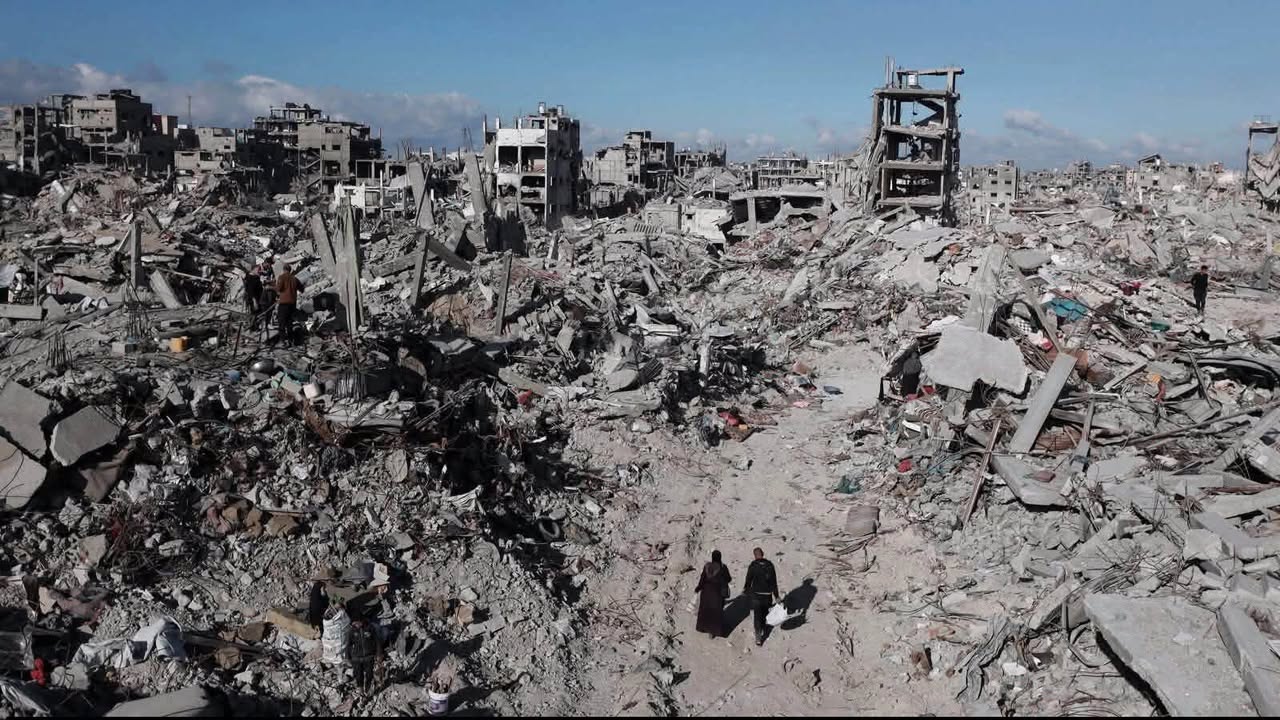
The international community must move to protect Palestinians, just as it has Ukrainians. It must act quickly to end Israel’s illegal blockade of the Gaza Strip; supply it with electricity and maintain these networks of electricity; rebuild other critical infrastructure that the Israeli bombing has destroyed; and guarantee that electricity is delivered to all facilities, starting with water and sanitation services and hospitals. This urgently requires the provision of generators and fuel.
The international community must uphold its obligations under international law to stop Israel from committing genocide against the Palestinian people in the Gaza Strip, a crime that has been ongoing since 7 October 2023. It must use genuine pressure tactics to compel Israel to immediately cease all of its crimes, including genocide, and to abide by international law and the ruling of the International Court of Justice in order to safeguard Palestinian civilians in the Strip from further atrocities.
The International Criminal Court must act quickly to issue arrest warrants for Israeli Prime Minister Benjamin Netanyahu and Defense Minister Yoav Galant; broaden the scope of its investigation into individual criminal responsibility for crimes committed in the Gaza Strip, to include everyone involved; issue warrants for their arrest; hold them accountable; and categorically declare Israel’s ongoing crimes to be genocide.
As part of their international moral and legal obligations, all nations must put an end to all forms of military and financial support of, and political cooperation with, Israel. This includes an immediate stop to all arms sales, exports, and transfers to Israel, including export licenses and military aid.
All nations that cooperate with Israel in committing crimes by providing it with any kind of direct support or assistance (most notably, the United States), must be held accountable. Giving aid and engaging in contractual agreements with Israel relating to the military, intelligence, politics, law, finance, and the media, among other domains that might help its crimes continue, is enabling Israel to commit its atrocities against Palestinians. The relevant employees and decision-makers in these countries must be held accountable, as they are complicit and partners in the Israeli crimes committed in the Gaza Strip, including the crime of genocide.
The international community must move quickly to address the root cause of the 76-year-long suffering and persecution of the Palestinian people, which is the Israeli occupation and settler colonisation of Palestine. It must put an end to Israel’s illegal occupation of the Occupied Palestinian Territory, including the Gaza Strip; abolish the apartheid system that has been imposed on all Palestinians for decades; lift the illegal, 17-year blockade on the Gaza Strip and its inhabitants; and take decisive action to support the path of Palestinian liberation and Palestinians’ right to self-determination.
This article is reprinted from the EuroMed Human Rights Monitor website

 marwan
 Heba
Heba