Jewish Experts: Israel Faces Isolation Over Gaza

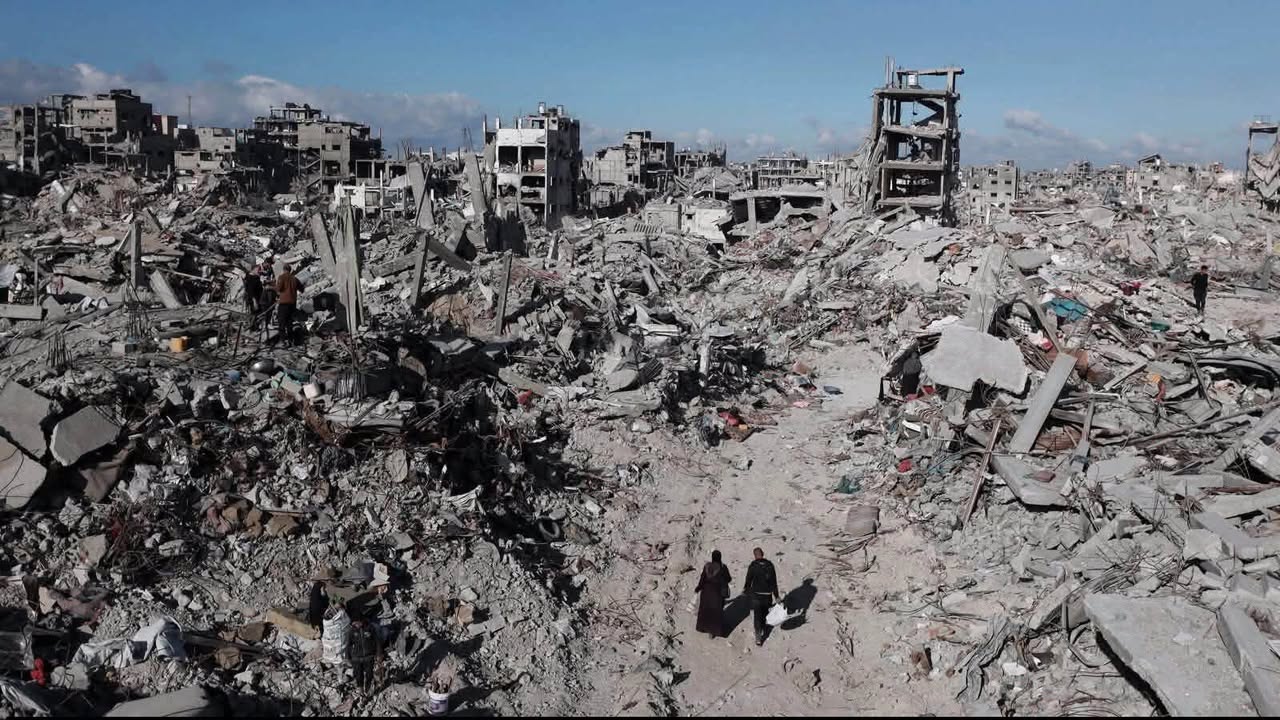
As Israel presses ahead with its nearly two-year-long offensive on Gaza, leading Israeli experts are warning that the country is facing unprecedented diplomatic, political, and societal backlash globally, raising concerns about deepening international isolation.

Prominent former diplomats, academics, and analysts told Anadolu that the ongoing attacks and resulting humanitarian catastrophe in Gaza are driving a surge in global opposition to Israel, including formal recognition of Palestinian statehood by several countries.

Mounting backlash across the globe

International criticism of Israel has intensified in recent months, particularly in response to the humanitarian crisis in Gaza.

Meanwhile, Spain, Norway, Ireland, and Slovenia officially recognized the state of Palestine in 2024.

France will follow suit, with President Emmanuel Macron recently announcing that Paris is set to recognize Palestine in September.

Public backlash has extended beyond governments, with Israeli tourists increasingly being confronted abroad.

In a recent incident, a pro-Palestinian group in Greece prevented a cruise ship carrying Israeli passengers from disembarking on the island of Syros.

Videos circulating on social media show Israeli travelers facing protests and hostility in multiple countries.

‘Recognition by France and Britain will come as shock to Israeli public’

Alon Liel, former charge d’affaires at Israel’s Embassy in Ankara and former secretary of the Foreign Ministry, described the international developments as a turning point.

“A year ago, Spain, Norway, Ireland, and Slovenia did it, but now it came to the point that France is doing it. I welcome it very much. I think it’s extremely important.

“And if Great Britain and Canada and Australia will join, much better, of course,” he told Anadolu.

Liel said that while Israel withdrew ambassadors from countries that recognized Palestine — going so far as to shut its Embassy in Ireland — it would not be able to do the same with major allies like the UK or Canada.

“The important thing is if the public will be noticing it and will be affected by it,” he stressed.

“I think the recognition by France and Britain will come as a shock to the Israeli public because these are two of the five permanent members of the Security Council.

“This can bring things closer to a full membership of Palestine in the UN. Of course, the Americans can veto it, but I don’t know for how long they can veto it.”

He argued that Western governments are recognizing Palestine as a substitute for sanctions against Israel.

“But they don’t have the ability to do it. It’s too risky for them, security-wise, intelligence-wise, economic-wise. So they go for a softer protest to what Israel is doing in Gaza in the form of recognition of Palestine,” Liel said.

Though symbolic, he believes such recognition lifts Palestinian morale and delivers “a blow to the Israeli public.”

“It’s very difficult for us now to travel abroad. Look at Greece. We had tourists that could not embark the ship that they came with.

“We had youngsters in Athens that were beaten. It’s happening now all over the world. So Israelis start realizing that ‘what we do in Gaza is unacceptable internationally. It will cost us in our ability to travel. It will cost us mainly in the future, also in the isolation of the country, and maybe economically’.”

He added that while Israeli strikes on Iran were initially met with international support, that dissipated quickly.

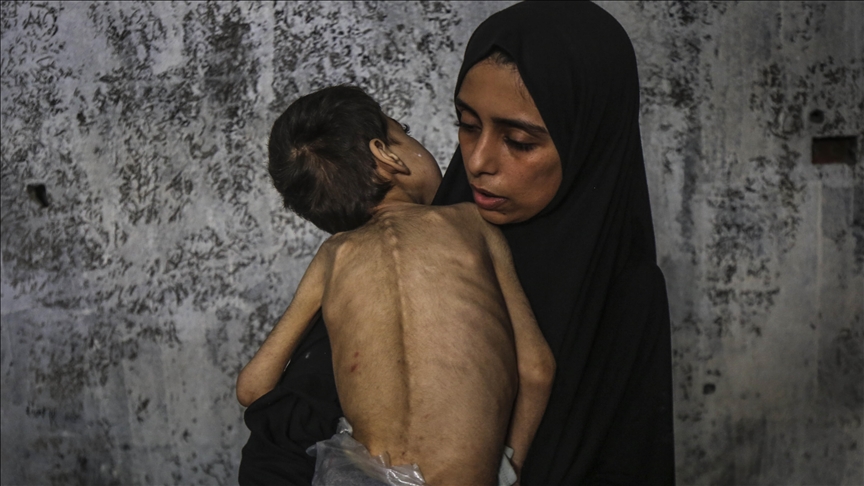
“As long as the war will go on with these pictures of starving children in Gaza, the tsunami will get stronger and Israel will become more isolated.”

“But I think it will end when the US will see that it is paying a price, an international price for backing Israel in the Middle East, in Europe, and the rest of the world. As long as Trump doesn’t feel that he pays a price, he will support us,” Liel warned.

Regarding Syria, Liel said American pressure had curbed Israel’s military activities there and even led to secret talks between Syrian and Israeli officials in France.

‘They don’t hate Israel. They do hate occupation’

Nadav Tamir, a former adviser to late Israeli President Shimon Peres and current director at the US-based liberal Jewish lobbying group J Street, argued that Palestinian statehood would benefit Israel morally and strategically.

He expressed hope that France would push the recognition issue to the UN Security Council.

“I’m convinced Trump not to veto it because I believe that there is a consensus among other 14 members of the Security Council to recognize Palestine if the US will not block it,” he said.

Tamir acknowledged, however, that Israeli retaliation often intensifies when external pressure increases.

“That was kind of the instinct of the right-wing government to show that when we’re being pressured from the outside, we will do counter things that will actually make a Palestinian state less possible.

“There is a clear attempt by this government to push all the Palestinians from Area C (Israeli-occupied territory in West Bank) and to make the Palestinian life in other areas harder and harder.

“So I don’t think that on the ground it will change much because what they’re already doing is bad enough, but it will be more declarative.”

As many as 147 countries already recognize Palestine, but recognition from Security Council powers such as France and the UK, Tamir said, has a far greater impact.

“I think Israel’s international standing is deteriorating every day that the tragedy in Gaza continues and this senseless war continues.

“You see it now from places that we haven’t seen it before, that used to be considered pro-Israel or pro-the Netanyahu government,” he said. “Now, many Israelis will say, oh, the world is antisemitic, the world hates us. I have connections with also people in civil societies in Europe, they don’t hate Israel. They do hate the occupation.”

He said “the criticism over what’s happening in Gaza now, unfortunately, the West Bank doesn’t get much coverage, but there’s also atrocities there. This is the main reason why Israel’s standing is deteriorating.”

Tamir warned that Prime Minister Benjamin Netanyahu is indifferent to international opinion as long as US President Donald Trump supports him.

Government focused only on survival and ideology

Professor Eyal Zisser, vice rector at Tel Aviv University, said there is outsized influence of the US in shaping international responses.

He said the most significant reaction to France’s recognition of Palestine came from Trump, who dismissed the move as it “doesn’t carry any weight.”

Zisser predicted that other Western nations might follow France if Israel’s Gaza offensive, which has already killed more than 59,000 people since October 2023, continues.

“Some more countries might join the French initiative, but once again, it will not change anything on the ground, because Israel is the occupier, it has the control, and the Americans are those who have a real influence over the Israeli policy.”

He warned that Israel’s actions in Gaza are deepening its global isolation.

“It leads to the destruction of the democratic nature of Israel, to the destruction of the state institution, and of course, this lunatic policy also creates many problems,” Zisser said.

“You mentioned the isolation of Israel, the image of Israel, its relation with the world, its relation with Arab countries, but this government is focusing on its political survival and political consideration, also maybe ideological consideration, lunatic ideological consideration of those who motivated it.”

The academic also criticized Israel’s military actions in Syria, saying: “It didn’t help anything. It was not a wise decision to intervene and it was not the right move,” according to Anadolu.

CrossFireArabia

CrossFireArabia
Dr. Marwan Asmar holds a PhD from Leeds University and is a freelance writer specializing on the Middle East. He has worked as a journalist since the early 1990s in Jordan and the Gulf countries, and been widely published, including at Albawaba, Gulf News, Al Ghad, World Press Review and others.

Related Posts

Open War: 1967 Naksa Remembered

Every year on 5 June, Palestinians and Arabs remember the 1967 war, known as the Naksa (Setback).

This is a pivotal turning point in the history of the Palestinian cause. The war ended with the Israeli occupation of the West Bank, including East Jerusalem, and the Gaza Strip, the Syrian Golan Heights and the Egyptian Sinai Peninsula.

This year it is the 59th anniversary of that terrible war. But the Israeli appatitite for aggression continues. Apart from its genocide on Gaza Israel has moved ahead with its settlement construction, arrests, with its military operations in the West Bank are escalating. It reflects the ongoing repercussions of the Naksa and the occupation policies that have entrenched military control and prevented a just settlement to the Palestinian question.

Six-Day War – Decades of Occupation

The war began at dawn on 5 June, 1967, with a massive Israeli air attack targeting Arab airfields and military bases. Six days later, it ended with the occupation of the remaining Palestinian territories, in addition carving up parts of Syria and Egypt.

The war’s consequences didn’t stop at altering geographical borders but also paved the way for an expansionist settlement project based on land confiscation, displacement of residents, and the imposition of new realities on the ground. These acts were in continuous violation of international law and UN resolutions that demanded an end to the occupation and withdrawal from the occupied territories.

International Resolutions: Ink on Paper

The war was followed by a series of international resolutions, most notably UN Security Council Resolution 242, which called for Israel’s withdrawal from the territories it occupied in 1967. However, the occupation continued its settlement expansion and the imposition of a fait accompli, ignoring repeated international demands to end the occupation and the respect for international law.

Over the following decades, settlements transformed from limited projects into a vast network that spread throughout the West Bank and occupied Jerusalem, undermining the prospects for establishing an independent and geographically contiguous Palestinian state.

Displacement and Settlements: Policy Since the 1967 War

The 1967 war led to the displacement of about 300,000 Palestinians from the West Bank and Gaza Strip. Displacement policies, land confiscation, and settlement expansion continued at an escalating pace in the years since.

Palestinian Central Bureau of Statistics data shows of the existence of 645 Israeli settlement sites and military bases in the West Bank as of the end of 2025, including 151 settlements and 350 outposts.

The number of settlers also rose to 778,567 by the end of 2024, while the Israeli occupation authorities continuing to seize Palestinian land and expand their settlement projects, despite their illegality under international law.

Oslo: Political Process Stalled…

The Oslo Accords in 1993 marked a significant political milestone, stipulating a transitional phase to pave the way for the establishment of an independent Palestinian state. However, the continued expansion of Israeli settlements and the imposition of facts on the ground have weakened the prospects for the success of the political process.

With successive Israeli governments, the chances for a settlement gradually diminished, and political negotiations stalled since 2014, amidst Palestinian accusations that Israel is using negotiations as a cover to continue settlement construction and seize more land.

Palestinians believe that successive Israeli policies have emptied the settlement process of its substance by reneging on signed commitments and refusing to implement the political obligations related to ending the occupation and establishing a Palestinian state.

A Military System Governing Every Detail of Palestinian Life

Following the occupation of the Palestinian territories in 1967, Israel imposed a system of military orders that granted it broad control over all aspects of life, from managing land and natural resources to arrests, trials, and civil laws.

The occupation authorities issued dozens of military orders that reshaped the legal system in the occupied territories, while military courts continued to try Palestinians according to procedures that international human rights organizations refuse to consider compliant with international standards of justice.

Prisoner support organizations also confirm that more than one million Palestinians have been arrested since 1967, while approximately 9,500 prisoners and detainees are currently held in Israeli prisons.

War on Gaza: An Extension of a Long Conflict

Palestinians believe that the ongoing war on the Gaza Strip, which began in October 2013, represents an extension of the occupation’s policies based on the use of military force and the imposition of facts on the ground by force, far removed from any political solutions that would end the conflict.

The war resulted in tens of thousands of martyrs and wounded, most of them women and children, in addition to thousands missing and widespread destruction of infrastructure and civilian facilities.

In the West Bank, raids, arrests, and settlement expansion continued, leading to the martyrdom of 1,168 Palestinians, injury of 12,666 others, the arrest of approximately 23,000, and the displacement of 33,000.

The Naksa Anniversary: ​​A Reality Persisting for 59 Years

Fifty-nine years after the June 1967 war, the effects of the Naksa remain present in the Palestinian landscape, through the continuation of the occupation, settlement activity, land confiscation, displacement of residents, and the stalled political settlement process.

As the anniversary is commemorated this year amidst the war in Gaza and the escalation of violence in the West Bank, Palestinians emphasize that the core of the conflict remains linked to the ongoing occupation and Israel’s refusal to implement international resolutions and fulfill its obligations. This has kept the Palestinian cause open to further crises and tensions over the past decades. Palestinian Information Center

Continue reading
Stories From Hell: Food at Gun-point

Doctors Without Borders/Médecins Sans Frontières (MSF) continues to treat scores of patients suffering from life-changing injuries, chronic pain, and psychological trauma sustained while attempting to access food assistance from US-backed, so-called Gaza Humanitarian Foundation (GHF) sites. This militarized food distribution scheme launched one year ago but only ran for six months before being forced to stop after significant controversy and criticism.

The GHF, which replaced a 400-site UN-coordinated aid distribution system, was run by Israel with financial support from the United States and other allies. GHF sites became operational on May 26, 2025, and were “secured” by private American armed contractors, with Israeli forces maintaining control over the wider perimeter.

US-backed aid distribution points are sites of orchestrated killing

Read more

Violence occurring at and related to GHF’s four distribution points led to deaths and injuries for thousands of people who were desperately seeking food during Israel’s months-long total blockade.

An MSF staff member checks Saad's patient file at Al-Mawasi primary health care center. Saad has to wear an external fixator after he was injured during a GHF food distribution in 2025.
At Al-Mawasi primary health care center, an MSF staff member greets Saad, who has to wear an external fixator after he was injured during a GHF food distribution in 2025. Palestine 2026 © Nour Alsaqqa/MSF

The legacy of the GHF is widespread violence against hungry people

“As MSF has documented with medical evidence, people who were seeking food in desperate and siege-like conditions suffered horrendous levels of targeted and indiscriminate violence,” said Joan Tubau, MSF head of mission for the Occupied Palestinian Territory.

“Children were shot in the chest while reaching for food, people were crushed or suffocated in stampedes, and entire crowds were gunned down at distribution points. Today, many GHF-related patients are entirely dependent on charity and community kitchens due to their mobility issues and lack of ability to work and provide for their families.”

People who were seeking food in desperate and siege-like conditions suffered horrendous levels of targeted and indiscriminate violence.Joan Tubau, MSF head of mission for the Occupied Palestinian Territory

Between June and October 2025, MSF teams recorded at least 32 deaths and treated 1,885 patients for injuries linked to the GHF sites at MSF’s Al-Attar and Al-Mawasi primary health care centers in Khan Younis.

Neama Awad

“Even if it meant death, I had to go bring food”

I am from Miraj, originally from Rafah. Everything was destroyed. The occupation came near us. They were shooting at our children and here too we are displaced. I only wish to return home. Honestly, my situation is very bad. I am sick, and my husband is sick.

I went looking for a loaf of bread. I went walking as I don’t even have one shekel for transportation. One day people came and said, ‘Go to the aid point in Al-Tina to get food.’ I said I would go. I wanted to bring food for my children. There was no food, nothing. We became skin and bones. I went to the aid distribution because we had no support at home — no flour, no food, no aid reaching us, not even a loaf of bread.

View moreA Palestinian woman injured at a GHF site in Gaza.

Palestine 2026 © Nour Alsaqqa/MSF

Patients recount horrific scenes

“My friend was executed in front of my eyes,” said Karim, a former barber who suffered life-changing injuries permanently damaging a nerve in his leg. “It still haunts me. Both of us were caught and handcuffed [by Israeli soldiers] behind our backs. A drone hovered above me, and four men were asked to take me away.”

Mustafa, a taxi driver from Rafah, developed a heel infection that caused rotting after a gunshot wound broke two of his bones as he was trying to access food. His 17-year-old nephew was shot in the head and killed by a sniper.

“[It] was so humiliating,” Mustapha said. “Thousands of people would run towards [the food], then the IDF would shoot on us from fixed points. Two thirds of the injured people in Gaza I know were cases from GHF.”

Saad Hussein, MSF patient

“Hunger: That is what made us go”

I am from southern Rafah. Neither our grandfather nor the many displaced people before us lived through this. So many homes were destroyed. Everyone was displaced. We were living in the Iqlimi area, but with the famine and everything that was happening, we were forced to leave. We have children, pregnant women, and breastfeeding mothers. We had to take whatever we could because nothing was available. We were forced to go to the American aid distribution points.

We had no clean food, no clean clothes, no clean bathrooms. Nothing was clean. We did not eat breakfast, lunch, or dinner. We would bring lentils from the community kitchen and survive on them until the next day. My mother, my brothers, my brother’s six orphaned children, my brother’s wife, me, my mother, and my father. God is with us and with them.

View morePortrait of Saad Hussein. Saad was injured in 2025 during a food distribution by the Gaza Humanitarian Foundation.

Palestine 2026 © Nour Alsaqqa/MSF

The opposite of humanitarian work

The GHF also played a key role in the malnutrition crisis manufactured by Israel. The drastic reduction of food and aid distribution points compounded by the total siege, intensified violence, mass displacement, and destruction of health facilities had a direct role in the famine declared in mid-2025, with devastating consequences on vulnerable groups such as pregnant women, newborns, and children.

“Nothing about GHF was a humanitarian solution,” Tubau said. “One year on, the magnitude of the harm inflicted on people at GHF distribution points without any accountability requires an independent investigation. Israel has an obligation to ensure unhindered humanitarian access and condemns aid models, including the GHF, that fail to alleviate suffering.”

My friend was executed in front of my eyes. It still haunts me. Both of us were caught and handcuffed [by Israeli soldiers] behind our backs.Karim, MSF patient

This militarized system of aid delivery resulted in significant harm and suffering and should never be replicated. Israel, the US, and all actors of influence to ensure that aid is non-militarized, accessible, and built on independence, impartiality, neutrality, and humanity. Civilians must be able to safely reach humanitarian assistance — based on vulnerability and need — wherever they choose to reside, and at scale.

*Names of patients have been changed for their safety.

MSF

Continue reading

You Missed

Israeli Settlers Carry Out 1,659 Attacks in May

Israeli Settlers Carry Out 1,659 Attacks in May

Israel Soldiers Shoot, Kill Baby in Hebron

  • By marwan
  • June 6, 2026
  • 20 views
Israel Soldiers Shoot, Kill Baby in Hebron

59 Years of Israeli Occupation…

59 Years of Israeli Occupation…

Memorizing The 1967 War Defeat!

Memorizing The 1967 War Defeat!

Open War: 1967 Naksa Remembered

Open War: 1967 Naksa Remembered

Israeli Soldiers: ‘…We Had to Kill Arabs’

Israeli Soldiers: ‘…We Had to Kill Arabs’