Mideast on War Footing: Is US Strike on Iran Coming?

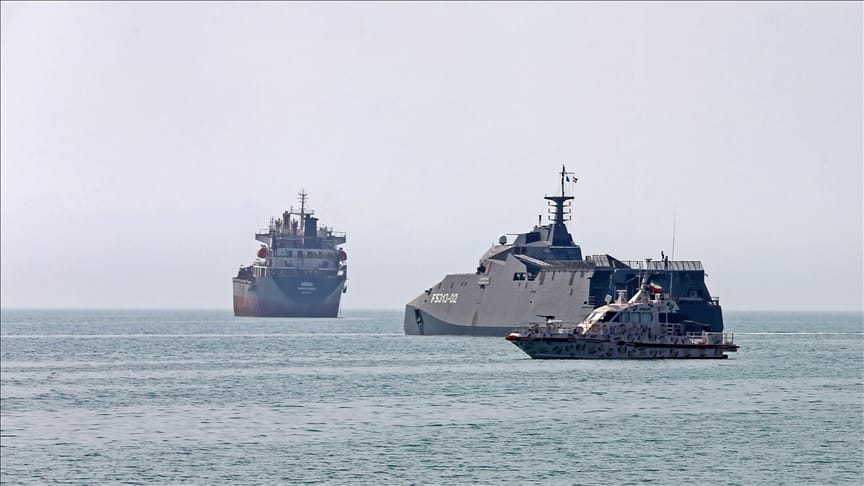
As US military assets continue to move into the Middle East, analysts warn that Washington is edging closer to a possible confrontation with Iran, weighing options that range from intensified economic pressure and a naval blockade to direct military action.

Recent developments have heightened fears that a US-led escalation could be imminent.

“It’s looking increasingly likely that with this buildup of military assets, President Donald Trump – and probably the Israelis – are preparing for a military escalation against the Iranians,” Ryan Bohl, a senior Middle East and North Africa analyst at the RANE Network, told Anadolu.

On Wednesday, Trump wrote on his social media platform Truth Social that a “massive armada” was heading toward Iran, expressing hope that Tehran would “come to the table” and negotiate with Washington. He warned that the fleet was prepared to “rapidly fulfill its mission with speed and violence, if necessary.”

Trump said the deployment was larger than the one previously sent toward Venezuela and confirmed that it is led by the USS Abraham Lincoln, one of the world’s largest aircraft carriers, which hosts electronic-warfare aircraft capable of disrupting Iranian radar systems.

The New York Times reported that the carrier strike group is accompanied by three warships equipped with Tomahawk cruise missiles, capable of long-range precision strikes. The US has also reportedly deployed around a dozen additional F-15E attack planes, along with Patriot and THAAD air-defense systems to protect against potential Iranian retaliation.

Steffan Watkins, a consultant specializing in tracking military ships and aircraft, said the US is also shipping supplies and deploying additional surveillance aircraft. “Preparations for operations targeting Iran appear to be underway,” he wrote Thursday on the American social media platform X.

“Time is running out,” Trump warned Iran, threatening that any future attack “will be far worse” than last year’s US strikes on Iranian nuclear facilities.

Although the rhetoric comes in the wake of Iran’s crackdown on protests, Bohl said Washington’s broader objective appears to be forcing changes in Iran’s foreign and security policies.

The goal is to see “if they can get Iran’s government to change its foreign policies, to give up on its missile program and its nuclear energy program,” he said.

Limited and targeted strikes

Analysts say one of the most likely military options under consideration is a campaign of limited, precision strikes targeting Iran’s military, missile and nuclear infrastructure.

“They could go after the missile program again – strike drones and missiles and manufacturing. They can try to destroy launchers, remains of Iran’s air force, some infrastructure related to the military-industrial complex,” Bohl told Anadolu.

During the 12-day war with Israel last June, the US struck three major Iranian nuclear facilities – Fordo, Natanz and Isfahan – using bunker-buster bombs, claiming the attacks crippled Iran’s nuclear program.

Bohl said it remains unclear whether Washington would allow Israel to initiate a new round of strikes or whether a joint US-Israeli campaign would unfold.

Another option, he added, would involve phased strikes rather than a single, overwhelming attack.

“We could be seeing a version of what we saw in Iraq back in the 1990s, where the US would strike Iraq, wait to see if that would create a concession process for the Iraqis and then strike again to try to again shift the Iraqis’ behavior,” he said. “And that could take weeks, even months to unfold.”

Blockade and attacks on infrastructure

Experts also suggested that the US might try to impose naval and aerial blockade on Iran.

“Imposing a new blockade on the Iranians and trying to seize their tankers like they did in Venezuela is escalatory,” Bohl said.

He added that Washington could also attempt to restrict Iranian airspace, limiting civilian flights in a bid to inflict economic damage.

“They could enhance their cyber campaign to try to cripple Iran’s infrastructure, particularly during this time where there’s still a lingering protest movement after those major crackdowns earlier this month,” he said. “So, disrupting infrastructure would also be a choice.”

The USS Abraham Lincoln Carrier Strike Group could also be used to intercept Iranian oil tankers leaving the Persian Gulf, he added.

However, Scott Lucas, a professor of international politics at the Clinton Institute at University College Dublin, cautioned that a blockade and seizure of Iranian vessels could be challenging.

“I think it would be very risky for the US to do what it’s done with Venezuela, which is to seize Iranian oil tankers,” he said.

“I think the prospect of that setting off a regional crisis is much greater, especially since Iran has the capacity to close off the Strait of Hormuz, and about 20% of the world’s oil supply goes through that waterway.”

Broad escalation and strikes on leadership

Analysts also warned that Washington could opt for a broader military campaign aimed at severely degrading Iran’s leadership and command structure.

“We are seeing reports that President Trump wants something ‘decisive,’ which is more of a major campaign to probably attack as many targets as possible and increasingly consider assassinations of top Revolutionary Guards and even some of the leadership like Supreme Leader Ali Khamenei,” said Bohl.

Such an approach could include attacks on senior commanders within the Islamic Revolutionary Guard Corps, political leadership nodes, and command-and-control infrastructure, analysts said.

Experts warned that efforts aimed at full regime change would almost certainly provoke retaliation against US forces and allies across the Middle East.

Bohl added that Trump believes Iran’s deterrence has comprehensively failed, as their missiles and drones have not stopped previous attacks.

“He (Trump) may believe that Iran isn’t able to carry out those sorts of comprehensive strikes on energy infrastructure,” he said. “That would encourage him to go on into a larger and more substantial campaign.”

Targeted assassinations and covert operations

A more limited alternative would involve targeted assassinations and covert operations rather than an overt large-scale war.

While analysts largely rule out a full US ground invasion of Iran, Bohl said Trump has demonstrated a preference for deploying special forces on high-risk missions.

“President Trump ran on a platform of avoiding another Iraq war, but he is very commando-happy and he likes to use his special forces,” said Bohl.

Such operations could include the destruction of high-value military targets or the assassination of individuals linked to Iran’s missile, drone or nuclear programs, analysts said.

“They have targeted Iranian leaders in the past. They assassinated the leader of the Quds Force … Gen. Qasem Soleimani at the start of 2020,” Lucas explained.

Bohl also pointed to US actions in Venezuela and North Korea as examples of attempts to apply pressure through targeted operations rather than regime-wide campaigns.

However, Bohl said that a repeat of Venezuela, where Washington reaches an understanding with the regime and takes out key leaders, does not appear to be a “viable option” in the case of Iran.

More economic pressure

Iran’s economy continues to be heavily constrained by sanctions. Earlier this month, the US announced an additional 25% tariff on countries trading with Tehran and imposed new sanctions on vessels and companies accused of transporting Iranian oil.

Bohl said Washington may seek to further destabilize Iran economically in hopes of forcing it back to negotiations.

The idea is to crack Iran’s politics by causing more economic damage and pushing them toward what are essentially surrender terms, he said.

Iran is already grappling with a severe economic crisis, marked by the rapid devaluation of the rial, which helped trigger nationwide protests late last December.

Lucas, however, argued that additional sanctions may have limited effect without broad international support.

“I think the Trump folks can bluster a bit, but they really can only tighten sanctions if they have international action on the sanctions,” he said, adding that countries such as Russia and China are unlikely to support further pressure.


What comes next

Analysts said several indicators could signal whether the US is moving closer to escalation.

Bohl said warning signs include commercial airlines avoiding Iranian airspace, the evacuation of foreign embassies, travel advisories urging civilians to leave Iran, and Israeli authorities placing the population on heightened alert.

He added that the arrival of the USS Abraham Lincoln in the US Central Command area of responsibility significantly shortens the timeline for potential action.

Given that Iran has already been struck in previous confrontations and that tensions remain extremely high, any move could rapidly spiral.

“Because it is kind of an undeclared war between the two sides already, it could really turn on a dime and begin sudden escalation,” Bohl warned.

CrossFireArabia

CrossFireArabia
Dr. Marwan Asmar holds a PhD from Leeds University and is a freelance writer specializing on the Middle East. He has worked as a journalist since the early 1990s in Jordan and the Gulf countries, and been widely published, including at Albawaba, Gulf News, Al Ghad, World Press Review and others.

Related Posts

Hormuz: Mines, Strategy or Business?

By Ismail Al Sharif

The US thought that assassinating senior Iranian leaders would bring down the regime, but this did not happen.

Iran’s inability to match American military and technological superiority led it to adopt a number of strategies, most notably what is known in the military literature as the Mosaic Defense Doctrine. This doctrine is based on dismantling its military central command into small, independent units, each operating autonomously and making its own decisions without consulting the higher command.

From Day 1 of the war, Iran adopted this approach. However, the lack of coordination and the disintegration of the military hierarchy led to chaos and confusion which affected the management of its operations. The situation became contradictory; the politicians were declaring one thing and military commanders acting in a completely different manner and direction.

This was reflected on the ground through extremely dangerous behavior. Military units, using small boats, indiscriminately laid naval mines to deter enemy ships. However, the lack of coordination here backfired resulting in the Iranian navy officers losing their ability to pinpoint the coordinates of the mines they planted in the Hormuz Strait with no accurate maps or reliable records. Some of these mines may have been completely displaced by the currents of the sea. This was further complicated by the fact that these mines were not primitive but far from it; they were sophisticated and able to detect sound and pressure, and thus able to track the passage of large ships and submarines, and detonate automatically upon approach.

However, mine removal is not easy task, as history shows. Even today, news reports continue to surface of mines in various parts of the Kingdom, half a century after the last war. Indeed, mines from World War II are still being discovered on land and at sea.

Even with Britain’s pledge to remove mines after the war, and despite possessing the latest specialized technologies in this field, the task remains arduous, protracted, and uncertain. The specter of a sudden explosion looms, reminding us that the danger of mines is not easily eliminated.

But the decisive factor in weakening navigation in the Hormuz Strait is not primarily military, but rather material. Commercial ships are massive investments, with some vessels valued at around $150 million and their cargoes potentially worth hundreds of millions of dollars. Therefore, a single mine explosion can cause catastrophic losses to both the ship and its cargo. Consequently, no ship sails without insurance; ports, banks, and shipping companies refuse to deal with uninsured vessels, and without insurance, global shipping grinds to a halt.

Herein lies the real surprise: the fate of the Strait is no longer dependent on Iran’s pronouncements regarding its opening or closure, but has effectively fallen into the hands of insurance companies. With the escalating risks, insurance costs have skyrocketed; “war risk” premiums have jumped from approximately 0.25% of the ship’s value to nearly 1% or more, exceeding a massive $1 million per voyage. And it doesnt stop there; seven major insurance companies announced their complete withdrawal, issuing notices of coverage cancellation just within just 72 hours.

And here comes the decisive turning point: Once the insurance coverage is lost, maritime traffic ground to a halt. During this 39-war, ships have effectively ceased sailing with the number of vessels transiting the Strait plummeting by more than 80%. Around 150 oil tankers remain anchored offshore, and major shipping companies suspended their operations, as if this vital artery of global trade had been frozen by a financial, rather than a military decision.

The US government attempted to provide alternative insurance coverage, but this effort failed and US President Trump’s pronouncements regarding mine removal were inconsistent with the reality.

The issue of reopening the Strait has once again become a prominent topic, but the deeper truth is that its fate is no longer determined by political statements or military actions, but rather by the decisions of insurance experts. Even if the war were to end immediately, ships would not resume sailing right away. Insurance companies need time to reassess the level of risk, and they base their decisions not on political logic, but on cold, hard numbers and rigorous data.

This article was originally published in Arabic in Addustour daily newspaper and republished in English in crossfirearabia.com.

Continue reading
Analysis: Middle East in Iranian Eyes

CROSSFIREARABIA – During the Israeli Genocide on Gaza Benjamin Netanyahu used to stand up and say with a smirk: ‘We are changing the face of the Middle East’.

Upbeat about murdering the women and children of Gaza from the late 2023 onwards, he was talking about the further normalization of the Arab world as established by the Abraham Accords, establish an economic order under Israel’s hegemony and end Hamas, Hezbollah and Houthis while clipping the wings of Iran.

Of course, Netanyahu’s face soon changed, albeit two-and-a-half years later, when Iran and Hezbollah were forced into a war generated by Israel and the USA on 29 February, 2026. While Iran got a battering, in the next 39 days, US ships and military bases in the Gulf and Jordan received such a hammering that soon forced US President Donald Trump to plead for a ceasefire.

In this war, Israel received a great shock, being attacked literally on an hourly and daily basis with its buildings, military basis and infrastructure taking directs hits while its millions of people living in underground shelters around-the-clock. 

To use a metaphor Tel Aviv’s nose was being rubbed in the sand in a way that has never been imagined by Netanyahu nor his ilk of extremist right wing fascist politicians who started calling for the expulsion of Gaza Palestinians from their homeland ever since the Israeli genocide on them since 7 October, 2023. 

Today’s Netanyahu’s vision of a new Middle East has been drastically changed, thrown in his face in fact! Iran’s political stances and its missiles have changed things around. The US and Israel were not able to change the current Iranian government in Iran despite killing the country’s spiritual leader Ali Khameini, have not ended the country’s nuclear program nor ended its ballistic missiles. 

So what is Netanyahu talking about? Yes, today there is clearly a new Middle East emerging but it is not according to Netanyahu’s eyes nor his wishful thinking. If anybody should be ‘celebrating’ it is clearly Iran, it’s government, revolutionary guard, its Generals, officers and soldiers who are very probably changing the face of the Middle East and may even be setting the map of how the region should look like in form from now on. 

From day one of the war, Trump started running scared despite his outlandish mutterings! He came to realize quickly that Netanyahu and the Mossad pushed him against Iran, convincing him it would be an easy fight and the government there would fall like a pack of cards. Trump since, started kicking himself as he finally fell to Netanyahu’s squinted prism to go after that country. Netanyahu kept pushing for this wild step since the 1990s through previous US presidents from Bill Clinton, George W Bush, Barack Obama and Joe Biden.

But they did not listen to him however, Trump fell into the trap and maybe this is why he is now privately kicking himself because he basically sent the globe into an economic tailspin and soaring exorbitant oil prices, a potentially deep recession and financial chaos.

In this war Netanyahu may have shot himself in the foot. His alliance with the USA  juxtaposed by Hezbollah whose fighters laid dormant since November 2024 when it stopped firing at Tel Aviv was a big surprise to the latter. Israel had previously thought that Hezbollah agreed to a ceasefire out of weakness and thus their entry into military action was unexpected. Hezbollah kept the military pressure on for six more days after Washington signed off with Iran and beating the Israeli army into submission.

On day 46 Trump intervened calling on the Israeli army to stop fighting Hezbollah. He had ulterior motive, he wanted to extract a normalization agreement between the Lebanese government and Israel; their ambassadors had just started meeting in Washington at the invitation of the US State Department in an upbeat atmosphere and inline for a final agreement to establish an accord between Tel Aviv and Beirut alongside the ones signed between Israel and four Arab states, the UAE, Bahrain, Sudan and Morocco starting September 2020. 

Thus a normalization agreement would be a feather in Trump’s cap, a sort of prestige move for the US president. But his pressure may have been seen as a life-saving formula. Trump was saving Israel from Netanyahu’s insistence that his army to keep fighting in southern Lebanon. Its fight has already cost Israel at least 13 soldiers who were killed, more than 500 injured and more than 100 topnotch Merkava tanks destroyed. Israeli towns and cities were being hammered from the north.

Israel was being beaten from the north. Its towns, cities and military bases again were wide-open to incoming rockets from Lebanon and were not being deflected. It was a war that had to be stopped. This time Trump insisted. If a ceasefire with Iran was going to stick, then Netanyahu had to be forced to make his soldiers stop their fight in Lebanon. 

Thus for the time being Netanyahu’s hand lie in check. Yet in the long run his dream for a new Middle East with Israel playing a central part in it may have been halted. After all, no Gulf or even Arab states now would think of normalizing with Israel despite the fact that Lebanon is being forced into it, but even for then its early days.

Netanyahu can kiss goodbye his long-life attempt to sign a normalization accord with Saudi Arabia for instance, a kingdom which is seen as a “major puller” in the Arab and Muslim world. It has already said that normalization is off the table with Israel. The Gulf has been disappointed in this war because it showed that America were not able to protect them from Iranian missiles that targeted their infrastructure as well the US military bases strewn across the region.

Netanyahu has lost on the economic level as well. His country stands economically devastated, army in ruins as admitted to by the Israeli chief of staff Eyal Zamir, and the dream of opening an ‘economic Middle East’ is definitely dashed for the time being.

America, as Trump knows, is left to pick up the pieces of a tattered world caused by war any choas in a region that is vital to the global system.

Continue reading

You Missed

Trump: Tunes, Ceasefire and Hormuz

Trump: Tunes, Ceasefire and Hormuz

Israeli Looters in Lebanon

  • By marwan
  • April 23, 2026
  • 17 views

Ayat, Qamar Bid Farwell to Their Martyr Dad

Ayat, Qamar Bid Farwell to Their Martyr Dad

‘We Killed Our Own Then Blamed Hamas’

‘We Killed Our Own Then Blamed Hamas’

An Unholy War!

An Unholy War!

‘Journalist Khalil Trapped Under Rubble Left to Die’

‘Journalist Khalil Trapped Under Rubble Left to Die’