IRGC: US, Israeli Universities Legitimate Targets

Iran’s Islamic Revolutionary Guard Corps (IRGC) Sunday warned that US- and Israeli-linked universities in the region are now “legitimate targets” in retaliation for attacks on Iranian educational facilities.

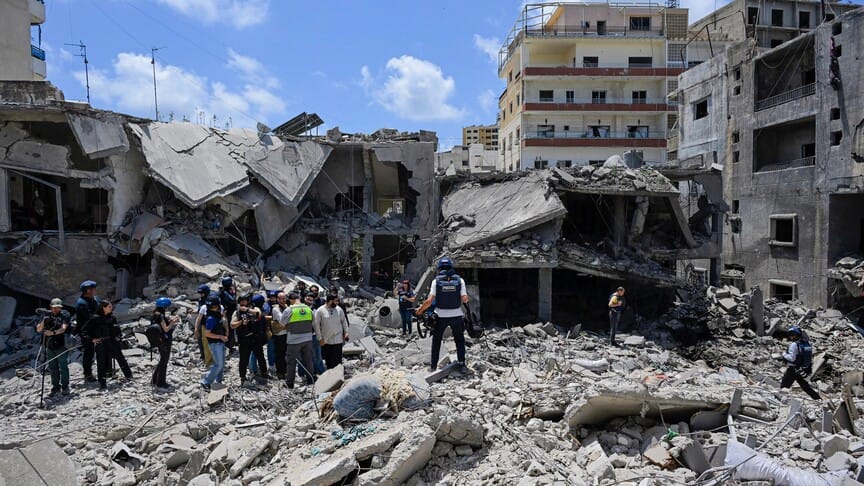
In a statement carried by the semi-official Fars news agency, the IRGC accused the US and Israel of repeatedly bombing Iranian universities, including Iran University of Science and Technology in Tehran.

“From now on, all universities of the occupying entity (Israel) and American universities in West Asia will be considered legitimate targets,” in response to the destruction of Iranian academic institutions, it said, calling on staff and students at US-linked universities in the region, as well as nearby residents, to stay at least one kilometer away from such facilities for their safety.

On Wednesday, the IRGC demanded that Washington condemn attacks on universities or face retaliatory attacks.

Iranian media reported several US and Israeli strikes on educational facilities, including Isfahan University of Technology and, Iran University of Science and Technology in Tehran.

The US and Israel have maintained airstrikes on Iran since Feb. 28, killing so far over 1,340 people, including then-Supreme Leader Ali Khamenei.

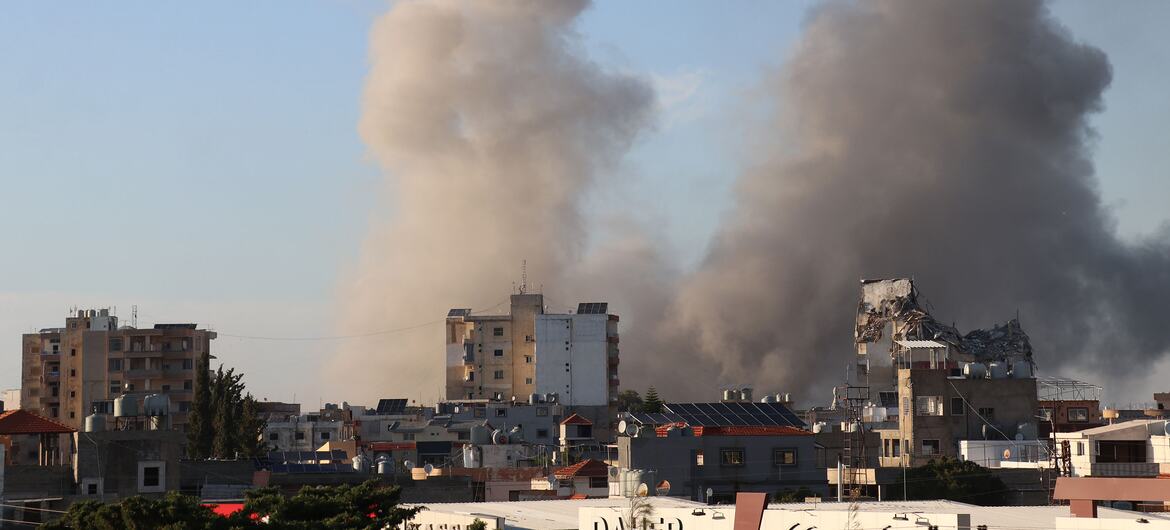
Iran has retaliated with drone and missile strikes targeting Israel, along with Jordan, Iraq, and Gulf countries hosting US military assets, causing casualties and damage to infrastructure while disrupting global markets and aviation. Anadolu

Continue reading
‘This War is Not Hours’

By Dr Hasan Al Dajah

Events in the Middle East are accelerating, foreshadowing a comprehensive regional explosion. However, a deeper reading of the situation transcends the traditional narrative that attempts to portray the conflict as an “Arab-Iranian” or sectarian one that transcends borders. The reality emerging today from the rubble of burning military bases and oil facilities is clear: this war is not ours; it is a major strategic war led by Washington with direct Israeli planning, aimed at reshaping the region to serve absolute Western hegemony, even if the price is turning Arab capitals into arenas of destruction and settling scores in which we have no stake.

For years, the United States promoted the concept of “deterrence” and providing protection to allied countries in exchange for billions of dollars in arms deals and a massive military presence. However, Operation “True Promise 5” and the subsequent precise Iranian strikes have stripped away the fig leaf from these claims. Field reports indicate that US bases, once described as “impregnable fortresses,” have become vulnerable targets themselves, requiring protection. At Al Udeid Air Base in Qatar, damage to the AN/FPS-132 early warning radar and the AN/TPY-2 facility resulted in a near-total paralysis of surveillance capabilities.

In Bahrain, home to the Fifth Fleet, the destruction of satellite communications stations led to a loss of centralized control over naval vessels. In Kuwait and the UAE, the casualties and the destruction of F-15 fighter jets revealed that advanced US technology was incapable of countering waves of drones and missiles that disrupted even civilian air traffic and struck vital facilities at Jebel Ali Port, reducing military installations and oil depots to ashes.

This resounding failure raises a fundamental question about the viability of relying on a “security umbrella” that has failed to protect its own perimeter and has become a security burden, attracting attacks rather than repelling them. This is no longer mere political analysis; it has become a public admission emanating from the corridors of Washington. What Senator Lindsey Graham recently revealed represents the pinnacle of terrifying candor. He confirmed that the true agenda is not about spreading “democracy” or protecting allies, but rather about embroiling the Gulf States as the military front and human cannon fodder in a direct confrontation with Iran. This is a prelude to seizing oil wells and managing the region’s wealth for Washington’s benefit, thus paying the price for the American presence, while simultaneously imposing full normalization and strangling China’s energy lifeline.

The United States’ recent attempt to seek refuge in French bases in the UAE, such as Al Dhafra Air Base and Camp de la Paix, is nothing more than a desperate effort to spread losses and hide behind the European umbrella after the deterioration of the original American bases. However, even these shared bases have not been immune to attack.

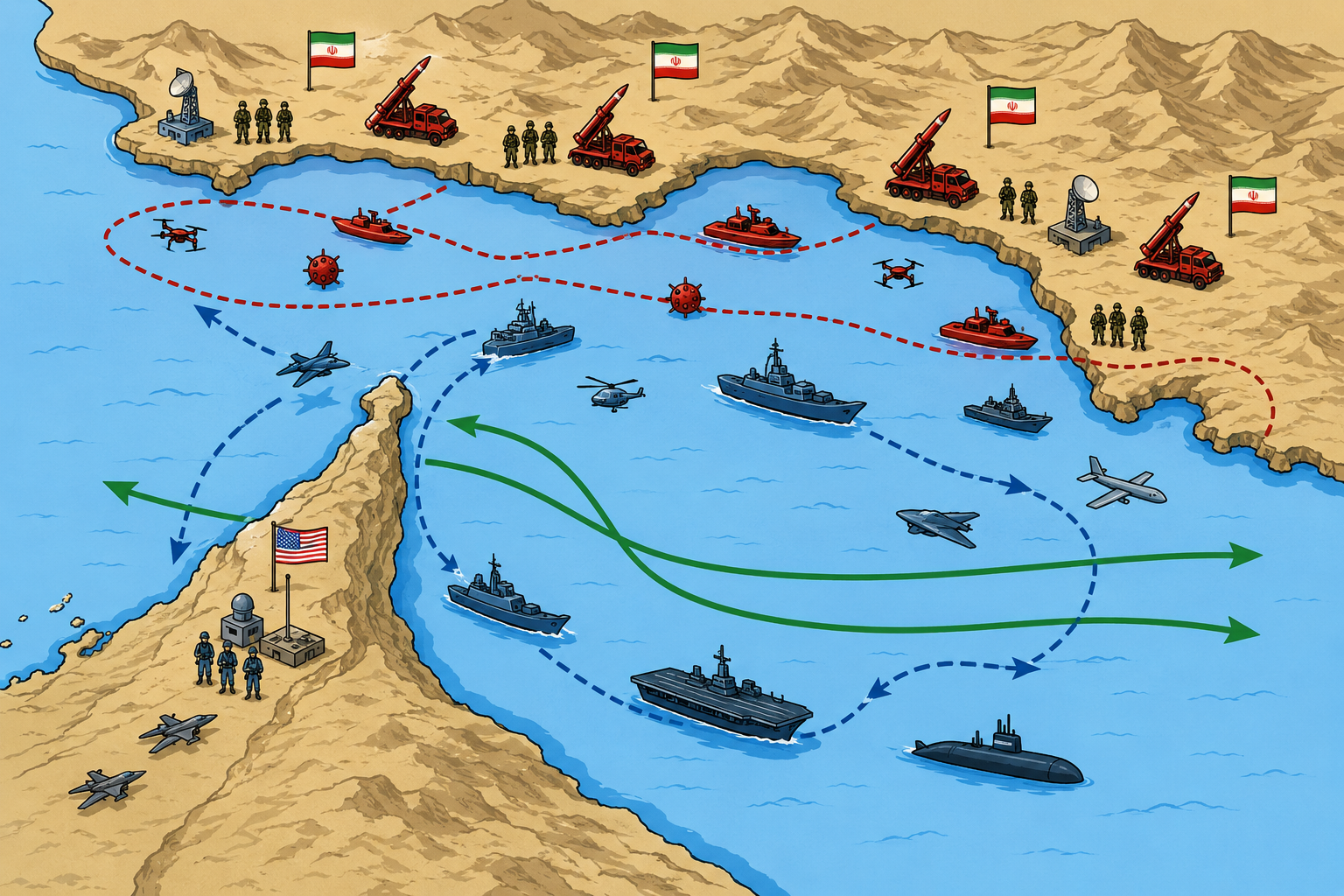
The strikes have proven that any facility supporting Western operations is a legitimate target in this zero-sum confrontation. The effects of this war extend beyond the military arena, striking at the very heart of daily life. The threat to the Strait of Hormuz has triggered seismic repercussions in global markets. The price of a barrel of oil jumped to around $116, an increase of more than $38, while gas prices in Europe rose by more than €25, and oil shipping costs soared by over 90 per cent, foreshadowing an uncontrollable wave of global inflation.

The United States, which today expresses its “displeasure” at Israel exceeding expectations in striking Iranian fuel depots, is not acting out of a desire for peace, but rather out of fear that the economic game will backfire on it and on oil markets, which cannot withstand the loss of Gulf supplies, especially given the 11 per cent increase in gasoline prices in America and the 70 per cent increase in jet fuel prices. What is happening in Jebel Ali, Manama, Doha, and Kuwait is not a struggle to defend Arab sovereignty, but rather a settling of scores between major powers that want to use Arab land as a chessboard.

The American bases that are groaning today under the weight of the strikes have proven to be a “paper tiger” when it comes to protecting allies, and that their presence is nothing but a magnet for crises that drains Arab capabilities for the benefit of foreign agendas that do not take into account Arab national security.

Arab capitals must realize, before it’s too late, that the “illusion of protection” has completely evaporated under the weight of missiles and drones. To be drawn into Israel’s desire to destroy the region, and to accommodate American ambitions to seize energy resources to finance its expansionist policies, is strategic suicide by any measure.

This raging war is not our war, and staying out of the inferno of this manufactured conflict is the only way to ensure that our wealth and the future of our generations do not become fuel for the schemes of Netanyahu, Trump, and the war profiteers behind them.

The time has come to seriously seek a self-reliant regional security system, one that originates from within the continent and is based on the shared interests of the region’s countries, far removed from foreign bases that today lack even the most basic military effectiveness and have become a strategic burden that itself needs protection after its defensive vulnerabilities have been exposed.

False American promises only increase our subservience and dependence on a modern colonial project that sees Arabs as nothing more than insignificant figures on its debt list, or mere cheap tools in its proxy wars. The true protection of homelands begins today with disengaging from these destructive agendas, and with the explicit acknowledgment that bases that have failed to protect their own walls and platforms will never be a shield for others.

Hasan Al-Dajah, a Professor of Strategic Studies at Al-Hussein Bin Talal University, is a columnist in the Jordan Times.

Continue reading
Larijani: Iran Will Not Negotiate With The US

Iran’s Supreme National Security Council Secretary Ali Larijani affirmed that his country will not negotiate with the United States. He added that US president Donald Trump has plunged the region into chaos with his “false hopes.”

On Monday, Larijani asserted Iran will not negotiate with the United States, noting that Trump “has plunged the region into chaos with his ‘false hopes,’ and is now worried about further losses among American forces.”

In a post on his “X” account, Larijani argued Trump has transformed his “America First” slogan into “Israel First,” sacrificing American soldiers for Israel’s pursuit of power. He continued: “With delusional actions and new lies, Trump is once again making American soldiers and their families pay the price for his personality cult.”

He added: “Today, the Iranian people are defending themselves, and the Iranian armed forces did not initiate the invasion.”

These statements come in response to a report in the Wall Street Journal about an initiative by Larijani to resume talks with Washington, presented through Omani mediators.

These statements also come amidst the ongoing US-Israeli aggression against Iran, which has targeted large areas of the country and resulted in the martyrdom of the Supreme Leader of the Islamic Revolution and the Islamic Republic of Iran, Ayatollah Ali Khamenei, and a number of other Iranian leaders. Almayadeen

Continue reading
Netanyahu Leaves Washington Empty-Handed

By Mohammad Al-Kassim

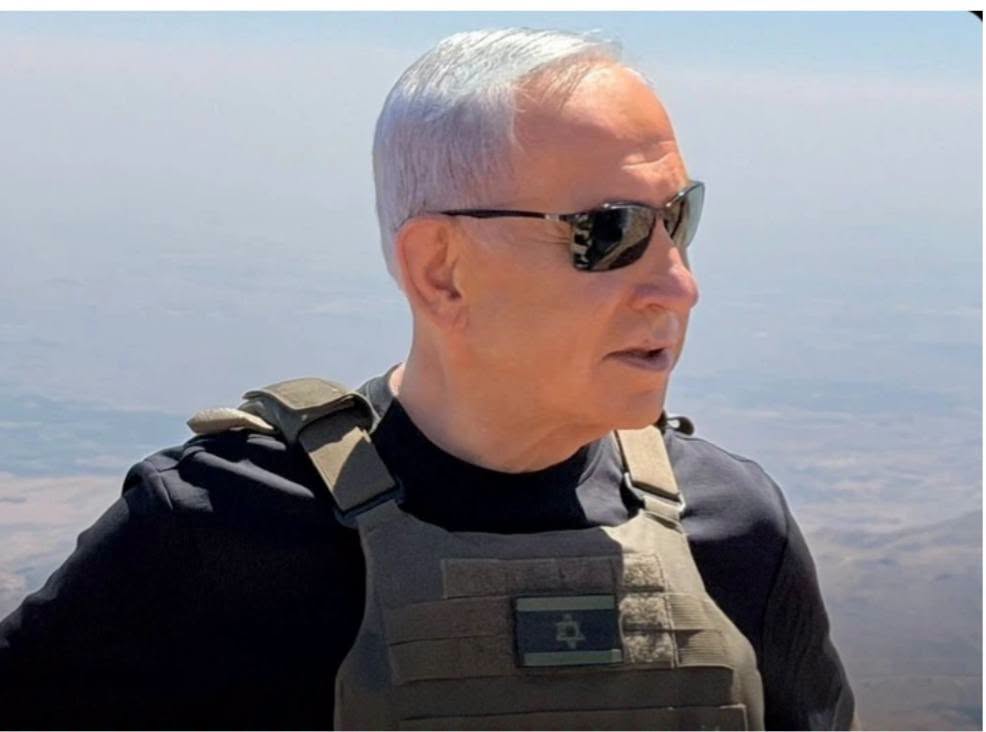
Israeli Prime Minister Benjamin Netanyahu returned from Washington without the outcome he had clearly hoped for, or the outcome he had led his domestic audience to expect in the days before the trip.

The visit, hastily moved up by a week and framed by Netanyahu as urgent and decisive, ended with a brief, anodyne statement from his office. There was no joint appearance, no press conference, and no public declaration of alignment with President Donald Trump on Iran. 

When Netanyahu met with Trump at the White House on Wednesday, Iran was top of the Israeli PM’s agenda. And on his way back to Israel, Netanyahu said he had made his feelings clear – “not hide my general scepticism about the possibility of reaching any agreement with Iran”. 

For a leader who typically amplifies diplomatic achievements and personal rapport with American presidents — from his 2015 address to Congress opposing the Obama administration’s Iran deal to his close partnership with Trump during the Abraham Accords — the restraint was striking.

President Trump, for his part, said “nothing definitive” had been decided. 

The White House made clear that negotiations with Iran remain ongoing following the first exploratory round of US–Iran talks aimed at testing parameters for a possible new nuclear framework. 

That, in itself, was the headline Netanyahu had hoped to prevent.

Meeting defined by what didn’t happen

Netanyahu arrived in Washington, saying he would present Israel’s “guiding principles” for negotiations with Iran. 

But there was nothing fundamentally new in those principles — nor in the message he delivered.

For more than three decades, Netanyahu has framed Iran as an existential threat to Israel, warning of its nuclear ambitions in international forums, including at the United Nations General Assembly in 2012, where he famously drew a red line on a cartoon bomb.

His objectives have been consistent: weaken Iran by any means available; prefer regime change if possible; and, failing that, ensure Iran is permanently deprived of nuclear capabilities and long-range missiles.

After last year’s direct, unprovoked Israeli attack on Iran, missile capabilities have become even more central to Israel’s demands.

In Washington, Netanyahu pushed a maximalist position:

  • no uranium enrichment on Iranian soil, a demand that goes beyond previous US negotiating frameworks, including the 2015 Joint Comprehensive Plan of Action, which permitted limited enrichment under strict monitoring;
  • strict limits — ideally elimination — of Iran’s ballistic missile programme, a core pillar of Tehran’s deterrence strategy and long considered non-negotiable by Iranian leadership;
  • constraints on Iran’s regional allies and proxy networks, and
  • Israeli freedom of action to strike Iran, even under any future agreement.

He also opposes any ‘sunset clause’ seeking permanent restrictions that would entrench Israel’s strategic dominance in the region.

None of this aligns with the trajectory of US–Iran diplomacy. 

While the Trump administration has yet to spell out the precise parameters of a potential agreement, early signals from Washington point to a more limited objective than Israel has been demanding. 

The focus appears to be on extending Iran’s nuclear breakout timeline and preventing weaponisation — rather than eliminating uranium enrichment altogether or dismantling Iran’s ballistic missile programme.

In effect, the White House seems to be testing whether an imperfect but enforceable deal is achievable before turning to escalation. 

That approach reflects a calculation that containing Iran’s nuclear advances, even partially, may be preferable to the risks of confrontation or military action.

At the same time, President Trump has sharpened his rhetoric. 

He reiterated his commitment to negotiations but paired it with a stark warning: if Iran fails to reach a nuclear deal with Washington, the outcome would be, in his words, “very traumatic”. 

For the first time, Trump also attached a timeframe to that ultimatum, suggesting that diplomacy has a limited window — roughly the next month — before consequences follow.

The message from Washington is deliberate ambiguity: diplomacy remains the preferred path, but the clock is now publicly ticking.

The timing of Netanyahu’s trip is critical. Netanyahu advanced the visit shortly after the first round of US–Iran talks, signalling urgency — and concern. 

Israeli officials feared momentum: that negotiations might move ahead before Israel could shape their parameters.

That fear appears well-founded. While Trump continues to issue rhetorical threats toward Iran, his actions suggest a preference for testing diplomacy before escalating militarily. 

Domestic pressures and political stakes

Netanyahu’s urgency is also driven by domestic considerations. 

His governing coalition faces mounting pressures, including disputes over military conscription exemptions for ultra-Orthodox parties, budget constraints linked to prolonged wartime expenditures, and ongoing public dissatisfaction following the October 7 attacks and subsequent regional escalation. 

A dramatic confrontation with Iran — or even the perception that he is leading one — would be politically transformative.

Iran remains one of the few issues in Israel that still commands near-consensus across coalition and opposition lines. 

Netanyahu knows that. He has long positioned himself as the indispensable guardian against Tehran, and he needs to show Israeli voters that Washington remains closely aligned with him.

That explains the repeated emphasis, aimed at domestic audiences, on “coordination” with the US — even when public evidence of such coordination is thin.

According to Israeli assessments, Netanyahu brought intelligence to Washington intended to cast doubt on Iran’s intentions, including claims that Tehran is stalling negotiations, continuing executions, and refusing to engage seriously on missiles.

But if this intelligence was meant to derail diplomacy, it appears not to have succeeded.

Trump’s team — including Steve Witkoff, Jared Kushner, Marco Rubio, and others — listened. 

But the White House has not embraced Israel’s conclusion that negotiations are futile. 

Instead, it appears determined to test whether a deal is possible, even if imperfect. That leaves Israel preparing for an alternative outcome.

The prevailing assessment in Israel is that talks may ultimately fail — either because Iranian demands prove incompatible with US red lines, or because Israel’s demands make an agreement politically or technically impossible. 

That is precisely why Netanyahu insists on keeping the military option alive.

Behind closed doors, the three-hour meeting likely went beyond negotiating positions to contingency planning: what happens if talks collapse, how far Israel can act independently, and what level of US support or tolerance it might expect.

Israel’s core demand remains unchanged: freedom of action.

Despite public expressions of unity, Netanyahu and Trump are approaching Iran from different strategic premises. 

Trump appears to value flexibility and leverage, using the prospect of force to extract concessions while keeping diplomatic channels open. 

Netanyahu seeks permanence: structural constraints that prevent Iran from re-emerging as a threshold nuclear power under any future political configuration.

What binds them — at least for now — is political self-interest. Both prefer to avoid public confrontation. Both face domestic calculations. And both understand the risks of escalation.

For Netanyahu, however, the Washington visit underscored an uncomfortable reality: Israel can influence US policy, but it does not control it.

Diplomacy is moving forward — whether Israel likes it or not. – TRTWorld

Continue reading
‘Iran Ready For Diplomacy’

Iran is ready for diplomatic negotiations, the country’s foreign minister said Monday, as tension continues to rise between Tehran and Washington.

“We are ready for diplomacy, but diplomacy also has its own principles. I hope we will see results soon,” Abbas Araghchi said during a visit to the shrine of Ayatollah Ruhollah Khomeini, the architect of Iran’s 1979 Revolution according to Anadolu.

“Iran’s enemies, who failed to achieve their goals,” whether through last year’s 12-day war or recent protests “have now turned to diplomacy.”

“These same parties are talking about diplomacy today, even though Iran has always been ready for this option, provided there is mutual respect and consideration of interests,” he added.

In June 2025, Israel, backed by Washington, launched a 12-day attack on Iran that targeted military and nuclear sites as well as civilian infrastructure and killed senior commanders and scientists. Iran responded by striking Israeli military and intelligence facilities with missiles and drones before the US announced a ceasefire.

Araghchi’s remarks came amid heightened tensions between Iran and the US, with the American military fleet reportedly heading toward the region, as announced by President Donald Trump.

Trump confirmed that a large US “armada” was en route to the region, warning Iran to enter negotiations over its nuclear program or face potential military action.

In recent days, there has been intense diplomatic activity, with several regional countries – including Turkiye – intervening to ease tensions between the two nations.

Continue reading