Gulf Escalation: A Blaze Awaits The Region

By Dr Marwan Asmar

With the Abraham Lincoln destroyer entering Middle East waters, everyone is gearing up for another US–Israeli war on Iran—the second in less than eight months.

Anxiety is gripping the region from the Gulf to Iran and all the way to Israel. Foreign states are warning their citizens in these countries to leave, while some airlines have suspended flights to the region. Once again, the Middle East is on a war footing, with fears that a wide conflict could erupt at any moment.

With an additional 7,000 US troops moving to the region, along with jets and fighter planes, the buildup is being described as the biggest “get-ready” military move since 2003, when the US launched its major war on Iraq and reshaped the region. Today, Middle Eastern countries are jittery about the current situation and the possibility of looming instability.

US President Donald Trump is not helping matters. He says he is weighing all options but keeps everyone guessing about his next move. He has warned that if the Iranian government continues its iron-fisted crackdown on protesters, the US could intervene militarily and wage another war on Tehran—much to the delight of the Israeli government, which is reportedly playing a behind-the-scenes role in encouraging unrest in Iran.

Although Trump is raising the war tempo and increasingly saber-rattling through military entrenchment, he is also sending mixed signals. He is not as boisterous as he was when he launched US strikes on Iran’s nuclear facilities in June 2025. What he really wants is to push Iran back to the negotiating table and secure a lasting deal on its nuclear programme. He claims Iran’s facilities have been dealt a significant blow and may never recover, but this seems unrealistic, given how far Iran has advanced in nuclear enrichment.

While Trump describes Israel as a “role model” ally and urges Arab countries to follow suit—a claim many find laughable—Washington appears to be diverging from Tel Aviv over objectives on Iran and may even be at odds with it. Analysts say Israel wants strikes, even multiple ones, to change Iran’s regime and is less concerned about the chaos that could follow.

The United States, by contrast, appears more cautious. US officials do not necessarily want a new regime in Iran, uncertain of what might replace it. They prefer the logic of “the devil you know rather than the devil you don’t.” Washington wants a regime it can work with, despite ideological differences, notwithstanding Trump’s bombastic rhetoric, which Tehran may exploit if it chooses to play the “Mr Nice Guy.”

One analyst suggests Trump wants tangible gains from Iran, preferably access to its oil resources through US petroleum companies, but this may be a pipe dream.

If that fails, Trump is likely to push for a revamped nuclear deal to replace the 2015 agreement, which reached its term in September 2025 and is up for renewal. He wants a deal stamped with a distinctly “Trumpian” identity, even though many issues are already settled. Needless to say, Trump wants to claim credit for clinching the deal.

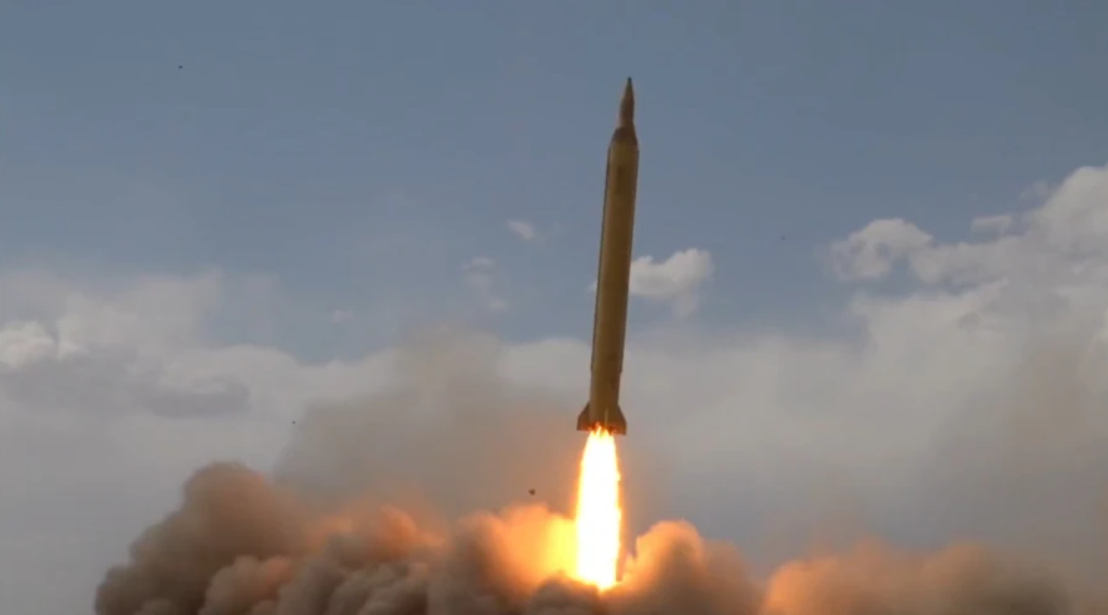
Today, the region stands on the edge of a precipice. It is touch-and-go. Many experts argue that a Middle East war is not imminent because it is neither politically nor economically feasible. Yet logic often takes a back seat in Trump’s world, especially with Israel pushing for a new wave of attacks on Iran, this time targeting its ballistic missile programme.

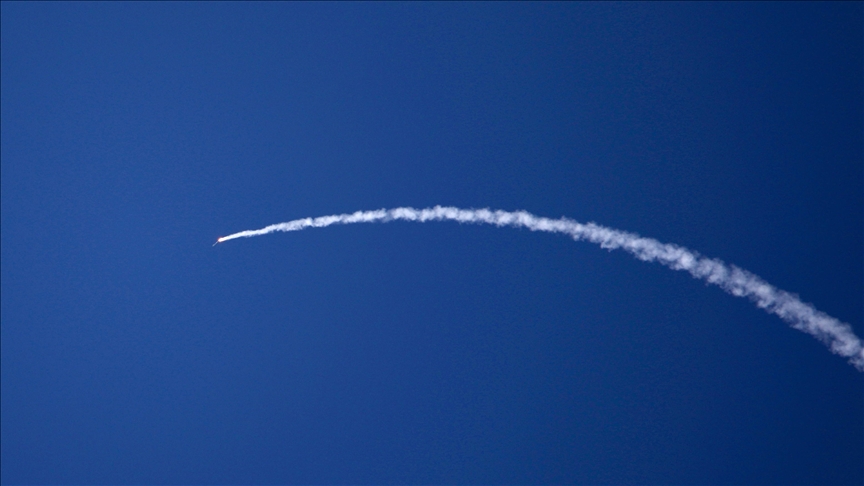
Iran, however, says it is ready. It has warned it will strike US bases in the region and beyond if it detects even a hint of an imminent attack. Iranian political and military leaders insist they will not remain sitting ducks for Washington or Tel Aviv. As a result, the region is caught in an escalating poker game.

While many believe Iran and its regional allies, such as Hezbollah and Hamas, have been significantly weakened over the past two years, neither the US nor Israel can be certain of Iran’s real capabilities. This uncertainty leaves them unsure about their next move—or Iran’s.

All this makes both Israel and the United States nervous about unpredictable scenarios across the region. Everyone is waiting, tapping their fingers, bracing for what may come next.

This article was originally published in Countercurrents.org

Continue reading
Mideast on War Footing: Is US Strike on Iran Coming?

As US military assets continue to move into the Middle East, analysts warn that Washington is edging closer to a possible confrontation with Iran, weighing options that range from intensified economic pressure and a naval blockade to direct military action.

Recent developments have heightened fears that a US-led escalation could be imminent.

“It’s looking increasingly likely that with this buildup of military assets, President Donald Trump – and probably the Israelis – are preparing for a military escalation against the Iranians,” Ryan Bohl, a senior Middle East and North Africa analyst at the RANE Network, told Anadolu.

On Wednesday, Trump wrote on his social media platform Truth Social that a “massive armada” was heading toward Iran, expressing hope that Tehran would “come to the table” and negotiate with Washington. He warned that the fleet was prepared to “rapidly fulfill its mission with speed and violence, if necessary.”

Trump said the deployment was larger than the one previously sent toward Venezuela and confirmed that it is led by the USS Abraham Lincoln, one of the world’s largest aircraft carriers, which hosts electronic-warfare aircraft capable of disrupting Iranian radar systems.

The New York Times reported that the carrier strike group is accompanied by three warships equipped with Tomahawk cruise missiles, capable of long-range precision strikes. The US has also reportedly deployed around a dozen additional F-15E attack planes, along with Patriot and THAAD air-defense systems to protect against potential Iranian retaliation.

Steffan Watkins, a consultant specializing in tracking military ships and aircraft, said the US is also shipping supplies and deploying additional surveillance aircraft. “Preparations for operations targeting Iran appear to be underway,” he wrote Thursday on the American social media platform X.

“Time is running out,” Trump warned Iran, threatening that any future attack “will be far worse” than last year’s US strikes on Iranian nuclear facilities.

Although the rhetoric comes in the wake of Iran’s crackdown on protests, Bohl said Washington’s broader objective appears to be forcing changes in Iran’s foreign and security policies.

The goal is to see “if they can get Iran’s government to change its foreign policies, to give up on its missile program and its nuclear energy program,” he said.

Limited and targeted strikes

Analysts say one of the most likely military options under consideration is a campaign of limited, precision strikes targeting Iran’s military, missile and nuclear infrastructure.

“They could go after the missile program again – strike drones and missiles and manufacturing. They can try to destroy launchers, remains of Iran’s air force, some infrastructure related to the military-industrial complex,” Bohl told Anadolu.

During the 12-day war with Israel last June, the US struck three major Iranian nuclear facilities – Fordo, Natanz and Isfahan – using bunker-buster bombs, claiming the attacks crippled Iran’s nuclear program.

Bohl said it remains unclear whether Washington would allow Israel to initiate a new round of strikes or whether a joint US-Israeli campaign would unfold.

Another option, he added, would involve phased strikes rather than a single, overwhelming attack.

“We could be seeing a version of what we saw in Iraq back in the 1990s, where the US would strike Iraq, wait to see if that would create a concession process for the Iraqis and then strike again to try to again shift the Iraqis’ behavior,” he said. “And that could take weeks, even months to unfold.”

Blockade and attacks on infrastructure

Experts also suggested that the US might try to impose naval and aerial blockade on Iran.

“Imposing a new blockade on the Iranians and trying to seize their tankers like they did in Venezuela is escalatory,” Bohl said.

He added that Washington could also attempt to restrict Iranian airspace, limiting civilian flights in a bid to inflict economic damage.

“They could enhance their cyber campaign to try to cripple Iran’s infrastructure, particularly during this time where there’s still a lingering protest movement after those major crackdowns earlier this month,” he said. “So, disrupting infrastructure would also be a choice.”

The USS Abraham Lincoln Carrier Strike Group could also be used to intercept Iranian oil tankers leaving the Persian Gulf, he added.

However, Scott Lucas, a professor of international politics at the Clinton Institute at University College Dublin, cautioned that a blockade and seizure of Iranian vessels could be challenging.

“I think it would be very risky for the US to do what it’s done with Venezuela, which is to seize Iranian oil tankers,” he said.

“I think the prospect of that setting off a regional crisis is much greater, especially since Iran has the capacity to close off the Strait of Hormuz, and about 20% of the world’s oil supply goes through that waterway.”

Broad escalation and strikes on leadership

Analysts also warned that Washington could opt for a broader military campaign aimed at severely degrading Iran’s leadership and command structure.

“We are seeing reports that President Trump wants something ‘decisive,’ which is more of a major campaign to probably attack as many targets as possible and increasingly consider assassinations of top Revolutionary Guards and even some of the leadership like Supreme Leader Ali Khamenei,” said Bohl.

Such an approach could include attacks on senior commanders within the Islamic Revolutionary Guard Corps, political leadership nodes, and command-and-control infrastructure, analysts said.

Experts warned that efforts aimed at full regime change would almost certainly provoke retaliation against US forces and allies across the Middle East.

Bohl added that Trump believes Iran’s deterrence has comprehensively failed, as their missiles and drones have not stopped previous attacks.

“He (Trump) may believe that Iran isn’t able to carry out those sorts of comprehensive strikes on energy infrastructure,” he said. “That would encourage him to go on into a larger and more substantial campaign.”

Targeted assassinations and covert operations

A more limited alternative would involve targeted assassinations and covert operations rather than an overt large-scale war.

While analysts largely rule out a full US ground invasion of Iran, Bohl said Trump has demonstrated a preference for deploying special forces on high-risk missions.

“President Trump ran on a platform of avoiding another Iraq war, but he is very commando-happy and he likes to use his special forces,” said Bohl.

Such operations could include the destruction of high-value military targets or the assassination of individuals linked to Iran’s missile, drone or nuclear programs, analysts said.

“They have targeted Iranian leaders in the past. They assassinated the leader of the Quds Force … Gen. Qasem Soleimani at the start of 2020,” Lucas explained.

Bohl also pointed to US actions in Venezuela and North Korea as examples of attempts to apply pressure through targeted operations rather than regime-wide campaigns.

However, Bohl said that a repeat of Venezuela, where Washington reaches an understanding with the regime and takes out key leaders, does not appear to be a “viable option” in the case of Iran.

More economic pressure

Iran’s economy continues to be heavily constrained by sanctions. Earlier this month, the US announced an additional 25% tariff on countries trading with Tehran and imposed new sanctions on vessels and companies accused of transporting Iranian oil.

Bohl said Washington may seek to further destabilize Iran economically in hopes of forcing it back to negotiations.

The idea is to crack Iran’s politics by causing more economic damage and pushing them toward what are essentially surrender terms, he said.

Iran is already grappling with a severe economic crisis, marked by the rapid devaluation of the rial, which helped trigger nationwide protests late last December.

Lucas, however, argued that additional sanctions may have limited effect without broad international support.

“I think the Trump folks can bluster a bit, but they really can only tighten sanctions if they have international action on the sanctions,” he said, adding that countries such as Russia and China are unlikely to support further pressure.


What comes next

Analysts said several indicators could signal whether the US is moving closer to escalation.

Bohl said warning signs include commercial airlines avoiding Iranian airspace, the evacuation of foreign embassies, travel advisories urging civilians to leave Iran, and Israeli authorities placing the population on heightened alert.

He added that the arrival of the USS Abraham Lincoln in the US Central Command area of responsibility significantly shortens the timeline for potential action.

Given that Iran has already been struck in previous confrontations and that tensions remain extremely high, any move could rapidly spiral.

“Because it is kind of an undeclared war between the two sides already, it could really turn on a dime and begin sudden escalation,” Bohl warned.

Continue reading
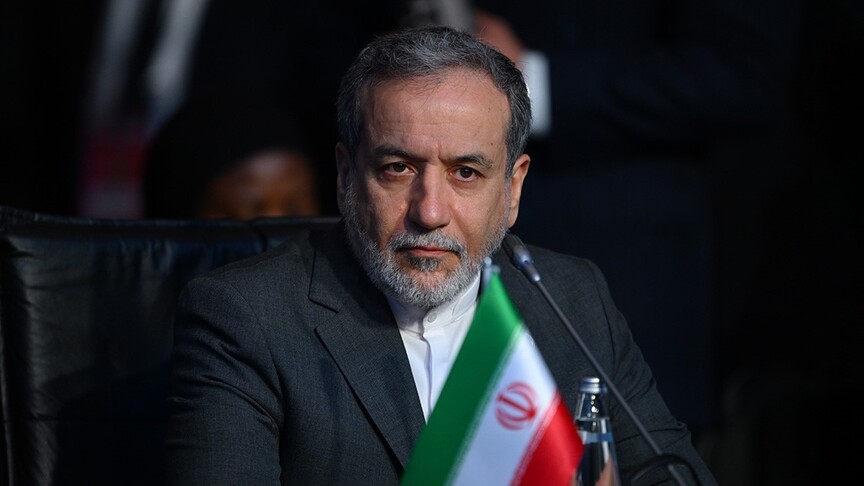
Araghchi: US Contacts Maintained Now!

Iranian Foreign Minister Abbas Araghchi said Monday evening that contacts between him and US envoy Steve Witkoff “continued before and after the protests, and are still ongoing.”

Iran is “ready for all options,” Araghchi told the Qatar-based Al Jazeera television.

The top diplomat expressed hope that Washington would choose “the wise option,” amid ongoing exchanges between the two sides.

“Some ideas are on the table with Washington and are currently being studied” by Tehran, he said, without giving further details.

However, he stressed that “it is not possible to combine the ideas proposed by Washington with its launching of threats against our country.”

On the possibility of a direct meeting with Witkoff, Araghchi said “there are ideas being discussed,” according to Anadolu.

Continue reading
White House Rebukes Israel on Violation of Ceasefire

The White House views Israel’s assassination of Al-Qassam leader, Raed Saad, as a violation of the Gaza ceasefire brokered by US President Donald Trump, two US officials told Axios.

The officials said the White House sent a stern private message to Israeli Prime Minister Benjamin Netanyahu after the strike.

Israel murdered Raed Saad on Saturday in Gaza City. Israel calls Saad the deputy commander of Hamas’ military wing. The attack murdered four people in total.

US officials said Israel did not notify or consult Washington before the strike.

“The White House message to Netanyahu was clear,” a senior US official said. “If you want to ruin your reputation and show you do not abide by agreements, be our guest. But we will not allow you to ruin President Trump’s reputation after he brokered the Gaza deal.”

An Israeli official confirmed that the White House expressed anger. The official claimed the message was softer and cited concerns from “certain Arab countries.” US officials rejected that account and said the White House was unequivocal that Israel violated the ceasefire.

The development comes as Israel continues to reject moving to the second phase of Trump’s ceasefire agreement to end the genocide in Gaza.

Israeli media reported ongoing resistance inside Netanyahu’s government to advancing the next phase. An Israeli security source told the public broadcaster that implementing the second phase “remains far from achievable.”

Netanyahu is expected to meet President Trump at Mar-a-Lago on December 29.

Meanwhile, Israeli forces continued daily ceasefire violations on Monday. Naval boats opened heavy fire toward Gaza’s coast. Israeli aircraft launched an airstrike alongside intense artillery shelling east of Khan Younis. Artillery fire also hit areas east of al-Bureij refugee camp in central Gaza.

Hamas condemned the Israeli violations and called on mediators and guarantor states to intervene. The movement said Israel seeks to undermine and sabotage the agreement.

Hamas leader Khalil al-Hayya reaffirmed commitment to the ceasefire in a recorded speech marking the movement’s 38th anniversary. He said starting the second phase is a top priority to secure full Israeli withdrawal.

Al-Hayya said any international forces in Gaza should focus only on maintaining the ceasefire and separating the two sides at Gaza’s borders. He stressed that resistance and its weapons remain a legitimate right under international law and are tied to establishing a Palestinian state.

Al-Qassam Brigades said Israel’s assassination of Saad represents a blatant breach of the ceasefire. The group said Israel crossed all red lines by targeting its leaders and civilians and by continuing military aggression.

Al-Qassam said Israel is disregarding President Trump’s plan and held him and the mediators responsible. The group affirmed its right to respond and defend itself by all means.

The first phase of the Gaza ceasefire began on October 10 after two years of Israeli genocide that killed more than 70,000 Palestinians and destroyed most civilian infrastructure.

Despite the agreement, Israel continues airstrikes, alters the agreed withdrawal line known as the Yellow Line, and restricts vital humanitarian aid to Gaza’s population according to the Quds News Network.

Continue reading
How Should Arabs Influence The US?

By Hamed Kasasbeh

The United States faces a sensitive equation in the Middle East. On one side, a strong strategic alliance with Israel, built on military and intelligence superiority. On the other, a deep economic and security partnership with Arab states, which control oil, gas, key waterways, and sovereign wealth funds. Yet Washington still treats Arabs as financial and energy suppliers, while granting Israel unconditional superiority. The question is: How long can this continue before America pays a strategic price?

Since the 1970s, oil has been tied to the U.S. dollar through the petrodollar system. This made the dollar the backbone of the global financial order and allowed Washington to finance deficits while keeping global dominance. But the landscape is shifting. BRICS seeks to reduce reliance on the dollar. With Saudi Arabia and the UAE joining, Arabs now have direct influence on the future of global finance. Any move to price oil in other currencies could shake the foundations of U.S. power.

Meanwhile, Israel—backed by open U.S. support—pushes Netanyahu’s vision of a “New Middle East.” The plan is clear: destroy Gaza, swallow the West Bank, fund the displacement of Palestinians, and strike Lebanon, Syria, Qatar, and Yemen. Even Gulf states are no longer outside the danger zone, as Israeli threats expand across the region.

Israel has little economic weight compared to the Arabs, but it enjoys political and military privileges that make it a forward base for Washington. Arabs, by contrast, hold powerful cards: oil and gas, the Suez Canal, Bab al-Mandab, the Strait of Hormuz, and sovereign funds with hundreds of billions in U.S. markets. Used together within a united stance, these cards can rebalance U.S. policy toward Israel.

The pressure is not only economic. The U.S. operates dozens of military bases in the Gulf, Jordan, and Turkey. If Arabs link these facilities to Washington’s position on the conflict, the cost of bias will rise. At the same time, Arabs are no longer just oil producers. They are key players in renewable energy and green hydrogen, shaping the future of global energy markets.

Inside the U.S., the Israeli narrative no longer dominates unchallenged. A growing movement among youth, universities, and independent media rejects blind support for Israel, especially after the humanitarian disaster in Gaza. This has fueled mass protests, political pressure, and divisions inside the Democratic Party between the old guard and a younger generation more critical of Israel. Arabs can build on this by engaging think tanks, universities, and Arab-American communities.

In Europe, the EU cannot ignore its vital interests with the Arab world in energy, trade, and investment. Public anger over Gaza is rising. Arabs have an opportunity to unify their message and push Europe toward greater independence from Washington. Linking access to Arab markets with balanced political positions could turn sympathy into official pressure on Israel from within its Western allies.

At the international level, Israeli actions no longer pass without scrutiny. The UN Security Council has issued repeated condemnations, despite Washington’s vetoes. The latest vote reaffirmed the two-state solution as the only path to peace, highlighting Israel’s growing isolation. A united Arab stance could transform this consensus into real leverage, combining international legitimacy with Arab economic power.

In the end, the ball is in the Arabs’ court. They hold the tools to impose a new balance and secure a fair solution for Palestine. If they act with unity and resolve, they can curb Israeli arrogance and reshape the region. If not, the cost will fall on Arab citizens—through weaker economies, shrinking wages, and eroded sovereignty—while the future of the Middle East is written without them.

The writer is a columnist in the Jordan Times

Continue reading