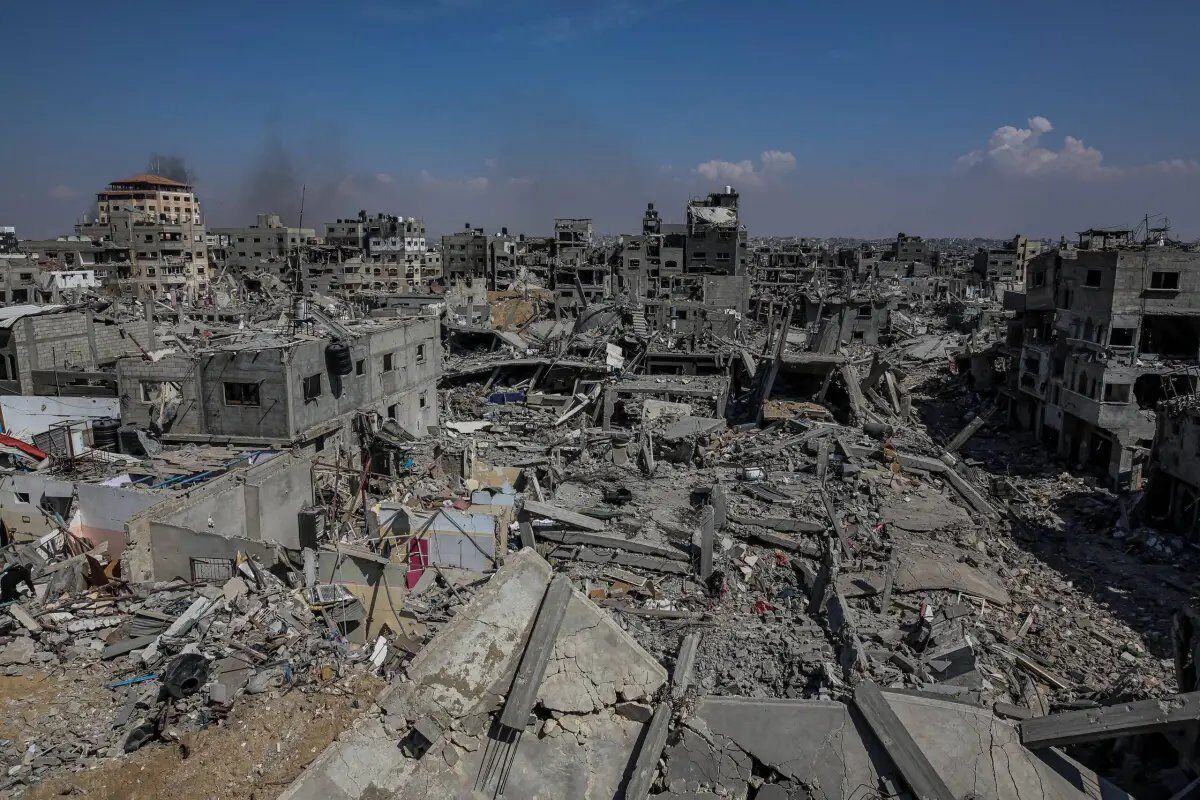
Sniper’s Rifle Remains Axiom on Gaza’s Battlefield

Military expert Colonel Hatem Al-Falahi believes the axes of Al-Zeitoun neighborhood (southeast of Gaza City) and Tal Al-Hawa (southwest of Gaza City) are continually active with Palestinian groups putting up stiff resistance there and explains why the Israelis are faltering in their military operations in those areas.

Colonel Al-Falahi of Al Jazeera Satellite Channel made this observation as he commented on the joint operation between Al Jihad’s Saraya Al Quds and the Hamas Al-Qassam Brigades which led to the sniping of an Israeli soldier in the Al-Zeitoun neighborhood.

As per Saraya Al-Quds video, it showed because the Israeli army is fighting from inside buildings, none of its soldiers are able to stick their heads out of the window and/or show their bodies completely.

In contrast, Colonel Al-Falahi says in an analysis of the military scene – the resistance groups are fighting from areas very close to the occupation army.

He said the recent  military operations carried out by the resistance show that the cooperation between the Palestinian factions have become great, especially between the two Islamists groups: Qassam Brigades and Saraya Al-Quds; adding this means they are work together as one unit and there is a joint operations room that coordinates the different military activities.

Sniper operations

Al-Falahi believes sniper operations have a very large impact, in terms of subject and psychology, on the occupation forces. He pointed out these are precise operations carried out against Israeli officers at high levels.

Colonel Al-Falahi recalled a previous report by the Hebrew daily Yedioth Ahronoth, which revealed that the Israeli army monitored the work of Palestinian snipers for 70 hours in the past and concluded a sniper in the Qassam Brigades and the rest of the factions take two or three days to monitor the target.

The daily stated these snipers have the capability to monitor their targets accurately, also concluding that snipers do not carry weapons during their movements, but rather, there are specific points where these are located in.

He pointed out snipers had a very large role in inflicting heavy losses on the occupation army in its war on the Gaza Strip, and added that at least 100 sniper operations have been carried out so far by Palestinian resistance fighters in the Gaza Strip.

The military and strategic expert confirmed that the resistance operations are still ongoing in Gaza, and the “sniper’s rifle” will remain operational for a long time, and the occupation army will not be able to remain in these areas no matter how much capabilities it has.

Resistance factions are fighting fierce battles with the Israeli occupation forces in different areas of Gaza. They have managed to kill Israeli soldiers in ambushes and clashed with them in the  combat axes in the Zeitoun neighborhood in Gaza City, the center and southern part of the Strip according to the Palestine Information Center.

Continue reading
Brik: ‘It is Not Hamas That is Collapsing But Israel’

Retired Israeli General Itzhak Brik said if the Israeli forces “continue fighting in Gaza by raiding and re-raiding the same targets, not only we won’t bring Hamas to collapse, but we will collapse ourselves”.

In an opinion piece published by the Israeli newspaper Haaretz, titled, “It Is Not Hamas That Is Collapsing, but iIsrael,” Brik said every day, Israeli forces in Gaza grow weaker while Hamas, “in contrast, has already replenished its ranks with 17- and 18-year-olds”.

Brik also noted many Israeli reservists are “no longer consenting” to being “redrafted again and again” and “conscripted soldiers are exhausted and are losing professional skills for lack of training”.

“Some argue that withdrawing army forces from Gaza after signing a hostage deal with Hamas would be the same as being defeated and surrendering…but this claim is grounded in a fundamental misunderstanding of what is taking place in the Gaza Strip.

It is fueled by clichés spread by the political and military echelons to justify their actions and gain public support and legitimacy to continue a failed war… it is those very same people declaring that a cessation of hostilities means our defeat and surrender who are bringing the military closer to collapse and the state to its downfall,” he added.

“Israel’s economy, international relations and social cohesiveness are severely damaged by this war of attrition against both Hamas and Hezbollah,” he said, adding the Israeli military “does not have enough forces to fight a multi-front war”.

Continue reading
Netanyahu Looks For ‘Imaginary Victory’ in Gaza

Israeli Prime Minister Benjamin Netanyahu is looking for an “imaginary victory” in Gaza that he has not succeeded in selling to his audience, the Palestinian resistance group Hamas said Monday.

Izzat Al-Rishq, a member of Hamas’s political bureau, was commenting on a speech by Netanyahu during which he insisted on keeping the Gaza-Egypt border area known as the Philadelphi Corridor under the Israeli army’s control, claiming it is necessary for achieving the war on Gaza’s goals.

“Netanyahu’s statements are the speech of a desperate person who is looking for an imaginary victory that he has not succeeded in marketing to his audience after 10 months of his Nazi war against our people in the Gaza Strip,” Al-Rishq said.

He “confirms with his statements today [Monday] that he is the one obstructing the exchange deal and the cease-fire agreement,” he said.

He added that any delay in his “approval and commitment to what was reached on July 7 (in a cease-fire proposal) means putting the lives of more prisoners at risk,” referring to the recent deaths of six Israeli captives in Gaza, saying “Netanyahu bears responsibility for the lives and safety of the prisoners held by the resistance.”

Earlier in the day, Netanyahu reaffirmed his intention to maintain Israeli troops in the Philadelphi Corridor.

“If we withdraw, we won’t (be able to) return there — not for 42 days and not for 42 years,” Israel’s Channel 12 quoted him as saying at a Cabinet meeting.

He was referring to the first 42-day phase of a proposed Gaza cease-fire and hostage swap deal with Hamas.

Netanyahu claimed that the Philadelphi Corridor, a demilitarized area on the border between Gaza and Egypt, is a “lifeline” for Hamas.

Contrary to his insistence on the Philadelphi Corridor, his Defense Minister, Yoav Gallant, called Sunday for the immediate convening of the Security Cabinet to reverse its decision to keep forces in the corridor.

Israel estimates that more than 100 hostages are still being held by Hamas in Gaza, some of whom are believed to have been already killed.

For months, the US, Qatar and Egypt have been trying to reach an agreement between Israel and Hamas to ensure a prisoner exchange and a cease-fire and allow humanitarian aid to enter Gaza. But mediation efforts have been stalled due to Netanyahu’s refusal to meet Hamas’s demands to stop the war.

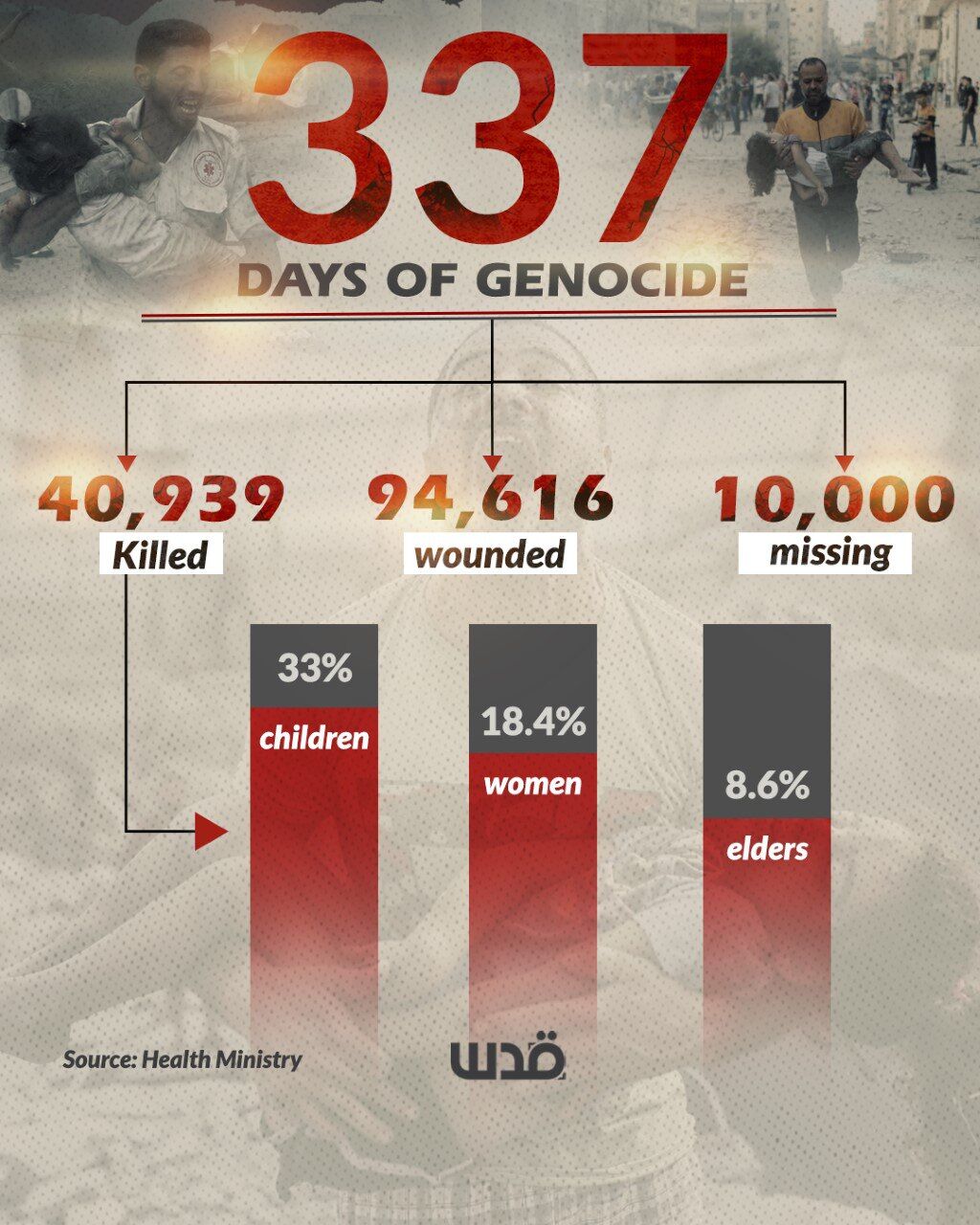
Israel’s ongoing war on the Gaza Strip has killed nearly 40,800 Palestinians, mostly women and children, and injured over 94,200 others, according to local health authorities.

An ongoing blockade of the enclave has led to severe shortages of food, clean water and medicine, leaving much of the region in ruins.

Israel faces accusations of genocide for its actions in Gaza at the International Court of Justice according to Anadolu.

Continue reading
Gaza Schools ‘Vanish Into Thin Air’

The Commissioner-General of the United Nations Relief and Works Agency for Palestine Refugees (UNRWA) Philippe Lazzarini said that more than 70% of the agency’s schools in Gaza have been destroyed or damaged, and the majority of them have become shelters crowded with hundreds of thousands of displaced families and cannot be used for education according to Wafa.

Lazzarini added in a post on X that “more than 600,000 children there are deeply traumatized, living in the rubble. They continue to be deprived of learning + schooling. Half of them used to be in UNRWA schools. The longer children stay out of school, the higher the risk of a lost generation, fueling resentment & extremism.”

“In Gaza, more than 70% of our schools are destroyed or damaged. The vast majority of our schools are now overcrowded shelters with hundreds of thousands of displaced families. They cannot be used for learning,” he added.

“With no ceasefire, children are likely to fall prey to exploitation including child labour and recruitment into armed groups. We have seen this way too often in conflicts around the world, let’s not repeat it in Gaza. A ceasefire is a win for all: it will allow respite for civilians, the release of the hostages + a flow of much needed basic supplies including for learning,” he was quoted as saying in the Palestinian news agency.

Continue reading
Philadelphi V. Hostages: Netanyahu-Gallant Fight Deepens

Disputes have escalated between Israeli Prime Minister Benjamin Netanyahu and his Defense Minister Yoav Gallant over the army’s presence in the Philadelphi Corridor, a demilitarized area along the border between the Gaza Strip and Egypt.

Netanyahu sees the axis as a “lifeline for Hamas,” ruling out any withdrawal of the Israeli forces from the corridor, the Israeli public broadcaster KAN said.

Netanyahu’s hardline position is seen by opposition leaders and families of Israeli hostages in Gaza as hindering efforts to reach a Gaza cease-fire and prisoner exchange agreement with Hamas according to Anadolu.

Last Thursday, Israel’s security cabinet voted to maintain Israeli military presence at the corridor, a position that drew fire from the defense minister.

Gallant called Israel’s control of the corridor “an unnecessary constraint that we’ve placed on ourselves.”

“We will not live up to the war goals we set for ourselves,” he said during a security cabinet meeting on Sunday. “The decision made Thursday was reached under the assumption that there is time, but if we want live hostages, there’s no time.”

“We endangered soldiers for decades for single individuals. How are we to treat the lives of 30? It’s moral bankruptcy,” the defense minister said, in reference to a 2001 prisoner swap deal with Hamas under which more than 1,000 Palestinian detainees were released in return for captured Israeli soldier Gilad Shalit.

During the meeting, Gallant reminded Netanyahu, “You released 1,027 prisoners, including Hamas leader Yahya Sinwar, in exchange for just one man, Gilad Shalit.”

KAN, citing sources close to Netanyahu, said the Israeli premier is not expected to dismiss his defense minister anytime soon despite their strained relations.

Public anger against Netanyahu’s government has grown after the army said Sunday that it had recovered the bodies of six hostages from southern Gaza.

In response, the country’s largest labor union Histadrut called a one-day general strike to pressure the Israeli government to reach an immediate cease-fire and prisoner swap deal with Hamas.

Israel estimates that more than 100 hostages are still being held by the Palestinian group Hamas in Gaza, some of whom are believed to have been already killed.

For months, the US, Qatar and Egypt have been trying to reach an agreement between Israel and Hamas to ensure a prisoner exchange and a cease-fire and allow humanitarian aid to enter Gaza. But mediation efforts have been stalled due to Netanyahu’s refusal to meet Hamas’ demands to stop the war.

Israel has continued its brutal offensive on the Gaza Strip following an attack by the Palestinian group Hamas last Oct. 7, despite a UN Security Council resolution calling for an immediate cease-fire.

The onslaught has resulted in over 40,700 Palestinian deaths, mostly women and children, and over 94,100 injuries, according to local health authorities.

An ongoing blockade of Gaza has led to severe shortages of food, clean water and medicine, leaving much of the region in ruins.

Israel faces accusations of genocide at the International Court of Justice, which has ordered a halt to military operations in the southern city of Rafah, where over one million Palestinians had sought refuge before the area was invaded on May 6.

Continue reading