Iran said Wednesday evening that Friday’s nuclear talks with the US are scheduled to be held in the Gulf state of Oman, confirming the timing and location of the planned negotiations.
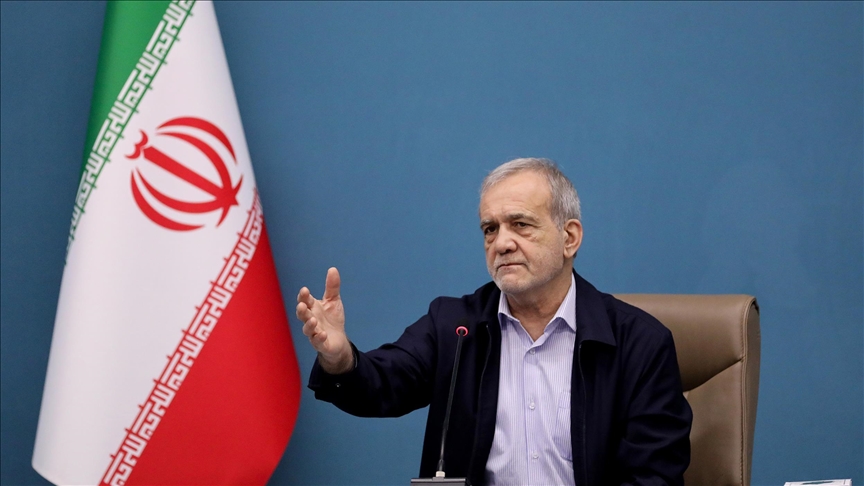
On US social media company X, Iranian Foreign Minister Abbas Araghchi said the talks would take place in the capital Muscat at around 10 am (0600GMT) local time.
“Nuclear talks with the United States are scheduled to be held in Muscat on about 10 a.m. Friday,” Araghchi wrote, expressing gratitude to Oman for facilitating the meeting.
“I’m grateful to our Omani brothers for making all necessary arrangements,” he added.
His comments come as a White House official also confirmed Wednesday to Anadolu that the talks would be held in Oman, despite earlier reporting by Axios that the US refused a change in the site of the talks, previously set to be held in Istanbul, Türkiye.
Prior to that, Iranian media reported that Iran and the US were slated to hold indirect negotiations in Muscat on Friday, with a focus on nuclear-related issues.
Before Muscat, Istanbul had been proposed as the venue, following Türkiye’s successful intervention to help ease tensions between the two countries.
Iran calls non-nuclear issues ‘non-negotiable’
As for what will be discussed, Iran’s semi-official Mehr News Agency cited a source saying that Washington seeks to “raise issues outside the nuclear framework, including defense matters.”
“These demands are not only unrelated to the nuclear issue but are directly tied to national security and the country’s deterrent capability and are fundamentally non-negotiable,” the unnamed source said.
He added that Iran is “ready to negotiate within a defined framework based on mutual respect on nuclear matters,” but that the “insistence on excessive demands and raising issues beyond the agreement is the main factor behind any potential deadlock.”
Oman has previously served as a mediator in indirect contacts between the two sides.
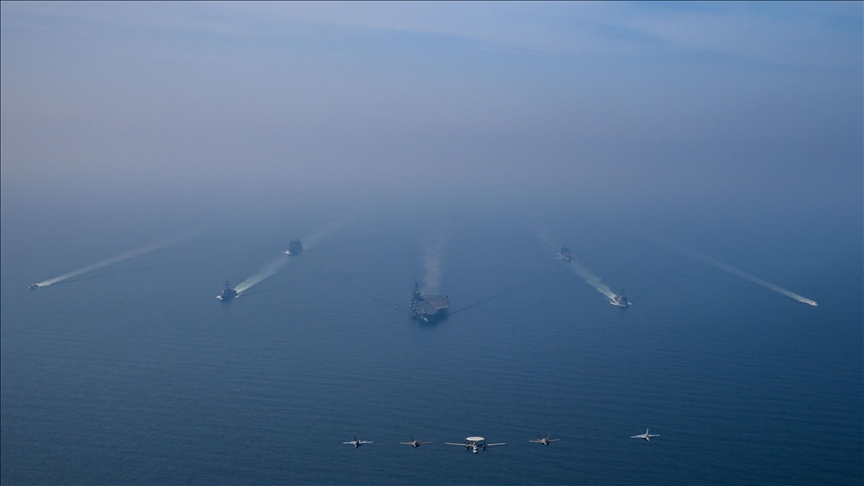
The planned talks come amid rising tensions between Washington and Tehran, fueled by an American military buildup in the Gulf and repeated threats of military action by US President Donald Trump.
In recent days, several countries have stepped in and offered to mediate between Tehran and Washington to ease tensions, with Türkiye playing a particularly active role.
The US and its ally Israel accuse Iran of seeking to produce nuclear weapons, while Tehran says its nuclear program is designed for peaceful purposes, including electricity generation.
Al Jazeera reported nine regional and Islamic countries pressured the Trump administration not to cancel and have the nuclear talks venue moved to Oman.
Military-strategic expert retired Major-General Mamoun Abu Nuwar states the ceasefire in the Gaza Strip remains extremely fragile as Israel continues to control the ground, security corridors and the buffer zone east of the enclave.
Abu Nuwar told Jordan 24 the current situation on the so-called “yellow line”—with its construction, improvements, and the creation of earthen fortifications—clearly shows Israel wants to make this line a permanent reality and has no intention of withdrawing from east of Gaza and will continue to carry out airstrikes and artillery shelling under the pretext of “thwarting imminent terrorist attacks.”
He added Israel seeks to establish a new reality on the ground and reinforce its security presence in the eastern areas, while simultaneously continuing to bombard the western areas of the Strip. This, he clarified, threatens the continuation of the truce and reduces it to a mere shadow.
Retired Major-General Mamoun Abu Nuwar
Regarding the formation of an international stabilization force in Gaza, Abu Nuwar explained it would be “a key element in the transitional phase,” but its success hinges on several crucial factors, notably a clear UN and Security Council.
He pointed out that any international force wouldn’t succeed without first of all coordinating it with and agreement of Hamas. He said without this, such a force would be seen as an occupation force exposing it to armed confrontation with the other resistance factions.
He stressed such force must have specific and clear tasks limited to maintaining security and assisting in the reconstruction of Gaza, along with establishing rules of engagement and a unified command structure to prevent a slide into open conflict.
Abu Nuwar indicated disarming Hamas is going to be one of the most “significant obstacles” to a settlement, as Israel insists on making it a precondition for any reconstruction or withdrawal. This is while Hamas states it would only disarm if a just political settlement leading to the establishment of a Palestinian state is reached.
He added Hamas agreed in principle to the formation of a technocratic administrative committee to take over the administration of Gaza and to allow the deployment of a new Palestinian force currently being trained in Jordan and Egypt, as part of an international plan to manage the next phase. However, Israel rejects the presence of Turkish forces in any potential mission and prefers the participation of countries such as Azerbaijan, Malaysia, and Indonesia.
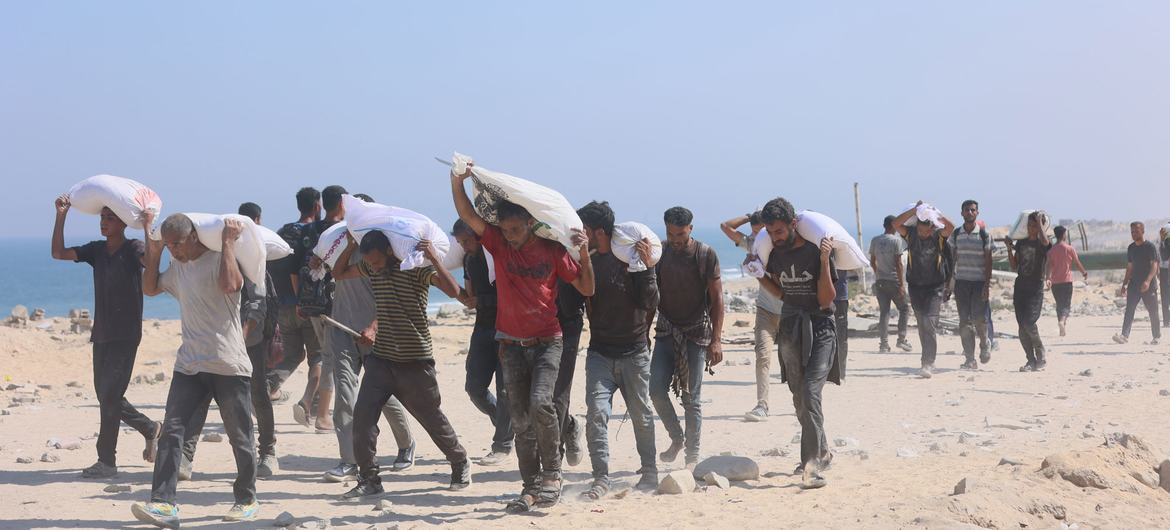
Abu Nuwar believes Israel will not withdraw completely from the Gaza Strip and will seek to maintain its security and military control over the border crossings and areas. He pointed out the continuation of this situation could lead to new waves of displacement of Palestinians, given the catastrophic humanitarian conditions in the south, particularly in Rafah and Khan Younis.
He indicated any attempts to rebuild or develop new areas in Rafah will fail unless the siege is lifted and full Palestinian control is restored. He noted the continued ambiguity surrounding the “yellow line” drawn by Israel east of the Gaza Strip suggests there is an attempt to impose a new geographical and political division in the enclave
Abu Nuwar concluded by saying that the road to a political solution or a comprehensive peaceful settlement is still long and arduous, especially with Israeli Prime Minister Benjamin Netanyahu’s lack of interest in the political process due to his internal electoral calculations. He stressed that the continuation of the current situation will make the ceasefire merely a cover for a new occupation reality, and will open the door to repeated clashes and numerous difficulties in implementing any peace plan or genuine reconstruction.
The United States faces a sensitive equation in the Middle East. On one side, a strong strategic alliance with Israel, built on military and intelligence superiority. On the other, a deep economic and security partnership with Arab states, which control oil, gas, key waterways, and sovereign wealth funds. Yet Washington still treats Arabs as financial and energy suppliers, while granting Israel unconditional superiority. The question is: How long can this continue before America pays a strategic price?
Since the 1970s, oil has been tied to the U.S. dollar through the petrodollar system. This made the dollar the backbone of the global financial order and allowed Washington to finance deficits while keeping global dominance. But the landscape is shifting. BRICS seeks to reduce reliance on the dollar. With Saudi Arabia and the UAE joining, Arabs now have direct influence on the future of global finance. Any move to price oil in other currencies could shake the foundations of U.S. power.
Meanwhile, Israel—backed by open U.S. support—pushes Netanyahu’s vision of a “New Middle East.” The plan is clear: destroy Gaza, swallow the West Bank, fund the displacement of Palestinians, and strike Lebanon, Syria, Qatar, and Yemen. Even Gulf states are no longer outside the danger zone, as Israeli threats expand across the region.
Israel has little economic weight compared to the Arabs, but it enjoys political and military privileges that make it a forward base for Washington. Arabs, by contrast, hold powerful cards: oil and gas, the Suez Canal, Bab al-Mandab, the Strait of Hormuz, and sovereign funds with hundreds of billions in U.S. markets. Used together within a united stance, these cards can rebalance U.S. policy toward Israel.
The pressure is not only economic. The U.S. operates dozens of military bases in the Gulf, Jordan, and Turkey. If Arabs link these facilities to Washington’s position on the conflict, the cost of bias will rise. At the same time, Arabs are no longer just oil producers. They are key players in renewable energy and green hydrogen, shaping the future of global energy markets.
Inside the U.S., the Israeli narrative no longer dominates unchallenged. A growing movement among youth, universities, and independent media rejects blind support for Israel, especially after the humanitarian disaster in Gaza. This has fueled mass protests, political pressure, and divisions inside the Democratic Party between the old guard and a younger generation more critical of Israel. Arabs can build on this by engaging think tanks, universities, and Arab-American communities.
In Europe, the EU cannot ignore its vital interests with the Arab world in energy, trade, and investment. Public anger over Gaza is rising. Arabs have an opportunity to unify their message and push Europe toward greater independence from Washington. Linking access to Arab markets with balanced political positions could turn sympathy into official pressure on Israel from within its Western allies.
At the international level, Israeli actions no longer pass without scrutiny. The UN Security Council has issued repeated condemnations, despite Washington’s vetoes. The latest vote reaffirmed the two-state solution as the only path to peace, highlighting Israel’s growing isolation. A united Arab stance could transform this consensus into real leverage, combining international legitimacy with Arab economic power.
In the end, the ball is in the Arabs’ court. They hold the tools to impose a new balance and secure a fair solution for Palestine. If they act with unity and resolve, they can curb Israeli arrogance and reshape the region. If not, the cost will fall on Arab citizens—through weaker economies, shrinking wages, and eroded sovereignty—while the future of the Middle East is written without them.
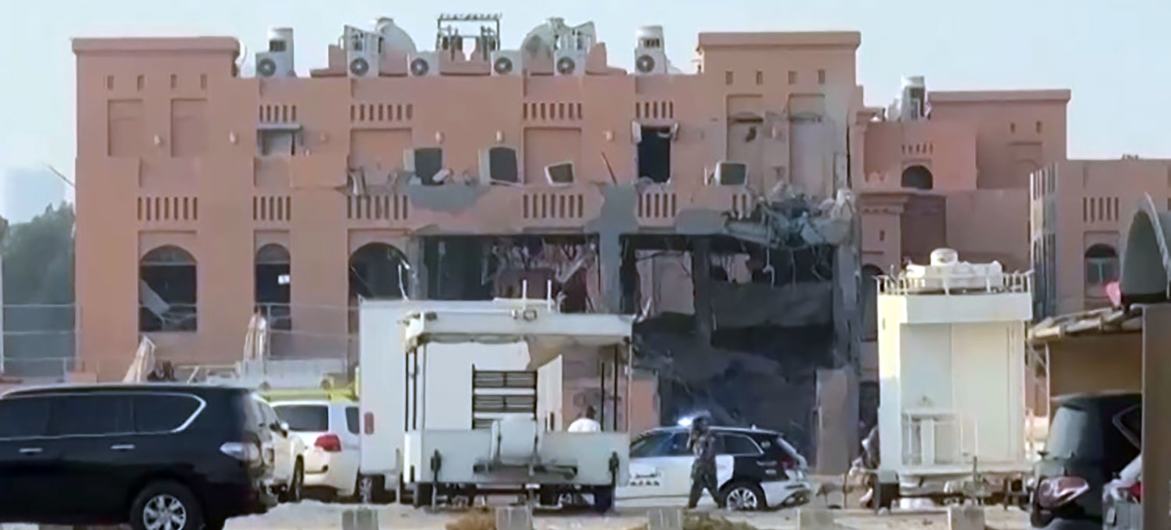
“This is a message to the entire Middle East,” Israeli Knesset Speaker Amir Ohana said in response to the Israeli airstrike that targeted Hamas leaders in the heart of the Qatari capital, Doha.
However, this statement is not merely a comment on the military operation strike into a declared strategic message, telling the entire region, and primarily the Gulf, that Israel, in partnership with Washington, has become the master of the decision-making process in the region.
Ohana’s statement is an explicit and direct threat that leaves no room for interpretation, reflecting the new deterrence doctrine adopted by Tel Aviv: No red lines, no geographical immunities, and no Western allies outside the confines of Israeli dictates. Simply put, anyone who disagrees with us becomes a legitimate target, even if they are in the heart of a friendly capital that hosts the largest American military base.
This makes for a dangerous conclusion: Israel no longer views the Gulf states as partners in stability, but rather as “open arenas for fiery messages.” Washington is blessing the silence, participating in complicity, and mocking the Arabs.
Naked dominance
And don’t forget the Israeli crime in the heart of the Gulf marks the beginning of a new era of naked dominance. It’s not a traditional security operation, but a pivotal turning point in the rules of regional engagement, in which Qatar has been embarrassed both on the Arab level and internationally.
Israel has now publicly placed itself in a circle (no longer concealing its intentions) – through bombing and military strikes – that it no longer sees a distinction between political geography and the theater of operations. More dangerously, the heart of the Gulf today has become openly subject to Tel Aviv’s fire. And who can challenge it?
The strike wasn’t an intelligence leak or a silent targeting, but a direct airstrike in an area teeming with embassies, schools, and residential buildings, in a country that is a major ally of Washington and a pillar of American security in the Middle East.
Thus the message has become clear to everyone: No one is above attack… no state, no sovereignty, no partnership.
The US administration, led by Donald Trump, evaded with a series of conflicting statements about its prior knowledge of the operation. But whether it knew and blessed it, knew and remained silent, knew too late, or did not know at all, the outcome is the same: The American cover was removed, Gulf confidence eroded, and billions perished. The statements of the US embassy in Doha did not go beyond expressions of caution to American citizens, while White House statements swayed between “regret over the location” to “understanding the goal of eliminating terrorism.”
I believe the opposite message was conveyed to the Gulf capitals: Your security is not a priority, and your sovereignty does not equate to a clear position from Washington. The question that now arises however is: Why Qatar? Why now? Why was the strike carried out in Qatar and not in Turkey, or Iran for example? This is despite the fact that the Hamas leaders that were targeted had just returned from Istanbul, suggesting Tel Aviv chose the location not arbitrarily but with deep political awareness. Tel Aviv did not pull the trigger in Istanbul, even though the targeted leaders passed through it only hours earlier.
Turkey, with all its military, political, and international complexity, is not a testing ground for Israeli madness. There are red lines that even Tel Aviv dares not cross… and Turkey is one of them. The potential Turkish military response, the internal Turkish explosion during a highly sensitive election season, and the delicate balance of power within NATO rendered Turkish territory “operationally closed” even to the most violent wings of Israeli decision-making. But when the targeted figures left Istanbul for Doha, everything changed.
Qatar, like other threatened Arab states, in the Israeli security and intelligence mindset, is merely an intermediate gray area, neither neutral nor classified as an “enemy,” potentially a shocking target at a low cost. This is something all Arab decision-makers should be aware of.
From Tel Aviv’s perspective, Qatar is balancing contradictory roles, managing mediation, funding aid, and hosting parties that anger Israel without possessing a genuine deterrent umbrella. There are no international calculations that could prevent a surgical strike carried out within hours. Merely hosting an American base does not make Doha “immune,” but may even further tempt Tel Aviv, proving that decision-making in the region is no longer solely in Washington’s hands but in Tel Aviv as well.
In short, Israel needed a platform to send the biggest message since the Gaza war… so it chose the weakest link, amid the silence of its strongest ally.
Here, we can pause a moment at the Knesset member’s statement that the operation was “a message to the Middle East.” This is not a slip of the tongue, but a strategic doctrine upon which future decisions are based. Israel is telling all countries in the region that whoever harbors Hamas, or even engages in dialogue with it, will be next.
If the Arab states fail to take a firm political stand, the Doha precedent will be repeated elsewhere. It may not be Hamas’s mediation that stands accuse but rather the concepts of neutrality, balance, and even dialogue with parties Tel Aviv disapproves of and which then could become sufficient justification for a strike. It’s a policy of punishment.
This scene is posing existential questions for Arab capitals. If Qatar, Washington’s most important ally, is being bombed over the heads of its own people, after Syria, Lebanon, and Gaza… should we wait for Iraq’s turn? Riyadh? Abu Dhabi? Kuwait? And others? Does the American umbrella truly protect us, or is it used only when our interests intersect with Israel’s?
And what is the point of hosting American bases if they do not prevent airspace violations? Or provide protection?
What happened in Doha is pushing the region to crossroads: Either continuing its position of dependency and timid mediation, or repositioning strategically and developing independent air defenses, which is logistically difficult, or seeking alternative alliances (Ankara, Beijing, Moscow, Tehran?), and establishing red lines that Tel Aviv will not cross.
Qatar now faces difficult choices: Will it withdraw from the Hamas mediation? Will it demand real security guarantees? Will it go further, toward symbolic deterrence or unconventional partnerships? Or will it pay the price of protection once again?
Beware: A war of wills is beginning now. The Israeli airstrike in Doha was not just a blow to Hamas, but also a slap in the face to the sovereignty of the Gulf and the region, an undermining of the prestige of international law and its signed, ratified, and binding agreements, and an insult to the concept of the alleged strategic partnership with America.
This is the beginning of a new era, one in which Israel and Washington declare that the security of the region is no longer an Arab decision. The question now is: Will the Arabs as a whole wake up before “Ohana’s message” reaches other capitals? Perhaps.
The author is a political writer based in Amman Jordan and contributed this article to the Al Rai Alyoum Arabic website
What happened on October 7th was not merely a surprise, bloody attack for Israel—it marked a watershed moment that redefined its security doctrine and the limits of its regional project. It was a moment strikingly similar to what the events of September 11th represented for the United States. Immediately after the launch of the Al Aqsa Flood operation, prime minister Benjamin Netanyahu wasted no time in drawing a direct comparison to 9/11.
This comparison was not just rhetorical or meant to rally emotions. It reflects a much deeper strategic vision. Netanyahu is using the shock of the attack to advance an old-new Israeli project: restructuring the region’s security and political landscape in a way that guarantees Israel near-absolute security in a demilitarised environment, free of any threats.
After the 9/11 attacks, US neoconservatives in the White House seized the moment to implement the “Project for the New American Century”—a vision developed by think tanks and figures like Paul Wolfowitz, William Kristol and Robert Kagan. Founded in 1997, the project aimed to reshape the global order and maintain American dominance, with Iraq, Syria, and Iran at the heart of its ambitions. September 11th became the ideal pretext to accelerate this vision through the invasion of Iraq and redrawing the map of the Middle East.
Today, Netanyahu is doing something strikingly similar. He sees the Al Aqsa Flood as a historic opportunity to accelerate his own regional vision—one that is no longer confined to Gaza but extends to southern Syria, Lebanon, Iran, Gaza again, and even the political dynamics in Turkey and several Arab states.
Those following Netanyahu’s rhetoric—and that of his ministers—can clearly see that Israel is no longer content with merely deterring its enemies. It now seeks to re-engineer the entire geopolitical landscape of the region. In southern Syria, Netanyahu stated clearly: “We will not allow any military forces threatening our borders to remain in southern Syria, and we will not return to the old equation.” Defence minister Yoav Gallant added that Israel will reshape the reality there to ensure its strategic security—which essentially means preventing the Syrian army from returning to its previous positions and enforcing a safe corridor between Sweida and the Golan Heights in line with Israeli interests.
In Lebanon, the objective has shifted from merely weakening Hizbollah to explicitly disarming the group entirely and eliminating its missile capabilities, which pose a direct threat to Israel.
In Gaza, the discussion is no longer about reconstruction or humanitarian relief. The conversation centers on the “day after”—meaning the complete removal of Hamas, disarmament of all resistance forces, and transforming Gaza into a powerless entity under full Israeli security control.
Even the proposed Palestinian state mentioned in the recent New York declaration is envisioned as a demilitarized one—to appease Netanyahu. Yet, he still won’t accept it. Israel has already moved past the idea of any sovereign Palestinian state. What’s “allowed”, according to current Israeli thinking, are fragmented cantons and voluntary or forced displacement of Palestinians.
As for Iran, Israel’s confrontation with Tehran is open-ended, aiming to reduce its missile capabilities and eliminate its strategic threat. It is also plausible that Israel’s strategic vision may extend to shaping the political scene in Turkey—possibly by pushing for a government more aligned with Israeli interests—and exerting pressure on certain Arab states, even those officially labeled as “friendly” to Tel Aviv.
This project is no longer tied to Netanyahu’s personal political survival. It has become close to a national consensus among Israeli institutions and political elites. Leaders like Yair Lapid or Naftali Bennett are unlikely to reverse course or return Israel to the pre-October 8th status quo.
What’s unfolding today isn’t a series of short-term security tactics. It’s a long-term strategic plan aimed at reshaping the regional balance of power and cementing Israel’s status as the undisputed regional superpower.


 CrossFireArabia