World Condemn Trump’s Plan Over Gaza

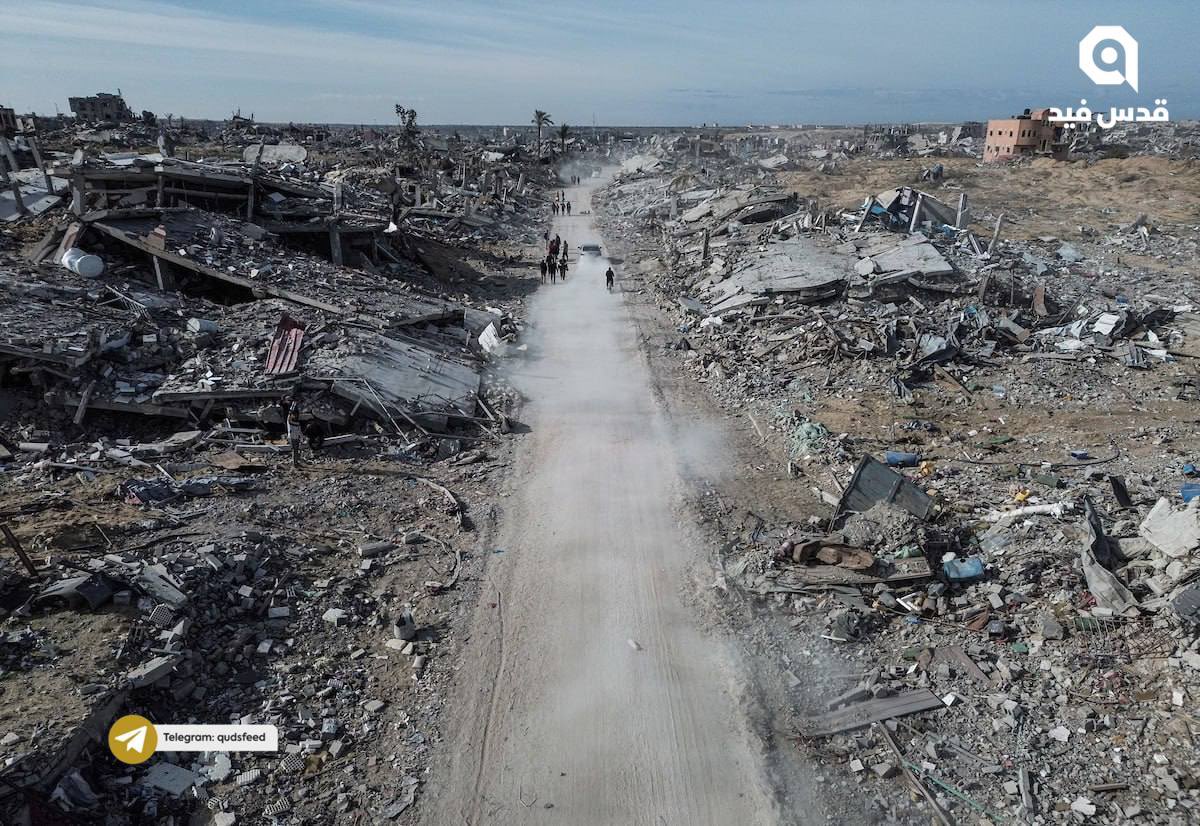
US President Donald Trump’s recent proposal to relocate Palestinians from Gaza and place the territory under long-term US control has sparked widespread international backlash.

Unveiled during a joint press conference with Israeli Prime Minister Benjamin Netanyahu, the plan envisions transforming Gaza into the “Riviera of the Middle East” by resettling Palestinians in neighboring countries like Jordan and Egypt.

While the proposal received support from Israel, the global response has been overwhelmingly negative, with strong condemnations from major powers, regional countries, and even US lawmakers.

Global powers reject forced relocation

Both Russia and China criticized the plan, highlighting the violation of international norms.

Kremlin spokesperson Dmitry Peskov reaffirmed Russia’s support for a two-state solution, while the Russian Foreign Ministry said: “Any populist comments are counter-productive and ramp up tensions.”

China condemned the forced displacement, emphasizing that “Palestinians governing Palestine” is fundamental for post-conflict stability.

European countries have also been vocal on the plan, expressing strong opposition.

German Foreign Minister Annalena Baerbock labeled the proposal a breach of international law, stressing that Gaza belongs to the Palestinians.

France reiterated its opposition to any forced displacement, calling it a serious violation of international law.

The UK, under Prime Minister Keir Starmer, supported Palestinian rights to return and rebuild, while Denmark said: “It doesn’t seem to be a realistic way forward.”

Reasserting Italy’s support for the two-state solution, the Italian foreign minister said nothing can be achieved without the Palestinians, noting: “It seems to me that it is a bit difficult (to implement the plan).”

Spain, Ireland, and Slovenia, having recognized Palestine in 2024, condemned the plan, calling it ignorant of Palestinian history and contradiction of the UN Security Council resolutions.

Belgium said forced displacement of populations constitutes “a grave breach of international humanitarian law” while Poland expressed support for a two-state solution.

Canada, where Trump put tariffs on hold last week, said its longstanding position on Gaza has not changed and is committed to achieving a two-state solution.

Relocation plan ‘unacceptable’

Turkish Foreign Minister Hakan Fidan condemned the plan as “unacceptable,” stressing that even considering such a proposal is wrong. The Turkish Defense Ministry declared its complete opposition to the displacement of Palestinians.

Palestinian President Mahmoud Abbas rejected the plan outright, stating peace cannot be attained without a Palestinian state.

Hamas group called it “hostile,” while Qatar, Egypt, and Saudi Arabia warned it would destabilize the region.

Iran also voiced firm opposition to the plan, and Iraq condemned the plan to displace Palestinians.

Although Latin American countries were largely silent, Brazil’s President Lula da Silva criticized the proposal as “incomprehensible,” questioning where displaced Palestinians would live.

Dissent within US

Despite originating in Washington, the plan faced criticism even from US lawmakers.

Democratic Senator Chris Van Hollen condemned it as “ethnic cleansing by another name.” Representative Rashida Tlaib, a Palestinian-American, declared: “Palestinians aren’t going anywhere.”

Even Republican figures like Senator Lindsey Graham found the proposal “problematic,” while Senator Tim Kaine labeled it “deranged.”

Trump’s Gaza relocation plan has united a broad spectrum of global opposition, transcending geopolitical divides.

While no country has openly expressed support for the plan, many countries have remained silent. Argentina, Japan, and India, the countries that sent representatives to Trump’s inauguration, have not made any statements on the issue.

Countries that want to maintain good relations with the new US administration have also remained silent. Latin American countries, where Trump has cracked down on immigration and drugs after taking the office, have so far kept mum.

Aside from Israel, the international community remains steadfast in rejecting forced displacement, advocating instead for a two-state solution as the only viable path to lasting peace in the region according to Anadolu.

CrossFireArabia

CrossFireArabia
Dr. Marwan Asmar holds a PhD from Leeds University and is a freelance writer specializing on the Middle East. He has worked as a journalist since the early 1990s in Jordan and the Gulf countries, and been widely published, including at Albawaba, Gulf News, Al Ghad, World Press Review and others.

Related Posts

Israel Violated The Ceasefire 4379 Times in 315 Days

CROSSFIREARABIA – Israel has violated the ceasefire 4379 times according to the Government Media Office in Gaza City. It has been 315 days since the Gaza ceasefire was signed on 10 October, 2025. The Office stated since that time Israeli military strikes on the Strip killed 1,286 people and injured 4,257 while 180 arrests were made by the Israeli occupation since that time.

Continue reading
Gaza’s Kites Return — and Israel Katz Threatens Revenge

CROSSFIREARABIA — A handful of balloons and homemade kites drifting out of the Gaza Strip have managed to provoke an extraordinary response from Israel’s defence establishment, with Defence Minister Israel Katz threatening assassinations, forced evacuations and military strikes if the launches continue.

The objects at the centre of the latest confrontation are remarkably primitive.

Israeli media reported that several kites crossed from Gaza into Israeli communities surrounding the Strip in recent days. At least five have reportedly been detected, including one found in Kibbutz Kfar Aza over the weekend.

Significantly, the kites discovered so far were reported not to have been carrying explosives or incendiary material. Israeli reports said they did not pose a danger to residents according to the Jerusalem Post.

That has not stopped Katz from treating them as a major security threat. He announced Sunday he had instructed the army to respond “immediately and forcefully” to balloons, kites or drones crossing from Gaza.

Katz said Israel would regard every such launch as an act of war and made clear that, as far as the Israeli military response was concerned, there would be little distinction between a balloon, a kite and an unmanned aircraft.

“A balloon is treated like a kite, and a kite is treated like a drone, with or without explosives,” Katz said, according to Israeli media, the Israeli daily reported.  

He went considerably further.

Katz threatened action against those Israel believes are responsible for launching the objects, including assassinations. He also raised the possibility of ordering Palestinians to evacuate residential neighbourhoods and of attacking areas Israel claims are being used as launching sites Anadolu Ajansı reported him as saying.

The threat potentially turns an object made from little more than plastic, sticks and string into justification for a much broader military response.

Gaza Disputes the Israeli Account

But there is another side to the story.

Gaza’s Government Media Office, Sunday, rejected the Israeli portrayal of the kites and balloons as organized hostile operations.

Ismail Al-Thawabta, director-general of the office, told the Palestinian Sanad News Agency that the Israeli allegations were unfounded and accused Katz of using them to prepare public opinion for another escalation against Gaza.

According to Al-Thawabta, what Israel is describing as acts of war are, in some cases, simply homemade kites constructed by Gaza’s children from nylon bags and pieces of wood.

Children fly them as one of the few forms of recreation still available amid the devastation and shortages inside Gaza, he said.

The Government Media Office argued that the crude kites largely follow the direction of the wind and cannot be precisely controlled over long distances as another local news agency pointed out.

That distinction is crucial.

Israel is alleging that objects are deliberately being dispatched across the boundary. Gaza officials are saying that children’s kites can simply be caught by the wind and carried beyond the Strip.

Neither claim should automatically be accepted without independent evidence establishing who launched each object and with what intention.

What is established from Israeli reporting, however, is that the kites discovered in recent days were not carrying explosives or incendiary devices as per the Shorouk Arabic website.

An Echo of 2018

The sight of kites crossing the Gaza boundary nevertheless carries powerful memories for Israelis.

During the Great March of Return protests beginning in 2018, Palestinians developed incendiary kites and balloons into an improvised form of protest and resistance. Some carried burning material across the boundary, starting fires in agricultural fields and nature reserves in southern Israel.

The devices were technologically simple but became a surprisingly persistent problem for the Israeli military.

Today’s situation is different in one important respect: The objects reported in the latest incidents have not been found carrying the incendiary or explosive payloads associated with some of the 2018 launches.

Yet the political and military reaction has been immediate.

Katz has effectively established a doctrine under which the distinction between a kite and a drone can disappear once either crosses from Gaza.

A Kite Becomes an “Act of War”

There is a striking imbalance in the language surrounding the episode.

Gaza remains devastated by years of warfare, displacement and destruction. Children there improvise toys from whatever materials can still be found.

Against that background, an object consisting of nylon, wood and string can cross the boundary on the wind and suddenly enter an entirely different world of military terminology: drone, launch site, operator, assassination, evacuation and act of war.

The Gaza Government Media Office says that is precisely the danger.

It argues that depicting children’s homemade kites as a significant military threat could provide Israel with a new justification for attacking civilians and residential areas according to Alray⁠.

Israel, by contrast, says it cannot afford to wait for a kite or balloon to prove dangerous before responding. Katz’s position is that anything deliberately launched from Gaza toward Israeli communities must be treated as a hostile act.

That leaves one central question hanging over the latest confrontation:

Are these deliberate launches from Gaza, as Israel alleges, or are at least some simply children’s kites escaping into the wind, as Gaza officials maintain?

For the moment, publicly available evidence does not settle that question. What it does show is how little is now required to threaten another escalation around Gaza. No missile. No rocket. Not even an explosive.

Just a kite crossing the sky — followed by a defence minister promising assassinations, evacuations and force.

This article is based on information from AI and is reproduced in Crossfirearabia.com

Continue reading

You Missed

Israel Violated The Ceasefire 4379 Times in 315 Days

Israel Violated The Ceasefire 4379 Times in 315 Days

Gaza’s Kites Return — and Israel Katz Threatens Revenge

Gaza’s Kites Return — and Israel Katz Threatens Revenge

Living With The Dead: Gazan Families Forced to Make Homes Among The Graves

Living With The Dead: Gazan Families Forced to Make Homes Among The Graves

Former Jewish PM: Israel Has ‘Lost The United States…’

Former Jewish PM: Israel Has ‘Lost The United States…’

Palestine in Color Dresses

Palestine in Color Dresses

Khan al-Sultan Stands Proud in Jerusalem

  • By marwan
  • August 22, 2026
  • 15 views
Khan al-Sultan Stands Proud in Jerusalem