How Trump Burned Western Friendships

By Jassem Al-Azzawi

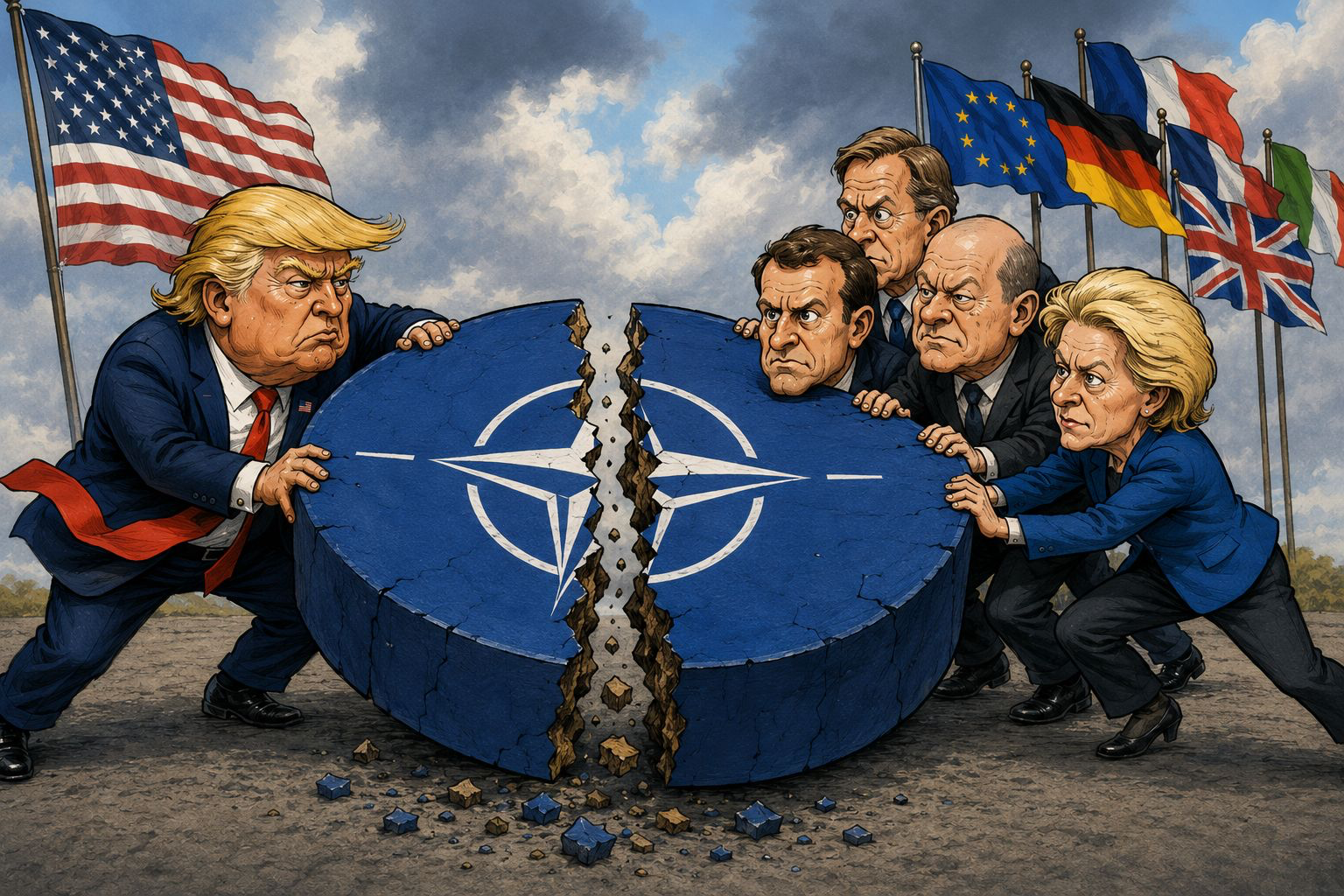
Something remarkable is happening today in the corridors of western powers. America’s closest allies are no longer whispering their frustrations behind closed doors; they are now shouting them from the podiums of their parliaments and in press conferences. And US president Donald Trump is responding in kind. The transatlantic alliance, painstakingly built over eight decades, is now fracturing in a live broadcast.

The immediate cause is the American-Israeli war on Iran, launched on 28 February, 2026, without consulting NATO partners, United Nations, or even Washington’s closest friends. But the rift runs deeper than a single conflict; it reflects a strategy that is indifferent to its allies, or even openly contemptuous of them.

“The Americans clearly lack a strategy.”

The breaking point was starkly illustrated in the frank remarks made by German Chancellor Friedrich Merz to students in Marsberg, northwest Germany. Merz likened the conflict with Iran to past US failures in Afghanistan and Iraq.

“It’s clear the Americans don’t have a strategic plan,” he said, describing Washington’s approach as “ill-conceived.”

He went even further, suggesting that the US was being “humiliated” by Tehran’s negotiating tactics which is a stunning public accusation from a Chancellor who, until recently, was one of Washington’s most hawkish European allies.

Trump reacted furiously, writing on his TruthSocial platform that Merz “doesn’t know what he’s talking about” and threatening to reduce the number of US troops stationed in Germany, currently at 36,436. He then told the German chancellor to mind his own business:

“The Chancellor of Germany should spend more time ending the war between Russia and Ukraine, where he has been completely ineffective, and fixing his own battered country… rather than meddling in the affairs of those who are eliminating the Iranian nuclear threat.”

This verbal sparring is transcending all diplomatic norms and is shakening the foundations of the US-European axis.

Starmer: “I’m fed up,” he says publicly.

British Prime Minister Keir Starmer invested considerable political capital in cultivating a working relationship with Trump, but that investment has now proven costly. When asked about Trump’s threats to destroy Iran, Starmer told ITV:

“These are not words I would ever use, because I speak from our British values ​​and principles.”

The harshest language came when Starmer placed Trump alongside Vladimir Putin as partners in causing British economic hardship, telling Talking Points:

“I’m fed up with seeing families and businesses across the country struggling with fluctuating energy bills because of Putin’s or Trump’s actions around the world.”

On British military involvement, Starmer was unequivocal: “I will not change my mind, and I will not back down. It is not in our national interest to join this war, and we will not do so.” Trump rewarded this initial stance with a statement to The Sun newspaper: “Starmer has not been cooperative. The relationship is clearly not what it used to be,” he said.

Meanwhile, the International Monetary Fund underscored the scale of the material risks by lowering its 2026 growth forecast for Britain to 0.8 percent. This is a direct consequence of the energy shock Trump’s trade war has inflicted on British households.

Sanchez and Carney: Europe and Canada Draw a Line

Spanish Prime Minister Pedro Sanchez has emerged as the most vocal European leader in his criticism of Trump and his uncompromising stance. After Trump threatened to sever all trade ties with Madrid following Spain’s refusal to allow US troops to use the Rota and Morón air bases, Sanchez did not back down. When the ceasefire was announced, his judgment was scathing:

“A ceasefire is always good news, but this temporary relief cannot make us forget the chaos, destruction, and lives lost. The Spanish government will not applaud those who set the world ablaze just because they have finally appeared with a bucket of water.”

For his part, Canadian Prime Minister Mark Carney offered a broader structural indictment, stating in a speech at the Lowy Institute in Sydney:

“Geostrategically, dominant powers are increasingly acting without restraint or respect for international norms and laws, while others bear the consequences.”

He described the war as “a failure of the international order,” adding that “the United States and Israel acted without engaging the United Nations or consulting allies, including Canada.”

The alarm bells were not only ringing abroad; Senate Democrats launched a fierce campaign to reclaim congressional authority over a war they deemed illegal, unauthorized, and a diplomatic disaster.

Senator Tim Kaine’s diagnosis was accurate: “There was no clear justification, no clear plan, and no effort to engage allies or Congress. When you make diplomacy impossible, you make war inevitable.”

Senator Chris Murphy was even more blunt.

“We have never seen a foreign conflict so publicly mismanaged. We have become a laughingstock around the world, while hurting Americans who are now paying billions more in fuel prices.” Senator Tammy Duckworth linked the current disaster to America’s post-World War II pattern, saying:

“Our duty is to ensure that our nation never again slides into an endless, self-serving war.” Despite this, all six war powers resolutions introduced by the Democrats failed due to Republican loyalty to Trump, even as the war cost the lives of 13 Americans in its first month and the price of a gallon of gasoline reached $4.30.

Time for reckoning has come…

Whether Trump’s antagonism toward allies is a strategic dismantling or simply the impulsiveness of a leader who confuses aggression with strength, the result is the same. He threatened to withdraw from NATO, imposed trade sanctions on Spain, threatened to withdraw troops from Germany, and pushed the “special relationship” with Britain to the brink of collapse. Secretary of State Marco Rubio’s warning also came to light.

Trump will “re-examine” Washington’s commitments to allies who did not support the war, as a declaration of “conditional friendship.”

America’s friends are being pushed away, its adversaries are watching, and the West, for the first time since 1945, is genuinely unsure whether it can rely on Washington.

Jassem Al-Azzawi is an Iraqi writer and journalist who contributed this article to the Arabic website, Al Rai Al Youm and appears in Crossfirearabia.com.
Continue reading
Palestinian State Out of Gaza Horrors?

It is hoped that the appeals for more recognitions of the Palestine state in the UN General Assembly in New York will increase pressure on Israeli Prime Minister Benjamin Netanyahu and his coalition partners to drastically change course and make the Palestinian state a reality.

Notwithstanding the US neutrality recognition, at least as things stand now, coupled with the increased efforts from the European Union, Israel stands to be ostracized in the international community.

One point remains rather curious however, is UK’s Premier Keir Starmer’s condition being that Britain will recognize a Palestinian state if Israel refuses to accept a ceasefire on Gaza.

For all intents and purposes, it seems what Starmer is interested in, is basically a ceasefire and then Palestinian state, but then again this is for the British government to ponder on in the face of the rolling train of recognitions.

But what does this recognition entails in practical terms? It basically means the stalled Oslo negotiations since 1993 are to be revived again, and if need be on different terms than what was envisioned before. Here one says different terms because the Oslo agreements were guaranteed by the world powers and nothing came out of them.

Indeed much more must be done by the world community, especially that now, we have a more difficult and intransigent Israeli government which needs above all else to accept, at least in principle, the two-state solution.

But also and at the same time time, the recognition of a Palestinian state entails the recognition of a Palestinian leadership with the ability and responsibility to represent the Palestinian people.

One supposes there is a general consensus on that now since the current PNA has become defunct and its current leadership obsolete in front of the immense responsibilities and tasks ahead.

In brief, it would be a mere rhetorical smokescreen to call on recognizing a Palestinian state without actually paving the way for the creation of such a state by totally changing the current PNA leadership via honest elections supervised by the international community and which represent the will of the Palestinian people.

Of course one cannot but insist, that the Arab role in the newly envisaged peace process is crucial. One also cannot help but think that the role of Saudi Arabia will be crucial for the next phase. For  start, the precondition of Saudi for any form of dealings with Israel, is for the latter to accept the principle of two-state solution, and in fairness it must be clarified that the French-Saudi initiative which led Emmanuel Macron to recognize a Palestinian state was supposed to be declared in in Paris.

But now due to this effort, it has become an international case at the UN. Israel has failed with all of its endeavors to normalize relations with Saudi Arabia without giving any concessions, mainly the acceptance of the precondition of the recognition of the two-state solution, and now it is facing both the pressure of the international community and the condition of the Saudis, especially they shift their strategy from the UAE to India, and without the Saudis they will have nothing in the Gulf.

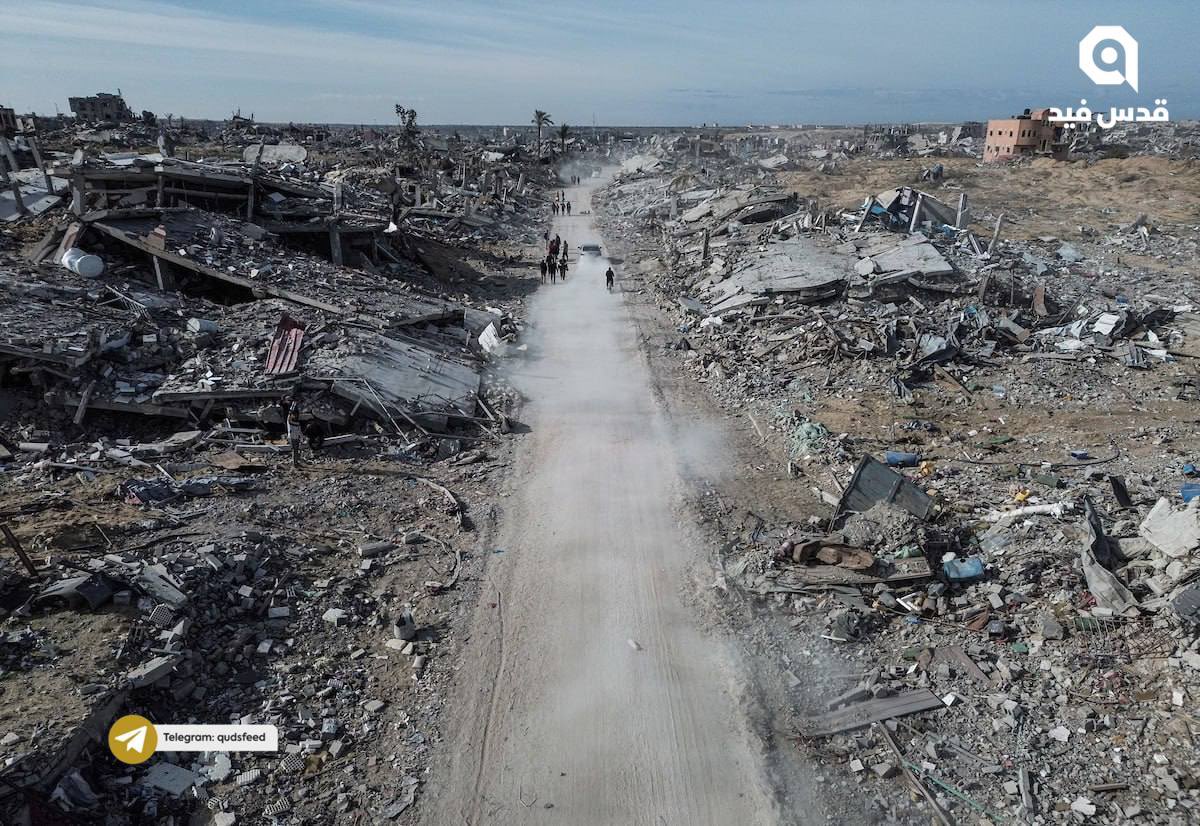
But still there is the bleeding wound of Gaza, the wound which can never start to heal without a collective Arab effort led by the Saudis which takes back to the conundrum of Israel’s acceptance of the principle of Palestinian state. Only then can Saudi Arabia lead the Arab effort, to first of all disarm Hamas, give an amnesty to Hamas members, and exile its leadership out of Gaza, in the hope of rehabilitating the strip and start in earnest the reconstruction efforts.

Continue reading
Britain to Recognize Palestine, Israel Cries Wolf

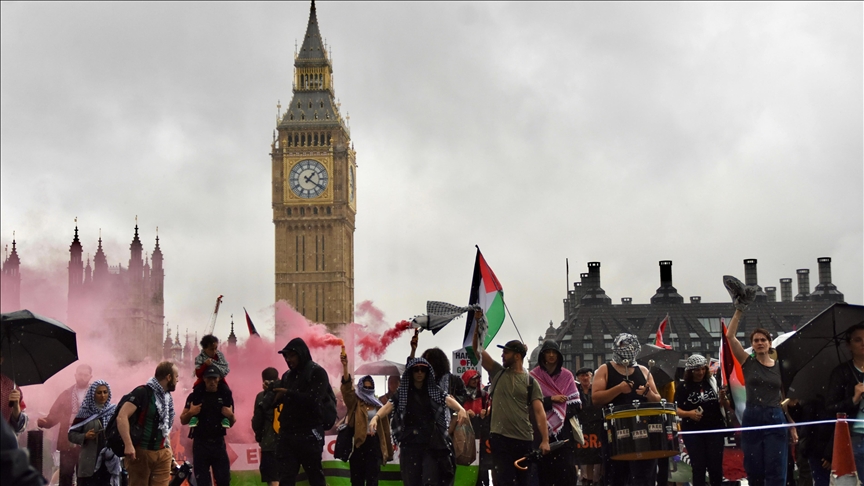
Israel rejected a British government decision on Tuesday to recognize a Palestinian state in September unless Tel Aviv takes “substantive steps to end the appalling situation” in Gaza, calling the move a “reward for Hamas.”

“The shift in the British government’s position at this time, following the French move and internal political pressures, constitutes a reward for Hamas and harms efforts to achieve a ceasefire in Gaza and a framework for the release of hostages,” the Israeli Foreign Ministry claimed in a statement as reported by Anadolu.

British Prime Minister Keir Starmer said his government would move to recognize a Palestinian state at the UN General Assembly in September if Israel fails to take “substantive steps to end the appalling situation in Gaza, agree to a ceasefire and commit to a long-term sustainable peace, and revive the prospect of a two-state solution.”

Last week, French President Emmanuel Macron confirmed that Paris would officially recognize a Palestinian state during the UN General Assembly in September.

So far, 149 of the UN’s 193 member states have recognized Palestine – a number that has steadily risen since Israel began its war on Gaza in October 2023.

The British decision comes amid mounting domestic and international pressure on Israel to end its genocidal war in Gaza and allow humanitarian aid into the besieged enclave.

The Israeli army has pursued a brutal offensive on Gaza since Oct. 7, 2023, killing over 60,000 Palestinians. The relentless bombardment has devastated the enclave and led to food shortages.

On Monday, Israeli rights groups B’Tselem and Physicians for Human Rights-Israel accused Israel of committing genocide in Gaza, citing the systematic destruction of Palestinian society and the deliberate dismantling of the territory’s healthcare system.

Last November, the International Criminal Court issued arrest warrants for Israeli Prime Minister Benjamin Netanyahu and his former Defense Minister Yoav Gallant for war crimes and crimes against humanity in Gaza.

Israel also faces a genocide case at the International Court of Justice for its war on the enclave.

Continue reading
Mad President and Street Brawl

By Dr Khairi Janbek

People from my generation remember a pop group which used to sing a song called the lunatics have taken over the asylum. Now, they were not themselves lunatics but merely performing for their audience and their fans, in the same manner. Neither Trump nor his band wagon are necessarily a bunch of thugs, but they are merely performing for their fans and audience.

However one cannot find any reason for world leaders to go to the Oval Office in order to provide US president Donald Trump with the material to entertain his fans and audience.

He ambushed King Abdullah of Jordan with the entry of journalists when that was not supposed to happen in order to market his absurd Gaza plan, president Emmanuel Macron of France provided him with the opportunity of posturing as an antagonist to the EU, prime minister Keir Starmer provided him with the opportunity of showing what Britain was groveling for – a free trade agreement and a role of being a bridge between the US and EU.

Ironically however, the worst of the Trump performance was left for Volodymr Zelensky, though his trip was the only one that made sense.

Zelensky for all intents and purposes, went to sign an agreement to hand the resources of Ukraine to America, but suddenly the situation deteriorated to almost a street brawl. Why? The whole thing was agreed upon by both sides from the start.

Of course, Zelensky expected a protection commitment from the USA in exchange for the mineral resources, but in fairness, without an explicit US commitment protection would have been implicitly there since supposedly, American companies and workers would be working in Ukraine, so what has actually happened to derail the whole agreement?

Of course, any such agreement with potential implicit US protection of Ukraine, is totally against Russian interests, especially according to some speculation, Putin has the intention to occupy the whole of Ukraine, therefore the talk in the corridors, is that Putin has offered Trump the exploitation of Ukrainian resources in the occupied territories of Russia, which in effect sabotaged the minerals agreement between US and Ukraine, and rescued Trump from having to give security guarantees; albeit implicit to Ukraine.

Now, at the peril of repeating the usual cliche of the EU facing a crossroad on its path, something which had happened frequently, this time it’s in fact different. The truth is that the US has been distancing itself from the EU at least from the days of president Obama, but the difference now is that the EU is being attacked by both the US and Russia, and finds itself as the large leviathan with clay feet unable to move.

The dilemma of differences within the EU are prominent, with full support for Ukraine, with some having lukewarm support, while some with no support at all, moreover the NATO future is hanging in the balance, to keep or not to keep that is the question, but what is the alternative? A European army which is yet to crystallize as an idea, or just drop all the effort?

What it boils down to now, is the idea of leadership of the “Free World”, certainly this notion has always been a nebulous idea, still, the US stood by it and projected its image accordingly, but now, it seems the US is not interested in world affairs except in what it can exploit and use and abuse for its own interests, which means, who will be the new leader of the Free World?

In fact, is there a need for a leader of the free world assuming that there is such a world? If the EU has any such pretensions, then big changes are necessary within its membership as it must be realized the road is very long for such an objective. But in the mean time, we have to settle for the theory of the mad president, ie. Trump would do anything, and peace by force with an oxymoron.

Dr Janbek is a Jordanian writer based in Paris.

Continue reading
World Condemn Trump’s Plan Over Gaza

US President Donald Trump’s recent proposal to relocate Palestinians from Gaza and place the territory under long-term US control has sparked widespread international backlash.

Unveiled during a joint press conference with Israeli Prime Minister Benjamin Netanyahu, the plan envisions transforming Gaza into the “Riviera of the Middle East” by resettling Palestinians in neighboring countries like Jordan and Egypt.

While the proposal received support from Israel, the global response has been overwhelmingly negative, with strong condemnations from major powers, regional countries, and even US lawmakers.

Global powers reject forced relocation

Both Russia and China criticized the plan, highlighting the violation of international norms.

Kremlin spokesperson Dmitry Peskov reaffirmed Russia’s support for a two-state solution, while the Russian Foreign Ministry said: “Any populist comments are counter-productive and ramp up tensions.”

China condemned the forced displacement, emphasizing that “Palestinians governing Palestine” is fundamental for post-conflict stability.

European countries have also been vocal on the plan, expressing strong opposition.

German Foreign Minister Annalena Baerbock labeled the proposal a breach of international law, stressing that Gaza belongs to the Palestinians.

France reiterated its opposition to any forced displacement, calling it a serious violation of international law.

The UK, under Prime Minister Keir Starmer, supported Palestinian rights to return and rebuild, while Denmark said: “It doesn’t seem to be a realistic way forward.”

Reasserting Italy’s support for the two-state solution, the Italian foreign minister said nothing can be achieved without the Palestinians, noting: “It seems to me that it is a bit difficult (to implement the plan).”

Spain, Ireland, and Slovenia, having recognized Palestine in 2024, condemned the plan, calling it ignorant of Palestinian history and contradiction of the UN Security Council resolutions.

Belgium said forced displacement of populations constitutes “a grave breach of international humanitarian law” while Poland expressed support for a two-state solution.

Canada, where Trump put tariffs on hold last week, said its longstanding position on Gaza has not changed and is committed to achieving a two-state solution.

Relocation plan ‘unacceptable’

Turkish Foreign Minister Hakan Fidan condemned the plan as “unacceptable,” stressing that even considering such a proposal is wrong. The Turkish Defense Ministry declared its complete opposition to the displacement of Palestinians.

Palestinian President Mahmoud Abbas rejected the plan outright, stating peace cannot be attained without a Palestinian state.

Hamas group called it “hostile,” while Qatar, Egypt, and Saudi Arabia warned it would destabilize the region.

Iran also voiced firm opposition to the plan, and Iraq condemned the plan to displace Palestinians.

Although Latin American countries were largely silent, Brazil’s President Lula da Silva criticized the proposal as “incomprehensible,” questioning where displaced Palestinians would live.

Dissent within US

Despite originating in Washington, the plan faced criticism even from US lawmakers.

Democratic Senator Chris Van Hollen condemned it as “ethnic cleansing by another name.” Representative Rashida Tlaib, a Palestinian-American, declared: “Palestinians aren’t going anywhere.”

Even Republican figures like Senator Lindsey Graham found the proposal “problematic,” while Senator Tim Kaine labeled it “deranged.”

Trump’s Gaza relocation plan has united a broad spectrum of global opposition, transcending geopolitical divides.

While no country has openly expressed support for the plan, many countries have remained silent. Argentina, Japan, and India, the countries that sent representatives to Trump’s inauguration, have not made any statements on the issue.

Countries that want to maintain good relations with the new US administration have also remained silent. Latin American countries, where Trump has cracked down on immigration and drugs after taking the office, have so far kept mum.

Aside from Israel, the international community remains steadfast in rejecting forced displacement, advocating instead for a two-state solution as the only viable path to lasting peace in the region according to Anadolu.

Continue reading