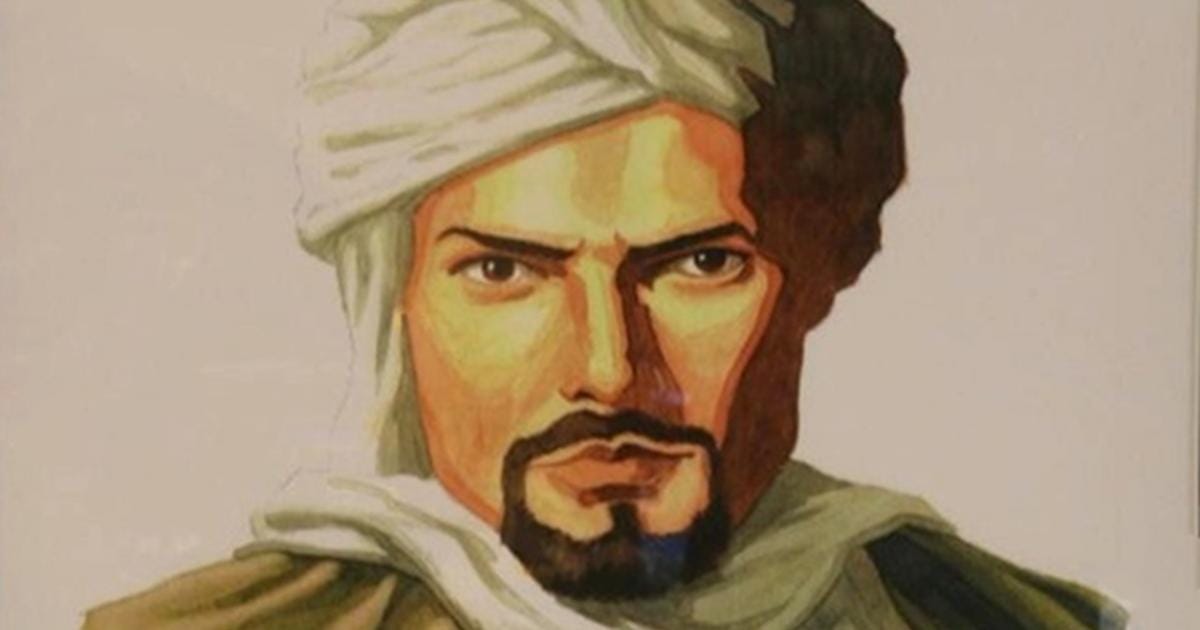
Ibn Batuta: ‘Prince of Muslim Travelers’

He visited numerous regions in more than 40 countries across the three continents of the Old World, covering more than 120,000 kilometers in his travels. He is Abu Abdullah Muhammad ibn Abdullah ibn Muhammad ibn Ibrahim ibn Abd al-Rahman ibn Yusuf al-Lawati al-Tanji, famously known as Ibn Battuta, one of the greatest Muslim explorers in history.

His journeys extended from Morocco to China, Malaysia, and the Philippines, a distance unmatched by any traveler before him. This led a prestigious university like Cambridge to bestow upon him the title “Prince of Arab Muslim Travelers.”

Birth and Early Life:

Ibn Battuta was born in 703 AH (1304 CE) in Tangier, northern Morocco, to a family from the Lawata Berber tribe, whose roots trace back to the Cyrenaica region of Libya.

According to some sources, the name “Ibn Battuta” is derived from his mother’s name, Fatouma. It was customary at the time for children to be named after their mothers, and this name was affectionately shortened to Battuta instead of Fatouma.

His family was renowned for its legal scholarship and practiced law during the Marinid dynasty.

Ibn Battuta was raised with a love of learning and reading, as he came from a scholarly family. He received an Islamic upbringing and likely studied at a traditional Islamic school (kuttab), learning the Quran and Islamic jurisprudence, following the common practice in North Africa at the time.

Upon reaching the age of 21, he resolved to go to Mecca for the Hajj pilgrimage, a journey initially planned for 16 months but which extended into nearly 30 years of exploration.

He visited many countries in the eastern hemisphere and almost the entire Islamic world, acquiring a wealth of knowledge that enabled him to experience adventures and adventures unmatched by any traveler before him.

Ibn Battuta recounted that he undertook this journey alone, without his parents. In his book, “A Gift to Those Who Contemplate the Wonders of Cities and the Marvels of Travel,” commonly known as “The Travels of Ibn Battuta,” he wrote: “From Tangier, my birthplace, on Thursday, the 2nd of Rajab, 725 AH/1324 CE, intending to perform the Hajj pilgrimage to the Sacred House of God and to visit the grave of the Prophet, peace and blessings be upon him, I set out alone, without a companion to keep me company or a mount to join me in.

A strong, determined impulse and a deep longing for those holy sites resided within me. I resolved to leave my loved ones, both male and female, and departed my homeland like a bird leaving its nest. My parents were still alive, and I endured the pain of separation from them, experiencing the same hardship they endured.”

Ibn Battuta’s Travels

Some researchers say that his pilgrimage was not solely for the purpose of performing the Hajj, but also aimed at learning, meeting scholars, and engaging with them, particularly in Islamic sciences, in addition to visiting all the regions reached by Islam.

During his journey, he faced difficulties and challenges, some of which nearly cost him his life, including being kidnapped by pirates and suffering a severe illness.

His physical immunity was weak, making him unable to resist disease, but this did not deter him from continuing his quest to achieve his goal.

In 1325 CE, Ibn Battuta’s journey began from the Moroccan city of Tangier towards Mecca. He passed through Algeria, Tunisia, and Libya until he reached Alexandria, which he described in his book.

He describes it as “a well-guarded port and a pleasant city, wondrous in its grandeur and authentic in its architecture. It possesses every imaginable improvement and fortification, and boasts worldly and religious landmarks. Its buildings combine grandeur and solidity, and it is radiant in its beauty, encompassing all virtues due to its central location between East and West.”

After Alexandria, Ibn Battuta traveled to Cairo, which at that time comprised four cities: Fustat, founded by Amr ibn al-As; al-Askar, founded by Salih ibn Ali al-Abbasi; al-Qata’i, established by Ahmad ibn Tulun; and Cairo itself, founded by Jawhar al-Siqilli, the commander of al-Mu’izz li-Din Allah al-Fatimi.

He continued his journey across Egypt until he reached the Red Sea, then proceeded to Palestine, where he visited Bethlehem and Jerusalem, and described the Al-Aqsa Mosque.

He said of Al-Aqsa: “It is one of the most wondrous, elegant, and exquisitely beautiful mosques. It is said that there is no mosque on earth larger than it.”

Then, describing the Dome of the Rock, he said: “It is one of the most wondrous, exquisitely crafted, and uniquely shaped buildings. It possesses every beauty and incorporates a touch of every kind of splendor. It stands on a raised platform in the center of the mosque, accessed by marble steps. It has four doors, and the surrounding area is also paved with marble, expertly crafted. Likewise, its interior, exterior, and interior are adorned with various types of decoration and exquisite workmanship, defying description. Much of it is overlaid with gold, so it sparkles with light and shines like lightning. The eye of the beholder is dazzled by its beauty, and the tongue of the one who sees it is incapable of describing it.”

He also visited the city of Acre, which had been devastated by the Crusades, which had not long since ended.

Ibn Battuta then left Palestine for Damascus, where he spent several months studying, before departing the entire Levant for the Hijaz, specifically Mecca, to perform the Hajj and Umrah pilgrimages.

After the Hajj season ended, Ibn Battuta did not consider returning to his native Morocco. Instead, he continued his journey towards Iraq, accompanying the Iraqi Hajj caravan to the city of Najaf. He then visited southern Iraq and the city of Wasit, whose people he admired.

Next, he entered the city of Basra, which he described as “one of the mother cities of Iraq, renowned far and wide, spacious, elegantly decorated, with numerous orchards and abundant fruits. Its abundance and fertility stem from its location at the confluence of two seas: The salty and the fresh. Nowhere in the world are there more date palms.”

After Basra, he entered Baghdad, which the Mongols had destroyed a century before his arrival. He observed its buildings and the remnants of its ruins.

He then visited Persia and the city of Tabriz, before returning to Mosul in Iraq. He then decided to return to Mecca to perform the Hajj for the second time.

He stayed in Mecca for a while until he recovered from an illness. Afterward, he traveled to Jeddah and then visited Sana’a in Yemen.

In 1328 CE, Ibn Battuta embarked on a sea voyage from Aden to Mogadishu in Somalia, and then to Kilwa, a city in Tanzania on the Horn of Africa coast.

From Kilwa, he sailed back towards Dhofar, then to Oman, then to Hormuz, before returning to Persia and finally making his way to Mecca in 1330.

After that, Ibn Battuta visited the Levant again, then headed north until he entered Asia Minor, reaching Sinope on the Black Sea coast, and then crossing the sea to Crimea.

He then visited southern Russia, and from there traveled to Constantinople, the capital of the Byzantine Empire. From there, he returned to Persia and continued his journey eastward until he entered India on September 8, 1333.

He spent approximately 10 years there, visiting many regions and serving as a judge for Muhammad Tughluq, the ruler of India, or the Tughluq dynasty.

He then wanted to leave India, but its ruler was unwilling to let him go. He claimed he wanted to perform the Hajj pilgrimage, but Muhammad Tughluq refused.

In 1345 CE, Muhammad Tughluq suggested he be sent as his ambassador to China. Ibn Battuta readily accepted, seeing it as a suitable opportunity to leave India and explore new regions and places.

Thus, Ibn Battuta traveled to China as Muhammad Tughluq’s ambassador and was also appointed a judge there. On his journey, he passed along the coast of Burma (Myanmar) towards the island of Sumatra, and then on to Guangzhou, where he finally arrived in China.

Hindu pirates had attacked his ships and those of his companions while they were sailing along the Indian coast, kidnapping him. He managed to escape, but then found himself caught in a storm that sank many of his ships and killed many of his men, as he recounts in his book.

Before all this, he decided to visit the Maldives, located in the Indian Ocean, south of India and Sri Lanka, after hearing about them.

He landed there 10 days after departing from the southern coast of India. The inhabitants welcomed him warmly, hosting him and appointing him their judge, thus elevating him to a position of great respect.

A year after his arrival in China, Ibn Battuta returned to Mecca, where he stayed for a while before returning to his native Morocco in 1349 CE.

He reached the capital, Fez, and then entered Tangier. There, he discovered that his mother had passed away months before his arrival, while his father had died several years prior.

A year after his first journey, Ibn Battuta embarked on a second, shorter trip, traveling to Granada in Andalusia via the Strait of Gibraltar.

In 1353 CE, he undertook a third journey, lasting two years, traveling across the Sahara Desert to the Mali Empire in western Sudan.

He reached the Niger River, then Timbuktu in Mali, before returning to his homeland in 1355 CE at the request of the Marinid Sultan Abu Inan ibn Abi al-Hasan, to document his experiences during those travels.

Ibn Battuta as a Judge and Poet

During his long journey of three decades, Ibn Battuta’s mission was not limited to travel and exploration. He also worked intermittently in several of the countries he visited.

He served as a judge in India and the Maldives, and as an ambassador to China. He settled in the Maldives for a time, married there, and served as their judge, gaining considerable respect due to his status as a Muslim scholar who had achieved great renown in India.

After arriving in Morocco, he also served as a judge, a position he held until his death.

Furthermore, during his travels, Ibn Battuta praised the sultans, kings, and prominent figures in the countries he visited, drawing upon his poetic talent.

In return, he received financial gifts and some presents, which he used to finance his travels, in addition to those who hosted him for a few days and those who provided him with jobs to earn a living.

Ibn Battuta’s Journey

The book “The Journey of Ibn Battuta” is one of the most famous travel books, in which he recorded what he witnessed and discovered during his travels (Al Jazeera).

The Book of the Journey

About a year after Ibn Battuta’s return from his third journey, specifically in 1356 CE, the ruler of Morocco at the time, the Marinid Sultan Abu Inan ibn Abi al-Hasan, asked his scribe, Muhammad ibn Juzayy al-Kalbi al-Gharnati, to record Ibn Battuta’s experiences and observations in a book.

Ibn Juzayy worked with Ibn Battuta for two years to write down what he had lived through over 30 years, compiling it into the book “The Journey.”

It was narrated that Ibn Juzayy said: “I have conveyed the words of Sheikh Abu Abdullah (Ibn Battuta) in terms that fully convey his intended meanings, clarifying the approaches he adopted. I have sometimes quoted him verbatim, without altering his original meaning or details. I have included all the stories and accounts he related, without attempting to verify their authenticity or test them, although he followed the most reliable methods in establishing the chains of transmission for his authentic narrations.”

The book “The Journey” has been translated into several living world languages, including Portuguese, French, English, and German. It recounts the events Ibn Battuta experienced during his travels, the people he met and interacted with, and the rulers of the regions he visited and those he worked with.

The book describes the things that caught his attention, the various types of clothing and foods and their preparation methods, as well as the cities and regions he entered, and the political and economic conditions of those places.

After completing this book, Ibn Battuta retired to a judicial position, where he spent the rest of his life.

His Death

Historical sources differ on the date of death of the traveler Ibn Battuta. Some sources suggest he died near Tangier in northern Morocco in 770 AH (1368 CE).

Others place his death between 777 AH (1375 CE) and 779 AH (1377 CE). No one mentions the cause of his death.

A tomb attributed to him exists in Tangier, despite the lack of any sources stating that he died there.

 Aljazeera.net

Continue reading
China Warns Israel Not to Occupy Gaza

China has warned Israel against “dangerous actions” of occupying Gaza, expressing its concerns for Tel Aviv’s decision to escalate its military offensive in Gaza.

Beijing’s remarks came after Israeli media exposed that Prime Minister Benjamin Netanyahu has decided, with US backing, to push ahead with a full-scale reoccupation of the besieged Palestinian enclave, targeting areas believed to hold Israeli captives.

“We urge Israel to immediately halt such dangerous actions. We urge all parties to promptly reach a binding and sustainable ceasefire agreement,” China’s envoy to the UN Geng Shuang told the UN Security Council meeting in New York on Tuesday according to Anadolu.

“We further urge countries with significant influence over the parties concerned to act in a just and responsible manner and take concrete steps to help bring about a ceasefire,” he said, according to an official transcript of his speech.

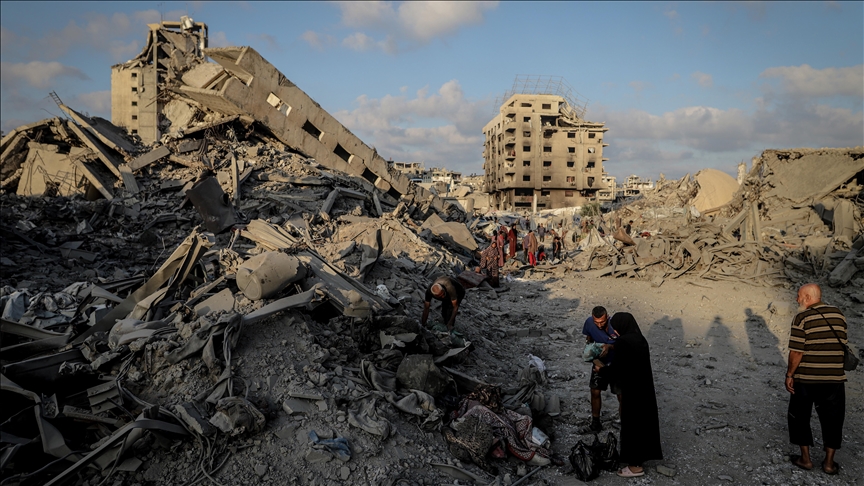
The Israeli army, rejecting international calls for a ceasefire, has pursued a brutal offensive on Gaza since Oct. 7, 2023, killing more than 61,000 Palestinians, almost half of them women and children. Israel’s military campaign has devastated the enclave and brought it to the verge of famine.

Last November, the International Criminal Court issued arrest warrants for Netanyahu and his former Defense Minister Yoav Gallant for war crimes and crimes against humanity in Gaza.

Israel also faces a genocide case at the International Court of Justice for its war on the enclave.

Continue reading
Changing The Middle East Face Through War

Dr Marwan Asmar

Israeli Prime Minister Benjamin Netanyahu finally got what he wanted: ‘A war with Iran.” But this war – now in its fifth day, is already proving very costly for Israel because of the Iranian military firepower meted out on Jewish cities, towns and military installations.

Such a war that begun Friday, 13 June, 2025, will be remembered as one of the greatest events in the calendar of the Middle East. The start of the reaping of the Muslim pride, for up until it was always US-backed Israeli ‘superman superiority’ – versus Islamic weakness and meekness.

Netanyahu may have made a devastating calculation by attempting to go after the Iranian vast nuclear infrastructure while in reality creating mayhem in Iranian cities, people and assassinating 10 of its top military leaders in the early hours of Friday morning.

This was all to change on the evening of that day as Iranian long-range missiles began to hurl down on central Israel and more precisely the Greater Tel Aviv area that includes other cities, towns and settlements with a population of 4 million people.

The start of the strikes on Israel stands today as unprecedented, a first-time development since the creation of the Zionist entity in 1948 and struck a series of bullet sounds among the Israeli population who has been huddling up-and-down the shelters since the conflict begun and best summarized by the US Ambassador to Israel Mike Huckabee who said one night after the bombs that:

“It was a tough night in Israel,” referring to the fact that he had to go down to the bomb shelter five times because of the incoming Iranian missiles that would not let up.

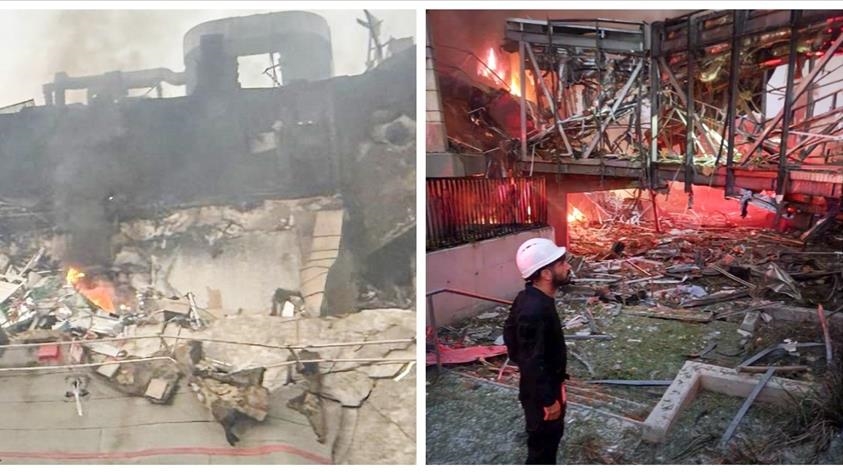
Shock, mayhem, hysteria quickly consumed Israelis as they started seeing first-hand, the destroyed buildings and quashed cars in the middle of Tel Aviv and its surrounding areas like Bat Yam, Ramat Gan, Rehovot, Petah Tikva and Herzliya.

Very quickly as well, missiles, and indiscriminately so, began to fall in these places, long seen as the pride of joy of Israeli technology, military industrialization and top business. These were crumbling in front of their eyes as reported by the Israeli newspapers and media channels.

Shocking was the fact, the incoming missiles, which made Israeli defenses like the Iron Dome and the David Sling look pitiful, were striking buildings and high-scrappers including the prestigious Weizmann Institute of Science with reporters of three its top flights struck and is now in fear of complete collapse.

Despite this, Netanyahu says he is sure of a complete victory, adding that Israel is on the verge of completely changing the face of the Middle East, including his claims of bombing Iranian military facilities, but in reality striking at civilian infrastructure and people.

However, for the first time Gazans and Palestinians are jubilating at the sight of what seems to be the non-stop Iranian missiles falling on Israeli areas where sirens go off and on in all middle of the night and day whilst in glee at the ruined and destroyed buildings. “Let them see how its like to be hit by a missile,” is a frequent comment voiced not only by Palestinians but also by many others in the world.

It is true the face of the Middle East is, and for the first time, is truly changing the face of the Middle East, but not according to the wishes of Netanyahu but to the people of the area of Gazans, Palestinians Arabs and Persians where they have watched the Israeli army bomb the enclave over the past 21 months or so.

This is indeed a historic moment led by Iran and soon to be joined by members of the Muslim world including Turkey, Pakistan, Malaysia and Indonesia. The unexpected war in the Middle East, as brought on by Netanyahu and his extremist and racist government, is upsetting the plans of the Trump plan for the Middle East who is portraying himself as a so-called “man of peace” – a fake image in the light of the fact that the US has been the top military supplier for Israel to carry out its Gaza genocide.

The conflict with Iran – that is not likely to end any time soon because of the arsenal that waits in the ready and to be unleashed – has effectively put an end to the idea of transferring Palestinians from Gaza to other lands. They are likely to stay firmly on their places despite the mass destruction of the enclave.

However, there is a clear slippery-slope to this war that is still in the initial stages with outside powers ready to take sides developing into a real possibility of World War III, if cool hands don’t take the lead and let real and effectively diplomacy take the reign of power to stop what was seen in the 1960s, 1970s and even 1980s the concept of Mutual Assured Destruction.  

The world today is on a precipice….


Continue reading
Iran-Israel: Making of a World War

By Dr Khair Janbek

We became accustomed for a while to the mutual bombardment of Iran and Israel for the first a couple of days. Then Israel started declaring that it had achieved its objectives whilst Iran maintained its own momentum, saying it is also teaching Israel a lesson.

But now the new flaring conflict is lasting longer than expected. We really don’t know for certain what are the objectives as the declared intentions keep changing on daily basis and the hidden objections tend to be irrelevant, at least for the time being because we have no clue about them.

What is certain is that neither Israel nor Iran are naïve to think that, a protracted campaign of mutual bombardment, is in their interest. The reality however, is that a war of attrition is not in their interest of either, and may serve the interests of the two other regional powers: Turkey and Saudi Arabia.

But would both Israel and Iran willingly allow Turkey and Saudi Arabia to replace their influence? This is not very likely, as we can clearly see both sides are trying their best to drag others into the conflict by turning it into a regional conflgeration, by dragging the US and the EU on one side, and the Russians, Chinese, and Pakistanis on the other.

One at this juncture must say that a regional conflict, even by unintended consequences may lead to a wider global conflagration, quickly bringing in world powers and states that will not sit by the sidelines.

On the face of it, anyone cannot miss the fact that bombarding Iran came on the first day of the end of the two-month grace period which the US gave to Tehran to reach an ‘ironclad’ nuclear agreement. So at least on the face of it, the whole issue is related to forcing Iran to come back to the negotiating table with the US albeit with a weakened position.

But then again, the contradictory statement of the administration in Washington could mean anything or nothing, implying for certainty that it had prior knowledge of the Israeli attack on Iran.

Another idea which was thrown into the arena in a flip-flop manner, is that of helping in the process of regime change, but if one can say anything, is that when the Iraq-Iran war erupted, it was still in the early days of the Islamic Revolution and there was strong opposition to the mullahs regime.

And rather than creating a possibility for a regime, the war created a united nationalist response against the then Saddam Hussein regime in Iraq. In a sense what started with a serious possibility of regime change ended up uniting the forces of the country.

Therefore, if the intention of the Israelis is regime change, then they better think twice about. Still, Iran is a country of more than 92 million people, with a territorial space of about 1.6 million kilometers so anything is possible. Just for interest, it is argued that Iran is 75 times the size of Israel.

So where do both parties go from here? One thing is for sure: One doesn’t know the extent of damage the two parties can do to each others’ nuclear arsenals. But if Israel feels it may not be able to destroy the Iranian nuclear infrastructure but can make it costly for them to re-start their programme, that would be naive because the Russians, the Chinese, and Pakistanis would be more than happy to offer their expertise.

One must add here however, that in the Near East, things can change very quickly.

Dr Janbek is a Jordanian writer based in Paris, France. He has contributed this article to crossfirearabia.com.

Continue reading
Can ‘Realist’ Trump Pull Off Gaza Ceasefire?

By Michael Jansen

During his ongoing visits to Saudi Arabia, Qatar and the Emirates, US President Donald Trump seeks to focus on business opportunities and investment in the US rather than address the negative political realities to which he contributed during his first term (2017-2021).

At that time, he dismissed the two-state solution in favour of “The Deal of the Century” which would give Palestinians a degree of autonomy within Israel. He defunded UNRWA, recognised Jerusalem as Israel’s capital, moved the US embassy there, and said the US no longer considers Israeli settlements illegal overturning a 1978 policy. The fate of the refugees, Jerusalem, and settlers were meant to be negotiated under the two-state solution by the sides under the 1993 Oslo accord. He closed the US consulate in occupied East Jerusalem which served Palestinians and the PLO office in Washington. Trump recognized Israeli annexation of Syria’s occupied Golan.

Trump began his second term by calling for the expulsion of Palestinians from Gaza which would be redeveloped as a Middle East Riviera instead of exerting pressure on Israel to end the Gaza war and enable its reconstruction. Under Trump’s real estate venture Gazan Palestinians were supposed to settle in Egypt and Jordan, which along with all the Arabs flatly rejected this proposal. Egypt drew up a counterproposal to reconstruct devastated Gaza while its population stays put.

His resort scheme has angered the Arab public from the Gulf to the Atlantic. His call for Saudi Arabia to establish relations with Israel has been rejected as Riyadh has said it will normalise when there is a Palestinian state with its capital in Jerusalem.

Since Trump made Saudi Arabia his first foreign destination in 2017 during his first term, the region has changed significantly by pivoting to the East. Saudi Arabia and the Emirates have cultivated ties with Russia – Riyadh’s partner on oil production and pricing – and China which buys Gulf oil and exports billions of dollars in goods to the Gulf. The Emirates, Egypt and Iran joined BRICS (the grouping of Brazil, Russia, India, China, and South Africa) while Saudi Arabia applied but did not follow through. China mediated Saudi-Iranian reconciliation. This has ended Iran’s isolation in the region.

On the positive side, early in this term Trump opened talks with Iran over its nuclear programme to replace the 2015 deal from which he withdrew in 2018. A fifth round of talks is expected. Although Trump wants to be a peacemaker, he has threatened war if the talks fail.

As a peacemaker, Trump bombed Yemen heavily to force Yemen’s Houthis to end attacks on international commercial and naval vessels in the Gulf of Aden and the Red Sea. The Houthis and US agreed to end this confrontation. Trump has not, however, halted Houthi drone and ballistic missile attacks on Israel which the Houthis say will stop if Israel observes a ceasefire or ends the war on Gaza.

Trump has not planned to stop in Israel during this Gulf tour, indicating that there is some distance between him and Israeli Prime Minister Binyamin Netanyahu. He has not only refused to ceasefire in Gaza but also maintained a ten-week blockade of the strip. He could have done both to ease Trump’s swing around the Gulf where Gaza is high on the agendas of the rulers and public. Since Netanyahu has carried on with his Gaza war, Trump has ignored him when resuming talks with Iran on limiting its nuclear programme in exchange for lifting sanctions and agreeing to a ceasefire with Yemen’s Houthi. The ceasefire has been welcomed by Washington’s Arab allies, particularly Saudi Arabia which had been urging an end to US attacks on Yemen before Trump began his tour.

Without Israeli involvement, the US has also negotiated with Hamas over the release on Monday of US-Israeli hostage Edan Alexander. For Trump, this is a greatly desired success in the US. In Israel, families of hostages who are not US-Israel dual citizens fear their relatives will be forgotten by Netanyahu who is determined to not only continue with the war but also to expand it once Trump departs from the region. Hostage families are not alone in their suspicions. A majority (54 per cent) of Israelis said that the war was being driven by personal rather than security reasons. Only 21 per cent agreed with Netanyahu’s prioritisation of eliminating Hamas over rescuing the hostages. A March poll showed 70 per cent of Israelis wanted Netanyahu to resign.

He has adopted this stance for several reasons. First, right-wingers in his coalition have vowed to pull out if he ends the war. Second, once the war is over, Netanyahu will be called upon to account for lax Israeli security in the south where Hamas breached the fence on October 7th, 2023, killed 1,200 Israelis and visitors and abducted another 251. There was no excuse for laxity. Young female Israeli soldiers deployed as “watchers” along that part of the border with Gaza, warned repeatedly that Hamas was conducting drills and manoeuvres ahead of an attack. Their warnings were not taken serioiusly by senior Israeli officers. Some of these women were killed and some captured. Third, as long as the war is being waged, Netanyahu will not have to explain how lightly armed Hamas fighters have managed to carry on the fight while the mighty Israeli army and air force levelled Gaza and killed 53,000 Palestinians. Netanyahu has a lot of explaining to do.

Jansen is a columnist for the Jordan Times

Continue reading