Can ‘Realist’ Trump Pull Off Gaza Ceasefire?

By Michael Jansen

During his ongoing visits to Saudi Arabia, Qatar and the Emirates, US President Donald Trump seeks to focus on business opportunities and investment in the US rather than address the negative political realities to which he contributed during his first term (2017-2021).

At that time, he dismissed the two-state solution in favour of “The Deal of the Century” which would give Palestinians a degree of autonomy within Israel. He defunded UNRWA, recognised Jerusalem as Israel’s capital, moved the US embassy there, and said the US no longer considers Israeli settlements illegal overturning a 1978 policy. The fate of the refugees, Jerusalem, and settlers were meant to be negotiated under the two-state solution by the sides under the 1993 Oslo accord. He closed the US consulate in occupied East Jerusalem which served Palestinians and the PLO office in Washington. Trump recognized Israeli annexation of Syria’s occupied Golan.

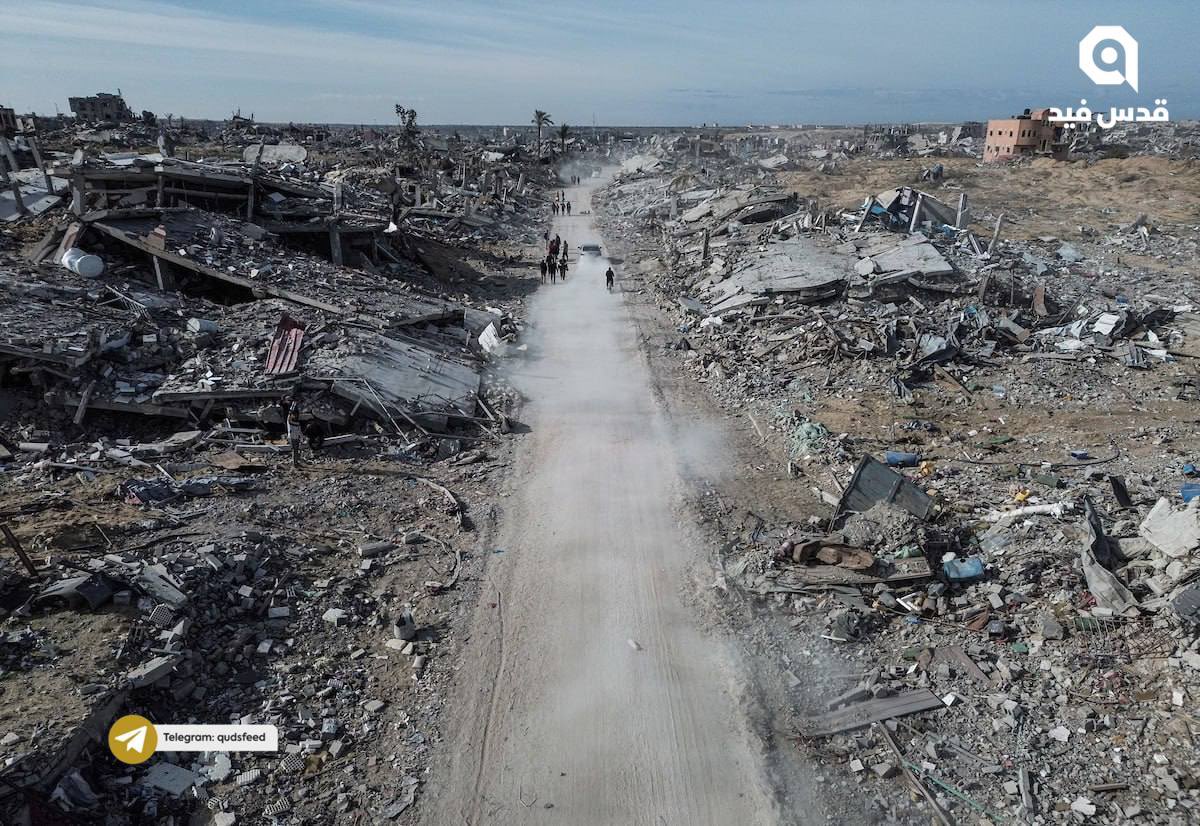
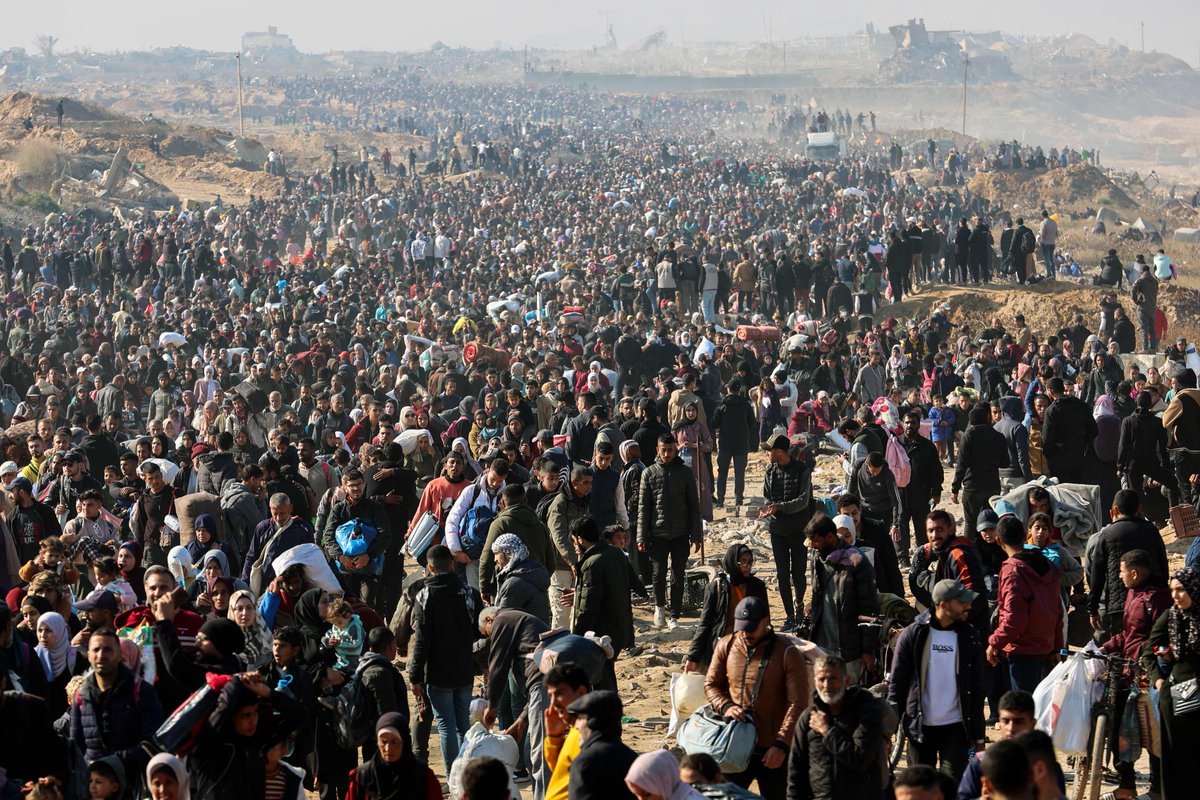
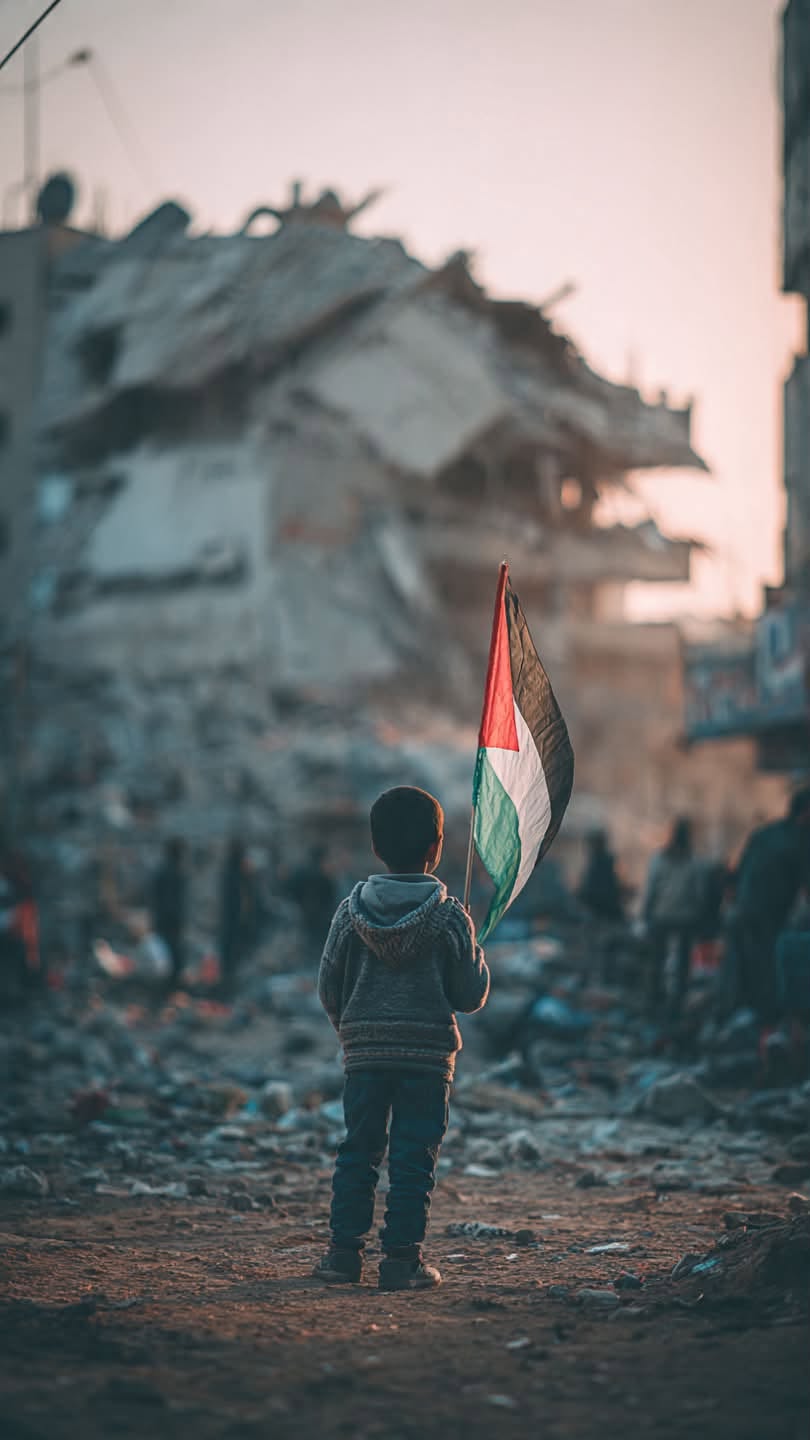
Trump began his second term by calling for the expulsion of Palestinians from Gaza which would be redeveloped as a Middle East Riviera instead of exerting pressure on Israel to end the Gaza war and enable its reconstruction. Under Trump’s real estate venture Gazan Palestinians were supposed to settle in Egypt and Jordan, which along with all the Arabs flatly rejected this proposal. Egypt drew up a counterproposal to reconstruct devastated Gaza while its population stays put.

His resort scheme has angered the Arab public from the Gulf to the Atlantic. His call for Saudi Arabia to establish relations with Israel has been rejected as Riyadh has said it will normalise when there is a Palestinian state with its capital in Jerusalem.

Since Trump made Saudi Arabia his first foreign destination in 2017 during his first term, the region has changed significantly by pivoting to the East. Saudi Arabia and the Emirates have cultivated ties with Russia – Riyadh’s partner on oil production and pricing – and China which buys Gulf oil and exports billions of dollars in goods to the Gulf. The Emirates, Egypt and Iran joined BRICS (the grouping of Brazil, Russia, India, China, and South Africa) while Saudi Arabia applied but did not follow through. China mediated Saudi-Iranian reconciliation. This has ended Iran’s isolation in the region.

On the positive side, early in this term Trump opened talks with Iran over its nuclear programme to replace the 2015 deal from which he withdrew in 2018. A fifth round of talks is expected. Although Trump wants to be a peacemaker, he has threatened war if the talks fail.

As a peacemaker, Trump bombed Yemen heavily to force Yemen’s Houthis to end attacks on international commercial and naval vessels in the Gulf of Aden and the Red Sea. The Houthis and US agreed to end this confrontation. Trump has not, however, halted Houthi drone and ballistic missile attacks on Israel which the Houthis say will stop if Israel observes a ceasefire or ends the war on Gaza.

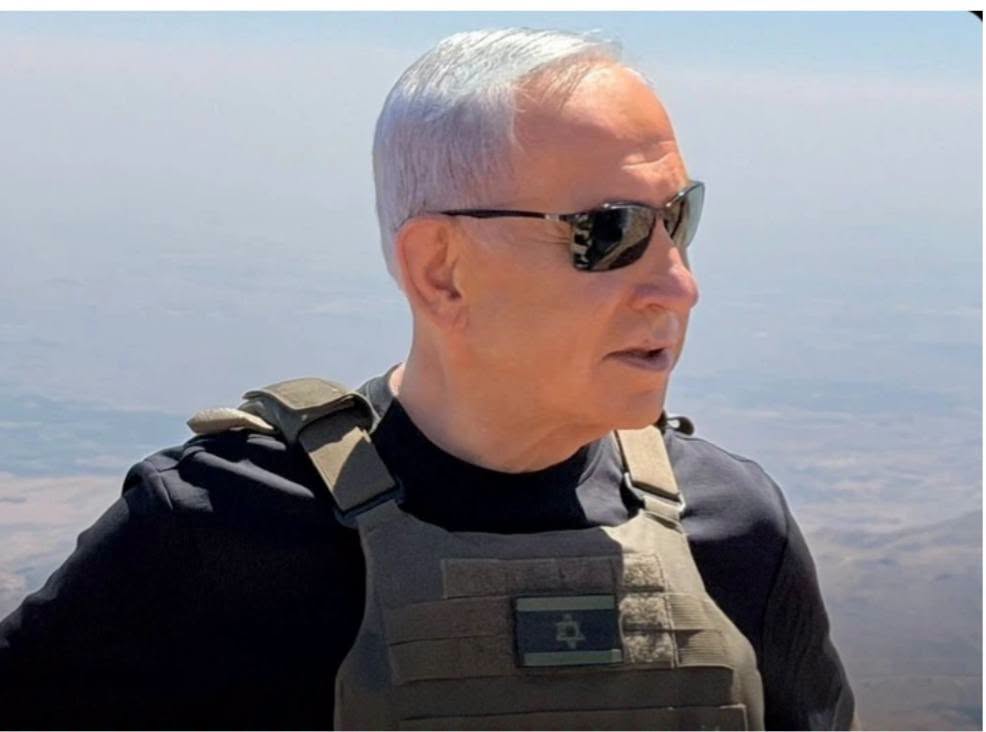
Trump has not planned to stop in Israel during this Gulf tour, indicating that there is some distance between him and Israeli Prime Minister Binyamin Netanyahu. He has not only refused to ceasefire in Gaza but also maintained a ten-week blockade of the strip. He could have done both to ease Trump’s swing around the Gulf where Gaza is high on the agendas of the rulers and public. Since Netanyahu has carried on with his Gaza war, Trump has ignored him when resuming talks with Iran on limiting its nuclear programme in exchange for lifting sanctions and agreeing to a ceasefire with Yemen’s Houthi. The ceasefire has been welcomed by Washington’s Arab allies, particularly Saudi Arabia which had been urging an end to US attacks on Yemen before Trump began his tour.

Without Israeli involvement, the US has also negotiated with Hamas over the release on Monday of US-Israeli hostage Edan Alexander. For Trump, this is a greatly desired success in the US. In Israel, families of hostages who are not US-Israel dual citizens fear their relatives will be forgotten by Netanyahu who is determined to not only continue with the war but also to expand it once Trump departs from the region. Hostage families are not alone in their suspicions. A majority (54 per cent) of Israelis said that the war was being driven by personal rather than security reasons. Only 21 per cent agreed with Netanyahu’s prioritisation of eliminating Hamas over rescuing the hostages. A March poll showed 70 per cent of Israelis wanted Netanyahu to resign.

He has adopted this stance for several reasons. First, right-wingers in his coalition have vowed to pull out if he ends the war. Second, once the war is over, Netanyahu will be called upon to account for lax Israeli security in the south where Hamas breached the fence on October 7th, 2023, killed 1,200 Israelis and visitors and abducted another 251. There was no excuse for laxity. Young female Israeli soldiers deployed as “watchers” along that part of the border with Gaza, warned repeatedly that Hamas was conducting drills and manoeuvres ahead of an attack. Their warnings were not taken serioiusly by senior Israeli officers. Some of these women were killed and some captured. Third, as long as the war is being waged, Netanyahu will not have to explain how lightly armed Hamas fighters have managed to carry on the fight while the mighty Israeli army and air force levelled Gaza and killed 53,000 Palestinians. Netanyahu has a lot of explaining to do.

Jansen is a columnist for the Jordan Times

Continue reading
Trump’s War in The Red Sea

Dr Khairi Janbek

The US foreign policy in the Red Sea today is characterized by a robust military response to Houthi threats, aiming to protect critical maritime trade routes and assert influence in a geopolitical strategic area. While these military operations garnered international support, the ongoing conflict underscores the complexities and challenges of Middle East interventions.

The US military’s increased involvement in the Red Sea, including the deployment of two aircraft carriers, signals a commitment to ensuring freedom of navigation and countering the Iranians in the region. However, the present ongoing escalation also risks entangling the US in a prolonged conflict.

This is reminiscent of past Middle East engagements which the Americans should be well-aware of, and may put additional strain on the US military resources amid other pressing global priorities if faces.

That said, the present military strikes on Yemen are not just about the Houthis. They are also widely seen as demonstration of US strength towards the group’s main backer: Iran.

The Washington administration is currently locked in a series of negotiations regarding Iran’s nuclear programme and Trump has not ruled out military action if those talks fail, yet, it is possible still, that the US, and judging by recent history, the Americans may change their mind and everything is put on hold yet again.

But we need to wait and see! The US has already moved its patriot and THAAD missiles from Asia to the Middle East, and only in the first month of the preparedness campaign, $200 million of ammunition has been used and this is making military officials greatly concerned about the impact on stocks the US Navy might use in the event of a Chinese attack on Taiwan.

At the same time, there are various Yemeni groups opposed to the Houthis with regional backing, and dare one say with some international backing, reportedly considering taking advantage of the situation to launch a ground campaign to oust the Houthis once and for all, but Washington is yet to make a decision on whether to back such operations or not.

Most analysts and officials say that, American troops participating in any ground operations in Yemen is highly unlikely, moreover, even more limited support for ground operations would still be another case of the US backing armed groups in a messy middle Eastern war; exactly the sort of situation Trump blasted previous administrations for falling into.

Dr Janbek is a Jordanian analyst based in Paris, France.

Continue reading
The Middle East Octopus

By Dr Khairi Janbek

When we think of contemporary Iran, one always believes that the Arab Middle East had always been dominated by three Non-Arab American allies: Iran of the Shah, Turkey and Israel. One thinks that those “neighborhood police stations” were the guarantors of stability through their convergence, and at times contradictions in the age of Cold War and oil. However, the Shah of Iran was deposed and the anti-communist Cold War ended, but that didn’t mean that oil stopped becoming important nor that both Russia and China were no longer threats.

One would say, that the rehabilitation of Iran and possibly turning it into a negotiations partner aims at keeping the third angle of the police stations triangle going, because non of the Arab countries, no matter how much they tried, could never replace Iran, because no “Arab police station” is permitted to emerge as a third angle.

Having said that, it would be beyond naive to think that the expansion of Iran’s power and influence happened by stealth or escaped the notice of the US and NATO. After all, Iran grew to become a Red Sea country through its influence on the Houthis in Yemen, a Mediterranean country through its influence in Syria as well Lebanon through Hezbollah, and the major Gulf country through its supporters in Iraq. In fact this Iranian domination of space is what has created a common space between all its long arm organizations in the region.

Essentially, if we compare Iran to an octopus, all those various groups are its tentacles, and they all serve the purpose of Iran’s strategic interests, albeit not through a push-button approach, but through not taking any action which would not please their master Iran. Of course, this puts Iran in a strong position to be a major player in the region and an inescapable negotiations partner for the US, which is also convenient for the Americans, in order to remind their Arab allies who is their protector in a region policed by Turkey, Israel and Iran.

Of course, this takes us to the point of saying that, for all intents and purposes, for the Americans a trusted adversary is more important than distrusted friends, and that it would be absurd to think that all those long arms of Iran in the Arab world can be amputated by military means; they certainly can be weakened, but without the consent of Iran and without the right price, so long as it remains behind them, nothing much can change.

At this point, from what one can only see, is that no one in their right mind or otherwise, will permit a war to emerge in which Israel is pitted against Iran and the US as well as NATO putting all their weight behind Israel and forcing the Arabs to choose their camp. That would be the scenario of the end of the world as we know it , or with major civil wars in the Arab countries controlled by the tentacles of Iran, and no one wants that.

Dr Janbek is a Jordanian writer based in Paris

Continue reading
World Condemn Trump’s Plan Over Gaza

US President Donald Trump’s recent proposal to relocate Palestinians from Gaza and place the territory under long-term US control has sparked widespread international backlash.

Unveiled during a joint press conference with Israeli Prime Minister Benjamin Netanyahu, the plan envisions transforming Gaza into the “Riviera of the Middle East” by resettling Palestinians in neighboring countries like Jordan and Egypt.

While the proposal received support from Israel, the global response has been overwhelmingly negative, with strong condemnations from major powers, regional countries, and even US lawmakers.

Global powers reject forced relocation

Both Russia and China criticized the plan, highlighting the violation of international norms.

Kremlin spokesperson Dmitry Peskov reaffirmed Russia’s support for a two-state solution, while the Russian Foreign Ministry said: “Any populist comments are counter-productive and ramp up tensions.”

China condemned the forced displacement, emphasizing that “Palestinians governing Palestine” is fundamental for post-conflict stability.

European countries have also been vocal on the plan, expressing strong opposition.

German Foreign Minister Annalena Baerbock labeled the proposal a breach of international law, stressing that Gaza belongs to the Palestinians.

France reiterated its opposition to any forced displacement, calling it a serious violation of international law.

The UK, under Prime Minister Keir Starmer, supported Palestinian rights to return and rebuild, while Denmark said: “It doesn’t seem to be a realistic way forward.”

Reasserting Italy’s support for the two-state solution, the Italian foreign minister said nothing can be achieved without the Palestinians, noting: “It seems to me that it is a bit difficult (to implement the plan).”

Spain, Ireland, and Slovenia, having recognized Palestine in 2024, condemned the plan, calling it ignorant of Palestinian history and contradiction of the UN Security Council resolutions.

Belgium said forced displacement of populations constitutes “a grave breach of international humanitarian law” while Poland expressed support for a two-state solution.

Canada, where Trump put tariffs on hold last week, said its longstanding position on Gaza has not changed and is committed to achieving a two-state solution.

Relocation plan ‘unacceptable’

Turkish Foreign Minister Hakan Fidan condemned the plan as “unacceptable,” stressing that even considering such a proposal is wrong. The Turkish Defense Ministry declared its complete opposition to the displacement of Palestinians.

Palestinian President Mahmoud Abbas rejected the plan outright, stating peace cannot be attained without a Palestinian state.

Hamas group called it “hostile,” while Qatar, Egypt, and Saudi Arabia warned it would destabilize the region.

Iran also voiced firm opposition to the plan, and Iraq condemned the plan to displace Palestinians.

Although Latin American countries were largely silent, Brazil’s President Lula da Silva criticized the proposal as “incomprehensible,” questioning where displaced Palestinians would live.

Dissent within US

Despite originating in Washington, the plan faced criticism even from US lawmakers.

Democratic Senator Chris Van Hollen condemned it as “ethnic cleansing by another name.” Representative Rashida Tlaib, a Palestinian-American, declared: “Palestinians aren’t going anywhere.”

Even Republican figures like Senator Lindsey Graham found the proposal “problematic,” while Senator Tim Kaine labeled it “deranged.”

Trump’s Gaza relocation plan has united a broad spectrum of global opposition, transcending geopolitical divides.

While no country has openly expressed support for the plan, many countries have remained silent. Argentina, Japan, and India, the countries that sent representatives to Trump’s inauguration, have not made any statements on the issue.

Countries that want to maintain good relations with the new US administration have also remained silent. Latin American countries, where Trump has cracked down on immigration and drugs after taking the office, have so far kept mum.

Aside from Israel, the international community remains steadfast in rejecting forced displacement, advocating instead for a two-state solution as the only viable path to lasting peace in the region according to Anadolu.

Continue reading
China Scoffs at Trump’s Gaza ‘Take Over’ Plan

China on Wednesday rebuffed US President Donald Trump’s plans to over “take over” Gaza, saying it opposes forced displacement of Palestinians to neighboring countries, state media reported.

Beijing “has always believed that ‘the Palestinians governing Palestine’ is the fundamental principle for postwar governance in Gaza,” Foreign Ministry spokesman Lin Jian told reporters.

“We oppose the forced displacement and relocation of the population in Gaza,” Lin stressed, rejecting Trump’s controversial plans to take over the Palestinian besieged enclave.

The statement from Beijing came after Trump announced a plan for the US to “take over” the Gaza Strip and “develop it after relocating Palestinians to neighboring countries.”

Trump made the remarks in a joint news conference in Washington with visiting Prime Minister Benjamin Netanyahu.

“The US will take over the Gaza Strip, and we will do a job with it too,” he said. “We’re going to develop it, create thousands and thousands of jobs, and it’ll be something that the entire Middle East can be very proud of.”

Trump gave no details on how the US would carry out the resettlement plan.

China’s Foreign Ministry, in contrast, said it hopes “all relevant parties will take the ceasefire in Gaza and post-war governance as an opportunity to push the Palestinian issue back onto the correct track of political resolution based on the ‘two-state solution,’ in order to achieve lasting peace in the Middle East,” according to Anadolu.

Continue reading