US Loses Nearly $4 Billion in Military Assets

The United States has lost approximately $3.84 billion in assets in the first two weeks of “Operation Epic Fury,” according to estimates and data compiled by Anadolu.

The largest items driving the cost are damaged and destroyed AN/TPY-2 radar components belonging to THAAD missile defense systems in the United Arab Emirates, Jordan and Saudi Arabia, valued at an estimated $2 billion. While the extent of the damage is unclear, satellite imagery analyzed by multiple outlets confirms that four AN/TPY-2 radars have been hit across these locations.

A US AN/FPS-132 early warning radar at Al-Udeid Air Base in Qatar, valued at $1.1 billion, was struck by an Iranian missile when retaliatory attacks began on Feb. 28. Qatari authorities confirmed that the radar was damaged according to Anadolu.

US officials speaking to CBS News have so far confirmed that 11 MQ-9 Reaper drones have been downed. At a unit cost of roughly $30 million, the total loss of the drones is about $330 million.

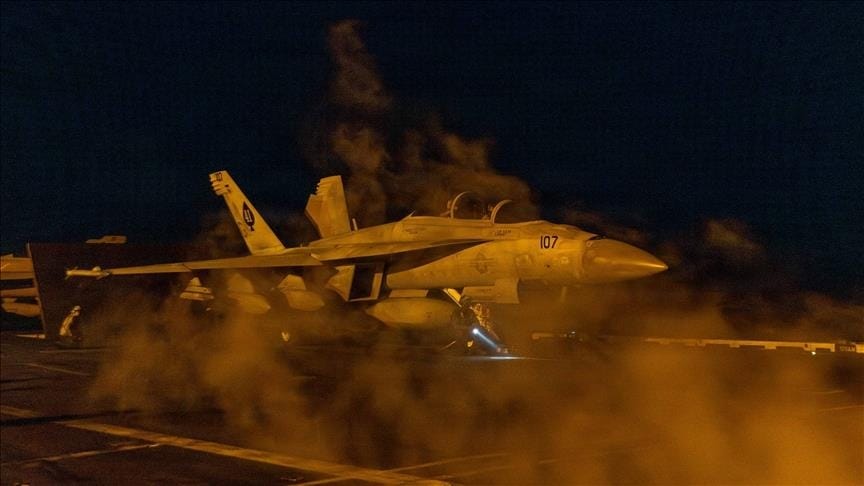
On the second day of strikes, three F-15E Strike Eagle fighter jets were lost in a friendly-fire incident involving Kuwaiti air defenses. While all six aircrew survived, the aircraft were destroyed, with replacement costs estimated at $282 million.

A KC-135 Stratotanker aircraft crashed in western Iraq during an operation on Thursday, killing all six aircrew. The replacement cost of the plane, first adopted in the late 1950s, is $80 million, adjusted for inflation.

Iran also struck the US Navy’s Fifth Fleet headquarters in Manama, Bahrain, destroying two satellite communications terminals and several large buildings.

Open-source intelligence reports have identified the targeted communication terminals as AN/GSC-52Bs, with an estimated cost of $20 million, factoring in deployment and installation.

In addition to the terminals lost in Bahrain, satellite imagery analyzed by The New York Times of Camp Arifjan in Kuwait showed three destroyed radomes, adding roughly $30 million in damage.

Combining these costs, the US has lost $3.84 billion worth of military assets in its ongoing conflict with Iran.

  • CrossFireArabia

    CrossFireArabia
    Dr. Marwan Asmar holds a PhD from Leeds University and is a freelance writer specializing on the Middle East. He has worked as a journalist since the early 1990s in Jordan and the Gulf countries, and been widely published, including at Albawaba, Gulf News, Al Ghad, World Press Review and others.

    Related Posts

    Iranian Missiles Cause ‘Extensive’ Damage to US Bases Than Previously Thought – Report

    Iran has inflicted more “extensive” damage to US bases and equipment in the Middle East since the start of US and Israeli strikes against Iran on Feb. 28, NBC News reported on Saturday, citing sources.

    The report said that the damages from Iran’s retaliatory strikes against US military bases in seven Middle Eastern countries were “far worse than publicly acknowledged and is expected to cost billions of dollars to repair.”

    Iran has hit dozens of targets, including warehouses, command headquarters, aircraft hangars, satellite communications infrastructure, runways, high-end radar systems, and dozens of aircraft, the report said.

    The Pentagon has not detailed the extent of the damage to US military bases publicly, according to the report, with US Central Command declining to comment on battle damage assessments.

    According to the report, some Republican lawmakers privately expressed their dissatisfaction with senior Pentagon officials for refusing to provide information on the extent of the damage or a cost estimate for repairs.

    “No one knows anything. And it’s not for lack of asking,” one congressional aide was quoted by NBC News as saying. “We have been asking for weeks and not getting specifics, even as the Pentagon is asking for a record high budget.”

    The report mentioned that the damage to and cost of repairing the bases could reignite a debate over the merits of maintaining US bases in such close proximity to an adversary like Iran. Anadolu

    Continue reading
    Why is Iran’s FM in Oman?

    Iranian Foreign Minister Abbas Araghchi arrived in Muscat, Oman’s capital, on Saturday evening, leading a diplomatic delegation, according to Tasnim news agency.

    Araghchi is expected to meet with senior officials in Oman to discuss bilateral relations and exchange views on regional developments.

    The visit follows his trip to Pakistan, where he said in a statement that he shared his country’s “position concerning a workable framework to permanently end the war on Iran,” without providing further details.

    He also expressed skepticism about Washington’s intentions.

    “Have yet to see if the U.S. is truly serious about diplomacy,” he said on the US social media company X.

    Pakistan has been acting as an intermediary between Tehran and Washington amid ongoing tensions following recent military escalation.

    Araghchi arrived in Pakistan late Friday and met with Pakistan’s Prime Minister Shehbaz Sharif in Islamabad on Saturday, amid efforts to revive stalled peace talks between the US and Iran to end their eight-week war.

    The first round was held in Islamabad two weeks ago but failed to reach an agreement to end the conflict that began on Feb. 28 and engulfed the entire Middle East. Those talks came after Pakistan brokered a two-week ceasefire on April 8, which was later extended by US President Donald Trump.

    Meanwhile, US President Donald Trump on Saturday said that he has cancelled a planned trip to Pakistan by special envoy Steve Witkoff and adviser Jared Kushner.

    “I’ve told my people a little while ago they were getting ready to leave, and I said, ‘Nope, you’re not making an 18 hour flight to go there. We have all the cards. They can call us anytime they want, but you’re not going to be making any more 18 hour flights to sit around talking about nothing’,” Trump told Fox News via phone.

    Iran has refused to hold direct talks with the US and said observations would be conveyed to Pakistan.

    Some of the sticking points are said to be the Strait of Hormuz, the US blockade of Iranian ports, and Iran’s enriched uranium. Anadolu

    Continue reading

    You Missed

    Iranian Missiles Cause ‘Extensive’ Damage to US Bases Than Previously Thought – Report

    Iranian Missiles Cause ‘Extensive’ Damage to US Bases Than Previously Thought – Report

    Why is Iran’s FM in Oman?

    Why is Iran’s FM in Oman?

    Iran Detains Two Ship With Links to Israel

    Iran Detains Two Ship With Links to Israel

    Grapes and Death in Gaza

    Grapes and Death in Gaza

    US-Iran: Who Will Blink First!

    US-Iran: Who Will Blink First!

    Trump: Tunes, Ceasefire and Hormuz

    Trump: Tunes, Ceasefire and Hormuz