‘Yes, it is Genocide,’ Leading Israeli Author Says

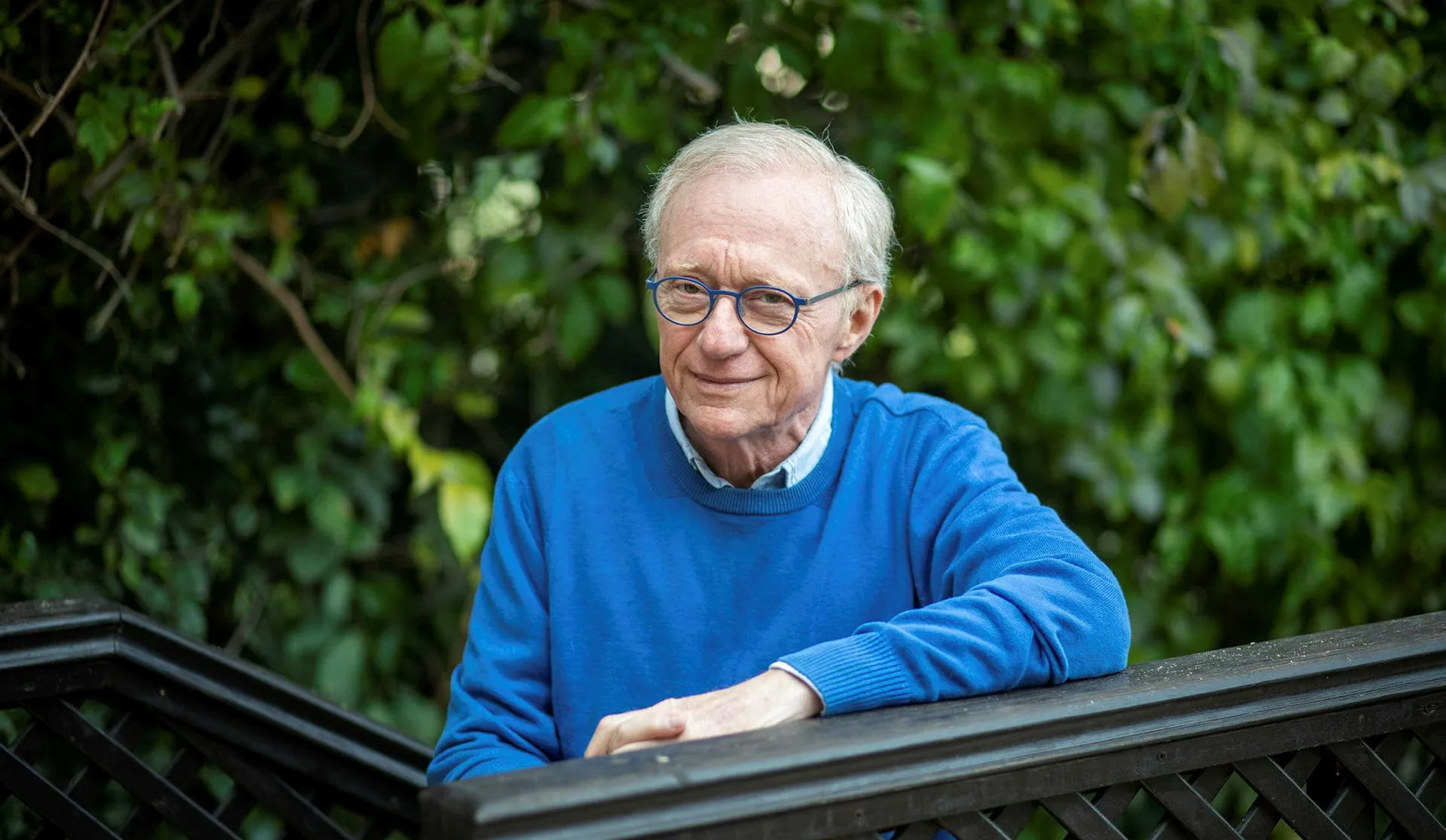
David Grossman, one of Israel’s most prominent authors, told Italian daily La Repubblica he has decided to start using the word “genocide” to describe the situation in Gaza.

“For years, I refused to use the word ‘genocide.’ But now I can’t hold back from using it, after what I’ve read in the newspapers, after the images I’ve seen and after talking to people who have been there”, he said in the interview published in the paper’s print edition on Friday.

Grossman said coming to the realization that Israel is committing genocide in Gaza was an extremely painful process on a personal level, but that he now found such conclusion inescapable.

“I want to speak as a person who has done everything he could to avoid having to call Israel a genocidal state. And now, with immense pain and a broken heart, I have to say that it is happening before my eyes. Genocide,” he said.

The Israeli writer went on to say he now feels a moral obligation to speak up. “I feel an inner urgency to do the right thing, and now it is the time to do it,” Grossman said.

Asked by the journalist about the spiraling death toll in Gaza, he said: “I feel sick. Even though I know that those numbers are controlled by Hamas and that Israel cannot be solely responsible for all the atrocities we are witnessing. Nevertheless, reading in the newspaper or hearing in conversations with friends in Europe the juxtaposition of the words ‘Israel’ and ‘hunger’; to do so starting from our history, from our supposed sensitivity to the suffering of humanity, from the moral responsibility we have always claimed to have towards every human being and not only towards Jews… all this is devastating”, he said.

Grossman’s words come amid growing condemnation of Israel for its actions in Gaza on the international stage, and as several countries, including France and Britain, have pledged to recognize a Palestinian state in the near future.

Palestinians receive food at an aid distribution hub in Gaza City, Friday.

The use of the word genocide to describe Israel’s war in Gaza is also becoming more common in international intellectual circles.

In mid-July, an opinion piece titled “I’m a Genocide Scholar. I Know It When I See It” in the New York Times by Professor Omer Bartov, an Israeli professor of Holocaust and genocide studies at Brown University, made the case for the use of the word genocide.

Grossman, who is one of Israel’s most well-known writers abroad, has long been a vocal critic of Israel’s occupation of Palestinian territories. The editor of The New Yorker, David Remnick, recently described him as “the only [living Israeli] novelist with comparable moral authority” to that of the late Amos Oz. In the interview in La Repubblica, he reiterated that he considers Israel’s occupation of the West Bank and Gaza after the Six-Day War as a key watershed moment in the country’s history.

“I am absolutely convinced that Israel’s curse began with the occupation of the Palestinian territories in 1967. Perhaps people are tired of hearing about it, but that is how it is,” he said.

Grossman also noted it is critical to ensure those harboring antisemitic sentiments do not “use and manipulate” the word genocide. He also criticized Hamas for turning Gaza into a base for launching rockets into Israel in the aftermath of Israel’s withdrawal in 2005.

“The Palestinians’ big mistake is that they could have turned the Strip into a thriving place, but instead they gave in to fanaticism and used it as a launching pad for missiles against Israel”, he said.

“If they had made the other choice, perhaps this would have prompted Israel to also give up the West Bank and end the occupation years ago”, he said.

Grossman also added that many around the world still fail to understand the magnitude of the trauma of October 7 for Israelis.

“Many people still don’t understand what it meant for us. Many people I know [in Israel] have abandoned our common left-wing values since that day; they have given in to fear, and suddenly their lives have become easier, they feel accepted by the majority, they no longer need to think,” he said.

Grossman considers resettling Gaza, as some Israeli ministers advocate, wrong and self-defeating. “I hear people like Smotrich and Ben-Gvir saying that we must rebuild settlements in Gaza, but what are they saying? Don’t they remember what happened when we were there, with Hamas killing hundreds of Israeli civilians, women and children, without us being able to protect them? We did not leave Gaza out of generosity, but because we could not protect our people”, he argued.

Looking forward, Grossman said he remains a believer in the two-state solution. As such, he praised French President Emmanuel Macron’s decision to recognize a Palestinian state, that was followed by similar statements by other leaders. “I don’t understand the hysteria it has provoked here in Israel”, he said.

Finally, Grossman rejected accusations that Israel’s cultural elites should have taken a stronger stance on what is happening in Gaza a lot faster. “I believe that targeting those who have fought the Occupation for 70 years, who have invested most of their lives and careers in this battle, is unfair”, he concluded.

Haaretz

CrossFireArabia

CrossFireArabia
Dr. Marwan Asmar holds a PhD from Leeds University and is a freelance writer specializing on the Middle East. He has worked as a journalist since the early 1990s in Jordan and the Gulf countries, and been widely published, including at Albawaba, Gulf News, Al Ghad, World Press Review and others.

Related Posts

Beirut Weeps For a Poet

Lebanon mourns Khatoun Salma, a Lebanese national poet who was killed along with her husband in an Israeli airstrike that targeted their home in the Tallet al-Khayat neighborhood of Beirut Wednesday, 8 April.

Rasha al-Amir, publisher of Dar al-Jadeed, announced that the bodies of Khatoun and her husband were recovered from the rubble, Thursday morning.

Lebanese journalist Maha Salma also mourned her sister Khatoun on her Instagram account, writing: “My dear sister is in God’s care. May God grant me patience in the pain of her loss and the burning of my heart and soul.”

Poet and playwright Yahya Jaber wrote a tribute to Khatoun on Facebook, saying: “Yesterday, the Israeli airstrike cut down a poet with its sharp scissors, a poet of delicate Arabic.” Under the rubble, the conjunction “waw,” the plural “waw,” the feminine plural “nun,” the feminine suffix “ta,” the definite article “al-“: a massacre of language at the hands of language. Jaber attached a picture of the building where Khatoun lived to his post, saying:

“Here is the Khayat Hill building, and here on one of these balconies, we used to stay up late with Khatoun and her husband, Muhammad Karsht, in the late 198s, spinning yarns of laughter and sewing memories. We would recite poetry and remember our city, Tyre, and love Beirut, the capital.”

Lebanese poet Majida Dagher wrote on her Facebook page in mourning for Khatoun: “Under the rubble of her house in Khayat Hill, they found a poet lying among her shattered rhymes. The death of a poet in an airstrike on Beirut makes you feel that war is very, very close. The sound of bones breaking has become louder, and the smell of blood deeper.

Salma fell from the heights of poetry before she could bid farewell to ‘the last inhabitant of the moon.'” She thought Beirut was her tent, Beirut the roof of her poem, where she would hide, “embracing a woman waiting” for the dust to settle. But the dust became the tent of a new Beirut, a Beirut weeping, broken, martyred.

Salma, who studied Arabic literature at the American University of Beirut, published two collections of poetry, “I Embraced a Woman Waiting” in 2009 and “The Last Inhabitants of the Moon” in 2012, both with the Lebanese publishing house Dar Al-Jadeed. She first gained recognition in the 1970s, during her secondary school years, when she won a poetry prize. Later, at the beginning of this century, she became known in cultural circles for her relatively small but distinguished poetic output and her academic pursuits, which included studies in Sufism and Sufi mystics.

She combined profound knowledge with poetic sensitivity. She left her mark on the Lebanese cultural scene with a unique poetic voice, manifested in her literary works that carried the pain of humanity, exile, and memory. With her tragic passing, Lebanon loses a literary and human figure who wrote of the wound in a language that resembled nothing but truth.

Continue reading
Al Bahri: The Man Who Set Palestinian Theater

He is a playwright and author of 12 plays, nearly 20 novels, and numerous translations. Jamil Habib Afara (al-Bahri) was known as the “Father of Theater.” He was born in 1895 in Haifa and his family name dates back to the mid-18th century, as his ancestor owned a merchant fleet that sailed the Mediterranean between Haifa, Acre, and Tripoli. This is where his family name originated.

He showed early interest in literature and writing. He and his brother, Hanna, were keen to revitalize the literary and intellectual scene in Haifa, establishing the National Library there in 1922. He first published the “Zahrat al-Jamil” (The Beautiful Flower) and later “al-Zahra” (The Flower) which was initially a weekly publication that later became a bi-weekly and continued publication for about nine months after his death in 1931. His last piece was

a journalistic investigation into the execution of the three martyrs: Muhammad Jamjoum, Fuad Hijazi, and Ata al-Zeer, in the city of Acre in 1930. He dedicated his time and his newspaper that day to the souls of these martyrs, leading with: “The terrible hour in Haifa and all of Palestine: Let us commemorate those who gave their lives for the homeland.” A large funeral was held for him, and poems and eulogies were recited and published in the Palestinian press, such as the “Al-Karmel” and “Falastin,” newspapers.

The Department of Culture of the Palestine Liberation Organization posthumously awarded him the Jerusalem Medal for Culture and Arts in 1990, and the Palestinian Ministry of Culture reprinted his first book, “The History of Haifa,” in 2022.

Continue reading

You Missed

Iranian Missiles Cause ‘Extensive’ Damage to US Bases Than Previously Thought – Report

Iranian Missiles Cause ‘Extensive’ Damage to US Bases Than Previously Thought – Report

Why is Iran’s FM in Oman?

Why is Iran’s FM in Oman?

Iran Detains Two Ship With Links to Israel

Iran Detains Two Ship With Links to Israel

Grapes and Death in Gaza

Grapes and Death in Gaza

US-Iran: Who Will Blink First!

US-Iran: Who Will Blink First!

Trump: Tunes, Ceasefire and Hormuz

Trump: Tunes, Ceasefire and Hormuz